Why AC Cleaning Matters for Commercial Buildings
Over 60 percent of American office buildings experience preventable HVAC issues tied to poor AC cleaning routines. With commercial spaces so dependent on healthy airflow, skipping routine maintenance can quietly sabotage both comfort and efficiency. This article uncovers how professional AC cleaning protects air quality, drives energy savings, and keeps building operations on track for every American business.
Table of Contents
Contents
- 1 Table of Contents
- 2 Key Takeaways
- 3 Defining AC Cleaning for Commercial Buildings
- 4 Health Impacts: Allergens, Mold, and Air Quality
- 5 Energy Savings and System Efficiency Explained
- 6 Extending System Lifespan and Reducing Costs
- 7 Common Misconceptions About AC Cleaning
- 8 What Quality AC Cleaning Services Involve
- 9 Unlock the Full Benefits of Expert AC Cleaning for Your Commercial Building
- 10 Frequently Asked Questions
- 11 Recommended
- Defining AC Cleaning For Commercial Buildings
- Health Impacts: Allergens, Mold, And Air Quality
- Energy Savings And System Efficiency Explained
- Extending System Lifespan And Reducing Costs
- Common Misconceptions About AC Cleaning
- What Quality AC Cleaning Services Involve
Key Takeaways
| Point | Details |
|---|---|
| Importance of AC Cleaning | Regular AC cleaning is essential for maintaining optimal performance and indoor air quality in commercial buildings. |
| Health Benefits | Comprehensive cleaning helps prevent mold and allergens, reducing health risks for building occupants. |
| Cost Efficiency | Proactive cleaning strategies can significantly lower energy consumption and extend the lifespan of HVAC systems. |
| Common Misconceptions | Many believe that AC cleaning is unnecessary, but regular maintenance is crucial for preventing costly breakdowns and ensuring system efficiency. |
Defining AC Cleaning for Commercial Buildings
AC cleaning for commercial buildings represents a systematic process of maintaining and sanitizing air conditioning systems to ensure optimal performance, energy efficiency, and indoor air quality. Unlike residential AC cleaning, commercial AC cleaning involves complex procedures that address the unique challenges of large-scale HVAC systems in office buildings, shopping centers, hospitals, and other professional environments.
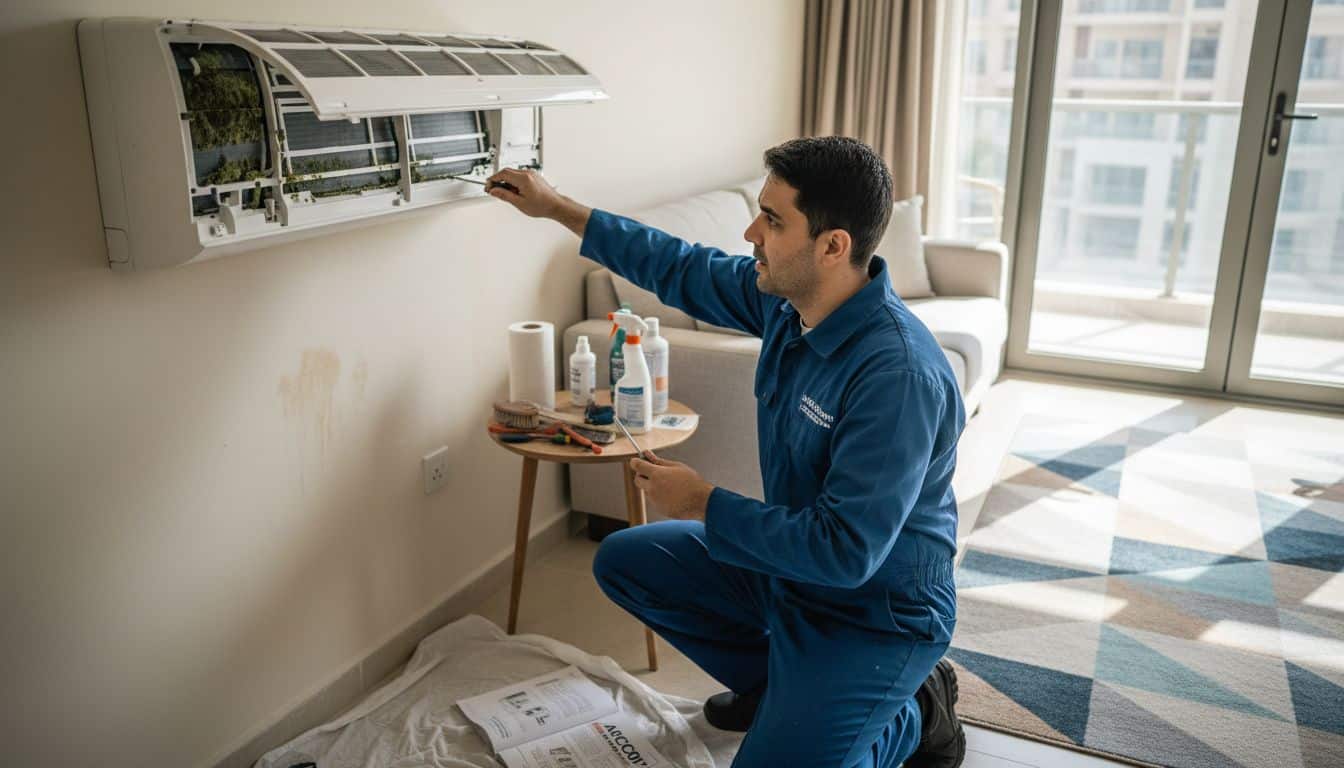
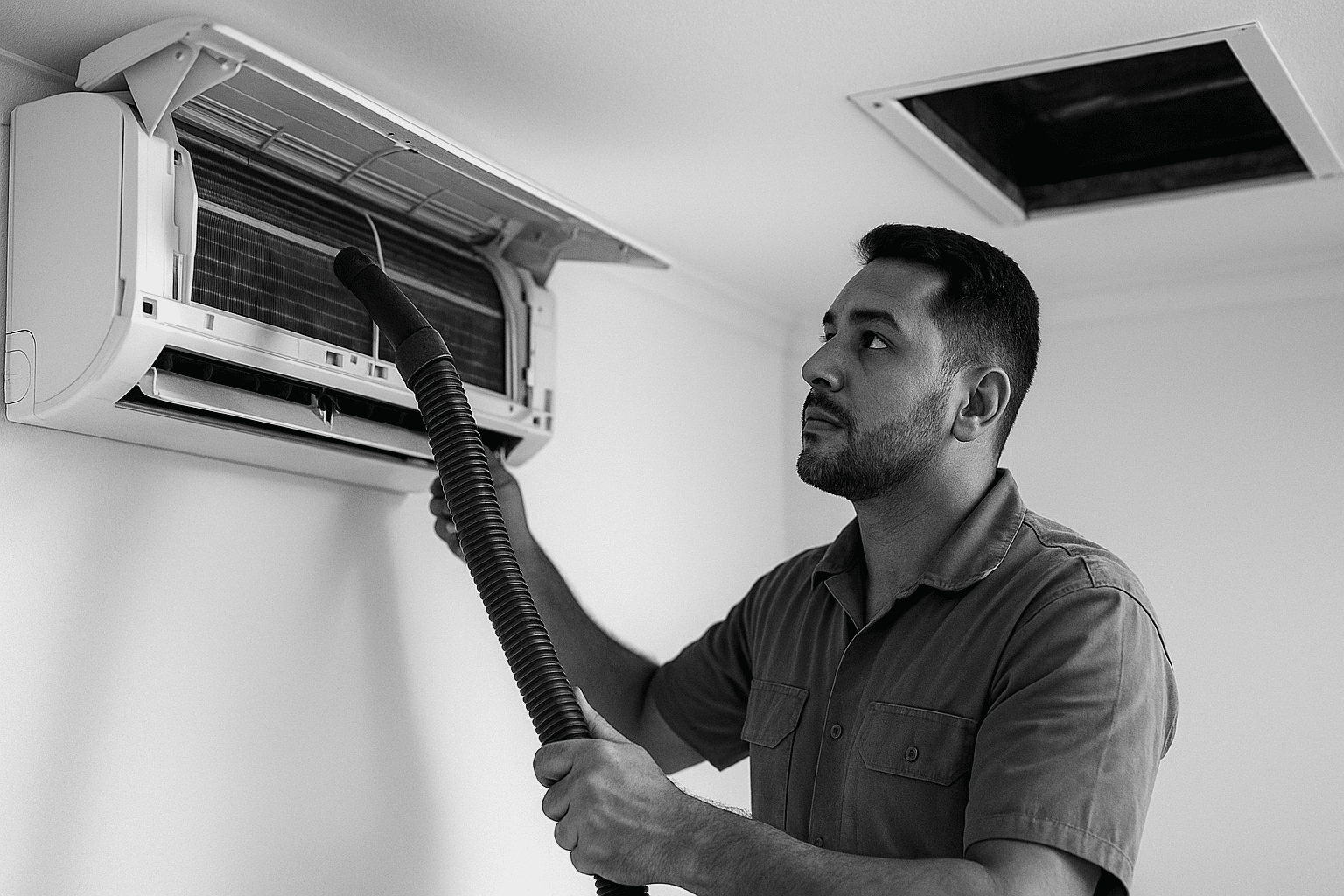
Commercial AC cleaning fundamentally involves comprehensive maintenance services that extend beyond basic surface cleaning. These services typically include detailed inspection of entire HVAC infrastructure, thorough cleaning of air ducts, coils, filters, and drainage systems, and specialized disinfection protocols designed to eliminate microbial contaminants. Professional technicians use advanced equipment and techniques to remove accumulated dust, debris, mold, and potential bacterial growth that can compromise system efficiency and indoor air quality.
The scope of commercial AC cleaning encompasses multiple critical components. These include mechanical cleaning of system parts, chemical treatment to prevent microbial growth, performance diagnostics, and comprehensive reporting. Specialized teams focus on addressing specific challenges like high-traffic areas, climate-specific environmental factors, and industry-specific hygiene requirements. By implementing rigorous cleaning protocols, commercial facilities can significantly reduce energy consumption, extend equipment lifespan, and create healthier indoor environments for occupants.
Here’s a summary of key benefits from regular commercial AC cleaning:
| Benefit | Description | Business Impact |
|---|---|---|
| Improved Air Quality | Removes dust, allergens, and microbes | Reduces sick days and complaints |
| Energy Efficiency | Minimizes system resistance and blockages | Lowers utility bills and waste |
| Extended System Lifespan | Reduces component wear and tear | Postpones costly replacements |
| Lower Maintenance Costs | Prevents urgent repairs and breakdowns | Enables better budget management |
Pro Tip: Schedule comprehensive AC cleaning during off-peak hours to minimize disruption and ensure thorough system assessment without impacting daily business operations.
Health Impacts: Allergens, Mold, and Air Quality
Commercial buildings face significant health challenges related to indoor air quality, with HVAC systems serving as critical vectors for potential contamination. Poor air conditioning maintenance can transform these systems into breeding grounds for harmful microorganisms, allergens, and respiratory irritants that pose substantial risks to occupant health. Regular cleaning of HVAC components is essential to prevent the accumulation of dangerous pollutants that can trigger serious respiratory issues and long-term health complications.
Mold growth represents one of the most serious health risks in poorly maintained commercial HVAC systems. These microscopic organisms thrive in dark, humid environments like air ducts, condensation traps, and cooling coils, rapidly reproducing and releasing spores that can cause significant respiratory problems. Individuals with pre-existing conditions like asthma, allergies, or compromised immune systems are particularly vulnerable to mold-related health complications. The potential health impacts range from mild allergic reactions and respiratory irritation to more severe conditions like chronic sinusitis, bronchitis, and potentially life-threatening pulmonary infections.
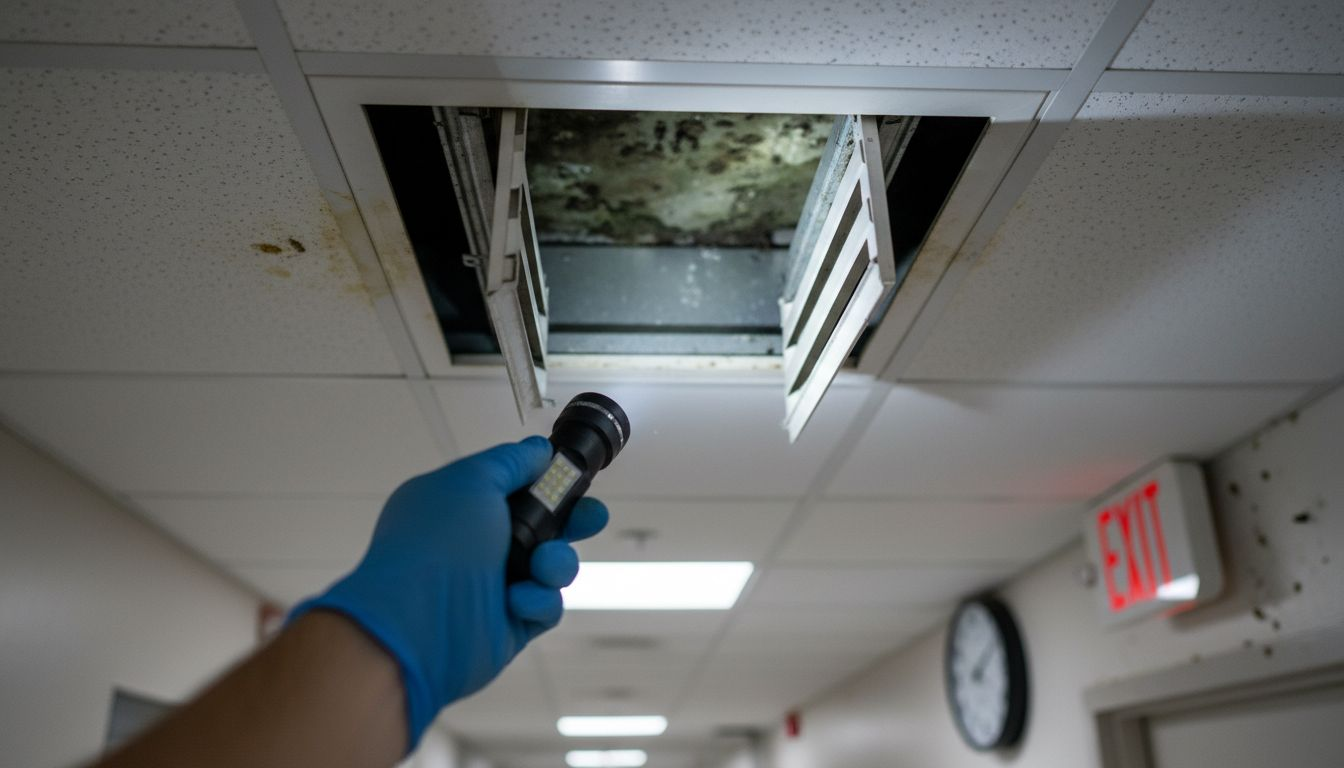
Allergens and particulate matter present additional critical concerns in commercial indoor environments. Dust mites, pollen, pet dander, and other microscopic particles can accumulate in HVAC systems, continuously circulating through building ventilation and compromising air quality. These contaminants can trigger allergic reactions, asthma attacks, and other respiratory conditions, leading to decreased workplace productivity, increased employee sick days, and potential long-term health risks. Advanced air conditioning cleaning techniques not only remove these contaminants but also implement preventative measures that inhibit future microbial growth and particle accumulation.
Pro Tip: Conduct quarterly comprehensive air quality assessments to proactively identify and mitigate potential HVAC-related health risks before they escalate into serious environmental and medical concerns.
Energy Savings and System Efficiency Explained
Commercial air conditioning systems represent significant energy investments, with their operational efficiency directly impacting a company’s bottom line and environmental footprint. Businesses that regularly clean their AC systems have reported substantial energy consumption reductions, demonstrating the critical link between routine maintenance and operational performance. A clean, well-maintained HVAC system operates with minimal resistance, allowing components to function at peak efficiency and consume less electrical energy.
The mechanical degradation of air conditioning systems occurs gradually through dust accumulation, microbial growth, and component wear. Dirty air filters, clogged condenser coils, and obstructed air passages force HVAC systems to work harder, consuming more electricity to maintain desired temperature levels. This increased energy demand not only drives up operational costs but also accelerates system component deterioration, potentially leading to premature system failure and expensive replacement requirements. Professional cleaning removes these performance barriers, restoring system aerodynamics and reducing unnecessary energy expenditure.
Complex commercial HVAC systems in large buildings like shopping centers, office complexes, and medical facilities require sophisticated maintenance strategies. Advanced cleaning protocols involve comprehensive diagnostics, precision cleaning of intricate components, and targeted interventions that optimize system performance. By addressing potential efficiency bottlenecks proactively, commercial facilities can achieve significant energy savings, reduce carbon footprints, and create more sustainable operational environments. Modern HVAC cleaning techniques utilize specialized equipment and scientific methodologies to diagnose and resolve performance issues that traditional maintenance approaches might overlook.
Pro Tip: Implement a predictive maintenance schedule that includes quarterly professional HVAC system assessments to identify and address potential efficiency challenges before they escalate into costly operational problems.
Extending System Lifespan and Reducing Costs
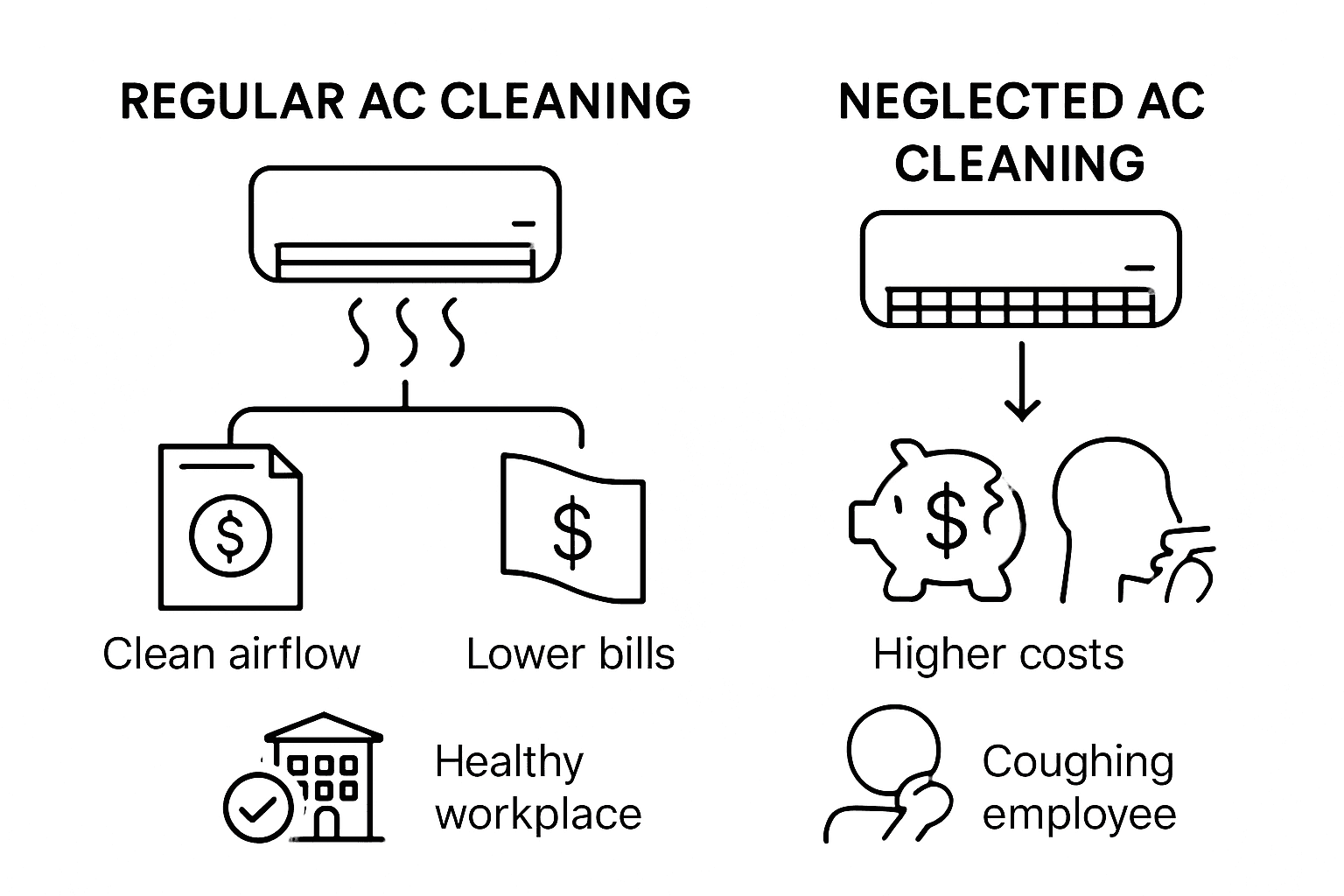
Commercial air conditioning systems represent substantial capital investments that require strategic maintenance to maximize their operational longevity and financial efficiency. A clean AC system functions as an efficient machine, dramatically reducing potential breakdown risks and associated repair expenses, ultimately extending the system’s overall lifespan and minimizing long-term maintenance costs. Proactive cleaning and maintenance serve as critical preventative strategies that protect both the mechanical infrastructure and the financial interests of commercial building operators.
The mechanical complexity of commercial HVAC systems means that even minor performance degradations can trigger cascading financial consequences. Accumulated dust, microbial growth, and particulate matter create additional mechanical stress on system components, causing accelerated wear on critical parts like compressors, fan motors, and heat exchangers. These incremental damages compound over time, potentially shortening system life by years and necessitating expensive component replacements or complete system overhauls. Professional cleaning interventions interrupt this destructive cycle by removing performance-limiting contaminants and restoring optimal system functionality.
Beyond immediate mechanical benefits, comprehensive AC cleaning strategies deliver substantial economic advantages for commercial facilities. By maintaining peak system performance, businesses can defer capital equipment replacements, reduce energy consumption, minimize unexpected repair downtime, and create more predictable maintenance budgets. Advanced cleaning techniques that incorporate diagnostic assessments can identify potential mechanical vulnerabilities before they escalate into catastrophic failures, transforming reactive maintenance approaches into proactive, cost-effective management strategies that protect significant infrastructure investments.
Pro Tip: Develop a standardized maintenance log that tracks cleaning intervals, performance metrics, and system diagnostics to create a comprehensive historical record supporting predictive maintenance strategies.
Common Misconceptions About AC Cleaning
Commercial building managers often harbor misconceptions about air conditioning maintenance that can lead to significant operational inefficiencies and unexpected expenses. Many believe that HVAC components do not require regular cleaning, a dangerous assumption that can compromise system performance and indoor air quality. These widespread myths can result in decreased system efficiency, increased energy consumption, and potential health risks for building occupants.
One prevalent misconception is that visual cleanliness indicates a properly functioning HVAC system. In reality, the most critical contamination occurs within internal components that are invisible to the naked eye. Microscopic dust, microbial growth, and particulate matter accumulate in air ducts, coils, and filters, creating breeding grounds for bacteria, mold, and allergens. Professional cleaning goes far beyond surface-level maintenance, involving comprehensive diagnostic assessments and specialized techniques that address hidden system vulnerabilities.
Another common fallacy is the belief that AC cleaning is an unnecessary expense rather than a strategic investment. Commercial building owners who view maintenance as a cost rather than a preventative measure often face significantly higher expenses in the long term. Neglected HVAC systems experience accelerated component wear, reduced energy efficiency, increased repair frequency, and potentially catastrophic system failures. Advanced cleaning protocols not only preserve system integrity but also optimize operational performance, reduce energy consumption, and create healthier indoor environments that protect both infrastructure and occupant well-being.
This table compares common misconceptions about AC cleaning with professional realities:
| Misconception | Reality |
|---|---|
| Visual cleanliness means internal cleanliness | Hidden contaminants are common in unseen components |
| Regular cleaning is an unnecessary expense | Preventative cleaning avoids costly future failures |
| Only filters need maintenance | Coils, ducts, and drains also require regular service |
Pro Tip: Develop a comprehensive maintenance documentation system that tracks system cleaning history, performance metrics, and potential issues to transform reactive maintenance into a proactive, cost-effective management strategy.
What Quality AC Cleaning Services Involve
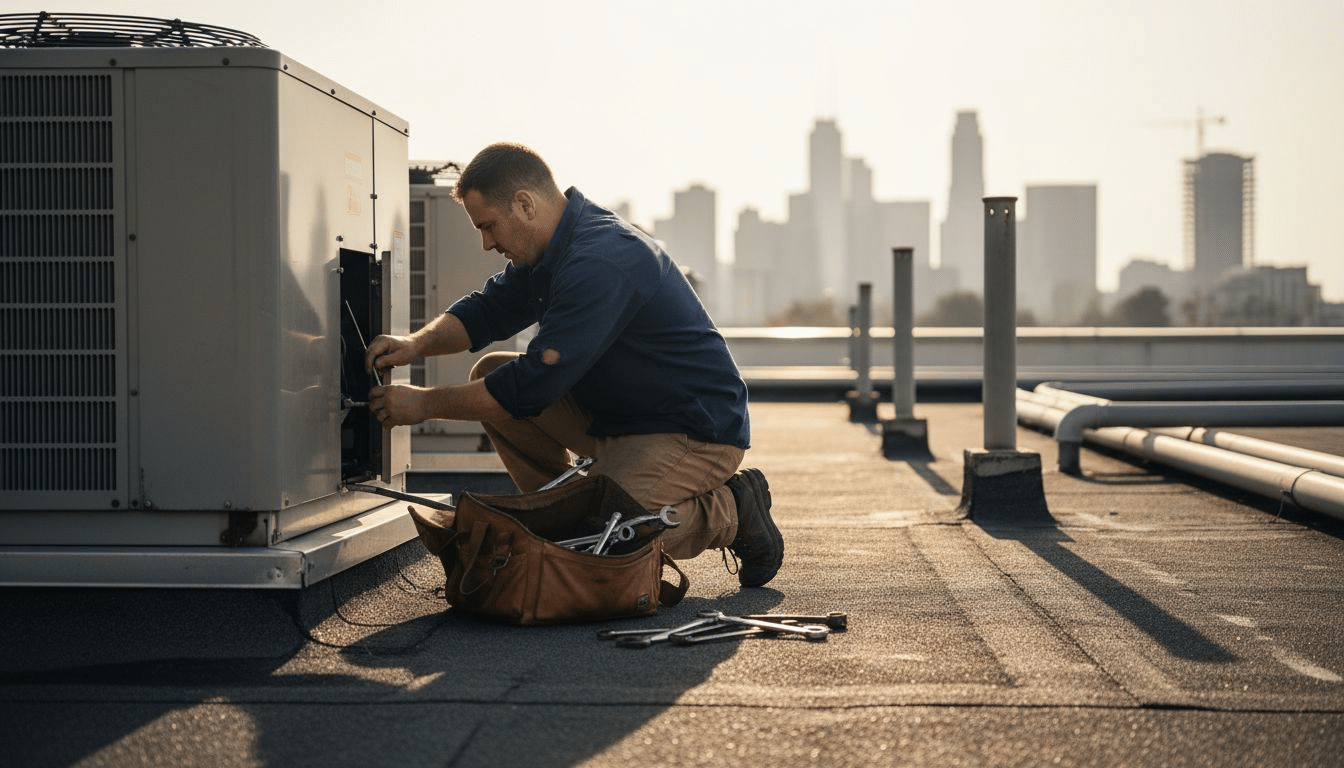
Quality AC cleaning services for commercial buildings represent a comprehensive, scientifically-driven approach to maintaining complex HVAC systems beyond simple surface maintenance. Comprehensive services include scheduled inspections, precision component cleaning, and systematic performance diagnostics that address the intricate mechanical and environmental challenges unique to large-scale commercial installations. Professional technicians utilize advanced diagnostic tools, specialized cleaning technologies, and evidence-based methodologies to ensure optimal system functionality and longevity.
The core components of professional AC cleaning services involve multiple sophisticated interventions. These include detailed internal system assessments, thorough cleaning of critical components like condenser coils, evaporator units, and air distribution networks, and precision calibration of system performance metrics. Specialized technicians employ hospital-grade disinfection protocols, advanced filtration techniques, and microbiological testing to eliminate potential contamination sources, removing microscopic particulates, microbial growth, and potential allergen reservoirs that traditional maintenance approaches might overlook.
Advanced AC cleaning services transcend basic maintenance by integrating comprehensive diagnostic and preventative strategies. Cutting-edge approaches involve thermal imaging to detect potential performance anomalies, airflow analysis to optimize ventilation efficiency, and detailed documentation of system health indicators. These technical interventions provide commercial building managers with granular insights into HVAC system performance, enabling proactive maintenance strategies that minimize unexpected downtime, reduce long-term operational costs, and create healthier indoor environmental conditions.
Pro Tip: Request a detailed post-cleaning diagnostic report that includes performance benchmarks, identified potential issues, and recommended future maintenance intervals to transform reactive maintenance into a strategic, data-driven management approach.
Unlock the Full Benefits of Expert AC Cleaning for Your Commercial Building
Maintaining a clean and efficient AC system is critical for commercial buildings to ensure healthier indoor air, reduced energy costs, and longer equipment lifespan as highlighted in the article. You face the challenge of microbial contamination, allergens, and inefficient airflow that can degrade occupant comfort and raise operational expenses. Saniservice offers scientifically precise AC cleaning solutions that address these exact pain points by dismantling, deep-cleaning, and disinfecting every system component using hospital-grade, chemical-free biosanitisers. Our NADCA-certified technicians bring unmatched expertise supported by in-house microbiology and advanced diagnostics ensuring your system runs safely and efficiently.
Elevate your building’s indoor environment today with AC Cleaning & Maintenance – Saniservice AC Cleaning.
Don’t wait for costly breakdowns or compromised air quality to impact your business. Choose Saniservice now to experience a scientifically backed, Swiss-quality service trusted by healthcare and government sectors across the UAE. Visit Saniservice to learn more and explore proven success stories in our Case Studies – Saniservice AC Cleaning. Take proactive control of your commercial AC system and secure a healthier, more efficient building today.
Frequently Asked Questions
What are the benefits of regularly cleaning commercial AC systems?
Regular cleaning improves air quality, enhances energy efficiency, extends system lifespan, and lowers maintenance costs, ultimately creating a healthier environment for occupants.
How does AC cleaning impact energy efficiency in commercial buildings?
Clean AC systems operate more efficiently by minimizing resistance and blockages, leading to reduced energy consumption and lower utility bills for businesses.
What are the health risks of neglecting AC cleaning in commercial facilities?
Poorly maintained AC systems can harbor mold, allergens, and other contaminants, posing serious respiratory risks to occupants and potentially leading to long-term health issues.
What does a comprehensive AC cleaning service include?
Quality AC cleaning services encompass thorough inspections, cleaning of all critical components, disinfection protocols, performance diagnostics, and detailed reporting on system health.