Best practices for AC hygiene: guide for Dubai homes
Your home’s air conditioner does more than cool your space. It circulates thousands of cubic meters of air daily, and when neglected, it becomes a breeding ground for mold, bacteria, and allergens that compromise your family’s health. In Dubai’s intense climate, where AC units run almost constantly, maintaining proper hygiene isn’t optional. This guide walks you through proven practices to keep your air clean, your energy bills low, and your system running efficiently for years.
Table of Contents
Contents
- 1 Table of Contents
- 2 Key Takeaways
- 3 Understanding the impact of AC hygiene on indoor air quality and energy efficiency
- 4 Preparing for effective AC cleaning: tools, timing, and professional support
- 5 Step-by-step guide to cleaning and maintaining your AC for optimal hygiene
- 6 Avoiding common mistakes and troubleshooting your AC hygiene routine
- 7 Maintain peak AC performance with expert cleaning and care
- 8 Frequently asked questions
- 9 Recommended
- Key takeaways
- Understanding the impact of AC hygiene on indoor air quality and energy efficiency
- Preparing for effective AC cleaning: tools, timing, and professional support
- Step-by-step guide to cleaning and maintaining your AC for optimal hygiene
- Avoiding common mistakes and troubleshooting your AC hygiene routine
- Maintain peak AC performance with expert cleaning and care
- Frequently asked questions
Key Takeaways
| Point | Details |
|---|---|
| Regular AC cleaning | Regular cleaning prevents dust and allergens from accumulating inside the unit, improving indoor air quality and reducing energy waste. |
| Professional disinfection | Professional services access hidden areas with hospital grade disinfectants to remove mold, bacteria, and biofilm that surface cleaning cannot reach. |
| Scheduled maintenance timing | Timing maintenance around Dubai climate with pre summer cleaning, mid season check during July or August, and fall servicing maximizes benefits and prevents buildup. |
| Hybrid maintenance routine | Hybrid maintenance combines monthly quick filter cleanings with periodic professional servicing to sustain performance and air quality. |
| Avoid cleaning mistakes | Use proper cleaning products and avoid cheap cleaners that can damage delicate components or leave residues that attract more dirt. |
Understanding the impact of AC hygiene on indoor air quality and energy efficiency
Your air conditioner filters and recirculates indoor air continuously. When dust, pollen, and moisture accumulate inside the unit, they create ideal conditions for mold and bacterial colonies. Neglected AC units harbor dust, allergens, and microbes that worsen indoor air quality, turning your cooling system into a distribution network for airborne contaminants. Every time the unit cycles on, it disperses these particles throughout your living spaces.
The health consequences are immediate and measurable. Contaminated AC systems trigger respiratory issues, worsen asthma symptoms, and cause persistent allergic reactions. Children and elderly family members face the highest risk. Beyond health impacts, dirty AC components force your system to work harder. Clogged filters restrict airflow, dusty coils reduce heat transfer efficiency, and blocked drainage channels cause water backup. The result is a 15 to 25 percent increase in energy consumption, directly inflating your monthly electricity costs.
Common health issues caused by poor AC hygiene include:
- Persistent respiratory infections and coughing
- Aggravated asthma and allergic rhinitis
- Skin irritation and eye inflammation
- Chronic fatigue from poor sleep quality
- Increased susceptibility to viral infections
“The quality of your indoor air depends entirely on the cleanliness of your AC system. In Dubai’s climate, where homes are sealed tight for cooling efficiency, contaminated air has nowhere to go.”
Addressing indoor air quality concerns starts with recognizing that your AC isn’t just a comfort appliance. It’s the primary determinant of what you and your family breathe every day. Proper hygiene transforms it from a potential health hazard into a protective barrier against outdoor pollutants.
Preparing for effective AC cleaning: tools, timing, and professional support
Successful AC maintenance begins with having the right supplies and understanding when to act. You don’t need expensive equipment for basic upkeep, but quality matters. Cheap cleaning products can damage delicate components or leave residues that attract more dirt.
| Item | Purpose | Notes |
|---|---|---|
| Microfiber cloths | Wiping surfaces without scratching | Washable and reusable |
| Soft bristle brush | Cleaning coils and fins | Avoid metal brushes |
| Vacuum with brush attachment | Removing loose dust | HEPA filter preferred |
| Mild detergent solution | General cleaning | pH neutral, no bleach |
| Spray bottle | Applying cleaning solutions | Fine mist setting |
| Flashlight | Inspecting dark areas | LED type for cool operation |
Timing your cleaning around Dubai’s climate patterns maximizes effectiveness. The ideal schedule includes a thorough cleaning before summer’s peak heat arrives, another mid-season check during July or August, and a final servicing as temperatures moderate in October. Scheduling AC cleaning at appropriate intervals ensures sustained air quality and performance, preventing the exponential buildup that occurs during periods of heavy use.
While homeowners can handle surface cleaning and filter maintenance, professional services deliver results impossible to achieve with household methods. Technicians dismantle units completely, accessing hidden chambers where mold thrives. They use hospital-grade disinfectants that eliminate microbial contamination without toxic residues. Professional equipment reaches deep into ductwork and drainage systems, removing biofilm and debris that cause persistent odors.
Consider scheduling AC cleaning with experts for:
- Annual deep disinfection of all components
- Mold remediation in drainage pans and ducts
- Coil chemical cleaning for optimal heat transfer
- Ductwork inspection and sanitization
- System performance testing and calibration
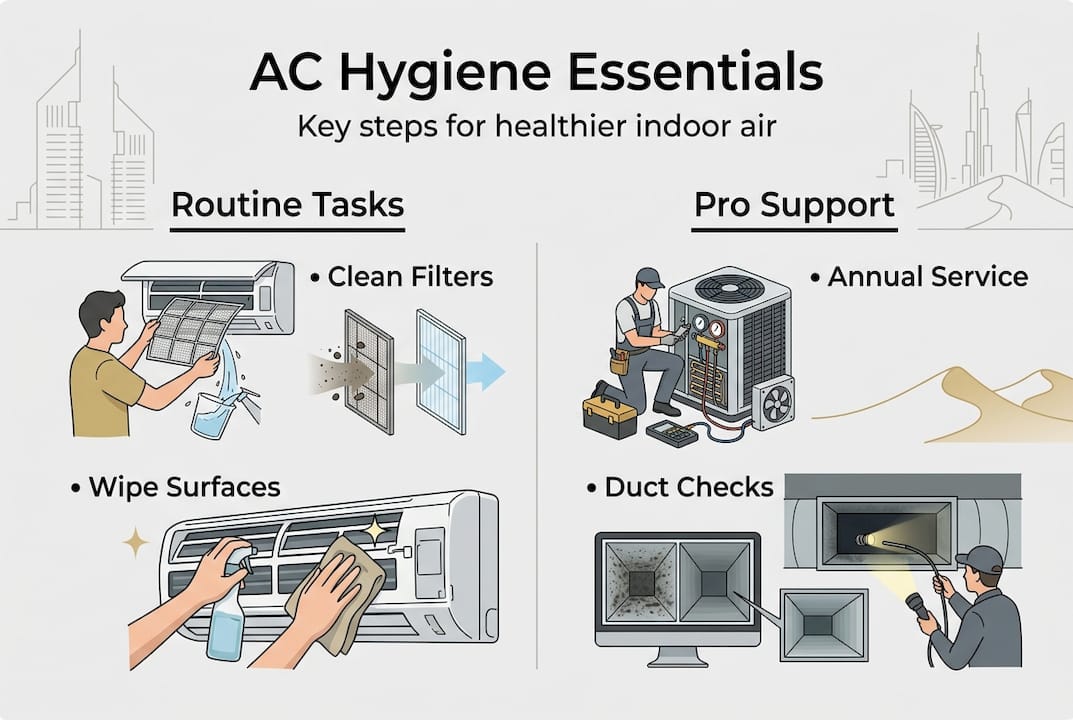
Pro Tip: Create a hybrid maintenance routine. Handle quick filter cleanings and surface wipes monthly, but schedule professional AC cleaning services annually. This combination keeps your system consistently clean without overwhelming your schedule or budget.
Step-by-step guide to cleaning and maintaining your AC for optimal hygiene
Proper AC cleaning follows a systematic approach that protects both you and your equipment. Rushing through steps or skipping safety measures risks injury and system damage. Follow this sequence for thorough, safe maintenance.
-
Power down completely. Turn off the thermostat, then locate and switch off the circuit breaker feeding your AC unit. Wait five minutes for capacitors to discharge. Verify power is off by attempting to turn on the system. Never skip this step, even for quick filter changes.
-
Access and service air filters. Remove the front panel or filter access door. Pull out filters carefully, noting their orientation for correct reinstallation. Washable filters need rinsing under cool water until runoff is clear, then complete air drying for 24 hours. Disposable filters require replacement every three months or when visibly clogged. Following a thorough cleaning checklist improves AC performance and indoor air quality by ensuring no component gets overlooked.
-
Clean evaporator coils and fins. Use a soft brush to gently remove surface dust from coils, working in the direction of the fins to avoid bending them. Spray a no-rinse coil cleaner according to manufacturer instructions, allowing it to foam and drip into the drain pan. Straighten any bent fins with a fin comb, as even minor damage reduces airflow significantly.
-
Disinfect drainage components. Locate the condensate drain pan beneath the evaporator coils. Remove standing water with a wet vacuum, then scrub the pan with detergent solution. Pour a cup of distilled vinegar down the drain line to dissolve biofilm and prevent clogs. Check that water flows freely by pouring a small amount into the pan and observing drainage.
-
Service the blower assembly. Remove the blower compartment cover. Vacuum dust from the blower wheel and motor housing using the brush attachment. Wipe blades individually with a damp cloth. Check the motor for oil ports and add a few drops of electric motor oil if present. Inspect the belt for cracks or looseness if your system uses belt drive.
-
Clean vents and registers. Remove all supply and return vent covers throughout your home. Wash them in warm soapy water, scrubbing away dust buildup. Vacuum inside the duct opening as far as your attachment reaches. Wipe the surrounding wall area before reinstalling covers.
Pro Tip: Keep a maintenance log in your phone or a notebook. Record every cleaning date, what you did, and any observations about system performance. This history helps identify patterns and makes conversations with technicians more productive. Reference your detailed AC cleaning checklist to ensure consistency, and review common AC maintenance tips to refine your routine over time.

Avoiding common mistakes and troubleshooting your AC hygiene routine
Even well-intentioned maintenance can backfire when homeowners make preventable errors. Understanding what not to do protects your investment and ensures your cleaning efforts actually improve air quality rather than create new problems.
Frequent mistakes that compromise AC hygiene:
- Using bleach or harsh chemicals that corrode metal components and leave toxic residues
- Pressure washing coils, which bends fins and forces water into electrical components
- Neglecting to replace filters on schedule, allowing dust to pack into coils
- Ignoring visible mold spots instead of treating them immediately
- Running the system with wet filters, which promotes microbial growth
- Forgetting to clean the outdoor condenser unit, reducing overall efficiency
- Skipping annual professional inspections that catch hidden issues
Many homeowners unknowingly damage AC units by improper cleaning techniques, particularly when using products designed for other applications. Kitchen degreasers, bathroom cleaners, and general-purpose sprays contain ingredients that attack aluminum, copper, and plastic components in AC systems.
| Approach | Advantages | Limitations |
|---|---|---|
| At-home cleaning | Cost-effective, convenient scheduling, maintains surface cleanliness | Cannot access internal components, lacks specialized equipment, misses hidden contamination |
| Professional service | Complete disassembly, hospital-grade disinfection, identifies mechanical issues, extends system lifespan | Higher upfront cost, requires scheduling, temporary loss of cooling |
When troubleshooting persistent issues after cleaning, start with the simplest explanations. Weak airflow usually indicates filters weren’t fully dried before reinstallation or the blower wheel needs deeper cleaning. Musty odors that return within days suggest mold in ductwork or the drain pan, requiring professional remediation. Unusual noises point to loose components that need tightening or worn parts needing replacement.
Safety must guide every cleaning session. Wear gloves to protect against sharp metal edges and chemical irritation. Use a stable ladder when accessing wall-mounted units. Keep cleaning solutions away from electrical connections. If you encounter extensive mold growth, heavy grease buildup, or refrigerant leaks, stop immediately and call professionals. Some situations require specialized training and equipment to resolve safely.
Understanding common AC cleaning mistakes helps you avoid repeating them, while following best AC hygiene practices ensures your efforts deliver measurable improvements in air quality and system efficiency.
Maintain peak AC performance with expert cleaning and care
You’ve learned the fundamentals of AC hygiene, but combining your regular upkeep with professional expertise delivers the best long-term results. Expert technicians bring specialized tools and training that transform your system’s performance beyond what household cleaning achieves.
Professional services dismantle your AC completely, accessing areas impossible to reach with standard tools. Technicians use endoscopic cameras to inspect ductwork, thermal imaging to identify airflow restrictions, and laboratory-tested biosanitizers that eliminate microbes without harsh chemicals. They measure system performance before and after service, providing concrete data on efficiency improvements. For Dubai property managers overseeing multiple units, scheduled professional maintenance prevents the cascading failures that lead to emergency repairs during peak summer demand.
Consider your AC cleaning checklist as your monthly guide, but recognize when deeper intervention makes sense. Annual professional AC cleaning services catch developing problems before they become expensive emergencies. The investment pays for itself through lower energy bills, fewer repairs, and extended equipment lifespan. When you’re ready to elevate your indoor air quality, scheduling AC cleaning with certified technicians ensures your family breathes the cleanest air possible.
Frequently asked questions
How often should I clean my home air conditioner?
Clean or replace filters every two to four weeks during heavy use periods, particularly summer months when your AC runs continuously. Schedule professional deep cleaning annually, ideally before Dubai’s peak heat season begins in May. Homes with pets, smokers, or family members with allergies benefit from quarterly professional service rather than annual. Usage intensity matters more than calendar dates. If you notice reduced airflow or higher electricity bills, clean immediately regardless of your last service date. Refer to the AC maintenance guide for personalized scheduling based on your specific circumstances.
Can I do air conditioner cleaning myself safely at home?
You can safely handle basic maintenance like filter cleaning, surface wiping, and drain pan inspection. These tasks require only common household supplies and basic safety precautions. However, full system cleaning involves dismantling components, working with electrical connections, and handling refrigerant lines that require professional training. Improper techniques damage expensive parts, void warranties, and create safety hazards. Most importantly, DIY cleaning cannot eliminate deep microbial contamination in ductwork and internal chambers. Balance your efforts by maintaining surfaces regularly while trusting comprehensive disinfection to experts. Learn more about DIY versus professional AC cleaning to make informed decisions about when to call for help.
What are signs my air conditioner needs immediate cleaning?
Weak airflow from vents indicates clogged filters or dirty blower wheels restricting air movement. Musty or moldy odors signal active microbial growth in your system that’s spreading spores throughout your home. Visible mold on vents, unusual condensation, or water pooling around the unit demands immediate attention to prevent structural damage. A sudden spike in electricity bills without increased usage suggests your system is working harder due to restricted airflow or dirty coils. Unusual sounds like rattling or grinding point to debris in the blower or loose components. Any of these symptoms requires prompt action. Delaying cleaning allows problems to compound, turning simple maintenance into costly repairs. Review AC cleaning warning signs to catch issues before they escalate into emergencies.