Ac Disinfection For Guide
If you’ve noticed a musty smell from your AC vents, experienced worsening allergy symptoms, or seen dark patches near your grilles, mold contamination inside your air-conditioning system is a likely cause. Understanding AC disinfection for mold: what works and what doesn’t is not straightforward — and in Dubai’s climate, getting it wrong means the problem returns within weeks. I’ve spent over 13 years cleaning and disinfecting AC systems across Dubai, Abu Dhabi, Sharjah, and the wider UAE, and the same misunderstandings appear repeatedly in homes and commercial spaces alike.
Mold in AC systems is not simply a cosmetic issue. Spores recirculated through ductwork enter the breathing zone of every occupant — including children, elderly residents, and anyone with respiratory sensitivities. In a city where residents spend up to 90% of their time indoors with continuously running air conditioning, the hygiene of that system matters enormously. Yet many treatments marketed as disinfection do little more than mask odours or clean visible surfaces, leaving the biological problem intact. This relates directly to Ac disinfection For Mold: What Works And What Doesn’t.
This article addresses the question of AC Disinfection for mold: what works and what doesn’t with the clarity that homeowners and facility managers deserve. We’ll cover what mold actually is inside an AC system, which treatments are genuinely effective, which popular approaches fail, and what a properly structured disinfection process looks like in practice.
Ac Disinfection For Mold: What Works And What Doesn’t – Why Mold Grows Inside AC Systems in the UAE
Mold requires three conditions to establish and grow: moisture, organic material, and limited airflow or light. AC systems in Dubai and across the UAE provide all three in abundance. The evaporator coil produces condensation continuously during cooling. Dust — laden with organic particles from desert sand, skin cells, and construction activity — accumulates on coil surfaces, inside ductwork, and in drain trays. Combined with the warm, enclosed environment inside ducting, this creates ideal fungal growing conditions.
In summer months, when outdoor humidity climbs and AC systems work at maximum capacity, condensation increases significantly. Drain lines and trays that aren’t maintained regularly become saturated with standing water, and biofilm — a dense layer of bacteria and fungi — establishes itself in the condensate pathway. This is the origin point for many of the musty odours that residents report. When considering Ac Disinfection For Mold: What Works And What Doesn’t, this becomes clear.
Understanding this root cause is essential before evaluating any approach to AC disinfection for mold. A treatment that doesn’t address moisture management and organic buildup will not produce lasting results, regardless of how strong the chemical agent is.
Ac Disinfection For Mold: What Works And What Doesn’t – What AC Disinfection for Mold Actually Means
There is an important distinction between AC cleaning and AC disinfection that is frequently misunderstood. Cleaning removes visible debris — dust, dirt, and loose contamination. Disinfection goes further by applying a treatment that kills microbial organisms including mould spores, bacteria, and fungi at a biological level. When it comes to AC disinfection for mold: what works and what doesn’t, this distinction is the foundation of everything.
Cleaning Alone Is Not Disinfection
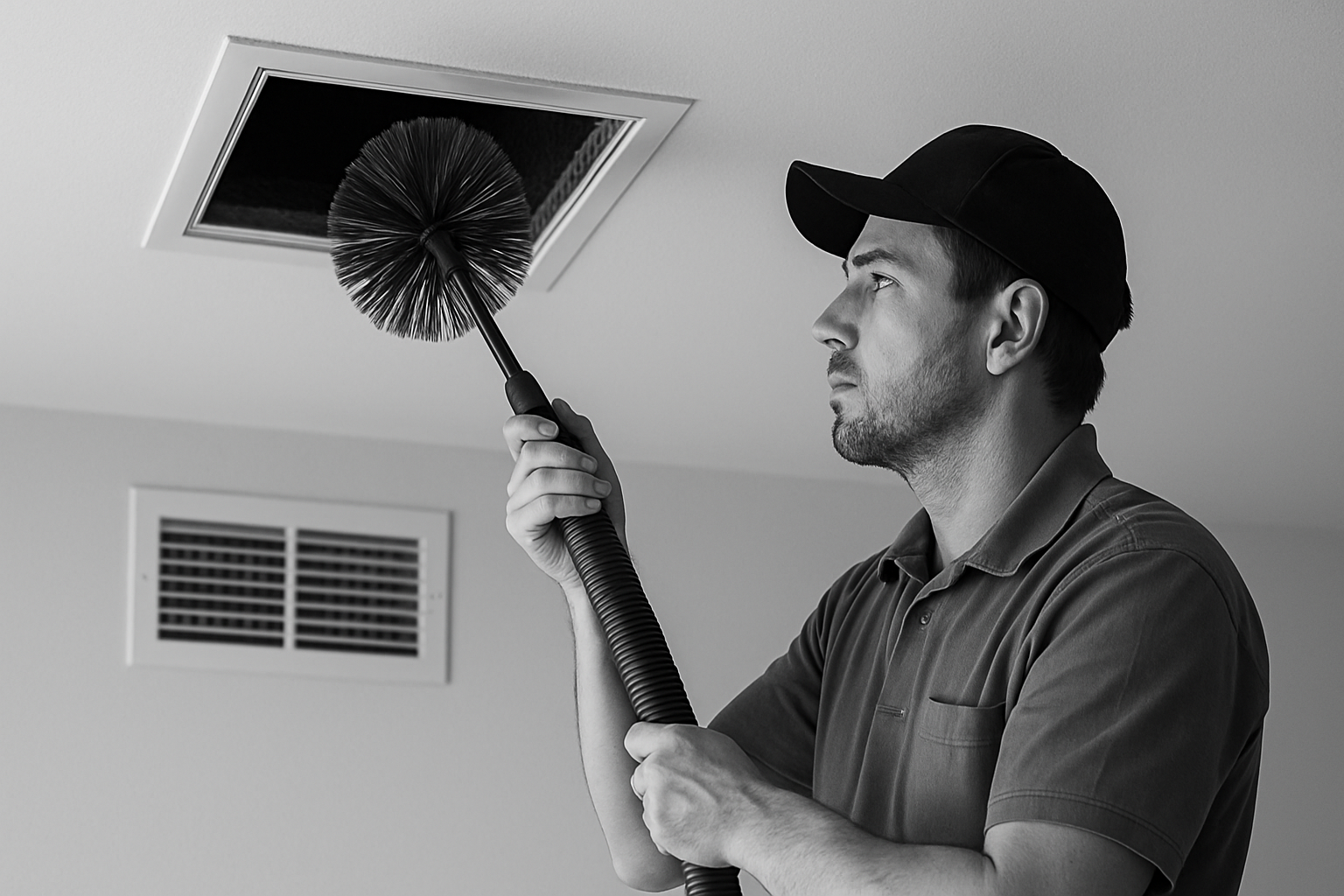
A technician who vacuums your ductwork and wipes down your grilles has cleaned your AC system. They have not disinfected it. Mold colonies embedded in coil fins, drain pan biofilm, and fungal spores settled on duct surfaces require a dedicated antimicrobial agent applied correctly and allowed to dwell for the appropriate contact time. Without that step, biological contamination remains active.
Disinfection Without Prior Cleaning Also Fails
Equally, applying a disinfectant chemical to a heavily soiled system without first removing physical contamination is also ineffective. Organic material — dust, biofilm, residue — neutralises disinfectant agents before they can reach the mold colonies beneath. Proper protocol always combines deep mechanical cleaning followed by targeted disinfection. The importance of Ac Disinfection For Mold: What Works And What Doesn’t is evident here.
Ac Disinfection For Mold: What Works And What Doesn’t – What Works in AC Disinfection for Mold
Based on 13 years of field experience across Dubai, Abu Dhabi, Sharjah, and Ras Al Khaimah, the following approaches consistently deliver measurable results when addressing mold in AC systems.
Quaternary Ammonium Compound (QAC) Treatments
QAC-based disinfectants are among the most reliable options for AC disinfection for mold. They disrupt fungal and bacterial cell membranes, providing effective kill rates against a broad spectrum of microorganisms. When applied correctly to pre-cleaned coil surfaces, ductwork interiors, and drain trays, QAC formulations deliver consistent results. The key is correct concentration, proper dwell time, and thorough coverage. Understanding Ac Disinfection For Mold: What Works And What Doesn’t helps with this aspect.
Hydrogen Peroxide-Based Antimicrobials
Accelerated hydrogen peroxide (AHP) formulations are particularly effective for occupied environments — clinics, nurseries, schools, and family homes — because they break down into water and oxygen after treatment, leaving no toxic residue. For AC disinfection for mold in spaces where children or sensitive occupants are present, AHP-based treatments represent an excellent balance of efficacy and safety.
Electrostatic Fogging After Cleaning
Electrostatic fogging — applying a charged antimicrobial mist that adheres uniformly to surfaces — is effective for reaching mold colonies inside ductwork and coil assemblies that manual application cannot easily access. This method works well as a secondary treatment following mechanical cleaning and coil disinfection. It is not a substitute for contact cleaning but adds meaningful coverage in complex duct systems. Ac Disinfection For Mold: What Works And What Doesn’t factors into this consideration.
Drain Pan and Condensate Line Treatment
Biofilm removal from the condensate drain tray and drainage line is a non-negotiable component of any effective mold disinfection service. Leaving the drain pan untreated after cleaning the rest of the system simply allows re-contamination to begin immediately. Enzymatic treatments and appropriate biocides applied to the condensate pathway interrupt the growth cycle at its most persistent location.
What Doesn’t Work in AC Disinfection for Mold
Understanding AC disinfection for mold: what works and what doesn’t means being equally clear about the approaches that fail — and unfortunately, several are common across Dubai’s residential service market.
Spray-and-Leave Chemical Applications Without Cleaning
One of the most frequently misrepresented services I encounter is the application of a spray disinfectant to an uncleaned system. A technician attends for 20–30 minutes, applies a misting agent through the vents, and leaves. This does not resolve mold contamination. As explained above, organic debris neutralises the chemical before it reaches established fungal colonies. The odour may temporarily reduce, but the biological problem persists.
Bleach Applied Directly to Ducts
Diluted bleach is sometimes used informally inside ductwork or on coil surfaces. While bleach (sodium hypochlorite) has antifungal properties in controlled applications, it degrades rapidly, leaves corrosive residue on metal components, and does not penetrate porous surfaces where mold roots (hyphae) are embedded. It is not appropriate for use inside occupied AC systems and is not an approved method for professional AC disinfection for mold. This relates directly to Ac Disinfection For Mold: What Works And What Doesn’t.
Air Fresheners and Deodorant Tablets
Deodorant blocks and fragrance tablets placed in drain trays or near coils address only the symptomatic odour, not the biological source. They dissolve into the condensate and may introduce unnecessary chemical compounds into the air stream. They are not disinfection and should not be presented as such.
Single-Component Treatment Without System Assessment
Disinfecting only the visible grilles and filters while leaving coils, ductwork, and drain systems untreated is one of the most common partial-service failures. Mold in one component will recontaminate cleaned areas within weeks in Dubai’s climate. Effective AC disinfection for mold must address the entire system, not isolated components. When considering Ac Disinfection For Mold: What Works And What Doesn’t, this becomes clear.
AC Disinfection for Mold in Dubai’s Specific Climate
Dubai’s combination of year-round AC usage, high summer humidity, desert dust infiltration, and sealed indoor environments creates contamination dynamics that are more aggressive than in temperate climates. Systems that might remain clean for 12 months in a European home may develop significant mold growth within 3–4 months in a Dubai villa or apartment with no maintenance.
The continuous operation of AC systems means coils never fully dry out between cooling cycles. Moisture is always present. Dust infiltration from construction activity, particularly in newer communities across Dubai South, Mohammed Bin Rashid City, and Yas Island in Abu Dhabi, adds organic material to damp surfaces with unusual regularity. This is why AC disinfection for mold: what works and what doesn’t must always be evaluated in the context of local climate and usage patterns, not general guidance designed for other regions.
In practice, Dubai and UAE residents should expect to require disinfection treatment at least once annually, with assessment twice yearly for homes with children, elderly residents, or known allergy and asthma sensitivities.
How to Assess Whether AC Disinfection for Mold Has Worked
Residents often ask how to tell whether a disinfection service has been effective. There are several practical indicators that a proper treatment has been carried out, rather than a superficial visit. The importance of Ac Disinfection For Mold: What Works And What Doesn’t is evident here.
- Odour resolution: Musty or sour smells from vents should be completely absent within 24–48 hours of treatment. If odour returns within days, the source was not properly treated.
- Visible inspection access: A reputable technician should be able to show you coil surfaces before and after cleaning. Pre-cleaning photographs should show biofilm or discolouration; post-treatment surfaces should be visibly clean.
- Drain flow confirmation: The condensate drain should be tested to confirm clear flow. Slow drainage indicates biofilm obstruction that has not been fully addressed.
- Occupant comfort: Residents with allergies or respiratory sensitivities typically notice improved comfort within the first few days following a properly conducted disinfection. This is not a clinical measure, but it is a meaningful signal.
For clinics, nurseries, schools, and commercial properties, indoor air quality testing using particle counters and microbial swab analysis provides objective data on whether AC disinfection for mold has achieved acceptable contamination levels.
Preventing Mold from Returning After Disinfection
Disinfection resolves existing contamination. Preventing recurrence requires a maintenance approach that addresses the root causes: persistent moisture, dust accumulation, and inadequate drainage. Understanding Ac Disinfection For Mold: What Works And What Doesn’t helps with this aspect.
The following measures significantly reduce mold recurrence rates between service visits:
- Clean or replace AC filters every 4–6 weeks during peak summer usage to reduce dust loading on coils.
- Ensure drain lines are kept clear and condensate trays are monitored for standing water.
- Maintain indoor humidity between 40–60% where possible using AC thermostat settings and dehumidification if available.
- Schedule professional coil cleaning and disinfection at least once annually, ideally before summer in April or May.
- Avoid blocking return air vents with furniture, curtains, or stored items, as restricted airflow increases condensation on coil surfaces.
In my experience, homes that follow a structured maintenance schedule rarely experience the severe mold contamination levels seen in systems that receive only reactive servicing. Prevention is always less costly — and less disruptive — than remediation. Ac Disinfection For Mold: What Works And What Doesn’t factors into this consideration.
Expert Takeaways for UAE Residents and Facility Managers
After more than a decade working across Dubai, Sharjah, Abu Dhabi, Ajman, Fujairah, and Ras Al Khaimah, the principles I return to on every job are consistent. Understanding AC disinfection for mold: what works and what doesn’t comes down to a few non-negotiable realities.
- Cleaning and disinfection are not the same service. Ensure your service provider delivers both, in the correct sequence.
- Whole-system treatment is required. Coils, ductwork, drain trays, and condensate lines must all be addressed in a single service visit.
- Chemical selection matters. QAC-based and AHP-based antimicrobials are appropriate for occupied environments. Bleach and fragrance products are not valid disinfection methods.
- Dubai’s climate demands more frequent attention than generic maintenance guides suggest. Twice-yearly assessment is a reasonable minimum for most residential properties.
- Results should be visible and measurable. Request before-and-after documentation and ask your technician to demonstrate drain flow clearance.
The question of AC disinfection for mold: what works and what doesn’t ultimately comes down to whether the service addresses the system as a health asset or simply a mechanical device. In Dubai, where AC systems run continuously and recirculate indoor air day and night, the distinction has real consequences for every occupant’s health and comfort. Done properly, disinfection restores a genuinely clean air environment. Done poorly, it provides only the appearance of one — and in a sealed indoor environment, that difference is invisible until symptoms remind you it was never resolved.
If you have concerns about mold contamination in your AC system, arrange a professional inspection that includes coil assessment, drain tray evaluation, and a clear explanation of recommended treatment. The right service provider will show you the evidence, explain the method, and follow up to confirm the result. Understanding Ac Disinfection For Mold: What Works And What Doesn’t is key to success in this area.