

Mold Inside Ac Systems Dubai: Causes And Removal Guide
Mold Inside AC systems Dubai: causes and removal is a topic that comes up repeatedly in the homes and offices I service across the UAE. In over 13 years of working with HVAC systems in Dubai, I have found mold growing inside evaporator coils, drain trays, flexible ducts, and diffuser housings — often in systems that were reportedly cleaned just months earlier. The conditions that drive this growth are not unusual or accidental. They are the direct result of how air conditioning operates in Dubai’s climate.
Dubai’s environment creates near-perfect conditions for mold development inside AC systems. Systems run continuously, surfaces stay damp from condensation, and air is recirculated in sealed indoor environments throughout the year. When mold establishes itself inside an AC unit, it does not remain contained. Spores are distributed into every room the system serves, affecting the air that occupants breathe around the clock. This relates directly to Mold Inside Ac Systems Dubai: Causes And Removal.
This guide covers the core causes of mold inside AC systems in Dubai, how to recognise it early, what professional removal involves, and how to prevent recurrence. Whether you manage a villa in Emirates Hills, an apartment in JLT, or a commercial office in Business Bay, the principles are consistent — and the consequences of ignoring the problem are real. When considering Mold Inside Ac Systems Dubai: Causes And Removal, this becomes clear.
Mold Inside Ac Systems Dubai: Causes And Removal – Why Mold Grows Inside AC Systems in Dubai’s Climate
Contents
- 1 Mold Inside Ac Systems Dubai: Causes And Removal – Why Mold Grows Inside AC Systems in Dubai’s Climate
- 2 Mold Inside Ac Systems Dubai: Causes And Removal – Primary Causes of Mold Inside AC Systems Dubai
- 3 Mold Inside Ac Systems Dubai: Causes And Removal – How to Identify Mold Inside Your AC System
- 4 Health Effects of Mold Inside AC Systems
- 5 Professional Removal of Mold Inside AC Systems Dubai
- 6 The Mold Removal Process Step by Step
- 7 Preventing Mold Recurrence in Dubai AC Systems
- 8 Expert Tips on Mold Inside AC Systems Dubai Causes and Removal
- 9 Conclusion on Mold Inside AC Systems Dubai
Mold requires three things to grow: moisture, organic material, and moderate temperatures. Dubai’s AC systems provide all three in abundance. Evaporator coils continuously produce condensation as warm, humid air passes over their cold surfaces. This moisture collects in drain trays and travels through condensate lines — but not before coating nearby surfaces in a thin film of water. The importance of Mold Inside Ac Systems Dubai: Causes And Removal is evident here.
During Dubai’s summer months, outdoor humidity levels regularly exceed 80 to 90 percent. Even with the AC running, indoor relative humidity often remains above 60 percent in poorly maintained systems. At these levels, mold spores that enter through return air grilles find favourable conditions to settle, germinate, and colonise internal surfaces. Understanding Mold Inside Ac Systems Dubai: Causes And Removal helps with this aspect.
The sealed nature of Dubai’s indoor environments compounds the problem significantly. Buildings are designed to retain cool air, which means contaminated air is recirculated rather than diluted by fresh outdoor air. This creates a feedback loop where spores produced by an existing mold colony are repeatedly cycled back through the system and redistributed throughout the space. Mold Inside Ac Systems Dubai: Causes And Removal factors into this consideration.
Mold Inside Ac Systems Dubai: Causes And Removal – Primary Causes of Mold Inside AC Systems Dubai
Blocked or Slow-Draining Condensate Lines
One of the most common causes of mold inside AC systems Dubai buildings experience is a blocked or partially obstructed condensate drain. When water cannot drain efficiently, it pools in the drain tray. Standing water in the tray provides a stable, warm, moist environment — exactly what mold and bacteria need to establish a biofilm colony. I have opened drain trays in Jumeirah villas and found biofilm layers several millimetres thick, producing the sour, musty odour that residents had been reporting for months. This relates directly to Mold Inside Ac Systems Dubai: Causes And Removal.
Dirty Evaporator Coils
Evaporator coils accumulate dust from recirculated air. When that dust becomes wet from condensation, it creates a nutrient-rich surface for microbial growth. Mold inside AC systems Dubai properties often originates at the coil surface, particularly in split units and fan coil units where filters are not cleaned frequently enough. Biofilm on coils also reduces heat exchange efficiency, increasing electricity consumption and reducing cooling performance. When considering Mold Inside Ac Systems Dubai: Causes And Removal, this becomes clear.
Undersized or Incorrectly Set Systems
AC systems that cycle on and off frequently due to incorrect sizing or thermostat settings do not run long enough to dehumidify properly. Short cycles cool the air without removing sufficient moisture. Over time, this leads to persistently high indoor humidity, which directly contributes to mold inside AC systems Dubai residents often mistake for a cleaning problem rather than a system design issue. The importance of Mold Inside Ac Systems Dubai: Causes And Removal is evident here.
Contaminated Flexible Ductwork
Flexible ducts used in many Dubai apartments and smaller villas are particularly vulnerable to mold growth. Their inner lining can trap dust, and if any moisture reaches the duct interior — whether from condensation, a leaking connection, or a drain overflow — mold can establish itself within days. Flexible duct mold is difficult to clean thoroughly and often requires section replacement in severe cases. Understanding Mold Inside Ac Systems Dubai: Causes And Removal helps with this aspect.
Mold Inside Ac Systems Dubai: Causes And Removal – How to Identify Mold Inside Your AC System
Early identification of mold inside AC systems is important because visible mold at a diffuser or grille typically indicates a larger colony somewhere deeper in the system. By the time mold becomes visible externally, it has usually been growing internally for weeks or months. Mold Inside Ac Systems Dubai: Causes And Removal factors into this consideration.
Common Signs to Watch For
- Musty or sour odour when the AC starts running, which fades slightly after extended operation
- Dark discolouration around diffusers, grilles, or return air panels
- Increased allergy or asthma symptoms at home, particularly in bedrooms where AC runs overnight
- Visible mold spots on or near supply and return air grilles
- Persistent condensation on walls or ceilings near supply diffusers
- Unexplained respiratory irritation that improves when occupants leave the building
If any of these signs are present, a professional inspection is the appropriate next step. Visual inspections through diffuser openings, combined with moisture testing and swab sampling where needed, provide a reliable basis for diagnosis before treatment begins. This relates directly to Mold Inside Ac Systems Dubai: Causes And Removal.
Health Effects of Mold Inside AC Systems
Mold inside AC systems Dubai buildings distribute into breathable air through supply diffusers. Occupants are exposed continuously, particularly during sleep when bedroom AC units run for extended periods. The health effects vary depending on the mold species present, the concentration of spores, and the sensitivity of individual occupants. When considering Mold Inside Ac Systems Dubai: Causes And Removal, this becomes clear.
Common health responses include persistent nasal congestion, sneezing, eye irritation, and skin reactions. In occupants with asthma or existing respiratory conditions, mold spore exposure can trigger more serious bronchial inflammation. Children and elderly residents are generally more susceptible to these effects. Clinics and nurseries in Dubai are environments where mold inside AC systems carries particular health risk, which is why the cleaning and disinfection standards I apply in those settings are considerably more rigorous. The importance of Mold Inside Ac Systems Dubai: Causes And Removal is evident here.
It is important to note that not every headache or cough is caused by mold. However, when symptoms correlate with time spent in a specific building or room, and when those symptoms ease after leaving, the AC system is a reasonable place to begin investigation. Understanding Mold Inside Ac Systems Dubai: Causes And Removal helps with this aspect.
Professional Removal of Mold Inside AC Systems Dubai
Mold inside AC systems Dubai requires a structured, system-level approach to remove effectively. Surface cleaning of grilles or diffusers without addressing the source — typically the coil, drain tray, or duct interior — will produce temporary results at best. Within weeks, the same colony recolonises the cleaned areas through spore distribution from the untreated source. Mold Inside Ac Systems Dubai: Causes And Removal factors into this consideration.
Professional removal is not simply a matter of applying disinfectant. It requires proper containment to prevent spore spread during cleaning, complete mechanical removal of biological material before chemical treatment, and post-treatment verification to confirm the colony has been eliminated rather than suppressed. Each of these steps matters for lasting results. This relates directly to Mold Inside Ac Systems Dubai: Causes And Removal.
The Mold Removal Process Step by Step
Step 1 — System Inspection and Contamination Mapping
Before any cleaning begins, I inspect every accessible component of the system. This includes the return air section, the evaporator coil, the drain tray and condensate line, the duct interiors where visible, and all supply diffusers. The goal is to map where contamination exists, identify the moisture source driving it, and determine whether the mold is localised or distributed across multiple system components. When considering Mold Inside Ac Systems Dubai: Causes And Removal, this becomes clear.
Step 2 — Containment and Airflow Control
Where mold colonies are present, HEPA-filtered negative pressure containment is used to prevent spores from spreading to other areas during the cleaning process. This is particularly important in clinics, nurseries, and homes with immunocompromised residents. Disturbing an active mold colony without containment can temporarily increase airborne spore counts and worsen exposure for occupants.
Step 3 — Mechanical Removal and Deep Cleaning
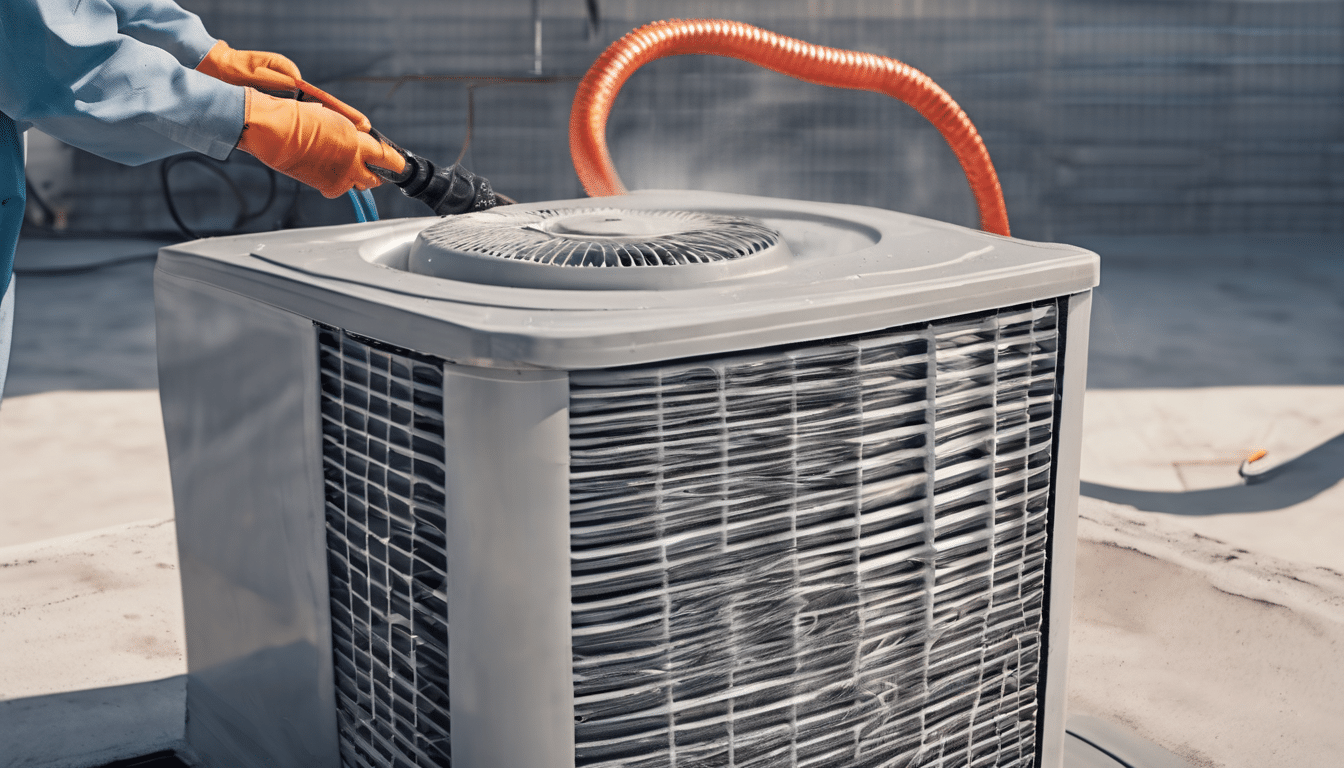
Biological material — including mold growth, biofilm, and accumulated dust — is removed mechanically before any chemical treatment. On coils, this involves brushing and HEPA-vacuuming followed by appropriate coil cleaning solutions. In drain trays, biofilm is physically removed and the tray is flushed. In duct sections with confirmed mold growth, agitation tools and negative pressure extraction are used to remove contamination from duct surfaces.
Step 4 — Antimicrobial Disinfection
After mechanical cleaning, an appropriate antimicrobial or antifungal disinfectant is applied to affected surfaces. The selection of disinfectant depends on the environment. In occupied homes, I use formulations that are effective against mold species while being safe for residual exposure after treatment. In medical and childcare environments, hospital-grade disinfectants with verified efficacy against a broader spectrum of microorganisms are used. All treated areas are adequately ventilated after application before the space is reoccupied.
Step 5 — Condensate Line Flushing and Drain Restoration
Addressing the moisture source is non-negotiable. If the condensate drain remains blocked or slow, mold will return regardless of how thorough the cleaning was. The drain line is flushed, obstructions are cleared, and the drain tray gradient is checked to ensure water flows freely. In some cases, a slow drain is caused by incorrect installation, which requires mechanical correction rather than cleaning alone.
Step 6 — Post-Treatment Verification
After treatment, the system is restarted and checked for residual odour, visible contamination, and moisture accumulation. In higher-risk environments such as clinics and schools, post-treatment air sampling or surface swabs provide objective confirmation that mold inside AC systems has been successfully removed. This documentation also supports infection control records where required.
Preventing Mold Recurrence in Dubai AC Systems
Mold inside AC systems Dubai properties experience will return if the underlying conditions are not corrected. Prevention is a combination of consistent maintenance, humidity management, and timely response to early warning signs.
- Clean or replace filters every 4 to 6 weeks during periods of continuous AC use. Clogged filters reduce airflow, increase internal moisture, and allow more particulate to reach coil surfaces.
- Schedule professional coil and drain cleaning at least once per year, and twice annually for systems in high-humidity areas or buildings with known contamination history.
- Monitor indoor relative humidity and aim to keep it below 60 percent. Portable humidity monitors are inexpensive and provide a reliable indicator of risk conditions.
- Respond to musty odours immediately. An odour from the AC system almost always indicates active microbial growth. Waiting does not resolve the problem — it allows the colony to expand and distribute further.
- Do not seal supply diffusers in unused rooms. Reduced airflow through closed rooms allows humidity to build and creates isolated pockets where mold can develop undetected.
Expert Tips on Mold Inside AC Systems Dubai Causes and Removal
After 13 years of addressing mold inside AC systems Dubai buildings across every property type, I consistently return to a few principles that determine whether a job produces lasting results or requires repeat treatment within a season.
Treat the source, not just the symptom. Cleaning diffusers and grilles without addressing the drain tray biofilm or coil contamination is the most common reason mold returns quickly after treatment. The visible signs are downstream consequences of an upstream problem.
Moisture is the variable you control. Mold inside AC systems Dubai environments will always have access to spores and organic material — these are unavoidable. What you can control is whether surfaces remain wet long enough for those spores to germinate. A well-draining, regularly cleaned system with properly functioning coils is significantly less likely to sustain mold growth.
Post-renovation systems need immediate attention. Construction and renovation dust is extraordinarily fine and penetrates deep into duct systems. This dust, combined with the residual moisture that follows construction activity, creates an almost guaranteed environment for mold inside AC systems in Dubai properties that have recently undergone works. A thorough post-renovation duct cleaning before reoccupying the space is not optional — it is a health requirement.
Not all cleaning services address mold properly. A standard AC service that involves rinsing filters and wiping external panels will not remove an established mold colony. When evaluating a provider, ask specifically how they address coil biofilm, drain tray contamination, and internal duct surfaces. The answers will quickly indicate whether their process matches the problem.
Conclusion on Mold Inside AC Systems Dubai
Mold inside AC systems Dubai: causes and removal is not a simple topic, but it is a manageable one when approached with the right knowledge and the right process. Dubai’s climate creates conditions that favour mold development in HVAC systems year-round. Continuous operation, condensation, recycled indoor air, and desert dust combine to make this one of the most common indoor air quality issues across the UAE’s residential and commercial sectors.
Understanding why mold grows inside AC systems, recognising the early signs, and responding with a system-level professional removal process are the steps that produce lasting results. Surface-level cleaning treats the appearance of the problem. Proper mold removal inside AC systems Dubai buildings require addresses its root — the moisture source, the contaminated surfaces, and the conditions that allowed growth to begin in the first place.
If you have noticed a persistent musty smell, unexplained respiratory symptoms in your home or office, or visible discolouration around your supply vents, a professional inspection is the appropriate first step. Mold inside AC systems Dubai does not resolve on its own. But with accurate diagnosis and systematic treatment, it can be eliminated — and with proper maintenance, kept from returning. Clean air is not visible, but its impact on your daily health and comfort is constant. Understanding Mold Inside Ac Systems Dubai: Causes And Removal is key to success in this area.


Leave a Reply