AC Coil Cleaning and Sanitisation Dubai Guide for Results
In Dubai’s climate, air conditioning systems run continuously for most of the year. Evaporator and condenser coils are among the most critical components in any HVAC system, yet they are also among the most commonly neglected. This AC Coil Cleaning and Sanitisation Dubai Guide is designed to fill that gap — explaining what coil contamination looks like, why it matters for health and efficiency, and what a properly executed cleaning and sanitisation process involves.
After 13 years working across Dubai’s villas, apartments, clinics, and commercial buildings, I have seen what happens when coils are overlooked. Cooling performance drops. Odours return within weeks of a duct clean. Mold grows silently inside the unit while families assume the air is safe. The coils are often where the problem begins — and where the solution must start. This relates directly to Ac Coil Cleaning And Sanitisation Dubai Guide.
This guide is structured to help you understand your system, identify warning signs, and know what to expect from a professional AC coil cleaning and sanitisation service in Dubai and across the UAE.
Ac Coil Cleaning And Sanitisation Dubai Guide – Why Coil Hygiene Matters in Dubai’s Climate
Contents
- 1 Ac Coil Cleaning And Sanitisation Dubai Guide – Why Coil Hygiene Matters in Dubai’s Climate
- 2 Ac Coil Cleaning And Sanitisation Dubai Guide – Understanding Evaporator and Condenser Coils
- 3 Ac Coil Cleaning And Sanitisation Dubai Guide – How Contamination Develops on AC Coils in Dubai
- 4 Health Effects of Dirty AC Coils in UAE Homes
- 5 The AC Coil Cleaning and Sanitisation Process Explained
- 6 Costs of AC Coil Cleaning and Sanitisation in Dubai
- 7 How Often Should Coil Cleaning Be Scheduled in Dubai
- 8 Expert Tips for Maintaining AC Coil Hygiene Year-Round
- 9 Conclusion
Dubai’s indoor environment creates conditions that accelerate coil contamination faster than most other climates. Systems operate year-round rather than seasonally. They cycle through warm, humid air continuously — drawing in dust, organic particulates, and moisture that accumulate on coil surfaces over time. When considering Ac Coil Cleaning And Sanitisation Dubai Guide, this becomes clear.
In most temperate climates, AC systems get a natural break during cooler months. That pause allows some degree of drying and self-regulation. In Dubai, that pause never comes. Coils remain wet, cool, and biologically active throughout the year, making them ideal surfaces for biofilm formation, mold growth, and dust bonding.
This AC Coil Cleaning and Sanitisation Dubai Guide addresses that reality directly. Standard cleaning intervals designed for European or North American climates do not apply here. Dubai’s conditions demand a more frequent and more thorough approach — one that accounts for continuous moisture, heavy dust infiltration, and sealed indoor environments.
Ac Coil Cleaning And Sanitisation Dubai Guide – Understanding Evaporator and Condenser Coils
Before addressing contamination, it helps to understand what each coil does and why both require cleaning.
Evaporator Coils
The evaporator coil is located inside the air handling unit. It absorbs heat from the indoor air as refrigerant passes through it, cooling the air before it is distributed into your rooms. Because the coil surface is cold and condensation forms on it continuously, it remains damp for extended periods — creating ideal conditions for microbial growth and dust adhesion.
Biofilm, mold colonies, and compacted dust on evaporator coils reduce heat transfer efficiency directly. A coil coated in even a thin layer of biological material transfers heat significantly less effectively, forcing the compressor to work harder and longer to reach the set temperature.
Condenser Coils
The condenser coil sits in the outdoor unit. It releases heat from the refrigerant into the external air. In Dubai, condenser coils face a different but equally serious contamination challenge: desert dust, construction particulates, and airborne debris clog the coil fins, blocking airflow and trapping heat. The importance of Ac Coil Cleaning And Sanitisation Dubai Guide is evident here.
A blocked condenser causes the system to run at elevated pressures, increasing energy consumption and accelerating compressor wear. In summer months when outdoor temperatures regularly exceed 42°C, a contaminated condenser coil can push a system towards thermal shutdown.
Ac Coil Cleaning And Sanitisation Dubai Guide – How Contamination Develops on AC Coils in Dubai
Understanding how contamination builds is central to this AC Coil Cleaning and Sanitisation Dubai Guide. Contamination on evaporator coils follows a predictable sequence that most homeowners are unaware of until symptoms appear.
First, airborne dust particles bypass or accumulate on air filters, particularly when filters are not changed on schedule. Fine particulates settle on the moist evaporator coil surface and bond to it as the condensation dries and reforms. Over weeks, a thin film develops that creates a surface for microbial attachment. Understanding Ac Coil Cleaning And Sanitisation Dubai Guide helps with this aspect.
Second, moisture from condensation provides the water activity that bacteria, mold spores, and other microorganisms require to colonise the coil. In Dubai’s humidity levels — which can spike dramatically indoors during summer — this colonisation can occur within weeks of a previous clean if the system is not properly sanitised.
Third, biofilm forms. Biofilm is a structured community of microorganisms embedded in a self-produced matrix. It adheres strongly to metal surfaces, resists standard cleaning products, and continuously releases contaminants into the airstream passing over the coil. Without targeted antimicrobial treatment, biofilm will persist and regrow.
Health Effects of Dirty AC Coils in UAE Homes
Contaminated coils do not remain isolated inside the unit. Every time the system operates, air passes over those surfaces at speed, carrying dislodged particles, spores, volatile compounds, and microbial fragments directly into occupied rooms. Ac Coil Cleaning And Sanitisation Dubai Guide factors into this consideration.
For occupants with asthma, allergic rhinitis, or dust sensitivities — conditions that are notably prevalent in Dubai — this constant exposure through a contaminated system can perpetuate or worsen symptoms. Children, elderly residents, and those with compromised immune function are particularly vulnerable to sustained low-level microbial exposure from HVAC systems.
Even in healthy occupants, persistent exposure to biofilm-contaminated air can cause fatigue, headaches, and respiratory irritation — symptoms often attributed to other causes because the AC system is rarely suspected. A proper AC Coil Cleaning and Sanitisation Dubai Guide approach treats coil hygiene as a health priority, not merely a technical maintenance task.
The AC Coil Cleaning and Sanitisation Process Explained
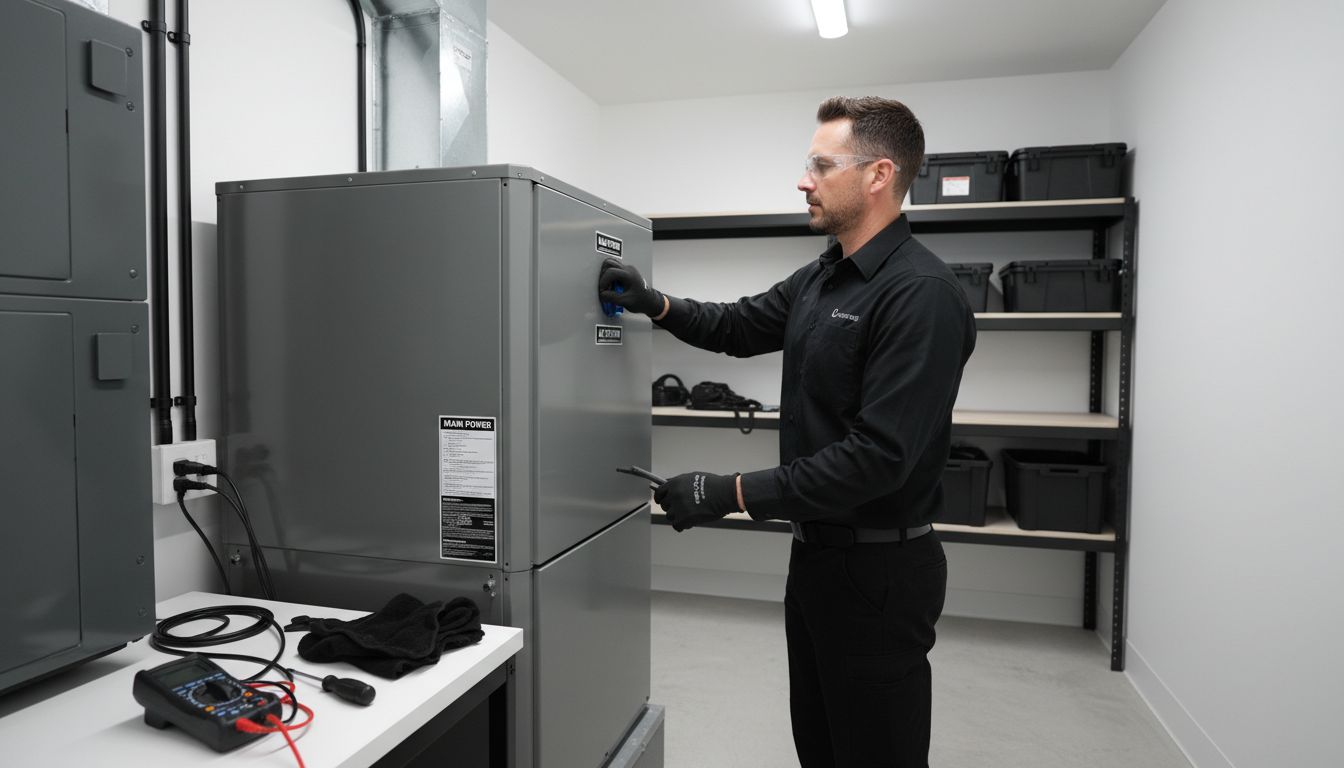
A professional AC coil cleaning and sanitisation in Dubai is a structured, multi-step process. What follows is an accurate account of what a thorough service should include. This relates directly to Ac Coil Cleaning And Sanitisation Dubai Guide.
Step 1 — System Inspection and Assessment
Before any cleaning begins, the technician should inspect both the evaporator and condenser coils for contamination type, severity, and any structural damage. Mold colonies, biofilm presence, coil fin damage, and blocked drain pans should all be assessed and documented. This informs the treatment approach selected.
Step 2 — Evaporator Coil Cleaning
The indoor unit’s access panel is removed and the coil is inspected under lighting. A low-foaming coil-safe chemical cleaner is applied to the evaporator coil surface. This is left to dwell, loosening bonded dust and breaking down biofilm structure. The coil is then gently rinsed or flushed — with drainage directed safely into the drain pan and condensate line.
Care is taken not to damage the delicate aluminium fins. High-pressure water directly against fins causes bending, which permanently reduces airflow efficiency. A professional uses appropriate pressure and technique for the coil type. When considering Ac Coil Cleaning And Sanitisation Dubai Guide, this becomes clear.
Step 3 — Antimicrobial Sanitisation
This is the stage that separates a thorough AC coil cleaning and sanitisation in Dubai from a basic rinse service. After mechanical cleaning, a hospital-grade antimicrobial or antifungal agent is applied to the evaporator coil surface. This targets residual mold spores, bacteria, and biofilm that mechanical cleaning alone cannot fully eliminate.
In environments where children or medically sensitive occupants are present, the sanitisation chemistry must be carefully selected — effective against microbial contamination but safe after appropriate drying time. I always confirm ventilation protocols with the client before applying any disinfectant inside a closed indoor unit.
Step 4 — Drain Pan and Condensate Line Treatment
The condensate drain pan sits beneath the evaporator coil and collects water from condensation. In long-running Dubai systems, these pans accumulate standing water, algae, and biofilm. Cleaning the coil without treating the drain pan is incomplete — recontamination from the pan back onto the coil will occur within weeks. The importance of Ac Coil Cleaning And Sanitisation Dubai Guide is evident here.
The pan is cleaned mechanically, flushed, and treated with an algaecide or biocide tablet to prevent regrowth. The condensate drain line is cleared to ensure proper drainage — a blocked line causes water overflow, ceiling damage, and elevated indoor humidity.
Step 5 — Condenser Coil Cleaning
The outdoor condenser unit is accessed and inspected for dust and debris accumulation between the fins. Compressed air or a coil-safe foaming cleaner is applied to dislodge compacted particulates. The unit is flushed carefully, ensuring debris is removed outward rather than pushed further into the coil.
Step 6 — System Reassembly and Performance Check
The unit is reassembled, filters are replaced or cleaned, and the system is operated to verify normal airflow, cooling performance, and drainage. Any anomalies observed during operation are reported to the client immediately. Understanding Ac Coil Cleaning And Sanitisation Dubai Guide helps with this aspect.
Costs of AC Coil Cleaning and Sanitisation in Dubai
Pricing for AC coil cleaning and sanitisation in Dubai varies depending on the system type, access difficulty, contamination severity, and whether sanitisation is included or offered as an add-on.
As a general guide for residential settings in Dubai and across the UAE, a single split unit evaporator coil cleaning with sanitisation typically ranges from AED 150 to AED 300 per unit. For ducted central systems in villas, where the air handling unit is often harder to access and the coil surface area is larger, expect costs in the range of AED 400 to AED 900 per AHU depending on system size and condition.
Condenser coil cleaning is often quoted separately or as part of a full system service. Full villa HVAC services — covering evaporator coils, condensers, drain pans, and duct sanitisation — can range from AED 1,500 to AED 4,500 depending on villa size, number of units, and scope of work. Ac Coil Cleaning And Sanitisation Dubai Guide factors into this consideration.
Be cautious of providers quoting unusually low prices. Proper coil sanitisation requires appropriate dwell time, correct chemistry, and a skilled technician. A service that takes 20 minutes per unit is unlikely to include genuine sanitisation.
How Often Should Coil Cleaning Be Scheduled in Dubai
In Dubai’s operating conditions, evaporator coil cleaning and sanitisation should be scheduled at a minimum of once per year for residential properties. However, for homes with pets, high occupancy, proximity to construction activity, or occupants with respiratory sensitivities, a six-monthly schedule is more appropriate.
Condenser coils in Dubai accumulate desert dust rapidly. Quarterly inspection and cleaning of condenser coils is advisable, particularly for units installed at ground level or near construction sites. A visibly dust-blocked condenser in summer is a genuine performance and reliability risk.
An annual maintenance plan that includes coil cleaning, drain pan treatment, filter replacement, and duct inspection delivers the most consistent protection. This AC Coil Cleaning and Sanitisation Dubai Guide consistently recommends preventive scheduling over reactive cleaning — because contamination that is addressed early is far easier to resolve than contamination that has been compounding for two or three years.
Expert Tips for Maintaining AC Coil Hygiene Year-Round
- Replace or wash filters on schedule. The filter is the first line of defence against coil contamination. A clogged filter passes more dust directly onto the evaporator coil than a clean one.
- Do not set the thermostat abnormally low. Excessively cold settings cause excessive condensation on the evaporator coil, increasing moisture and microbial risk.
- Check for musty odours at startup. A sour or musty smell when the AC first runs often indicates biofilm or mold on the evaporator coil — not the ducts. Address it at the source.
- Inspect the drain pan periodically. A visible water line or slime in the drain pan is an early indicator that sanitisation is overdue.
- After renovation work, schedule a full coil clean. Post-construction dust is dense, abrasive, and adheres to coil surfaces rapidly. It should be removed before normal system operation resumes.
- Ensure outdoor units have clear airflow. Vegetation, stored items, or structures blocking condenser airflow accelerate coil fouling and reduce system performance significantly.
Conclusion
The coils at the heart of your air conditioning system determine both the quality of the air you breathe and the efficiency of the cooling you rely on every day. In Dubai’s year-round operating environment, coil contamination is not a distant possibility — it is a predictable outcome of continuous use in a hot, humid, dust-intensive climate.
This AC Coil Cleaning and Sanitisation Dubai Guide has outlined the science behind contamination, the health risks of neglected coils, the steps involved in a professional cleaning and sanitisation service, and the maintenance schedules appropriate for UAE conditions. The goal is not to create concern, but to provide clarity — so that homeowners, facility managers, and property professionals across Dubai, Abu Dhabi, Sharjah, and the wider UAE can make informed decisions about their HVAC hygiene.
Clean coils are not a cosmetic improvement. They are the difference between air that supports health and air that quietly undermines it. If your system has not had a professional coil clean and sanitisation in the past 12 months, a professional inspection is a sensible and responsible next step. Use this AC Coil Cleaning and Sanitisation Dubai Guide as your reference, and apply the same standards to your home that are expected in the clinics and schools where air hygiene is already treated as non-negotiable.