Signs Your AC Ducts Need Cleaning Between Services Dubai
The Signs Your AC ducts need cleaning between services are not always dramatic. In most Dubai homes, they begin quietly — a subtle shift in how the room feels, a faint trace of something you can’t quite name in the air, or a fine layer of dust settling on surfaces faster than it should. These early indicators matter precisely because they appear before anything becomes visible inside the duct system itself.
In a city where air conditioning operates continuously for ten or more months of the year, the interval between professional services carries far more weight than it does in moderate climates. Dubai’s combination of desert particulate matter, construction activity, high summer humidity, and sealed indoor environments creates conditions where duct soiling can progress meaningfully between annual or biannual cleans. Knowing the signs your AC ducts need cleaning between services allows homeowners to intervene at the right moment — not too early, not too late.
This guide is written specifically for villa owners, apartment residents, and property managers across Dubai, Abu Dhabi, Sharjah, and the wider UAE. It draws on field observations gathered across hundreds of residential and commercial systems in conditions unique to this region.
Why Dubai Conditions Accelerate Duct Soiling Between Services
Contents
- 1 Why Dubai Conditions Accelerate Duct Soiling Between Services
- 2 Signs Your AC Ducts Need Cleaning Between Services — Dust and Particulate Signals
- 3 Signs Your AC Ducts Need Cleaning Between Services — Odour Indicators
- 4 Performance and Efficiency Signals Between Services
- 5 Environmental and Situational Triggers That Warrant Interim Attention
- 6 Signs Your AC Ducts Need Cleaning Between Services — Health and Comfort Observations
- 7 Expert Takeaways — Recognising When to Act
- 8 Frequently Asked Questions
- 8.1 How often should AC ducts be cleaned in a Dubai villa?
- 8.2 What does it mean when my AC smells musty in Dubai?
- 8.3 Can construction work nearby make my AC ducts dirty faster?
- 8.4 Is visible dust from AC grilles a serious issue?
- 8.5 Why do my rooms cool unevenly after my AC was cleaned last year?
- 8.6 Does high humidity in UAE summers affect duct cleanliness?
- 8.7 How do I know if my AC ducts need cleaning or just filter replacement?
- 9 Reading the Room — What Clean Air Actually Tells You
Understanding the signs your AC ducts need cleaning between services requires understanding why duct soiling occurs faster here than in most other cities. Dubai presents four compounding factors that generic HVAC guidance rarely accounts for.
First, continuous operation. Unlike temperate climates where systems rest for months, UAE air conditioning runs year-round. There is no dry-out period, no seasonal pause. Moisture accumulates in coil bays and drain lines without interruption, creating conditions where particulate matter adheres more readily to duct surfaces.
Second, high dust infiltration. Desert particulate, coastal salt aerosols, and ongoing construction activity across new developments introduce fine particulate matter that penetrates even well-maintained filter banks. Areas near major infrastructure projects — such as new community developments in Dubai South, Expo City surrounds, or Yas Island in Abu Dhabi — see measurably higher dust loading inside HVAC systems.
Third, summer humidity. Between June and September, outdoor humidity regularly exceeds 80 to 90 per cent during early morning hours. When this air enters a system not perfectly sealed, condensation forms inside ductwork and creates conditions favourable to moisture-driven microbial activity.
Fourth, sealed indoor environments. Most UAE homes and offices are tightly sealed against heat. This limits the natural dilution of recirculated air and means that anything accumulating inside the duct system — dust, particulate, biological material — is continuously redistributed to occupants.
Signs Your AC Ducts Need Cleaning Between Services — Dust and Particulate Signals
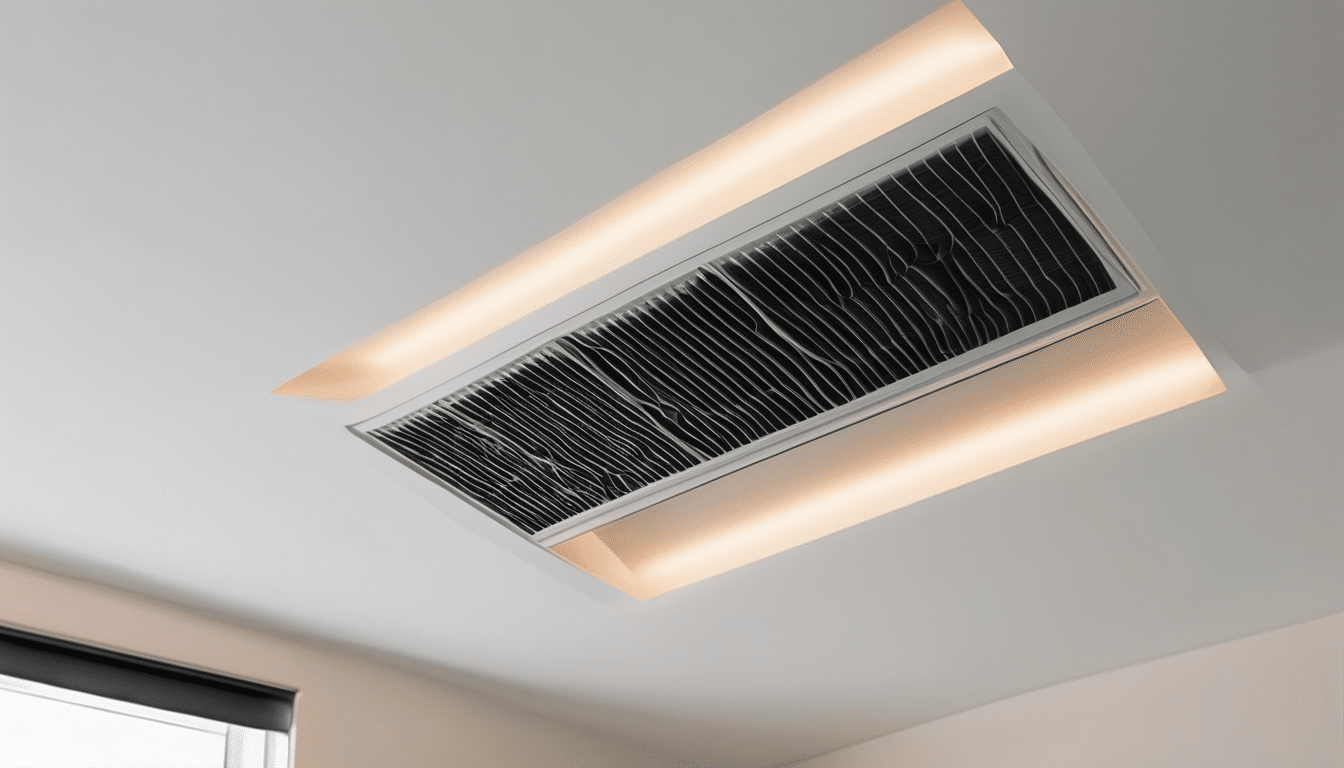
One of the clearest signs your AC ducts need cleaning between services is visible dust emission from supply diffusers. When fine grey or brown dust is visibly discharged from grilles — particularly noticeable in low-light conditions or when you hold a white tissue near the outlet — particulate accumulation in ducts has progressed to a point where the airstream is carrying material back into the room.
Accelerated Surface Soiling in the Home
Pay attention to how quickly horizontal surfaces in your home collect dust between routine cleaning. If you are wiping down shelves, television units, or skirting boards significantly more often than you were six months ago — and nothing else has changed in your environment — the duct system is a likely contributor. This is a commonly observed pattern in Dubai villas during periods of high construction activity nearby, or after any renovation work inside the property.
Visible Particulate Accumulation on Diffuser Grilles
Dark or grey shadowing around supply and return grilles is one of the most reliable early signs your AC ducts need cleaning between services. This ghosting effect occurs when airflow velocity carries fine particles that deposit on surrounding surfaces before they can be recirculated. If grilles cleaned during your last service have developed visible soiling within four to six weeks, the upstream duct sections require attention.
Signs Your AC Ducts Need Cleaning Between Services — Odour Indicators
Odour is one of the most informative diagnostic signals an occupant can detect. The challenge is knowing which odours indicate a duct-cleaning issue versus a drain line, coil, or filter problem.
Musty or Earthy Smell When the AC Starts
A musty or earthy odour that appears during the first few minutes of AC operation — particularly after the system has been switched off overnight — is among the signs your AC ducts need cleaning between services that should not be dismissed. This pattern typically indicates moisture-driven microbial conditions in the coil bay or in sections of ductwork where condensation has formed. The smell often dissipates after ten minutes of operation, which causes some residents to assume it has resolved. It has not.
Stale or Flat Air Quality Throughout the Day
A persistent flatness or staleness to indoor air — not an identifiable bad smell, but an absence of freshness — is one of the subtler signs your AC ducts need cleaning between services. This occurs when accumulated particulate and organic material inside ductwork off-gases continuously into the recirculated airstream. It is particularly noticeable in master bedrooms and children’s rooms in larger villas, where supply ducts are longer and return air pathways are more restricted.
Performance and Efficiency Signals Between Services
Beyond sensory indicators, mechanical performance provides some of the most objective signs your AC ducts need cleaning between services. These signals require no special equipment — just observation over time.
Reduced Airflow From Supply Diffusers
If specific rooms feel warmer than usual despite no change in thermostat settings, and this correlates with noticeably weaker airflow from the supply grilles in those rooms, particulate accumulation in the corresponding duct branch is a likely cause. Duct soiling adds resistance to airflow, reducing the volume of conditioned air reaching the space. This is frequently identified during field investigations in older Dubai villa systems and in apartments where original duct insulation has begun to deteriorate.
Uneven Cooling Across Rooms
Uneven cooling — where one bedroom maintains the set temperature comfortably while another never quite reaches it — can reflect blocked or partially obstructed duct branches. When professional service intervals extend beyond twelve months in high-soiling environments, localised accumulation in horizontal duct runs is commonly observed. The pattern becomes more pronounced in multi-storey villas where upper-floor supply ducts carry air over longer distances.
Increased Filter Clogging Rate
If your supply air filters are reaching visible soiling capacity faster than they did previously, this is one of the more measurable signs your AC ducts need cleaning between services. Filters typically manage particulate load from the return air side. When upstream duct contamination increases, filters must compensate for higher-than-normal particulate volumes. A filter that previously ran cleanly for four to six weeks but now shows visible grey loading within two to three weeks reflects a system under higher contamination pressure.
Environmental and Situational Triggers That Warrant Interim Attention
Certain events and environmental changes in UAE homes create immediate need to assess signs your AC ducts need cleaning between services, regardless of when the last service was completed.
Post-Renovation and Post-Construction Periods
Any renovation work inside a property — whether minor kitchen tiling, full bathroom refits, or structural modifications — introduces fine construction particulate that infiltrates the HVAC system through unprotected return air inlets. This is one of the most commonly observed causes of accelerated duct soiling in Dubai, where internal fit-out work continues throughout the year in residential buildings across JVC, Business Bay, Al Barsha, and Dubai Hills. Post-construction AC duct cleaning is not optional in these cases — it is a direct response to confirmed particulate infiltration.
Seasonal Dust Events and Shamal Winds
The Shamal — the north-westerly wind system that typically intensifies between June and September — carries fine desert particulate in concentrations that overwhelm standard filter protection if doors or windows are inadvertently left open, or if building envelope sealing is imperfect. Following an extended Shamal period, HVAC filter inspection and duct assessment is advisable, particularly in ground-floor apartments and villas with accessible external louvres.
New Occupants or Increased Occupancy
A change in occupancy — particularly when children move into a property where a previous occupant did not maintain the system well — is a practical trigger to review signs your AC ducts need cleaning between services. New occupants have no baseline knowledge of the system’s history and no way to assess what accumulated over the preceding tenancy. A documented professional assessment at the point of move-in is a reasonable standard, particularly for families with young children or occupants with respiratory sensitivities.
Signs Your AC Ducts Need Cleaning Between Services — Health and Comfort Observations
Occupant health and comfort signals are among the most significant signs your AC ducts need cleaning between services, but they require careful interpretation. These observations should prompt investigation rather than immediate conclusions.
A pattern of morning congestion, persistent throat irritation, or increased sneezing that correlates with time spent indoors — and improves when occupants leave the property — is worth investigating from an indoor air quality perspective. Similarly, occupants with diagnosed allergies or asthma who report worsening symptoms at home despite consistent medication may find that the HVAC system is a contributing factor. These are patterns frequently raised during professional consultations in Dubai, and they invariably lead back to a system inspection rather than a direct duct cleaning recommendation — because the cause must be identified before the solution is defined.
Expert Takeaways — Recognising When to Act
Based on field investigations across Dubai’s residential sector, the following framework helps homeowners act on signs your AC ducts need cleaning between services at the right time rather than reactively.
- Visible dust emission from supply diffusers warrants immediate inspection, not deferred to the next scheduled service.
- Musty odours during the first minutes of AC operation indicate a moisture-related condition that will not resolve without targeted treatment.
- Accelerated surface soiling — dusty surfaces returning within days of cleaning — is a measurable indicator of elevated duct particulate load.
- Post-renovation periods always require duct assessment, regardless of service history.
- Uneven cooling that was not present previously reflects a system change, not a thermostat issue.
- Filter replacement frequency doubling without explanation points upstream — to the duct system.
None of these signals demand panic. They demand observation, documentation, and a professional assessment from a qualified HVAC hygiene specialist. A NADCA-aligned methodology applied during a thorough inspection will identify whether interim cleaning is warranted, and which components require attention.
Frequently Asked Questions
How often should AC ducts be cleaned in a Dubai villa?
In Dubai’s climate, most residential HVAC specialists recommend a full duct cleaning service every twelve to eighteen months for standard villas. However, signs your AC ducts need cleaning between services — such as accelerated surface dust, reduced airflow, or post-renovation particulate infiltration — may require interim attention regardless of the scheduled interval.
What does it mean when my AC smells musty in Dubai?
A musty smell from AC outlets, particularly during the first minutes of operation, typically indicates moisture-driven microbial conditions in the coil bay or ductwork. In Dubai’s humid summer months, this is one of the more common signs your AC ducts need cleaning between services and warrants a professional coil and drain line inspection rather than a DIY fix.
Can construction work nearby make my AC ducts dirty faster?
Yes. Active construction within and around your building introduces fine particulate that penetrates HVAC systems through return air intakes and building envelope gaps. This is one of the most frequently observed causes of accelerated duct soiling across new communities in Dubai, Abu Dhabi, and Sharjah. Post-construction duct assessment is standard practice after any significant nearby building activity.
Is visible dust from AC grilles a serious issue?
Visible dust emission from supply diffusers is a clear indicator of elevated particulate accumulation in ducts. It means the airstream is carrying material back into the living space rather than containing it within the system. This is one of the most direct signs your AC ducts need cleaning between services and should not be deferred.
Why do my rooms cool unevenly after my AC was cleaned last year?
Uneven cooling that develops after a previously successful service can reflect localised particulate re-accumulation in specific duct branches, or a drainage or coil condition that has progressed since the last clean. It is one of the performance-based signs your AC ducts need cleaning between services and warrants a targeted inspection rather than a full system replacement.
Does high humidity in UAE summers affect duct cleanliness?
Significantly. During peak summer months, outdoor humidity levels regularly exceed 80 per cent in the UAE, creating conditions where condensation forms inside imperfectly sealed or poorly insulated ductwork. This moisture supports particulate adhesion and creates favourable conditions for microbial activity — both of which accelerate duct soiling between professional services.
How do I know if my AC ducts need cleaning or just filter replacement?
Filter replacement addresses particulate loading at the point of capture — it does not address what has accumulated upstream in the duct system. If filter replacement improves performance and airflow immediately, it may be sufficient. If performance problems persist after filter replacement, or if odour and surface soiling indicators remain present, those are signs your AC ducts need cleaning between services rather than filter maintenance alone.
Reading the Room — What Clean Air Actually Tells You
The signs your AC ducts need cleaning between services are ultimately a form of communication from your home. Dubai’s indoor environments are not passive. They respond to the quality of the systems running through them, and they reflect that quality back in how the air feels, how surfaces behave, and how occupants experience the space day to day.
Recognising these signals early — and acting on them through a qualified professional assessment — is not overcaution. It is the straightforward maintenance logic that Dubai’s climate conditions demand. Contact a certified HVAC hygiene specialist for a property-specific evaluation if any of the indicators described here are present in your home. Understanding Signs Your AC Ducts Need Cleaning Between Services is key to success in this area.