AC Condenser Coil Signs: When Cleaning Is Overdue
Understanding AC Condenser Coil Signs: When Cleaning Is Overdue is essential. In Dubai’s climate, recognising AC condenser coil signs that cleaning is overdue matters more than most homeowners realise. The condenser coil sits at the heart of the heat-rejection process: it releases the heat extracted from your indoor air to the outside environment. When that coil becomes fouled with dust, sand, and compacted particulate, the entire refrigeration cycle is compromised. What follows is a measurable decline in cooling performance, a rise in energy consumption, and eventually a system that cannot meet its own design specification.
UAE residents face an unusually demanding set of conditions. Outdoor units are exposed to desert dust, construction particulate, and ambient temperatures that regularly exceed 45 °C in summer. These conditions accelerate fouling at a rate that would be considered severe in most other climates. A condenser coil that might stay clean for twelve months in a temperate region can reach a problematic accumulation level in three to four months in Dubai, Abu Dhabi, or Sharjah. Knowing the AC condenser coil signs that cleaning is overdue is therefore a practical necessity, not an optional awareness. This relates directly to AC Condenser Coil Signs: When Cleaning Is Overdue.
This guide walks through each of the key warning signals, explains the mechanism behind them, and describes what a properly scoped professional cleaning protocol addresses. If you are a villa owner, apartment resident, or property manager anywhere across the UAE, understanding these indicators will help you act before a fouled coil becomes a failed system. When considering AC Condenser Coil Signs: When Cleaning Is Overdue, this becomes clear.
AC Condenser Coil Signs: When Cleaning Is Overdue – What AC Condenser Coil Signs That Cleaning Is Overdue Actual
Contents
- 1 AC Condenser Coil Signs: When Cleaning Is Overdue – What AC Condenser Coil Signs That Cleaning Is Overdue Actual
- 2 AC Condenser Coil Signs: When Cleaning Is Overdue – Reduced Cooling Output as an AC Condenser Coil Sign
- 3 AC Condenser Coil Signs: When Cleaning Is Overdue – Rising Energy Bills as a Condenser Coil Warning Signal
- 4 Warm Air from Vents Despite Full System Operation
- 5 Compressor Short-Cycling and System Trips
- 6 Condenser Fin Damage and Its Relationship to Fouling
- 7 How UAE Climate Accelerates Condenser Coil Fouling
- 8 What a Properly Scoped Condenser Coil Cleaning Addresses
- 9 Expert Takeaways for UAE Homeowners
- 10 Frequently Asked Questions
- 10.1 How often should condenser coils be cleaned in Dubai?
- 10.2 What are the clearest AC condenser coil signs that cleaning is overdue?
- 10.3 Can a fouled condenser coil damage the compressor?
- 10.4 Is a water rinse sufficient to clean a condenser coil?
- 10.5 Why does my Abu Dhabi apartment AC lose cooling in summer despite recent servicing?
- 10.6 How does a professional know when condenser coil fouling is severe enough to warrant chemical cleaning?
- 10.7 Does condenser coil cleaning affect indoor air quality in Dubai homes?
- 11 When to Call a Professional
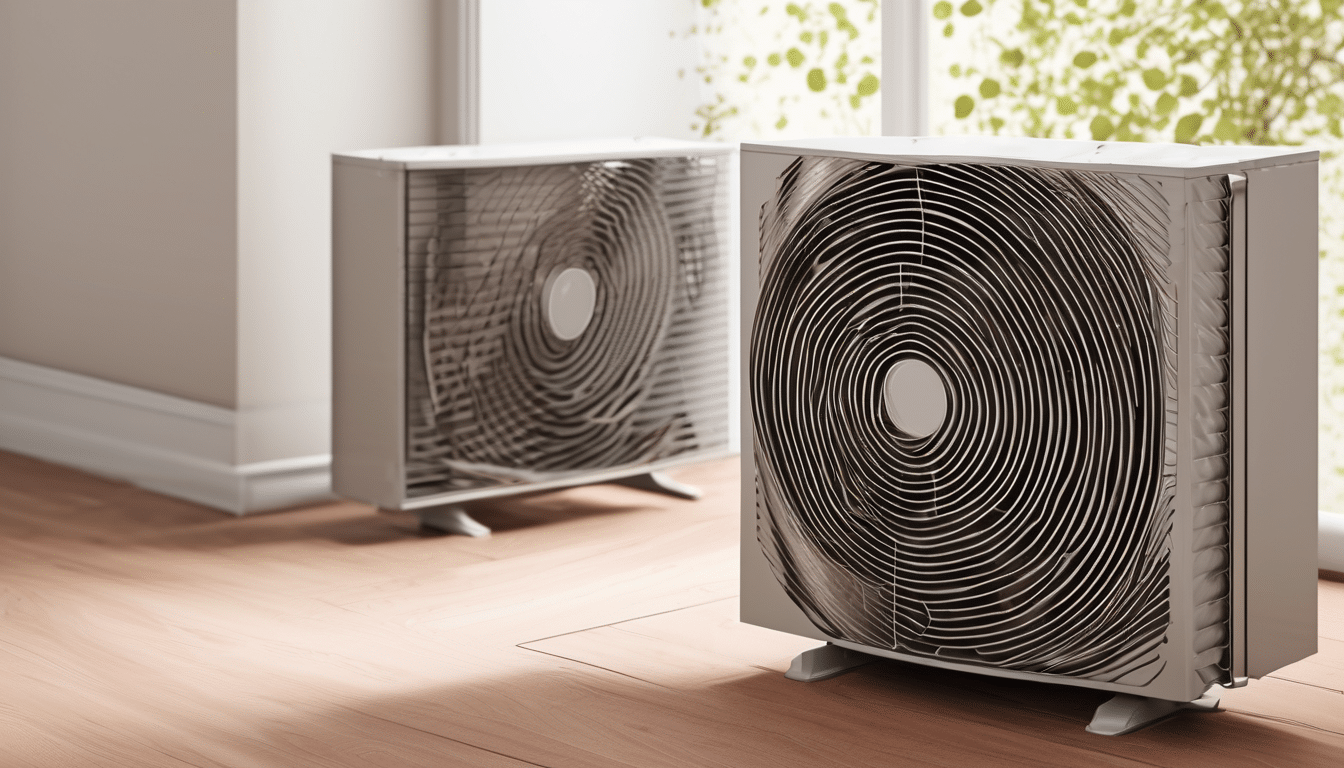
The most direct signal is visible. When you inspect the outdoor unit of a split or central AC system, the condenser fins — the tightly packed aluminium blades surrounding the coil — should allow visible light to pass through them. When those fins are uniformly grey or brown with compacted dust, and when airflow through the fin matrix is restricted to the point where you can barely see light through the coil body, cleaning is not approaching: it is already overdue. The importance of AC Condenser Coil Signs: When Cleaning Is Overdue is evident here.
Beyond the visual, the coil surface itself may show signs of biological film. In humid coastal areas such as Dubai Marina, JBR, or Abu Dhabi’s Corniche district, moisture-driven microbial conditions can develop on condenser coil surfaces exposed to saline air and intermittent moisture from overnight dew. This appears as a dark, slightly glistening layer beneath the particulate accumulation. It compounds the fouling problem because biofilm acts as an adhesive that binds dust more firmly to the coil surface and resists water flushing alone. Understanding AC Condenser Coil Signs: When Cleaning Is Overdue helps with this aspect.
AC Condenser Coil Signs: When Cleaning Is Overdue – Reduced Cooling Output as an AC Condenser Coil Sign
The most commonly reported AC condenser coil sign that cleaning is overdue is a noticeable reduction in cooling output. The system runs continuously, the thermostat is set correctly, but the rooms never reach the desired temperature during peak afternoon hours. This pattern is characteristic of condenser coil fouling rather than refrigerant loss or compressor wear, though those causes should be assessed alongside coil condition. AC Condenser Coil Signs: When Cleaning Is Overdue factors into this consideration.
The mechanism is straightforward. A fouled condenser coil cannot reject heat efficiently. The refrigerant leaving the condenser is warmer than it should be, which raises the condensing pressure throughout the system. The evaporator coil, which is supposed to absorb heat from your indoor air, operates less effectively because the refrigerant it receives is already carrying excess heat. The net result is that your AC system is working harder and delivering less. This relates directly to AC Condenser Coil Signs: When Cleaning Is Overdue.
Why Dubai Villas Experience This Earlier Than Apartments
Villa outdoor units in communities such as Arabian Ranches, Damac Hills, or Al Barsha tend to sit at ground level or on elevated plinths exposed to prevailing desert winds. This means they receive a higher load of coarse construction dust and fine sand compared with high-rise apartment units. The AC condenser coil signs that cleaning is overdue often appear within three to four months following a sandstorm sequence or a period of nearby construction activity. Apartment units on upper floors accumulate finer particulate more slowly but are not immune, particularly in communities with rooftop plant rooms and exposed mechanical equipment. When considering AC Condenser Coil Signs: When Cleaning Is Overdue, this becomes clear.
AC Condenser Coil Signs: When Cleaning Is Overdue – Rising Energy Bills as a Condenser Coil Warning Signal
A fouled condenser coil forces the compressor to work under elevated head pressure. This directly increases electrical consumption. If your DEWA or ADDC bills have risen without a corresponding change in usage patterns, occupancy, or thermostat settings, the AC system’s condenser coil condition is among the first variables to investigate. The importance of AC Condenser Coil Signs: When Cleaning Is Overdue is evident here.
NADCA guidelines and ASHRAE research both support the principle that coil fouling creates measurable efficiency loss. The relationship is not linear: a lightly fouled coil causes modest loss, but as accumulation increases and airflow through the fin matrix becomes significantly restricted, efficiency degradation accelerates. Saniservice field assessments across Dubai residential properties have consistently documented this pattern — the coil condition and the energy consumption trajectory are closely related. Understanding AC Condenser Coil Signs: When Cleaning Is Overdue helps with this aspect.
This AC condenser coil sign is particularly useful because it provides a documented baseline. If your energy bills have trended upward over a summer season without explanation, a condenser coil inspection is a logical first step before investing in equipment replacements. AC Condenser Coil Signs: When Cleaning Is Overdue factors into this consideration.
Warm Air from Vents Despite Full System Operation
When the condenser coil is significantly fouled, the system may reach a point where it can no longer maintain discharge air temperature within specification. The air from your vents feels tepid rather than cool. The system has not failed mechanically — it is operating — but the thermal performance has degraded to a point where occupants notice immediately. This relates directly to AC Condenser Coil Signs: When Cleaning Is Overdue.
This is one of the clearest AC condenser coil signs that cleaning is overdue, because it reflects a system that has passed through early and moderate fouling stages without intervention. The warm air symptom typically appears in the afternoon peak when outdoor temperatures are highest and the condenser is under maximum thermal load. If the system cools adequately in the morning but struggles after midday, condenser coil fouling is a likely contributing factor. When considering AC Condenser Coil Signs: When Cleaning Is Overdue, this becomes clear.
Compressor Short-Cycling and System Trips
A fouled condenser coil elevates refrigerant head pressure. When this pressure exceeds the high-pressure limit set on the system’s protection circuit, the compressor trips on its high-pressure safety cutout. The system shuts down briefly, restarts, then trips again. This short-cycling pattern is a serious AC condenser coil sign that cleaning is urgently overdue — not simply scheduled. The importance of AC Condenser Coil Signs: When Cleaning Is Overdue is evident here.
Compressor short-cycling accelerates mechanical wear. The start-up current draw on each restart stresses motor windings and increases heat inside the compressor housing. Over repeated cycles, this shortens compressor lifespan significantly. Addressing the condenser coil fouling that causes the elevated head pressure is not optional at this stage — it is the intervention that prevents a coil-cleaning expense from becoming a compressor replacement cost. Understanding AC Condenser Coil Signs: When Cleaning Is Overdue helps with this aspect.
Audible Changes in Unit Operation
Homeowners sometimes notice that the outdoor unit sounds different before they identify a performance decline. A strained or higher-pitched fan motor noise can indicate that the condenser fan is working against restricted airflow through a fouled coil. Rattling or vibration changes can also occur as airflow dynamics shift. These audible AC condenser coil signs that cleaning is overdue are worth taking seriously, particularly if they coincide with any of the performance changes described above. AC Condenser Coil Signs: When Cleaning Is Overdue factors into this consideration.
Condenser Fin Damage and Its Relationship to Fouling
Heavily compacted dust accumulation on condenser fins creates a secondary problem beyond heat transfer restriction. When high-pressure water is applied without proper technique to a deeply fouled coil, the debris cannot release cleanly from the tightly packed fin matrix and the water pressure itself can bend or collapse the thin aluminium fins. This fin damage further restricts airflow and is not reversible without specialised fin combing. This relates directly to AC Condenser Coil Signs: When Cleaning Is Overdue.
Recognising AC condenser coil signs that cleaning is overdue before this stage is reached allows the cleaning to be performed correctly — using appropriate chemical application to break down compacted fouling before water flushing, applied at controlled pressure from the correct direction. SaniHome’s Condenser Coil Cleaning protocol follows this sequence precisely, treating the fouling condition rather than simply flushing the surface. When considering AC Condenser Coil Signs: When Cleaning Is Overdue, this becomes clear.
How UAE Climate Accelerates Condenser Coil Fouling
The UAE presents four compounding conditions that drive condenser coil fouling faster than most climates worldwide. First, outdoor AC units operate continuously for eight to ten months of the year without the rest periods that temperate climates provide. Second, desert particulate is fine, abrasive, and electrostatically charged, which means it adheres to coil surfaces more readily than urban particulate in other regions. Third, coastal humidity in cities such as Dubai, Sharjah, Abu Dhabi, and Fujairah creates moisture conditions that bind dust into a compacted layer. Fourth, construction activity across the UAE generates unusually high loads of cement dust and silica particulate that settle densely into fin matrices. The importance of AC Condenser Coil Signs: When Cleaning Is Overdue is evident here.
These four factors mean that the cleaning frequency appropriate for a UK or European residential AC system does not translate to UAE conditions. Professional assessments conducted by Saniservice technicians across Dubai, Abu Dhabi, and Sharjah villas indicate that annual condenser coil cleaning is a minimum standard in most residential settings, with properties near construction sites or coastal areas often requiring more frequent attention. Understanding AC Condenser Coil Signs: When Cleaning Is Overdue helps with this aspect.
What a Properly Scoped Condenser Coil Cleaning Addresses
Understanding AC condenser coil signs that cleaning is overdue also means understanding what the service needs to address. A surface rinse that dislodges loose dust from the outer fin layer does not constitute a cleaning that resolves fouling-related performance loss. The protocol must address compacted internal accumulation, any biological film present on the coil surface, and the drain and condensate components associated with the outdoor unit. AC Condenser Coil Signs: When Cleaning Is Overdue factors into this consideration.
SaniHome’s condenser coil cleaning protocol applies a Dubai Municipality approved eco-friendly bio-sanitiser at appropriate dwell time to break down compacted fouling before controlled water flushing. The coil is cleaned from the inside outward where access allows, which removes accumulated material rather than compacting it further. After cleaning, a before-and-after assessment documents the condition improvement, providing the homeowner with a documented record rather than an assumed result. This relates directly to AC Condenser Coil Signs: When Cleaning Is Overdue.
Expert Takeaways for UAE Homeowners
- Inspect the outdoor unit fins visually every three months. If light does not pass through the fin matrix evenly, schedule a professional assessment.
- Track your electricity bills monthly. A sustained upward trend without a usage explanation warrants a condenser coil inspection.
- If your AC system trips frequently in peak summer afternoons, treat this as an urgent condenser coil sign rather than a thermostat issue.
- Properties near construction activity in communities such as Dubai South, Yas Island, or Al Maryah Island should assess condenser coil condition more frequently than the minimum annual schedule.
- Do not apply high-pressure water to a heavily fouled condenser coil without pre-treatment chemical application — fin damage is a real risk and cannot be reversed.
- Combine condenser coil cleaning with evaporator coil and duct cleaning for a system-level result. Cleaning one component while leaving contaminated components upstream does not resolve the full performance and air quality picture.
Frequently Asked Questions
How often should condenser coils be cleaned in Dubai?
In Dubai’s climate, annual condenser coil cleaning is the minimum standard for most residential properties. Villas near construction zones, coastal properties exposed to saline air and humidity, and units that show AC condenser coil signs that cleaning is overdue — such as restricted airflow through fins or rising energy bills — may require cleaning every six months. A professional assessment determines the appropriate schedule based on site-specific conditions.
What are the clearest AC condenser coil signs that cleaning is overdue?
The most recognisable AC condenser coil signs that cleaning is overdue include compacted particulate visible on the fin surface, reduced cooling output during peak afternoon hours, rising electricity consumption without a usage change, warm air from vents despite full system operation, and compressor short-cycling or high-pressure safety trips. Any one of these warrants a professional inspection.
Can a fouled condenser coil damage the compressor?
Yes. A fouled condenser coil raises refrigerant head pressure, which forces the compressor to work under elevated load. Repeated high-pressure safety trips cause thermal and electrical stress on compressor motor windings. Over time, this accelerates mechanical wear and shortens compressor lifespan. Addressing condenser coil fouling promptly is one of the most direct ways to protect compressor longevity in UAE residential AC systems.
Is a water rinse sufficient to clean a condenser coil?
A water rinse alone is insufficient for a condenser coil with compacted fouling. In UAE conditions, dust and biological film bind firmly to fin surfaces and resist water flushing without pre-treatment. A properly scoped cleaning protocol applies a suitable chemical agent at appropriate dwell time to break down compacted material before controlled water flushing. This approach removes fouling rather than redistributing it and reduces the risk of fin damage from pressure washing.
Why does my Abu Dhabi apartment AC lose cooling in summer despite recent servicing?
If cooling loss resumes shortly after a recent service, the most likely explanations are that the condenser coil was not cleaned thoroughly during that service, or that the evaporator coil and ductwork were not addressed alongside the condenser. In Abu Dhabi’s summer conditions, a partially cleaned system recontaminates quickly. A system-level assessment that covers both coil sets, drain components, and duct condition provides a more durable result.
How does a professional know when condenser coil fouling is severe enough to warrant chemical cleaning?
A trained technician assesses condenser coil condition visually by examining fin matrix light transmission, airflow resistance, and surface deposits. Where biological film is present alongside particulate accumulation, or where the fouling layer is compacted rather than loose, chemical pre-treatment is indicated before water flushing. NADCA-aligned methodology recommends this approach for coils where fouling depth exceeds what mechanical agitation and water alone can address safely.
Does condenser coil cleaning affect indoor air quality in Dubai homes?
Condenser coil cleaning primarily improves system efficiency and protects mechanical components. However, it contributes to indoor wellbeing indirectly: a system operating within its design parameters maintains correct evaporator coil surface temperatures, which reduces moisture-driven microbial conditions on the evaporator side. A complete system-level cleaning — condenser coil, evaporator coil, drain components, and ductwork — produces the most meaningful improvement in indoor air quality for Dubai villa and apartment residents.
When to Call a Professional
The AC condenser coil signs that cleaning is overdue described throughout this guide can be monitored by any homeowner with a few minutes and a basic awareness of what to look for. However, the cleaning itself requires proper equipment, correct chemical selection, appropriate pressure management, and post-service documentation. Applying the wrong chemical concentration or incorrect water pressure to a fouled coil can cause fin damage that permanently reduces airflow capacity — an outcome that costs significantly more to address than a timely professional cleaning would have.
SaniHome serves residential properties across Dubai, Abu Dhabi, Sharjah, Ajman, Ras Al Khaimah, Umm Al Quwain, and Fujairah. Every condenser coil cleaning is conducted as part of a scoped system assessment, using Dubai Municipality approved bio-sanitisers and documented NADCA-aligned methodology. If you have identified any of the AC condenser coil signs that cleaning is overdue in your home, a professional assessment is the right first step. Contact SaniHome to arrange a property-specific evaluation. Understanding AC Condenser Coil Signs: When Cleaning Is Overdue is key to success in this area.