AC Coil Cleaning and Sanitisation Dubai Guide
In Dubai’s climate, the condition of your AC coils determines more than cooling efficiency — it shapes the quality of air circulating through every room your family occupies. This AC Coil Cleaning and Sanitisation Dubai Guide addresses the specific contamination patterns found in residential and commercial systems across Dubai, Abu Dhabi, Sharjah, and Ajman, where air conditioning operates continuously for most of the year. What separates a surface clean from a properly sanitised coil is measurable, lab-verified, and felt the moment conditioned air moves differently through your space.
After thirteen years working inside HVAC systems across Dubai’s villas, apartments, and commercial buildings, I have seen what coil contamination actually looks like — and what it costs in comfort, energy draw, and indoor wellbeing when it goes unaddressed. This guide is built on field observations, NADCA-aligned methodology, and the understanding that in a sealed indoor environment with no natural ventilation, the coil is the single most influential component in determining what you breathe. This relates directly to AC Coil Cleaning and Sanitisation Dubai Guide.
Whether you are scheduling your first professional service or reassessing a recurring problem that basic maintenance has not resolved, this AC Coil Cleaning and Sanitisation Dubai Guide gives you the framework to understand what a complete coil service involves, why Dubai’s conditions accelerate contamination, and what to expect when the job is done properly.
AC Coil Cleaning and Sanitisation Dubai Guide – Why Coil Condition Matters in Dubai’s Indoor Environment
Dubai’s residential AC systems run for ten to twelve months of the year. Unlike temperate climates where systems switch off seasonally and dry out naturally, Dubai systems cycle continuously — which means moisture never fully leaves the evaporator coil surface. That persistent moisture, combined with fine desert dust and the organic matter carried in recirculated air, creates conditions where biofilm can establish itself on coil fins and surfaces over a matter of weeks.
Biofilm is not simply dust. It is a structured layer of microbial activity — bacteria and fungi embedded in a self-protecting matrix — that develops on moist metal surfaces when the conditions allow. Once established, biofilm acts as an insulating layer between the refrigerant and the air passing over the coil. That insulation reduces heat exchange efficiency, increases energy consumption, and introduces biological material directly into the airstream your family breathes. When considering AC Coil Cleaning and Sanitisation Dubai Guide, this becomes clear.
As part of any credible AC Coil Cleaning and Sanitisation Dubai Guide, it is important to note that the evaporator coil is the primary site of moisture accumulation in a split or ducted system. The condenser coil, located in the outdoor unit, faces a different set of challenges — exposure to construction dust, sand, and in coastal areas, salt-laden air. Both require distinct cleaning approaches that address their specific contamination profiles.
AC Coil Cleaning and Sanitisation Dubai Guide – Evaporator Coil Cleaning — The Process Explained
The evaporator coil sits inside the air handling unit, where warm return air passes over it to be cooled before distribution. Because this coil operates at temperatures below the dew point of the surrounding air, condensation forms on its surface continuously during operation. This is normal and necessary for dehumidification — but it also makes the evaporator the most contamination-prone component in the system. The importance of AC Coil Cleaning and Sanitisation Dubai Guide is evident here.
Accessing and Inspecting the Coil
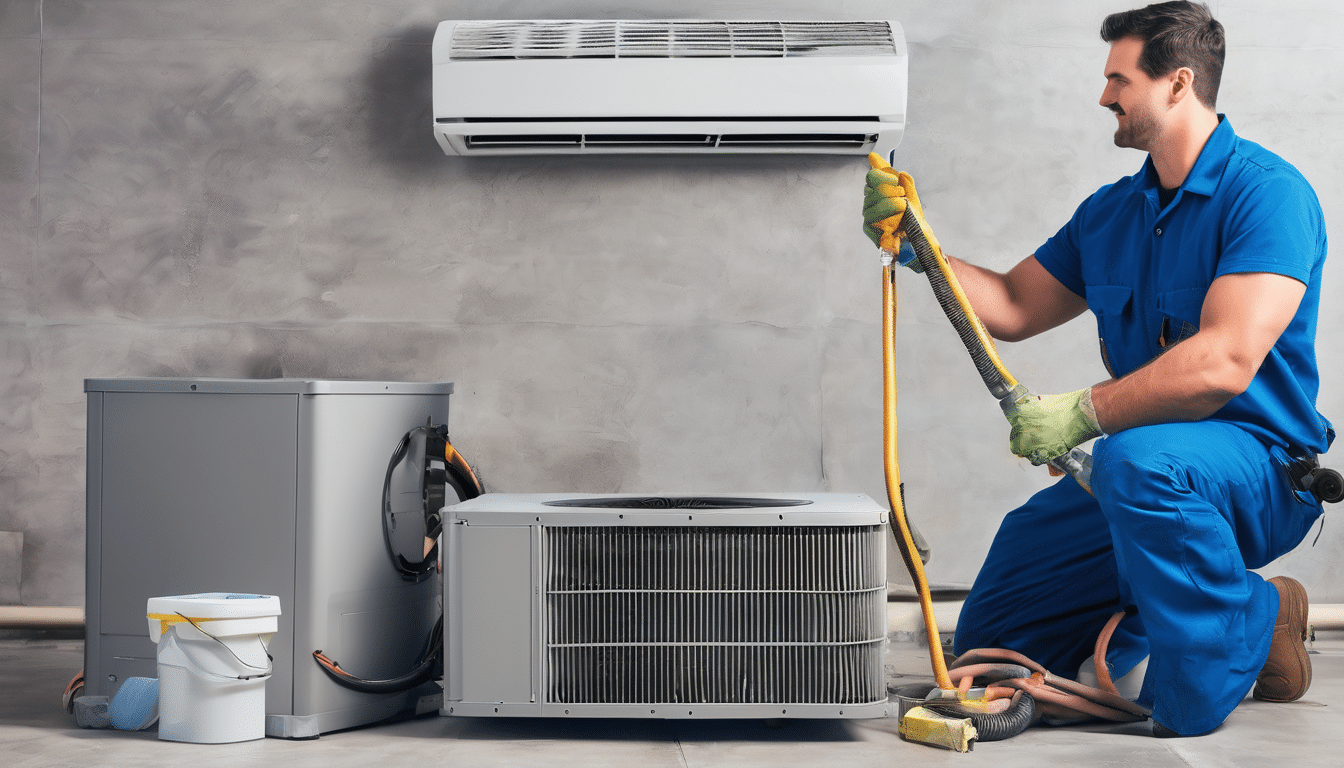
A qualified technician begins by isolating the system and accessing the air handling unit safely. Before any cleaning begins, a visual and diagnostic inspection of the coil condition is conducted. This includes assessing fin density, biofilm presence, surface corrosion, refrigerant oil contamination, and the condition of the drain pan beneath the coil. In Dubai villa systems, Saniservice specialists frequently identify drain pans with standing water and biofilm accumulation that has been overlooked during routine filter changes.
Cleaning Methodology for Evaporator Coils
Cleaning begins with HEPA-filtered vacuum extraction to remove loose particulate without dispersing it into the occupied space. A pH-appropriate coil cleaning solution — selected based on the coil material and contamination type — is applied and allowed to dwell. Foaming no-rinse formulations are commonly used for evaporator coils, as they penetrate fin channels and lift biofilm without requiring high-pressure rinse water that could damage fin geometry. Understanding AC Coil Cleaning and Sanitisation Dubai Guide helps with this aspect.
Following the chemical treatment, a low-pressure rinse is performed where system design allows. The drain pan is cleaned separately, and drain lines are flushed to confirm unobstructed condensate flow. In this AC Coil Cleaning and Sanitisation Dubai Guide, it is worth emphasising that drain line blockages are among the most common causes of water damage and secondary contamination in Dubai apartments — a step that should never be skipped.
AC Coil Cleaning and Sanitisation Dubai Guide – Condenser Coil Cleaning and Outdoor Unit Care
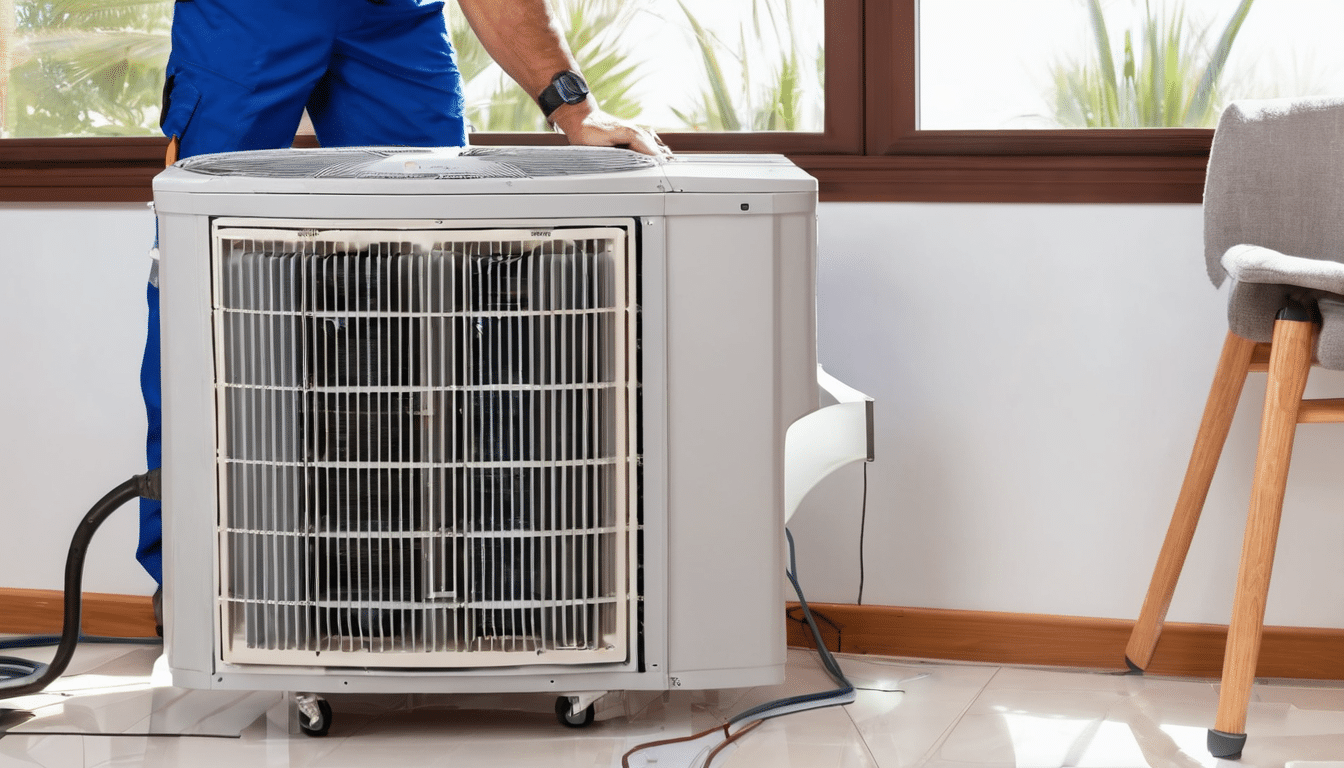
The condenser coil sits in the outdoor unit, rejecting heat absorbed from the indoor air. In Dubai’s outdoor environment, condenser coils accumulate construction dust, sand, cottonwood fibre during spring months, and in some locations, sea salt deposits. When the condenser coil becomes blocked, the system works harder to reject heat, compressor temperatures rise, and cooling performance degrades noticeably. AC Coil Cleaning and Sanitisation Dubai Guide factors into this consideration.
Condenser coil cleaning typically involves high-pressure water washing from the inside of the coil outward — pushing debris out rather than further into the fin matrix. In cases of heavy salt or mineral deposit accumulation, a descaling chemical treatment is applied first. After cleaning, condenser coil surfaces are inspected for fin damage that may require combing to restore airflow geometry. This step is consistently undervalued by basic maintenance services but is a standard component of a proper AC Coil Cleaning and Sanitisation Dubai Guide procedure.
Sanitisation — What It Means and Why It Differs from Cleaning
Cleaning removes visible contamination — dust, debris, and loosened biofilm. Sanitisation addresses the microbial residue that remains on coil surfaces after cleaning and is invisible to the naked eye. In a clinical or food-service environment, the distinction between clean and sanitised is regulated. In residential AC systems, it is equally important, though less commonly understood. This relates directly to AC Coil Cleaning and Sanitisation Dubai Guide.
Post-cleaning sanitisation involves the application of an antimicrobial treatment to coil surfaces, drain pans, and internal air handling unit walls. Saniservice uses hospital-grade, human-safe disinfectant formulations that are effective against bacteria and fungi while posing no inhalation risk to occupants when applied and ventilated correctly. The disinfectant is applied as a fine mist or foam, ensuring full surface contact across fin surfaces without over-saturation.
For families with children, elderly residents, or occupants with respiratory sensitivities, sanitisation is not optional — it is the step that converts a clean-looking system into a system that genuinely supports indoor wellbeing. This distinction is central to any honest AC Coil Cleaning and Sanitisation Dubai Guide that prioritises health outcomes over visual appearance alone.
How Dubai’s Climate Accelerates Coil Contamination
Four conditions specific to Dubai’s environment create a faster contamination cycle than in most other climates. First, year-round AC operation means coils never complete a full dry-out cycle. Second, indoor humidity during summer months — particularly in older buildings with inadequate vapour barriers — creates condensation conditions that extend beyond the coil itself. Third, fine desert dust and construction particulate infiltrate return air pathways at rates that standard filters cannot fully address. Fourth, sealed building envelopes recirculate indoor air without the natural dilution that opening windows would provide.
These four factors combine to create a contamination signature that is specific to Gulf region systems and that generic coil cleaning approaches, developed for temperate climates, do not fully address. NADCA-aligned methodology, adapted for Dubai’s operational realities, accounts for these conditions in both the cleaning protocol and the recommended service frequency. When considering AC Coil Cleaning and Sanitisation Dubai Guide, this becomes clear.
Frequency and Scheduling Recommendations
In Dubai residential environments, evaporator coil inspection and cleaning is recommended on an annual basis as a minimum, with sanitisation conducted at the same interval. Systems in environments with higher contamination exposure — post-renovation spaces, properties near construction activity, buildings with known humidity management issues, or households with pets — may benefit from a six-monthly service cycle.
Condenser coils in outdoor units exposed to heavy dust or coastal salt air should be inspected every six months, with cleaning performed as contamination levels indicate. Saniservice specialists assess both coils during a site inspection and recommend service frequency based on observed conditions rather than a generic schedule. This is a key principle in any credible AC Coil Cleaning and Sanitisation Dubai Guide — service timing should follow the system’s actual condition, not a calendar assumption.
Signs That Your Coils Need Professional Attention
There are several observable indicators that coil contamination has reached a level where professional service is warranted. Reduced cooling performance without a refrigerant fault is often the first sign — when the coil is insulated by biofilm, heat exchange efficiency drops and the system runs longer cycles to achieve the set temperature. Increased electricity consumption without changes in usage patterns frequently accompanies this.
Musty or sour odours from supply vents — particularly noticeable when the system first starts after a period of inactivity — are commonly associated with biological material on the evaporator coil or in the drain pan. Water overflow from the drain pan or visible water staining near indoor units indicates a blocked drain line, which is almost always accompanied by microbial growth in standing condensate. Each of these observations points to a coil and drainage system that requires professional assessment as a priority, not a routine filter change. The importance of AC Coil Cleaning and Sanitisation Dubai Guide is evident here.
What to Expect from a Professional Coil Service in Dubai
A complete, professional coil cleaning and sanitisation service in Dubai should include a pre-service inspection with documented findings, targeted cleaning of both evaporator and condenser coils using appropriate chemistry and methodology, drain pan and drain line cleaning, post-cleaning sanitisation, and a written report confirming the work completed. Saniservice documents the condition of the system before and after service, providing clients with verifiable evidence of the improvement achieved.
This documentation standard aligns with ISO 9001 quality management requirements and reflects the accountability expected of a health science company rather than a general maintenance provider. When evaluating service providers, this AC Coil Cleaning and Sanitisation Dubai Guide recommends requesting written confirmation of the methodology used, the chemicals applied (with safety data sheets), and the scope of work completed. These are reasonable expectations that a qualified provider will meet without hesitation.
Key Takeaways for Dubai Homeowners and Facility Managers
- Coil cleaning and sanitisation are distinct processes — cleaning removes contamination, sanitisation addresses microbial residue that remains after cleaning.
- Dubai’s year-round AC operation, humidity levels, and dust infiltration create a faster contamination cycle than temperate climates — service frequency should reflect this.
- Both evaporator and condenser coils require attention, using different methodologies suited to their distinct operating environments.
- Drain pan and drain line cleaning is inseparable from coil service — overlooking it leaves the primary site of moisture accumulation untreated.
- A professional service should include pre- and post-service documentation, not just a report that work was completed.
- Chemical selection matters — human-safe formulations applied correctly protect occupants and deliver measurable antimicrobial results.
Frequently Asked Questions
How often should AC coils be cleaned in Dubai?
For most Dubai residential and commercial systems, annual evaporator coil cleaning and sanitisation is the baseline recommendation. Properties near construction activity, post-renovation spaces, or systems in buildings with humidity management challenges may benefit from a six-monthly service cycle. A professional inspection determines appropriate frequency based on observed coil condition rather than a fixed calendar interval.
What is the difference between AC coil cleaning and sanitisation?
Coil cleaning removes visible contamination — dust accumulation, debris, and loosened biofilm from fin surfaces. Sanitisation applies an antimicrobial treatment to the cleaned surfaces, addressing microbial residue that remains after cleaning and is not visible to the naked eye. Both steps are necessary for a complete service that supports genuine indoor wellbeing, particularly in homes with children or occupants with respiratory sensitivities. Understanding AC Coil Cleaning and Sanitisation Dubai Guide helps with this aspect.
Why does my Dubai apartment AC smell musty even after a basic service?
Musty odours from AC vents are most commonly associated with biological material on the evaporator coil or standing condensate in a blocked drain pan. A basic filter change or surface wipe will not address contamination inside the air handling unit. The evaporator coil and drain system require professional access, targeted chemical treatment, and post-cleaning sanitisation to resolve the odour at its source.
Is AC coil sanitisation safe for families and children in Dubai homes?
When conducted by a qualified provider using hospital-grade, human-safe formulations with appropriate ventilation protocols, coil sanitisation poses no risk to occupants. Saniservice uses disinfectants selected for their efficacy and occupant safety profile, and technicians follow controlled application procedures that minimise chemical exposure during service. Post-service ventilation guidelines are provided to all clients before work begins. AC Coil Cleaning and Sanitisation Dubai Guide factors into this consideration.
Does coil cleaning improve cooling performance in Dubai villas?
Yes. Biofilm and dust accumulation on evaporator coil surfaces act as an insulating layer that reduces heat exchange efficiency between the refrigerant and passing air. Removing this layer restores the coil’s designed heat transfer capacity, which commonly results in measurable improvement in cooling performance, faster temperature recovery, and reduced energy consumption — all of which are frequently reported by Dubai villa residents after a complete coil cleaning service.
What does a professional AC coil cleaning service in Dubai include?
A complete professional service includes pre-service inspection and documentation, evaporator and condenser coil cleaning using chemistry appropriate to each coil’s contamination profile, drain pan cleaning, drain line flushing, post-cleaning antimicrobial sanitisation, and a written service report. Saniservice provides before-and-after documentation as standard, giving clients verifiable confirmation of the condition improvement achieved. This relates directly to AC Coil Cleaning and Sanitisation Dubai Guide.
How do I know when my Dubai home AC coils need professional cleaning?
Key indicators include reduced cooling performance without a refrigerant fault, increased electricity consumption, musty or sour odours from supply vents, water overflow or staining near indoor units, and visible dust accumulation around supply diffusers. Any one of these observations warrants a professional assessment. A qualified technician will inspect coil condition directly rather than estimating the need from external indicators alone.
The condition of your AC coils is one of the few aspects of indoor air quality that responds directly and measurably to professional intervention. This AC Coil Cleaning and Sanitisation Dubai Guide exists to give Dubai homeowners, villa residents, and facility managers the knowledge to act on what they observe and expect from what they commission. When the work is done properly — both evaporator and condenser, cleaned and sanitised, documented and verified — the difference is noticed in how the air feels and how the system performs, not just in a receipt confirming service was completed. To understand what your system’s coils currently look like, contact Saniservice for a property-specific assessment.