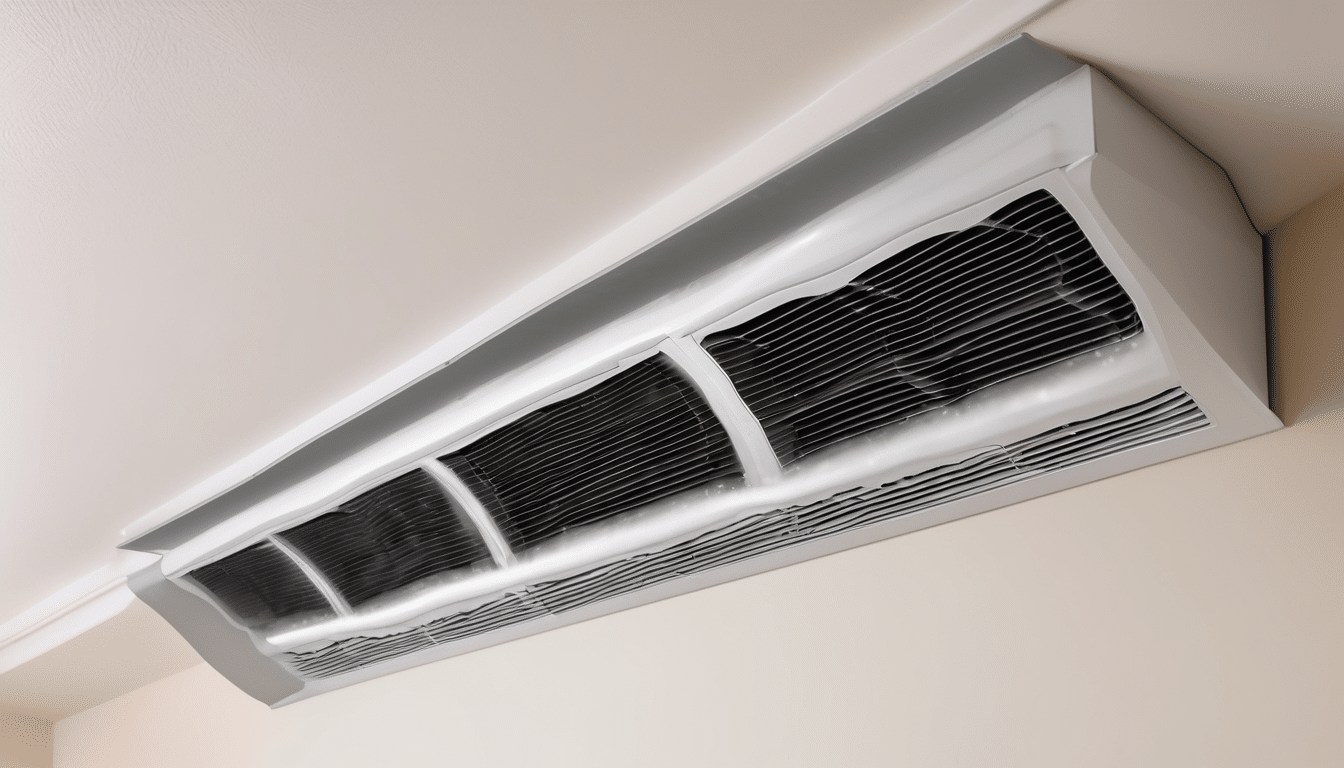
Does Duct Cleaning Actually Help? Dubai Homeowner Guide
Does duct cleaning actually help? It is one of the most reasonable questions a homeowner can ask, particularly in a region where AC systems run continuously and air quality is something families live inside every single day. The short answer is yes — but only when the cleaning is thorough, method-driven, and addresses the full system rather than the visible surfaces alone. In the UAE, where desert dust, coastal humidity, and sealed indoor environments combine, the case for properly executed duct cleaning is not theoretical. It is documented in before-and-after particulate counts, in reduced filter loading rates, and in the sensory difference families notice the moment they walk back through their front door.
The scepticism around duct cleaning is understandable. There are services that amount to little more than a vacuum inserted at the grille and a bill handed over at the door. That kind of approach does not help. It may redistribute particulate accumulation in ducts rather than remove it, and it almost certainly misses the coil bay, drain pan, and internal surfaces where the real contamination originates. The question is not whether duct cleaning helps in principle. The question is whether the specific service being performed addresses the actual contamination present in your system. This relates directly to Does Duct Cleaning Actually Help.
This guide covers the science behind what accumulates inside residential HVAC systems across the UAE, the conditions that make duct cleaning genuinely worthwhile, what a proper cleaning process involves, and how to assess whether a service has actually delivered. Whether you live in a Dubai villa, an Abu Dhabi apartment, or a Sharjah townhouse, the information here is drawn from field experience across all seven emirates and more than thirteen years of residential AC work.
Does Duct Cleaning Actually Help With Air Quality?
Contents
- 1 Does Duct Cleaning Actually Help With Air Quality?
- 2 What Actually Accumulates Inside UAE Duct Systems
- 3 Does Duct Cleaning Actually Help After Renovation?
- 4 The Conditions That Make Duct Cleaning Worth Doing
- 5 Does Duct Cleaning Actually Help With Energy Efficiency?
- 6 What a Proper Duct Cleaning Process Looks Like
- 7 Does Duct Cleaning Actually Help Families With Allergies?
- 8 How Often Should UAE Home Systems Be Cleaned?
- 9 Expert Takeaways From Thirteen Years of UAE Residential AC Work
- 10 Frequently Asked Questions
- 10.1 Does duct cleaning actually help reduce dust in the home?
- 10.2 How do I know if my Dubai home’s ducts actually need cleaning?
- 10.3 Does duct cleaning actually help with AC odours?
- 10.4 Is duct cleaning worth it for apartment AC systems in Sharjah or Ajman?
- 10.5 How long does it take for ducts to get dirty again after cleaning?
- 10.6 Can duct cleaning help with my child’s allergy symptoms at home?
- 10.7 Does duct cleaning actually help with energy consumption in UAE summer?
- 11 The Difference You Notice Before You Name It
Duct cleaning, performed properly, can measurably reduce the concentration of particulate matter and biological contaminants circulating through a home’s air supply. NADCA-aligned methodology — which is the recognised standard for residential and commercial air duct cleaning — identifies the full system as a contamination pathway, not just individual sections of ductwork. When that standard is applied, the improvement in air quality is real and verifiable.
In the UAE context, the particulate accumulation in ducts is not subtle. Fine desert dust, construction particulate from surrounding development activity, and fibres from furnishings all enter through fresh air intakes and recirculation systems. Over time, these settle across the internal surface area of ductwork — sometimes centimetres deep in systems that have not been cleaned in several years. Every time the fan runs, that material is mobilised and delivered directly into the breathing zone. When considering Does Duct Cleaning Actually Help, this becomes clear.
The health relevance of this is well established within respiratory medicine and indoor air quality science. Particulate matter in the PM2.5 and PM10 ranges, which are the fractions most commonly found in residential duct systems, are associated with irritation of the upper respiratory tract, aggravated asthma symptoms, and increased allergy responses. For families with children, elderly residents, or occupants with documented respiratory sensitivities, reducing the particulate load in the air supply is not cosmetic maintenance. It is a genuine contribution to daily wellbeing.
Does duct cleaning actually help with these outcomes? Based on field investigations and the post-service measurements conducted through Saniservice’s in-house quality process, properly executed cleaning consistently reduces visible particulate at diffusers and extends the interval before filters reach their loading capacity. That is a measurable result, not an assumption.
What Actually Accumulates Inside UAE Duct Systems
Understanding what duct cleaning addresses requires knowing what is actually present inside the system. Duct contamination in UAE homes follows a pattern shaped by the local environment, the construction methods used, and the continuous operation of air conditioning across all twelve months of the year.
Desert Dust and Fine Particulate
The UAE’s desert environment means that fine silica-based dust is in constant circulation outdoors. During periods of shamal wind, dust concentrations rise sharply, and that particulate enters buildings through any gap in the building envelope — including outdoor air intakes on HVAC systems. Over months and years, this material builds up on duct walls, particularly in horizontal runs and near supply diffusers where airflow slows. The accumulation is often grey-brown in colour, compacted against internal surfaces, and significantly heavier than what accumulates in more temperate climates. The importance of Does Duct Cleaning Actually Help is evident here.
Moisture-Driven Microbial Conditions in Coil Bay
The evaporator coil, drain pan, and the section of ductwork immediately downstream from the air handling unit operate in persistently humid conditions. The evaporator coil removes moisture from indoor air as part of the cooling process, and that condensation must drain away continuously. When drain lines partially block, when drain pans accumulate biofilm, or when coil fin surfaces develop a coating of organic material, the moisture-driven microbial conditions in the coil bay become a continuous contamination source for the entire duct system downstream.
This is one of the most important things to understand about duct cleaning: ducts that are cleaned without also addressing the coil and drain pan will recontaminate within weeks. The downstream ductwork is only as clean as the air passing through it, and that air originates from the coil bay. Understanding Does Duct Cleaning Actually Help helps with this aspect.
Post-Construction Particulate
In a city like Dubai, where renovation and new construction are constant, post-construction particulate accumulation in ducts is an extremely common finding. Gypsum dust, concrete particulate, paint aerosols, adhesive fumes, and sealant compounds all enter duct systems during fit-out and finishing work. Without a dedicated post-construction duct cleaning and sanitisation protocol, these materials remain inside the system and are delivered into the indoor air every time the AC operates.
Does Duct Cleaning Actually Help After Renovation?
Post-construction and post-renovation duct cleaning is one of the clearest examples of where duct cleaning genuinely helps. Field investigations consistently show that systems in homes that have undergone kitchen renovations, bathroom retiling, or full apartment fit-outs carry significant quantities of construction particulate inside the ductwork — often in spaces that were sealed during the work but still received material through return air paths. Does Duct Cleaning Actually Help factors into this consideration.
The composition of post-renovation duct contamination is distinct from standard dust accumulation. Gypsum and calcium carbonate compounds from plasterboard cutting are fine enough to pass through standard filter media and settle deep inside duct runs. When these materials are disturbed by airflow, they present a respiratory irritant. This is particularly relevant in homes where young children or elderly residents spend extended periods in air-conditioned rooms.
A proper post-construction duct cleaning in this context uses HEPA-filtered negative pressure containment to capture dislodged particulate rather than simply redistributing it. The cleaning process is documented with before-and-after photography inside the duct system, and a full system disinfection is performed to address any microbial conditions that may have developed during the period when the system was running through construction activity. This relates directly to Does Duct Cleaning Actually Help.
Does duct cleaning actually help in this scenario? Consistently, and verifiably. The difference between a post-renovation system that has been properly cleaned and one that has not is measurable in filter loading rates within the first two weeks of operation.
The Conditions That Make Duct Cleaning Worth Doing
Not every home requires duct cleaning at the same frequency, and honest assessment of need matters more than a scheduled commercial push. Based on field experience across UAE residential properties, the following conditions justify professional duct cleaning. When considering Does Duct Cleaning Actually Help, this becomes clear.
Visible Particulate at Diffusers
Grey or brown residue visible at supply diffusers is a reliable indicator that particulate accumulation in ducts has reached the point where it is being transported into the room during each cycle. This is not always a sign of neglect — in high-dust environments near construction zones or during periods of increased wind activity, accumulation can occur quickly even in well-maintained systems.
Persistent Odours From Supply Vents
A musty or sour smell from AC vents that does not resolve after filter replacement almost always traces back to organic material in the coil bay or drain pan. This is a moisture-driven microbial condition, and the odour will return within days of any cleaning that does not address the root source. Full system cleaning including coil, drain pan, and drain line is required to resolve it. The importance of Does Duct Cleaning Actually Help is evident here.
Reduced Airflow From Specific Diffusers
When airflow from one or more supply diffusers drops noticeably while others remain strong, partial blockage within the duct run is a likely cause. This is common in flexible duct systems where sections can sag, kink, or accumulate sufficient particulate to restrict the internal diameter. Duct cleaning combined with duct inspection identifies and resolves these restrictions.
New Occupancy or Long Vacancy
Homes that have been unoccupied for extended periods, or that are receiving new occupants after a tenancy change, benefit significantly from a full system clean. During vacancy, systems may run intermittently or not at all, allowing moisture to remain on coil surfaces without the natural drying effect of regular airflow. This creates conditions where microbial growth can establish before the new occupants arrive. Understanding Does Duct Cleaning Actually Help helps with this aspect.
Allergy and Respiratory Sensitivity Complaints
When occupants — particularly children — experience worsening allergy or asthma symptoms that correlate with time spent indoors rather than outdoors, the air conditioning system is a reasonable first point of investigation. Does duct cleaning actually help in this context? When the system inspection confirms elevated particulate or microbial conditions, proper cleaning combined with a professional-grade bio-sanitiser treatment has been observed to reduce symptom frequency in sensitive occupants.
Does Duct Cleaning Actually Help With Energy Efficiency?
This is a question that deserves a direct answer, because it is frequently used as a primary selling point by cleaning services, sometimes beyond what the evidence supports. The honest position is this: duct cleaning alone has a modest and indirect effect on energy consumption. Coil cleaning, on the other hand, has a well-documented and significant effect. Does Duct Cleaning Actually Help factors into this consideration.
An evaporator coil coated in biofilm, organic material, or mineral deposits cannot transfer heat efficiently. The coil surface is designed to allow cold refrigerant to extract heat from warm indoor air passing across the fins. When those fins are coated, the thermal exchange is impaired, the compressor must run longer to achieve the set temperature, and electricity consumption increases accordingly. ASHRAE engineering data consistently supports the relationship between coil fouling and reduced system efficiency.
Coil cleaning is a critical component of any full system clean. When coils are restored to a clean surface condition, the system’s efficiency recovers. This is particularly relevant in UAE homes during summer months when outdoor temperatures exceed 45°C and systems operate at maximum load for extended periods. The financial case for coil cleaning, in this climate, is real. This relates directly to Does Duct Cleaning Actually Help.
Does duct cleaning actually help with energy bills? Through its effect on airflow balance and coil condition, yes. Through duct cleaning alone without addressing the coil, the impact is more limited. Any service that claims dramatic energy savings from duct cleaning alone, without measuring coil condition, is overstating the evidence.
What a Proper Duct Cleaning Process Looks Like
The quality of duct cleaning is entirely determined by the process applied, not by the presence of a technician with a vacuum. A process that delivers measurable improvement in a UAE residential system involves several distinct stages, each addressing a different contamination pathway. When considering Does Duct Cleaning Actually Help, this becomes clear.
System Inspection and Contamination Assessment
A professional service begins with a systematic inspection of the air handling unit, coil bay, drain pan, and accessible duct sections before any cleaning begins. This assessment documents the type and extent of contamination present and determines the appropriate cleaning methodology and disinfection protocol for that specific system. In systems where internal duct access is limited, video inspection tools document conditions that would otherwise be invisible.
HEPA-Filtered Negative Pressure Containment
NADCA-aligned duct cleaning uses negative pressure to capture dislodged particulate rather than allowing it to enter the room. A HEPA-filtered negative air machine is connected to the duct system to create this containment, ensuring that the cleaning process does not redistribute contaminants into the home. This is a non-negotiable component of a professional-standard service. The importance of Does Duct Cleaning Actually Help is evident here.
Mechanical Agitation and Extraction
Compressed air agitation tools, rotary brushes, and contact vacuum extraction are applied to dislodge and remove particulate accumulation from duct walls, supply plenums, and return air pathways. The method used depends on duct material — galvanised iron ducts, flexible ducts, and pre-insulated duct board systems each require a different approach to avoid damaging the internal lining while achieving full particulate removal.
Coil and Drain Pan Cleaning
The evaporator coil is cleaned using a coil-safe cleaning agent applied to the fin surface, followed by a controlled rinse process that removes biofilm and mineral deposits without forcing material into the drain pan. The drain pan is mechanically cleaned and flushed, and the condensate drain line is cleared and treated to prevent biofilm reformation. Understanding Does Duct Cleaning Actually Help helps with this aspect.
Disinfection With Approved Bio-Sanitiser
Following physical cleaning, the entire internal system is treated with a Dubai Municipality approved, eco-friendly bio-sanitiser. SaniHome applies the Swiss Concept of Disinfection — a professional-grade antimicrobial treatment that addresses moisture-driven microbial conditions across the coil bay, duct surfaces, and drain pan without leaving residues that affect indoor air quality after treatment. The choice of disinfectant matters, particularly in homes where children, elderly residents, or occupants with sensitivities are present.
Does Duct Cleaning Actually Help Families With Allergies?
For families managing diagnosed respiratory sensitivities, duct cleaning is one element of a broader indoor air quality strategy, not a standalone cure. However, its contribution is meaningful when the contamination profile of the system justifies it. Does Duct Cleaning Actually Help factors into this consideration.
Common allergens circulated through AC systems in UAE homes include house dust mite fragments, pet dander, pollen particles captured from outdoor air, and fungal spores associated with moisture-driven microbial conditions in coil bays. Each of these is an established respiratory trigger for sensitised individuals, and each is present in the particulate load inside a system that has not been properly cleaned.
Reducing the allergen load in the air supply through thorough duct cleaning and disinfection does not eliminate allergy as a health issue, but it does remove one significant and continuous source of exposure. Parents of children with diagnosed asthma or allergic rhinitis frequently report a perceptible change in their child’s night-time symptoms after a full system clean — an observation that is consistent with the reduction in airborne allergen concentration that a properly executed service delivers. This relates directly to Does Duct Cleaning Actually Help.
Does duct cleaning actually help in this context? When the system inspection confirms meaningful contamination and the cleaning is performed to a documented standard, the answer — based on consistent field observation — is yes.
How Often Should UAE Home Systems Be Cleaned?
Cleaning frequency is a function of the conditions each system operates in, not a fixed calendar interval. However, based on field experience across UAE residential properties, the following general framework is applicable. When considering Does Duct Cleaning Actually Help, this becomes clear.
For Dubai and Abu Dhabi villas with ducted central AC systems operating year-round, a full system clean every twelve to eighteen months is a reasonable baseline where no exceptional contamination conditions are present. Homes near active construction, homes with pets, homes that have recently undergone renovation, or homes occupied by residents with respiratory sensitivities warrant more frequent assessment.
For apartment systems in Sharjah, Ajman, Ras Al Khaimah, Umm Al Quwain, and Fujairah — where split AC units rather than central ducted systems are more common — cleaning intervals depend on filter loading rates, the presence of any odour, and visible diffuser condition. An annual service that includes coil cleaning, drain pan clearing, and disinfection is a defensible standard for continuous-use systems in the UAE climate.
The most reliable indicator that a system needs attention is not a calendar date. It is a combination of reduced airflow, visible particulate at diffusers, persistent odour, or an assessment by a qualified HVAC hygiene specialist who can inspect internal conditions rather than estimating from external appearance alone.
Expert Takeaways From Thirteen Years of UAE Residential AC Work
Over thirteen years working across UAE homes from Dubai Marina to Ajman and Fujairah, a number of consistent observations have shaped the way SaniHome approaches residential duct cleaning.
- Ducts that are cleaned without coil and drain pan attention will show the same contamination pattern within six to eight weeks. Root-cause thinking is non-negotiable.
- Post-construction duct cleaning is among the most impactful services available to UAE homeowners, because construction particulate accumulation is both heavy and persistent, and it begins circulating from day one of AC operation.
- The chemical used for disinfection matters as much as the physical cleaning process. Human-safe, Dubai Municipality approved bio-sanitisers, applied by trained technicians with proper ventilation protocols, protect occupants during and after the service.
- HEPA-filtered negative pressure containment is not optional in a properly executed service. Without it, cleaning redistributes rather than removes particulate, and the system is no cleaner than before.
- The families who benefit most from regular duct cleaning are not the ones who wait for a visible problem. They are the ones who treat AC hygiene as a scheduled component of home maintenance, the same way they service their water heater or replace their filters.
Frequently Asked Questions
Does duct cleaning actually help reduce dust in the home?
Yes, when performed to a documented standard. Particulate accumulation in ducts is mobilised by airflow each time the system runs, contributing to the dust that settles on surfaces throughout the home. A thorough duct clean using HEPA-filtered negative pressure containment removes this material and reduces the system’s contribution to indoor particulate levels. Results are observable in filter loading rates within weeks of a properly executed service.
How do I know if my Dubai home’s ducts actually need cleaning?
The most reliable indicators are visible grey residue at supply diffusers, persistent musty odour from vents, reduced airflow from specific rooms, or a history of renovation activity with no subsequent duct cleaning. A professional inspection by a qualified HVAC hygiene specialist provides a documented assessment of actual conditions inside the system rather than an assumption based on age or calendar interval.
Does duct cleaning actually help with AC odours?
Musty or sour AC odours almost always originate from moisture-driven microbial conditions in the coil bay and drain pan rather than from the ducts themselves. Duct cleaning alone will not resolve these odours permanently. A full system clean that addresses the evaporator coil, drain pan, and condensate drain line, followed by treatment with a professional-grade bio-sanitiser, is required to eliminate the source and prevent recurrence.
Is duct cleaning worth it for apartment AC systems in Sharjah or Ajman?
For split AC units common in Sharjah and Ajman apartments, the equivalent service includes deep cleaning of the indoor unit’s coil, blower wheel, and drain pan. These components carry the same contamination patterns as ducted systems — biofilm, particulate accumulation, and moisture-driven microbial conditions — and cleaning them delivers the same measurable improvement in air quality and system performance relevant to all UAE residential environments.
How long does it take for ducts to get dirty again after cleaning?
The recontamination rate depends primarily on filter quality and maintenance, proximity to construction activity, and whether the coil and drain pan were cleaned at the same time as the ducts. A properly cleaned system with well-maintained filters in a normal residential environment typically shows gradual recontamination over twelve to eighteen months before reaching the threshold that warrants the next full service. Systems near active construction or with degraded filters can reach that threshold more quickly.
Can duct cleaning help with my child’s allergy symptoms at home?
When a system inspection confirms meaningful particulate or biological contamination, professional duct cleaning and disinfection can reduce the allergen load delivered through the air supply — a continuous and direct exposure pathway. Whilst duct cleaning is not a medical treatment, reducing airborne allergen concentration in the bedroom and living areas where sensitised children spend the most time is a documented and rational component of indoor allergen management.
Does duct cleaning actually help with energy consumption in UAE summer?
The most significant efficiency gain comes from cleaning the evaporator coil rather than the ducts alone. A coil coated in biofilm or mineral deposits impairs heat exchange, forcing the compressor to run longer to achieve the set temperature. In UAE summers where outdoor temperatures regularly exceed 45°C, clean coils are directly relevant to system efficiency and electricity consumption. Full system cleaning that includes the coil restores this performance in a way that duct cleaning alone cannot.
The Difference You Notice Before You Name It
Does duct cleaning actually help? The most accurate answer is this: when it is performed properly — addressing the full system, not just the accessible ducts — it delivers a measurable improvement in particulate levels, a genuine resolution of odour complaints, a documented reduction in allergen load, and a restored operating efficiency in the coil. These are not marketing claims. They are outcomes that proper methodology consistently produces.
For UAE families running their AC systems every day across every month of the year, the cumulative effect of what those systems carry matters. The air in a properly cleaned and maintained HVAC system is not the same as the air in one that has been running for two years without attention. Most occupants know this the moment they walk back into their home after a proper service — before they can name the difference, they feel it.
SaniHome delivers residential AC cleaning and disinfection across all seven emirates to NADCA-aligned standards, using Dubai Municipality approved bio-sanitisers and before-and-after documentation in every service. If your system has not been inspected recently, or if you are seeing any of the indicators described in this guide, a professional assessment is the right starting point. Does duct cleaning actually help? In a home like yours, in a climate like this, the evidence says yes — when it is done right.