Does Duct Disinfection Remove Smoke Odour Permanently in UAE
Does duct disinfection remove smoke odour permanently? It is one of the most common questions I receive from homeowners across Dubai, Sharjah, and Abu Dhabi who have noticed a lingering cigarette or smoke smell each time their AC runs. The short answer is: it depends heavily on how deeply the smoke has penetrated the system, and whether the right treatment protocol is applied.
Smoke odour inside AC ducts is not simply a surface issue. Tobacco smoke, shisha fumes, and fire-related smoke all carry microscopic particles and volatile organic compounds (VOCs) that bind to duct linings, coil surfaces, insulation, and drain components. A basic wipe-down will not address this. Does Duct Disinfection remove smoke odour permanently requires a complete assessment of system contamination, followed by targeted chemical treatment across every affected component.
This pricing guide breaks down what the process involves, what it realistically costs in AED across different property types in the UAE, and when additional treatments may be necessary to achieve lasting results.
How Smoke Gets Inside AC Duct Systems in the UAE
Contents
- 1 How Smoke Gets Inside AC Duct Systems in the UAE
- 2 Does Duct Disinfection Remove Smoke Odour Permanently — What the Process Actually Does
- 3 Factors That Determine Whether Smoke Odour Returns
- 4 Does Duct Disinfection Remove Smoke Odour Permanently — Pricing Guide for UAE
- 5 Pricing Table by Property Type
- 6 Does Duct Disinfection Remove Smoke Odour Permanently Without Coil Treatment
- 7 Health Risks of Smoke Smell in AC Vents — Dubai Perspective
- 8 Does Duct Disinfection Remove Smoke Odour Permanently — Expert Tips for Long-Term Results
- 9 When an Air Purifier Supports Duct Disinfection
- 10 Conclusion
In Dubai and across the UAE, air conditioning runs continuously for most of the year. During the summer months, outdoor temperatures regularly exceed 42°C, which means windows stay closed and all air is recirculated through the HVAC system. This creates a closed-loop environment where any smoke generated indoors is pulled directly into the return air pathway and distributed through the ducts.
Cigarette smoke, shisha smoke, and even cooking fumes contain fine particulate matter and oily residue. As this air passes through the system, particles settle onto duct walls, accumulate on evaporator coil fins, coat the blower fan, and embed into flexible duct insulation. Over time, this residue becomes a persistent odour source that no amount of ventilation alone can clear.
In properties where smoking has occurred daily over several months or years, the contamination is often structural — meaning it has penetrated insulation liners and coated internal surfaces deeply enough that surface-level disinfection will not achieve permanent removal.
Does Duct Disinfection Remove Smoke Odour Permanently — What the Process Actually Does
Does duct disinfection remove smoke odour permanently is best answered by understanding what professional-grade disinfection actually addresses. A proper smoke odour treatment is not a single spray-and-leave application. It is a multi-stage process that targets every component where odour compounds have settled.
Stage One — Mechanical Cleaning
The first stage involves physically removing accumulated dust, particulate matter, and smoke residue from duct walls using negative pressure equipment and rotary brush systems. This step is essential before any chemical treatment, because disinfectants cannot penetrate through layers of settled contamination.
Stage Two — Evaporator Coil and Drain Treatment
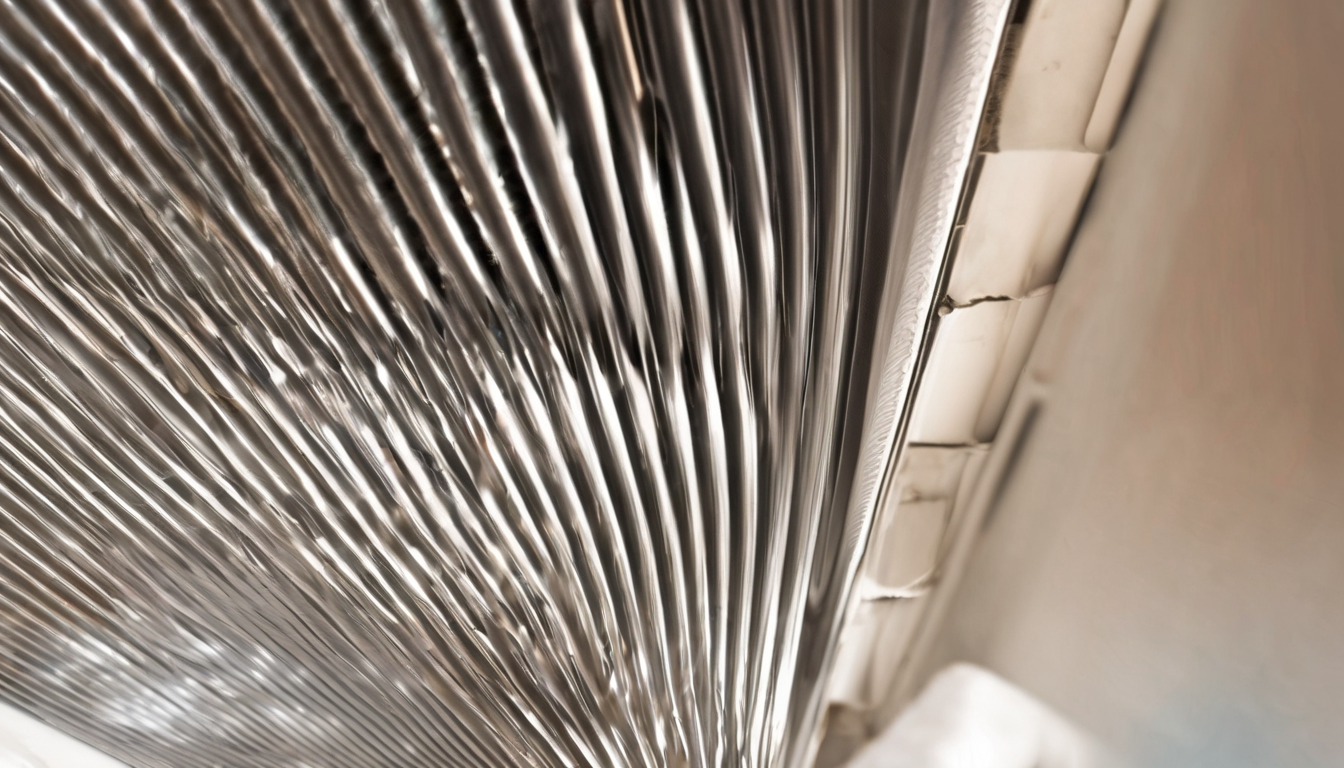
Smoke particles accumulate heavily on evaporator coil fins because all return air passes directly through them. A deep coil clean using appropriate chemical agents removes the oily smoke film. The drain pan and condensate line are also treated to eliminate residue that has washed down from the coil surface.
Stage Three — Odour-Neutralising Disinfection
Specialised antimicrobial and odour-neutralising agents are applied throughout the duct system using fogging or misting equipment. These agents chemically break down VOC compounds rather than masking them with fragrance. This is the critical distinction between a genuine disinfection service and a basic deodorising spray.
Factors That Determine Whether Smoke Odour Returns
Does duct disinfection remove smoke odour permanently in every case? Not necessarily. Several variables influence whether odour returns after treatment, and understanding these helps set realistic expectations.
- Duration of exposure: Systems exposed to daily smoking over two or more years often have smoke compounds embedded in pre-insulated duct liners. In these cases, permanent removal may require section replacement rather than cleaning alone.
- Duct material: Flexible ducts with fibrous internal linings absorb and retain smoke compounds more deeply than galvanised iron (GI) ductwork. GI systems respond better to chemical treatment.
- Whether the source is eliminated: Disinfection cannot produce permanent results if smoking continues inside the property without adequate source control. The system will recontaminate within weeks.
- Completeness of treatment: If coils, blower fans, or drain components are skipped, those untreated areas will continue releasing odour compounds into the air stream regardless of how well the ducts were cleaned.
- Filter replacement: AC filters saturated with smoke residue must be replaced as part of any treatment. Reusing contaminated filters immediately reintroduces the problem.
Does Duct Disinfection Remove Smoke Odour Permanently — Pricing Guide for UAE
Does duct disinfection remove smoke odour permanently at a single flat rate? No. Pricing in the UAE varies considerably based on property size, system complexity, degree of contamination, and whether additional treatments such as coil cleaning or ozone treatment are included.
Below is a realistic cost breakdown based on current market rates across Dubai, Abu Dhabi, Sharjah, and the Northern Emirates. These figures reflect professional-grade service with genuine odour-neutralising treatment, not basic AC cleaning.
Base Duct Disinfection with Smoke Odour Treatment
This covers mechanical duct cleaning, odour-neutralising disinfection fogging, filter replacement, and a basic drain pan clean. It does not include deep coil treatment or ozone shock treatment.
- Studio and one-bedroom apartment: AED 350 – AED 550
- Two to three bedroom apartment: AED 550 – AED 850
- Three to four bedroom villa: AED 900 – AED 1,500
- Large villa (five or more bedrooms): AED 1,500 – AED 2,500
- Commercial office space per 100 sq m: AED 400 – AED 700
Additional Treatments That Affect Total Cost
For severe or long-term smoke contamination, additional treatments are often required to achieve results that last.
- Deep evaporator coil chemical clean per unit: AED 200 – AED 450
- Blower fan cleaning per unit: AED 150 – AED 300
- Ozone shock treatment (whole property): AED 400 – AED 800
- Duct section replacement (per linear metre, GI): AED 80 – AED 150
- Flexible duct replacement (per linear metre): AED 50 – AED 100
- HEPA filter upgrade per unit: AED 120 – AED 250
Pricing Table by Property Type
| Property Type | Basic Smoke Disinfection | Full Treatment (Coils + Ozone) |
|---|---|---|
| Studio / 1 Bedroom Apartment | AED 350 – AED 550 | AED 700 – AED 1,100 |
| 2–3 Bedroom Apartment | AED 550 – AED 850 | AED 1,000 – AED 1,600 |
| 3–4 Bedroom Villa | AED 900 – AED 1,500 | AED 1,800 – AED 2,800 |
| Large Villa (5+ Bedrooms) | AED 1,500 – AED 2,500 | AED 2,800 – AED 4,500 |
| Commercial Office (per 100 sq m) | AED 400 – AED 700 | AED 800 – AED 1,400 |
These ranges reflect professional service providers operating in Dubai, Abu Dhabi, and Sharjah. Significantly lower quotes — particularly below AED 250 for any property type — often indicate that coil treatment, proper negative pressure equipment, and genuine odour-neutralising chemistry are not included.
Does Duct Disinfection Remove Smoke Odour Permanently Without Coil Treatment
Does duct disinfection remove smoke odour permanently when the coils are not treated? In my experience working across Dubai’s residential sector, the answer is almost always no. The evaporator coil is the primary surface through which all return air passes. If smoke residue has coated the coil fins — which it will in any system used in a smoking environment — that residue will continue releasing odour compounds each time the AC operates.
I have assessed properties where duct disinfection was carried out by a previous company, yet the smoke smell returned within two weeks. In every case, the coils had not been cleaned. The ducts were treated effectively, but the contaminated coil continued to condition and distribute odour-laden air throughout the property.
For genuine permanence, the coil treatment is not optional. It is a core component of any credible smoke odour removal service.
Health Risks of Smoke Smell in AC Vents — Dubai Perspective
Beyond odour, there are meaningful health considerations when smoke compounds are present in an AC system. In Dubai and the UAE, where residents spend the vast majority of their time indoors with sealed windows and continuously recirculating air, contaminated duct systems represent a sustained exposure risk.
Tobacco smoke residue contains over 7,000 compounds, many of which are classified as toxic or carcinogenic. When these compounds settle inside ductwork and are then continuously recirculated through the air stream, occupants are exposed to low-level but ongoing contamination. Children, elderly residents, and those with asthma or respiratory sensitivities are particularly vulnerable.
Thirdhand smoke — the residue that clings to surfaces after the smoke source is gone — is especially relevant inside AC ducts because it is reactivated by heat and airflow. Every cooling cycle reintroduces these compounds into the breathing environment. This is why does duct disinfection remove smoke odour permanently is not just a comfort question — it is a genuine health consideration for families living in these spaces.
Does Duct Disinfection Remove Smoke Odour Permanently — Expert Tips for Long-Term Results
After thirteen years of working on smoke-contaminated AC systems across Dubai, Abu Dhabi, and Sharjah, I have identified the most important factors that determine whether results are lasting. Does duct disinfection remove smoke odour permanently when these steps are followed correctly? In most cases, yes — or the improvement is significant enough to be considered permanent under normal conditions.
- Always replace filters: Never reinstall a smoke-saturated filter after disinfection. Replace with a quality pleated filter rated MERV 11 or higher, and plan replacements every 30–45 days in smoking environments.
- Include blower fan cleaning: Smoke residue accumulates on blower fan blades and housing. A clean duct system will still distribute odour if the fan is not addressed.
- Request fogging documentation: Ask the service provider to confirm which odour-neutralising chemical was used. Generic fragrance-based sprays mask odour temporarily. True VOC-neutralising agents eliminate it chemically.
- Consider ozone treatment for severe cases: Ozone shock treatment, carried out in an unoccupied space, reaches surfaces that chemical fogging cannot. It is effective for deeply embedded smoke compounds but requires careful application and proper ventilation before reoccupancy.
- Assess duct integrity: In systems with heavily contaminated flexible duct liners, replacement may be more cost-effective than repeated cleaning. A qualified technician should assess whether the liner can be restored or requires section-by-section replacement.
- Schedule a follow-up inspection: A professional inspection at four to six weeks after treatment confirms whether the treatment was effective or whether any component requires further attention.
When an Air Purifier Supports Duct Disinfection
Does duct disinfection remove smoke odour permanently on its own, or is an air purifier also needed? For most properties, a complete professional duct and coil disinfection service is sufficient. However, in cases of ongoing smoke exposure — where a household member continues smoking indoors — an air purifier with a true HEPA filter and activated carbon layer can meaningfully reduce the rate at which the AC system recontaminates.
Activated carbon is particularly effective at capturing VOCs and smoke compounds before they enter the return air pathway. Placing a portable unit with activated carbon filtration in rooms where smoking occurs reduces the load on the AC system and extends the effectiveness of any duct disinfection treatment.
An air purifier is a supportive measure, not a replacement for proper duct disinfection. It will not remove existing smoke residue from coils or duct surfaces. It is most useful as a preventive layer once the primary system has been professionally treated.
Conclusion
Does duct disinfection remove smoke odour permanently? The honest answer is: yes, in most cases — provided the treatment is comprehensive, covering ducts, coils, the blower fan, drain components, and filters as a complete system rather than individual parts in isolation. In properties with long-term heavy smoke contamination, ozone treatment or partial duct replacement may also be necessary to achieve lasting results.
In Dubai and across the UAE, where AC systems run continuously in sealed indoor environments, does duct disinfection remove smoke odour permanently is more than an aesthetic concern. It directly affects the air quality that families breathe every day. Investing in the right treatment — not the cheapest quote — is what separates a lasting result from a problem that returns within weeks.
Does duct disinfection remove smoke odour permanently when carried out by a qualified specialist using professional-grade chemistry and proper equipment? In most cases, yes. The key is ensuring every component of the system is treated, not just the visible duct openings. If you are dealing with persistent smoke odour in your home or commercial space across the UAE, arrange a professional inspection to assess the degree of contamination before committing to a treatment plan.