How Humidity Affects AC Ducts in UAE Summers Dubai Guide
There is a moment in early June when the air in Dubai shifts. The temperature has been climbing for weeks, but now something else arrives — weight. That heaviness is humidity, and while you feel it the moment you step outside, your AC duct system is already responding to it deep within your walls. Understanding How Humidity Affects AC ducts in UAE summers is one of the most practical things a Dubai homeowner can do, because what happens inside those ducts directly shapes the air your family breathes every day.
How humidity affects AC ducts in UAE summers is not a single event. It is a continuous process that unfolds across the cooling season, compounding with each week of elevated moisture exposure. Dubai and the broader UAE experience relative humidity levels that regularly exceed 80% between June and September. In coastal areas of Abu Dhabi, Ajman, and Ras Al Khaimah, maritime influence can push those figures even higher. The AC system, running continuously to maintain indoor comfort, becomes the primary interface between that outdoor moisture and your indoor environment.
This article draws on field observations from over a decade of duct assessment and cleaning across Dubai’s residential and commercial sectors. The patterns described here are commonly observed during professional assessments in villas, apartments, and mid-rise towers throughout the UAE. What you understand about moisture dynamics in your ductwork will directly inform how well — and how often — you maintain it.
Why UAE Summers Create Unique Duct Conditions
Most international guidance on HVAC hygiene was developed for climates with seasonal variation — winters that allow systems to rest, dry out, and recover. The UAE offers no such reprieve. Dubai’s AC systems operate twelve months a year, with the most demanding period running from May through October. This continuous operation means that moisture-related contamination processes inside ductwork are never interrupted by a dry season. This relates directly to How Humidity Affects AC Ducts in UAE Summers.
Understanding how humidity affects AC ducts in UAE summers requires appreciating this distinction. In a temperate climate, a duct system might accumulate biological matter over a warm season and then naturally dry and stabilise during winter. In Dubai, the system never dries. Condensate drainage remains active. Relative humidity indoors, even with air conditioning, often sits between 55% and 65%. That range is precisely the threshold at which biological growth on duct surfaces becomes a consistent possibility rather than an occasional risk.
The Desert-Humidity Paradox
Many residents assume that because the UAE is a desert environment, humidity is less of a concern than in tropical regions. Field investigations consistently contradict this assumption. Dubai’s coastal geography, combined with summer sea-surface temperatures and the urban heat island effect, produces warm, humid air masses that the AC system must process continuously. The desert origin of daytime dust only adds to the contamination load, as fine particulates carry moisture-absorbing properties that alter how debris behaves inside ductwork.
How Humidity Affects AC Ducts in UAE Summers Through Condensation
The most direct mechanism through which humidity affects AC ducts in UAE summers is condensation. When warm, humid air contacts a cooler duct surface, moisture transfers from the air to the duct wall. In a well-sealed, properly insulated system, this transfer is minimal and manageable. In real-world Dubai installations, however, several factors amplify it significantly. When considering How Humidity Affects AC Ducts in UAE Summers, this becomes clear.
Flexible ducting — widely used in UAE residential construction — is particularly susceptible. When insulation is compressed, poorly fitted, or aged beyond its service life, the thermal barrier between the conditioned air inside and the warm air outside the duct weakens. That temperature differential drives condensation onto duct surfaces and, critically, onto the dust and debris already accumulated on those surfaces. Damp dust does not behave like dry dust. It adheres more firmly, provides a substrate for biological activity, and resists simple air-pressure cleaning methods.
Pre-Insulated and GI Duct Behaviour Under Humidity
Galvanised iron (GI) ductwork, common in older Dubai villas and commercial buildings, responds differently to humidity than flexible or pre-insulated systems. GI ducts can develop surface corrosion points when condensation is persistent, and those roughened surfaces trap particulates more effectively than smooth duct interiors. Pre-insulated ductwork, increasingly specified in newer UAE developments, offers better thermal performance but can develop moisture intrusion at joints and seams if installation quality was inconsistent — a finding that appears regularly during professional duct assessments across Dubai Marina, Business Bay, and JVC.
Biofilm Formation and How Humidity Affects AC Ducts in UAE Summers
One of the most consequential ways that humidity affects AC ducts in UAE summers is through biofilm development. Biofilm is a structured community of microorganisms — primarily bacteria — that colonises wet or intermittently wet surfaces and forms a protective matrix that makes them highly resistant to standard cleaning methods. The importance of How Humidity Affects AC Ducts in UAE Summers is evident here.
Inside a UAE duct system during summer, the conditions for biofilm formation are frequently present: persistent surface moisture from condensation, an organic nutrient source from accumulated dust and debris, and continuous airflow that spreads biological matter further into the system. Laboratory analysis of duct swabs from Dubai residential properties commonly identifies bacterial species associated with biofilm in precisely these conditions.
What makes biofilm particularly relevant to duct hygiene is its persistence. Once established, it does not simply dry out when conditions change. It requires targeted mechanical disruption and appropriate antimicrobial treatment — not standard compressed-air cleaning alone. This is why NADCA-aligned methodology specifies contact cleaning protocols rather than air-only approaches, particularly in humid-climate environments like the UAE.
Drain Pans, Condensate Lines, and Moisture Pathways in UAE Summer Systems
Understanding how humidity affects AC ducts in UAE summers requires looking beyond the ducts themselves to the components that manage condensate — the drain pan and condensate lines. These components are where moisture is supposed to exit the system. When they are partially blocked, microbially colonised, or draining slowly, moisture backs up and creates secondary contamination pathways.
A drain pan with standing water in a Dubai villa during July is not an unusual finding. The condensate load in a humid UAE summer is substantial — a residential fan coil unit processing humid outdoor air can produce several litres of condensate per day. When the drain pan surface develops a biofilm layer, it becomes a source of airborne biological particles that the system then distributes through the ductwork. Drain pan cleaning and condensate line flushing are therefore inseparable from duct cleaning in a proper UAE summer maintenance protocol.
How Humidity Affects AC Ducts in UAE Summers Inside Villas Versus Apartments
The scale and architecture of Dubai villas create specific humidity-related duct challenges that differ from apartment systems. Villa ductwork often runs through unconditioned ceiling voids, roof spaces, and inter-floor cavities where summer temperatures can exceed 50°C. The temperature differential between the hot surrounding space and the cooled duct interior is extreme, and without consistent insulation integrity, condensation along duct runs becomes a predictable outcome.
Dubai apartment systems, typically centralised or split-type fan coils with shorter duct runs, experience humidity effects more concentrated at the unit itself — evaporator coil surfaces, drain trays, and the immediate duct collar. The challenge here is compounded density: in a twelve-storey tower in JLT or Discovery Gardens, dozens of units sharing common shafts can redistribute moisture-laden air through gaps and pathways that a single-unit assessment would not identify. Understanding How Humidity Affects AC Ducts in UAE Summers helps with this aspect.
Commercial Properties and Humidity Load
In commercial settings across Abu Dhabi and Sharjah, central air handling units process enormous volumes of humid outdoor air during summer. The duct networks serving office floors, hotel corridors, and school classrooms carry that processed air across hundreds of metres. How humidity affects AC ducts in UAE summers in these environments is a facilities management concern with direct implications for occupant comfort, indoor air quality compliance, and energy consumption. Coil fouling from moisture-carrying dust significantly reduces heat transfer efficiency, increasing energy load during the period when electricity demand is already at its peak.
Recognising the Signs That Humidity Has Affected Your Duct System
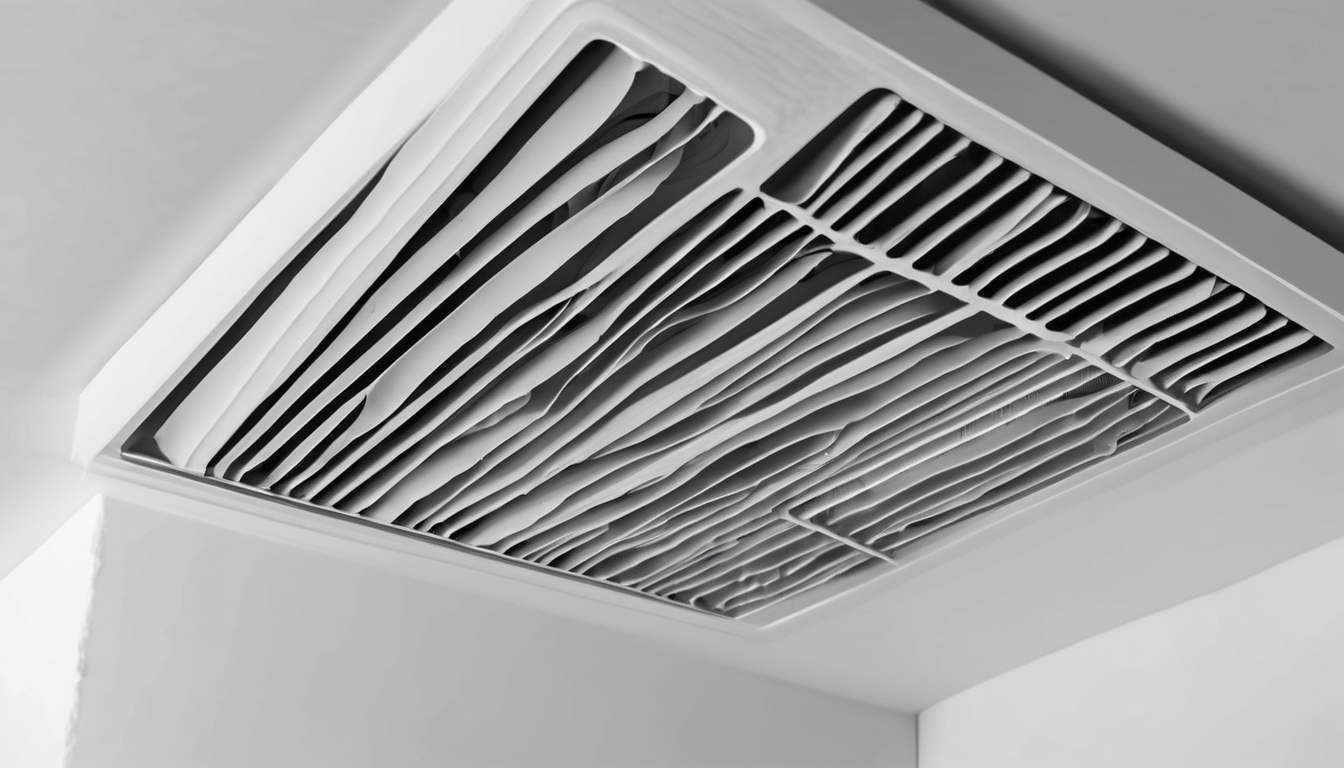
How humidity affects AC ducts in UAE summers often becomes visible — or noticeable — before a formal assessment takes place. Dubai residents frequently describe a musty or sour smell from vents that appears or intensifies between June and August. This odour typically indicates biological activity on duct surfaces, coil faces, or drain pans — a direct consequence of moisture exposure.
Other commonly observed indicators include:
- Uneven cooling across rooms, suggesting airflow restriction from moisture-compacted debris in ducts
- Visible discolouration or dark staining around vent diffusers, which can indicate particulate migration from damp duct interiors
- Increased dust settlement on surfaces shortly after cleaning, suggesting contaminated air recirculation
- Reduced cooling efficiency despite the unit running continuously — a sign that evaporator coil performance has been compromised by biological fouling
- Condensation visible on vent grilles or diffusers, indicating inadequate insulation or high indoor humidity at the supply point
These observations, taken individually, might have multiple explanations. Taken together, they point consistently toward moisture-related contamination that standard filter replacement or surface wipe-down will not resolve.
What Proper Duct Cleaning Addresses in UAE Summer Conditions
A service that properly accounts for how humidity affects AC ducts in UAE summers is meaningfully different from a basic duct blow-out. It begins with visual inspection — ideally with a duct camera — to assess contamination type and location before any cleaning begins. Damp, compacted debris requires different tools and techniques than dry particulate accumulation.
NADCA-aligned methodology calls for contact cleaning of duct surfaces, not air-pressure displacement of debris from one area to another. In humid-climate environments, this is especially important because biofilm and moisture-bonded debris will not respond to air-only cleaning approaches. Following mechanical cleaning, antimicrobial treatment applied to duct interiors, coil surfaces, and drain components addresses the biological residue that physical cleaning alone does not fully eliminate. How Humidity Affects AC Ducts in UAE Summers factors into this consideration.
Saniservice specialists working in UAE residential and commercial properties follow a system-level protocol that addresses the entire contamination pathway — coils, drain pans, condensate lines, and duct runs — because treating one component without the others allows recontamination within weeks. That cycle of recurring odour and contamination is precisely what a thorough, humidity-aware cleaning protocol is designed to break.
Recommended Maintenance Timing for UAE Duct Systems
Given how humidity affects AC ducts in UAE summers, the timing of professional cleaning matters. The most effective scheduling approach for Dubai and broader UAE properties is a pre-summer assessment — typically in April or early May — before peak humidity arrives and while the system can be inspected under manageable conditions. A follow-up assessment after the summer season, in October or November, allows any moisture-driven contamination that developed during peak humidity to be identified and addressed before the system carries it through the next operating year.
Annual cleaning is a minimum benchmark. Properties with known moisture issues, post-construction dust exposure, or occupants with respiratory sensitivities benefit from the additional visibility that mid-year inspections provide. Facilities in Sharjah and Ajman, where summer humidity can be particularly persistent, and properties near Dubai’s waterfront areas — Palm Jumeirah, Dubai Creek Harbour, JBR — should factor coastal humidity exposure into their maintenance frequency decisions. This relates directly to How Humidity Affects AC Ducts in UAE Summers.
Expert Takeaways for Dubai Homeowners and Facility Managers
- Humidity affects AC ducts in UAE summers through condensation, biofilm formation, and drain system overload — all of which compound when systems run continuously without inspection
- Flexible duct insulation integrity is a priority inspection point; compressed or aged insulation increases condensation risk across duct runs
- Drain pan condition is as important as duct interior condition — biological activity in drain components migrates directly into supply air
- Musty odours from vents during summer are a reliable indicator of moisture-related contamination, not simply dust accumulation
- NADCA-aligned contact cleaning combined with antimicrobial treatment is the appropriate response to humidity-driven duct contamination in UAE conditions
- Pre-summer cleaning, scheduled in April or May, provides the most effective protection against peak-season moisture impact
Conclusion
How humidity affects AC ducts in UAE summers is not a peripheral concern — it is the central variable that distinguishes duct hygiene in the UAE from almost any other operating environment in the world. Continuous operation, extreme outdoor humidity, intense temperature differentials inside building cavities, and sealed indoor spaces that recirculate air rather than diluting it all converge on the duct system as the point of highest consequence.
The homes and buildings where this is managed well share a common quality: the air inside feels different. Not dramatically different — there is no single sensory event. But after a proper, humidity-aware duct cleaning, residents consistently notice that the staleness they had normalised is gone. That shift is not cosmetic. It reflects measurable changes in what is circulating through the system — fewer biological particles, cleaner coil surfaces, freely draining condensate pathways. Understanding how humidity affects AC ducts in UAE summers is the first step toward making that shift a permanent condition rather than a temporary one.
If you would like to understand what your duct system looks like after a UAE summer, a professional assessment with camera inspection is the place to start. Contact Saniservice to see what your air quality looks like — and what a system-level clean can restore. When considering How Humidity Affects AC Ducts in UAE Summers, this becomes clear.
Frequently Asked Questions
How does humidity affect AC ducts in UAE summers differently than in other climates?
In the UAE, AC systems operate year-round without a dry season to allow ducts to recover. Combined with outdoor humidity frequently exceeding 80% during summer months, this creates continuous moisture exposure inside duct systems. This persistent damp environment promotes condensation, biological growth on duct surfaces, and biofilm formation at a rate that temperate climates, with their seasonal breaks, do not produce.
Why do Dubai AC vents develop a musty smell in summer?
Musty odours from AC vents during Dubai summers typically indicate biological activity on duct surfaces, evaporator coil faces, or drain pans — all of which are exposed to elevated moisture during peak humidity months. This odour is not resolved by filter replacement alone. It requires mechanical cleaning of affected surfaces combined with appropriate antimicrobial treatment applied to the contamination source.
How often should AC ducts be cleaned in Dubai given summer humidity?
For most Dubai residential properties, professional duct cleaning once a year is the minimum recommended frequency, with pre-summer timing — April or early May — offering the most effective protection. Properties near coastal areas such as JBR, Dubai Creek Harbour, or Palm Jumeirah, where ambient humidity is higher, and properties with known moisture or mould history, benefit from inspection after the summer season as well. The importance of How Humidity Affects AC Ducts in UAE Summers is evident here.
Does humidity affect flexible ducting and GI ducting differently in UAE properties?
Yes. Flexible ducting is particularly vulnerable to condensation when insulation is compressed or aged, as the thermal barrier between the cooled duct interior and the hot surrounding cavity weakens. GI ductwork is more structurally stable but can develop surface corrosion at condensation points, creating rough surfaces that trap moisture-laden debris. Both duct types require humidity-aware inspection and cleaning protocols in UAE summer conditions.
Duct cleaning alone is insufficient when humidity has affected the wider system. Evaporator coils, drain pans, and condensate lines are all humidity-exposed components that can harbour biological contamination. A system-level approach — addressing coils, drain components, and duct runs as a unified pathway — is required to prevent recontamination. Cleaning ducts without addressing a fouled drain pan, for example, typically results in the odour and contamination returning within weeks.
Can condensation inside AC ducts in UAE summers cause structural damage to a villa?
Persistent condensation inside or around duct systems in UAE villas can contribute to moisture accumulation in ceiling voids, roof spaces, and wall cavities over time. Commonly observed during professional assessments are cases where insulation integrity failure in duct runs has led to secondary moisture issues in surrounding building materials. This is one reason duct insulation condition is a priority inspection point in UAE residential properties, particularly in villas with extensive ductwork through unconditioned spaces. Understanding How Humidity Affects AC Ducts in UAE Summers helps with this aspect.
Key indicators include musty or sour smells from supply vents, visible discolouration around vent diffusers, reduced cooling efficiency despite the system running continuously, and increased dust settlement on surfaces shortly after cleaning. In Abu Dhabi and Sharjah, where coastal humidity exposure during summer is pronounced, these signs commonly appear between June and September and warrant professional inspection rather than filter replacement alone. Understanding How Humidity Affects AC Ducts in UAE Summers is key to success in this area.