HVAC Cleaning for Energy Efficiency: Proven Impact
Every Dubai property manager knows the strain local weather puts on air conditioning systems year-round. High temperatures and relentless humidity mean your HVAC must work nonstop, especially during peak summer. Over time, dust and contaminants collect inside your system, making it labor harder and driving up energy costs. Professional HVAC cleaning restores system efficiency and ensures healthy indoor air, while helping you save on monthly bills—a smart move for luxury villa owners and managers who value both comfort and sustainability.
Table of Contents
Contents
- 1 Table of Contents
- 2 Key Takeaways
- 3 What Is HVAC Cleaning for Energy Efficiency
- 4 How Contaminants Affect Energy Use
- 5 Types of HVAC Cleaning Methods Explained
- 6 Standards, Certifications, and Best Practices
- 7 Cost Savings, Benefits, and Misconceptions
- 8 Common Mistakes and How to Avoid Them
- 9 Unlock True Energy Efficiency with Expert HVAC Cleaning
- 10 Frequently Asked Questions
- 11 Recommended
- What Is HVAC Cleaning for Energy Efficiency
- How Contaminants Affect Energy Use
- Types of HVAC Cleaning Methods Explained
- Standards, Certifications, and Best Practices
- Cost Savings, Benefits, and Misconceptions
- Common Mistakes and How to Avoid Them
Key Takeaways
| Point | Details |
|---|---|
| HVAC Cleaning Enhances Efficiency | Professional HVAC cleaning can improve system efficiency by 15 to 25%, significantly lowering energy costs associated with cooling. |
| Deep Cleaning is Essential | Unlike routine maintenance, thorough HVAC cleaning addresses internal contaminants that impact system performance and air quality. |
| Timing is Critical | Scheduling HVAC cleaning before the peak cooling season ensures optimal performance and energy savings during high-demand months. |
| Qualified Technicians Matter | Choosing certified professionals ensures comprehensive cleaning that truly enhances energy efficiency and system longevity. |
What Is HVAC Cleaning for Energy Efficiency
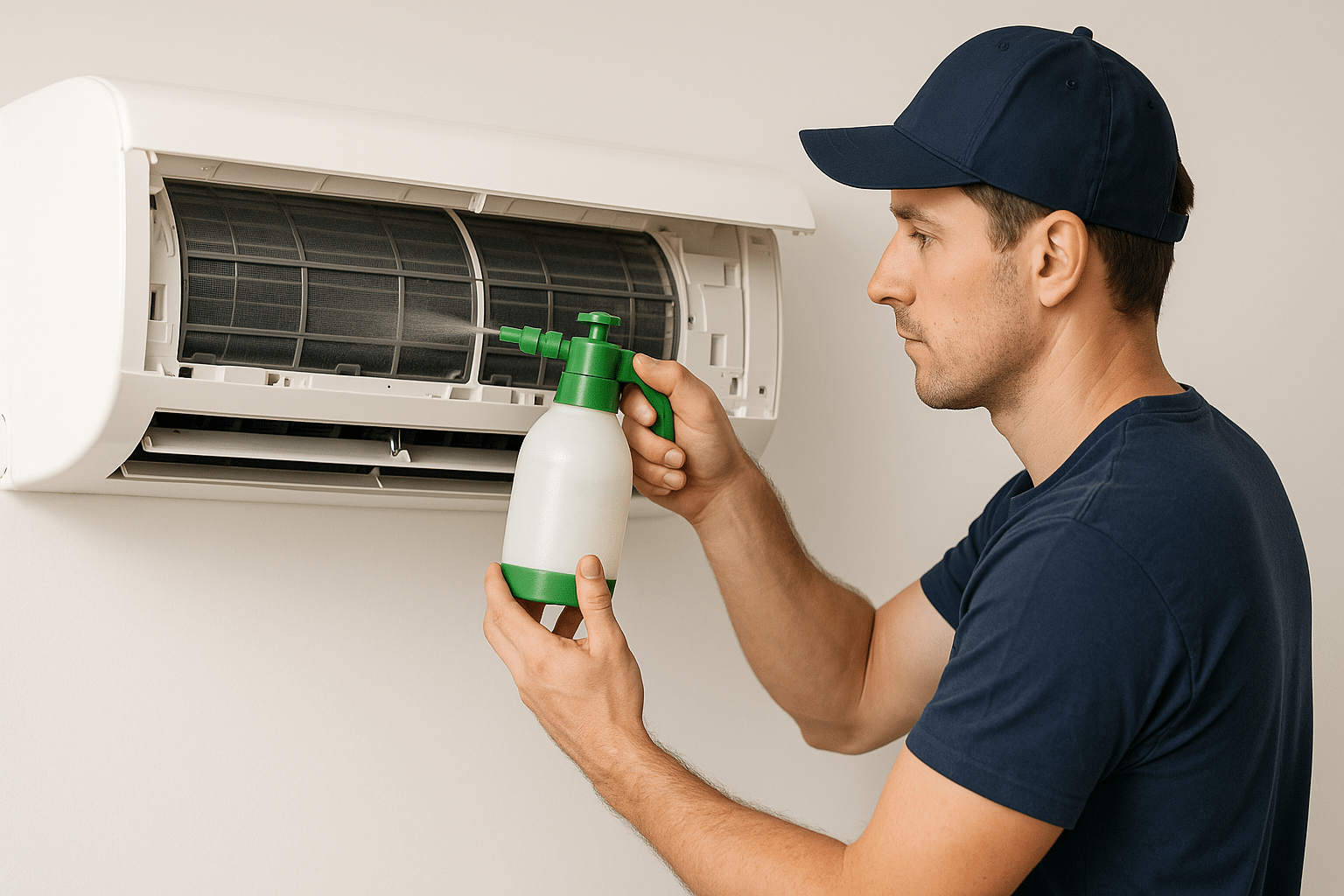
HVAC cleaning for energy efficiency is a specialized process that removes accumulated dust, debris, mold, and biological contaminants from your air conditioning system to restore optimal performance and reduce energy consumption. In Dubai’s intense heat and high humidity, your HVAC system works constantly, and when components become clogged or contaminated, the system must labor harder to deliver cool air. This struggle directly translates into higher energy bills and accelerated wear on expensive equipment. By removing these obstructions, professional HVAC cleaning restores system efficiency, allowing your air conditioner to deliver the same cooling output while consuming significantly less energy.
The science behind this impact is straightforward. Your HVAC system contains multiple components that collect contaminants over time: evaporator coils that chill air, condenser coils that release heat, blower wheels that circulate air, and drainage systems that remove moisture. When these surfaces become layered with dust and biofilm, heat transfer becomes inefficient. A dust-laden evaporator coil cannot absorb heat effectively from indoor air, forcing the compressor to run longer and harder. Similarly, condensate drain trays clogged with debris and bacterial growth impede water drainage, leading to backup and additional strain on the system. The result? Your system expends substantially more electrical energy to achieve the same temperature setpoint. Conversely, clean coils and unobstructed airflow allow your system to reach desired temperatures faster and maintain them with minimal cycling, directly lowering your monthly energy consumption.
What makes HVAC cleaning distinct from routine maintenance is its depth and comprehensiveness. Standard maintenance typically involves filter changes and seasonal inspections, whereas professional cleaning requires technicians to dismantle core components, accessing internal surfaces that routine service cannot reach. SaniAC by Saniservice uses hospital-grade, chemical-free biosanitizers and NADCA-certified protocols to deep-clean coils, blowers, ducts, and drain pans, eliminating mold colonies, bacterial biofilms, and allergen reservoirs that accumulate even in well-maintained systems. This thorough approach removes not just visible dust but also microscopic organisms that degrade air quality and energy performance. For villa owners and property managers across the UAE, this distinction matters significantly: energy efficiency gains from professional cleaning often range from 15 to 25 percent, translating to measurable reductions in your cooling bills while simultaneously improving indoor air quality and system lifespan.
The timing of HVAC cleaning for energy efficiency also reflects the extreme climate realities of the United Arab Emirates. During peak summer months, when outdoor temperatures exceed 50 degrees Celsius, your HVAC system operates continuously. Contamination buildup accelerates in this environment due to intense dust infiltration and rapid moisture accumulation. Scheduling professional cleaning before the peak cooling season, typically in late spring, ensures your system performs at maximum efficiency when demand and energy costs are highest. For luxury villa owners seeking both operational cost savings and environmental responsibility, this preventative approach aligns with modern sustainability expectations while delivering immediate, quantifiable returns on investment.
Pro tip: Schedule your HVAC cleaning in April or May, before peak summer demand strikes Dubai, to maximize energy savings during the hottest, most expensive months of the year.
How Contaminants Affect Energy Use
Contaminants in your HVAC system act like invisible energy thieves. Dust particles, mold spores, and bacterial biofilm accumulate on critical components, creating a barrier that forces your air conditioning system to work significantly harder. When contaminants obstruct airflow, the blower motor must compensate by running at higher speeds or for longer periods to push the same volume of air through your vents. This increased workload directly translates to higher energy consumption. In Dubai’s climate, where cooling demands are relentless from May through October, this extra strain compounds month after month, resulting in energy bills that are noticeably higher than they should be for your property size.
The mechanical impact of contamination operates through several pathways. Evaporator coils become layered with dust and organic growth, reducing their heat absorption capacity. Condenser coils accumulate debris that impairs heat release. Blower wheels collect dust particles that increase friction and resistance. Even your ductwork develops internal surface deposits that narrow the effective airway. Each contamination point acts as a restriction, similar to how plaque buildup narrows blood vessels. Your HVAC system responds by increasing pressure and runtime to maintain desired indoor temperatures. Research shows that dust and particulate contamination significantly impair airflow and system efficiency, forcing equipment to consume substantially more electrical energy. For property managers overseeing multiple villas, this effect compounds across numerous units, creating substantial operational cost increases that directly impact profitability.
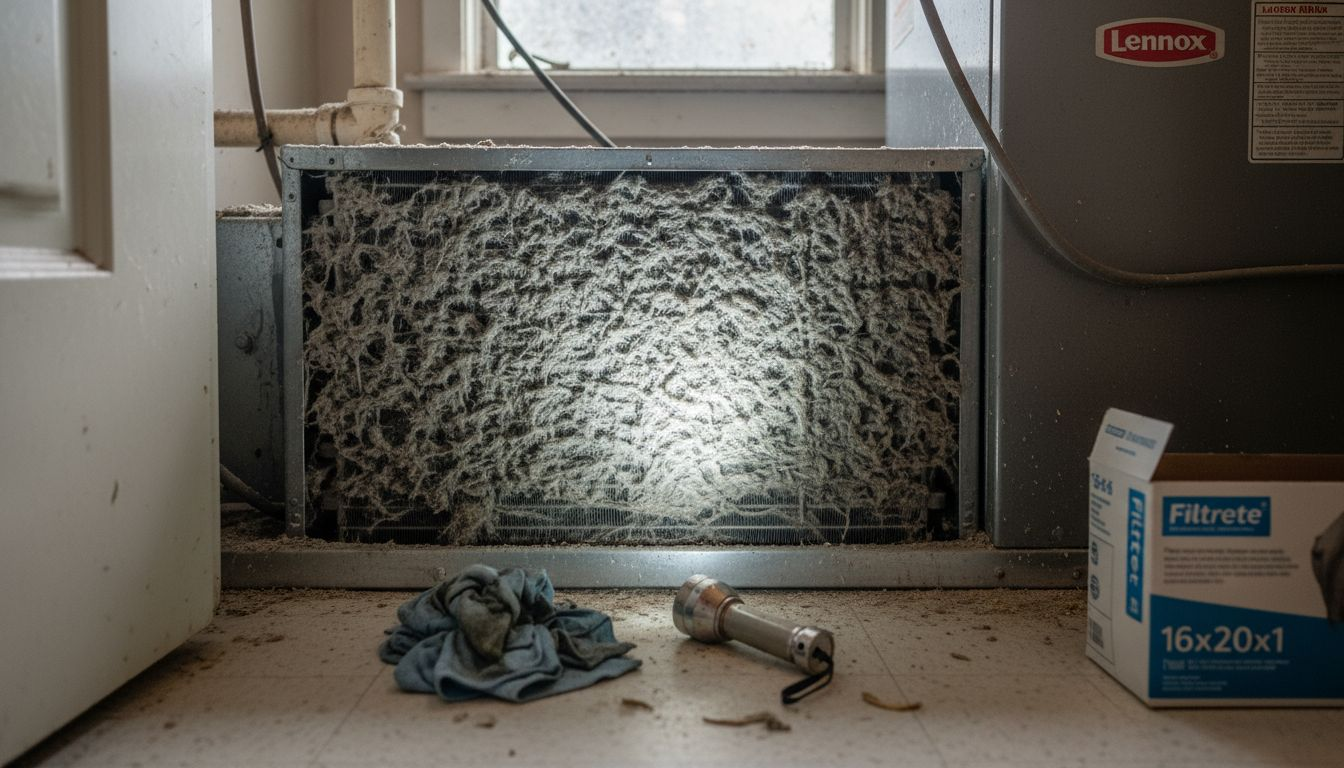
Biofilm and microbial growth add another dimension to energy waste. When moisture accumulates in drain pans and ductwork, mold and bacteria colonize these surfaces, creating sticky biofilm layers. These biological deposits are far more restrictive than simple dust accumulation. Biofilm-coated coils transfer heat less effectively, require higher refrigerant pressures, and force compressors to cycle more frequently. The combination of mechanical blockage plus reduced thermal efficiency means your system must run longer and harder to cool your villa to the desired temperature. In humid Dubai environments, where outdoor humidity regularly exceeds 80 percent during summer months, biofilm formation happens rapidly. Your air conditioner pulls moisture from interior air, and that moisture condenses on cold coils and drains into collection trays. Without proper cleaning and drainage maintenance, these areas become breeding grounds for contamination that directly increases your energy consumption by 20 to 30 percent compared to clean systems.
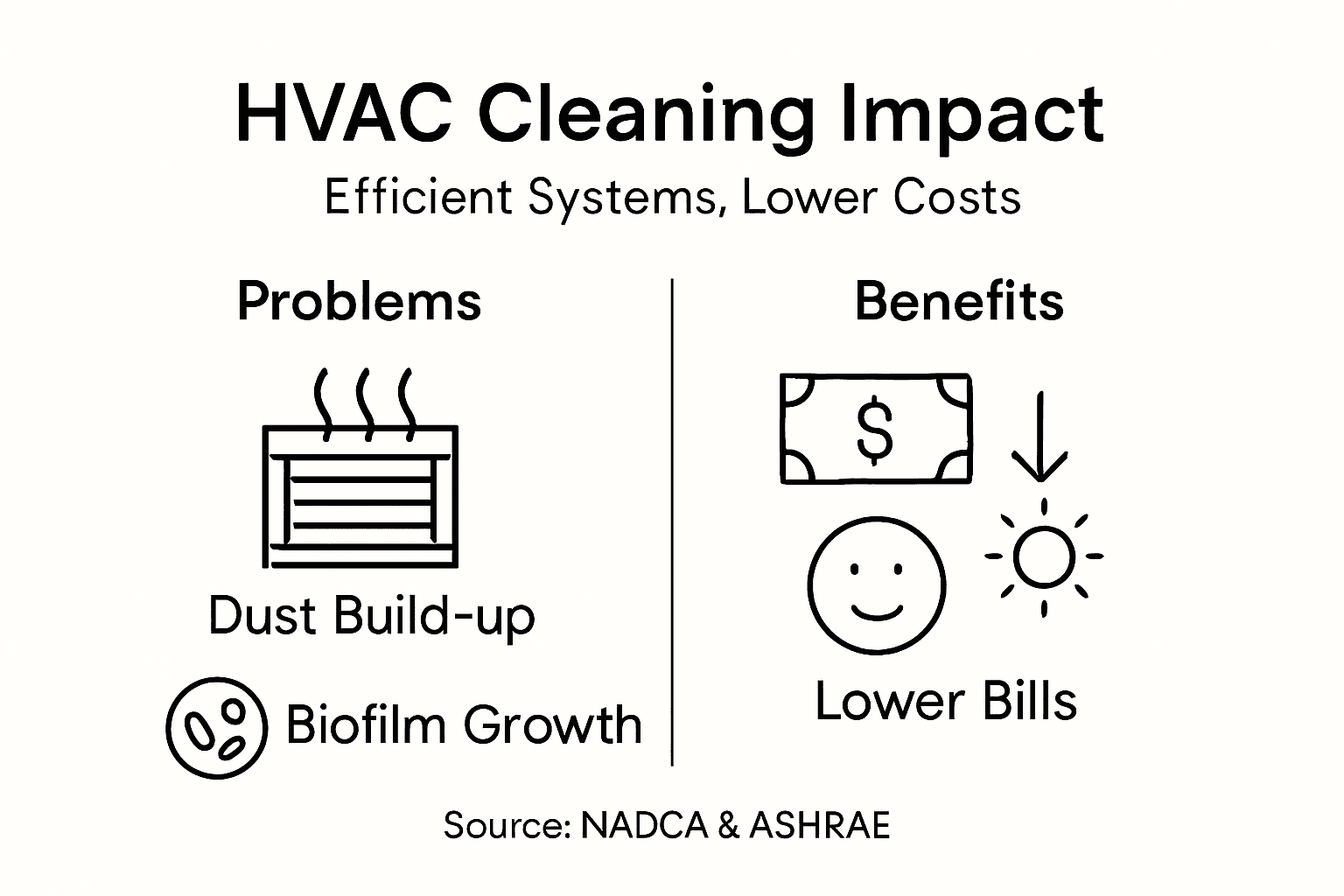
The economic consequence is significant for luxury villa owners and property managers. A villa with contaminated HVAC components consuming 25 percent more energy than necessary translates to thousands of dirhams in additional annual cooling costs. Over a typical HVAC system’s lifespan, contamination can add tens of thousands of dirhams to your total energy expenses. SaniAC by Saniservice uses scientific protocols backed by our in-house microbiology laboratory to identify and eliminate contamination sources comprehensively. By removing dust, mold, bacterial biofilm, and other obstructions, professional cleaning restores your system’s thermodynamic efficiency. Your equipment operates at design specifications, achieving desired temperatures without excess cycling or extended runtime. This efficiency restoration is not theoretical; it produces measurable reductions in energy consumption that appear immediately in your utility bills.
Here’s a quick reference table summarizing how main HVAC contaminants impact both system performance and costs:
| Contaminant Type | Key Impact on System | Typical Energy Waste Increase | Additional Risk |
|---|---|---|---|
| Dust and Debris | Reduces airflow, clogs coils | 10–20% higher consumption | Compressor overheating risk |
| Mold and Biofilm | Inhibits heat transfer | Up to 30% higher bills | Poor air quality and odors |
| Bacterial Growth | Blocks drainage, adds strain | 15–25% more electricity used | Allergies, mold spores spread |
| Clogged Filters | Restricts air delivery | Up to 15% wasted energy | Frequent breakdowns possible |
Pro tip: Request an energy audit from your HVAC provider before cleaning to document baseline consumption, then measure bills again two months post-cleaning to quantify your exact energy savings.
Types of HVAC Cleaning Methods Explained
Not all HVAC cleaning approaches are equal. The method used depends entirely on your system’s configuration, the contamination level, and which components require attention. Professional cleaning involves far more than simply replacing air filters or running your system with the door open. The most comprehensive approach combines multiple techniques to address every contamination source. Proper cleaning techniques involve inspection, mechanical removal, surface cleaning, and biocidal treatments tailored to your specific system type and environment. For villa owners in Dubai facing intense heat, high humidity, and significant dust infiltration, understanding these methods helps you recognize whether your current service provider is delivering genuine deep cleaning or merely surface-level maintenance.
Coil Cleaning and Evaporator Treatment
Evaporator and condenser coils are the heart of your cooling system, yet they are also the most contaminated components in typical HVAC installations. Dust, pollen, and biological growth accumulate on coil fins, reducing heat transfer efficiency and forcing your compressor to work harder. Professional coil cleaning requires dismantling the system to access internal coils directly. Technicians use specialized equipment to flush away debris without damaging the delicate aluminum fins. In many cases, chemical-free biosanitizers are applied to eliminate mold spores and bacterial colonies that routine air circulation cannot remove. SaniAC by Saniservice applies hospital-grade biosanitizers proven to eliminate 99.9 percent of microorganisms while maintaining complete safety for occupants. This treatment does more than restore immediate efficiency. It prevents rapid recontamination by eliminating the biological foundation that allows new growth to establish. For energy efficiency, clean coils mean lower refrigerant pressures, shorter compressor cycles, and measurable reductions in electricity consumption within days of service completion.
Duct Cleaning and Airway Restoration
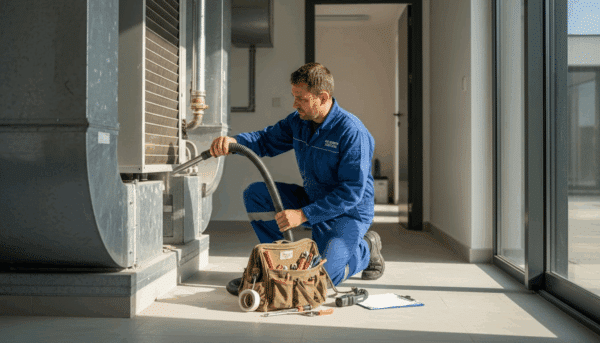
Your ductwork acts as the distribution network for cooled air throughout your villa. Over months and years, dust settles inside ducts, reducing effective airway diameter and increasing resistance to airflow. Your blower motor compensates by running longer or faster, consuming additional energy. Duct cleaning involves mechanical agitation to dislodge deposits, followed by high-powered vacuum extraction to remove loosened debris completely. Advanced cleaning uses rotating brushes or compressed air systems designed specifically for duct geometry. The goal is restoring the full internal diameter so air moves freely with minimal resistance. For properties in dusty Dubai environments, duct cleaning typically reveals substantial accumulation that occupants never see. This invisible contamination directly impacts energy bills. Clean ducts reduce blower motor strain and allow your system to achieve set temperatures faster, lowering overall runtime and energy consumption significantly.
Drain Pan and Condensate System Cleaning
Condensate drain pans collect thousands of liters of water annually as your air conditioner cools indoor air. This standing water combined with darkness creates ideal conditions for mold and bacterial colonization. When drain pans become clogged with biofilm, water backs up into your system, forcing additional strain on drainage pumps and creating moisture problems that degrade efficiency. Professional cleaning of drain pans involves removing accumulated biofilm, flushing drain lines completely, and applying biosanitizers to prevent rapid regrowth. This seemingly minor maintenance step has outsized impact on energy efficiency. Clogged drains force your system to work harder to expel water, and any moisture remaining in the system reduces cooling capacity. Proper drain maintenance restores this efficiency path and prevents the compressor from cycling excessively due to thermal sensor interference from moisture accumulation.
Air Filter Replacement and Filter Media Upgrade
Standard disposable filters become progressively clogged as they accumulate dust, creating increasing resistance to airflow. Most property managers replace filters seasonally, but in Dubai’s dusty environment, filters often need replacement monthly during peak cooling season. While filter replacement is maintenance rather than deep cleaning, upgrading to higher efficiency filter media can meaningfully improve both air quality and energy performance. Scheduled cleaning and filter replacement maintain airflow and heat exchange efficiency, reducing energy consumption directly. High efficiency filters (MERV 11 or higher) capture more particulates while maintaining reasonable resistance to airflow when properly sized. The balance matters: filters that are too restrictive force your blower to work harder, consuming excess energy. Professional HVAC technicians understand this tradeoff and can recommend filter specifications that maximize both air quality and energy efficiency for your specific system.
UV Light Disinfection Systems
Ultraviolet light technology offers supplementary protection against ongoing biological contamination in your ductwork and coils. UV light damages microbial DNA, preventing mold and bacterial regrowth in treated areas. These systems operate continuously, providing long term suppression of contamination between professional cleaning appointments. While UV systems do not physically remove dust or debris, they prevent biological growth that would otherwise occur rapidly in Dubai’s humid environment. The energy impact is modest since UV systems consume minimal electricity, yet they prevent the accelerated contamination that would otherwise degrade efficiency and trigger premature professional cleaning needs. For villa owners seeking maximum energy efficiency between professional cleanings, UV installation on evaporator coils offers measurable long term protection and cost savings.
Pro tip: Request a pre and post cleaning performance report that documents airflow velocity and system pressure drop, allowing you to quantify exactly how much your efficiency improved from the cleaning investment.
Standards, Certifications, and Best Practices
Professional HVAC cleaning is not a casual service where technicians follow personal preference or shortcuts. The industry operates within established standards and certification frameworks designed to ensure consistent quality, safety, and measurable energy outcomes. When you hire a cleaning provider, you are essentially trusting them to follow protocols that protect your equipment investment and improve your home’s performance. ASHRAE develops standards governing HVAC system maintenance and cleaning for energy efficiency and indoor air quality, establishing benchmarks that professional firms must meet to deliver credible results. For villa owners and property managers in Dubai, understanding these standards helps you evaluate whether your service provider is truly qualified or simply claiming expertise without substantiation. The difference between certified and uncertified service can mean the difference between genuine efficiency improvements and wasted expense.
NADCA Certification and Duct Cleaning Standards
The National Air Duct Cleaners Association (NADCA) establishes the industry standard for duct cleaning protocols and technician qualifications. NADCA certification requires technicians to demonstrate knowledge of proper cleaning methodology, safety procedures, and contamination assessment techniques. Certified NADCA contractors follow specific procedural guidelines that ensure ducts are cleaned thoroughly without damage to the system. This certification matters for energy efficiency because improper duct cleaning can actually reduce airflow effectiveness or introduce new contamination. A certified technician understands how to assess ductwork, select appropriate cleaning equipment, and verify completion through visual inspection and air quality testing. SaniAC by Saniservice employs NADCA-certified technicians who adhere to these rigorous standards. When you see NADCA certification displayed, you know the provider has invested in training and quality assurance. This investment typically translates to better energy outcomes because the work is performed systematically rather than haphazardly.
ASHRAE Standards 180 and 62 for System Performance
ASHRAE Standard 180 specifically addresses inspection and maintenance procedures for HVAC systems, defining how often components should be evaluated and what constitutes proper maintenance. This standard establishes baselines that determine whether your system is being maintained adequately to sustain efficiency. Standard 62 governs ventilation requirements and indoor air quality, specifying how much outdoor air must be introduced and how contamination should be controlled. Together, these standards create a framework that professional firms use to develop maintenance schedules and cleaning protocols. When a service provider references ASHRAE compliance, they are committing to procedures proven to maintain system efficiency and occupant health. For property managers overseeing multiple villas, ASHRAE compliance provides assurance that cleaning services follow documented, repeatable procedures rather than improvised approaches.
ACCA Quality Standards and Best Practices
The Air Conditioning Contractors of America (ACCA) provides ANSI-approved quality standards covering the entire HVAC lifecycle from design through maintenance and cleaning. ACCA standards define procedures that promote energy efficiency and occupant comfort through recognized codes and certifications, establishing baseline competencies that contractors should demonstrate. ACCA-certified firms use standardized assessment tools to evaluate system performance before and after cleaning, documenting energy improvements through objective measurement. This documentation matters because it allows you to verify that cleaning actually achieved the promised efficiency gains. Rather than accepting a service provider’s assertion that efficiency improved, ACCA-aligned firms provide pre and post cleaning measurements that prove performance enhancement. For luxury villa owners seeking accountability and measurable returns on service investments, this standardized approach provides transparency and objective evidence of value delivered.
ISO Certifications for Quality and Environmental Management
Beyond HVAC specific standards, quality service providers pursue broader ISO certifications demonstrating commitment to systematic quality management and environmental responsibility. ISO 9001 certification validates that a firm has implemented documented procedures, quality assurance protocols, and continuous improvement processes. ISO 14001 certification demonstrates environmental management practices that minimize waste and ecological impact. ISO 45001 certification verifies workplace safety protocols protecting both technicians and occupants. SaniAC by Saniservice holds triple ISO certification, demonstrating commitment to quality, environmental stewardship, and safety. These certifications require regular audits by independent third parties, meaning compliance is verified rather than self-reported. When selecting a cleaning provider, ISO certifications provide external validation that the company operates according to documented, verified standards rather than unconfirmed claims.
In-House Microbiology Laboratory Validation
The most advanced firms maintain scientific capabilities to validate cleaning effectiveness beyond visual inspection. SaniAC by Saniservice operates an in-house microbiology laboratory that tests contamination levels before and after cleaning, quantifying microbial reduction and verifying treatment efficacy. This laboratory approach transforms cleaning from a service based on subjective assessment to one grounded in scientific measurement. Your cleaning provider can show you before-and-after microbial cultures proving that mold, bacteria, and allergen sources have been eliminated. This scientific validation provides confidence that cleaning actually accomplished its stated objectives, not merely made components appear cleaner. For property managers and villa owners serious about energy efficiency combined with indoor air quality, laboratory validated cleaning offers the highest standard of accountability and proof of performance.
Pro tip: Request certifications and laboratory test results before hiring any HVAC cleaning provider; legitimate firms will readily provide documentation proving their standards compliance and cleaning effectiveness.
To help you evaluate cleaning providers, compare key industry certifications and what they guarantee:
| Certification/Standard | Focus | Provider Responsibility | Benefit to Property Owners |
|---|---|---|---|
| NADCA | Duct cleaning protocols | Follows safe, thorough procedures | Protects ducts, ensures results |
| ASHRAE 180 & 62 | Maintenance & air quality | Meets inspection frequency, airflow | Sustains efficiency, healthy air |
| ACCA | Quality assurance | Provides objective performance data | Measurable savings, accountability |
| ISO 9001/14001/45001 | Quality/environment/safety | Implements verified management | Consistent standards, less risk |
Cost Savings, Benefits, and Misconceptions
The financial case for professional HVAC cleaning is straightforward when you look at actual consumption data. A contaminated system operating at reduced efficiency consumes 20 to 30 percent more electricity than a clean system delivering identical cooling output. In Dubai, where air conditioning runs nearly year-round and electricity rates continue climbing, this excess consumption translates directly into thousands of dirhams in unnecessary annual expenses. A villa consuming an extra 3,000 to 5,000 kilowatt-hours annually due to contaminated HVAC components spends an additional 1,500 to 2,500 dirhams monthly on electricity alone. Professional cleaning costs between 2,000 and 5,000 dirhams depending on system complexity and contamination severity, yet recovers that investment through energy savings within 2 to 4 months of operation. Beyond the immediate energy cost reduction, well-maintained HVAC systems cut energy bills and operational costs significantly while extending equipment lifespan by years. For property managers overseeing multiple villas, this efficiency improvement becomes a major profit lever. A portfolio of 20 villas gaining 25 percent energy efficiency improvement generates 300,000 to 500,000 dirhams in annual savings—a transformation that impacts the bottom line meaningfully.
Tangible Benefits Beyond Energy Savings
While reduced electricity consumption provides the most quantifiable benefit, cleaning delivers additional advantages that enhance property value and occupant satisfaction. Clean HVAC systems produce noticeably improved indoor air quality as mold spores, bacterial colonies, and allergen sources are eliminated. Occupants report fewer respiratory issues, better sleep quality, and generally improved comfort in spaces with professionally cleaned air conditioning. For villa owners renting properties or selling in Dubai’s competitive real estate market, these quality improvements justify premium pricing. Health conscious buyers and renters increasingly value indoor air quality as much as square footage and aesthetic finishes. Extended equipment lifespan represents another substantial benefit. Contaminated systems force compressors to work harder and cycle more frequently, accelerating wear and reducing component lifespan from 12 to 15 years down to 8 to 10 years. Professional cleaning eliminates this excess strain, allowing equipment to operate at design specifications. This lifespan extension often reaches 3 to 5 additional years, potentially avoiding 15,000 to 30,000 dirhams in premature replacement costs. Combined with energy savings and improved indoor air quality, the total economic and quality-of-life benefit substantially exceeds the cleaning investment.
Common Misconceptions About Cleaning Effectiveness
Many property owners and managers hold misconceptions that prevent them from investing in professional cleaning despite clear financial and health benefits. The most prevalent misconception is that HVAC cleaning provides only marginal efficiency improvements and therefore does not justify the cost. This belief often stems from experiences with superficial cleaning that replaced filters but did not address internal component contamination. When coils remain dirty and biofilm continues growing in drain systems, visible cleaning activities do not produce meaningful efficiency gains. This creates the false impression that cleaning itself is ineffective. The reality is that professional cleaning targeting internal components and biofilm removal delivers substantial improvements. The misconception persists because too many service providers perform incomplete cleaning that produces minimal results, then claim cleaning does not work. Genuine deep cleaning using NADCA certified protocols and laboratory validated biosanitizers produces the promised efficiency improvements. Another widespread misconception is that regular filter replacement eliminates the need for professional coil and duct cleaning. Filter replacement addresses incoming particulates but does not remove contamination already accumulated on coils, in ducts, and throughout the system. A clogged evaporator coil continues reducing efficiency regardless of filter replacement frequency. Professional cleaning addresses these internal surfaces that filters cannot reach.
A third misconception suggests that cleaning is beneficial only for older systems while newer installations remain contamination-free. In reality, new HVAC systems accumulate dust and biological growth just as quickly as older systems, particularly in Dubai’s dusty, humid environment. Within 12 months of installation, even new coils begin developing biofilm and dust accumulation that reduces efficiency. Waiting until systems are old to consider cleaning means accepting unnecessary energy waste for years. Regular professional cleaning on new systems prevents contamination buildup from the start, sustaining peak efficiency throughout the system’s entire lifespan. Property managers who implement proactive cleaning schedules on all villas, regardless of age, achieve the best long-term cost performance and occupant satisfaction. One final misconception claims that HVAC cleaning damages sensitive components or risks introducing contamination during the service process. This belief stems from improper cleaning techniques that scratch coils or leave moisture trapped inside systems. Professional NADCA-certified firms understand safe cleaning methodologies that protect equipment integrity. Proper drying protocols prevent moisture problems. SaniAC by Saniservice’s chemical-free biosanitizers eliminate contamination without introducing new toxins or residues. When performed correctly, cleaning strengthens system integrity rather than compromising it.
Calculating Your Personal Return on Investment
Understanding your specific energy savings requires simple math. Identify your current monthly electricity bill and estimate the percentage attributable to air conditioning, typically 40 to 60 percent of total consumption during peak cooling months. If your villa consumes 2,000 kilowatt-hours monthly and electricity costs 0.50 dirhams per kilowatt-hour, and 50 percent of consumption is air conditioning, you spend approximately 500 dirhams monthly on cooling. If professional cleaning reduces this consumption by 25 percent, you save 125 dirhams monthly or 1,500 dirhams annually. A 3,500 dirham cleaning investment returns its cost in approximately 28 months. For villas with higher baseline consumption or where cleaning efficiency gains exceed 25 percent, payback periods compress to 18 to 24 months. Beyond the payback period, every month of subsequent operation continues generating that monthly savings indefinitely until the next professional cleaning becomes due, typically 12 to 18 months later.
Pro tip: Track your electricity bills for three months before cleaning, calculate average monthly cooling costs, then monitor the same months the following year to document your actual savings with precision that justifies the investment to your accounting department.
Common Mistakes and How to Avoid Them
Property managers and villa owners frequently make decisions about HVAC cleaning that undermine efficiency gains and waste money. These mistakes typically stem from misunderstanding what professional cleaning actually involves or selecting service providers based solely on price rather than qualifications. The most damaging mistake is hiring unqualified contractors who perform incomplete cleaning that addresses only visible surfaces while leaving internal contamination untouched. An unqualified technician may clean accessible filter areas and ductwork entry points, creating the appearance of comprehensive service without actually removing biofilm from coils or bacterial colonies from drain systems. Your system appears cleaner but operates with unchanged inefficiency because the core contamination persists. Common mistakes include inadequate inspection, improper cleaning techniques, and ignoring regular maintenance schedules, all of which compromise the energy efficiency and air quality benefits cleaning should deliver. Avoiding these pitfalls requires working with certified firms that follow documented protocols and provide verification of work completion. SaniAC by Saniservice’s NADCA certification, ASHRAE compliance, and laboratory validation ensure your cleaning addresses all contamination sources comprehensively.
Selecting Unqualified Contractors
Price is tempting. When a cleaning provider quotes 1,200 dirhams while a certified competitor quotes 4,000 dirhams, the cost difference creates pressure to choose the cheaper option. This decision often backfires. Unqualified providers lack proper equipment for accessing internal components, understanding of safe cleaning procedures, and knowledge of contamination assessment. They may damage coil fins with overly aggressive mechanical cleaning, scratch refrigerant lines, or leave excessive moisture inside the system that creates new problems. Chemical cleaners applied improperly can corrode aluminum components or leave residues that affect air quality. The cheapest cleaning option frequently delivers the worst results. Avoid this mistake by verifying contractor credentials before hiring. Request proof of NADCA certification, ASHRAE standard compliance, and relevant insurance coverage. Ask for references from property managers who have hired them previously. Interview multiple providers to understand the difference between superficial and comprehensive cleaning. Yes, qualified contractors cost more, but they deliver results that justify the investment through genuine efficiency improvements and protection of expensive equipment.
Inadequate Inspection and Documentation
A second critical mistake involves skipping thorough system inspection before and after cleaning. Without baseline assessment, you cannot quantify whether cleaning actually improved efficiency or merely cost money without producing results. Professional firms following ACCA quality standards and comprehensive certification protocols conduct detailed pre-cleaning inspection documenting contamination levels, airflow measurements, and system pressure readings. These measurements establish baseline performance. Post-cleaning measurement compares identical parameters, proving quantitatively that efficiency improved. When service providers skip this documentation step, they eliminate accountability for results. They can claim cleaning was successful while providing no objective evidence. Insist on pre and post-cleaning performance documentation. Request photographs documenting contamination before cleaning and cleanliness after completion. Ask for air quality test results showing microbial reduction. Laboratory-validated results provide proof that cleaning actually eliminated the biological contamination causing efficiency loss. Without documentation, you are relying on the provider’s word that work was performed correctly and completely.
Neglecting Regular Maintenance Between Professional Cleanings
A third mistake involves treating professional cleaning as a one-time event rather than part of a regular maintenance schedule. Even after professional deep cleaning, your system begins reaccumulating contamination immediately in Dubai’s dusty environment. Within 3 to 6 months, dust deposits on coils and biofilm begins growing in drain systems. Ignoring this regrowth means efficiency gradually declines until pre-cleaning contamination levels return. The solution involves implementing a maintenance schedule that combines professional deep cleaning every 12 to 18 months with routine filter replacement every month during cooling season and basic drain pan cleaning every 3 months. Property managers overseeing multiple villas should establish automated maintenance calendars that trigger service reminders before contamination reaches problematic levels. This proactive approach maintains efficiency year-round rather than allowing efficiency to degrade between cleanings. Many facility managers make the mistake of scheduling professional cleaning only when problems become obvious, such as when efficiency has declined noticeably or when air quality complaints arise from occupants. By that point, several months of excess energy consumption have already occurred. Scheduled preventative cleaning maintains efficiency continuously, avoiding the degradation period entirely.
Failure to Address Root Contamination Sources
A fourth mistake involves cleaning components without identifying and addressing contamination sources. If your HVAC system sits in a location with poor air intake filtration or if ductwork has gaps allowing dust infiltration, cleaning removes current contamination but does not prevent rapid recontamination. Professional assessment should identify whether your system’s location, filtration specification, or ductwork integrity allows excessive contamination entry. If gaps exist, sealing them prevents future contamination. If filtration is undersized, upgrading filter rating reduces subsequent dust accumulation. Some contamination sources stem from operational practices, such as leaving doors and windows open during peak cooling periods, introducing outdoor dust into the system. Others result from inadequate drainage maintenance allowing moisture to accumulate. Addressing root causes through comprehensive assessment prevents the cleaned system from immediately recontaminating. This requires contractors who understand the full scope of contamination pathways, not merely those who perform mechanical cleaning of already-contaminated components.
Pro tip: Establish a written maintenance schedule with your HVAC provider specifying professional cleaning frequency, filter replacement intervals, and drain pan cleaning frequency; track completion dates and performance metrics in a spreadsheet to ensure accountability and optimize scheduling based on your actual system contamination patterns.
Unlock True Energy Efficiency with Expert HVAC Cleaning
If you are struggling with higher energy bills caused by dust, mold, and biofilm build-up in your AC system then you are not alone. The article reveals how contaminants increase energy consumption and reduce system lifespan. At Saniservice, we understand these challenges and provide deep cleaning solutions using hospital-grade, chemical-free biosanitisers applied by NADCA-certified technicians. Our scientifically proven approach restores your HVAC system’s peak performance by thoroughly cleaning coils, ducts, blowers, and drain pans to reduce your electricity costs and improve indoor air quality.
Discover the real difference professional HVAC cleaning can make for your villa or commercial property by exploring our AC Cleaning & Maintenance – Saniservice AC Cleaning services. See how we deliver measurable energy savings and healthier environments through our Case Studies – Saniservice AC Cleaning. Take control of your air conditioning efficiency and comfort today by visiting Saniservice’s website to schedule your comprehensive cleaning and start saving this cooling season.
Frequently Asked Questions
What is HVAC cleaning for energy efficiency?
HVAC cleaning for energy efficiency is a specialized process that removes dust, debris, mold, and contaminants from your HVAC system to improve performance and decrease energy consumption.
How does contamination affect energy use in HVAC systems?
Contaminants like dust and mold create barriers that hinder airflow, forcing the HVAC system to work harder, which results in increased energy consumption of 20 to 30 percent compared to a clean system.
What are the benefits of professional HVAC cleaning?
Professional HVAC cleaning can lead to significant energy savings, improved indoor air quality, extended system lifespan, and lower operational costs, often translating to 15 to 25 percent energy efficiency gains.
How often should HVAC cleaning be performed for optimal efficiency?
It’s recommended to schedule HVAC cleaning every 12 to 18 months, with additional routine maintenance like filter replacements occurring more frequently, especially in dusty environments.
Recommended
- AC duct cleaning companies that guarantee improved airflow – Saniservice AC Cleaning
- Best Air Duct Cleaning Companies Near Me – Expert Comparison 2025 – Saniservice AC Cleaning
- HVAC Cleaning Explained: Science, Methods, and Impact – Saniservice AC Cleaning
- Energy Efficiency Through AC Cleaning: Luxury Villa Impact