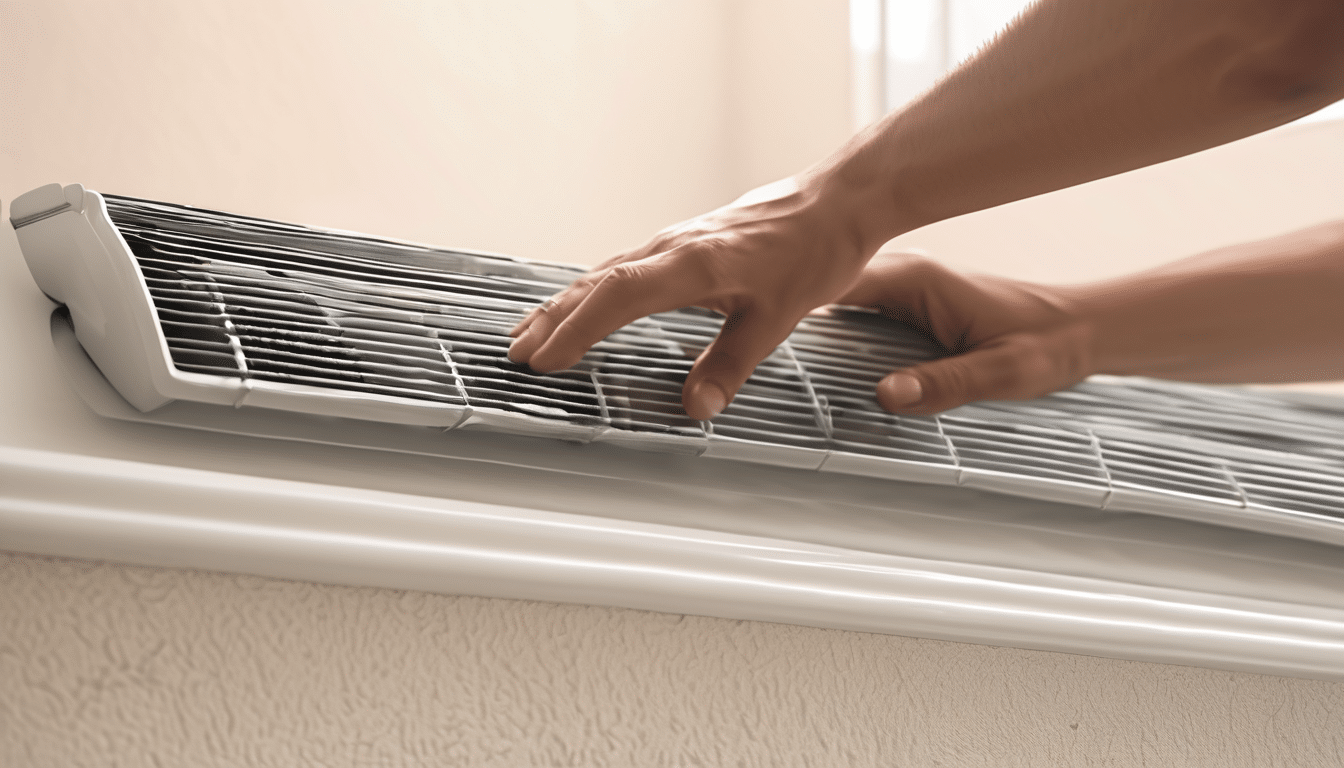
Signs Your AC Coils Need Cleaning Before the Next Service
The Signs Your AC coils need cleaning before the next service are rarely dramatic. They tend to be quiet and gradual — a room that takes longer to cool, a faint smell that comes and goes, an electricity bill that edges upward without explanation. In Dubai’s climate, where air conditioning operates continuously for most of the year, coil contamination builds steadily and invisibly. By the time it becomes obvious, the system has typically been working harder than it should for weeks.
Understanding these early indicators matters because coil condition sits at the heart of how well your entire HVAC system performs. Evaporator coils absorb heat from indoor air. Condenser coils release that heat outside. When either surface becomes coated with dust, particulate accumulation, biofilm, or moisture-driven microbial conditions, heat transfer efficiency drops — and every other part of the system compensates. The compressor works harder. Energy consumption rises. Air quality deteriorates. Identifying the signs your AC coils need cleaning before the next service protects both the system and the people breathing the air it circulates.
This review draws on field observations from residential HVAC work across Dubai, Abu Dhabi, Sharjah, and the wider UAE — villas, apartments, townhouses, and residential compounds where AC systems run without pause from April through October and rarely fully dry out between cycles.
Signs Your AC Coils Need Cleaning Before the Next Service – Signs Your AC Coils Need Cleaning — Reduced Cooling Effici
Contents
- 1 Signs Your AC Coils Need Cleaning Before the Next Service – Signs Your AC Coils Need Cleaning — Reduced Cooling Effici
- 2 Signs Your AC Coils Need Cleaning Before the Next Service – Signs Your AC Coils Need Cleaning — Rising Electricity Bil
- 3 Signs Your AC Coils Need Cleaning Before the Next Service – Signs Your AC Coils Need Cleaning — Persistent AC Odours
- 4 Signs Your AC Coils Need Cleaning — Visible Ice Formation on the Indoor Unit
- 5 Signs Your AC Coils Need Cleaning — Water Leaks or Overflow from the Indoor Unit
- 6 Signs Your AC Coils Need Cleaning — Worsening Allergy or Respiratory Symptoms Indoors
- 7 Signs Your AC Coils Need Cleaning — Unusual Sounds During Operation
- 8 What a Proper Coil Cleaning Assessment Covers
- 9 Expert Takeaways for Dubai Homeowners
- 10 Conclusion
- 11 Frequently Asked Questions
- 11.1 How do I know if my AC coils need cleaning before my next scheduled service in Dubai?
- 11.2 Why do AC coils get dirty so quickly in UAE homes?
- 11.3 Can I tell if my evaporator coils need cleaning without opening the unit?
- 11.4 Is a musty AC smell always related to coil condition in Dubai apartments?
- 11.5 How often should AC coils be cleaned in Dubai villas compared to apartments?
- 11.6 Does cleaning the AC filter address coil contamination?
- 11.7 What should a professional AC coil cleaning service include in the UAE?
The most consistent early sign your AC coils need cleaning before the next service is a drop in cooling performance that cannot be explained by thermostat settings or outdoor temperature alone. If a room that previously reached a comfortable temperature within twenty minutes now takes forty, and the system is running continuously to compensate, coil contamination is a likely contributor.
Evaporator coils transfer heat through direct contact between refrigerant-cooled surfaces and the air passing over them. When a layer of dust and particulate accumulation builds on those surfaces — even a thin one — it acts as insulation, slowing the rate at which heat can be absorbed. NADCA-aligned research consistently identifies fouled coil surfaces as one of the primary causes of measurable efficiency reduction in residential HVAC systems.
In UAE homes, this effect compounds quickly. Desert dust is fine-grained and adhesive. It penetrates filters, settles on coil fins, and bonds with condensation moisture to form a paste that standard filter changes cannot address. Recognising reduced cooling as one of the signs your AC coils need cleaning — rather than assuming the refrigerant is low — often changes the diagnosis entirely.
Signs Your AC Coils Need Cleaning Before the Next Service – Signs Your AC Coils Need Cleaning — Rising Electricity Bil
An unexplained increase in your DEWA or electricity utility bill, particularly during months of high AC use, frequently traces back to coil condition. When heat transfer is compromised, the compressor must run longer cycles to achieve the same cooling outcome. Longer compressor cycles consume significantly more electricity. This relates directly to Signs Your AC Coils Need Cleaning Before the Next Service.
This is one of the signs your AC coils need cleaning before the next service that homeowners can track without any technical knowledge. If your consumption has increased compared to equivalent periods in previous years, and nothing else in the home has changed — no new appliances, no change in occupancy, no change in thermostat settings — coil fouling deserves serious consideration.
SaniHome specialists commonly observe this pattern in Dubai villas and apartments where AC systems have been serviced on a basic filter-change schedule without attention to coil condition. The filter may be clean, the system may appear functional, but the coils underneath are carrying months of accumulated contamination that no filter change can resolve.
Signs Your AC Coils Need Cleaning Before the Next Service – Signs Your AC Coils Need Cleaning — Persistent AC Odours
A musty, sour, or stale smell emanating from AC vents is one of the more immediately noticeable signs your AC coils need cleaning before the next service. In Dubai’s humidity, evaporator coils remain wet for long periods. When the system cycles off, condensation sits on coil surfaces. Without proper drainage and drying, moisture-driven microbial conditions develop — and these produce the characteristic odours that families frequently report.
What makes this particularly relevant in UAE homes is that the problem is rarely resolved by cleaning the drain pan alone. The coil surface itself is often where biofilm accumulates first. Biofilm is a structured microbial layer that adheres to metal surfaces and is highly resistant to simple rinsing. Proper removal requires targeted antibacterial and antifungal disinfection using Dubai Municipality approved bio-sanitisers, applied directly to coil surfaces under controlled conditions.
If the odour returns within days of a basic cleaning service, this is a clear signal that the coil bay has not been properly addressed. This recurring pattern is among the most commonly observed signs your AC coils need cleaning before the next service — specifically, a service that goes beyond surface-level work.
Signs Your AC Coils Need Cleaning — Visible Ice Formation on the Indoor Unit
Ice forming on the indoor unit or on the copper refrigerant lines is a visible and reliable indicator that something is restricting airflow or heat transfer. In many cases, fouled evaporator coils are directly responsible. When the coil surface is coated in particulate accumulation, airflow over the coil is reduced. The refrigerant inside cools below its intended operating temperature and the moisture in the surrounding air freezes on contact with the coil surface. When considering Signs Your AC Coils Need Cleaning Before the Next Service, this becomes clear.
This is one of the signs your AC coils need cleaning before the next service that warrants prompt attention. Ice formation puts mechanical stress on the compressor, risks water damage when the ice melts during defrost cycles, and confirms that the system is operating outside its designed parameters. Refrigerant top-up is sometimes recommended as a first response, but if the underlying coil condition is not addressed, the problem will return.
Field assessments in Dubai residential properties regularly identify ice formation in systems where coil cleaning has been deferred for multiple service cycles. The coils are often serviceable — the issue is accumulated contamination, not component failure.
Signs Your AC Coils Need Cleaning — Water Leaks or Overflow from the Indoor Unit
Water pooling beneath the indoor unit, or dripping from the unit itself, is a visible sign that warrants immediate investigation. While a blocked drain line is frequently the primary cause, coil condition is often a contributing factor. When evaporator coils are heavily fouled, condensate drainage patterns change. Water that would normally drip cleanly into the drain pan is instead channelled unpredictably, bypassing the drainage system.
Additionally, biofilm accumulation in the drain pan and drain line — which is closely associated with microbial conditions on the coil surface — is a recurring cause of overflow in UAE residential systems. The two issues are connected and typically need to be addressed together as part of a complete coil bay service.
Homeowners in Dubai apartments are particularly vulnerable to water damage from this pattern, given that leaks from ceiling-mounted or high-wall units can damage flooring, furniture, and electrical fittings before the source is identified. Recognising water leaks as one of the signs your AC coils need cleaning before the next service — rather than simply a plumbing issue — speeds up the correct diagnosis.
Signs Your AC Coils Need Cleaning — Worsening Allergy or Respiratory Symptoms Indoors
When family members experience increased sneezing, nasal congestion, throat irritation, or worsening allergy symptoms that appear to correlate with time spent at home — particularly in air-conditioned rooms — coil condition is a credible factor to investigate. Evaporator coils that carry particulate accumulation, fine dust, and moisture-driven microbial conditions continuously circulate these contaminants through the air supply. The importance of Signs Your AC Coils Need Cleaning Before the Next Service is evident here.
This is among the signs your AC coils need cleaning before the next service that families with children, elderly residents, or occupants with respiratory sensitivities should treat as a priority rather than a convenience. The coil surface in a contaminated system is effectively a recirculation point for everything the air delivery system has collected.
SaniHome specialists working with families in Dubai and Abu Dhabi regularly identify this pattern: symptoms improve noticeably after comprehensive coil cleaning and disinfection, even in cases where previous basic servicing had been completed without addressing coil condition. The difference lies in the depth of treatment, not just the frequency.
Signs Your AC Coils Need Cleaning — Unusual Sounds During Operation
Rattling, hissing, or a consistently louder compressor than usual can indicate that the system is working under mechanical strain. While unusual sounds have multiple possible causes, one commonly overlooked contributor is condenser coil fouling. When outdoor condenser coils become blocked with dust, debris, or particulate accumulation from construction activity — which is common across Dubai and the wider UAE — heat rejection is impaired and compressor operating pressure rises.
Elevated compressor pressure produces audible changes in system behaviour. This is one of the signs your AC coils need cleaning before the next service that homeowners often attribute to mechanical failure, when in many cases a thorough condenser coil cleaning resolves the symptom entirely. Post-construction particulate accumulation on outdoor units is especially prevalent in rapidly developing areas across Dubai, Sharjah, and Ajman.
What a Proper Coil Cleaning Assessment Covers
Understanding the signs your AC coils need cleaning before the next service is the first step. Knowing what a proper assessment and cleaning service should include is equally important for evaluating whether a proposed service will actually resolve the issue.
Evaporator Coil Inspection and Cleaning
A thorough evaporator coil service involves physical inspection of the coil surface, fin condition, and drain pan, followed by cleaning using appropriate chemistry suited to the contamination type. For systems with biofilm or moisture-driven microbial conditions, Dubai Municipality approved antibacterial bio-sanitisers are applied directly to coil surfaces, with controlled dwell time and proper ventilation before the system is restarted. Understanding Signs Your AC Coils Need Cleaning Before the Next Service helps with this aspect.
Condenser Coil Condition Review
The outdoor condenser unit is often overlooked in residential servicing. Fin blockage from dust, particulate accumulation, and plant matter restricts airflow and directly impairs system efficiency. A complete coil service addresses both the indoor and outdoor components, because contamination on either surface affects overall system performance.
Before-and-After Documentation
Reputable residential AC cleaning providers — including SaniHome specialists working under the Saniservice quality management system — document coil condition before and after service. This provides homeowners with verifiable evidence of the work completed and a baseline for future assessments. ISO 9001 certified service documentation is the standard against which proper residential coil cleaning should be measured.
Expert Takeaways for Dubai Homeowners
- Reduced cooling output and rising electricity bills are the earliest measurable signs your AC coils need cleaning before the next service — track both over comparable billing periods.
- Persistent AC odours that return within days of basic cleaning indicate that coil bay biofilm has not been properly addressed.
- Ice formation on the indoor unit is a mechanical warning sign, not just a comfort inconvenience — it requires prompt investigation of coil condition.
- Water leaks from the indoor unit often connect directly to coil contamination and drain pan biofilm accumulation.
- In the UAE, condenser coils are exposed to construction particulate, desert dust, and seasonal sand events — outdoor coil condition deserves the same attention as indoor coil condition.
- Families with children or respiratory sensitivities should treat the signs your AC coils need cleaning before the next service as a health indicator, not simply a performance metric.
Conclusion
The signs your AC coils need cleaning before the next service are consistent, recognisable, and meaningful. Reduced cooling efficiency, higher electricity consumption, persistent odours, ice formation, water leaks, worsening respiratory comfort, and unusual operational sounds all point toward the same underlying cause: coil surfaces that have accumulated contamination beyond what the system can compensate for on its own.
In Dubai’s operating environment — where AC systems run continuously, humidity sustains microbial conditions, and desert particulate infiltrates every HVAC component — coil condition degrades faster than in most climates. Waiting for the next scheduled service to address clear warning signs is rarely the right approach. The signs your AC coils need cleaning before the next service exist precisely so that informed homeowners can act before the system — and the indoor air quality it governs — is further compromised.
If any of the indicators described in this review are present in your home, a professional coil assessment by a NADCA-certified specialist is the appropriate next step. SaniHome residential AC cleaning specialists serve Dubai villas, Abu Dhabi apartments, Sharjah townhouses, and residential properties across all seven emirates, with service documentation and before-and-after reporting included as standard.
Frequently Asked Questions
How do I know if my AC coils need cleaning before my next scheduled service in Dubai?
The most reliable signs your AC coils need cleaning before the next service include noticeably reduced cooling output, unexplained increases in electricity bills, musty or sour odours from the vents, ice forming on the indoor unit, and water leaking from the unit. In Dubai’s climate, these signs often appear within a few months of the previous service if coil condition was not specifically addressed.
Why do AC coils get dirty so quickly in UAE homes?
UAE homes are subject to four compounding factors: continuous AC operation that prevents coils from drying properly, fine desert dust that penetrates filters and adheres to wet coil surfaces, high humidity during summer months that sustains moisture-driven microbial conditions, and sealed indoor environments that recirculate contaminants. Together, these conditions accelerate coil fouling significantly faster than in temperate climates.
Can I tell if my evaporator coils need cleaning without opening the unit?
Several signs your AC coils need cleaning before the next service are observable without technical access — reduced cooling performance, rising energy consumption, persistent AC odours, and visible water leaks are all external indicators. However, confirming coil condition definitively requires physical inspection by a trained HVAC specialist who can assess fin condition, biofilm presence, and drain pan status directly.
Musty or sour AC odours in Dubai apartments are most commonly associated with moisture-driven microbial conditions in the coil bay or drain pan — both of which relate directly to coil condition and drainage hygiene. While a blocked drain line alone can produce odour, the coil surface is typically where biofilm originates. A service that addresses only the drain pan without cleaning the coils will usually result in the odour returning within days.
How often should AC coils be cleaned in Dubai villas compared to apartments?
In Dubai’s operating environment, evaporator coil cleaning is generally recommended at least once annually, with condenser coil cleaning aligned to the same schedule. Villas with larger ducted systems and higher particulate exposure — particularly those near construction activity — may benefit from assessment every six months. Apartments in sealed high-rise buildings often have slightly different contamination profiles but are not exempt from coil fouling, particularly where humidity is poorly managed.
Does cleaning the AC filter address coil contamination?
Filter cleaning or replacement maintains airflow and catches larger airborne particles, but it does not address contamination that has already reached the coil surface. Fine particulate, biofilm, and moisture-driven microbial conditions on evaporator coils require direct coil cleaning using appropriate chemistry. Filter maintenance is a preventive measure; it is not a substitute for the coil service that the signs your AC coils need cleaning before the next service indicate is overdue.
What should a professional AC coil cleaning service include in the UAE?
A proper residential coil cleaning service in the UAE should include physical inspection of both evaporator and condenser coils, cleaning with appropriate chemistry suited to the contamination type, antibacterial and antifungal disinfection of the coil bay using Dubai Municipality approved bio-sanitisers, drain pan and drain line servicing, and before-and-after documentation. NADCA-aligned methodology and ISO 9001 certified service documentation are the benchmarks to look for. Understanding Signs Your AC Coils Need Cleaning Before the Next Service is key to success in this area.