Signs Your AC System Needs Professional Disinfection Now
The Signs Your AC system needs professional disinfection are not always obvious — but they are consistent. A musty smell that returns within days of cleaning, family members experiencing unexplained allergy symptoms, or visible dark staining near your air vents are not minor inconveniences. In Dubai’s climate, where air conditioning operates continuously and indoor environments stay sealed for most of the year, these signals carry genuine health implications. Recognising them early makes a meaningful difference to what you and your family breathe every day.
Standard AC filter cleaning removes surface dust, but it does not eliminate the microbial contamination that accumulates inside ducts, on evaporator coils, in drain trays, and along condensate lines. Professional disinfection is a different process entirely — one designed to address bacteria, mould colonies, biofilm, and organic residue that standard maintenance does not reach. Understanding when your system has crossed that threshold is the first step towards genuinely cleaner indoor air. This relates directly to Signs Your Ac System Needs Professional Disinfection.
After 13 years working across Dubai’s residential and commercial environments, I have seen the same warning signs appear in villas in Jumeirah, apartments in Dubai Marina, offices in Business Bay, and family homes across Sharjah and Abu Dhabi. The conditions here are specific: continuous operation, high summer humidity, dense desert dust infiltration, and sealed indoor spaces that recirculate air without dilution. Those conditions accelerate contamination in ways that clients rarely anticipate — until the signs become impossible to ignore.
Signs Your Ac System Needs Professional Disinfection – Persistent Musty or Sour Odours From Vents
One of the clearest signs your AC system needs professional disinfection is a persistent musty, sour, or stale odour that emerges when the system runs. This smell is not dust. It is the byproduct of microbial activity — bacteria, mould, or biofilm — growing inside a system that has accumulated enough organic matter and moisture to sustain it.
In Dubai’s climate, evaporator coils operate in near-constant condensation cycles during summer months. Moisture that does not drain efficiently becomes a growth medium. When air passes across contaminated coils or through colonised ductwork, it carries those compounds directly into the room. The odour is often described as damp cloth, soil, or mildew — and it tends to intensify when the system first starts after a period of rest.
If the smell persists despite filter replacement or surface cleaning, the contamination source is deeper in the system. Professional disinfection with antibacterial and antifungal agents is required to eliminate it at the root.
Visible Mould or Dark Staining Near Vents
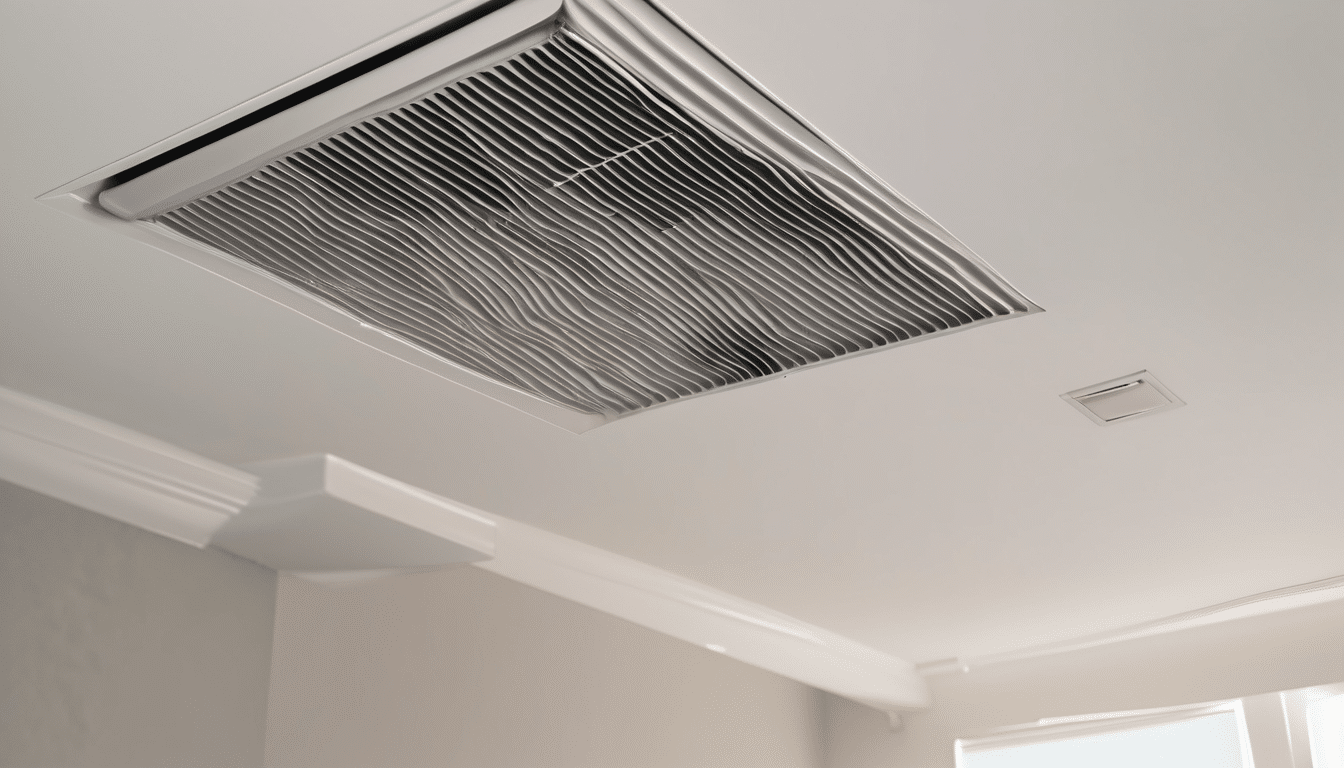
Dark or greenish staining around air diffusers, on vent grilles, or on ceiling surfaces near supply registers is a direct visual indicator that mould is active within the system. This is among the most serious signs your AC system needs professional disinfection, because visible surface mould almost always indicates more extensive colonisation inside the ductwork or on internal components.
Where Mould Typically Originates
Mould growth in AC systems generally begins at the evaporator coil, where moisture and organic dust accumulate together. From there, it spreads into the drain tray, along flexible duct lining, and eventually reaches supply grilles. By the time staining is visible on the vent, the colony has typically been established for weeks or months.
In sealed Dubai apartments and villas where humidity spikes between May and September, this progression can occur within a single cooling season if the system has not been properly cleaned and the drainage is even partially blocked. Visible mould at the vent is the endpoint of a process that professional disinfection must address in full — not just at the surface.
Worsening Allergy or Respiratory Symptoms Indoors
If occupants experience sneezing, nasal congestion, eye irritation, dry throat, or worsening asthma symptoms that improve when they leave the building, this is a significant sign your AC system needs professional disinfection. The pattern is important: symptoms that worsen at home and ease outdoors or in a different environment point strongly toward indoor air quality as the cause.
Children, elderly residents, and anyone with pre-existing respiratory conditions are particularly sensitive to airborne mould spores, bacterial endotoxins, and dust mite allergens that circulate through contaminated AC systems. In my experience across Dubai nurseries, family villas, and residential towers, this is the warning sign that most consistently prompts families to seek proper diagnosis rather than repeated filter changes. When considering Signs Your Ac System Needs Professional Disinfection, this becomes clear.
A professional inspection and air quality assessment can determine whether the AC system is the source. If contamination is confirmed, disinfection is required — not simply a filter replacement or basic coil wash.
Odours Return Within Days of a Recent Cleaning
One of the most frustrating signs your AC system needs professional disinfection — rather than standard maintenance — is when odours return within days or weeks of a service that supposedly included cleaning. This cycle is extremely common, and it has a specific cause.
Basic AC cleaning removes accessible dust and surface deposits, but it does not eliminate established mould colonies, biofilm in drain lines, or microbial contamination on internal duct surfaces. When the system restarts, moisture reactivates whatever was left behind, and the odour returns quickly. Clients often assume the cleaning was not thorough enough — but in many cases, the issue is that the service provided was not appropriate for the level of contamination present.
Recurring odours after cleaning are a reliable indicator that the system requires antibacterial and antifungal disinfection, drain pan decontamination, and potentially full duct sanitisation with appropriate biocidal agents. Standard maintenance alone will not resolve it.
Water Pooling, Drain Blockages, or Overflow Signs
Water staining around indoor AC units, drips from ceiling cassettes, or visible moisture pooling near the unit are practical signs your AC system needs professional disinfection alongside mechanical attention. Drainage issues indicate that the condensate system — the drain tray and drainage line — is partially or fully blocked.
The Biofilm Connection
In long-operating systems, condensate drain lines develop biofilm: a structured layer of bacteria, algae, and organic matter that accumulates inside the drainage pathway. This biofilm restricts flow, causes overflow, and releases microbial compounds into the air. Simply flushing the drain line does not remove established biofilm — it requires appropriate chemical treatment and mechanical action.
Drain pan contamination also creates a persistent reservoir for mould and bacterial growth that continuously recontaminates the air passing through the system. Addressing this component is a non-negotiable part of proper disinfection in Dubai’s climate.
Signs Your AC System Needs Professional Disinfection After Renovation
Post-construction and post-renovation environments present a specific set of signs your AC system needs professional disinfection. During building work, fine construction dust — containing cement particles, gypsum fibres, chemical compounds from adhesives, and silica — enters the ductwork and settles on every internal surface. If the system was running during or after renovation without protective measures, the contamination is extensive.
Construction dust is not simply abrasive — it carries chemical residues that can off-gas into the air and create irritation for sensitive occupants. It also creates a dense substrate layer on which mould and bacteria establish themselves once moisture is introduced by normal AC operation.
In newly completed or recently renovated homes across Dubai, Abu Dhabi, and Sharjah, post-construction duct cleaning combined with professional disinfection is considered essential before regular occupancy. Moving into a property without addressing this is one of the most common mistakes families make when they assume a new or renovated home means clean air. The importance of Signs Your Ac System Needs Professional Disinfection is evident here.
Reduced Cooling Efficiency Despite Regular Servicing
Reduced cooling performance is not always a mechanical fault. When evaporator coils are coated in biofilm, dust accumulation, or microbial deposits, their ability to transfer heat is significantly compromised. The system works harder, runs longer, and still fails to reach the desired temperature. This is one of the less obvious signs your AC system needs professional disinfection, because it presents as a performance issue rather than a hygiene concern.
Coil biofilm acts as an insulating layer between the refrigerant and the air passing across the coil. Even a thin deposit of 0.1mm to 0.25mm can reduce heat exchange efficiency by a measurable percentage. In a Dubai villa running its system for 18 to 22 hours per day during summer, this translates directly into higher electricity consumption and reduced comfort — alongside the ongoing health implications of circulating contaminated air.
Professional coil cleaning and disinfection removes these deposits, restores heat exchange performance, and eliminates the microbial reservoir at the same time. The improvement in both efficiency and air quality is typically immediate and measurable.
Signs Your AC System Needs Professional Disinfection — When to Act
There are certain situations where the signs your AC system needs professional disinfection are present regardless of how recently the system was last serviced. These include moving into a new property with no service history, returning from an extended period away with the system shut down in summer humidity, or following any illness outbreak in the household where airborne transmission may have occurred.
Systems in clinics, nurseries, schools, and healthcare environments in Dubai should be assessed on a more frequent schedule — typically every three to four months — given the vulnerability of occupants and the regulatory expectations around indoor air quality in those settings. In residential environments, annual professional disinfection is a reasonable baseline for most homes, with inspection at six months during peak summer use.
The critical principle is this: do not wait for visible mould or health symptoms before acting. By that stage, the contamination has been present and circulating for some time. Early recognition of the signs your AC system needs professional disinfection allows intervention before occupant health is compromised.
What Professional AC Disinfection Actually Involves
Professional disinfection is not the same as standard AC cleaning. It is a specific process that targets microbial contamination using hospital-grade antibacterial and antifungal agents, applied in a controlled and methodical sequence across all system components.
Core Components of a Proper Disinfection Service
- Evaporator coil treatment: Application of appropriate biocidal agents to remove biofilm, mould colonies, and bacterial deposits from coil surfaces
- Drain pan and condensate line decontamination: Biofilm removal from the drainage pathway using mechanical cleaning and chemical treatment
- Internal duct disinfection: Application of antimicrobial fog or spray to duct surfaces, particularly in systems with flexible or pre-insulated ductwork where mould growth occurs on lining material
- Diffuser and grille sanitisation: Removal, cleaning, and disinfection of all supply and return grilles
- Post-treatment ventilation: Adequate airing of treated spaces before occupancy, particularly where sensitive occupants such as children or elderly residents are present
The chemicals used must be appropriate for occupied residential or commercial environments — non-toxic residues, low volatile organic compound profiles, and safe for use around children and pets. This is an area where the choice of service provider matters significantly. Aggressive chemicals applied without proper ventilation protocols can create short-term air quality issues of their own.
Key Takeaways and Next Steps
Recognising the signs your AC system needs professional disinfection is not a technical skill — it is a matter of knowing what to look for and understanding why those signals matter in Dubai’s specific indoor environment. Persistent odours, visible staining, recurring allergy symptoms, post-cleaning recontamination, drainage problems, post-renovation dust, and reduced cooling efficiency are all clear indicators that standard maintenance is no longer sufficient.
The signs your AC system needs professional disinfection are the system communicating that it has moved beyond surface contamination into active microbial colonisation. That distinction determines whether a filter change is appropriate or whether a full disinfection protocol is required. Acting on those signs promptly protects both the health of your household and the long-term performance of the system.
If you are identifying these signs your AC system needs professional disinfection in your Dubai home, apartment, or commercial space, the right next step is a professional inspection — not a standard service call. A qualified technician should assess the condition of your coils, drain system, and ductwork before recommending treatment. Quality disinfection costs more than a basic clean, typically ranging from AED 400 to AED 1,500 or more depending on system size and condition, but it addresses the actual problem rather than postponing it. Clean air is not visible — but its effect on the people breathing it every day is constant and cumulative.