What Happens During a Villa AC Duct Inspection Dubai
What Happens During a villa AC duct inspection is a question more Dubai homeowners are asking — and rightly so. With air conditioning running continuously for most of the year, the duct network inside a villa becomes one of the most actively used and least examined systems in the home. Dust accumulation, moisture-driven microbial conditions in coil bays, biofilm in drain lines, and particulate migration from construction or desert infiltration all build silently inside a system that remains largely invisible to the people who depend on it daily.
A properly conducted inspection is not a formality before cleaning. It is a diagnostic process in its own right. The findings determine what cleaning method is appropriate, which components require disinfection, whether airflow imbalances exist, and how severe the contamination signature actually is. Without this step, cleaning becomes guesswork — and guesswork in a residential AC system means contaminated air continues to circulate long after a technician has left the property. This relates directly to What Happens During a Villa AC Duct Inspection.
This guide walks through every stage of what happens during a villa AC duct inspection, from the moment a SaniHome specialist arrives at your property to the point where findings are documented and a service plan is defined. If you are planning an AC duct cleaning for your Dubai villa, or simply want to understand what the process involves, this is the starting point.
What Happens During a Villa AC Duct Inspection — The Pre-Arrival Assessment
Contents
- 1 What Happens During a Villa AC Duct Inspection — The Pre-Arrival Assessment
- 2 What Happens During a Villa AC Duct Inspection — The Site Walkthrough
- 3 What Happens During a Villa AC Duct Inspection — Coil Bay and Air Handler Examination
- 4 Internal Duct Inspection — What Happens Inside the Ductwork
- 5 Airflow Assessment and Contamination Pathway Analysis
- 6 What Happens During a Villa AC Duct Inspection — Documentation and Reporting
- 7 What Happens During a Villa AC Duct Inspection After Findings Are Reviewed
- 8 Expert Insights — What the Inspection Stage Changes in Practice
- 9 Frequently Asked Questions
- 9.1 How long does a villa AC duct inspection take in Dubai?
- 9.2 What happens during a villa AC duct inspection if mould conditions are identified?
- 9.3 Is an AC duct inspection the same as AC Duct Cleaning?
- 9.4 How often should a Dubai villa AC duct inspection be carried out?
- 9.5 What should I do before a villa AC duct inspection appointment in Dubai?
- 9.6 Can an AC duct inspection identify why one room in my villa feels warmer than others?
- 9.7 Does what happens during a villa AC duct inspection differ for villas in Abu Dhabi versus Dubai?
- 10 What an Inspection Makes Possible
Before a technician sets foot in the property, a professional duct inspection begins with a review of available information. The age of the property, the type of duct system installed (galvanised iron, flexible ducting, or pre-insulated board), the number of zones, and the history of previous cleaning or maintenance all shape what the inspector will prioritise on arrival.
Dubai villas built before 2010 often have galvanised iron ductwork with external insulation, which accumulates particulate differently from the pre-insulated panel systems used in newer builds. Post-construction villas, recently renovated properties, and homes that have been unoccupied for extended periods each present distinct contamination profiles. A professional inspection protocol accounts for these variables before assessment begins.
What Happens During a Villa AC Duct Inspection — The Site Walkthrough
On arrival, the first stage of what happens during a villa AC duct inspection is a full site walkthrough. The SaniHome specialist walks each zone of the villa, identifying all supply diffusers, return air grilles, access points, and the location of air handling units or ducted split indoor units. This stage is more important than it appears.
Villas in Dubai can have anywhere from four to sixteen or more supply registers across multiple levels. Some areas — particularly rooms that are rarely used, storage zones, or areas above false ceilings — may have diffusers that are partially or fully obstructed, disconnected from the main duct run, or showing visible particulate accumulation at the face. These observations inform the inspection sequence that follows.
Documenting Visible Conditions at Registers and Grilles
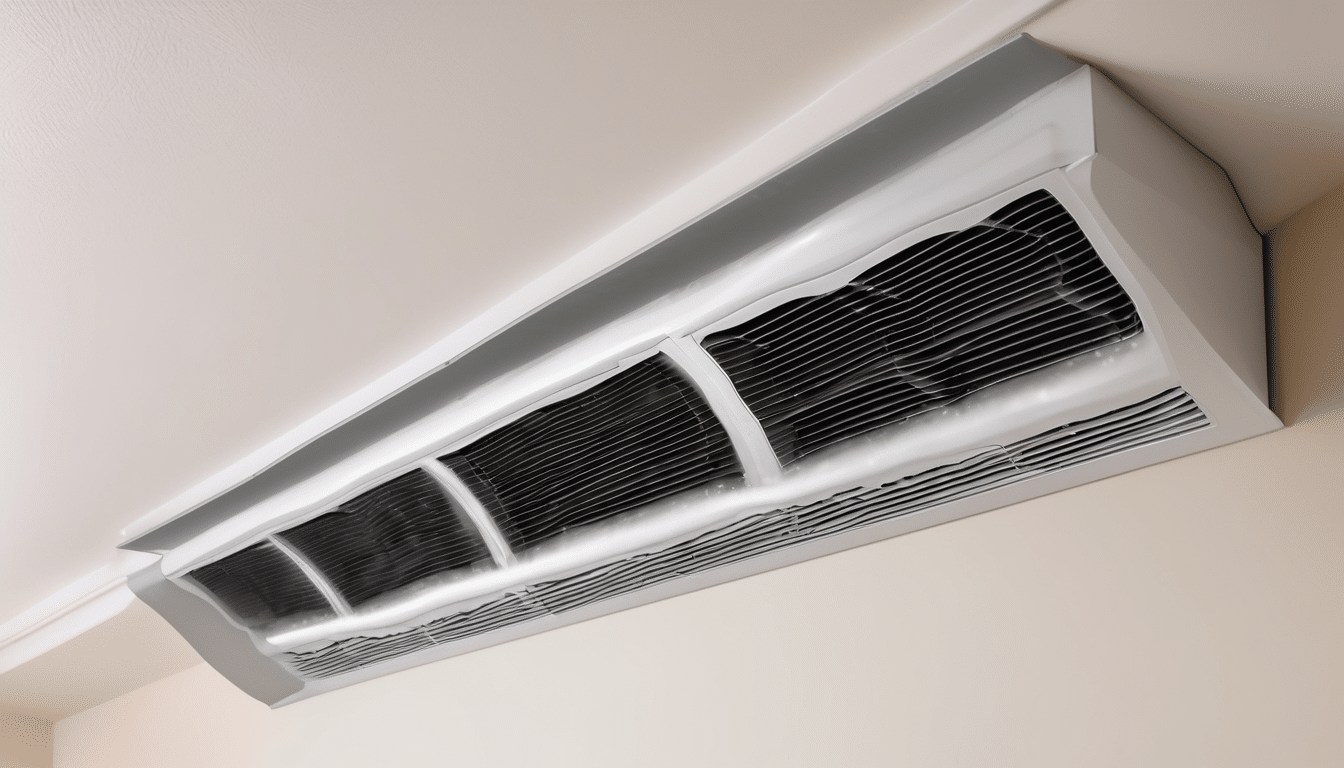
Each supply diffuser and return air grille is examined individually. Technicians look for the colour and texture of particulate at the register face — fine grey dust indicates typical airborne accumulation, darker or matted deposits may indicate higher moisture content or organic particulate, and orange or reddish tinting is often associated with desert dust infiltration common across Dubai, Sharjah, and Ras Al Khaimah villas near open desert areas.
Return air grilles receive particular attention because they are the intake point for the entire air stream. A heavily loaded return grille confirms that particulate has been entering the system in volume, which means the ductwork and coil bay downstream are likely contaminated proportionally. When considering What Happens During a Villa AC Duct Inspection, this becomes clear.
What Happens During a Villa AC Duct Inspection — Coil Bay and Air Handler Examination
Understanding what happens during a villa AC duct inspection requires understanding where contamination originates. The evaporator coil bay is the most critical area in any ducted system. This is where warm, humid return air passes across refrigerant-cooled coil fins, generating condensation and creating the moisture conditions that support microbial growth when not properly maintained.
The inspector opens the coil bay access panel — or, in systems where no access panel exists, identifies the appropriate point of entry — and examines the coil face, drain pan, and condensate drain line. Biofilm formation in the drain pan is one of the most frequently identified findings in Dubai villas, particularly in systems operating through the summer months when humidity infiltration is highest.
What the Coil Condition Tells the Inspector
A clean coil surface is silver-grey with visible fin structure and clear air paths between fins. Restricted coils show compacted particulate between the fins, visible biofilm growth on the coil face, or in more advanced cases, ice formation during operation indicating airflow restriction sufficient to cause freeze-up. Each of these conditions is documented because they directly affect which cleaning protocol is appropriate and whether disinfection of the coil bay is required in addition to mechanical cleaning.
The condensate drain pan condition is assessed alongside the coil. Standing water in the drain pan, visible slime accumulation, or evidence of overflow indicate a drain blockage or inadequate pan slope — a common finding in older Dubai villas where drain lines were installed without adequate gradient.
Internal Duct Inspection — What Happens Inside the Ductwork
The internal inspection of the duct runs is where what happens during a villa AC duct inspection becomes most revealing. The inspector introduces a flexible inspection camera through accessible points — typically at the air handler connection, at branch takeoffs, or at selected register openings — to assess the internal condition of the ductwork.
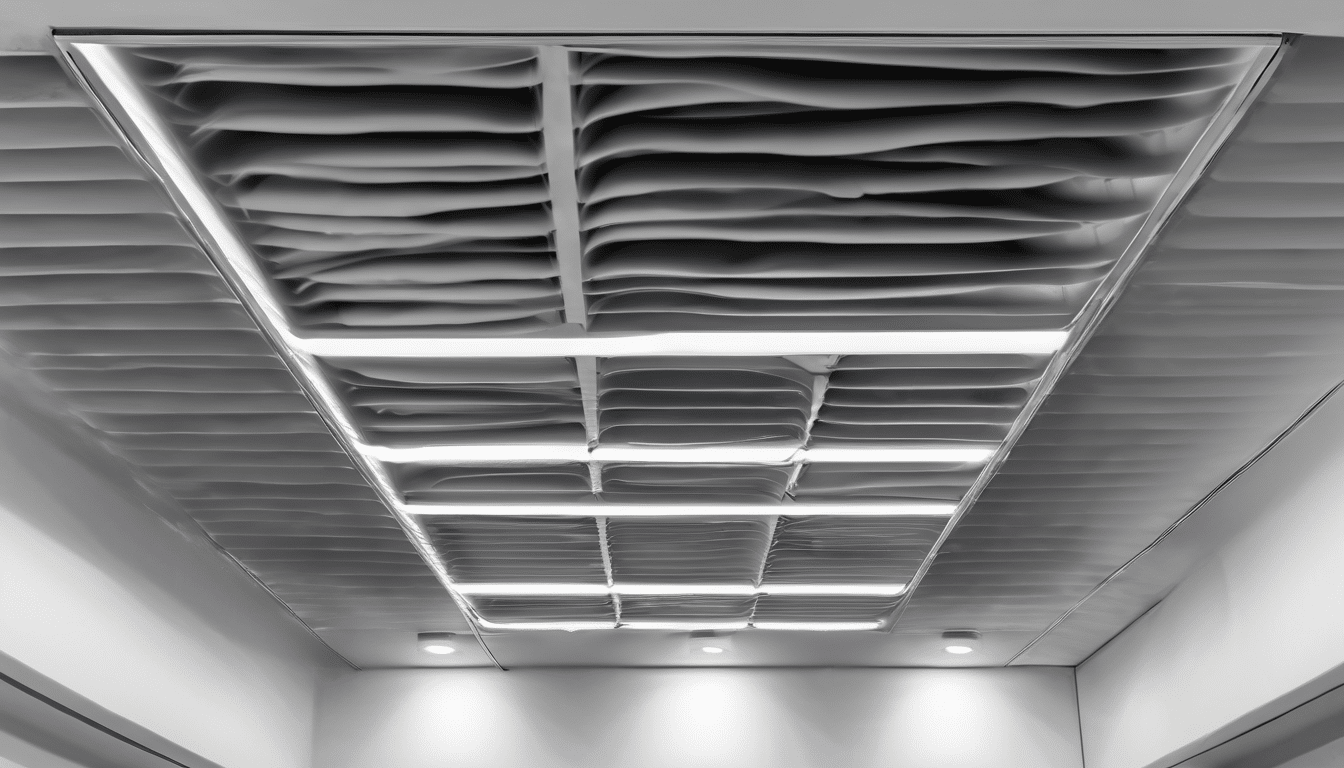
Camera inspection reveals particulate accumulation depth, the presence of visible biological growth (identified as surface discolouration or matted organic deposits rather than isolated dust), evidence of previous water ingress such as staining or liner deterioration, joint separation in flexible duct sections, and in post-construction villas, construction debris including drywall dust, tile adhesive, and insulation fibres that were never removed after the build was completed.
Findings That Commonly Appear in Dubai Villas
Based on field investigations across UAE villas, several findings appear consistently. Particulate accumulation at the base of vertical duct runs — driven by gravity settling of desert dust over years of operation — is among the most common. Flexible duct sections that have sagged, kinked, or partially collapsed represent another frequent finding, reducing airflow to specific zones and creating areas where particulate collects rather than moves through the system.
In villas near active construction zones — areas around Dubailand, Damac Hills, or newer Abu Dhabi and Sharjah developments — fine construction particulate inside the duct lining is a near-universal finding in systems that were not properly sealed and cleaned post-construction. This type of contamination is finer than typical household dust and more difficult to dislodge with low-powered cleaning approaches. The importance of What Happens During a Villa AC Duct Inspection is evident here.
Airflow Assessment and Contamination Pathway Analysis
A comprehensive understanding of what happens during a villa AC duct inspection includes airflow assessment. Contamination does not distribute evenly through a duct system. It follows the path of air — and where airflow is restricted, contamination concentrates. The inspector uses airflow readings at individual supply registers to identify zones where delivery is significantly below design specification.
Airflow imbalance in a multi-zone villa can result from duct leakage, blocked or collapsed sections, damper failure, or coil restriction. Identifying these imbalances at the inspection stage means that cleaning can be designed to address root causes rather than simply removing visible surface deposits that will reaccumulate rapidly if the underlying airflow problem persists.
What Happens During a Villa AC Duct Inspection — Documentation and Reporting
Professional inspection methodology requires that every finding is documented rather than described verbally. SaniHome inspection reports include photographs taken at each register face, at the coil bay, at the drain pan, and from the internal camera footage. These images serve two purposes: they allow the homeowner to understand exactly what was found in their system, and they provide a reference baseline against which the post-cleaning condition can be verified.
The inspection report also identifies the duct system type, estimated linear metreage of duct to be cleaned, the number of registers and grilles, the condition category assigned to each component, and the recommended cleaning and disinfection protocol based on findings. Scope is determined per property after a site inspection — variables that affect quoted scope include system size, contamination severity, duct type, and accessibility — which is why a site assessment is the necessary starting point before any service recommendation is made.
What Happens During a Villa AC Duct Inspection After Findings Are Reviewed
Once the inspection is complete and findings are reviewed with the homeowner, the specialist explains what happens during the subsequent cleaning service in the context of the specific system. Not every villa requires the same scope. A recently occupied villa in a newer development may need routine mechanical duct cleaning with targeted coil care. A villa returning from six months of vacancy in Dubai’s summer humidity may require full system disinfection using Dubai Municipality approved bio-sanitisers in addition to mechanical cleaning of the entire duct network.
The inspection findings also determine whether NADCA-aligned negative pressure containment is necessary — particularly important in occupied villas where children or residents with respiratory sensitivities are present — and whether any immediate remediation is needed before full cleaning proceeds. Drain line blockages, for example, are typically cleared as a priority action to prevent condensate overflow during the cleaning process.
Expert Insights — What the Inspection Stage Changes in Practice
Thirteen years of residential AC work across the UAE has shown me one consistent pattern: the homes where contamination returns fastest are the ones where cleaning was carried out without proper inspection first. The technician cleaned what was visible, missed what was not, and left the root cause — a collapsed duct section, a biofilm-coated drain pan, a coil bay with restricted airflow — entirely untouched.
A proper villa AC duct inspection takes time. It requires access to areas that are inconvenient to open. It produces documentation that a technician working quickly will skip. But it is the only way to understand what the system actually contains, and therefore the only way to clean it properly. The inspection is not a preliminary step. It is the standard itself. Understanding What Happens During a Villa AC Duct Inspection helps with this aspect.
- Request camera footage from the internal duct inspection — a professional service will provide this as standard.
- Ask to see the coil bay condition before and after cleaning — coil photographs are a reliable quality indicator.
- Confirm that the drain pan and condensate line are included in the inspection scope, not just the duct runs.
- For post-construction villas, specify that construction particulate assessment is part of the inspection brief.
- Ensure the inspection report is written, not verbal — documented findings protect the homeowner and the service provider equally.
Frequently Asked Questions
How long does a villa AC duct inspection take in Dubai?
A thorough inspection of a standard Dubai villa — including site walkthrough, coil bay assessment, drain pan examination, and internal camera inspection of key duct sections — typically takes between 45 minutes and two hours depending on the property size, number of zones, and system accessibility. Larger villas with multiple air handling units require proportionally longer inspection time.
What happens during a villa AC duct inspection if mould conditions are identified?
If the inspection reveals moisture-driven microbial conditions in the coil bay or duct lining, the specialist will identify the extent and location of affected sections, assess the moisture source, and recommend an appropriate disinfection protocol using Dubai Municipality approved bio-sanitisers alongside mechanical cleaning. The inspection report will document findings for reference.
Is an AC duct inspection the same as AC Duct Cleaning?
No. An inspection is a diagnostic assessment that identifies what is inside the system, where contamination is located, and what cleaning approach is appropriate. Cleaning is the subsequent service. Conducting cleaning without inspection first means the scope cannot be accurately defined and findings cannot be verified before and after service.
How often should a Dubai villa AC duct inspection be carried out?
For continuously occupied Dubai villas, a professional AC duct inspection is recommended annually. Villas returning from extended vacancy, properties that have undergone renovation or construction work, or homes where occupants report persistent AC odours or increased allergy symptoms should be inspected promptly rather than waiting for a scheduled interval.
What should I do before a villa AC duct inspection appointment in Dubai?
Ensure that the specialist has access to all AC units, ceiling access panels, and plant rooms on the property. Clear the area around indoor units if possible. Note any specific rooms where airflow seems reduced, unusual odours are present, or diffusers appear heavily loaded — this information helps the inspection team prioritise their assessment sequence.
Can an AC duct inspection identify why one room in my villa feels warmer than others?
Yes. Airflow imbalance between zones is one of the findings that what happens during a villa AC duct inspection is specifically designed to reveal. Causes frequently include partially collapsed flexible duct sections, closed or failed zone dampers, heavily restricted coil surfaces, or duct leakage between the air handler and the affected register. Each of these is identifiable during a systematic inspection.
Does what happens during a villa AC duct inspection differ for villas in Abu Dhabi versus Dubai?
The inspection methodology follows the same NADCA-aligned protocol across all UAE emirates. However, the contamination signature may vary. Coastal Abu Dhabi villas often show higher humidity-related conditions in coil bays, while villas in areas closer to open desert in Dubai, Sharjah, or Ras Al Khaimah frequently show higher desert particulate loads inside duct runs. Inspection findings are always property-specific.
What an Inspection Makes Possible
What happens during a villa AC duct inspection determines everything that follows. The scope of cleaning, the disinfection protocol, the components addressed, the documentation produced — all of it flows from what is actually found inside the system rather than from a generic service package applied uniformly regardless of conditions.
For Dubai villa owners who want clean air that stays clean, the inspection is where that outcome begins. It is not a sales step. It is the moment where the system is understood honestly, findings are documented clearly, and a cleaning service is designed around what the home actually needs. SaniHome specialists carry out this assessment as the foundation of every residential AC service, because without it, the standard cannot be maintained. Understanding What Happens During a Villa AC Duct Inspection is key to success in this area.