


Why AC Cleaning for Commercial Spaces Matters
Why AC cleaning for commercial spaces in Dubai is essential becomes clear when you consider the city’s high humidity and nonstop air conditioning. Keeping your commercial space safe is a daily challenge, as dirty HVAC systems can circulate airborne contaminants, increase respiratory health risks, and lead to poor compliance with strict Dubai health regulations. Science-backed AC cleaning targets hidden buildup in ducts and coils, restoring indoor air quality and lowering operational risk. A comprehensive approach provides lasting protection for your facility with proven, measurable results.
Table of Contents
Contents
- 1 Table of Contents
- 2 Key Takeaways
- 3 What AC Cleaning in Commercial Spaces Involves
- 4 Major Health and Air Quality Impacts
- 5 Energy Efficiency and Cost Savings Explained
- 6 Dubai Regulations and Compliance Requirements
- 7 Risks of Neglecting Regular AC Cleaning
- 8 Take Control of Your Commercial AC Cleaning for a Healthier Space
- 9 Frequently Asked Questions
- 10 Recommended
- What AC Cleaning In Commercial Spaces Involves
- Major Health And Air Quality Impacts
- Energy Efficiency And Cost Savings Explained
- Dubai Regulations And Compliance Requirements
- Risks Of Neglecting Regular AC Cleaning
Key Takeaways
| Point | Details |
|---|---|
| Comprehensive AC Cleaning Is Essential | Regular professional cleaning of AC systems in commercial spaces is crucial for maintaining air quality and preventing disease transmission. |
| Documented Maintenance Ensures Compliance | Keeping detailed records of cleaning activities and staff training is vital for adhering to Dubai’s health regulations. |
| Energy Efficiency and Cost Savings | Clean HVAC systems significantly boost energy efficiency, translating to substantial cost savings over time. |
| Neglecting Maintenance Leads to Health Risks | Delaying AC cleaning increases the likelihood of airborne diseases and deteriorates overall indoor air quality, impacting occupant health. |
What AC Cleaning in Commercial Spaces Involves
AC cleaning in commercial spaces goes far beyond a simple filter swap or a quick dust wipe. It’s a comprehensive, multi-component process that targets the entire HVAC system to eliminate contaminants, prevent disease transmission, and restore air quality to safe standards. Commercial facilities in Dubai face unique challenges: high occupancy rates, varying humidity levels, and continuous operation mean that contamination accumulates faster and spreads more extensively than in residential settings. A proper cleaning program addresses every pathway where particles and microorganisms travel through your building’s air systems.
The Complete Breakdown of Commercial AC Cleaning
When SaniAC by Saniservice professionals arrive at your facility, they execute a detailed protocol that covers multiple interconnected components. HVAC duct systems require complete disassembly and cleaning to remove accumulated biofilm, dust, and microbial colonies that have established themselves along duct walls. The evaporator and condenser coils are meticulously cleaned, as these aluminum fins become breeding grounds for mold and bacteria when moisture collects during normal operation. Blower wheels, which distribute air throughout your building, accumulate particulate matter and require specialized brushing to restore efficiency. Drainage trays and condensation lines demand particular attention because stagnant water creates ideal conditions for bacterial growth and mold proliferation.
The process involves several critical stages:
- System assessment and mapping of all components
- Protective sealing of occupied areas during active cleaning
- Mechanical removal of debris and biofilm using specialized tools
- Application of hospital-grade, chemical-free biosanitizers to eliminate remaining pathogens
- HEPA filtration and air quality verification
- Documentation and records maintenance for compliance
Proper comprehensive scheduling and trained personnel are essential for maintaining these hygiene standards over time. A one-time cleaning provides immediate improvement, but commercial spaces require ongoing maintenance programs that specify what areas need attention, how frequently, and using which methods. This prevents the rapid recontamination that occurs in high-traffic commercial environments. SaniAC by Saniservice develops customized cleaning schedules based on your facility’s specific risk factors, occupancy patterns, and regulatory requirements.
The distinction between DIY approaches and professional cleaning cannot be overstated. Commercial HVAC systems operate continuously, handling significantly higher air volumes than residential units. The contamination load builds up differently, requiring specialized equipment like negative air machines, sealed cleaning enclosures, and industrial-strength biosanitizers that residential equipment simply cannot match. Additionally, commercial facilities must comply with health regulations and maintain documentation proving their indoor air quality management practices. When regulatory inspectors visit your property, they expect to see evidence of systematic cleaning protocols, not sporadic maintenance efforts.
Here’s how professional and DIY AC cleaning approaches differ for commercial spaces:
| Factor | Professional Cleaning | DIY/Basic Maintenance |
|---|---|---|
| Scope | Full system disinfection | Surface-level dust removal |
| Equipment | Specialized commercial tools | Standard household tools |
| Documentation | Regulatory compliance reports | Rarely documented |
| Health Impact | Reduces airborne pathogens | May leave microbes behind |
Why Professional Standards Matter in Dubai
Dubai’s climate presents specific challenges that amplify the importance of professional AC cleaning. High humidity levels, combined with year-round air conditioning operation, create persistent moisture conditions throughout your HVAC infrastructure. This constant moisture, coupled with dust from the desert environment, accelerates biofilm formation and microbial colonization. Professional cleaning removes not just visible contamination but also the invisible microbial film that builds on coils and ductwork, which smaller maintenance operations typically miss. The difference between surface-level cleaning and scientific-backed deep disinfection directly impacts your facility’s ability to maintain healthy indoor environments for occupants.
Working with professionals who maintain their own in-house microbiology laboratory means your cleaning process is verified and monitored through actual microbial testing rather than assumption. Before and after testing confirms that pathogens have been eliminated, not simply redistributed. This level of accountability protects your facility from liability and ensures you’re meeting the health and safety expectations of your building’s occupants, whether they are employees, clients, or residents.
Pro tip: Schedule your commercial AC cleaning during off-peak hours or weekends to minimize disruption to operations, and always request documentation showing pre and post-cleaning microbial test results to verify the effectiveness of the work performed.
Major Health and Air Quality Impacts
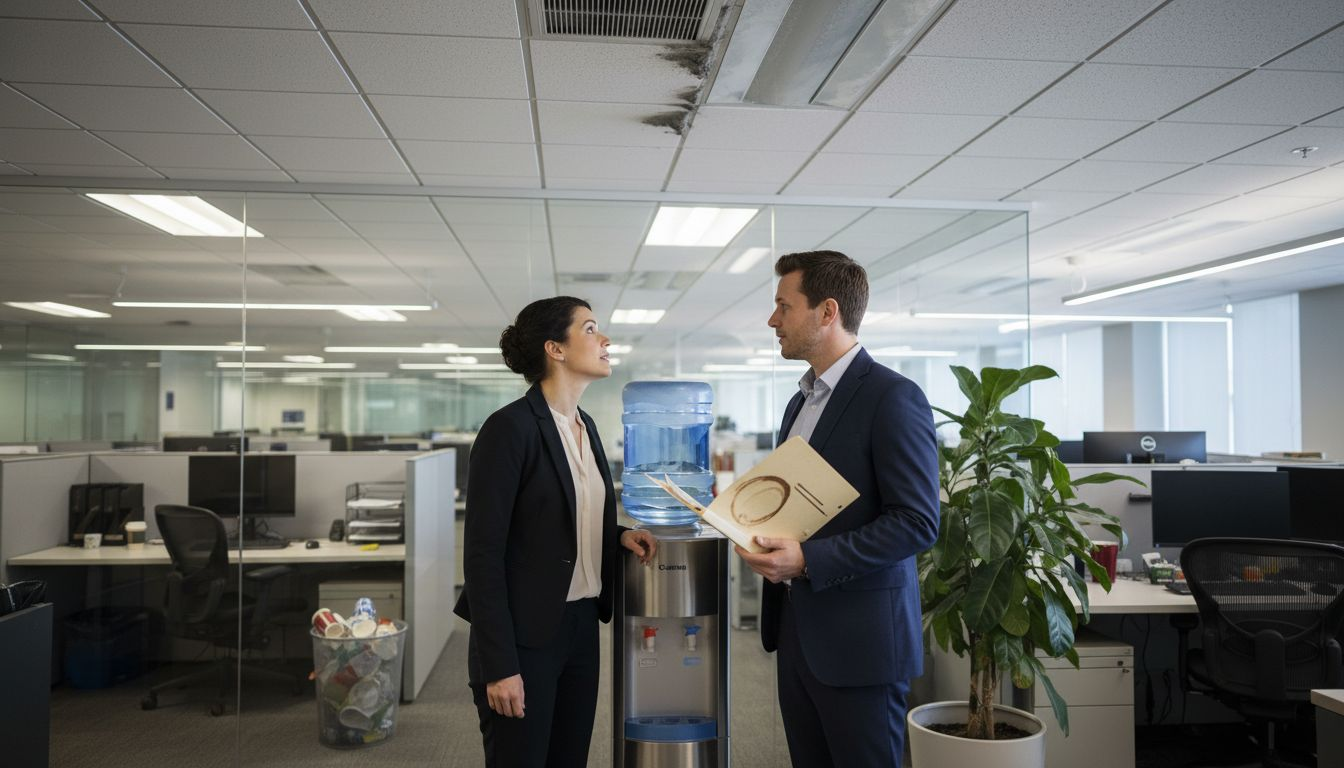
The air your building’s occupants breathe directly determines their health outcomes. When AC systems operate without proper cleaning, they become distribution networks for contaminants rather than filters. Dirty coils, clogged ducts, and moisture-laden drainage systems pump mold spores, bacteria, allergens, and particulate matter into every room, creating an environment that triggers respiratory illnesses, exacerbates allergies, and compromises cardiovascular function. For facility managers in Dubai, understanding these health consequences isn’t academic. It’s a direct responsibility that affects employee productivity, tenant satisfaction, regulatory compliance, and your organization’s liability exposure.
The Documented Health Consequences
Research clearly establishes the link between poor indoor air quality and serious health outcomes. Exposure to indoor air pollutants from poorly maintained AC systems contributes to respiratory diseases, cardiovascular issues, and increased mortality rates. Fine particulate matter and nitrogen dioxide accumulate in enclosed commercial spaces with dirty ventilation systems, creating an invisible health threat that occupants encounter daily. These aren’t theoretical risks. They manifest as increased sick days, chronic respiratory conditions in susceptible populations, and elevated healthcare costs for building occupants.
Mold represents one of the most immediate threats. When moisture accumulates in AC systems, it creates ideal breeding conditions for fungal colonies that release spores into your building’s air supply. Occupants exposed to mold spores experience allergic reactions, asthma attacks, and chronic sinusitis. Vulnerable populations like children, elderly residents, and immunocompromised individuals face particularly severe outcomes. The problem intensifies in Dubai’s climate, where high humidity levels mean moisture constantly collects in HVAC systems unless actively managed through professional cleaning.
Bacterial contamination presents another serious concern. Legionella bacteria, which causes Legionnaires’ disease, thrives in warm water trapped in AC drainage systems. A single contaminated system can expose dozens or hundreds of occupants to a potentially fatal respiratory infection. Beyond Legionella, common bacteria colonizing dirty coils and ducts trigger infections and inflammatory responses in the respiratory tract. These aren’t rare complications. They’re predictable outcomes when maintenance falls below professional standards.
How Clean Systems Protect Health
Proper AC cleaning directly interrupts these disease transmission pathways. Efficient HVAC cleaning maintains indoor air quality by controlling humidity levels that prevent mold growth and reducing airborne particulate matter that damages respiratory systems. When SaniAC by Saniservice removes biofilm from coils, disinfects ductwork, and clears drainage trays, they’re not just improving comfort. They’re eliminating the biological threat that occupants inhale with every breath.
The impact extends beyond infection prevention. Clean HVAC systems operate more efficiently, delivering consistent airflow and temperature control that reduce occupant stress and fatigue. Better air quality correlates with improved cognitive function, fewer sick days, and higher productivity. For commercial facilities, this translates directly to reduced absenteeism and improved business outcomes.
When you consider the occupational health perspective, the value becomes obvious. Your facility’s indoor air quality reflects your commitment to occupant safety. Regular professional AC cleaning demonstrates this commitment through documented maintenance records, microbial testing results, and verifiable system performance. This protects your organization from liability claims while building trust with employees, tenants, and visitors.
The Accumulation Problem
One critical factor that many facility managers overlook is how quickly contamination accumulates in commercial spaces. Unlike residential units that might operate six to eight hours daily, commercial HVAC systems run nearly continuously, circulating air through multiple zones with varying occupancy and contamination profiles. This constant operation means biofilm develops faster, moisture accumulates more consistently, and particulate matter loads increase geometrically compared to light-use systems. A commercial space that skips cleaning for twelve months experiences contamination levels equivalent to a residential home being neglected for several years.
This accumulation creates a compounding health risk. Early-stage contamination might trigger only seasonal allergies or minor respiratory irritation. But as biofilm thickens and microbial populations establish themselves, occupants face increasingly severe exposures. What began as an occasional cough develops into chronic respiratory issues. Allergies intensify. Vulnerable individuals begin experiencing symptoms that force them to avoid the space entirely. By the time facility managers recognize the problem, significant health damage has already occurred.
Pro tip: Implement a quarterly cleaning schedule rather than annual maintenance to prevent contamination accumulation in your commercial space, and use microbial testing before and after each cleaning to document that health risks are actually being eliminated.
Energy Efficiency and Cost Savings Explained
Here’s what most facility managers don’t realize: your AC system’s energy consumption directly correlates with how clean it is. A dirty HVAC system doesn’t just circulate contaminated air. It works dramatically harder to push conditioned air through clogged coils and blocked ducts, consuming significantly more electricity while delivering less effective cooling and heating. For commercial buildings in Dubai operating year-round air conditioning, this efficiency loss translates into thousands of dirhams in unnecessary operational costs every month. When you understand the financial impact of poor maintenance, AC cleaning stops being an optional expense and becomes an obvious investment that pays for itself multiple times over.
The Quantified Energy Impact
The numbers are striking. Routine HVAC cleaning boosts energy efficiency by reducing fan energy consumption by 41 percent to 60 percent while simultaneously improving supply airflow by 10 percent to 46 percent. These aren’t marginal improvements. They represent fundamental changes in how your system operates. When biofilm coats your evaporator coils, it creates an insulating barrier that forces your system to work harder to achieve the same temperature differential. The blower motor spins faster and longer. Compressors cycle more frequently. Every component strains to overcome the resistance created by accumulated contamination.
Think about the cumulative effect across a large commercial facility. A medium-sized office building with multiple HVAC zones might operate 300,000 hours annually. If cleaning reduces energy consumption by even 50 percent, you’re looking at the equivalent of shutting down your system for 150,000 hours without losing any conditioning capability. That’s a massive reduction in electrical usage and associated costs.
University research demonstrates the dramatic difference between clean and dirty systems. A cleaned HVAC system delivers up to 110 percent increased conditioned air supply while using less energy than its dirty counterpart. This means your occupants experience better temperature control, more consistent humidity levels, and improved overall comfort while your facility actually consumes less electricity. That’s the holy grail of facility management: better outcomes at lower operational costs.
Real-World Cost Implications for Dubai Facilities
Let’s translate this into concrete numbers for your facility. Consider a 5,000 square meter commercial space with typical Dubai operational patterns. An unclean HVAC system might consume approximately 180,000 kilowatt-hours annually. At current Dubai electricity rates of roughly 0.30 AED per kilowatt-hour, that’s 54,000 AED in annual energy costs. A 50 percent efficiency improvement through professional cleaning reduces that to 27,000 AED, saving 27,000 AED yearly while improving air quality and extending equipment lifespan.
A professional AC cleaning service typically costs between 8,000 to 12,000 AED for a facility of this size, depending on system complexity and contamination levels. Your energy savings alone pay back the entire cleaning cost in roughly 4 to 5 months. Everything after that represents pure savings. Over a five-year period, you’re looking at potential savings exceeding 120,000 AED while simultaneously reducing your facility’s environmental footprint through lower energy consumption.
Beyond direct energy costs, there’s the maintenance angle. Clean systems operate at lower temperatures and pressures, reducing stress on compressors, motors, and other mechanical components. This extends equipment lifespan and dramatically reduces catastrophic failure risks. A major compressor replacement in a commercial building costs 40,000 to 80,000 AED or more. Preventive cleaning that extends equipment life by two or three years represents substantial financial protection.
The Pressure Fluctuation Factor
One underappreciated benefit of professional cleaning involves system stability. Dirty ducts and coils create variable resistance throughout your HVAC infrastructure. This forces your system to deal with constant pressure fluctuations as it tries to maintain set temperatures across zones with different contamination levels. These fluctuations stress components and cause the system to cycle inefficiently, wasting energy. A clean, properly balanced system maintains consistent pressure and airflow, allowing it to operate smoothly without the energy-intensive adjustments required in contaminated systems.
This stability also reduces demand charges on your electricity bill. Many commercial facilities pay tiered rates where peak demand drives up overall costs. A system that runs smoothly without pressure spikes consumes more consistent power, potentially lowering your demand charge tier and reducing overall electricity costs even further.
Pro tip: Track your monthly electricity consumption for three months before scheduling AC cleaning, then monitor for six months afterward to quantify your actual energy savings, which you can use to justify future cleaning investments to senior management or property owners.
Dubai Regulations and Compliance Requirements
Dubai operates in a highly regulated environment where building standards directly impact your facility’s operational license and legal standing. Unlike some jurisdictions where AC maintenance remains a voluntary best practice, Dubai’s regulatory framework treats indoor air quality as a mandatory health and safety requirement. The Dubai Municipality and Department of Health and Safety establish specific technical guidelines that commercial facility managers must follow. Failing to comply creates legal exposure, operational risks, and potential fines. Understanding these requirements isn’t optional. It’s essential for protecting your facility’s permits, avoiding penalties, and demonstrating your commitment to occupant health.
Dubai Municipality Technical Guidelines and Accreditation Requirements
Dubai’s regulations require accredited cleaning and disinfection procedures in commercial buildings, including comprehensive HVAC maintenance. This isn’t vague guidance. The Dubai Municipality’s Technical Guidelines for Indoor Air Quality specify exactly what must be cleaned, how frequently, and using which approved methods. Compliance involves multiple interconnected requirements that facility managers must coordinate effectively.
The accreditation requirement means your cleaning service must hold proper licensing from Dubai Municipality. Not all cleaning companies qualify. Your provider must demonstrate competency in commercial HVAC systems, undergo regular inspections proving they follow approved procedures, and use only authorized cleaning chemicals. When you hire SaniAC by Saniservice, you’re choosing a provider with triple ISO certification (9001, 14001, 45001) and NADCA certification, meaning your facility automatically meets Dubai’s accreditation standards. This distinction matters when inspectors arrive. They verify that your cleaning contractor holds the required credentials before accepting documentation.
Staff training represents another critical compliance component. Personnel conducting AC cleaning must complete training on health hazards, proper chemical handling, safety protocols, and documentation procedures. This requirement exists because untrained staff might use improper chemicals, skip essential disinfection steps, or fail to document their work. When regulatory authorities investigate, they examine training records to verify that qualified personnel executed the cleaning work. Facilities that cannot produce evidence of staff training face significant compliance violations.
Inspection Schedules and Documentation Requirements
Commercial properties in Dubai face quarterly inspections and must maintain detailed documentation of all HVAC maintenance activities. This isn’t a suggestion. Compliance involves quarterly inspections and accreditation confirming that registered low-toxicity chemicals are being used and health protection protocols are being followed. Your facility manager must maintain comprehensive records showing:
- Dates and times of all cleaning activities
- Specific components cleaned and disinfected
- Chemicals used, including safety data sheets
- Names of trained personnel who performed the work
- Pre and post-cleaning air quality test results
- Any issues identified or repairs completed
When inspectors visit, they examine these records meticulously. They want to see that your facility is following a systematic maintenance schedule, not responding reactively to problems. They verify that microbial testing was conducted to confirm contamination was actually eliminated. They cross-reference staff names against training certifications. Incomplete or missing documentation creates the appearance of noncompliance, even if you’ve been conducting proper maintenance.
Health Protection Protocols and Chemical Standards
Dubai regulations mandate the use of registered low-toxicity chemicals approved by health authorities. This protects your occupants from exposure to harsh disinfectants while ensuring effective contamination elimination. Many commercial cleaning products available elsewhere contain chemicals that Dubai regulations prohibit. Using unauthorized chemicals, even if they’re more effective at killing microbes, violates compliance requirements and creates health and safety liability.
SaniAC by Saniservice uses hospital-grade, chemical-free biosanitizers that comply with Dubai health standards. These scientifically-proven disinfectants eliminate mold, bacteria, and viruses without introducing toxic residues into your building’s air supply. This approach satisfies regulatory requirements while protecting occupants from chemical exposure that could trigger respiratory issues or allergic reactions.
Operational continuity depends on maintaining compliance status. Violations can result in facility closure orders, permit revocation, or substantial fines. More importantly, noncompliance exposes your organization to liability if occupants develop health issues that investigators trace to poor indoor air quality management. Building owners and facility managers bear personal responsibility for ensuring compliance.
This table summarizes key Dubai HVAC regulatory requirements for facility managers:
| Requirement | Description | Consequence for Non-Compliance |
|---|---|---|
| Licensed Cleaning Provider | Only accredited firms allowed | Facility fines or shutdown |
| Staff Training Records | Verified learning and safety protocols | Violation during inspection |
| Documented Air Quality Tests | Pre/post cleaning testing required | Compliance failure, legal exposure |
| Approved Chemicals Only | Use government-registered disinfectants | Legal liability, health risks |
Pro tip: Create a compliance calendar documenting quarterly inspection dates, required cleaning windows, staff training renewal deadlines, and chemical inventory checks, then share it with your cleaning contractor so everyone maintains alignment with Dubai Municipality requirements.
Risks of Neglecting Regular AC Cleaning
Delay on AC cleaning transforms your HVAC system from a health safeguard into a contamination spreader. When you skip regular maintenance, the consequences accumulate silently and systematically until a crisis forces your hand. By that point, damage has already occurred. Occupants have been exposed to harmful pathogens. Equipment has deteriorated. Repair costs have skyrocketed. The financial and health impacts of neglect far exceed the cost of preventive maintenance. For facility managers in Dubai, understanding these specific risks provides the motivation to prioritize cleaning schedules before problems develop.
Disease Transmission and Outbreak Risk
Neglecting regular AC cleaning creates a direct pathway for disease transmission through your building’s air systems. Dirty HVAC systems harbor bacteria, mold, and viruses that replicate rapidly in moisture-rich environments. When your system operates, it doesn’t just circulate air. It actively distributes these pathogens to every room connected to the ductwork. Neglecting regular AC cleaning increases disease transmission risk through airborne pathogens and can worsen indoor air quality, contributing to outbreaks of illnesses such as COVID-19.
Consider what happened to commercial buildings during COVID-19. Facilities with clean HVAC systems and regular disinfection experienced significantly lower infection rates among occupants. Buildings that delayed cleaning or relied on basic filter changes became transmission hotspots where the virus spread efficiently through contaminated air. The difference wasn’t luck. It was maintenance discipline. In Dubai’s climate, where year-round air conditioning means constant system operation, the virus survival time in contaminated ducts exceeds that in cooler climates. Poor maintenance creates extended exposure windows that accelerate transmission.
The risk extends beyond respiratory viruses. Legionella bacteria colonize dirty AC systems and cause potentially fatal Legionnaires’ disease. Influenza viruses survive and replicate in contaminated ductwork. Tuberculosis bacilli spread through stagnant air in poorly maintained systems. These aren’t hypothetical scenarios. They’ve documented in commercial buildings worldwide, often traced directly to negligent AC maintenance. In Dubai’s highly regulated environment, disease outbreaks linked to your facility create liability exposure that extends far beyond the immediate health impacts.
Progressive Deterioration and Cascading Costs
One critical aspect of AC neglect is how problems compound over time. It’s not linear deterioration. It’s exponential. Early-stage contamination might barely affect air quality. But after six months of neglect, biofilm establishes itself on coils and ductwork. After twelve months, microbial colonies have multiplied substantially. After eighteen months, your system’s efficiency has declined 30 to 40 percent. After two years, you’re facing major repairs or complete system replacement.
Failure to regularly clean AC systems leads to contamination with dust, microbes, and allergens, raising health risks while escalating repair costs and reducing HVAC system efficiency and lifespan. The financial impact becomes severe when compressors fail because dirty coils forced them to operate at excessive temperatures. Blower motors burn out from strain created by clogged ducts. Refrigerant leaks develop because contaminants damage seals. A single compressor replacement costs 40,000 to 80,000 AED. A complete system replacement can exceed 200,000 AED. Compare that to the 8,000 to 12,000 AED for professional cleaning, and the math becomes painfully obvious.
Beyond equipment costs, there are occupant-related expenses. Increased respiratory illnesses mean more sick days, higher healthcare costs, and reduced productivity. Allergy sufferers avoid your building entirely. Businesses relocate to facilities with better air quality. For commercial landlords, these dynamics directly impact tenant retention and rental rates. A building known for poor indoor air quality becomes harder to lease and commands lower market rates.
System Efficiency Collapse
A clean HVAC system operates at design efficiency. Every component functions as engineered. Air circulates freely. Coils transfer heat effectively. Moisture drains properly. But a neglected system struggles against accumulated resistance. The evaporator coil develops an insulating biofilm layer that prevents heat transfer. Ductwork fills with dust and debris that reduces airflow. Blowers work harder to push air through clogged passages. Compressors cycle more frequently to compensate for reduced efficiency.
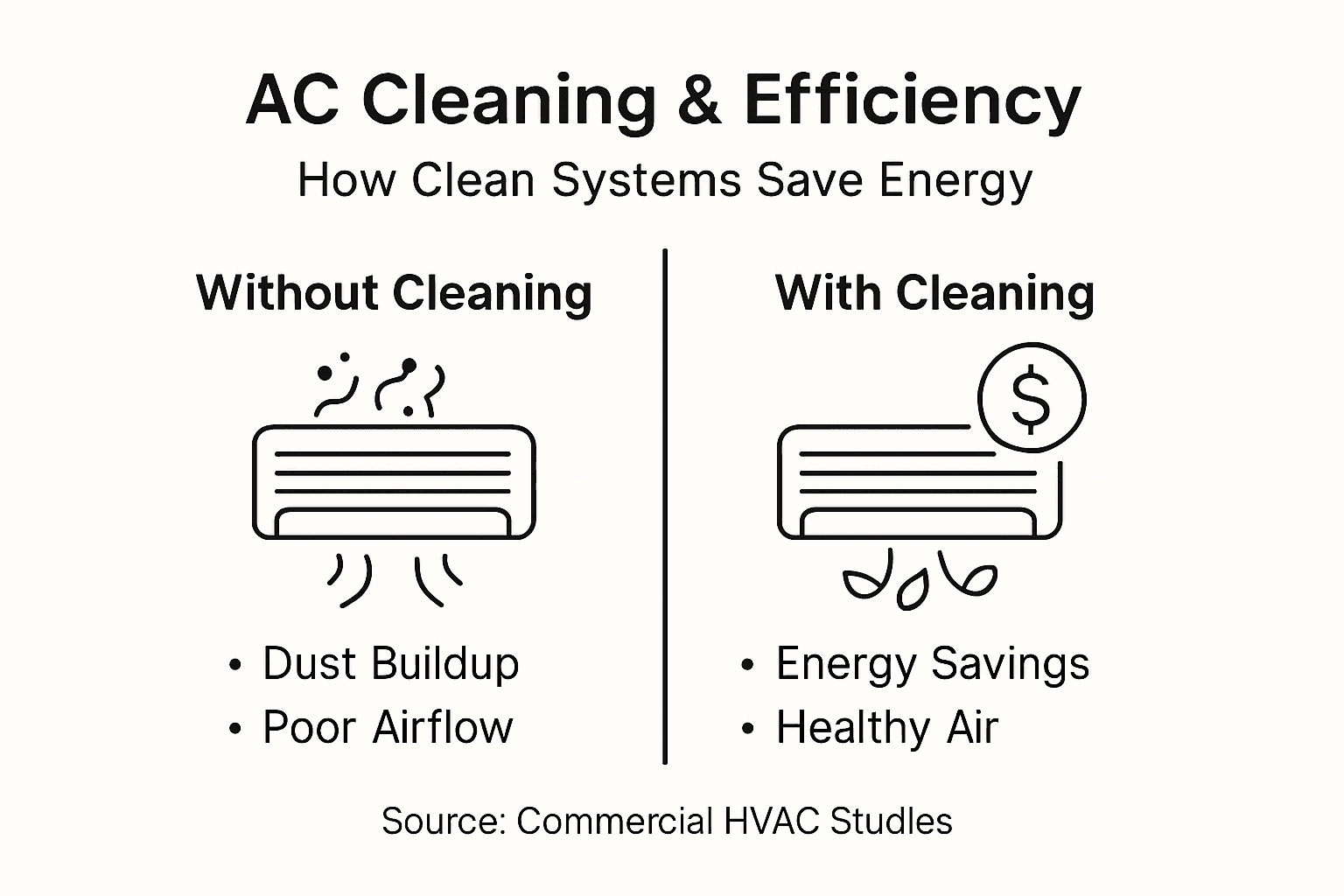
This efficiency collapse manifests in your electricity bills. A facility that should consume 180,000 kilowatt-hours annually might consume 280,000 or more when systems deteriorate through neglect. That’s an extra 100,000 AED annually in wasted electricity costs. Spread across five years of neglect, you’re looking at 500,000 AED in excess energy consumption, plus the ultimate repair costs when the system finally fails.
The Health Accumulation Effect
Occupants don’t develop serious respiratory illness from a single day in a contaminated building. The damage accumulates progressively. Early exposure causes minor symptoms. Extended exposure intensifies reactions. Chronic exposure creates permanent health consequences. A facility that neglects cleaning for two years exposes occupants to cumulative health risks equivalent to smoking a pack of cigarettes daily. Vulnerable populations develop serious illnesses. Some occupants develop lasting respiratory conditions that persist even after they leave your building.
This creates documented liability. If occupants develop illnesses and investigative testing traces the cause to poor air quality in your facility, you face legal claims, settlement costs, and reputational damage. Insurance companies investigate whether facility managers knew about maintenance requirements and chose to ignore them. Negligence becomes difficult to defend.
Pro tip: Establish a documented maintenance calendar with quarterly professional AC cleaning scheduled automatically, then set email reminders 30 days before each appointment to ensure nothing gets postponed or forgotten due to competing priorities.
Take Control of Your Commercial AC Cleaning for a Healthier Space
Maintaining clean and efficient air conditioning in commercial spaces is not just about comfort it is a critical defense against health risks such as mold, bacteria, and allergens. If you are concerned about the rapid contamination buildup and high operational costs highlighted in the article, Saniservice is here to provide a scientifically advanced solution. Our NADCA-certified technicians use hospital-grade, chemical-free biosanitisers supported by our in-house microbiology laboratory to ensure your entire HVAC system is deeply disinfected and fully compliant with Dubai’s regulations.
Don’t let poor indoor air quality and rising energy bills threaten your business operations. Visit our AC Cleaning & Maintenance – Saniservice AC Cleaning page to learn how our expert team restores system efficiency and protects occupant health. Discover real-world results in our Case Studies – Saniservice AC Cleaning and take your first step toward a safer indoor environment today by contacting us at https://saniacservice.com. Act now to ensure healthier air, greater energy savings, and compliance with Dubai’s strict standards.
Frequently Asked Questions
What does AC cleaning in commercial spaces involve?
AC cleaning in commercial spaces is a comprehensive process that includes the disassembly and cleaning of HVAC duct systems, evaporator and condenser coils, blower wheels, drainage trays, and condensation lines. It aims to eliminate contaminants and improve indoor air quality.
Why is professional AC cleaning important for health?
Professional AC cleaning is crucial because it reduces airborne pathogens, mold, and bacteria that can lead to respiratory illnesses and other health problems for occupants. Clean systems promote healthier indoor environments and compliance with health regulations.
How often should commercial AC cleaning be scheduled?
Commercial AC cleaning should ideally be scheduled quarterly to prevent contamination buildup, especially in high-traffic areas where the HVAC systems run continuously. This regular maintenance helps maintain air quality and system efficiency.
What are the energy efficiency benefits of regular AC cleaning?
Regular AC cleaning can significantly improve energy efficiency by reducing fan energy consumption and improving airflow. A clean system operates more efficiently, leading to lower energy costs and prolonged equipment lifespan.

Leave a Reply