How to Remove AC Mold Naturally for Healthier Air
How to remove ac mold on Hidden patches of mold inside your air conditioning system can turn even the most elegant Dubai villa into a source of sneezing, strange odors, and ongoing wellness concerns. With the region’s unique climate, preventing further contamination during AC mold removal is essential for safeguarding your home’s air quality. This guide walks you through proven steps that prioritize both your health and the integrity of your villa’s cooling system.
Table of Contents
Contents
- 1 Table of Contents
- 2 Quick Summary
- 3 Step 1: Prepare the AC Unit and Workspace
- 4 Step 2: Identify and Isolate Mold-Affected Areas
- 5 Step 3: Apply Natural, Chemical-Free Mold Removers
- 6 Step 4: Clean and Disinfect All AC Components
- 7 Step 5: Verify Mold Removal and Restore Airflow
- 8 Protect Your Home with Expert AC Mold Removal and Maintenance
- 9 Frequently Asked Questions
- 9.0.1 How do I prepare my workspace for AC mold removal?
- 9.0.2 What natural solutions can I use to remove mold from my AC?
- 9.0.3 How can I ensure all mold is removed from my AC system?
- 9.0.4 What personal protective equipment should I wear during mold removal?
- 9.0.5 How can I maintain a mold-free air conditioning system?
- 10 Recommended
- Step 1: Prepare the AC Unit and Workspace
- Step 2: Identify and Isolate Mold-Affected Areas
- Step 3: Apply Natural, Chemical-Free Mold Removers
- Step 4: Clean and Disinfect All AC Components
- Step 5: Verify Mold Removal and Restore Airflow
Quick Summary
| Main Takeaway | Explanation |
|---|---|
| 1. Shut down the AC unit completely | Turn off the system at the circuit breaker to prevent mold spores from spreading during cleaning. |
| 2. Wear protective gear during removal | Use an N95 mask, gloves, eyewear, and long-sleeved clothing to safeguard your health while handling mold. |
| 3. Utilize natural mold removers | Apply solutions like white vinegar and baking soda to eliminate mold without harmful chemicals infiltrating your home environment. |
| 4. Thoroughly clean all components | Deep clean filters, coils, and ducts using natural disinfectants to ensure comprehensive mold eradication and optimal air quality. |
| 5. Verify mold removal before restarting | Inspect cleaned areas and test air quality to confirm that all mold is gone and airflow is restored properly. |
Step 1: Prepare the AC Unit and Workspace
Preparing your workspace for AC mold removal is critical to preventing further contamination and protecting your health. Before starting the cleaning process, you’ll need to carefully set up your workspace and take essential precautionary measures.
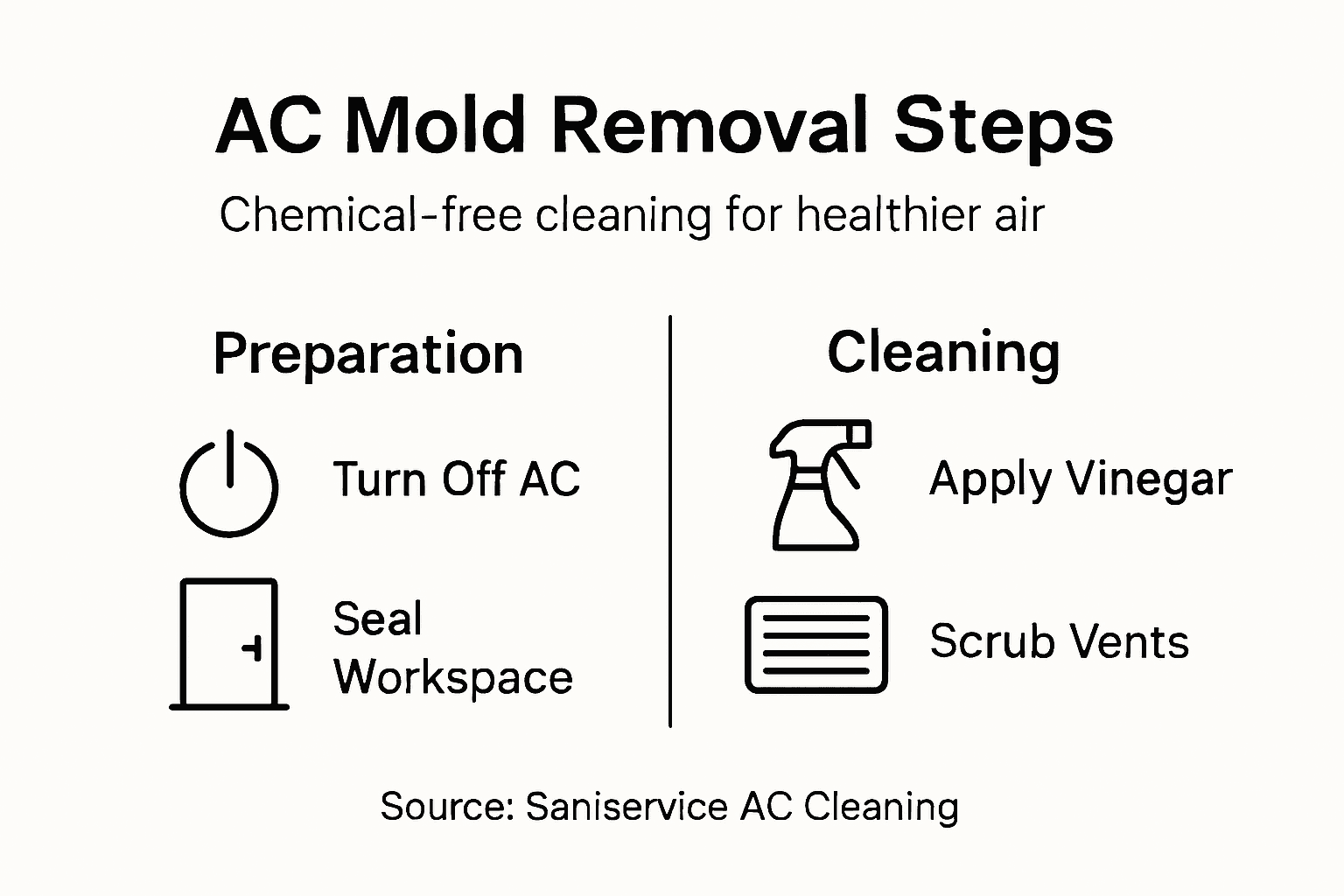
Begin by completely shutting down the air conditioning system to prevent the spread of mold spores. Comprehensive workspace containment involves several important steps:
- Turn off the AC unit at the circuit breaker
- Seal off the work area with polyethylene sheeting
- Create negative air pressure using fans directed outside
- Remove nearby furniture and sensitive items
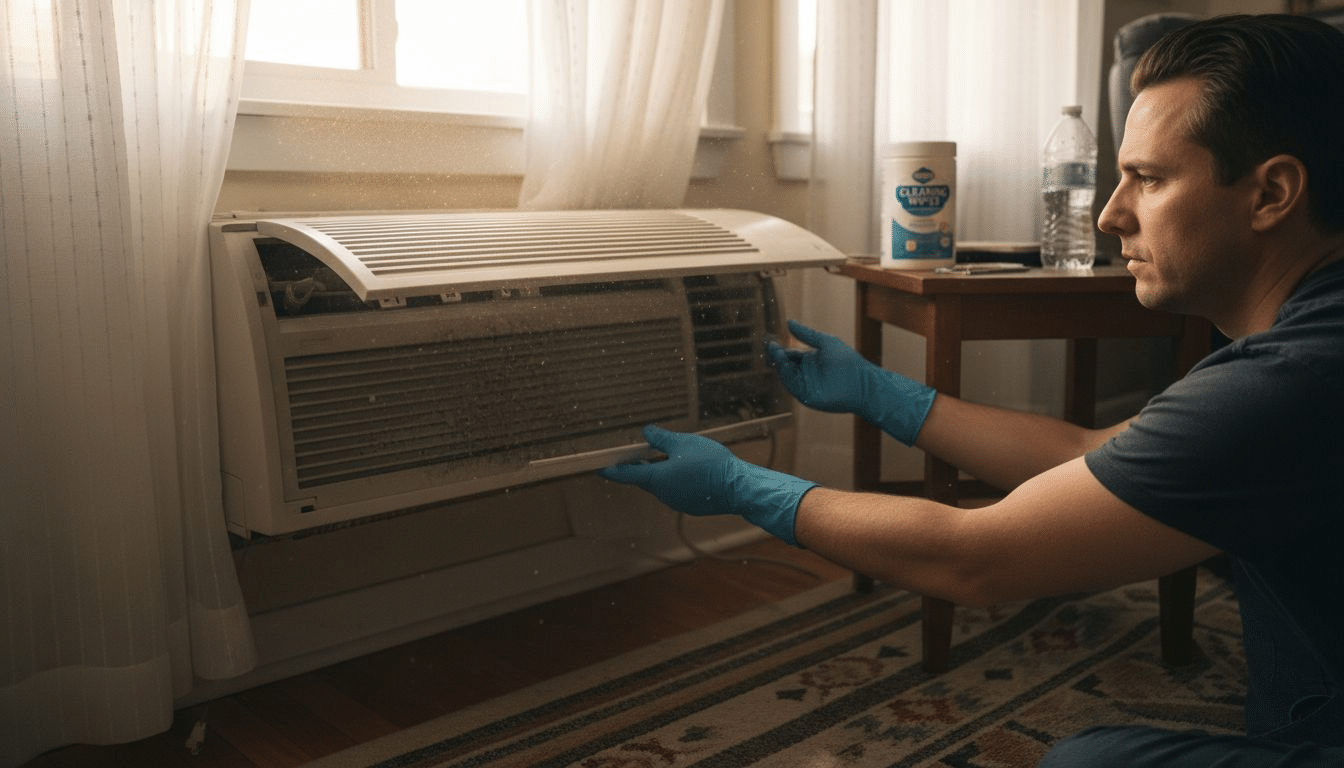
Personal protection is equally important during mold remediation. Wear the following protective equipment:
- N95 respirator mask
- Disposable gloves
- Protective eyewear
- Long-sleeved clothing
- Disposable shoe covers
Ensure proper ventilation by opening windows and using fans to direct airflow outside. This helps prevent mold spore circulation during the cleaning process. Moisture control is also crucial – address any underlying water leaks or humidity issues before starting your mold removal.
Proper preparation reduces mold spread and minimizes health risks during remediation.
Pro tip: Always have a dedicated set of cleaning tools for mold removal that can be thoroughly disinfected or disposed of after use.
Step 2: Identify and Isolate Mold-Affected Areas
Detecting and containing mold growth in your air conditioning system requires careful inspection and strategic isolation techniques. Your goal is to prevent further contamination while preparing for safe and effective mold removal.
Start by conducting a thorough visual inspection of your AC system and surrounding areas. Look for telltale signs of mold growth such as discoloration, dark spots, or unusual stains on vents, filters, and internal components. Mold contamination zones must be carefully assessed based on several key indicators:
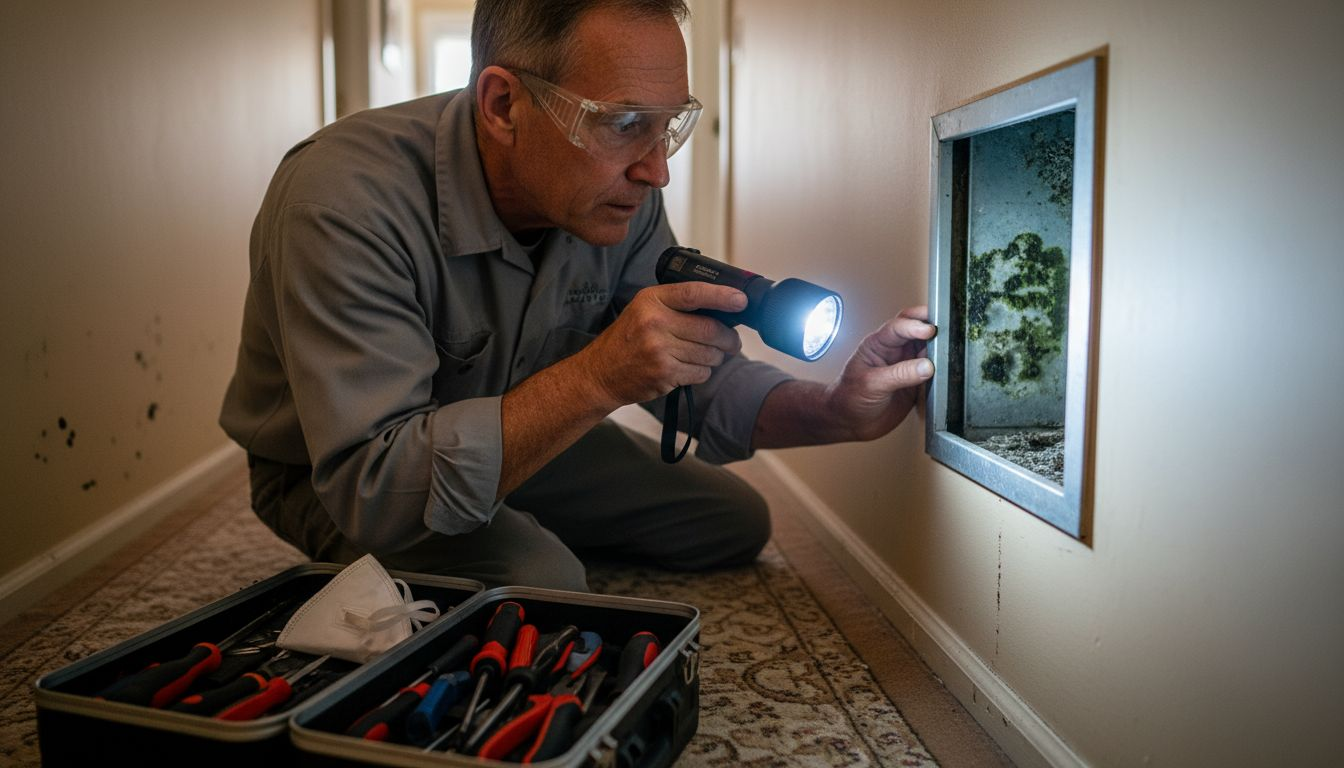
The table below summarizes visual indicators and common causes of mold growth in AC systems:
| Visual Indicator | Likely Cause | Action Suggestion |
|---|---|---|
| Dark or green-black spots | Persistent moisture | Improve drainage and ventilation |
| Water stains | Leakage or condensation | Repair leaks promptly |
| Musty odors | Fungal colonization | Deep clean and disinfect |
| Filter discoloration | Accumulated dust and spores | Replace or clean filters |
- Visible dark or green-black patches
- Musty or damp odors near the AC unit
- Water stains or persistent moisture
- Unexplained respiratory symptoms
Once you’ve identified mold-affected areas, implement strict containment protocols:
- Measure the contaminated area precisely
- Select appropriate containment method
- Seal off the workspace with polyethylene sheeting
- Use negative air pressure techniques
- Mark the contained area to prevent accidental entry
For smaller areas under 10 square feet, limited containment using plastic sheeting is typically sufficient. However, spaces exceeding 100 square feet require full containment to prevent widespread spore dispersal.
Proper identification and isolation are crucial first steps in effective mold remediation.
Pro tip: Use a bright flashlight and wear protective eyewear during inspection to catch subtle mold growth signs that might be missed with standard lighting.
Step 3: Apply Natural, Chemical-Free Mold Removers
Removing mold from your AC system requires strategic use of natural, non-toxic solutions that effectively eliminate fungal growth without introducing harmful chemicals into your indoor environment. The goal is to create a clean, safe space using ingredients you likely already have in your kitchen.
Natural mold removal methods offer powerful alternatives to harsh commercial cleaners. White vinegar stands out as a potent antifungal agent with remarkable cleaning capabilities:
- Use undiluted white vinegar in a spray bottle
- Apply directly to moldy surfaces
- Let sit for 60 minutes without wiping
- Wipe clean with a microfiber cloth
- Repeat if necessary
Additional natural mold-fighting solutions include:
- Baking soda mixed with water to create a scrubbing paste
- Hydrogen peroxide for stubborn mold patches
- Tea tree oil diluted in water for its antifungal properties
- Grapefruit seed extract as a natural disinfectant
When applying these solutions, focus on thoroughly saturating the affected areas and allow sufficient contact time for maximum effectiveness. Remember that porous materials might require complete replacement if mold has deeply penetrated the surface.
Here is a quick-reference guide comparing natural mold removers for AC cleaning:
| Solution | Best For | Application Tip |
|---|---|---|
| White vinegar | Most types of surface mold | Use undiluted, let sit before wiping |
| Baking soda paste | Gentle scrubbing | Mix with water, scrub, rinse thoroughly |
| Hydrogen peroxide | Stubborn, visible patches | Apply 3% solution, leave 10 min, then wipe |
| Tea tree oil | Whole-system deodorizing | Dilute in water, spray, do not rinse |
| Grapefruit seed extract | Persistent air freshening | Add drops to water, spray affected areas |
Natural remedies can effectively combat mold while preserving your indoor air quality.
Pro tip: Always test natural solutions on a small, inconspicuous area first to ensure they do not damage or discolor your AC system components.
Step 4: Clean and Disinfect All AC Components
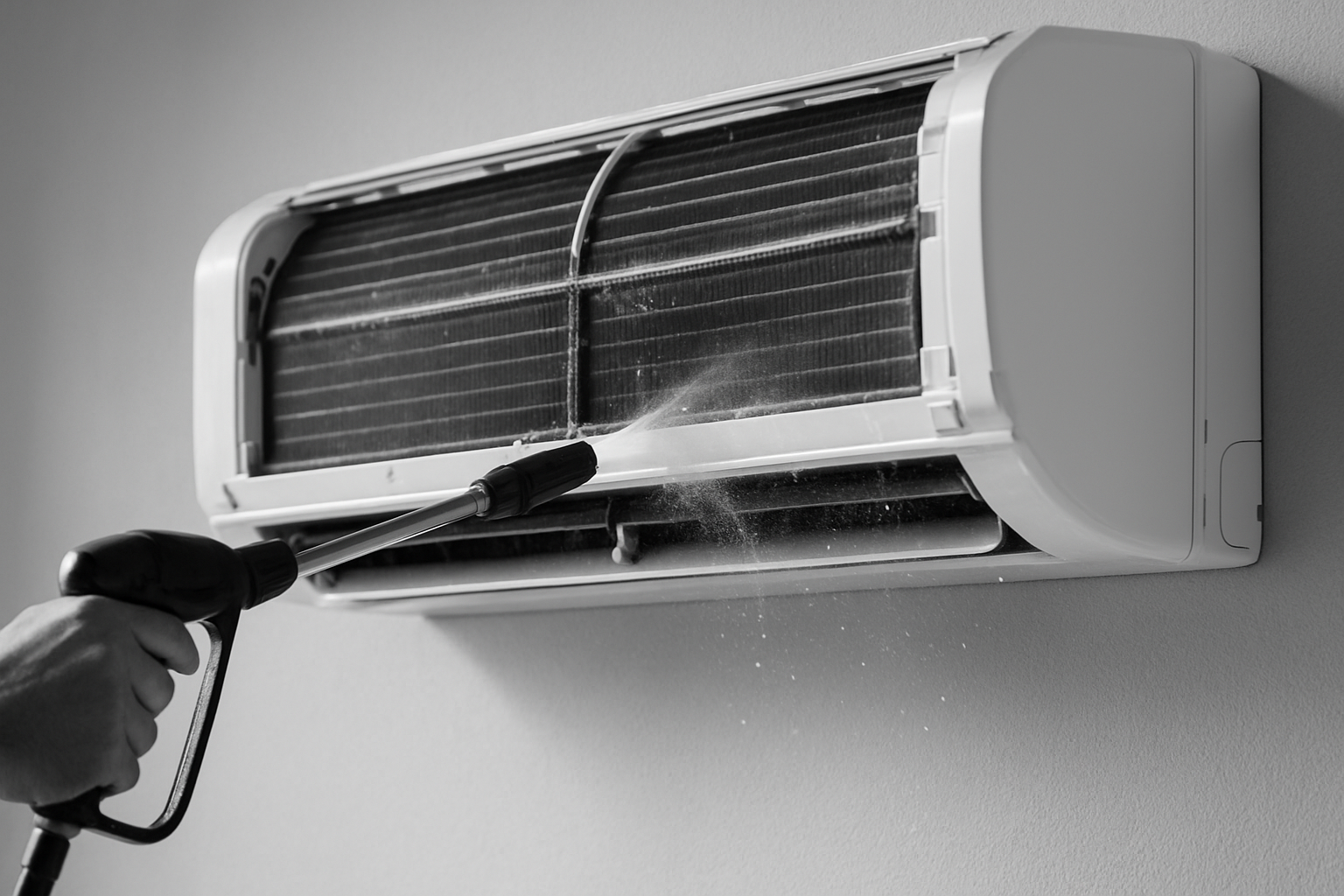
Deep cleaning your AC system requires methodical and comprehensive disinfection of every accessible component to eliminate mold and prevent future growth. This crucial step ensures your air conditioning system delivers clean, healthy air throughout your home.
Cleaning AC components thoroughly involves multiple stages of targeted treatment and careful sanitization:
- Disconnect power to the AC unit
- Remove external access panels
- Clean removable parts separately
- Use natural antimicrobial solutions
- Ensure complete drying after cleaning
Focus on these critical AC components during your cleaning process:
- Air filters (replace or deep clean)
- Evaporator and condenser coils
- Drip pans and drainage lines
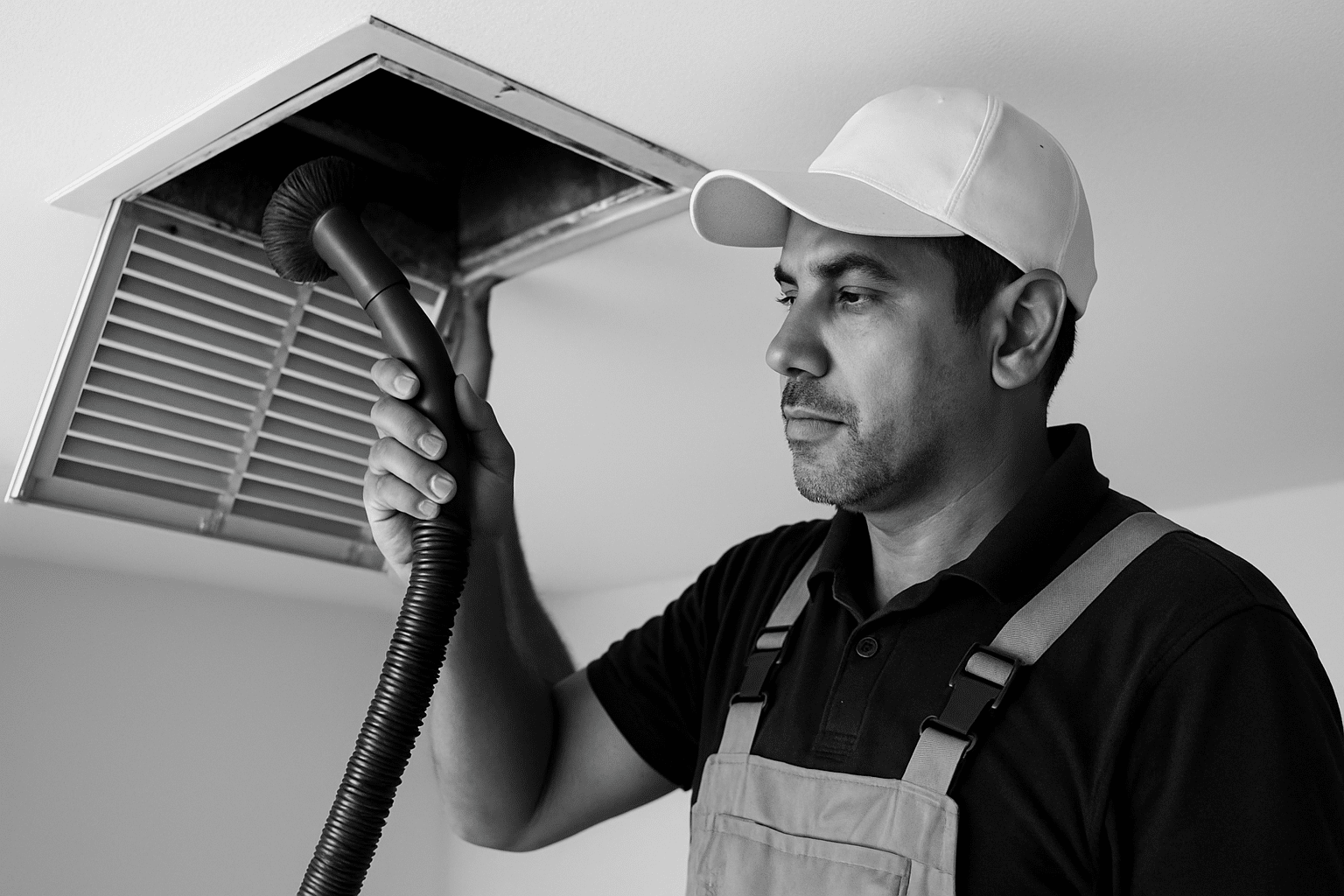
- Vents and air registers
- Internal ductwork surfaces
White vinegar, hydrogen peroxide, and tea tree oil serve as exceptional natural disinfectants that eliminate mold without introducing toxic chemicals. When cleaning, use microfiber cloths to trap microscopic particles and prevent cross-contamination.
Systematic cleaning prevents mold recurrence and maintains optimal indoor air quality.
Pro tip: Invest in a soft-bristled brush with an extendable handle to reach difficult interior AC components without risking damage to delicate surfaces.
Step 5: Verify Mold Removal and Restore Airflow
The final stage of your AC mold remediation process involves comprehensive verification and systematic restoration of your air conditioning system’s functionality. This critical step ensures that all mold has been successfully eliminated and your system is ready to deliver clean, healthy air.
Verification of mold removal requires thorough inspection and careful assessment of multiple system components:
- Conduct visual inspection of all cleaned surfaces
- Check for any remaining discoloration or musty odors
- Examine previously contaminated areas for signs of regrowth
- Test air quality using moisture detection tools
- Confirm complete dryness of all system components
Restore your AC system’s airflow by following these systematic steps:
- Replace or clean air filters
- Reassemble all removed AC components
- Reconnect electrical connections
- Run the system at full capacity for 30 minutes
- Monitor temperature and airflow consistency
Maintain optimal indoor air quality by controlling humidity levels and ensuring proper ventilation. Regular maintenance and proactive monitoring will prevent future mold growth and protect your respiratory health.
Consistent vigilance is key to maintaining a mold-free air conditioning system.
Pro tip: Consider using a digital hygrometer to monitor indoor humidity levels and keep them between 30-50% to discourage mold regrowth.
Protect Your Home with Expert AC Mold Removal and Maintenance
Mold growth in your air conditioning system can threaten your indoor air quality and health. This article highlights the challenges of safely removing mold naturally to protect your family from allergens and respiratory risks. If you want to go beyond DIY solutions and ensure every AC component is deeply cleaned and disinfected without harmful chemicals, professional help is essential. Saniservice combines scientific precision with Swiss-quality care to tackle mold at its source while enhancing your AC system’s performance and longevity.
Take control of your indoor environment today by exploring our proven AC Cleaning & Maintenance – Saniservice AC Cleaning services. Discover how our NADCA-certified technicians use hospital-grade biosanitisers in each deep cleaning backed by our own microbiology lab for unmatched results. Visit Saniservice to learn more and see real success stories in our Case Studies – Saniservice AC Cleaning. Don’t wait until mold affects your health. Act now for cleaner, healthier air starting with a professional AC mold removal service.
Frequently Asked Questions
How do I prepare my workspace for AC mold removal?
To prepare your workspace for AC mold removal, shut down the air conditioning system and seal off the area with polyethylene sheeting. Use fans to create negative air pressure and remove nearby furniture to prevent contamination.
What natural solutions can I use to remove mold from my AC?
Natural solutions like undiluted white vinegar, baking soda mixed with water, hydrogen peroxide, and tea tree oil are effective for removing mold from your AC. Apply these solutions directly to the affected areas, allowing them to sit for adequate contact time before wiping them clean.
How can I ensure all mold is removed from my AC system?
To ensure thorough mold removal, conduct a detailed visual inspection of all cleaned components in your AC system, checking for discoloration or musty odors. Replace or clean air filters, and test the system’s airflow after reassembly to confirm it operates effectively without any remnants of mold.
What personal protective equipment should I wear during mold removal?
During mold removal, wear an N95 respirator mask, disposable gloves, protective eyewear, long-sleeved clothing, and disposable shoe covers. This personal protective equipment helps safeguard your health while you clean the AC system.
How can I maintain a mold-free air conditioning system?
To maintain a mold-free air conditioning system, regularly monitor humidity levels and ensure proper ventilation. Keep indoor humidity between 30-50% and perform routine inspections to catch any signs of moisture or mold early on, preventing future issues.