What Is ISO 45001 and Its Impact on Safe Environments
Managing luxury properties in Dubai means facing unique safety challenges every day. The close quarters of high-end buildings make indoor air quality and hazard control a top concern for property managers and facility directors. Adopting ISO 45001 occupational health and safety standards gives your organization a structured, globally recognized approach for identifying risks, ensuring compliance, and building trust with both residents and authorities. Discover how this framework can help you maintain impeccable air quality and protect everyone under your roof.
Table of Contents
Contents
- 1 Table of Contents
- 2 Key Takeaways
- 3 Defining ISO 45001 Occupational Safety Standards
- 4 Key Requirements for Certification Compliance
- 5 Proactive Risk Management and Safety Systems
- 6 Legal Obligations and Industry-Specific Implications
- 7 Benefits, Mistakes, and Alternatives for Properties
- 8 Strengthen Your ISO 45001 Compliance with Proven HVAC Safety Solutions
- 9 Frequently Asked Questions
- 10 Recommended
- Defining ISO 45001 Occupational Safety Standards
- Key Requirements for Certification Compliance
- Proactive Risk Management and Safety Systems
- Legal Obligations and Industry-Specific Implications
- Benefits, Mistakes, and Alternatives for Properties
Key Takeaways
| Point | Details |
|---|---|
| Global Standard | ISO 45001 provides a structured framework for occupational health and safety management, ensuring all levels of an organization play a role. |
| Plan-Do-Check-Act Cycle | The standard emphasizes a continuous improvement cycle to maintain safety and prevent workplace injuries. |
| Legal Compliance | Compliance with local and international regulations is crucial for certification and operational legitimacy. |
| Employee Involvement | Active worker participation in safety decisions enhances the overall safety culture and helps identify hazards effectively. |
Defining ISO 45001 Occupational Safety Standards
ISO 45001 is the global benchmark for occupational health and safety management systems. It provides organizations with a structured framework to identify hazards, assess risks, and create safer working environments across all industries and organizational sizes.
Unlike generic safety guidelines, ISO 45001 specifies requirements for a complete management system that integrates leadership commitment, worker participation, and continuous improvement. This means every level of your organization—from top management to frontline staff—plays an active role in safety culture.
For property managers and facility directors in Dubai’s luxury real estate sector, this standard is particularly valuable. Your buildings house residents, guests, and staff in close quarters where air quality, equipment safety, and emergency protocols directly impact occupant health.
Core Components of ISO 45001
The standard operates on a plan-do-check-act cycle that ensures safety never becomes static:
- Plan: Identify workplace hazards and establish safety policies aligned with your organization’s goals
- Do: Implement controls, provide training, and execute documented procedures
- Check: Monitor performance through inspections, incident reporting, and worker feedback
- Act: Review results and continuously improve your safety systems
Why It Matters for Dubai’s Facility Management
Dubai’s intense climate and densely occupied buildings create unique safety challenges. AC systems accumulate biofilm and dust, HVAC components degrade faster, and indoor air quality directly impacts occupant wellness.
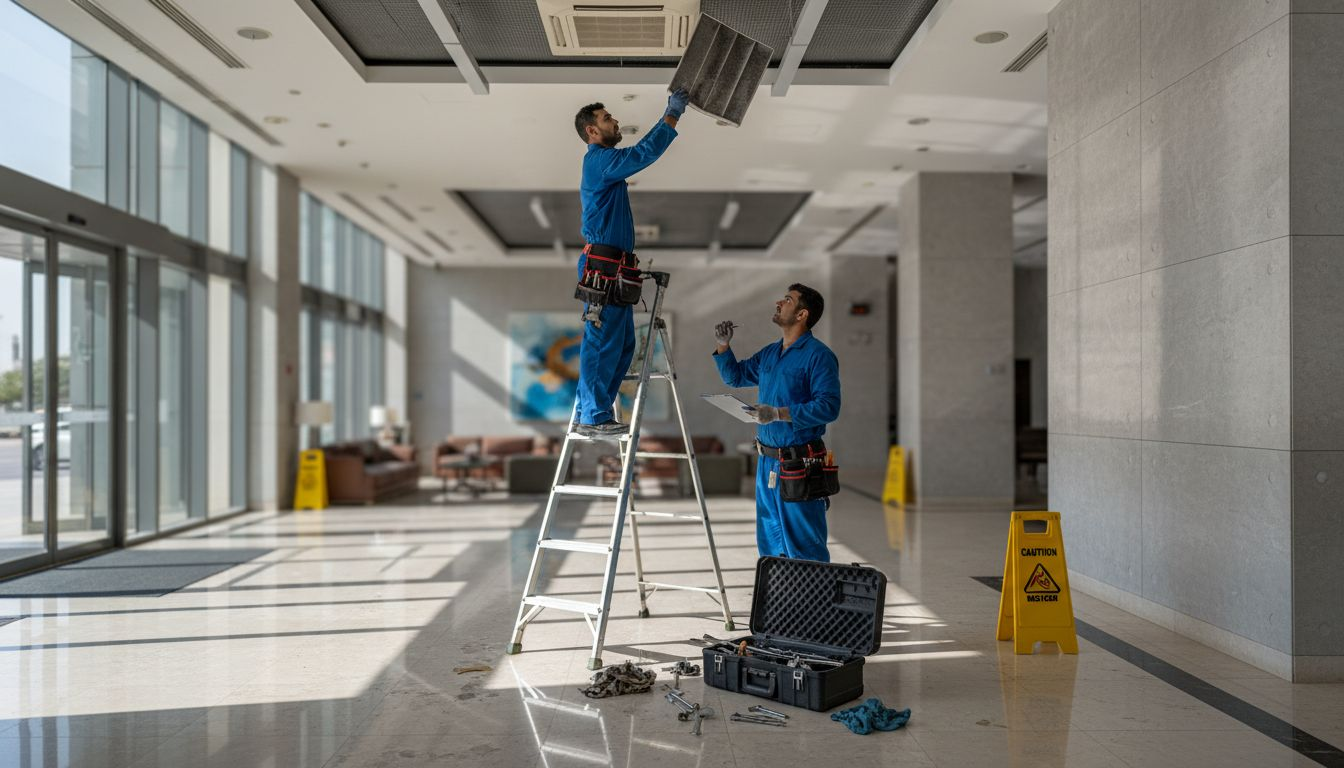
ISO 45001 compliance demonstrates that you’re taking these risks seriously. Workers feel protected. Residents trust your management. Insurance premiums often decrease. Regulatory inspections proceed smoothly because your systems are documented and auditable.
The Global Recognition Factor
ISO 45001 is the globally recognized occupational health and safety management system standard that helps organizations minimize the risk of injury and illness. It strengthens legal compliance and builds resilience into your operations.
In Dubai, where international standards drive business expectations, this certification signals professionalism and accountability to stakeholders, tenants, and government authorities.
ISO 45001 isn’t just a compliance checkbox—it’s a structured commitment to preventing workplace injury and creating a culture where safety is everyone’s responsibility.
Moving From Awareness to Action
Implementing ISO 45001 requires more than posting safety posters. You need documented procedures, staff training, hazard assessments, and regular audits. Many facility directors partner with specialists like SaniAC by Saniservice, who combine their triple ISO certification with expert knowledge of indoor air quality and HVAC safety.
Your HVAC systems, for instance, present multiple hazard points: contaminated coils harbor harmful bacteria, blocked drainage trays become breeding grounds for mold, and poor duct maintenance circulates allergens. ISO 45001 ensures these risks are identified, addressed, and monitored systematically.
Pro tip: Start by conducting a comprehensive hazard assessment of your HVAC systems and indoor air quality controls—this forms the foundation of your ISO 45001 compliance roadmap.
Key Requirements for Certification Compliance
Getting ISO 45001 certified means more than adopting good intentions. Your organization must meet specific, measurable requirements that demonstrate a functioning safety management system from top to bottom.
The certification process starts with understanding what auditors will assess. They’re not looking for perfection; they’re verifying that you have documented systems, trained personnel, and mechanisms for continuous improvement that actually work in your facility.
Essential Documentation and Planning
ISO 45001 requires you to develop and implement an occupational health and safety management system with documented policies, objectives, and operational controls. This isn’t a one-time document—it’s a living system that guides daily decisions.
Your documentation must include:
- Safety policies aligned with your organizational context and worker needs
- Hazard identification procedures specific to your building type and operations
- Risk assessment methods that evaluate likelihood and severity of potential incidents
- Legal compliance registers tracking all relevant UAE and Dubai regulations
- Emergency response plans with clear procedures and assigned responsibilities
- Training records showing all personnel received appropriate safety instruction
- Performance metrics to measure whether your system actually reduces incidents
The Two-Phase Audit Process
Certification bodies conduct audits in structured stages. The preliminary audit reviews your documentation and readiness before the certification audit verifies actual implementation. Surveillance audits then occur annually to confirm ongoing compliance.
For facility managers, this means auditors will walk your buildings, interview staff, review maintenance records, and test whether your documented procedures match real-world practices. Gaps between what’s written and what’s happening will delay certification.
Hazard Identification and Risk Assessment
You must systematically identify workplace hazards—both obvious and hidden. In Dubai’s luxury residential and commercial properties, this includes HVAC-related hazards that many facility teams overlook.
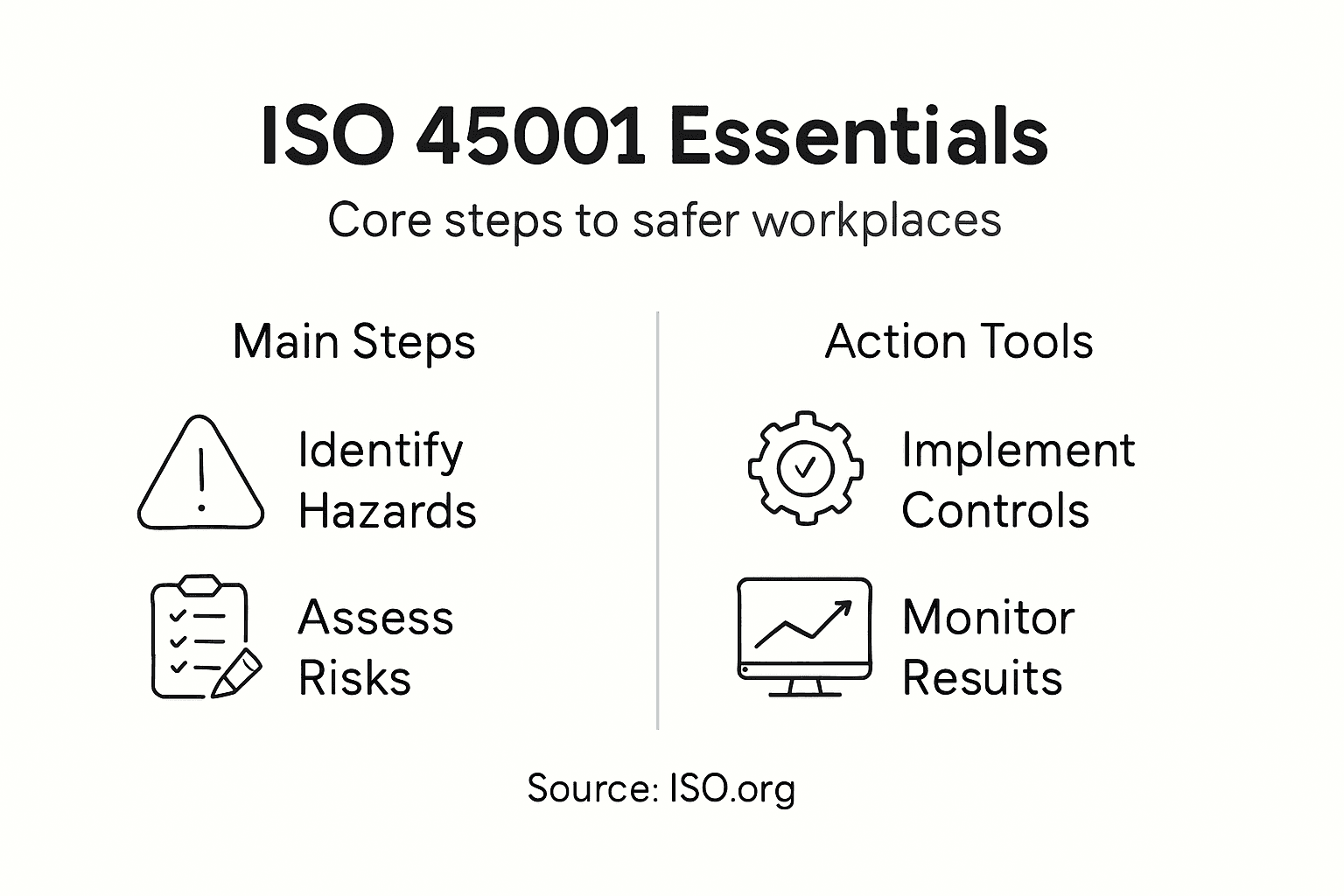
Contaminated air conditioning coils harbor Legionella bacteria. Blocked drainage trays become mold incubators. Poorly maintained ducts circulate allergens and biological contaminants. ISO 45001 demands that you identify these risks, assess their severity, and implement controls.
Risk assessment isn’t guesswork. You evaluate the likelihood of harm occurring and the potential consequences, then assign control measures ranked by effectiveness.
Certification auditors verify that your risk assessments are current, comprehensive, and actually address the hazards present in your specific facility—not generic template documents.
Operational Controls and Continuous Improvement
Once you’ve identified risks, you must implement controls that prevent incidents. This includes preventive maintenance schedules, equipment inspections, and corrective actions when problems arise.
The certification scheme requires you to maintain compliance through surveillance audits and special audits when significant changes occur. You’ll document incidents, investigate root causes, and demonstrate how findings lead to system improvements.
For indoor air quality and HVAC safety, this means regular professional cleaning and disinfection services that generate documented results—not just maintenance logs.
Pro tip: Partner with ISO 45001-certified service providers like SaniAC by Saniservice who understand certification requirements and can provide audit-ready documentation proving your HVAC systems meet occupational safety standards.
Proactive Risk Management and Safety Systems
Proactive risk management is where ISO 45001 fundamentally shifts your safety approach. Instead of reacting after incidents occur, you systematically identify hazards, assess their likelihood and severity, and implement controls before anyone gets hurt.
This forward-thinking methodology transforms how facility managers operate in Dubai’s demanding environment. Rather than treating safety as compliance overhead, it becomes an integrated part of daily decision-making that protects occupants and staff.
The Plan-Do-Check-Act Safety Cycle
ISO 45001 uses a continuous improvement cycle that never stops:
- Plan: Identify hazards specific to your property and establish safety objectives aligned with organizational goals
- Do: Implement documented controls, train personnel, and execute prevention procedures
- Check: Monitor performance through inspections, incident tracking, and worker feedback
- Act: Analyze results, investigate near-misses, and improve systems based on findings
This cycle repeats continuously. Each rotation makes your safety systems stronger because you’re learning from what actually happens in your buildings.
Risk Assessment Methodology
ISO 45001 promotes a risk-based approach emphasizing systematic identification and control of occupational health and safety risks. Effective risk assessment uses structured techniques like job safety analysis and failure mode effects analysis to uncover hazards others miss.
For property managers, this means evaluating not just obvious dangers but also hidden risks. HVAC systems present subtle hazards: biofilm accumulation reduces air quality, contaminated coils harbor pathogens, blocked drainage trays create mold environments, and poor duct maintenance circulates allergens throughout occupied spaces.
Proactive risk management identifies these hazards before they cause illness—preventing problems rather than managing emergencies after the fact.
Worker Involvement and Safety Culture
ISO 45001 requires genuine worker participation in safety decisions. Your staff and residents observe conditions you might miss. Creating channels for reporting hazards, near-misses, and safety suggestions builds a culture where everyone takes ownership.
Property managers who involve maintenance teams, cleaning staff, and security personnel in safety planning discover vulnerabilities faster. These frontline workers understand operational realities and can suggest practical controls.
Continuous Monitoring and Improvement
Proactive systems require ongoing vigilance. You’ll monitor safety performance through:
- Regular inspections of HVAC equipment and indoor air quality
- Analysis of incident reports and near-miss data
- Worker feedback and hazard reports
- Environmental monitoring (air quality, temperature, humidity)
- Preventive maintenance effectiveness reviews
Monitoring isn’t passive observation—it drives active improvements. When data reveals patterns, you adjust procedures, increase training, or implement additional controls.
Connecting HVAC Safety to Risk Management
Your air conditioning systems directly impact occupational health. Professional cleaning and disinfection services that include safe chemical practices in occupied spaces ensure your risk assessments translate into actual protection. Documentation from certified service providers proves you’re managing this critical hazard systematically.
Pro tip: Establish baseline indoor air quality measurements before implementing controls, then monitor regularly to demonstrate that your proactive safety measures are actually reducing risks and protecting occupants.
Legal Obligations and Industry-Specific Implications
ISO 45001 doesn’t exist in a vacuum. Your organization must comply with local, national, and international regulations that govern occupational health and safety in your specific industry and jurisdiction.
In Dubai and the United Arab Emirates, this means navigating UAE labor laws, Emirates Standards and Metrology Authority requirements, and any building-specific regulations. Failure to address legal obligations puts your organization at risk of penalties, lawsuits, and operational shutdowns.
Understanding Your Legal Landscape
ISO 45001 mandates organizations to determine and comply with legal and other requirements relevant to occupational health and safety hazards and risks. This isn’t optional—compliance is a non-negotiable component of certification and operational legitimacy.
Dubai’s property management sector faces distinct legal requirements:
- UAE Labor Law: Governs working conditions, injury reporting, and employer liability
- Building codes: Specify safety standards for HVAC systems, ventilation, and fire safety
- Environmental regulations: Address chemical use, waste disposal, and emissions
- Health authority guidelines: Mandate indoor air quality and occupant safety standards
- Industry-specific standards: Apply to healthcare facilities, hospitality, and residential properties
Building a Compliance Register
ISO 45001 requires maintaining a current compliance register documenting all applicable legal requirements. This living document tracks regulations, deadlines, responsible parties, and verification methods.
Your register should identify which regulations apply to your specific properties. A luxury residential tower faces different requirements than a commercial office building or healthcare facility. Maintaining accuracy prevents compliance gaps that auditors will identify.
Non-compliance with legal obligations isn’t just a certification problem—it’s a liability exposure that can result in fines, work stoppages, and damage to your professional reputation.
Industry-Specific Applications
ISO 45001’s flexible framework adapts to different sectors. Residential properties, commercial buildings, and healthcare facilities each have unique occupational safety priorities.
For facility managers, this means your safety system must address hazards specific to your building type. Healthcare facilities require stricter infection control measures. Hotels need emergency procedures protecting guests and staff. Residential complexes must ensure safe living conditions for families.
HVAC system safety applies across all these contexts. Contaminated air conditioning directly violates occupational health regulations in every jurisdiction.
Staying Current With Regulatory Changes
Laws and standards change. ISO 45001 requires regular updates to your compliance register whenever regulations shift. Dubai’s rapid development means new building codes and standards emerge regularly.
Property managers must monitor regulatory bodies for updates and adjust safety procedures accordingly. This ongoing compliance maintenance prevents your certification from becoming obsolete.
Integrating Compliance Into Operations
Compliance isn’t a separate program—it’s integrated into daily decision-making. Your safety policies, procedures, and training must reflect applicable legal requirements. When you engage professional services like SaniAC by Saniservice, ensure they understand your specific regulatory obligations and provide documentation meeting those requirements.
Pro tip: Conduct a comprehensive legal compliance audit before seeking ISO 45001 certification to identify all applicable regulations, then document how your safety system addresses each requirement—this prevents certification delays and audit findings.
Benefits, Mistakes, and Alternatives for Properties
ISO 45001 delivers measurable outcomes for property managers willing to invest in systematic safety management. The results extend far beyond compliance checkboxes—they directly impact occupant health, operational efficiency, and your organization’s credibility.
For property and facility managers, understanding core business impacts of ISO 45001 compliance helps prioritize resources:
| Impact Area | ISO 45001 Compliance | Non-Compliance |
|---|---|---|
| Employee Well-being | Proactive hazard controls | Higher injury risk |
| Tenant Trust | Enhanced reputation | Potential dissatisfaction |
| Regulatory Action | Fewer fines, audit ready | Increased penalty risk |
| Operational Downtime | Fewer disruptions | More stoppages, emergencies |
| Insurance Costs | Likely reductions | Possible surcharges |
But implementation requires careful attention. Common pitfalls can undermine your certification and leave hazards unaddressed. Understanding both the benefits and pitfalls helps you avoid costly mistakes.
Documented Benefits of ISO 45001
ISO 45001 adoption shows significant benefits, including a 32% average reduction in workplace injuries, outperforming previous safety standards. Beyond injury prevention, organizations report:
- Improved safety culture: Workers actively participate in identifying hazards rather than passively following rules
- Enhanced regulatory compliance: Your operations align with local and international requirements, reducing penalty risks
- Better organizational resilience: Systematic risk management prevents disruptions that damage reputation and revenue
- Lower insurance costs: Insurers recognize reduced liability exposure and often decrease premiums
- Increased occupant trust: Residents and tenants feel protected, improving satisfaction and retention
- Operational efficiency: Preventive maintenance reduces emergency repairs and extends equipment lifespan
Common Implementation Mistakes
Some property managers treat ISO 45001 as a documentation exercise rather than operational reality. This approach fails certification audits and leaves occupants unprotected.
Frequent mistakes include:
- Inadequate worker involvement: Creating safety systems without input from maintenance staff, cleaners, and security personnel
- Poor system integration: Treating safety as separate from HVAC maintenance, cleaning, and facilities management
- Regulatory misalignment: Developing procedures that don’t address your specific legal obligations in Dubai
- Superficial hazard assessment: Identifying obvious risks while missing hidden dangers like contaminated HVAC systems
- Documentation without action: Maintaining policies nobody actually follows in daily operations
The gap between documented procedures and actual practice is where certification fails and occupants remain unprotected.
Alternatives to ISO 45001
Other frameworks exist—older OHSAS 18001, industry-specific standards, or self-designed safety programs. But none offer ISO 45001’s global recognition, structured approach, and proven effectiveness.
Alternatives typically lack:
- Third-party verification confirming actual compliance
- Structured risk management methodologies
- Worker participation requirements
- Continuous improvement mechanisms
- International credibility
For Dubai’s luxury real estate sector competing globally, ISO 45001 certification signals genuine commitment to occupant safety.
To clearly differentiate ISO 45001 from alternative safety frameworks, here is a comparison table illustrating their unique advantages:
| Criteria | ISO 45001 | OHSAS 18001 | Custom Safety Program |
|---|---|---|---|
| Global Recognition | Internationally adopted | Regional, being phased out | No third-party validation |
| Continuous Improvement | Required by standard | Limited, less structured | Usually lacking formal process |
| Worker Participation | Integral part of system | Often less emphasized | Varies, not guaranteed |
| Legal Compliance | Explicit, built-in | Less rigorous | Depends on local expertise |
| Audit Process | Annual, third-party | Internal or external | Internal, not standardized |
| Insurance Impact | Lower premiums likely | May not affect rates | Uncertain by provider |
| Credibility with Stakeholders | High, globally respected | Moderate, often replaced | Low, limited to local context |
Aligning Safety Systems With HVAC Management
Your property’s indoor air quality directly determines whether your safety system actually protects occupants. HVAC hazards require professional management—contaminated coils, biofilm-laden ducts, and mold-infested drainage trays violate occupational health standards.
Partner with certified service providers who understand ISO 45001 requirements and deliver documented results proving your risk controls function effectively.
Pro tip: When implementing ISO 45001, prioritize addressing one major hazard category completely rather than superficially addressing many—success with HVAC safety management demonstrates your commitment and builds momentum for broader compliance.
Strengthen Your ISO 45001 Compliance with Proven HVAC Safety Solutions
The article underscores the critical challenge of managing hidden workplace hazards in HVAC systems to meet ISO 45001 occupational safety standards. Facility managers in Dubai face unique risks from contaminated AC coils, biofilm in ducts, and mold in drainage trays that directly affect indoor air quality and occupant health. Your goal is to establish a robust, evidence-based occupational health and safety management system that integrates proactive hazard identification, effective risk controls, and continuous improvement as outlined in ISO 45001.
Saniservice specializes in addressing these exact pain points with scientific precision and hands-on expertise. Our NADCA-certified technicians perform comprehensive cleaning and disinfection of all AC components using hospital-grade, chemical-free biosanitisers proven to eliminate mold, bacteria, and allergens. With a triple ISO certification portfolio including ISO 45001, we align our service delivery to support your safety management objectives and help you confidently meet audit requirements.
Take control of your facility’s occupational health risks today and experience safer indoor environments that protect workers, residents, and visitors.
Ready to elevate your safety systems and fully comply with ISO 45001 standards? Discover how our professional air conditioning cleaning and disinfection services bring scientific rigor and operational excellence to your property management. Partner with Dubai’s leading experts at Saniservice to transform HVAC hazard management from a compliance task into a culture of safety. Visit us now to schedule your comprehensive HVAC hygiene assessment and gain peace of mind for your workforce and occupants.
Frequently Asked Questions
What is ISO 45001?
ISO 45001 is a global standard for occupational health and safety management systems designed to help organizations create safer working environments by providing a structured framework for identifying hazards and assessing risks.
How does ISO 45001 impact workplace safety?
ISO 45001 enhances workplace safety by integrating leadership commitment, worker participation, and continuous improvement, ensuring that safety becomes a core part of the organizational culture rather than just a compliance requirement.
What are the core components of implementing ISO 45001?
The core components of implementing ISO 45001 include planning (identifying hazards), doing (implementing controls), checking (monitoring performance), and acting (reviewing results for continuous improvement).
Why is ISO 45001 important for facility management?
ISO 45001 is crucial for facility management as it addresses the unique risks in environments like luxury real estate, ensuring compliance with safety standards, enhancing tenant confidence, and potentially lowering insurance costs.
Recommended
- Indoor Air Quality Improvement Through Safe Chemical
- 11 Essential Safe Chemical Practices in Occupied Spaces During AC Cleaning in Dubai: Complete 2026 Guide
- Sustainable HVAC Cleaning: Healthier Air, Greener Living
- Improve HVAC Hygiene Without: 9 Proven Methods for Healthier Spaces
- Proper Business Junk Disposal: Impact on Safety and Compliance