

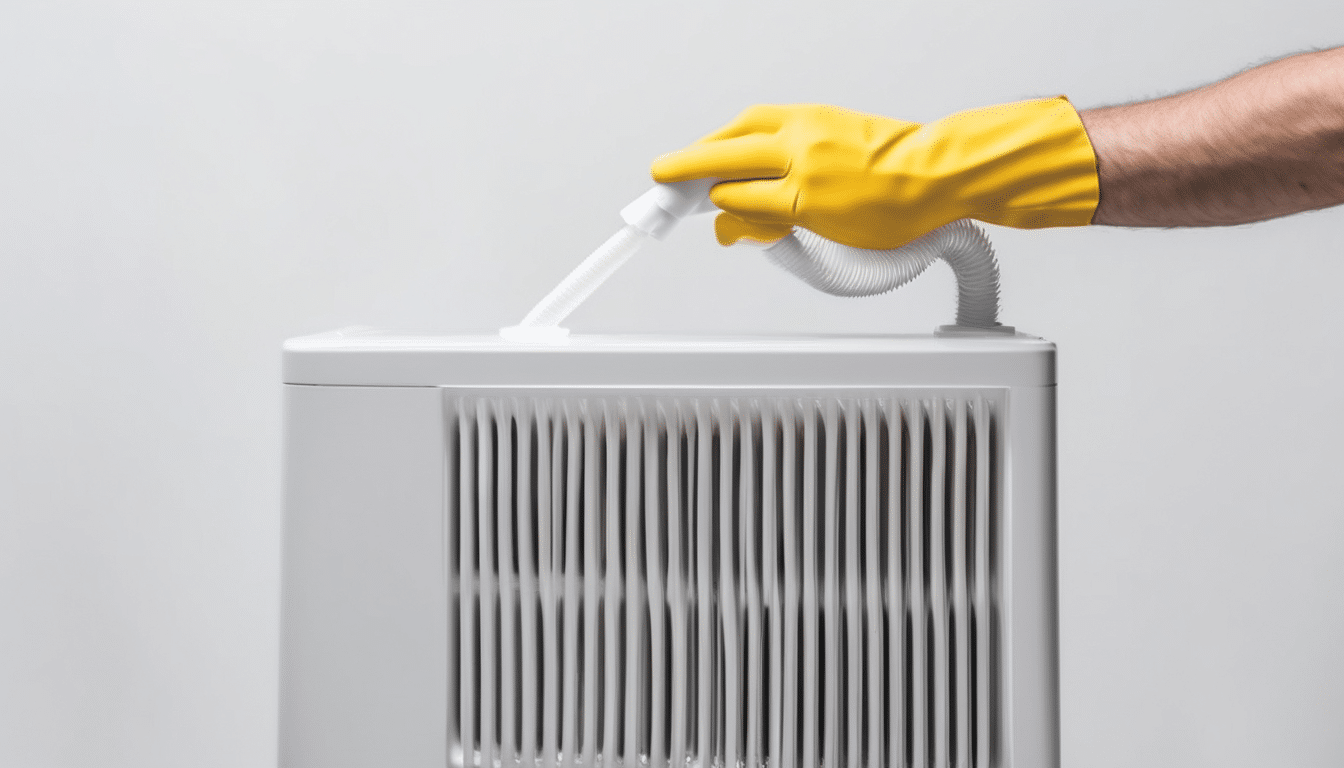
AC Coil Cleaning Actually Involve: Explained
When most people think about AC maintenance, they picture someone hosing down a filter or wiping a vent cover. What Does AC coil cleaning actually involve, however, goes considerably deeper than that. The coils inside your air conditioning system — both the evaporator coil and the condenser coil — are where heat exchange happens, and they are also where contamination quietly accumulates over months of continuous operation.
In Dubai and across the UAE, air conditioning systems run for the majority of the year. Temperatures routinely exceed 40°C from May through September, and even the cooler months rarely allow systems to rest. This continuous operation creates ideal conditions for dust, moisture, biofilm, and microbial growth to build up on coil surfaces. The result is reduced cooling performance and, more importantly, degraded indoor air quality that affects everyone who breathes inside the space. This relates directly to Ac Coil Cleaning Actually Involve.
Understanding what AC coil cleaning actually involves helps you make informed decisions about your home’s maintenance, evaluate the quality of a service you have received, and protect the health of your family. This guide walks through the entire process from start to finish.
Why AC Coil Cleaning Matters in Dubai’s Climate
Contents
- 1 Why AC Coil Cleaning Matters in Dubai’s Climate
- 2 The Two Types of Coils and Why Both Need Attention
- 3 What AC Coil Cleaning Actually Involves — The Inspection Phase
- 4 What AC Coil Cleaning Actually Involves — The Cleaning Process
- 5 Disinfection and Biofilm Removal After Coil Cleaning
- 6 Drain Pan and Condensate Line Cleaning
- 7 What AC Coil Cleaning Actually Involves — Chemical Selection
- 8 What AC Coil Cleaning Actually Involves — Measurable Results
- 9 How Often AC Coil Cleaning Is Needed in UAE Properties
- 10 Key Takeaways for Property Owners
Dubai’s climate creates a contamination environment unlike most of the world. The combination of fine desert dust, construction particulates, high summer humidity, and year-round AC operation means that coil surfaces are under constant stress. Dust accumulates on fins. Moisture condenses and never fully evaporates. Microbial colonies establish themselves in the damp, dark interior of air handling units. When considering Ac Coil Cleaning Actually Involve, this becomes clear.
Over time, this contamination forms a layer of insulating debris across the coil surface. This layer reduces the coil’s ability to transfer heat efficiently, forces the compressor to work harder, increases energy consumption, and pushes contaminated air into the living space with every cooling cycle. The importance of Ac Coil Cleaning Actually Involve is evident here.
What does AC coil cleaning actually involve in this context? It involves reversing a contamination process that Dubai’s climate accelerates at a rate most generic maintenance schedules do not account for.
The Two Types of Coils and Why Both Need Attention
The Evaporator Coil
The evaporator coil sits inside the air handling unit, typically located within the indoor unit of a split system or inside a ducted air handler. Warm air from the room passes over this coil, which contains refrigerant at low temperature. The heat from the air transfers to the refrigerant, cooling the air before it is distributed back into the room. Understanding Ac Coil Cleaning Actually Involve helps with this aspect.
Because the evaporator coil operates at low temperatures and produces condensation, it creates a permanently damp surface. Dust and organic particles carried in the return air stick to this moisture. Over weeks and months, a dense mat of contamination forms across the fins. This is where mold and bacterial growth are most commonly found inside residential AC systems in Dubai. Ac Coil Cleaning Actually Involve factors into this consideration.
The Condenser Coil
The condenser coil is located in the outdoor unit. It releases the heat extracted from indoor air into the outside environment. In Dubai, condenser coils are exposed to desert dust, construction debris, and occasional sand intrusion. Heavy contamination on condenser fins reduces heat rejection efficiency, which forces the system to consume more energy and can lead to premature compressor failure. This relates directly to Ac Coil Cleaning Actually Involve.
Both coils require specific cleaning approaches. What AC coil cleaning actually involves differs between these two components, and a proper service addresses both rather than prioritising one.
What AC Coil Cleaning Actually Involves — The Inspection Phase
A professional service begins with a thorough inspection before any cleaning tool is deployed. The technician accesses the indoor air handling unit and visually assesses the evaporator coil condition. This includes evaluating the density and nature of contamination, identifying any visible mold growth, checking for bent or damaged fins, and assessing the condition of the drain pan and condensate line below the coil. When considering Ac Coil Cleaning Actually Involve, this becomes clear.
The outdoor condenser unit is inspected separately. Fin blockage, debris accumulation, and airflow obstruction are assessed. The technician also checks refrigerant lines and connections during this phase, noting anything that may affect system performance post-cleaning. The importance of Ac Coil Cleaning Actually Involve is evident here.
This inspection phase informs the cleaning method selected. A coil with heavy biological contamination requires a different chemical protocol than one with primarily dust and debris loading. Skipping this step leads to generic treatment that may not address the actual contamination present. Understanding Ac Coil Cleaning Actually Involve helps with this aspect.
What AC Coil Cleaning Actually Involves — The Cleaning Process
Evaporator Coil Cleaning Steps
What AC coil cleaning actually involves for the evaporator begins with electrical isolation of the unit. The technician removes access panels and protects surrounding areas, including walls, ceiling fixtures, and any furniture below the unit, from moisture and chemical contact.
The coil fins are first addressed with a low-pressure rinse or a dry brushing technique to dislodge loose dust and debris without pushing contamination deeper into the fin matrix. This step is often overlooked in rapid, low-cost cleaning services, which results in compacted debris that is harder to remove. Ac Coil Cleaning Actually Involve factors into this consideration.
A coil-safe alkaline or neutral pH cleaner is then applied to the fin surface and allowed to dwell for several minutes. This dwell time is critical — it allows the chemistry to break down organic material, grease, and biofilm without requiring aggressive mechanical force that could bend delicate aluminium fins. This relates directly to Ac Coil Cleaning Actually Involve.
The coil is then carefully rinsed, directing drainage into the drain pan below. The technician monitors that the rinse is complete and that no chemical residue remains on the coil surface. When considering Ac Coil Cleaning Actually Involve, this becomes clear.
Condenser Coil Cleaning Steps
The condenser coil cleaning follows a similar pattern. The outdoor unit is isolated and the fins are inspected for damage. A fin comb may be used to straighten bent fins before cleaning, as bent fins restrict airflow and reduce efficiency even after the coil is cleaned. The importance of Ac Coil Cleaning Actually Involve is evident here.
A specialised degreaser or alkaline cleaner appropriate for condenser coils is applied. The outdoor environment allows for more generous rinsing, which is performed with low to moderate water pressure to flush debris out from the fin matrix. High-pressure washing is avoided, as it bends fins and damages coil coatings. Understanding Ac Coil Cleaning Actually Involve helps with this aspect.
Disinfection and Biofilm Removal After Coil Cleaning
Cleaning removes visible contamination. Disinfection addresses the microbial component that physical cleaning alone cannot eliminate. In Dubai’s humid summer conditions, evaporator coils frequently develop biofilm — a structured community of bacteria and fungi protected by a self-produced matrix that adheres strongly to metal surfaces. Ac Coil Cleaning Actually Involve factors into this consideration.
What AC coil cleaning actually involves at a professional standard includes a disinfection step following the mechanical cleaning phase. An EPA-registered or equivalent antimicrobial treatment is applied to the coil and surrounding surfaces within the air handler. This treatment targets bacterial colonies, mold spores, and existing biofilm without leaving harmful residues in the airstream.
The disinfectant is selected based on occupant sensitivity. In homes with young children, elderly residents, or anyone with respiratory conditions, the technician should use a formulation that is safe for occupied environments once properly applied and ventilated. This is a conversation that should happen before any chemical enters the system. This relates directly to Ac Coil Cleaning Actually Involve.
Drain Pan and Condensate Line Cleaning
The drain pan beneath the evaporator coil is one of the most frequently neglected components in a typical AC service. It collects the condensate water that drips from the coil during operation. In continuous-use systems across Dubai, this pan rarely dries completely. It becomes a reservoir for standing water, algae, and bacterial growth. When considering Ac Coil Cleaning Actually Involve, this becomes clear.
Drain pan cleaning involves physical removal of accumulated sludge, followed by disinfection of the pan surface. The condensate drain line connected to the pan is flushed to clear any blockage caused by algae growth or debris. A blocked drain line leads to water overflow, which can cause ceiling damage and create significant moisture problems inside walls and structural elements. The importance of Ac Coil Cleaning Actually Involve is evident here.
A properly cleaned drain pan and clear condensate line are direct indicators of a thorough service. If this step is not included, what AC coil cleaning actually involves in that service is incomplete — and contamination will return to the coil surface within weeks through moisture carrying microbial content from a dirty pan.
What AC Coil Cleaning Actually Involves — Chemical Selection
The chemistry used during coil cleaning is not interchangeable. Different coil materials, contamination types, and occupant sensitivities require different formulations. What AC coil cleaning actually involves from a chemical standpoint includes careful selection based on these variables.
Alkaline foaming cleaners work well on heavily soiled evaporator coils, particularly where grease or organic buildup is present. Neutral pH cleaners are preferred for coils with treated surfaces or in environments where occupant chemical sensitivity is a concern. Acidic descalers are occasionally used on condenser coils where mineral scale has accumulated, but must be handled with care and rinsed thoroughly. Understanding Ac Coil Cleaning Actually Involve helps with this aspect.
Disinfectants are applied separately from cleaning agents and should be food-safe grade or equivalent, particularly in kitchens, clinics, nurseries, and schools. VOC off-gassing after disinfection is a consideration in occupied spaces, and proper ventilation — typically 30 to 60 minutes of airflow — should follow any chemical application before the space is reoccupied.
What AC Coil Cleaning Actually Involves — Measurable Results
A well-executed coil cleaning produces outcomes that are both visible and measurable. The most immediate result is improved airflow. A clean coil allows air to pass through the fin matrix without resistance, restoring the system’s designed airflow rate and distribution across connected rooms.
Cooling efficiency improves measurably. A coil surface free from insulating contamination transfers heat at its designed rate, which means the compressor reaches target temperature faster and cycles less frequently. This directly reduces electricity consumption — a meaningful factor given that AC typically accounts for 60 to 70 percent of residential electricity costs in the UAE.
Odours associated with biological contamination are eliminated. The musty or sour smell that many Dubai residents associate with their AC — particularly at the start of the cooling season — originates from microbial activity on the evaporator coil and in the drain pan. Post-cleaning disinfection resolves this at the source.
Indoor air quality improves as allergens, mold spores, and bacterial aerosols are no longer being circulated by the system. For residents with asthma, rhinitis, or other respiratory conditions, this improvement is often noticeable within the first few days of a properly completed service.
How Often AC Coil Cleaning Is Needed in UAE Properties
For residential properties in Dubai, Abu Dhabi, Sharjah, and across the UAE, a professional coil cleaning service is typically recommended every 12 months at minimum. Properties near construction sites, in older buildings with less effective filtration, or in homes with pets or heavy occupancy may benefit from cleaning every six to nine months.
Commercial properties — including offices, clinics, schools, and hotels — often require more frequent service due to higher occupancy, increased pollutant loading, and stricter indoor air quality obligations. In healthcare settings, quarterly coil inspection and at least bi-annual deep cleaning are standard practice.
The timing of coil cleaning in the UAE ideally falls before the onset of the summer cooling season, typically during March or April, and again before or shortly after the summer period ends. This prevents the worst contamination from being circulated during the months of peak system operation.
Key Takeaways for Property Owners
- What AC coil cleaning actually involves goes beyond a surface wipe — it includes inspection, mechanical cleaning, chemical treatment, disinfection, and drain line maintenance.
- Both the evaporator coil and condenser coil require separate, appropriate cleaning methods.
- Disinfection is not optional in Dubai’s climate — biological contamination on evaporator coils is common in continuously operating systems.
- The drain pan and condensate line must be cleaned as part of any complete coil service.
- Chemical selection should match the contamination type and occupant sensitivity — ask your technician what products they are using and why.
- Expect measurable improvements in airflow, cooling efficiency, and indoor odour following a properly completed service.
- Annual coil cleaning is the minimum recommended frequency for UAE residential properties, with higher-frequency service for commercial or sensitive-use spaces.
Understanding what AC coil cleaning actually involves gives you a clear standard against which to measure any service you receive. The process is precise, multi-step, and grounded in both mechanical and biological principles. In Dubai’s climate, where air conditioning is not a seasonal convenience but a daily necessity, the condition of your system’s coils directly determines what your family breathes every hour they spend indoors. A properly executed coil cleaning service is one of the most direct investments you can make in the health and comfort of your home.



Leave a Reply