AC Evaporator Coil Cleaning Signs Guide
Understanding AC Evaporator Coil Cleaning: Signs It Is Due is essential. AC evaporator coil cleaning is one of the most overlooked aspects of HVAC maintenance in Dubai — and one of the most consequential. The evaporator coil sits at the heart of your indoor air handling unit, responsible for absorbing heat from the room and enabling the cooling cycle. When that coil accumulates dust, biological residue, or moisture-driven contamination, the entire system pays a price. Understanding the signs that AC evaporator coil cleaning is due can prevent efficiency loss, persistent odours, and longer-term coil damage before they become costly problems.
In Dubai’s climate — continuous operation, high ambient humidity during summer months, and fine particulate infiltration from construction and desert conditions — evaporator coils reach a contamination threshold faster than in temperate environments. A coil that functions well in March can be noticeably restricted by August. The timeline is not the same as it would be in a European or North American home. Dubai AC systems do not rest, and neither does the accumulation of material on the coil surface. This relates directly to AC Evaporator Coil Cleaning: Signs It Is Due.
This guide walks through the specific signs that indicate AC evaporator coil cleaning is due, explains what is actually happening inside the system when those signs appear, and outlines the professional cleaning process so you understand what to expect when a qualified technician arrives. When considering AC Evaporator Coil Cleaning: Signs It Is Due, this becomes clear.
AC Evaporator Coil Cleaning: Signs It Is Due – What the Evaporator Coil Actually Does
Contents
- 1 AC Evaporator Coil Cleaning: Signs It Is Due – What the Evaporator Coil Actually Does
- 2 AC Evaporator Coil Cleaning: Signs It Is Due – Signs That AC Evaporator Coil Cleaning Is Due
- 3 AC Evaporator Coil Cleaning: Signs It Is Due – How Quickly Does a Dubai Coil Reach This Threshold?
- 4 The Professional Coil Cleaning Process Step by Step
- 4.1 Step 1 — System Inspection and Access
- 4.2 Step 2 — Filter Removal and Cleaning
- 4.3 Step 3 — Dry Debris Removal
- 4.4 Step 4 — Coil Washing with Approved Cleaning Solution
- 4.5 Step 5 — Disinfection Treatment
- 4.6 Step 6 — Condensate Drain and Tray Cleaning
- 4.7 Step 7 — Reassembly, System Restart, and Airflow Check
- 5 What You Should Expect After AC Evaporator Coil Cleaning
- 6 Expert Tips for Dubai Homeowners
- 7 When AC Evaporator Coil Cleaning Is Due — A Summary Checklist
- 8 Frequently Asked Questions
- 8.1 How often should AC evaporator coil cleaning be done in Dubai?
- 8.2 What causes musty smells from AC vents in Dubai apartments?
- 8.3 Is AC evaporator coil cleaning different from duct cleaning?
- 8.4 Can I clean the evaporator coil myself?
- 8.5 Does a clean evaporator coil actually reduce electricity bills in Dubai?
- 8.6 How do I know if the coil cleaning was done properly after a service visit?
- 8.7 Does AC evaporator coil cleaning help with allergies in Dubai homes?
Before identifying the signs, it helps to understand the function. The evaporator coil is a network of refrigerant-filled tubes, typically arranged in a fin-and-tube configuration, housed inside the indoor unit of your air conditioning system. Warm air from the room passes over these fins, heat transfers to the refrigerant, and cooled air returns to the space. The coil surface also condenses moisture from the air, which drains away through a condensate line. The importance of AC Evaporator Coil Cleaning: Signs It Is Due is evident here.
This process means the coil is simultaneously cold, wet, and exposed to a continuous stream of airborne particles. Dust, skin cells, textile fibres, and fine desert particulates all pass through the filter system — and anything fine enough to bypass the filter lands on the coil fins. Over time, this layer of material acts as an insulating barrier, reducing the coil’s ability to absorb heat efficiently. The system works harder, cools less effectively, and the conditions for microbial activity become increasingly favourable. Understanding AC Evaporator Coil Cleaning: Signs It Is Due helps with this aspect.
Understanding this mechanism makes it clear why AC evaporator coil cleaning is due not just when something is visibly wrong, but on a scheduled basis aligned with actual operating conditions. AC Evaporator Coil Cleaning: Signs It Is Due factors into this consideration.
AC Evaporator Coil Cleaning: Signs It Is Due – Signs That AC Evaporator Coil Cleaning Is Due
Reduced Cooling Output with Normal Settings
One of the most consistent early indicators is a gradual reduction in cooling performance. The thermostat is set as usual, the unit runs at the same speed, but the room takes longer to reach the desired temperature — or never quite reaches it. This is coil insulation in action. A layer of accumulated material on the fins reduces heat transfer efficiency, meaning the refrigerant absorbs less heat per cycle. The system compensates by running longer, but the output remains diminished. This relates directly to AC Evaporator Coil Cleaning: Signs It Is Due.
In Dubai’s summer months, when ambient outdoor temperatures regularly exceed 42°C, reduced cooling output is not just uncomfortable — it is a clear signal that AC evaporator coil cleaning is due and should not be deferred. When considering AC Evaporator Coil Cleaning: Signs It Is Due, this becomes clear.
Warm or Insufficiently Cooled Air from Vents
If the air coming from supply diffusers feels warmer than expected, or if there is a noticeable difference between rooms served by the same system, the evaporator coil is a primary suspect. Restricted heat exchange means the air leaving the coil bay retains more heat than it should. This symptom is particularly common in villa systems where multiple zones share a central air handling unit and contamination on the coil affects all zones equally. The importance of AC Evaporator Coil Cleaning: Signs It Is Due is evident here.
Ice Formation on the Coil or Refrigerant Lines
When the coil is heavily soiled, airflow across the fins drops significantly. Without sufficient warm air moving over the coil surface, the refrigerant temperature falls below the dew point and moisture on the coil freezes. Ice formation on the evaporator coil or on the refrigerant suction line is a clear sign that AC evaporator coil cleaning is due — and that the issue has progressed beyond early-stage accumulation. If ice is present, the system should be turned off to allow defrost before cleaning begins. Understanding AC Evaporator Coil Cleaning: Signs It Is Due helps with this aspect.
Persistent Musty or Sour Odours from Vents
This is the sign that most Dubai residents notice first. A musty, sour, or earthy smell from the AC vents — particularly on first start-up after a period of inactivity — indicates microbial activity on the coil surface or in the condensate drain system. The combination of moisture, warmth, and organic material on the coil creates conditions where microbial colonies develop and produce volatile compounds detectable as odour. AC Evaporator Coil Cleaning: Signs It Is Due factors into this consideration.
These odours are not cosmetic. They indicate that what the system is circulating into the room has changed in composition. AC evaporator coil cleaning is due when this odour appears, and the cleaning process must include disinfection — not just physical removal of debris — to address the source. This relates directly to AC Evaporator Coil Cleaning: Signs It Is Due.
Higher Electricity Consumption Without Explanation
A soiled evaporator coil forces the compressor and fan motor to work harder and run longer to achieve the same thermal output. If your electricity bill increases noticeably during a period of otherwise consistent usage patterns, and no new appliances have been added, the HVAC system efficiency is worth examining. Coil contamination is one of the more common contributors to unexplained energy consumption increases in Dubai residential properties. When considering AC Evaporator Coil Cleaning: Signs It Is Due, this becomes clear.
Excess Moisture Around the Indoor Unit
When the evaporator coil is coated in accumulated material, condensate drainage can be affected. Water may not drain cleanly from the coil fins, leading to overflow from the condensate tray or visible moisture around the base of the indoor unit. This is also a sign that the drain pan and condensate line require inspection alongside the coil cleaning itself. The importance of AC Evaporator Coil Cleaning: Signs It Is Due is evident here.
AC Evaporator Coil Cleaning: Signs It Is Due – How Quickly Does a Dubai Coil Reach This Threshold?
Based on field observations across residential and commercial properties throughout Dubai, evaporator coils in continuously operated systems typically require professional attention every 12 to 18 months under normal residential conditions. In properties near active construction sites, in homes with pets, or in systems that operate without regular filter maintenance, that interval shortens considerably. Understanding AC Evaporator Coil Cleaning: Signs It Is Due helps with this aspect.
The defining factor in Dubai is not just dust volume — it is the combination of dust with persistent humidity. During the summer months, relative humidity inside poorly maintained systems can create conditions where fine particulates bond with moisture on the coil surface, forming a more compact and adhesive layer than dry dust alone would produce. This is why AC evaporator coil cleaning performed in Dubai requires more than compressed air. It requires wet cleaning methods, appropriate chemical application, and in many cases disinfection treatment. AC Evaporator Coil Cleaning: Signs It Is Due factors into this consideration.
The Professional Coil Cleaning Process Step by Step
Step 1 — System Inspection and Access
A professional assessment begins before any cleaning takes place. The technician examines the indoor unit, checks filter condition, and assesses the coil visually. Access panels are removed carefully to avoid fin damage. At this stage, the technician confirms whether ice is present (requiring defrost time), identifies the extent of accumulation, and notes any signs of drain tray overflow or condensate line blockage. This relates directly to AC Evaporator Coil Cleaning: Signs It Is Due.
Step 2 — Filter Removal and Cleaning
Filters are removed and cleaned separately. In many cases, a blocked or saturated filter has been restricting airflow and accelerating coil contamination. Filters are washed, inspected for structural integrity, and set aside to dry before re-installation. When considering AC Evaporator Coil Cleaning: Signs It Is Due, this becomes clear.
Step 3 — Dry Debris Removal
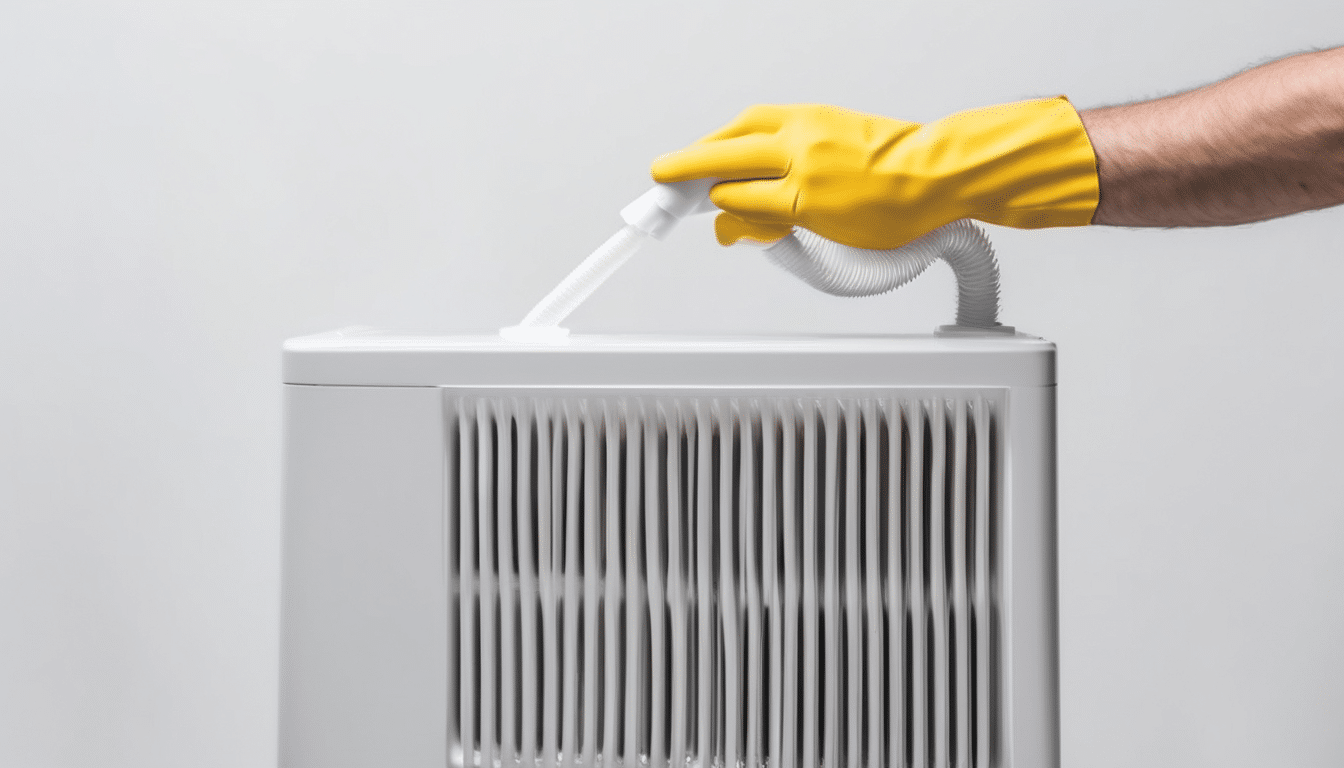
Loose particulate accumulation on the coil fins is carefully removed using HEPA-filtered vacuum equipment. This step prevents dislodged debris from entering the drain pan or being redistributed into the duct system during the wet cleaning phase. The importance of AC Evaporator Coil Cleaning: Signs It Is Due is evident here.
Step 4 — Coil Washing with Approved Cleaning Solution
A non-corrosive, pH-appropriate coil cleaning solution is applied to the fin surface and allowed to dwell for the time specified in the product protocol. The solution penetrates the accumulated layer and lifts bonded material without damaging the aluminium fins or the copper tubing. Pressure rinse follows, directed toward the condensate drain. Understanding AC Evaporator Coil Cleaning: Signs It Is Due helps with this aspect.
Step 5 — Disinfection Treatment
This is the step that distinguishes thorough professional cleaning from surface-level service. A suitable antimicrobial treatment — applied according to a documented protocol and safe for occupied residential environments — addresses microbial activity on the coil surface and in the condensate tray. This step is essential when musty odours are present or when the system operates in a humid environment. It is the difference between removing visible contamination and addressing what causes odour to return within weeks. AC Evaporator Coil Cleaning: Signs It Is Due factors into this consideration.
Step 6 — Condensate Drain and Tray Cleaning
The drain pan is cleaned of any accumulated residue. The condensate line is flushed to confirm clear drainage flow. Blockages in the condensate line are a common finding when evaporator coil cleaning is due — the same conditions that allow material to accumulate on the coil also affect the drain pathway. This relates directly to AC Evaporator Coil Cleaning: Signs It Is Due.
Step 7 — Reassembly, System Restart, and Airflow Check
Panels are replaced and the system is restarted. The technician checks supply air temperature, confirms condensate drainage is operating correctly, and verifies that airflow has been restored to the level expected for the system specification. A post-cleaning inspection confirms that no residue or moisture remains accessible inside the unit.
What You Should Expect After AC Evaporator Coil Cleaning
The change is perceptible. Cooling output improves noticeably within the first operating cycle. Rooms reach temperature more quickly and the system cycles less frequently, which translates to measurable efficiency improvement. Musty odours should be absent — not masked, but genuinely absent — because their source has been addressed at the coil level.
Residual chemical odour from the cleaning process, if any, disperses within a few hours with normal ventilation. Professional-grade products designed for occupied residential environments are formulated to off-gas quickly and safely. Any technician who cannot confirm the safety profile of the products they use should be asked to do so before work begins.
Expert Tips for Dubai Homeowners
- Check and clean your AC filters every four to six weeks during peak summer operation. A clean filter significantly extends the interval before AC evaporator coil cleaning is due again.
- If you notice a musty smell returning within two to four weeks of a recent service, the coil disinfection step may not have been performed — or the condensate drain requires attention.
- For villa systems with multiple indoor units, schedule coil cleaning for all units at the same time. Cleaning one while leaving others contaminated allows recontamination through shared ductwork.
- Post-construction periods require immediate coil inspection. Fine construction dust bypasses standard filters and settles on coil fins within days of nearby activity.
- Request a written service report that documents what was found, what was cleaned, and what products were used. This creates a maintenance record and provides a baseline for future assessments.
When AC Evaporator Coil Cleaning Is Due — A Summary Checklist
Use this checklist to assess whether professional coil cleaning should be scheduled:
- Cooling feels less effective than it did three to six months ago
- Rooms take noticeably longer to reach the set temperature
- A musty or sour odour is present when the AC runs
- Ice has been observed on the unit or refrigerant lines
- Electricity consumption has increased without a clear explanation
- Moisture or water is visible around the indoor unit
- More than 12 months have passed since the last professional coil cleaning
- The property is near active construction
- Occupants with respiratory sensitivities have noticed worsening symptoms indoors
If two or more of these conditions apply, AC evaporator coil cleaning is due and scheduling a professional assessment is the appropriate next step.
Frequently Asked Questions
How often should AC evaporator coil cleaning be done in Dubai?
In Dubai’s climate, professional AC evaporator coil cleaning is typically required every 12 to 18 months for residential systems under normal operating conditions. Systems near construction sites, homes with pets, or units without consistent filter maintenance may require attention more frequently. A professional assessment determines the actual condition of the coil and confirms the appropriate service interval for your specific property.
What causes musty smells from AC vents in Dubai apartments?
Musty odours from AC vents most commonly originate from microbial activity on the evaporator coil surface or in the condensate drain tray. Dubai’s humidity creates conditions where moisture on the coil combines with accumulated organic material, allowing microbial colonies to develop. The odour is a sign that AC evaporator coil cleaning — including disinfection, not just physical cleaning — is due.
Is AC evaporator coil cleaning different from duct cleaning?
Yes. Coil cleaning targets the heat exchange surface inside the indoor air handling unit, while duct cleaning addresses the internal surfaces of the supply and return air distribution network. Both components can accumulate contamination independently. In many Dubai villas, coil contamination and duct soiling are present simultaneously and ideally addressed together for complete system hygiene.
Can I clean the evaporator coil myself?
Superficial filter cleaning is a reasonable occupant task. However, proper evaporator coil cleaning requires access to internal unit components, appropriate cleaning chemistry matched to coil materials, and a working knowledge of condensate drain systems. Incorrect chemical application or physical pressure on the fins can cause fin damage or refrigerant line corrosion. Professional service is recommended for coil cleaning in Dubai residential and commercial properties.
Does a clean evaporator coil actually reduce electricity bills in Dubai?
A clean coil improves heat transfer efficiency, meaning the compressor achieves the required cooling with less energy and shorter run cycles. In Dubai, where air conditioning accounts for a significant proportion of household electricity consumption during summer, coil cleaning that restores proper heat exchange can contribute meaningfully to reduced running costs. The extent of savings depends on how contaminated the coil was before cleaning.
How do I know if the coil cleaning was done properly after a service visit?
After professional AC evaporator coil cleaning, cooling output should improve noticeably within the first operating cycle. Musty odours should be absent. Ask for a written service report that documents findings, products used, and before-and-after condition notes. A technician who completed the work correctly will have no hesitation providing this documentation.
Does AC evaporator coil cleaning help with allergies in Dubai homes?
When accumulated material and microbial residue on the coil surface are removed and the system is properly disinfected, the quality of air being circulated through the home improves. For occupants with respiratory sensitivities or dust-related allergies in Dubai, this can contribute to a noticeably cleaner indoor environment. Coil cleaning is one component of a broader indoor air quality approach that may also include duct cleaning and filter upgrades.
AC evaporator coil cleaning is due more often than most Dubai residents realise — and the signs, when you know what to look for, are not subtle. Reduced cooling, persistent odours, higher electricity consumption, and moisture issues around the indoor unit all point to the same root cause: a coil that can no longer perform at its design capacity because contamination has accumulated on its surface. Addressing that contamination through a professional cleaning process that includes physical removal, chemical treatment, and disinfection restores the system to the condition it was designed to operate in. The difference is something you feel the moment you walk into the room. Understanding AC Evaporator Coil Cleaning: Signs It Is Due is key to success in this area.