AC Coil Cleaning Dubai Guide for UAE Villa and Apartment
In Dubai’s climate, the coil inside your air conditioning system works harder, stays wetter, and accumulates contamination faster than coils in almost any other residential environment on earth. This AC coil cleaning Dubai guide exists because that contamination has consequences — for cooling performance, for system lifespan, and for the quality of the air recirculated through your home every hour of every day. Understanding what happens inside your coil bay, and what a thorough cleaning process actually involves, is the starting point for every informed decision a UAE homeowner can make about their HVAC system.
Across thirteen years of residential AC work in Dubai, Abu Dhabi, Sharjah, Ajman, Ras Al Khaimah, and beyond, the coil is consistently the component where contamination is most consequential and most frequently underestimated. It is not visible from the grille. It is not something a basic filter change addresses. And when it is left untreated in a continuously operating system, the downstream effects accumulate quietly, well before anything obvious appears. This relates directly to AC Coil Cleaning Dubai Guide.
This guide covers coil types, contamination mechanisms, the cleaning process, and what to expect from a professional service — so that when you commission AC Coil Cleaning in Dubai, you know exactly what you are paying for and why it matters.
Why Coil Condition Matters More in UAE Homes
Contents
- 1 Why Coil Condition Matters More in UAE Homes
- 2 AC Coil Cleaning Dubai Guide — Understanding the Two Coil Types
- 3 AC Coil Cleaning Dubai Guide — Signs Your Coils Need Attention
- 4 What a Professional AC Coil Cleaning Process Involves
- 5 AC Coil Cleaning Dubai Guide — Frequency Recommendations for UAE Systems
- 6 Coil Cleaning and Indoor Air Quality in UAE Apartments and Villas
- 7 AC Coil Cleaning Dubai Guide — Choosing the Right Service Provider
- 8 AC Coil Cleaning Dubai Guide — Energy Efficiency and Coil Performance
- 9 Expert Takeaways for UAE Homeowners
- 10 Frequently Asked Questions
- 10.1 How often should AC coils be cleaned in Dubai?
- 10.2 What does an AC coil cleaning service in Dubai include?
- 10.3 Why does my AC smell after cleaning?
- 10.4 Can dirty coils affect my family’s health in a Dubai home?
- 10.5 Is AC coil cleaning different for apartments and villas in the UAE?
- 10.6 How much does AC coil cleaning cost in Dubai?
- 10.7 Does AC coil cleaning improve energy efficiency in UAE homes?
- 11 Conclusion
The evaporator coil sits at the centre of your AC system’s thermal exchange process. Warm indoor air passes across refrigerant-cooled coil fins, heat is extracted, and conditioned air is returned to the room. That process depends entirely on unrestricted fin-to-air contact. When dust, debris, and biological matter accumulate across the coil surface, thermal transfer degrades — and your system works progressively harder to achieve the same output. When considering AC Coil Cleaning Dubai Guide, this becomes clear.
In the UAE, three conditions accelerate coil contamination beyond what most temperate-climate maintenance schedules account for. First, continuous operation. Unlike systems in cooler climates that cycle seasonally, UAE residential AC runs year-round, with peak demand reaching 18 to 20 hours of daily operation during summer months. There is no natural recovery period. Second, humidity. Coastal cities including Dubai, Abu Dhabi, Sharjah, and Ajman experience humidity levels that regularly exceed 80 percent during summer and transitional months. An active coil surface is cold and wet — conditions that promote microbial colonisation when combined with dust and organic particulate. Third, desert dust. Particulate infiltration from shamal wind events and active construction activity across the UAE creates an indoor dust load that no filter entirely prevents.
The result, commonly observed during professional assessment of UAE residential systems, is a coil surface that combines dust compaction, organic debris, and moisture-driven microbial conditions — a combination that standard maintenance cleaning rarely addresses in full.
AC Coil Cleaning Dubai Guide — Understanding the Two Coil Types
Every split or ducted AC system contains two distinct coils, and a complete AC coil cleaning Dubai guide must address both. They perform different functions and accumulate different contamination profiles.
The Evaporator Coil
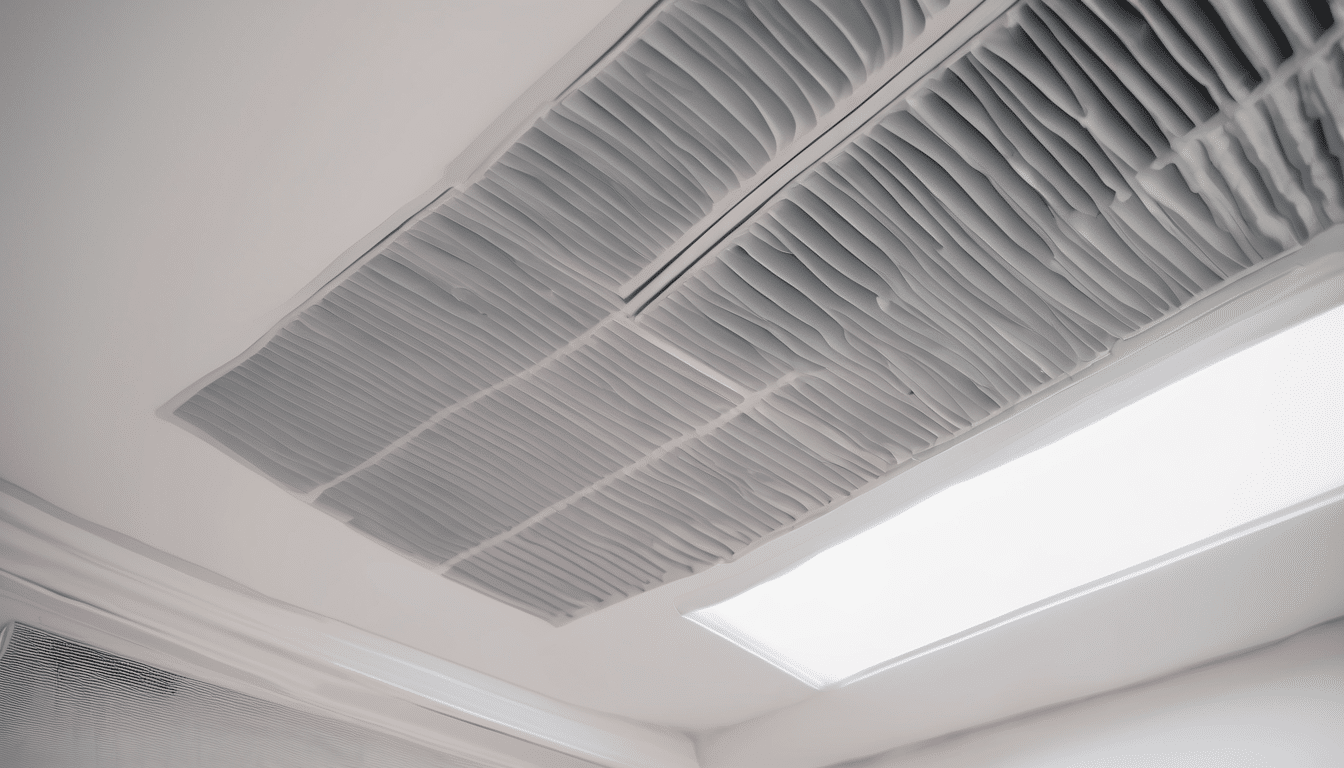
The evaporator coil is the indoor component, typically housed inside the air handling unit or indoor cassette. It is the coil that cools air as it passes through, and because it operates at temperatures below the dew point, it is perpetually damp during operation. That moisture is by design — condensation on the coil surface is what removes humidity from indoor air. However, that same moisture makes the evaporator coil the primary site for moisture-driven microbial conditions in residential systems.
Particulate accumulates across evaporator fins over time, binding with moisture and biological material to form a dense layer that reduces airflow and insulates the coil surface. When this layer is present, cooling capacity drops measurably. Systems may run for longer cycles, fail to reach setpoint temperatures, or develop the sour or musty odour that UAE families frequently report after several months of uninterrupted operation.
The Condenser Coil
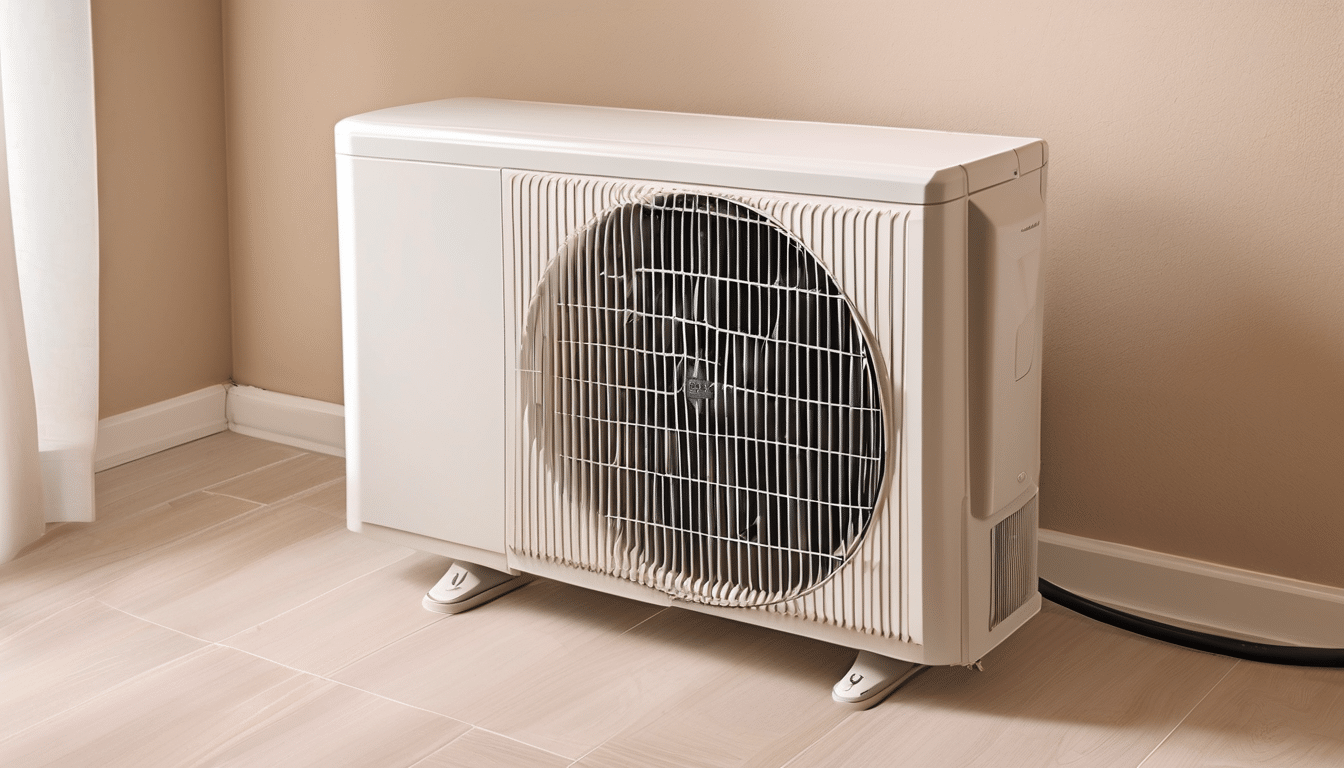
The condenser coil is the outdoor unit component, responsible for rejecting heat extracted from indoor air into the external environment. In UAE residential installations, condenser coils face desert dust, sand, salt aerosol in coastal locations, and organic matter carried by wind. They do not operate in the same wet conditions as evaporator coils, but blocked condenser fins force the compressor to work against elevated head pressure, which increases energy consumption and accelerates compressor wear. The importance of AC Coil Cleaning Dubai Guide is evident here.
A complete AC coil cleaning Dubai service addresses both coils. Cleaning only the evaporator while leaving the condenser blocked is a partial treatment that leaves efficiency losses in place.
AC Coil Cleaning Dubai Guide — Signs Your Coils Need Attention
Because coils are not visible during normal AC operation, many UAE homeowners are unaware of their condition until performance degradation becomes obvious. The following indicators, commonly identified during professional AC coil cleaning assessments in Dubai and across the UAE, suggest that coil cleaning has moved from preventive to remedial priority.
- Reduced cooling output despite the system running at full capacity, particularly noticeable in rooms where setpoint temperatures are no longer being reached
- Longer cooling cycles before rooms stabilise at the selected temperature
- A musty, sour, or organic odour that appears when the AC is first switched on or persists through operation
- Visible moisture around the indoor unit, overflow from the drain pan, or water staining near the unit housing
- Increased electricity consumption without a corresponding change in usage patterns
- Occupants in the home reporting persistent nasal irritation, allergy-type symptoms, or discomfort that correlates with AC use
None of these signs confirms coil condition with certainty — each can have multiple causes. However, all of them warrant a professional inspection that includes coil access, and this AC coil cleaning Dubai guide recommends treating them as prompts for assessment rather than waiting for complete system failure.
What a Professional AC Coil Cleaning Process Involves
There is a significant difference between what passes for coil cleaning in the lower tier of the Dubai service market and what a documented, NADCA-aligned process involves. This section describes the latter, because the difference directly determines whether the service resolves the contamination or simply redistributes it.
System Inspection and Access
A professional AC coil cleaning engagement begins with inspection before any tools are applied. The technician assesses system type, coil access points, drain line condition, blower condition, and the degree of contamination visible at the evaporator. This step determines the appropriate method and the scope of treatment. It is also the moment where a qualified technician identifies whether coil cleaning alone is sufficient or whether drain pan biofilm, blower fouling, or duct contamination is also present.
Controlled Cleaning with Appropriate Chemistry
Evaporator coil cleaning in a residential setting requires foaming coil cleaners or no-rinse solutions formulated for indoor use. In homes where children, elderly occupants, or residents with respiratory sensitivities are present — a frequent scenario across UAE villa and apartment communities — the chemistry used must be appropriate for enclosed indoor spaces. Dubai Municipality approved bio-sanitisers, including Swiss-formulated eco-sanitiser compounds used by SaniHome technicians, meet this requirement. Understanding AC Coil Cleaning Dubai Guide helps with this aspect.
The cleaning process involves applying solution across the full coil surface, allowing appropriate dwell time for contamination to break down, and removing displaced matter in a controlled manner that prevents it from entering the drain system or the duct network downstream. On heavily fouled coils, this step is repeated.
Drain Pan and Condensate Line Treatment
The coil and the drain pan form a connected contamination environment. Moisture that condenses on the evaporator runs directly into the drain pan and from there through the condensate line to the building drainage. Biofilm accumulation in the drain pan is a near-universal finding in UAE residential systems that have not been serviced within twelve months. A coil cleaning process that does not address the drain pan leaves an active source of contamination in contact with the cleaned coil surface.
Condenser Coil Cleaning
Outdoor condenser coil cleaning involves safe application of coil cleaner to fin surfaces, followed by gentle rinsing to remove bound dust and debris. Care is taken to protect electrical components and to avoid bending fins that restrict airflow. Straightening of distorted fins using appropriate tools is included in a complete service. AC Coil Cleaning Dubai Guide factors into this consideration.
Documentation and Verification
A professional AC coil cleaning service produces a before-and-after service report. Where video inspection is used, this provides documented evidence of coil condition prior to and following cleaning. This documentation matters — it is the difference between a service you trust and a service you assume worked.
AC Coil Cleaning Dubai Guide — Frequency Recommendations for UAE Systems
The question of how often coil cleaning is required in UAE residential systems does not have a single universal answer. It depends on system type, occupancy patterns, proximity to construction activity, whether pets are present, and the filtration quality of the installed system. However, this AC coil cleaning Dubai guide can offer frequency benchmarks based on field experience across the UAE.
For continuously operated residential systems in Dubai, Abu Dhabi, and other UAE cities, evaporator coil inspection and cleaning is generally warranted on an annual basis at minimum. Systems in villas with high dust infiltration, homes near active construction, or properties where occupants have respiratory sensitivities commonly benefit from a six-monthly service cycle. This relates directly to AC Coil Cleaning Dubai Guide.
Condenser coil cleaning is typically aligned with the evaporator cycle, though properties in exposed locations — seafront villas, desert-edge compounds, or buildings adjacent to large construction sites — may require more frequent attention due to accelerated fin fouling.
Post-construction cleaning represents a distinct category. Any AC coil cleaning Dubai service conducted after renovation work, fitout completion, or handover of a new property should be treated as a full system clean rather than a maintenance service. Construction particulate — fine gypsum dust, concrete aerosol, and adhesive off-gassing — infiltrates coil surfaces during building work and is not removed by standard filter replacement.
Coil Cleaning and Indoor Air Quality in UAE Apartments and Villas
The connection between coil condition and indoor air quality is one that this AC coil cleaning Dubai guide treats as central rather than incidental. In a residential environment where the AC system recirculates indoor air continuously, the condition of the evaporator coil directly determines what is being added to or removed from that air on every pass.
A contaminated evaporator coil with moisture-driven microbial conditions present on its surface introduces airborne particulate into the supply air stream. This is not a theoretical concern — it is a mechanism that NADCA documentation addresses directly as a reason for scheduled coil cleaning in occupied buildings. Families with children who have allergy diagnoses, residents with asthma, and elderly occupants with reduced respiratory reserve are the groups most consistently affected by the difference between a clean and a fouled coil.
SaniHome technicians working across UAE villas and apartments frequently identify coil conditions that correlate directly with the odour complaints and health observations families have reported. After cleaning, the change in air quality is noticed immediately — not because anything has been sprayed into the air, but because the source of contamination has been removed from the recirculation pathway.
AC Coil Cleaning Dubai Guide — Choosing the Right Service Provider
This AC coil cleaning Dubai guide would be incomplete without addressing how to evaluate a service provider. The Dubai market includes a wide range of operators at significantly different quality levels, and the gap between them is not always visible from a booking page or a quoted scope.
Questions Worth Asking Before Booking
Ask whether the service includes both evaporator and condenser coils, or only one. Ask whether drain pan cleaning is included in the scope. Ask what cleaning chemistry is used and whether it is appropriate for occupied residential spaces. Ask whether a before-and-after service report is provided. Ask whether the technicians are trained to NADCA standards or equivalent documented methodology.
A provider who cannot answer these questions clearly, or who quotes a price without inspecting the property, is offering a generic service that may not address the specific contamination pattern in your system.
What Differentiates a Premium Service
Premium residential AC coil cleaning in Dubai is characterised by system-level thinking rather than component-by-component treatment. The evaporator coil, drain pan, blower assembly, and duct network are contamination pathways in a connected system. Cleaning the coil without addressing the drain pan leaves biofilm in contact with a freshly cleaned surface. Cleaning the coil without inspecting the blower misses the fouling pattern that redistributes particulate back across the coil within weeks. When considering AC Coil Cleaning Dubai Guide, this becomes clear.
SaniHome’s approach to residential AC coil cleaning is built on this connected-system methodology, using NADCA-aligned protocols, Dubai Municipality approved bio-sanitisers, and documented service reporting that gives homeowners verifiable evidence of what was done and what changed.
AC Coil Cleaning Dubai Guide — Energy Efficiency and Coil Performance
Clean coils perform more efficiently than fouled coils — this is a measurable relationship, not a marketing claim. When the fin surface of an evaporator coil is clear of compacted dust and biofilm, thermal transfer occurs across the full designed surface area. When that surface is partially insulated by contamination, the system must run for longer periods at higher load to achieve the same temperature differential.
In UAE residential buildings where electricity costs are a consideration and where AC systems account for a substantial portion of total energy consumption, coil condition directly affects running costs. The efficiency improvement that follows a thorough evaporator and condenser coil cleaning is one of the most tangible returns on a professional service — and one that accumulates over every billing cycle between services. The importance of AC Coil Cleaning Dubai Guide is evident here.
This is why this AC coil cleaning Dubai guide frames coil cleaning not only as a health service, but as a performance and efficiency investment. The two outcomes are not in competition. A clean coil delivers both.
Expert Takeaways for UAE Homeowners
After more than a decade of AC coil cleaning work across Dubai, Abu Dhabi, Sharjah, Ajman, Ras Al Khaimah, Umm Al Quwain, and Fujairah, these are the principles that guide every assessment and service.
- Coil cleaning in the UAE is not an optional upgrade — it is a maintenance requirement shaped by continuous operation, high humidity, and desert particulate infiltration.
- Both coils matter. A service that addresses only the evaporator while leaving the condenser fouled delivers a partial result.
- The drain pan is part of the coil cleaning scope. It is not a separate item — it is the contamination continuation of the evaporator coil surface.
- Chemistry matters in homes with children and sensitive occupants. Dubai Municipality approved, eco-formulated bio-sanitisers are not a premium option — they are the appropriate standard for residential use.
- Documentation is not administrative overhead — it is proof of service quality. Before-and-after reporting is the difference between trusting a service and assuming it worked.
- Post-construction coil cleaning should never be treated as standard maintenance. Construction particulate contamination requires a purpose-designed protocol.
- Annual inspection at minimum, with assessment-driven scheduling for high-demand properties. A property-specific evaluation is more reliable than a generic frequency recommendation.
Frequently Asked Questions
How often should AC coils be cleaned in Dubai?
In Dubai, evaporator coil cleaning is generally recommended on an annual basis for most residential systems. Homes near active construction, properties with high occupancy, and households with allergy-sensitive residents commonly benefit from a six-monthly cleaning cycle. Condenser coils should be cleaned on the same schedule. Post-construction properties require a dedicated deep clean regardless of how recently the system was installed. Understanding AC Coil Cleaning Dubai Guide helps with this aspect.
What does an AC coil cleaning service in Dubai include?
A complete AC coil cleaning service covers the evaporator coil, the drain pan and condensate line, and the outdoor condenser coil. It includes inspection before and after cleaning, application of appropriate coil cleaning chemistry, biofilm removal from the drain pan, and a service report documenting condition and treatment. Providers who exclude any of these elements are offering a partial service.
Why does my AC smell after cleaning?
A temporary odour immediately after cleaning is typically the result of displaced organic matter or cleaning solution off-gassing, which dissipates within a short period with normal ventilation. A persistent sour or musty odour after cleaning usually indicates that the drain pan biofilm or blower fouling was not fully addressed during the service. A system-level cleaning that includes all contamination pathways should eliminate rather than simply move the odour source.
Can dirty coils affect my family’s health in a Dubai home?
Yes. A fouled evaporator coil with moisture-driven microbial conditions present can introduce airborne particulate into the supply air stream on every recirculation cycle. In a sealed UAE home where the AC runs continuously, this has a measurable effect on indoor air quality. Families with children who have allergies, asthmatic residents, and elderly occupants are the groups most likely to notice the difference between a clean and a contaminated coil in their daily comfort. AC Coil Cleaning Dubai Guide factors into this consideration.
Is AC coil cleaning different for apartments and villas in the UAE?
The core process is the same, but the scope and complexity differ. Villas with ducted central systems, multiple air handling units, and large outdoor condensers represent a more involved service than a single-room apartment cassette unit. Villas near desert-facing boundaries or in active construction zones typically show heavier condenser fouling. Apartment systems in high-rise buildings often have constrained access to outdoor units, which requires specialist equipment and additional care during condenser cleaning.
How much does AC coil cleaning cost in Dubai?
Quoted scope and pricing for AC coil cleaning in Dubai depends on system type, number of units, access conditions, degree of contamination, and whether additional components such as duct cleaning or blower service are included. A property-specific assessment is the reliable way to receive an accurate quote. Contact SaniHome for a site-based evaluation of your system.
Does AC coil cleaning improve energy efficiency in UAE homes?
Yes. Clean evaporator and condenser coils allow full thermal transfer across the designed fin surface area. When coils are fouled by dust, debris, and biological accumulation, the system compensates by running longer cycles at higher compressor load. The efficiency gain after professional coil cleaning is reflected in shorter cooling cycles and reduced electricity consumption — an outcome that accumulates over every billing period between services. This relates directly to AC Coil Cleaning Dubai Guide.
Conclusion
This AC coil cleaning Dubai guide has covered the science, the process, the frequency benchmarks, and the selection criteria that UAE homeowners need to make informed decisions about their AC systems. The central point is this: coil condition is not a cosmetic or peripheral concern. In a continuously operating system in a hot, humid, dust-rich environment, the evaporator and condenser coils are the performance and air quality core of your home’s thermal environment.
Clean coils cool more efficiently, last longer, and do not introduce contamination into the air your family breathes. Fouled coils do the opposite — gradually, invisibly, and with consequences that accumulate well before anything obvious appears. The AC coil cleaning Dubai guide framework presented here is built on thirteen years of field experience across UAE residential properties and on the documented protocols that SaniHome applies to every service.
If your system has not been inspected or cleaned within the past twelve months, or if you have recently completed renovation work, moved into a new property, or noticed any of the performance or odour indicators described in this guide, a professional assessment is the right next step. Contact SaniHome to arrange an evaluation of your system and receive a scope and quote specific to your property. Understanding AC Coil Cleaning Dubai Guide is key to success in this area.