AC Evaporator Coil Cleaning Signs Guide
Understanding AC Evaporator Coil Cleaning: Signs and Process is essential. AC Evaporator Coil cleaning signs and process are two things every Dubai villa owner and apartment resident should understand — not because it is complex, but because the coil is the component your air passes closest to before it enters your room. When that surface is compromised, everything downstream is affected: airflow, cooling efficiency, odour, and the quality of air your family breathes every day. Understanding what to look for, and what a proper cleaning involves, puts you in a far better position to protect your home environment.
In Dubai’s climate, evaporator coils operate under conditions that accelerate contamination. Continuous usage means the coil never fully dries between cycles. High ambient humidity — particularly between June and September — creates persistent moisture on coil surfaces. Fine particulates from desert dust and construction activity coat fins and block airflow. Together, these conditions make AC evaporator coil cleaning not a periodic luxury, but a routine necessity for any system running year-round. This relates directly to AC Evaporator Coil Cleaning: Signs and Process.
This article covers both dimensions: the signs that tell you a coil cleaning is overdue, and the process a qualified specialist should follow when carrying it out. If you recognise any of the warning signs below, a professional assessment is the appropriate next step. When considering AC Evaporator Coil Cleaning: Signs and Process, this becomes clear.
AC Evaporator Coil Cleaning: Signs and Process – Why the Evaporator Coil Matters in Dubai’s Environment
Contents
- 1 AC Evaporator Coil Cleaning: Signs and Process – Why the Evaporator Coil Matters in Dubai’s Environment
- 2 AC Evaporator Coil Cleaning: Signs and Process – AC Evaporator Coil Cleaning Signs Your System Needs Attentio
- 3 AC Evaporator Coil Cleaning: Signs and Process – The Professional AC Evaporator Coil Cleaning Process Step by
- 3.1 Step 1 — System Isolation and Access
- 3.2 Step 2 — Dry Particulate Removal
- 3.3 Step 3 — Coil Fin Cleaning with Approved Solution
- 3.4 Step 4 — Rinse and Flush
- 3.5 Step 5 — Drain Tray and Condensate Line Treatment
- 3.6 Step 6 — Antibacterial and Antifungal Disinfection
- 3.7 Step 7 — Reassembly, Restart, and Performance Check
- 4 AC Evaporator Coil Cleaning Process for Different System Types
- 5 How Often Should Evaporator Coil Cleaning Be Scheduled
- 6 Coil Cleaning Versus Full Duct Cleaning — Understanding the Difference
- 7 Expert Takeaways for Dubai Homeowners
- 8 Conclusion
- 9 Frequently Asked Questions
- 9.1 What are the main signs that AC evaporator coil cleaning is needed?
- 9.2 How often should evaporator coil cleaning be done in Dubai?
- 9.3 Does evaporator coil cleaning improve cooling efficiency?
- 9.4 What is included in a professional AC evaporator coil cleaning service?
- 9.5 Is evaporator coil cleaning the same as full AC duct cleaning?
- 9.6 Can a musty AC smell be resolved by coil cleaning alone?
- 9.7 How do I know if the evaporator coil cleaning was done properly in my Dubai apartment?
The evaporator coil sits inside the air handler unit and is responsible for absorbing heat from the air passing through it. As warm indoor air flows across the cold coil surface, heat transfers out and cooled air continues into the ductwork. This process is continuous in Dubai homes, running up to 18 to 20 hours a day during summer months. The importance of AC Evaporator Coil Cleaning: Signs and Process is evident here.
The coil’s surface is cold and often wet with condensation — ideal conditions for particulate accumulation and, over time, moisture-driven microbial conditions in the coil bay. A thin layer of contamination on the fins acts as insulation, reducing the coil’s ability to absorb heat efficiently. The NADCA standard for HVAC systems recognises coil condition as a direct determinant of system performance and indoor air quality. Understanding AC Evaporator Coil Cleaning: Signs and Process helps with this aspect.
In Saniservice field investigations across Dubai villas and apartments, coil contamination is commonly observed in systems that were otherwise reported as recently serviced. The reason is consistent: filter-only cleaning misses the coil entirely, and the coil is where the real work accumulates. AC Evaporator Coil Cleaning: Signs and Process factors into this consideration.
AC Evaporator Coil Cleaning: Signs and Process – AC Evaporator Coil Cleaning Signs Your System Needs Attentio
Recognising the signs of a contaminated evaporator coil is the first part of the AC evaporator coil cleaning signs and process. Most of these indicators appear gradually, which is why they are often attributed to other causes before the coil is identified as the source. This relates directly to AC Evaporator Coil Cleaning: Signs and Process.
Reduced Cooling Output Despite Normal Settings
When the coil fins are coated with particulate accumulation, airflow across the coil is restricted and heat transfer efficiency drops. The system runs longer to reach the same temperature, and in some cases never quite reaches it. If your thermostat is set to 22°C but the room feels closer to 25°C, coil condition is one of the first things a qualified technician should assess. When considering AC Evaporator Coil Cleaning: Signs and Process, this becomes clear.
Musty or Sour Odour from Vents
A persistent musty smell when the AC operates — particularly during the first few minutes of a cycle — is one of the most commonly reported signs preceding professional AC evaporator coil cleaning. This odour typically originates in the coil bay or drain tray area, where moisture and organic matter combine. It does not respond to filter replacement or vent cleaning alone. Addressing it requires direct coil and drain system treatment. The importance of AC Evaporator Coil Cleaning: Signs and Process is evident here.
Visible Moisture or Water Around the Air Handler
When the coil surface is partially blocked, condensate cannot drain efficiently. Water may back up into the tray, overflow, or appear as moisture around the air handler unit. If left unaddressed, this can cause secondary damage to surrounding structures and confirms that the coil and drainage system require professional cleaning. Understanding AC Evaporator Coil Cleaning: Signs and Process helps with this aspect.
Ice Formation on the Coil or Refrigerant Lines
Ice on the evaporator coil or on the refrigerant lines running from the unit is a sign of severely restricted airflow across the coil. The coil drops below freezing point when air cannot pass through it efficiently. This is a mechanical consequence of coil contamination and typically requires a controlled defrost cycle before cleaning can be performed safely. AC Evaporator Coil Cleaning: Signs and Process factors into this consideration.
Rising Electricity Consumption
A system compensating for poor heat transfer runs the compressor harder and longer. In Dubai, where AC accounts for a significant portion of household electricity consumption, unexplained increases in utility bills are frequently traced back to coil condition. Clean coils allow the system to reach setpoint faster and cycle off sooner — a measurable efficiency outcome of proper AC evaporator coil cleaning. This relates directly to AC Evaporator Coil Cleaning: Signs and Process.
AC Evaporator Coil Cleaning: Signs and Process – The Professional AC Evaporator Coil Cleaning Process Step by
Understanding the process is the second half of AC evaporator coil cleaning signs and process. A properly conducted coil clean follows a documented protocol — not a single-step spray-and-wipe approach. Below is the sequence used by Saniservice specialists in Dubai residential and commercial properties. When considering AC Evaporator Coil Cleaning: Signs and Process, this becomes clear.
Step 1 — System Isolation and Access
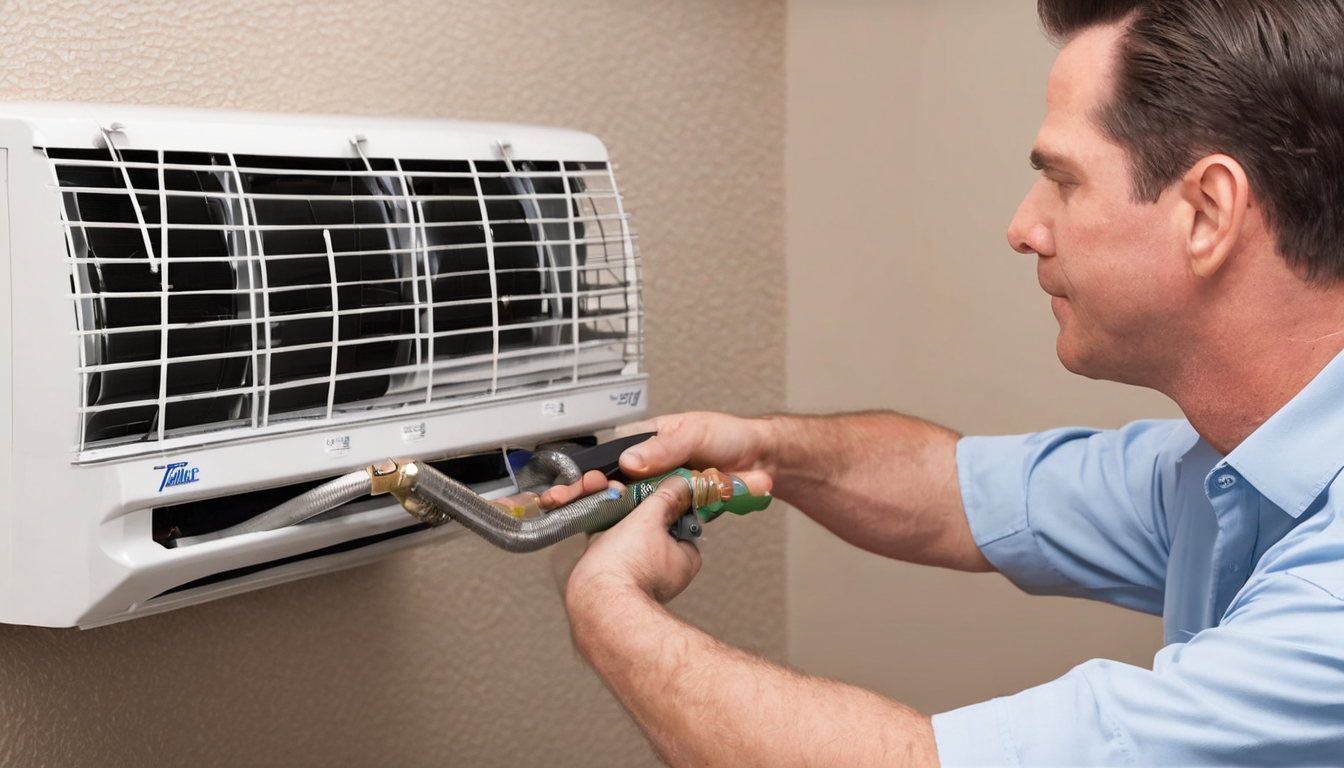
The air handler unit is powered down and access panels are removed to expose the evaporator coil. Depending on the installation — cassette, split, or central ducted system — this step may require partial disassembly. Saniservice technicians carry the tools required for each system type without relying on the occupant to facilitate access. The importance of AC Evaporator Coil Cleaning: Signs and Process is evident here.
Step 2 — Dry Particulate Removal
Before any liquid is introduced, loose particulate accumulation on the coil fins is removed using low-pressure compressed air or a soft brush. This step prevents dry contaminants from becoming embedded deeper into the coil during wet cleaning. Negative pressure containment is used where necessary to prevent particulates from re-entering the occupied space. Understanding AC Evaporator Coil Cleaning: Signs and Process helps with this aspect.
Step 3 — Coil Fin Cleaning with Approved Solution
A non-acidic, human-safe coil cleaner is applied to the fin surface and allowed to penetrate. The solution lifts bonded particulates, biofilm residue, and organic matter from the fin surfaces without damaging aluminium fins or copper tubing. The selection of chemistry matters — particularly in properties with children, elderly residents, or occupants with respiratory sensitivities. Saniservice applies Swiss bio-sanitiser formulations that are both effective and safe for occupied environments. AC Evaporator Coil Cleaning: Signs and Process factors into this consideration.
Step 4 — Rinse and Flush
The coil is rinsed thoroughly to remove the cleaning solution and dislodged contamination. Rinse water is directed into the drain tray and out through the condensate line. This step also confirms whether the drain system is flowing freely or requires additional attention. This relates directly to AC Evaporator Coil Cleaning: Signs and Process.
Step 5 — Drain Tray and Condensate Line Treatment
The drain tray is cleaned separately, removing any accumulated debris and biofilm from surfaces. The condensate line is flushed to clear blockages and confirm free drainage. This step is frequently omitted in basic cleaning services — and it is frequently the source of recurring odour complaints. In the AC evaporator coil cleaning signs and process, drain system treatment is non-negotiable. When considering AC Evaporator Coil Cleaning: Signs and Process, this becomes clear.
Step 6 — Antibacterial and Antifungal Disinfection
Following the mechanical clean, an antimicrobial treatment is applied to coil surfaces and the drain tray. This addresses moisture-driven microbial conditions in the coil bay that mechanical cleaning alone cannot resolve. The disinfectant is selected for compatibility with HVAC materials and verified for safety in occupied spaces. The importance of AC Evaporator Coil Cleaning: Signs and Process is evident here.
Step 7 — Reassembly, Restart, and Performance Check
Access panels are replaced and the system is restarted. The technician checks supply air temperature, condensate drainage, and airflow at diffusers to confirm the system is performing as expected. Any anomalies observed during the service — such as damaged fins, blocked drain lines, or signs of refrigerant issues — are documented and communicated to the client. Understanding AC Evaporator Coil Cleaning: Signs and Process helps with this aspect.
AC Evaporator Coil Cleaning Process for Different System Types
The AC evaporator coil cleaning signs and process vary slightly depending on the system type installed in your property. Dubai residences commonly feature split systems, ceiling cassettes, ducted central systems, and fan coil units in high-rise apartments. AC Evaporator Coil Cleaning: Signs and Process factors into this consideration.
Split systems typically have the evaporator coil behind the indoor unit’s front panel. Access is straightforward but requires the correct tools to avoid damaging plastic casings. Ceiling cassettes require panel removal and may need the unit to be partially lowered for thorough coil access. Ducted central systems have the coil housed in an air handler unit — often located in a ceiling void or utility space — and require the most comprehensive access procedure. This relates directly to AC Evaporator Coil Cleaning: Signs and Process.
Each system type has specific drainage configurations that affect how the drain tray is accessed and treated. Saniservice technicians are trained across all major system configurations commonly found in Dubai villas, apartments, and commercial properties.
How Often Should Evaporator Coil Cleaning Be Scheduled
In Dubai’s operating environment, evaporator coil cleaning is commonly recommended every 12 months for residential systems and every six months for commercial or high-occupancy environments. Properties in areas with elevated construction activity — such as those near active development zones in Dubai South, Al Furjan, or Mohammed Bin Rashid City — may require more frequent assessment due to higher particulate loads entering the system.
Post-renovation cleaning is a specific trigger that should not be delayed. Construction dust is exceptionally fine and penetrates coil fins readily. A system that operated through a renovation period should be assessed and cleaned before normal residential use resumes.
The AC evaporator coil cleaning signs and process does not follow a fixed calendar alone — it responds to what the system shows. If any of the warning signs described earlier are present before the 12-month mark, they indicate that assessment should not wait.
Coil Cleaning Versus Full Duct Cleaning — Understanding the Difference
Coil cleaning and duct cleaning address different parts of the HVAC system, and both have their place in a complete indoor air quality strategy. The evaporator coil is the source point — contamination here affects everything downstream. The ductwork carries conditioned air from that source point to every room in the property.
In many Dubai properties, the correct sequence is coil cleaning first, followed by duct assessment. Cleaning ducts while the coil remains contaminated is a short-term measure at best — particulates and odour sources will continue to be introduced into the duct system on every cycle.
Saniservice assessments typically evaluate both systems together and recommend a scope based on what is found, not on a standard package. This approach ensures that work addresses the actual contamination pathway rather than the most visible symptom.
Expert Takeaways for Dubai Homeowners
- The evaporator coil is the component that most directly affects both cooling efficiency and air quality — it warrants specific attention, not just a general service.
- Musty odours, reduced cooling output, and rising electricity bills are the three most commonly observed signs preceding a professional coil clean in Dubai field investigations.
- A proper AC evaporator coil cleaning process includes dry particulate removal, wet coil cleaning, drain tray treatment, condensate line flush, and antimicrobial disinfection — not just a filter replacement.
- Human-safe chemistry matters, particularly in homes with children, elderly residents, or occupants with respiratory sensitivities.
- Annual coil cleaning is a reasonable baseline for Dubai residential systems; more frequent service is appropriate where system loading is higher or where particulate ingress is elevated.
- Drain tray and condensate line treatment must be included in every coil service — omitting it is the most common reason odours return within weeks of cleaning.
Conclusion
AC evaporator coil cleaning signs and process represents the most technically important element of maintaining air quality and cooling performance in a Dubai home. The coil works hardest in conditions that accelerate its contamination — continuous operation, high humidity, and fine particulate infiltration. Recognising the signs early and ensuring the cleaning follows a documented, system-level protocol makes the difference between a service that lasts and one that needs to be repeated within the season.
The air that reaches you starts at the coil. When that surface is clean — fins clear, drain flowing, antimicrobial treatment applied — what you notice first is what changes quietly: the room feels right when you walk in, the smell is neutral, and the system runs without straining. That is what a proper AC evaporator coil cleaning delivers, and it is a standard worth holding every service to.
If your system is showing any of the signs described in this guide, or if it has been more than 12 months since the last professional coil assessment, a property-specific evaluation is the appropriate starting point. Saniservice specialists carry out detailed AC coil cleaning assessments across Dubai, Abu Dhabi, Sharjah, Ajman, and Ras Al Khaimah — contact the team to arrange a site visit and documented service report.
Frequently Asked Questions
What are the main signs that AC evaporator coil cleaning is needed?
The most commonly observed signs are reduced cooling output despite normal thermostat settings, a musty or sour odour from vents during operation, visible moisture around the air handler unit, ice formation on the coil or refrigerant lines, and unexplained increases in electricity consumption. Any one of these warrants a professional assessment of the coil and drain system.
How often should evaporator coil cleaning be done in Dubai?
For Dubai residential systems, evaporator coil cleaning is commonly recommended every 12 months. Properties near active construction zones or with high occupancy loads may benefit from a six-month assessment cycle. Post-renovation cleaning should be scheduled immediately after construction work is complete, regardless of the last service date.
Does evaporator coil cleaning improve cooling efficiency?
Yes. Particulate accumulation on coil fins acts as insulation and restricts airflow, reducing the coil’s ability to absorb heat efficiently. A clean coil reaches setpoint temperature faster and allows the compressor to cycle off sooner. This translates to measurable improvement in cooling performance and a reduction in electricity consumption — both commonly observed following professional AC evaporator coil cleaning.
What is included in a professional AC evaporator coil cleaning service?
A properly conducted service includes system isolation and access, dry particulate removal, coil fin cleaning with an approved solution, rinse and flush, drain tray cleaning, condensate line treatment, and antimicrobial disinfection. A performance check at reassembly confirms airflow and drainage are functioning correctly. Services that only clean filters or wipe external surfaces do not constitute a professional evaporator coil clean.
Is evaporator coil cleaning the same as full AC duct cleaning?
No. Coil cleaning addresses the heat exchanger component inside the air handler unit. Duct cleaning addresses the ductwork that distributes conditioned air through the property. Both are distinct services. In many Dubai properties, coil cleaning should be completed first, as a contaminated coil will continue to introduce particulates and odour into clean ductwork on every cycle.
Can a musty AC smell be resolved by coil cleaning alone?
In many cases, yes — particularly when the odour originates in the coil bay or drain tray. However, a comprehensive assessment should also evaluate the drain tray, condensate line, and nearby ductwork. Persistent musty odours that return within weeks of service typically indicate that drain system treatment was omitted, or that moisture-driven microbial conditions in the coil bay were not fully addressed during the initial clean.
How do I know if the evaporator coil cleaning was done properly in my Dubai apartment?
A properly completed service should result in measurably improved cooling output, neutral air odour from vents, confirmed condensate drainage, and a written service report documenting what was found and what was treated. Saniservice provides documented before-and-after evidence with every professional AC evaporator coil cleaning to confirm that work was completed to the stated standard. Understanding AC Evaporator Coil Cleaning: Signs and Process is key to success in this area.