Air Duct Cleaning Cost UAE 2026: Up to 20% Energy Savings
You receive three quotes for air duct cleaning. One is AED 800, another AED 1,500, and the third AED 2,400. Each contractor promises clean ducts and better air quality. How do you decide which represents fair value? Understanding the cost drivers, quality trade-offs, and proven health benefits helps you invest wisely rather than gamble on the cheapest bid or overpay without clear returns.
Table of Contents
Contents
- 1 Table of Contents
- 2 Key Takeaways
- 3 Understanding Air Duct Cleaning and Its Importance
- 4 Typical Cost Overview of Air Duct Cleaning in the UAE
- 5 Key Factors Influencing Air Duct Cleaning Costs
- 6 Certification, Technology, and Quality Trade-Offs
- 7 Common Misconceptions About Air Duct Cleaning Costs and Benefits
- 8 Benefits of Professional Air Duct Cleaning in UAE Context
- 9 Recommended Cleaning Frequency and Practical Tips for UAE Properties
- 10 Conclusion: Making an Informed Investment in Air Duct Cleaning
- 11 Discover Expert Air Duct Cleaning with Saniservice
- 12 FAQ
- 13 Recommended
- Understanding Air Duct Cleaning and Its Importance
- Typical Cost Overview of Air Duct Cleaning in the UAE
- Key Factors Influencing Air Duct Cleaning Costs
- Certification, Technology, and Quality Trade-Offs
- Common Misconceptions About Air Duct Cleaning Costs and Benefits
- Benefits of Professional Air Duct Cleaning in UAE Context
- Recommended Cleaning Frequency and Practical Tips for UAE Properties
- Conclusion: Making an Informed Investment in Air Duct Cleaning
- Discover Expert Air Duct Cleaning with Saniservice
Key Takeaways
| Point | Details |
|---|---|
| Average UAE cleaning costs | AED 800 to AED 2,500 depending on system size and contamination. |
| Certified cleaning premium | Costs 30% more but delivers 40% better indoor air quality improvements. |
| Energy and health gains | Professional cleaning improves efficiency by 10-20% and reduces microbial contaminants over 90%. |
| Recommended frequency | Every 3 to 5 years based on environmental conditions and occupancy. |
Understanding Air Duct Cleaning and Its Importance
Air duct cleaning systematically removes dust, microbial contaminants, and allergens from HVAC ductwork and components. This process directly affects indoor air quality by eliminating particles that circulate through your home every time the system runs. Clean ducts mean fewer respiratory irritants, reduced allergy triggers, and healthier breathing environments for your family.
Beyond health, professional air duct cleaning advantages include improved HVAC airflow and energy efficiency. When dust and debris clog ducts, your system works harder to maintain temperature, consuming more electricity and wearing components faster. Removing these obstructions restores optimal airflow, cutting energy waste and extending equipment lifespan.
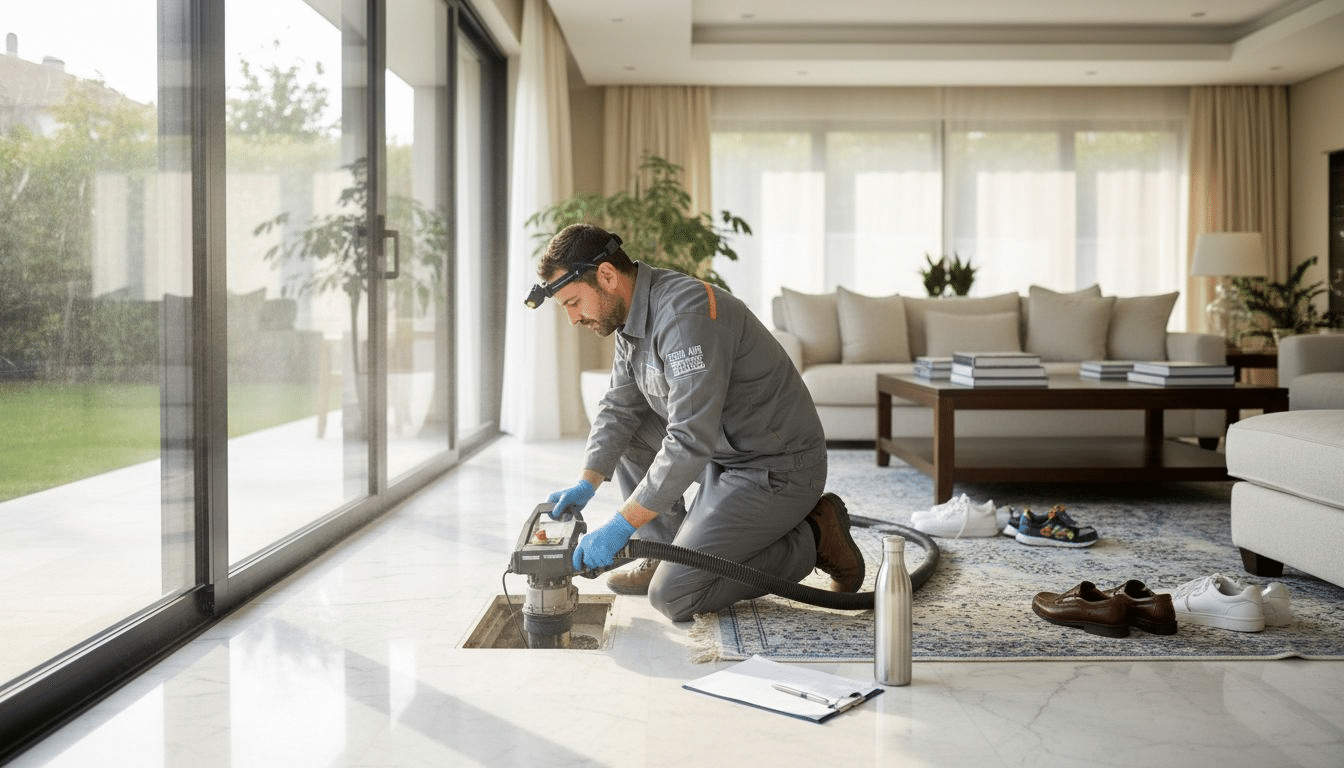
Certified cleaning requires specialized technology and expertise. Basic vacuuming cannot reach embedded contaminants or address microbial growth. Professional services dismantle components, apply hospital-grade biosanitisers, and verify results through diagnostic testing. This scientific approach ensures thorough decontamination rather than superficial surface cleaning.
Pro Tip: Verify that providers use hospital-grade biosanitisers for effective microbial removal. Chemical-free formulations eliminate mold, bacteria, and fungi without leaving toxic residues that compromise indoor air quality.
The difference between amateur and professional cleaning shows in results. Certified technicians follow validated protocols that target hidden contamination zones. Proper equipment reaches deep into ductwork, removing allergens and pathogens that accumulate over years. When you understand what genuine cleaning entails, price variations make sense.
Typical Cost Overview of Air Duct Cleaning in the UAE
Cleaning costs in the UAE vary widely based on several property-specific factors. A typical villa with standard central air conditioning might see cleaning costs from AED 800 to AED 2,500. Smaller apartments with simpler duct layouts fall at the lower end, while large villas with extensive ductwork and multiple zones push toward higher ranges.

System complexity drives labor requirements and equipment needs. A basic split AC unit requires less time and fewer tools than a sprawling ducted system serving multiple rooms. Technicians must access every duct segment, clean individual components, and sanitize surfaces throughout the network. More access points and longer duct runs increase work hours and material costs proportionally.
Contamination severity significantly impacts pricing. Light dust accumulation requires standard cleaning protocols. Heavy microbial growth, pest debris, or construction residue demands intensive remediation with specialized biosanitisers and extended treatment times. Providers assess contamination levels during inspections to quote accurately for the work required.
Higher-end cleaning services include diagnostics and hospital-grade sanitizers that ensure lasting results. These offerings cost more upfront but prevent rapid recontamination, extending intervals between cleanings. Budget services may skip diagnostic testing or use less effective cleaning agents, creating short-term savings but compromising long-term value.
Cost transparency prevents surprises when comparing quotes. Reputable providers break down pricing by system components, cleaning methods, and optional add-ons like air quality testing or UV sanitization. Understanding what each quote includes helps you compare apples to apples rather than guessing why prices differ.
Key Factors Influencing Air Duct Cleaning Costs
HVAC system size stands as the primary cost driver. Larger systems with more ductwork require additional labor hours, greater equipment use, and increased cleaning materials. A compact apartment system might take three hours to clean thoroughly, while a sprawling villa could require a full day or more. Each additional duct segment, vent, and component adds incremental cost to the total service.
Key factors affecting duct cleaning costs include the type and severity of contamination present. Dust and pet dander respond to standard cleaning protocols. Mold, bacteria, and fungal colonies require specialized disinfection with hospital-grade biosanitisers, extending treatment times and raising material costs. Severe contamination may necessitate multiple treatment cycles to achieve safe microbial levels.
Diagnostic technology improves cleaning precision but adds to service costs. Air quality testing identifies specific contaminants, guiding targeted treatment approaches. Microbial sampling verifies that sanitization achieved effective pathogen elimination. These diagnostic steps ensure thorough cleaning rather than guesswork, justifying their cost through proven results.
Eco-certified cleaning aligns with UAE sustainability standards but typically adds 8-15% to service costs. Certified providers use environmentally responsible methods, biodegradable agents, and energy-efficient equipment. These practices support green building requirements and reduce environmental impact, appealing to sustainability-conscious homeowners despite the modest price premium.
| Cost Factor | Impact on Price | Typical Range |
|---|---|---|
| System Size | High | +30-50% for large systems |
| Contamination Severity | Medium to High | +20-40% for heavy contamination |
| Diagnostics | Medium | +15-25% for testing |
| Eco-Certification | Low to Medium | +8-15% premium |
Pro Tip: Request a contamination assessment before accepting quotes. Visual inspections and basic testing reveal actual cleaning needs, preventing both under-treatment and unnecessary services.
Certification, Technology, and Quality Trade-Offs
NADCA-certified services cost about 30% more but deliver over 40% better IAQ improvements and longer intervals before recontamination. Certification ensures technicians follow scientifically validated protocols, use approved equipment, and achieve measurable results. This professional standard eliminates guesswork and guarantees effective contaminant removal through evidence-based practices.
Hospital-grade biosanitisers outperform traditional chemicals in pathogen elimination but add roughly 15% to cleaning costs. These advanced formulations target mold, bacteria, and viruses without toxic residues that compromise indoor air quality. Chemical-free options protect vulnerable household members like children, elderly adults, and those with respiratory conditions while achieving superior microbial reduction.
Eco-certified cleaning costs 8-15% more but aligns with UAE sustainability requirements, supporting green building codes and environmental responsibility. Certified providers minimize waste, use biodegradable materials, and operate energy-efficient equipment. These practices demonstrate commitment to environmental stewardship while maintaining cleaning effectiveness.
DIY or uncertified cleaning risks structural damage and ineffective microbe removal. Improper techniques can tear ductwork, dislodge insulation, or damage HVAC components. Inadequate sanitization leaves pathogens in place, allowing rapid recontamination that wastes your investment. Professional certification protects both your property and your health through proper training and accountability.
| Service Type | Cost Premium | IAQ Improvement | Recontamination Interval |
|---|---|---|---|
| Non-Certified | Baseline | 20-30% | 1-2 years |
| NADCA-Certified | +30% | 60-70% | 3-5 years |
| With Hospital-Grade Biosanitisers | +45% | 75-85% | 4-6 years |
| Eco-Certified | +50% | 70-80% | 3-5 years |
The price differential between basic and certified cleaning reflects real quality differences. Lower-cost services often skip critical steps like component disassembly, thorough sanitization, or post-cleaning verification. These shortcuts reduce immediate costs but compromise results, leading to faster recontamination and more frequent cleaning needs that increase long-term expenses.
Common Misconceptions About Air Duct Cleaning Costs and Benefits
Many homeowners assume cleaning is only necessary when dust is visibly accumulating on vents or furniture. Invisible microbial contamination poses greater health risks than visible dust. Mold spores, bacteria, and allergens circulate silently through ductwork, triggering respiratory problems and allergic reactions without obvious signs. Professional cleaning addresses these hidden threats that surface cleaning cannot reach.
The belief that cheaper services deliver equivalent results leads to wasted money and continued contamination. Budget providers often lack certification, use inadequate equipment, or skip critical sanitization steps. These shortcuts produce temporary surface cleanliness while leaving embedded contaminants in place. Within months, air quality degrades again as pathogens multiply, requiring another cleaning that ultimately costs more than investing in quality service initially.
Not all air duct cleaning provides lasting air quality improvements. Only certified, science-based methods achieve thorough decontamination and sustained results. Services that rely on basic vacuuming or surface wiping cannot eliminate embedded microbial colonies or treat ductwork interiors effectively. Scientific protocols with hospital-grade biosanitisers and diagnostic verification ensure complete pathogen removal.
Some homeowners view professional cleaning as an unnecessary luxury rather than preventive maintenance. This misconception ignores the compounding costs of poor indoor air quality. Respiratory issues, allergy symptoms, and increased HVAC energy consumption all stem from contaminated ductwork. Addressing these problems reactively through medical care and higher utility bills exceeds the cost of proactive professional cleaning.
- Visible dust does not indicate the full contamination picture; microbial growth occurs out of sight.
- Low-cost services frequently omit critical steps that ensure effective pathogen elimination.
- True air quality improvements require certified methods with diagnostic verification.
- Postponing professional cleaning increases health risks and energy costs over time.
Benefits of Professional Air Duct Cleaning in UAE Context
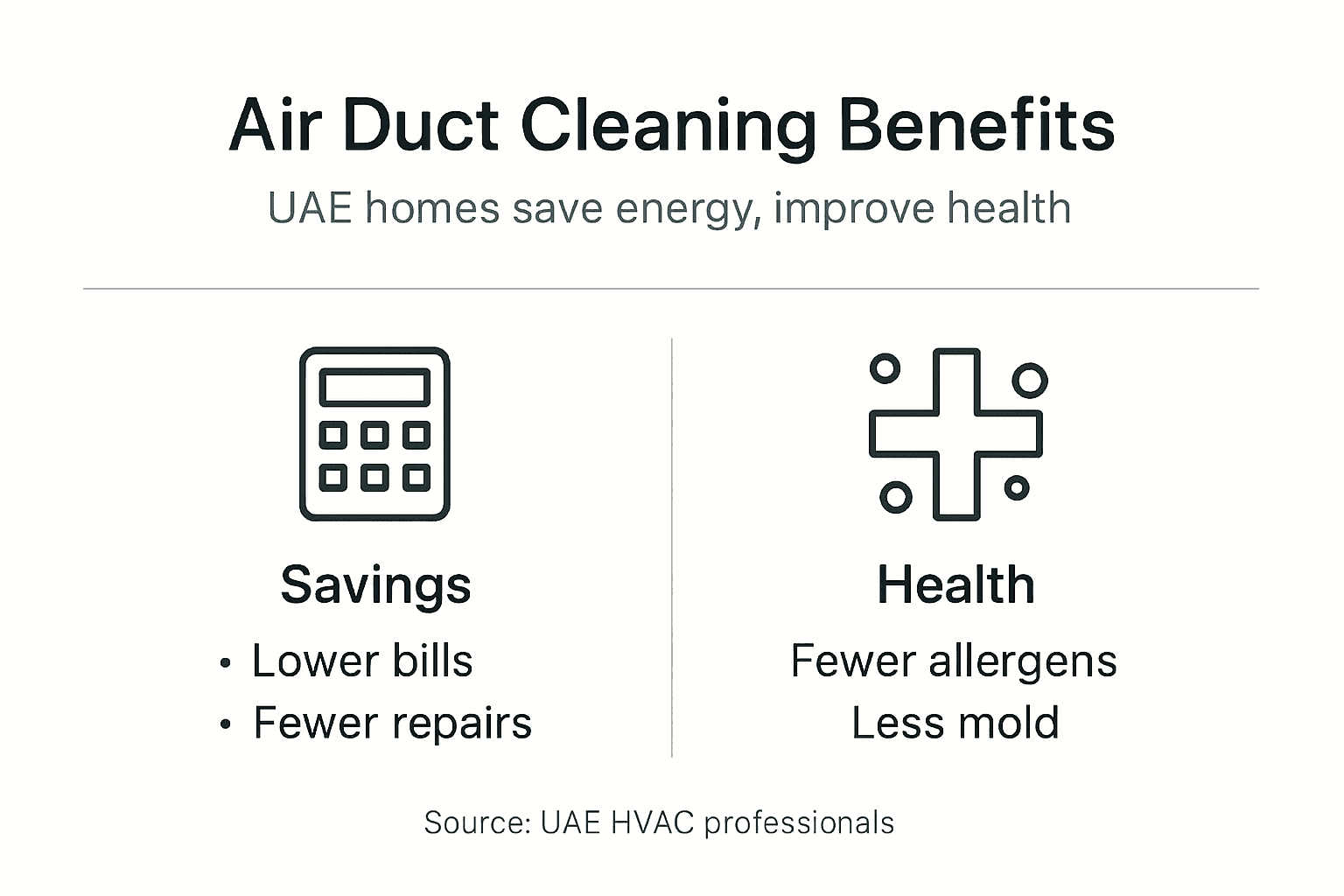
Energy efficiency improvements of 10-20% from certified cleaning translate to substantial savings on monthly utility bills. In the UAE’s hot climate, air conditioning represents the largest residential energy expense. When clean ducts restore optimal airflow, HVAC systems operate at peak efficiency, reducing electricity consumption and cutting cooling costs significantly throughout the year.
Microbial and allergen reductions exceeding 90% dramatically improve respiratory health for household members. Children, elderly adults, and individuals with asthma or allergies experience fewer symptoms when breathing air free from mold spores, bacteria, and allergens. This health benefit reduces medical visits, medication costs, and sick days while enhancing daily comfort and quality of life.
Proper cleaning extends HVAC system lifespan by reducing wear on components. Dust-clogged ducts force blowers, compressors, and fans to work harder, accelerating mechanical wear and increasing breakdown risks. Clean ductwork allows equipment to operate within designed parameters, minimizing stress and delaying costly repairs or premature replacement. This preservation of capital equipment delivers long-term financial value.
Case studies from UAE properties show measurable air quality improvements following professional air duct cleaning in Dubai. Microbial testing before and after treatment documents pathogen elimination. Residents report fewer allergy symptoms, reduced dust accumulation, and improved sleep quality. These documented outcomes validate the investment through tangible health and comfort gains.
The UAE’s desert environment creates unique contamination challenges. Airborne sand and dust infiltrate buildings continuously, accumulating in ductwork faster than in other climates. Regular professional cleaning addresses this environmental reality, maintaining indoor air quality despite external dust loads. This climate-specific need makes routine duct maintenance more critical for UAE homes than properties in less dusty regions.
- Energy-efficient home improvements reduce utility costs while improving comfort and environmental footprint.
- Certified cleaning achieves over 90% reduction in airborne allergens and pathogens.
- Clean HVAC systems last longer and require fewer repairs, protecting your equipment investment.
- UAE-specific dust conditions necessitate more frequent attention to ductwork contamination.
Recommended Cleaning Frequency and Practical Tips for UAE Properties
-
Schedule professional duct cleaning every 3 to 5 years depending on occupancy levels and local environmental conditions. High-traffic homes, properties with pets, or buildings in particularly dusty areas may require more frequent service to maintain optimal air quality.
-
Prioritize NADCA or equivalent certified providers with proven cleaning protocols and verifiable results. Certification ensures technicians follow scientifically validated methods rather than improvising approaches that may miss critical contamination.
-
Look for services that incorporate hospital-grade biosanitisers and diagnostic testing in their cleaning process. These tools ensure thorough pathogen elimination and provide measurable verification that treatment achieved intended results.
-
Verify eco-certification to ensure sustainable practices that align with UAE green building codes. Environmentally responsible cleaning protects both your indoor environment and the broader ecosystem.
-
Request detailed service breakdowns that explain what the cleaning includes. Transparent providers outline component access, cleaning methods, sanitization agents, and verification testing, helping you understand exactly what you are purchasing.
-
Understand indoor air quality basics and cleaning recommendations to make informed decisions about when service is needed. Recognizing contamination signs and risk factors helps you schedule cleaning proactively rather than waiting for problems to become severe.
Timing cleaning during cooler months reduces inconvenience since HVAC downtime has less impact on comfort. Scheduling in spring or fall allows thorough cleaning without leaving your home uncomfortably warm during peak summer heat. This strategic timing also lets you start the hot season with optimal system performance.
Conclusion: Making an Informed Investment in Air Duct Cleaning
Transparent understanding of cost components prevents both overpaying for unnecessary services and underinvesting in inadequate cleaning. When you know what drives pricing, you can evaluate quotes intelligently rather than choosing blindly based on lowest price. This knowledge protects your budget while ensuring you receive genuine value.
Higher upfront costs for certified, technology-based cleaning are justified by lasting improvements in air quality and energy efficiency. Cheap services that skip critical steps create false economy through rapid recontamination and continued health risks. Quality cleaning delivers sustained benefits that compound over time through lower energy bills, reduced health issues, and extended HVAC lifespan.
Choosing certified, scientifically based providers delivers reliable, proven results backed by diagnostic verification. Evidence-based cleaning removes guesswork, ensuring thorough decontamination and measurable improvements. This professional approach protects your investment through accountability and documented outcomes.
Smart choices today save money and improve health and comfort throughout your HVAC system’s lifespan. Proper maintenance preserves equipment value, reduces operating costs, and creates healthier indoor environments for your family. Understanding cost factors empowers you to invest wisely in services that deliver genuine, lasting benefits.
Discover Expert Air Duct Cleaning with Saniservice
Your air ducts deserve the same scientific precision that healthcare facilities demand. Saniservice offers professional air duct cleaning services in Dubai backed by NADCA certification and hospital-grade biosanitisers that eliminate over 90% of microbial contaminants.
Our in-house microbiology laboratory and Indoor Sciences team ensure every cleaning meets evidence-based standards. Diagnostic testing identifies specific contamination, guiding targeted treatment that addresses your property’s unique needs. Eco-certified agents and sustainable practices align with UAE green building requirements while protecting your family’s health.
Explore our Air Conditioning Cleaning Checklist to understand the comprehensive process behind truly effective HVAC cleaning. For detailed methodology, review our step-by-step AC cleaning guide that explains how scientific protocols deliver superior results. Contact Saniservice today to schedule your assessment and experience the difference that certified, science-backed cleaning creates for your home’s air quality and energy efficiency.
FAQ
What is the cost of air duct cleaning in the UAE?
Typical costs range from AED 800 to AED 2,500 based on system size and contamination severity. Certified services using advanced technology and hospital-grade biosanitisers typically command higher prices due to superior cleaning quality and longer-lasting results.
How often should air ducts be cleaned in UAE homes?
Every 3 to 5 years depending on occupancy levels, local dust conditions, and air quality concerns. Properties with pets, high traffic, or severe allergies may benefit from more frequent cleaning to maintain optimal indoor air quality.
Are cheaper air duct cleaning services as effective as certified ones?
Lower-cost services often lack certification, skip critical sanitization steps, and use inadequate equipment that leaves contaminants in place. Certified services cost more but deliver over 40% better indoor air quality improvements and prevent rapid recontamination that cheaper alternatives allow.
What benefits can I expect from professional air duct cleaning?
Improved indoor air quality with over 90% reduction in microbial contaminants and allergens. Energy savings of 10-20% that lower monthly utility bills. Extended HVAC system lifespan that reduces maintenance costs and delays expensive equipment replacement.