


Improve Indoor Air Quality in Officeuaeclimatechallenges
—
TITLE—
How to Improve Indoor Air Quality in Office: A Comprehensive Guide for Healthy Workspaces
—
META—
Improve indoor air quality, office ventilation, HVAC maintenance, mold prevention, dust removal, UAE climate challenges
—
EXCERPT—
In today’s modern work environment, maintaining clean and healthy air is crucial for productivity and well-being. This comprehensive guide offers practical steps to improve indoor air quality in offices across the UAE, addressing unique climate conditions like year-round AC usage and desert dust. By following expert insights, you can ensure a healthier workspace.
—
CONTENT—
Understanding How to Improve Indoor Air Quality in Office
Contents
- 1 Understanding How to Improve Indoor Air Quality in Office
- 2 Improve Indoor Air Quality In Office – Identify the Problems Causing Poor Air Quality
- 3 Improve Indoor Air Quality In Office: Clean and Maintain Your HVAC Systems
- 4 Control Dust and Particulates
- 5 Reduce Mold Growth with Proper Humidity Control
- 6 Use Air Purifiers for Additional Filtering
- 7 Promote Green Building Design Principles
- 8 Monitor and Track Indoor Air Quality
- 9 Expert Tips for Improving Air Quality
- 10 Frequently Asked Questions (FAQs)
- 11 Conclusion
Indoor air quality (IAQ) is a significant factor affecting the health and productivity of office workers. In Dubai, the year-round AC usage and high humidity levels contribute to unique challenges that can lead to poor IAQ. This guide will explore strategies for improving indoor air quality specifically tailored to offices in the UAE.
Improve Indoor Air Quality In Office – Identify the Problems Causing Poor Air Quality
The first step in improving IAQ is identifying the issues that contribute to poor air quality. Common culprits include:
- Dust and Particulates: Accumulated dust, pollen, and other particulates can reduce air clarity and exacerbate allergies.
- Mold Growth: High humidity levels and condensation provide ideal conditions for mold to grow, leading to musty odors and health risks.
- Contaminated HVAC Systems: Dirty air filters, ducts, and coils can circulate contaminants throughout the building.
Improve Indoor Air Quality In Office: Clean and Maintain Your HVAC Systems
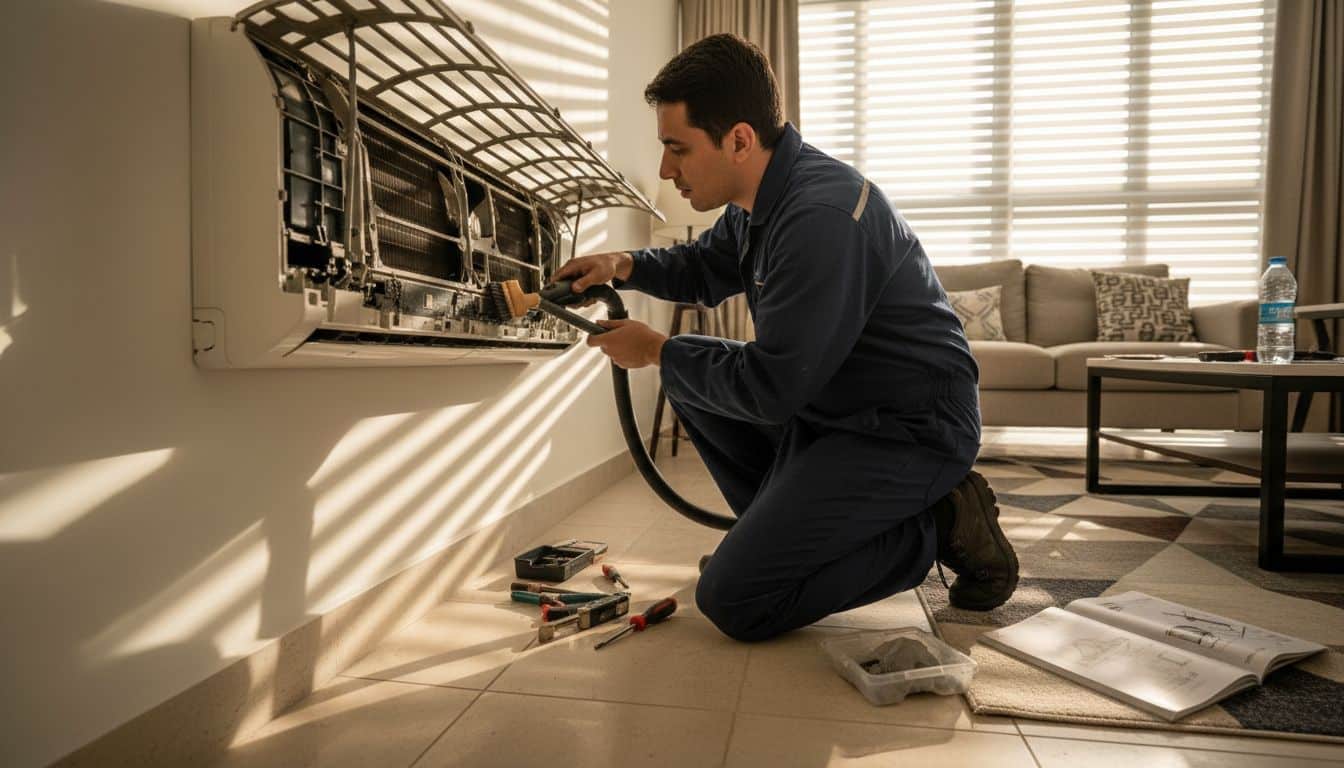
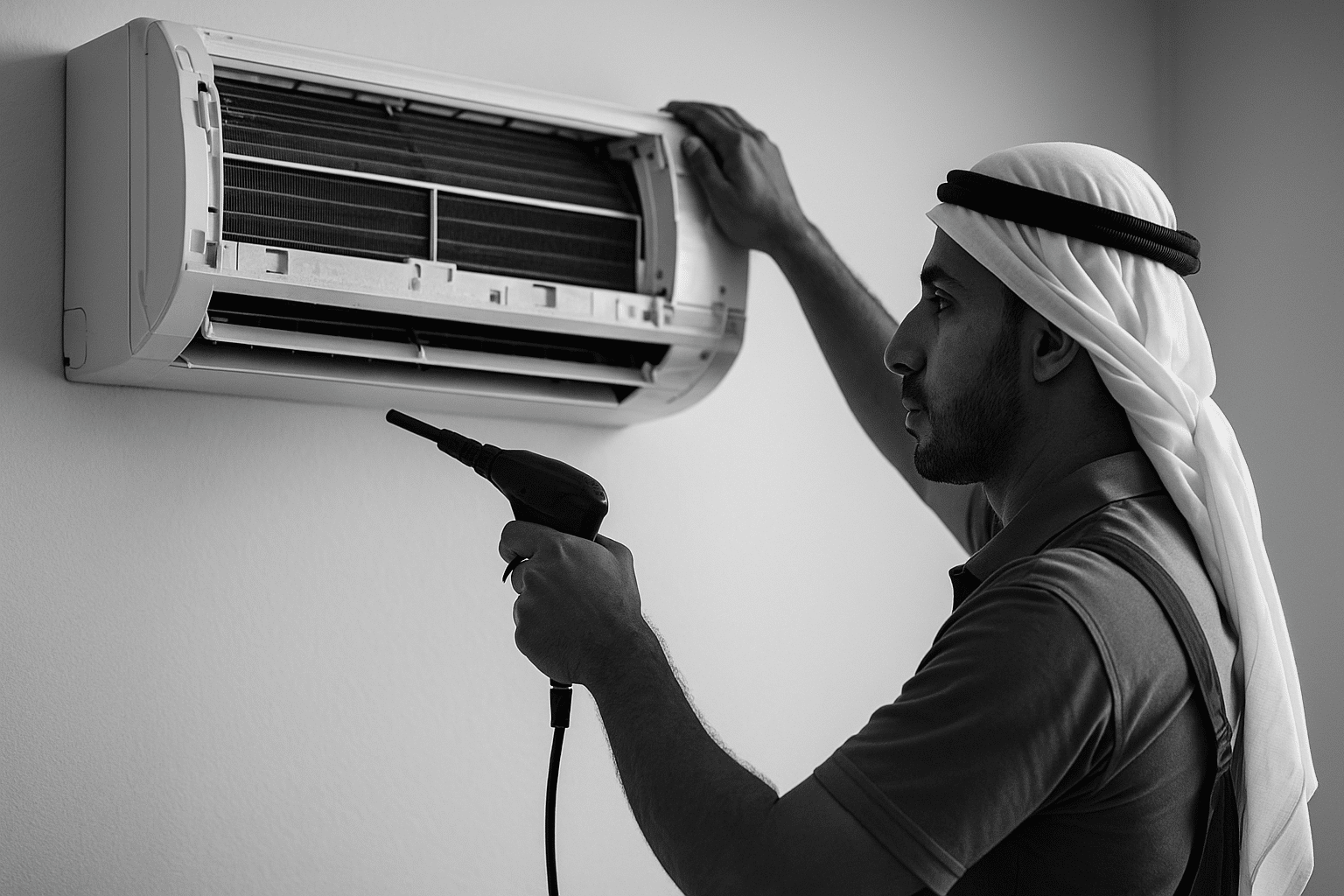
HVAC systems are a critical component of maintaining clean indoor air. Regular cleaning and maintenance help remove accumulated dust, mold spores, and other contaminants:
- Deep Cleaning: Hire professionals to perform deep duct cleaning every 3-5 years.
- Frequent Filter Replacement: Change filters at least quarterly, more often if the office is in a dusty environment.
- Coil and Blower Maintenance: Clean or replace evaporator and condenser coils annually to prevent microbial growth.
Control Dust and Particulates
Controlling dust and particulate matter is essential for maintaining clean indoor air. Implement the following strategies:
- Regular Cleaning: Use HEPA vacuum cleaners to remove fine particles from carpets, floors, and furniture.
- Proper Ventilation: Ensure proper ventilation by opening windows when weather permits or using exhaust fans.
- Dust Collection Systems: Install dust collection systems in areas with high particulate levels, such as construction zones.
Reduce Mold Growth with Proper Humidity Control
Mold growth is a significant concern in offices due to the UAE’s humid climate. To reduce mold risk:
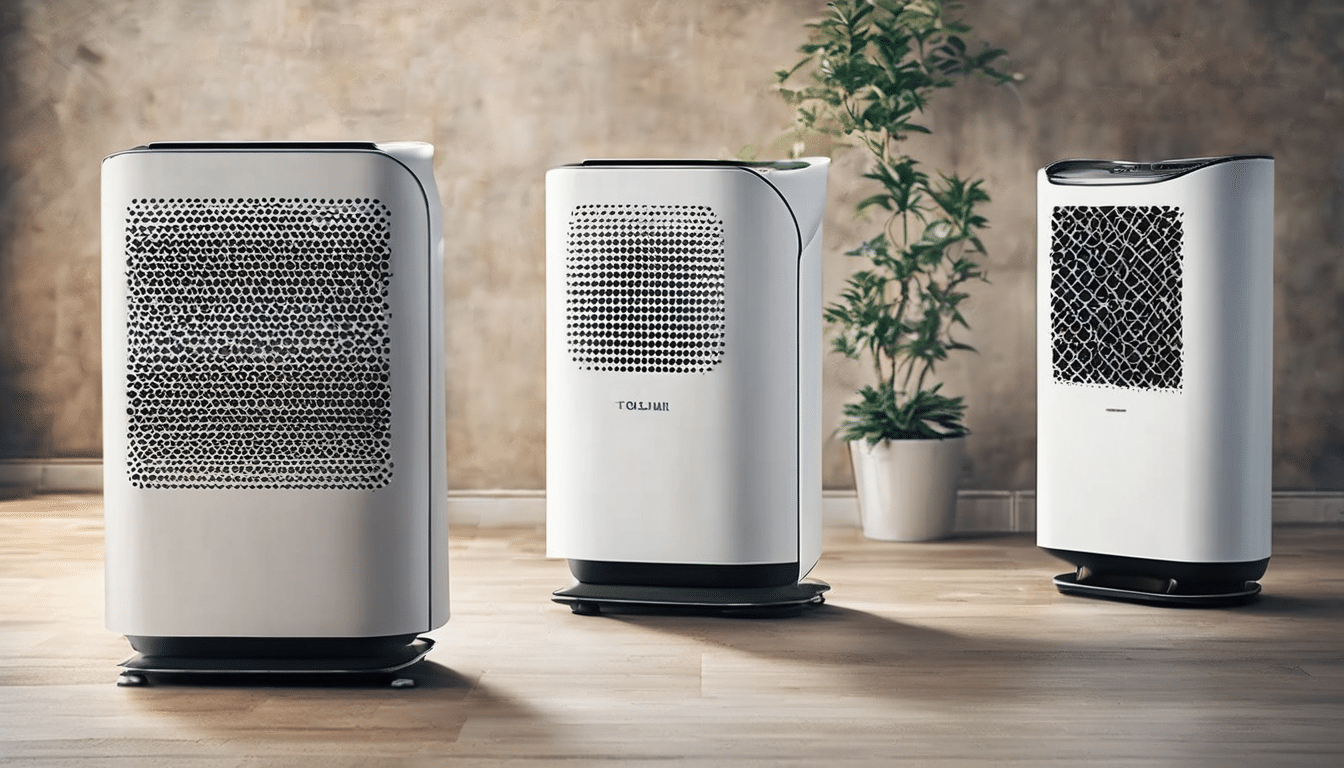
- Dehumidification Systems: Install dehumidifiers to maintain indoor humidity levels below 60%.
- Air Conditioner Maintenance: Regularly clean and disinfect AC systems to prevent moisture buildup.
- Mold-Resistant Materials: Use mold-resistant materials in building construction and renovation projects.
Use Air Purifiers for Additional Filtering
Air purifiers can provide an additional layer of filtration, especially during peak allergy seasons. Consider the following:
- HEPA Filters: Use high-efficiency particulate air (HEPA) filters to remove fine particles and allergens.
- Ionizers: Ionizing purifiers can also be effective in reducing airborne contaminants.
- Multifunctional Units: Opt for units that offer both air purification and dehumidification capabilities.
Promote Green Building Design Principles
Adopting green building design principles can significantly improve indoor air quality. Key strategies include:
- Natural Ventilation: Design buildings to maximize natural airflow and minimize reliance on mechanical ventilation.
- Low-VOC Materials: Use low volatile organic compounds (VOC) materials in construction and finishes to reduce indoor air pollution.
- Sustainable Landscaping: Incorporate green spaces with plants that can naturally purify the air.
Monitor and Track Indoor Air Quality
To ensure continuous improvement in IAQ, consider implementing monitoring systems:
- Indoor Air Quality Sensors: Install sensors to track temperature, humidity, and particulate levels.
- Data Analytics: Use data analytics tools to identify trends and areas for improvement.
- Regular Testing: Conduct periodic testing with professional IAQ experts to validate improvements.
Expert Tips for Improving Air Quality
Here are some expert tips for maintaining a healthy indoor environment in offices:
- Choose High-Quality HVAC Filters: Select filters with high MERV ratings to trap more particulates.
- Frequent Inspections: Schedule regular inspections of your HVAC systems by qualified professionals.
- Employee Education: Educate staff about the importance of IAQ and encourage them to report concerns.
Frequently Asked Questions (FAQs)
- Can air purifiers replace HVAC maintenance?
- No, air purifiers should be seen as a supplement to proper HVAC maintenance. Regular cleaning and servicing of your HVAC system are still necessary.
- How often should I change my air filters?
- Air filters should generally be changed every three months, but this can vary depending on the environment and filter type.
- What is the best way to control mold growth in offices?
- To control mold growth, maintain indoor humidity levels below 60%, use dehumidifiers when necessary, and ensure proper ventilation.
Conclusion
Maintaining clean and healthy air quality is essential for a productive and healthy office environment. By following the strategies outlined in this guide, you can significantly improve IAQ in offices across the UAE. Regular maintenance, professional cleaning, proper humidity control, and using advanced technologies are key to ensuring a comfortable and safe workspace.
—
TAGS—
indoor air quality, HVAC systems, mold prevention, dust removal, UAE climate challenges
—
ALT_TEXT—
How to Improve Indoor Air Quality in Office – Guide for healthier workspaces in Dubai and Abu Dhabi, United Arab Emirates

Leave a Reply