


For Dubai Climate: HEPA Filter Selection Guide
Living in Dubai means dealing with unique environmental challenges that significantly impact indoor air quality. The combination of desert dust, high humidity, and year-round air conditioning creates specific filtration needs that standard HEPA filters may not adequately address. This HEPA Filter Selection Guide for Dubai Climate Conditions provides expert guidance on choosing the right filtration solution for your home or office.
The continuous operation of AC systems in Dubai’s climate means filters work harder and require more frequent maintenance. Desert sand particles are particularly abrasive and can quickly clog standard filters, while humidity encourages microbial growth that requires specialized filtration. Understanding these factors is essential for selecting HEPA filters that will perform effectively in local conditions. This relates directly to Hepa Filter Selection Guide For Dubai Climate Conditions.
This comprehensive HEPA Filter Selection Guide for Dubai Climate Conditions covers everything from filter ratings and specifications to maintenance requirements and common purchasing mistakes. Whether you’re concerned about dust control, mold prevention, or general air quality improvement, following these guidelines will help you make an informed decision for your specific needs.
Hepa Filter Selection Guide For Dubai Climate Conditions – Understanding HEPA Filter Basics
Contents
- 1 Hepa Filter Selection Guide For Dubai Climate Conditions – Understanding HEPA Filter Basics
- 2 Hepa Filter Selection Guide For Dubai Climate Conditions – Dubai Climate Challenges for Air Filtration
- 3 Hepa Filter Selection Guide For Dubai Climate Conditions – Key Selection Criteria for Dubai Conditions
- 4 HEPA Filter Types Comparison
- 5 Sizing and Capacity Considerations
- 6 Maintenance and Replacement Guide
- 7 Common Selection Mistakes to Avoid
- 8 Expert Tips for Filter Selection
- 9 Frequently Asked Questions
HEPA stands for High Efficiency Particulate Air, and true HEPA filters must meet strict international standards for filtration efficiency. According to these standards, genuine HEPA filters must capture at least 99.97% of particles that are 0.3 microns in size. This particle size represents the most penetrating particle size (MPPS), making it the benchmark for filter efficiency testing.
Different filter ratings exist within the HEPA classification, including HEPA-type, HEPA-like, and true HEPA filters. For Dubai’s challenging conditions, only true HEPA filters provide the level of protection needed against fine desert dust and airborne contaminants. The filtration mechanism involves multiple layers of fine glass fibres arranged in a random pattern, creating a maze that traps particles through interception, impaction, and diffusion.
Understanding MERV ratings is also crucial when following a HEPA Filter Selection Guide for Dubai Climate Conditions. MERV (Minimum Efficiency Reporting Value) ratings range from 1 to 20, with higher numbers indicating better filtration. True HEPA filters typically correspond to MERV 17-20, making them ideal for capturing the fine particulate matter common in Dubai’s atmosphere.
Hepa Filter Selection Guide For Dubai Climate Conditions – Dubai Climate Challenges for Air Filtration
Dubai’s desert environment presents unique challenges for air filtration systems. The fine silica dust prevalent in the region measures between 2.5-10 microns, easily entering buildings and circulating through AC systems. This dust is not only a nuisance but can also carry pollutants and allergens that affect indoor air quality and respiratory health.
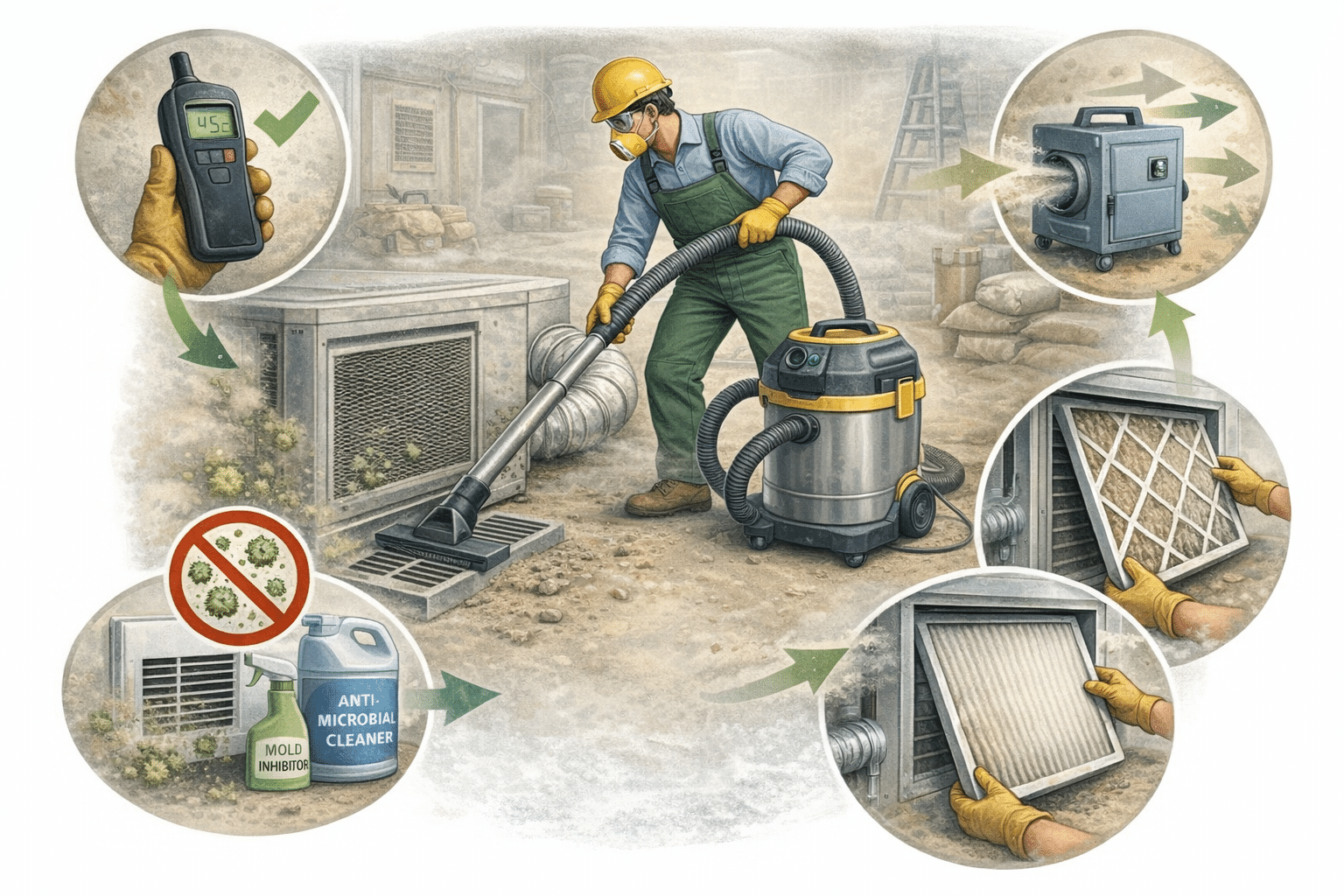
High humidity levels, particularly during summer months, create ideal conditions for mold growth and microbial proliferation. When combined with dust accumulation, this moisture can lead to biofilm development within AC systems. A proper HEPA Filter Selection Guide for Dubai Climate Conditions must address both particulate filtration and moisture-related contamination concerns.
Year-round air conditioning operation means filters work continuously, accumulating dust and contaminants at an accelerated rate. The constant airflow also distributes any captured microorganisms throughout living spaces if filters aren’t properly maintained. These factors make filter selection and maintenance particularly critical in Dubai compared to more temperate climates.
Hepa Filter Selection Guide For Dubai Climate Conditions – Key Selection Criteria for Dubai Conditions
When selecting HEPA filters for Dubai conditions, several key criteria should guide your decision. Filtration efficiency is paramount – look for true HEPA certification that guarantees 99.97% efficiency at 0.3 microns. This ensures protection against the fine desert dust that characterizes the region’s air quality challenges.
Filter capacity and dust holding capacity are equally important considerations. Given the high dust load in Dubai, filters with greater capacity will require less frequent replacement and maintain efficiency longer. Antimicrobial treatment is another critical factor, as it helps prevent mold and bacterial growth on the filter media in humid conditions. When considering Hepa Filter Selection Guide For Dubai Climate Conditions, this becomes clear.
Airflow resistance significantly impacts energy consumption and system performance. Filters with lower initial resistance help maintain AC efficiency while providing adequate filtration. The physical dimensions and compatibility with your existing HVAC system complete the essential criteria for an effective HEPA Filter Selection Guide for Dubai Climate Conditions.
Performance Metrics to Evaluate
Several performance metrics should inform your HEPA filter selection. The CADR (Clean Air Delivery Rate) indicates how quickly a filter can clean air in a specific room size. For Dubai’s conditions, higher CADR values are preferable due to the constant influx of outdoor contaminants. Energy Star ratings help identify filters that won’t significantly increase your electricity consumption.
Noise level considerations are often overlooked but important for comfort, especially in bedrooms and living areas. Filter lifetime estimates based on Dubai’s conditions rather than standard testing environments provide more accurate replacement scheduling. These metrics combined create a comprehensive evaluation framework for your HEPA Filter Selection Guide for Dubai Climate Conditions.
HEPA Filter Types Comparison
Different HEPA filter types offer varying benefits for Dubai’s specific needs. Pleated HEPA filters provide increased surface area for capturing particles, making them ideal for high-dust environments. Their design allows for greater dust holding capacity while maintaining airflow, extending service intervals in Dubai’s challenging conditions.
Bag filters offer excellent dust holding capacity and are less prone to clogging quickly in dusty environments. Their design allows particles to distribute throughout the bag rather than concentrating on the surface. This makes them particularly suitable for the fine desert dust prevalent in Dubai, as outlined in this HEPA Filter Selection Guide for Dubai Climate Conditions.
Electrostatic HEPA filters use charged fibres to attract particles, potentially increasing efficiency for smaller particles. However, their performance can diminish as dust accumulates, requiring more frequent maintenance in high-dust environments. Understanding these differences is crucial for selecting the most appropriate filter type for your specific situation and location.
| Filter Type | Best For | Dubai Suitability | Maintenance Frequency |
|---|---|---|---|
| Pleated HEPA | High dust areas | Excellent | 3-4 months |
| Bag Filters | Extended use | Very Good | 4-6 months |
| Electrostatic | Allergen reduction | Good | 2-3 months |
| Carbon Composite | Odour control | Good | 3-4 months |
Sizing and Capacity Considerations
Proper sizing is crucial for effective filtration in Dubai’s climate. An undersized filter will clog quickly and may bypass air, reducing overall efficiency. Conversely, an oversized filter might not fit properly, creating gaps that allow unfiltered air to circulate. Always measure your existing filter or consult your HVAC manual before purchasing replacements.
Capacity considerations extend beyond physical dimensions to dust holding capacity. In Dubai’s dusty environment, filters with higher dust holding capacity will maintain performance longer between changes. This is particularly important for whole-house systems that process large volumes of air continuously throughout the year.
Airflow capacity must match your HVAC system’s specifications to avoid straining the motor or reducing efficiency. Filters that are too restrictive can increase energy consumption by up to 15% in constantly running Dubai AC systems. This balance between filtration efficiency and airflow resistance is a key aspect of the HEPA Filter Selection Guide for Dubai Climate Conditions.
Maintenance and Replacement Guide
Regular maintenance is essential for HEPA filters to perform effectively in Dubai’s demanding environment. Under normal conditions, filters should be inspected monthly and replaced every 3-4 months. However, during sandstorm season or in particularly dusty areas, more frequent checks and replacements may be necessary. The importance of Hepa Filter Selection Guide For Dubai Climate Conditions is evident here.
Visual inspection provides the best indication of when replacement is needed. If the filter appears heavily loaded with dust or shows signs of microbial growth, replacement should occur immediately. Performance indicators include reduced airflow from vents, increased dust accumulation on surfaces, or the system running longer to maintain temperature.
Proper installation ensures no air bypasses the filter, maintaining system efficiency. Always check the airflow direction arrow and ensure a tight seal in the filter housing. Following these maintenance guidelines completes your comprehensive HEPA Filter Selection Guide for Dubai Climate Conditions implementation.
Common Selection Mistakes to Avoid
Several common mistakes can undermine filter effectiveness in Dubai’s climate. Choosing based solely on price often leads to inferior filters that require more frequent replacement and provide inadequate protection. The initial savings are quickly offset by increased replacement costs and potential health impacts from poor air quality.
Ignoring antimicrobial properties is another frequent error in humid climates like Dubai. Without these treatments, filters can become breeding grounds for mold and bacteria, actually worsening indoor air quality. This is particularly problematic when following a HEPA Filter Selection Guide for Dubai Climate Conditions that doesn’t account for humidity challenges.
Overlooking filter dimensions and compatibility can result in poor sealing and air bypass. Even the most efficient filter cannot perform properly if unfiltered air can circulate around it. Similarly, neglecting to consider airflow resistance may lead to increased energy costs and reduced system performance over time.
Expert Tips for Filter Selection
Based on extensive experience with Dubai’s unique conditions, several expert tips can guide your HEPA filter selection. Always choose true HEPA certification over “HEPA-type” or “HEPA-like” claims, as these don’t meet the rigorous standards needed for Dubai’s fine dust particles. The investment in quality filtration pays dividends in health protection and system longevity.
Consider filters with activated carbon layers for additional odor and VOC protection, particularly in urban areas with high pollution levels. For homes with allergy sufferers, look for filters with enhanced allergen capture capabilities. These specialized features become particularly valuable in the context of a comprehensive HEPA Filter Selection Guide for Dubai Climate Conditions.
Establish a regular maintenance schedule based on visual inspection rather than fixed time intervals, as dust levels can vary significantly throughout the year. Keep spare filters on hand, especially during sandstorm season when replacements may be needed unexpectedly. These practical tips ensure your filtration system provides optimal protection year-round.
Frequently Asked Questions
How often should I replace HEPA filters in Dubai?
In Dubai’s climate, HEPA filters typically require replacement every 3-4 months under normal conditions. During sandstorm season or in particularly dusty areas, monthly inspection and potentially more frequent replacement may be necessary. Visual inspection remains the best indicator of replacement needs.
Can HEPA filters help with humidity issues?
While HEPA filters primarily address particulate matter, many include antimicrobial treatments that help prevent mold growth in humid conditions. For comprehensive humidity control, consider combining HEPA filtration with dedicated dehumidification systems for optimal indoor air quality management.
Are washable HEPA filters effective in Dubai?
Washable HEPA filters generally aren’t recommended for Dubai’s conditions. The fine desert dust can be difficult to completely remove through washing, and improper cleaning may damage the filter media. Disposable filters typically provide more consistent performance in high-dust environments.
Selecting the right HEPA filter for Dubai’s unique climate requires careful consideration of multiple factors including filtration efficiency, capacity, antimicrobial properties, and compatibility with your HVAC system. By following this comprehensive HEPA Filter Selection Guide for Dubai Climate Conditions, you can ensure optimal indoor air quality despite the challenges posed by desert dust, humidity, and year-round AC operation. Regular maintenance and timely replacement complete an effective air quality management strategy that protects health and enhances comfort in your Dubai home or office.

Leave a Reply