

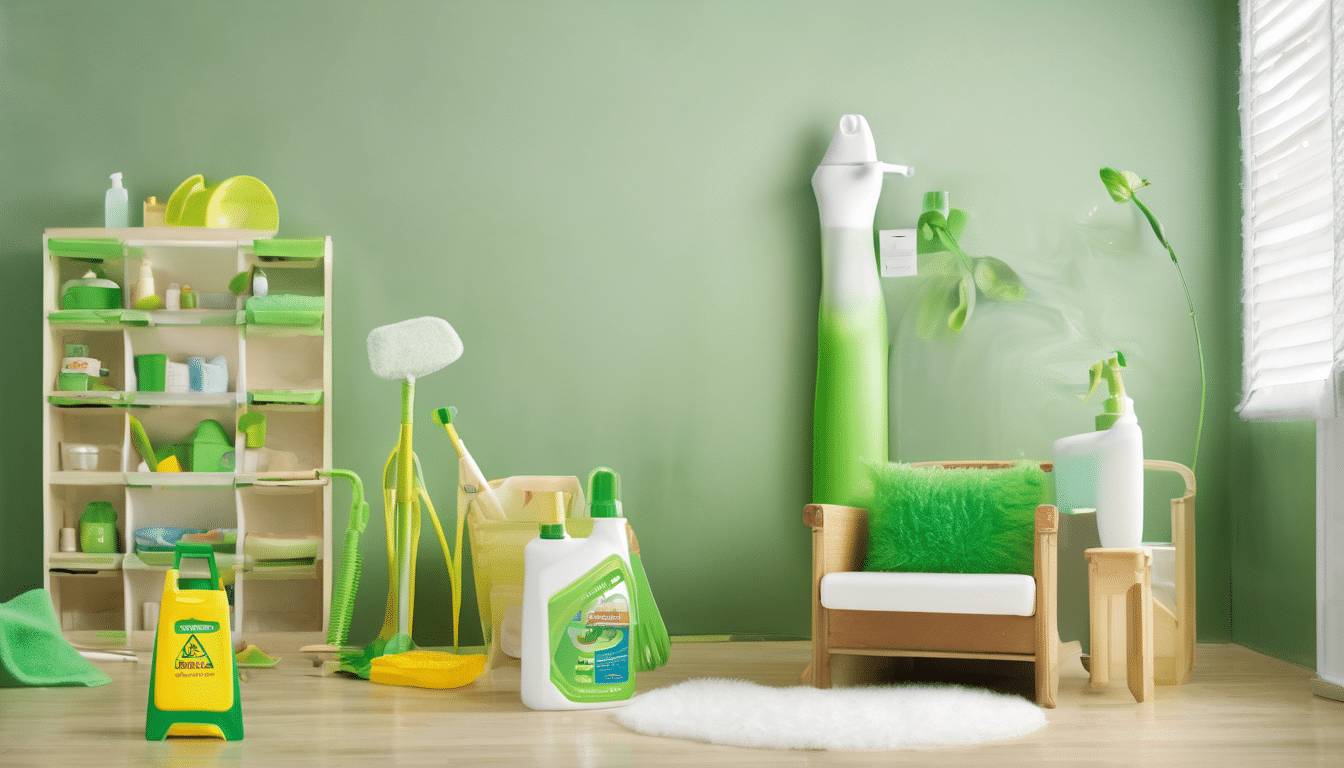
Green Cleaning Products for Nurseries Safety Guidelines UAE
Creating a safe and healthy environment for children in nurseries requires careful consideration of every element that affects indoor air quality, particularly the cleaning products used daily. Green Cleaning Products for Nurseries Safety Guidelines have become increasingly important in the UAE, where year-round air conditioning and enclosed spaces amplify the impact of chemical exposure on young children’s developing respiratory systems.
In Dubai’s climate, nurseries operate with continuous HVAC systems, making the selection and application of cleaning products critical for maintaining healthy indoor environments. Children spend significant portions of their day in these enclosed spaces, making them particularly vulnerable to airborne contaminants from traditional cleaning chemicals. Understanding proper Green Cleaning Products for Nurseries Safety Guidelines ensures that cleaning practices enhance rather than compromise the health and safety of children in educational settings.
The implementation of environmentally responsible cleaning protocols requires a comprehensive understanding of product chemistry, application methods, and their interaction with HVAC systems. This approach protects children whilst maintaining the high hygiene standards required in nursery environments throughout the UAE.
Understanding Green Cleaning Products for Nurseries Safety Guidelines
Contents
- 1 Understanding Green Cleaning Products for Nurseries Safety Guidelines
- 2 Green Cleaning Products For Nurseries Safety Guidelines – Product Selection Criteria and Certification Standards
- 3 Green Cleaning Products For Nurseries Safety Guidelines – Safe Application Methods and Timing Protocols
- 4 Indoor Air Quality Considerations in UAE Climate
- 5 Staff Training and Implementation Strategies
- 6 Monitoring and Effectiveness Assessment
- 7 UAE Regulatory Compliance and Standards
- 8 Cost Considerations and Budget Planning
- 9 Troubleshooting Common Implementation Challenges
Green cleaning products represent a fundamental shift from traditional chemical-based cleaning solutions toward formulations that prioritise child safety and environmental responsibility. These products eliminate harsh chemicals such as ammonia, chlorine bleach, and volatile organic compounds that can compromise indoor air quality in nursery environments.
The definition of green cleaning products extends beyond marketing claims to encompass specific criteria including biodegradability, low toxicity levels, and minimal environmental impact. In nursery settings, these products must maintain effective cleaning and disinfection capabilities whilst reducing exposure risks for children with developing immune and respiratory systems.
Green Cleaning Products for Nurseries Safety Guidelines emphasise the importance of understanding ingredient transparency. Effective green products list all components clearly, avoiding proprietary blends that obscure potentially harmful substances. This transparency enables facility managers to make informed decisions based on specific ingredients rather than marketing terminology.
The effectiveness of green cleaning products in nursery environments depends on proper selection and application. These products often require different contact times and application methods compared to traditional chemicals, making staff education essential for successful implementation.
Key Characteristics of Safe Nursery Cleaning Products
Safe nursery cleaning products share several essential characteristics that distinguish them from conventional cleaning solutions. pH levels typically range between 6 and 8, avoiding extreme acidity or alkalinity that can irritate children’s skin and respiratory systems. These neutral formulations reduce the risk of chemical burns or respiratory distress whilst maintaining cleaning effectiveness.
Fragrance-free formulations represent another critical safety feature. Many traditional cleaning products contain synthetic fragrances that can trigger allergic reactions and respiratory issues in sensitive children. Green cleaning products for nurseries either eliminate fragrances entirely or use natural essential oils in minimal concentrations.
The absence of volatile organic compounds distinguishes quality green cleaning products from conventional alternatives. VOCs contribute to indoor air pollution and can cause headaches, respiratory irritation, and long-term health concerns in children exposed to these compounds in enclosed nursery environments.
Green Cleaning Products For Nurseries Safety Guidelines – Product Selection Criteria and Certification Standards
Selecting appropriate Green Cleaning Products for Nurseries Safety Guidelines requires understanding recognised certification standards that validate product safety and environmental claims. Third-party certifications provide objective verification of product performance and safety characteristics beyond manufacturer marketing statements.
The Green Seal certification represents one of the most stringent standards for institutional cleaning products. Products bearing this certification undergo rigorous testing for human health impacts, environmental effects, and cleaning performance. For nursery environments, Green Seal certified products provide assurance of safety without compromising cleaning effectiveness.
EcoLogo certification offers another reliable standard for green cleaning product selection. This program evaluates products across their entire lifecycle, from raw material extraction through disposal, ensuring comprehensive environmental responsibility. Products meeting EcoLogo standards demonstrate reduced environmental impact whilst maintaining performance standards suitable for childcare facilities.
Cradle to Cradle certification takes a holistic approach to product assessment, evaluating material health, renewable energy use, water stewardship, and social fairness. This comprehensive evaluation system ensures that certified products meet the highest standards for safety and sustainability in nursery environments.
Ingredient Analysis and Safety Assessment
Effective Green Cleaning Products for Nurseries Safety Guidelines require detailed ingredient analysis to identify potentially harmful components. Common ingredients to avoid include 2-butoxyethanol, which can cause respiratory and eye irritation, and nonylphenol ethoxylates, which are endocrine disruptors particularly concerning in children’s environments.
Plant-based surfactants represent safer alternatives to petroleum-derived cleaning agents. These naturally occurring compounds provide effective cleaning action whilst breaking down readily in the environment and posing minimal health risks to children. Coconut-based and corn-derived surfactants demonstrate excellent cleaning performance with superior safety profiles.
Natural disinfecting ingredients such as hydrogen peroxide and citric acid offer effective antimicrobial action without the health concerns associated with quaternary ammonium compounds or chlorine-based disinfectants. These ingredients provide necessary sanitisation whilst maintaining indoor air quality in nursery settings.
The concentration levels of active ingredients directly impact both safety and effectiveness. Green cleaning products for nurseries typically use lower concentrations of active ingredients, relying on proper application techniques rather than chemical strength to achieve cleaning objectives.
Green Cleaning Products For Nurseries Safety Guidelines – Safe Application Methods and Timing Protocols
Implementing Green Cleaning Products for Nurseries Safety Guidelines requires carefully planned application methods that minimise children’s exposure whilst maintaining cleaning effectiveness. Timing protocols ensure that cleaning activities occur when children are not present, allowing adequate ventilation and product settling before children return to treated areas.
Pre-cleaning preparation involves removing children from treatment areas and ensuring adequate ventilation throughout the cleaning process. Even with green products, proper ventilation prevents the accumulation of cleaning product vapours and ensures optimal indoor air quality when children return to the space.
Application techniques for green cleaning products often differ from traditional chemical cleaners. These products may require longer contact times to achieve equivalent disinfection levels, necessitating adjustments to cleaning schedules and procedures. Staff must understand these differences to maintain effective hygiene standards whilst using safer products.
Dilution protocols for concentrated green cleaning products require precise measurement to ensure effectiveness without wasting materials or compromising safety. Proper dilution ratios optimise cleaning performance whilst maintaining the safety profile that makes green products suitable for nursery environments.
Equipment and Tool Considerations
The selection of cleaning equipment and tools directly impacts the effectiveness of Green Cleaning Products for Nurseries Safety Guidelines implementation. Microfibre cloths and mops enhance cleaning effectiveness by physically removing contaminants rather than relying solely on chemical action. This mechanical cleaning approach reduces the quantity of cleaning products required whilst improving overall hygiene outcomes.
Spray bottles and application equipment must be dedicated specifically to green cleaning products to prevent cross-contamination with traditional chemicals. Even minimal residues from conventional cleaners can compromise the safety profile of green products and potentially create harmful chemical reactions.
HEPA-filtered vacuum systems complement green cleaning protocols by removing dust and allergens that chemical cleaning cannot address. These systems prevent the redistribution of contaminants during cleaning activities whilst supporting overall indoor air quality objectives in nursery environments.
Colour-coded cleaning systems prevent cross-contamination between different areas and cleaning products. This systematic approach ensures that tools used for bathroom cleaning do not inadvertently transfer contaminants to food preparation or play areas, maintaining the hygiene standards essential in nursery settings.
Indoor Air Quality Considerations in UAE Climate
The UAE’s climate presents unique challenges for maintaining indoor air quality in nursery settings, making Green Cleaning Products for Nurseries Safety Guidelines particularly important. Year-round air conditioning creates enclosed environments where cleaning product vapours can accumulate and recirculate through HVAC systems, potentially exposing children to concentrated contaminants.
High humidity levels during certain periods can affect the performance and safety of cleaning products. Some green cleaning formulations may require adjustments in humid conditions to maintain effectiveness whilst preventing mould growth or product degradation that could compromise safety standards.
Desert dust infiltration requires frequent cleaning to maintain hygiene standards, increasing children’s potential exposure to cleaning products. Green cleaning solutions enable more frequent cleaning cycles without accumulating harmful chemical residues that could impact children’s health over time.
HVAC system interactions with cleaning products represent a critical consideration in UAE nursery environments. Traditional cleaning chemicals can contaminate air handling systems, leading to ongoing exposure even after cleaning activities conclude. Green cleaning products reduce this risk by eliminating volatile compounds that can accumulate in ductwork.
Ventilation and Air Exchange Requirements
Proper ventilation remains essential even when using Green Cleaning Products for Nurseries Safety Guidelines, ensuring optimal air quality during and after cleaning activities. Fresh air exchange rates should increase during cleaning periods to prevent any accumulation of cleaning product vapours, even from environmentally safe formulations.
Air filtration systems require regular maintenance to support green cleaning protocols effectively. Clean filters ensure that recirculated air remains free from contaminants whilst preventing the buildup of cleaning product residues that could impact long-term air quality in nursery environments.
Timing ventilation with cleaning activities maximises the effectiveness of green cleaning products whilst minimising children’s exposure. Strategic scheduling ensures that treated areas receive adequate fresh air circulation before children return, maintaining the safety benefits of green cleaning protocols.
Monitoring indoor air quality before, during, and after cleaning activities provides objective verification of Green Cleaning Products for Nurseries Safety Guidelines effectiveness. Regular testing ensures that cleaning protocols maintain or improve air quality rather than inadvertently introducing new contaminants.
Staff Training and Implementation Strategies
Successful implementation of Green Cleaning Products for Nurseries Safety Guidelines depends on comprehensive staff training that addresses both product-specific procedures and broader safety principles. Training programmes must cover the differences between green and traditional cleaning products, emphasising proper application methods and timing protocols.
Product-specific training ensures that staff understand the unique characteristics of each green cleaning product, including appropriate dilution ratios, contact times, and application methods. This detailed knowledge enables effective cleaning whilst maintaining the safety profile that makes green products suitable for nursery environments.
Safety data sheet review provides essential information about product ingredients, handling procedures, and emergency protocols. Even with green cleaning products, staff must understand proper storage, handling, and disposal procedures to maintain safety standards throughout the facility.
Hands-on training with actual products and equipment ensures that theoretical knowledge translates into practical cleaning skills. This practical approach identifies potential challenges and ensures consistent application of Green Cleaning Products for Nurseries Safety Guidelines across all staff members.
Quality Assurance and Monitoring Protocols
Regular monitoring ensures consistent application of Green Cleaning Products for Nurseries Safety Guidelines and identifies areas for improvement in cleaning protocols. Supervisory checks verify proper dilution ratios, application techniques, and timing compliance to maintain both safety and effectiveness standards.
Documentation systems track product usage, application schedules, and any observed issues or concerns. This systematic record-keeping supports continuous improvement efforts whilst providing accountability for safety protocol compliance.
Feedback mechanisms enable staff to report challenges or suggestions related to green cleaning product implementation. Regular communication ensures that practical insights from daily cleaning activities inform ongoing protocol refinements and training updates.
Performance metrics evaluate both cleaning effectiveness and safety compliance, ensuring that Green Cleaning Products for Nurseries Safety Guidelines achieve their intended objectives without compromising hygiene standards essential in childcare environments.
Monitoring and Effectiveness Assessment
Evaluating the effectiveness of Green Cleaning Products for Nurseries Safety Guidelines requires systematic monitoring approaches that assess both cleaning performance and health outcomes. Regular assessment ensures that environmentally responsible products maintain the hygiene standards essential for protecting children’s health in nursery environments.
Surface testing protocols verify that green cleaning products achieve appropriate levels of cleanliness and disinfection. ATP testing provides rapid, objective measurement of surface cleanliness, enabling immediate adjustments to cleaning procedures if results indicate inadequate cleaning performance.
Air quality monitoring before and after cleaning activities demonstrates the impact of green cleaning products on indoor environmental conditions. This monitoring reveals whether cleaning protocols improve, maintain, or inadvertently compromise air quality in nursery settings.
Microbiological testing validates the antimicrobial effectiveness of green disinfecting products. Regular sampling of high-touch surfaces ensures that safer cleaning products maintain the pathogen control necessary to prevent illness transmission in nursery environments.
Health Outcome Tracking
Long-term health outcome monitoring provides the most meaningful assessment of Green Cleaning Products for Nurseries Safety Guidelines effectiveness. Tracking respiratory symptoms, allergic reactions, and skin irritations among children and staff reveals the real-world health impacts of cleaning product choices.
Absence rates related to respiratory illness or allergic reactions can indicate whether green cleaning protocols successfully reduce health impacts compared to traditional cleaning chemicals. This data provides objective evidence of programme benefits for facility administrators and parents.
Staff health outcomes offer additional insights into Green Cleaning Products for Nurseries Safety Guidelines effectiveness. Cleaning staff experience direct exposure to products and can provide valuable feedback about skin irritation, respiratory comfort, and overall health impacts during daily cleaning activities.
Parental feedback regarding children’s health and comfort provides qualitative assessment of green cleaning programme success. Parents often notice changes in their children’s respiratory comfort, skin conditions, or allergy symptoms that may relate to nursery environmental factors including cleaning products.
UAE Regulatory Compliance and Standards
Implementing Green Cleaning Products for Nurseries Safety Guidelines in the UAE requires understanding local regulatory requirements and safety standards that govern childcare facility operations. UAE health authorities establish specific guidelines for cleaning and disinfection in educational environments that must be maintained regardless of product choices.
Dubai Municipality regulations specify cleaning frequency, disinfection requirements, and safety protocols for childcare facilities. Green cleaning products must meet these regulatory standards whilst providing enhanced safety benefits for children and staff in nursery environments.
Federal Authority for Government Human Resources guidelines address occupational health and safety requirements for cleaning staff. These regulations ensure that product selection considers worker safety alongside environmental and child health concerns.
Emirates Authority for Standardisation and Metrology standards provide technical specifications for cleaning products used in institutional settings. Understanding these standards ensures that selected green cleaning products meet performance requirements whilst maintaining safety enhancements.
Documentation and Reporting Requirements
Regulatory compliance requires systematic documentation of Green Cleaning Products for Nurseries Safety Guidelines implementation, including product specifications, training records, and monitoring results. This documentation demonstrates compliance with health and safety regulations whilst supporting continuous improvement efforts.
Incident reporting protocols must address any adverse reactions or safety concerns related to cleaning product use. Even with green products, proper reporting ensures rapid response to any health concerns whilst maintaining regulatory compliance.
Regular compliance audits verify that green cleaning protocols meet all applicable regulatory requirements. These audits provide objective assessment of programme compliance whilst identifying opportunities for improvement in safety protocols.
Certification maintenance requires ongoing documentation and periodic renewal of staff training, product certifications, and safety protocol updates. This systematic approach ensures continued compliance with evolving regulatory requirements.
Cost Considerations and Budget Planning
Implementing Green Cleaning Products for Nurseries Safety Guidelines involves initial investment considerations balanced against long-term health and operational benefits. Green cleaning products typically cost 10-30% more than conventional alternatives, with prices ranging from AED 25-85 per litre for concentrated formulations suitable for nursery environments.
Cost-per-use calculations provide more accurate assessment of green cleaning product economics than simple purchase price comparisons. Many green products offer superior dilution ratios, reducing actual usage costs despite higher initial purchase prices.
Training costs represent an important budget consideration, as staff require education about proper application methods for green cleaning products. Initial training programmes typically cost AED 500-1,500 per facility, depending on staff size and training depth.
Equipment modifications may be necessary to optimise Green Cleaning Products for Nurseries Safety Guidelines implementation. Microfibre cleaning systems and specialised applicators cost AED 200-800 per nursery classroom but enhance cleaning effectiveness whilst reducing product consumption.
Long-term Economic Benefits
Reduced health-related costs offset higher product prices through decreased illness rates among children and staff. Nurseries implementing comprehensive green cleaning programmes often report 15-25% reductions in respiratory illness-related absences.
Lower staff turnover rates result from improved working conditions when using safer cleaning products. Cleaning staff retention improves when exposure to harsh chemicals is eliminated, reducing recruitment and training costs.
Enhanced reputation and parent satisfaction can support higher enrollment rates and fee structures. Many parents actively seek nurseries that prioritise environmental responsibility and child health through green cleaning protocols.
Reduced HVAC maintenance costs result from eliminating harsh chemical vapours that can damage air handling equipment. Green cleaning products extend equipment life whilst maintaining superior indoor air quality.
Troubleshooting Common Implementation Challenges
Common challenges in implementing Green Cleaning Products for Nurseries Safety Guidelines include staff resistance to change, perceived effectiveness concerns, and adjustment periods for new cleaning procedures. Addressing these challenges systematically ensures successful programme implementation.
Staff concerns about cleaning effectiveness often arise during transition periods from traditional to green cleaning products. Demonstrating equivalent or superior cleaning performance through objective testing helps overcome these concerns whilst building confidence in new protocols.
Product performance issues may occur during initial implementation as staff learn optimal application methods. Extended contact times, proper dilution ratios, and appropriate surface preparation techniques resolve most performance concerns with green cleaning products.
Cost concerns from administrators require clear presentation of total programme benefits including health improvements, regulatory compliance advantages, and long-term economic benefits that offset higher initial product costs.
Solutions and Best Practices
Gradual implementation allows staff to become comfortable with Green Cleaning Products for Nurseries Safety Guidelines whilst maintaining continuity of cleaning operations. Phased transitions reduce resistance whilst providing opportunities to refine procedures based on practical experience.
Regular performance monitoring demonstrates green cleaning effectiveness whilst identifying areas requiring additional training or procedure adjustments. Objective measurement builds confidence and supports continuous improvement efforts.
Clear communication about health and environmental benefits helps staff understand the importance of green cleaning protocols. Education about chemical exposure risks and safer alternatives motivates compliance with new procedures.
Ongoing support ensures successful long-term implementation of green cleaning programmes. Regular check-ins, additional training opportunities, and responsive problem-solving maintain programme effectiveness whilst supporting staff success.
The successful implementation of Green Cleaning Products for Nurseries Safety Guidelines in the UAE creates healthier environments for children whilst maintaining the rigorous hygiene standards essential in educational settings. These protocols protect developing respiratory systems from harmful chemical exposure whilst supporting environmental responsibility initiatives that benefit the broader community.
Effective green cleaning programmes require systematic planning, comprehensive staff training, and ongoing monitoring to achieve optimal results. The investment in safer cleaning products and enhanced procedures yields significant returns through improved health outcomes, regulatory compliance, and enhanced facility reputation.
As awareness of indoor air quality impacts grows throughout the UAE, nurseries implementing Green Cleaning Products for Nurseries Safety Guidelines position themselves as leaders in child health protection whilst meeting evolving parental expectations for environmentally responsible childcare environments. This comprehensive approach ensures that cleaning practices enhance rather than compromise the health and safety of children in nursery settings.

Leave a Reply