

How to Remove Allergens from AC for Cleaner Air Indoors
Most homeowners in Dubai are surprised to learn that a single unclean AC system can harbor up to one million microscopic allergens. That means every breath could impact your health, especially if you aspire to maintain American standards of indoor air quality. By how to remove allergens from ac understanding professional steps for AC allergen elimination, you will discover practical ways to protect your family, reduce respiratory risks, and keep your property’s air fresher throughout the year.
Table of Contents
Contents
- 1 Table of Contents
- 2 Quick Summary
- 3 Step 1: Prepare AC system and workspace for safe cleaning
- 4 Step 2: Dismantle key AC components for thorough access
- 5 Step 3: Deep clean coils, blowers, and ducts using non-toxic methods
- 6 Step 4: Disinfect AC surfaces with hospital-grade biosanitisers
- 7 Step 5: Verify allergen removal and test air quality
- 8 Achieve Truly Cleaner Air Indoors with Expert AC Cleaning Solutions
- 9 Frequently Asked Questions
- 9.0.1 How do I prepare my AC system for allergen removal?
- 9.0.2 What components should I dismantle for thorough AC cleaning?
- 9.0.3 What are effective non-toxic methods for cleaning AC coils and ducts?
- 9.0.4 How should I disinfect my AC system after cleaning?
- 9.0.5 How can I verify that allergens have been removed from my AC?
- 9.0.6 How often should I clean and disinfect my AC system to maintain air quality?
- 10 Recommended
- Step 1: Prepare AC System And Workspace For Safe Cleaning
- Step 2: Dismantle Key AC Components For Thorough Access
- Step 3: Deep Clean Coils, Blowers, And Ducts Using Non-Toxic Methods
- Step 4: Disinfect AC Surfaces With Hospital-Grade Biosanitisers
- Step 5: Verify Allergen Removal And Test Air Quality
Quick Summary
| Key Point | Explanation |
|---|---|
| 1. Shut Down AC System First | Always turn off your air conditioning unit and disconnect it from power before cleaning to ensure safety. |
| 2. Use Proper Protective Gear | Gather essential protective equipment like gloves, eye protection, and a respirator to safeguard your health while cleaning. |
| 3. Document Component Configurations | Take photos and label connections when dismantling parts to avoid confusion during reassembly of your AC system. |
| 4. Apply Non-Toxic Cleaning Methods | Use mild, biodegradable cleaning solutions and proper tools to clean AC components without introducing harmful chemicals. |
| 5. Verify Indoor Air Quality Post-Cleaning | Assess air quality and allergen levels after cleaning using monitoring tools to ensure effective allergen removal for a healthier environment. |
Step 1: Prepare AC system and workspace for safe cleaning
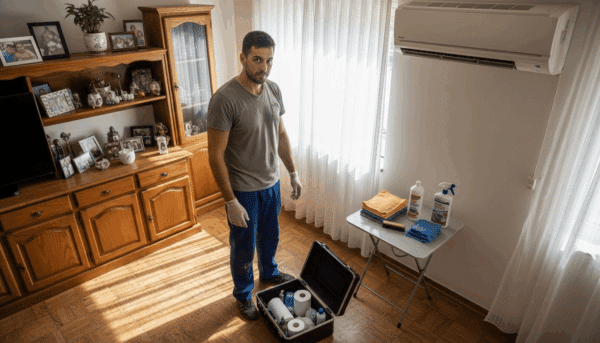
Preparing your air conditioning system for a thorough cleaning requires careful planning and strategic workspace setup to ensure safety and effectiveness. Your goal is to create a clean, controlled environment that minimizes allergen dispersion and protects both your equipment and personal health.
Start by completely shutting down your AC system and disconnecting it from electrical power sources. This critical first step prevents potential electrical hazards and allows safe access to system components. Remove or cover nearby furniture and flooring with protective plastic sheeting to prevent dust and debris contamination. Open windows to ensure proper ventilation during the cleaning process, which will help manage potential chemical exposure risks and reduce allergen concentration in the indoor environment.
Gather all necessary protective equipment before beginning, including disposable gloves, eye protection, and a high-quality respirator mask designed to filter microscopic particles. These items are essential for preventing direct contact with accumulated dust, mold spores, and potential chemical cleaning agents. Organize your cleaning supplies systematically, ensuring you have microfiber cloths, soft brushes, approved cleaning solutions, and disposable containment bags for collecting removed debris.
Here’s a summary of essential protective equipment and its role in safe AC cleaning:
| Item | Purpose | Recommended Use |
|---|---|---|
| Disposable gloves | Shields hands from contaminants | Always during cleaning |
| Eye protection | Prevents exposure to debris | When dismantling or spraying |
| Respirator mask | Filters microscopic particles | For handling allergens, dust |
| Protective clothing | Protects skin and clothing | Throughout the process |
Pro tip: Always work in a well-ventilated area and wear personal protective equipment to minimize potential health risks during AC system cleaning.
Step 2: Dismantle key AC components for thorough access
Removing and inspecting individual AC components provides comprehensive access for deep cleaning and allergen removal. This critical step allows you to thoroughly clean areas that typically accumulate dust, mold, and microscopic particles that compromise indoor air quality.
Begin by carefully documenting electrical component configurations before disconnection. Use a digital camera or smartphone to photograph wiring connections and component placements. Systematically remove the outer AC panel by locating and unscrewing mounting fasteners. Keep screws organized in a magnetic tray to prevent loss. Gently extract sensitive components like the capacitor and fan motor assembly using appropriate tools such as insulated screwdrivers and adjustable wrenches.
Carefully separate the blower motor, evaporator coil, and condensate drain pan for individual inspection and cleaning. Work slowly and methodically to avoid damaging delicate electrical connections or mechanical parts. Use soft brushes and compressed air to remove accumulated debris from each component. Place removed parts on clean protective surfaces to prevent contamination and facilitate thorough cleaning.
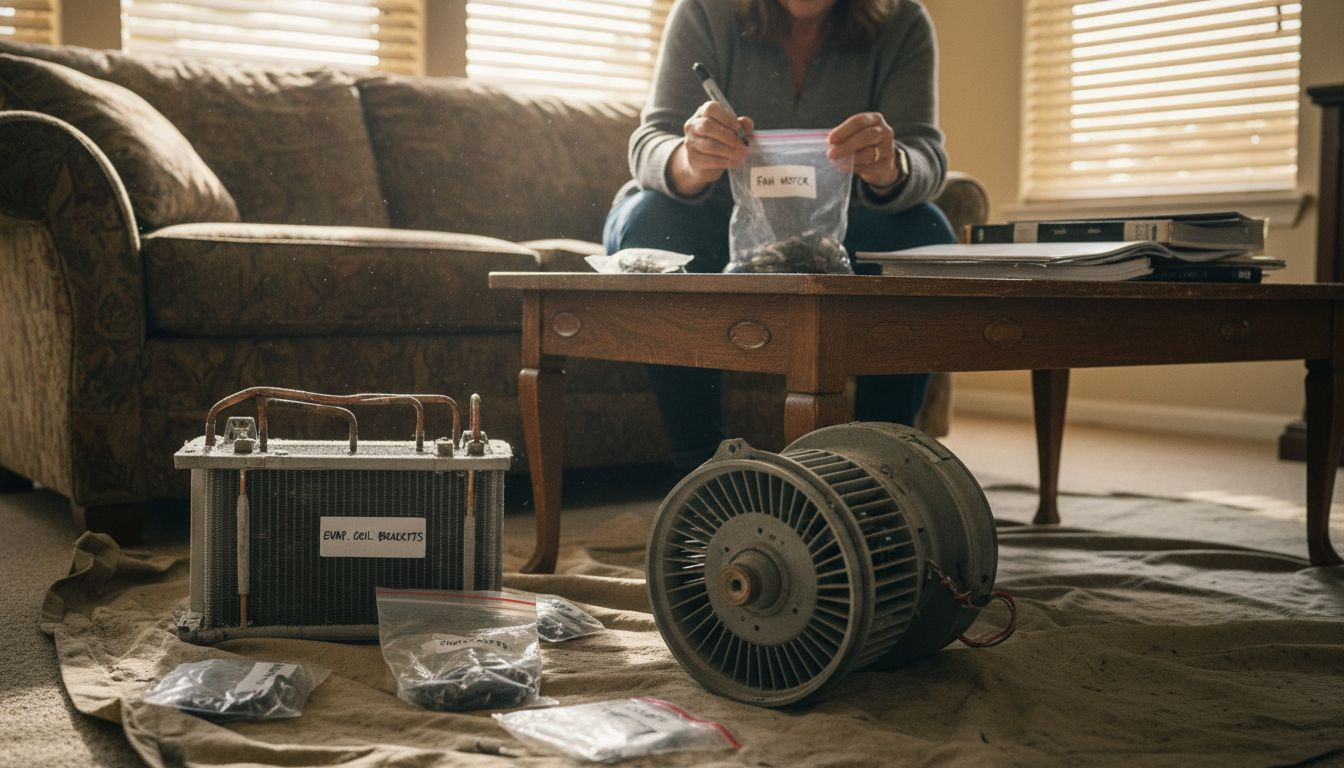
Pro tip: Label and photograph electrical connections before removal to ensure accurate reassembly and prevent potential system damage during reinstallation.
Step 3: Deep clean coils, blowers, and ducts using non-toxic methods
Deep cleaning your air conditioning system requires careful attention to remove accumulated allergens, dust, and potential microbial contaminants without introducing harmful chemicals. Your goal is to restore your AC system to optimal performance while maintaining a safe indoor environment.
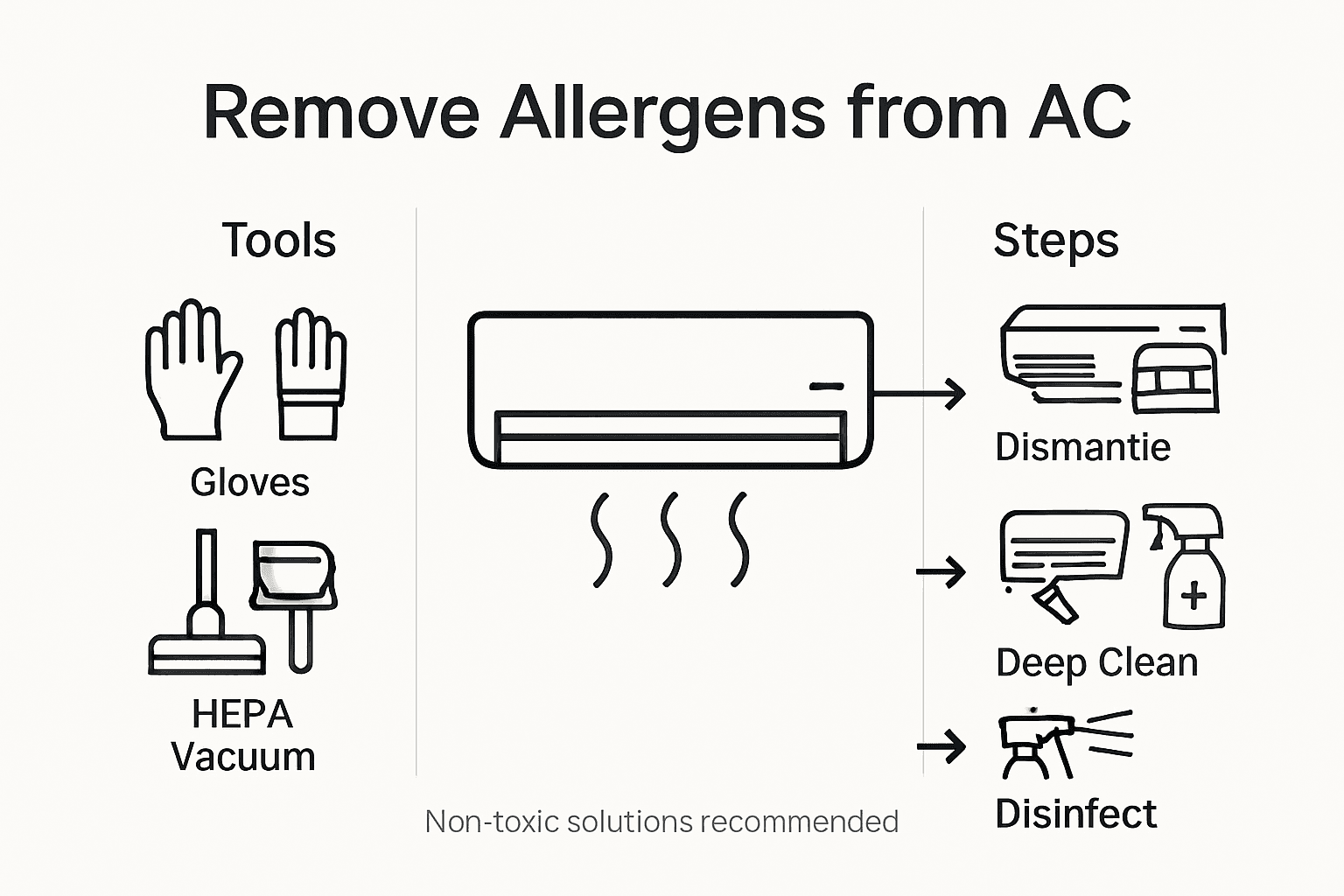
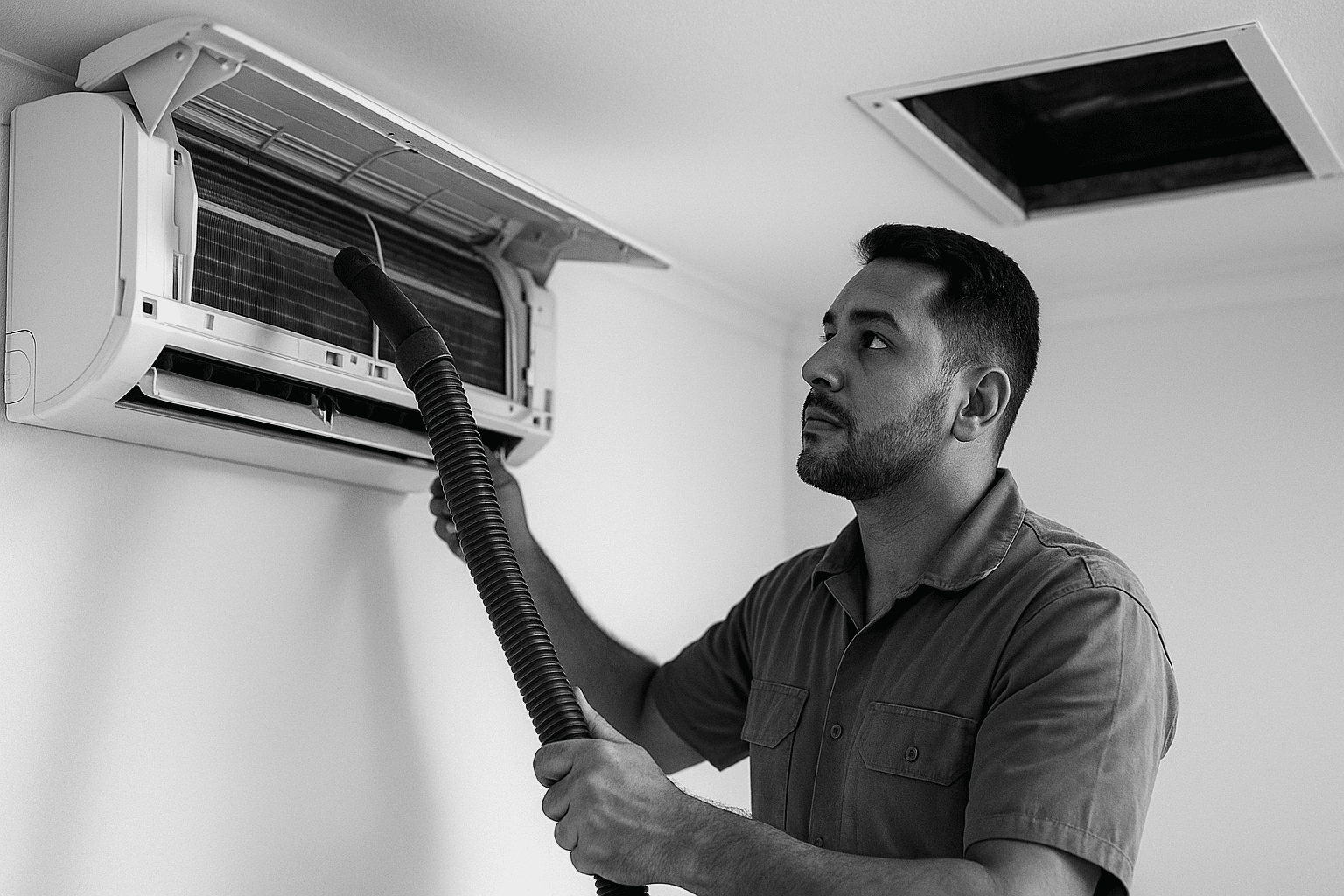
Non-toxic cleaning methods provide an effective approach to sanitizing AC components. Start by using a high-efficiency particulate air (HEPA) vacuum to extract loose debris from blower assemblies, coils, and duct surfaces. Prepare a gentle cleaning solution using mild biodegradable detergent mixed with warm water. Apply the solution sparingly using microfiber cloths, working carefully to avoid saturating electrical components. For delicate surfaces like evaporator coils, consider specialized non-toxic cleaning techniques that remove buildup without causing damage.
Utilize soft brushes with extended reach to carefully scrub accumulated grime from hard-to-access areas of blowers and coils. Pay special attention to condensate drain pans and surrounding areas where moisture can create breeding grounds for mold and bacteria. Compressed air can help dislodge stubborn particles, but use low pressure to prevent damaging sensitive components. Thoroughly rinse and dry each component to prevent moisture related issues and potential microbial growth.
Pro tip: Always work systematically and wear protective gloves to prevent direct contact with accumulated debris during the cleaning process.
Step 4: Disinfect AC surfaces with hospital-grade biosanitisers
Disinfecting your air conditioning system requires precise application of specialized hospital-grade biosanitisers to eliminate allergens, bacteria, and microscopic contaminants effectively. This critical step transforms your AC system from a potential breeding ground for harmful microorganisms into a clean, health-promoting environment.
Proper disinfection protocols demand careful selection and application of EPA-registered biosanitisers. Begin by selecting a quaternary ammonium or hydrogen peroxide based disinfectant specifically designed for HVAC surfaces. Wear protective gloves and eye protection. Spray the biosanitiser evenly across AC components, ensuring complete surface coverage without oversaturating electrical parts. Allow the recommended contact time for maximum microbial elimination follow manufacturer instructions precisely to guarantee thorough sanitization.
Use microfiber cloths or disposable wipes to systematically apply and remove the disinfectant, working from the cleanest areas to the most contaminated sections. Pay extra attention to moisture-prone areas like condensate drain pans and coil surfaces where microorganisms proliferate. Ensure complete drying of all surfaces after disinfection to prevent potential moisture related microbial regrowth. Ventilate the area thoroughly during and after the disinfection process to dissipate any residual chemical odors.
Compare key non-toxic AC cleaning and disinfection agents used in the process:
| Solution Type | Common Active Ingredient | Application Area | Safety Advantage |
|---|---|---|---|
| Mild Biodegradable Detergent | Plant-derived surfactant | Coils, ducts | Low chemical residue |
| Quaternary Ammonium Disinfectant | Ammonium compounds | Surfaces, drain pans | Effective microbial control |
| Hydrogen Peroxide Disinfectant | Stabilized peroxide | General AC surfaces | Breaks down into water, oxygen |
Pro tip: Always read and follow manufacturer instructions carefully when using hospital-grade biosanitisers to ensure both effective disinfection and personal safety.
Step 5: Verify allergen removal and test air quality
Comprehensively checking your AC system after cleaning ensures that you have successfully removed allergens and restored healthy indoor air quality. This final verification step provides peace of mind and confirms the effectiveness of your thorough cleaning process.
Employ multiple strategies to assess air quality and allergen removal. Use air quality monitoring sensors to detect microscopic particle levels and potential pollutants. These digital tools can provide real time data about airborne allergen concentrations, helping you understand the immediate impact of your cleaning efforts. Additionally, consider professional air quality testing services that can conduct detailed analyses of particulate matter, mold spores, and other potential respiratory irritants present in your indoor environment.
Conduct a visual inspection of your AC components to confirm complete allergen removal. Check for any remaining dust residue, discoloration, or moisture that might indicate incomplete cleaning. If possible, use a high powered microscope or magnifying lens to examine surfaces for microscopic debris. Consider performing an allergy sensitivity test by spending extended time in the space after cleaning to ensure no adverse reactions occur, which could indicate lingering allergens or irritants.
Pro tip: Schedule professional air quality testing every six months to maintain consistent indoor environmental health and catch potential issues early.
Achieve Truly Cleaner Air Indoors with Expert AC Cleaning Solutions
Removing allergens from your air conditioning system is critical for a healthier home or workspace. As the article highlights, tackling dust, mold, and microscopic irritants requires careful dismantling, non-toxic deep cleaning, and hospital-grade disinfection. If you are struggling with lingering allergens or want peace of mind knowing your AC system is meticulously maintained, professional services are your best solution.
Saniservice in Dubai brings together scientific precision and Swiss-quality care to eliminate these hidden health hazards. Our NADCA-certified technicians expertly dismantle and deep-clean every AC component using chemical-free biosanitisers proven to kill mold, bacteria, and allergens. Backed by our in-house microbiology lab and a multidisciplinary Indoor Sciences team, we ensure safer air that supports your well-being, boosts energy efficiency, and prolongs system lifespan.
Explore our AC Cleaning & Maintenance services to see how we remove allergens at their source.
Don’t settle for less when it comes to the air you breathe. Visit Saniservice now to schedule your professional AC cleaning and experience cleaner, healthier indoor air today. For inspiring success stories, check out our Case Studies and join countless satisfied clients who trust us for indoor air quality excellence.
Frequently Asked Questions
How do I prepare my AC system for allergen removal?
To prepare your AC system for allergen removal, begin by shutting it down and disconnecting it from electrical power. Cover furniture and flooring with protective sheeting and ensure proper ventilation by opening windows before starting the cleaning process.
What components should I dismantle for thorough AC cleaning?
Dismantle key components such as the outer AC panel, blower motor, evaporator coil, and condensate drain pan. Carefully document the configuration of electrical connections to ensure proper reassembly after cleaning.
What are effective non-toxic methods for cleaning AC coils and ducts?
Use a high-efficiency particulate air (HEPA) vacuum to remove debris and a mild biodegradable detergent mixed with warm water for cleaning. Apply the solution with microfiber cloths while avoiding saturation of electrical components for effective cleaning.
How should I disinfect my AC system after cleaning?
Disinfect your AC system by using an EPA-registered biosanitiser, applying it evenly across all applicable surfaces. Follow the manufacturer’s contact time instructions to ensure maximum effectiveness, and allow all surfaces to dry completely to prevent microbial regrowth.
How can I verify that allergens have been removed from my AC?
After cleaning, conduct a visual inspection of AC components for any remaining dust or moisture. Additionally, use air quality monitoring sensors to check for airborne allergens and confirm successful allergen removal for a healthier indoor environment.
How often should I clean and disinfect my AC system to maintain air quality?
To maintain air quality, it is advisable to clean and disinfect your AC system at least once every six months. Regular maintenance helps reduce allergen buildup and ensures optimal performance of your system.

Leave a Reply