


How Indoor Air Quality Impacts Education Facility Cleaning
In the UAE’s educational landscape, where air-conditioning runs continuously throughout the academic year, understanding How Indoor Air quality impacts education facility cleaning has become a critical concern for administrators, facility managers, and health professionals. The unique climate conditions—characterised by extreme heat, high humidity, and persistent desert dust—create specific challenges for maintaining clean, healthy learning environments. This comprehensive guide explores the direct relationship between air quality management and cleaning protocols in schools, nurseries, and universities across Dubai, Abu Dhabi, and the broader Emirates.
How indoor air quality impacts education facility cleaning extends far beyond surface-level cleanliness. It encompasses the entire ecosystem of airborne particles, microbial growth, and environmental contaminants that affect student health, cognitive function, and academic performance. With children spending significant portions of their developmental years in educational settings, the quality of the air they breathe directly influences their learning experience, attendance rates, and overall wellbeing.
Throughout this guide, we’ll examine the scientific foundations of indoor air quality, the specific challenges faced by UAE educational institutions, and practical strategies for integrating air quality management into comprehensive cleaning protocols. From AC duct cleaning and disinfection to surface cleaning techniques that minimise airborne contaminants, we’ll provide actionable insights for creating healthier educational spaces that support both learning and health.
Understanding How Indoor Air Quality Impacts Education Facility Cleaning
Contents
- 1 Understanding How Indoor Air Quality Impacts Education Facility Cleaning
- 2 How Indoor Air Quality Impacts Education Facility Cleaning – AC Systems in UAE Schools and Their Air Quality Impact
- 3 How Indoor Air Quality Impacts Education Facility Cleaning – Cleaning Protocols That Directly Impact Indoor Air Quality
- 4 Mold and Bacterial Control in Educational Environments
- 5 Dust Management Strategies for UAE Educational Facilities
- 6 Health Impacts on Students and Staff
- 7 Cost-Effective Air Quality Solutions for Schools
- 8 Implementation Framework for UAE Educational Institutions
- 9 Expert Tips for Maintaining Optimal Air Quality
- 10 Frequently Asked Questions
- 11 Conclusion
How indoor air quality impacts education facility cleaning begins with recognising that cleaning is not just about visible surfaces but about managing the entire indoor environment. In UAE educational settings, where windows remain closed for most of the year due to extreme outdoor temperatures, indoor air quality becomes a contained ecosystem that directly affects occupant health and cleanliness standards. The relationship between air quality and cleaning is bidirectional—poor air quality necessitates more frequent and intensive cleaning, while effective cleaning practices significantly improve air quality.
The particulate matter circulating through HVAC systems settles on surfaces, requiring constant dusting and wiping. Meanwhile, cleaning activities themselves can disturb settled particles and reintroduce them into the air if not performed correctly. This complex interaction means that facility managers must approach cleaning and air quality as integrated systems rather than separate responsibilities. Understanding how indoor air quality impacts education facility cleaning requires acknowledging that every cleaning decision—from product selection to frequency and method—affects the airborne environment that students and teachers breathe throughout the school day.
In Dubai’s climate, where desert dust infiltrates buildings continuously, the challenge becomes particularly pronounced. Educational facilities must implement cleaning protocols that address both surface contamination and airborne particulates simultaneously. This holistic approach recognises that truly clean educational spaces require attention to what’s on surfaces and what’s in the air—and how these two elements constantly interact throughout the school environment.
How Indoor Air Quality Impacts Education Facility Cleaning – AC Systems in UAE Schools and Their Air Quality Impact
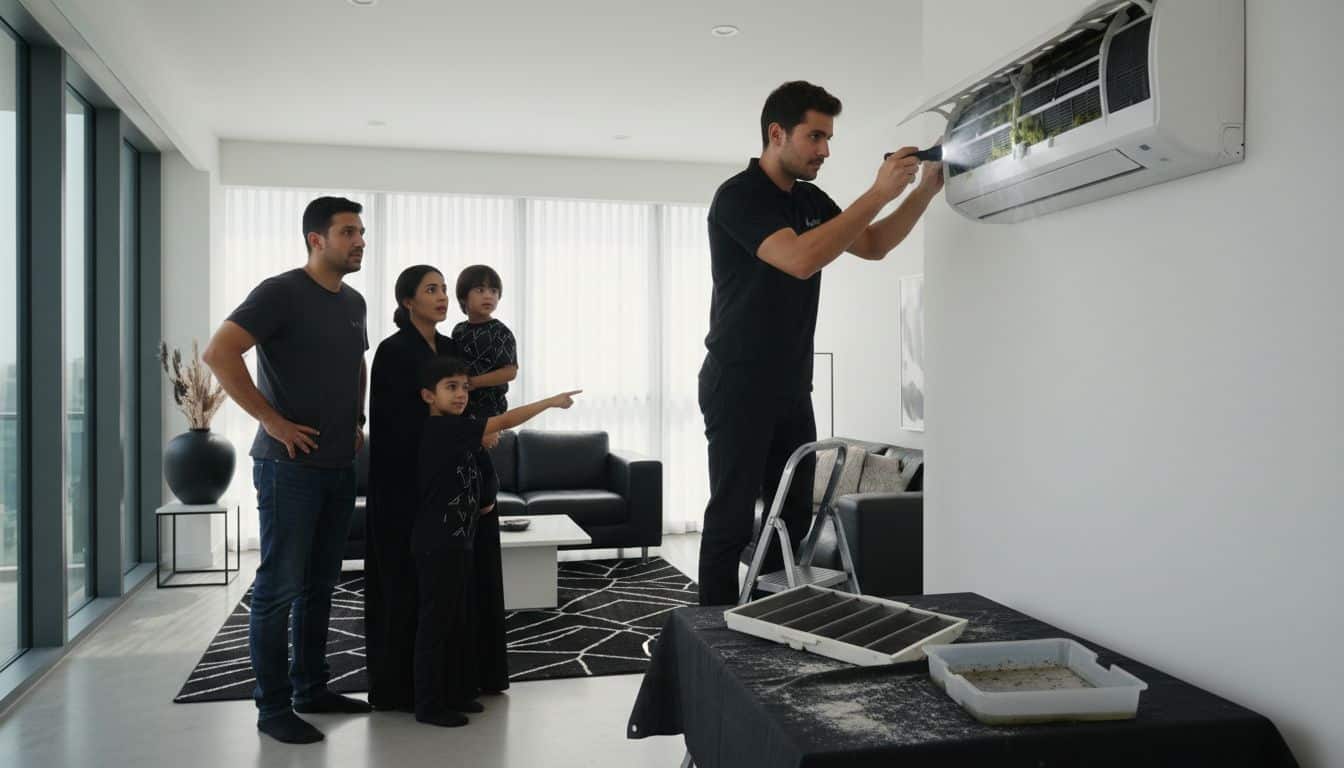
Central air-conditioning systems in UAE educational facilities play a pivotal role in determining how indoor air quality impacts education facility cleaning. These systems operate virtually year-round, circulating air through ducts, filters, and coils that can become reservoirs for dust, allergens, and microbial growth if not properly maintained. The continuous operation in Dubai’s demanding climate means AC systems require specialised attention to prevent them from becoming sources of contamination rather than solutions for comfort.
The design and maintenance of HVAC systems directly influence cleaning requirements throughout educational facilities. Poorly maintained systems distribute dust evenly across all surfaces, requiring more frequent cleaning and creating persistent challenges for maintenance staff. Conversely, well-maintained systems with proper filtration significantly reduce the particulate load entering occupied spaces, making cleaning more effective and sustainable. Understanding how indoor air quality impacts education facility cleaning means recognising that AC maintenance isn’t just an engineering concern—it’s a fundamental cleaning priority.
Regular AC duct cleaning, coil cleaning, and filter replacement form the foundation of effective air quality management in schools. These measures prevent the accumulation of dust and microbial growth within the system itself, reducing the constant reintroduction of contaminants into learning spaces. For UAE educational institutions, investing in comprehensive AC maintenance represents one of the most effective strategies for managing how indoor air quality impacts education facility cleaning requirements and outcomes.
How Indoor Air Quality Impacts Education Facility Cleaning – Cleaning Protocols That Directly Impact Indoor Air Quality
Effective cleaning protocols specifically designed to address how indoor air quality impacts education facility cleaning involve strategic approaches to timing, methodology, and product selection. In educational settings, where occupancy patterns are predictable, cleaning should be scheduled to minimise disruption to air quality during occupied hours. This often means performing dust-intensive tasks after hours and using cleaning methods that capture rather than redistribute particles.
Microfiber cleaning systems have revolutionised how indoor air quality impacts education facility cleaning by dramatically reducing the amount of dust and allergens stirred into the air during cleaning processes. Unlike traditional cotton cloths that often push particles around, microfiber materials capture and retain contaminants, preventing them from becoming airborne. Similarly, HEPA-filtered vacuum cleaners prevent the recirculation of fine particles that can affect respiratory health and settle on surfaces shortly after cleaning.
Cleaning product selection also plays a crucial role in managing how indoor air quality impacts education facility cleaning. Low-VOC (volatile organic compound) cleaning solutions reduce the chemical load in indoor air, creating healthier environments for students and staff. In UAE schools, where ventilation may be limited due to closed windows, selecting cleaning products that don’t contribute to indoor air pollution becomes particularly important for maintaining air quality standards alongside surface cleanliness.
Mold and Bacterial Control in Educational Environments
How indoor air quality impacts education facility cleaning becomes particularly evident when addressing mold and bacterial contamination in UAE’s humid climate. Educational facilities with high occupant densities generate significant moisture through respiration, perspiration, and activities, creating ideal conditions for microbial growth if not properly managed. AC systems, while providing cooling, can also contribute to moisture issues through condensation and drain pan problems if not properly maintained.
Mold growth in educational facilities presents unique challenges for cleaning protocols. Surface cleaning alone cannot address airborne spores that continue to recolonise cleaned areas. Effective management requires addressing moisture sources, improving ventilation, and using cleaning methods that capture rather than disperse spores. Understanding how indoor air quality impacts education facility cleaning means implementing antimicrobial cleaning protocols that break the cycle of contamination rather than providing temporary solutions.
In classrooms, libraries, and laboratories, regular disinfection of high-touch surfaces helps control bacterial spread, but these efforts must be balanced with air quality considerations. Overuse of certain disinfectants can contribute to indoor air pollution, while insufficient cleaning allows microbial contamination to affect occupant health. The optimal approach involves targeted disinfection where needed, combined with overall air quality management through proper ventilation and filtration to create environments that resist microbial proliferation.
Dust Management Strategies for UAE Educational Facilities
Desert dust presents one of the most significant challenges for understanding how indoor air quality impacts education facility cleaning in the UAE. This fine particulate matter infiltrates buildings continuously, settling on surfaces and circulating through HVAC systems. Effective dust management requires a multi-faceted approach that addresses both infiltration points and cleaning methodologies tailored to this specific environmental challenge.
Entry point management forms the first line of defence in controlling how indoor air quality impacts education facility cleaning. Sealing windows, doors, and other openings reduces the influx of desert dust, decreasing the cleaning burden throughout facilities. Additionally, maintaining positive air pressure within buildings helps prevent dust infiltration through openings, creating a barrier against the constant environmental challenge faced by UAE educational institutions.
Cleaning frequency and methodology must adapt to the relentless nature of desert dust. Daily dusting using damp cloths or electrostatic dusters captures particles rather than redistributing them into the air. Floor cleaning should utilise microfibre mops and HEPA-filtered vacuum systems that trap fine particles effectively. Understanding how indoor air quality impacts education facility cleaning means recognising that dust management isn’t about achieving dust-free environments—it’s about implementing continuous control measures that maintain acceptable air quality levels despite environmental challenges.
Health Impacts on Students and Staff
The relationship between how indoor air quality impacts education facility cleaning and occupant health represents a critical consideration for educational administrators. Poor indoor air quality contributes to various health issues that directly affect educational outcomes, including increased absenteeism, reduced cognitive function, and exacerbated respiratory conditions. In environments where air quality is properly managed through effective cleaning protocols, students and staff experience fewer health-related disruptions to learning and teaching.
Children are particularly vulnerable to indoor air pollutants due to their developing respiratory systems and higher breathing rates relative to their body size. Understanding how indoor air quality impacts education facility cleaning means recognising that cleaning protocols directly influence children’s health and their ability to concentrate and learn effectively. Dust mites, mold spores, and chemical residues from cleaning products can trigger asthma attacks and allergic reactions, creating barriers to participation in educational activities.
For teaching staff, prolonged exposure to poor indoor air quality can lead to respiratory issues, headaches, and fatigue—all of which affect teaching effectiveness and job satisfaction. Implementing cleaning protocols that prioritise air quality creates healthier working environments that support teacher wellbeing and retention. The comprehensive approach to how indoor air quality impacts education facility cleaning ultimately serves the core educational mission by creating environments that support rather than hinder health and learning.
Cost-Effective Air Quality Solutions for Schools
Implementing strategies that address how indoor air quality impacts education facility cleaning need not require excessive budgets. Many of the most effective approaches involve strategic investments that yield long-term savings through reduced cleaning frequency, improved HVAC efficiency, and decreased absenteeism among students and staff. UAE educational institutions can implement cost-effective measures that significantly improve air quality while managing operational expenses.
Preventive maintenance represents one of the most cost-effective approaches to managing how indoor air quality impacts education facility cleaning. Regular AC servicing, including coil cleaning and filter replacement, prevents the accumulation of contaminants that would otherwise distribute throughout facilities and require more intensive cleaning. Investing AED 2,000-5,000 annually in professional AC maintenance can save thousands more in increased cleaning costs and energy consumption resulting from clogged systems.
Staff training offers another high-return investment for addressing how indoor air quality impacts education facility cleaning. Teaching cleaning personnel proper techniques for dust capture, chemical dilution, and equipment use improves cleaning effectiveness while reducing product waste and airborne chemical exposure. Many improvements in how indoor air quality impacts education facility cleaning involve process optimisation rather than capital investment, making them accessible to educational institutions with varying budget constraints.
Implementation Framework for UAE Educational Institutions
Developing a structured approach to how indoor air quality impacts education facility cleaning requires a systematic framework that educational institutions can implement regardless of size or resources. This framework begins with assessment—understanding current air quality conditions through monitoring and identifying specific challenges unique to each facility. Regular air quality testing provides baseline data that informs cleaning protocols and helps measure improvement over time.
Policy development forms the next critical step in addressing how indoor air quality impacts education facility cleaning. Clear guidelines regarding cleaning frequencies, methods, and products ensure consistency across facilities and shifts. These policies should specifically address air quality considerations, including requirements for low-VOC products, HEPA filtration in cleaning equipment, and protocols for managing dust during cleaning operations.
Continuous monitoring and adjustment complete the implementation framework for how indoor air quality impacts education facility cleaning. Regular air quality assessments, combined with feedback from occupants and cleaning staff, help identify emerging issues and refine protocols accordingly. This adaptive approach recognises that environmental conditions and facility usage patterns change over time, requiring ongoing attention to how indoor air quality impacts education facility cleaning practices and outcomes.
Expert Tips for Maintaining Optimal Air Quality
Based on extensive experience with how indoor air quality impacts education facility cleaning in UAE schools, these practical tips can help institutions maintain healthier learning environments:
- Schedule AC duct cleaning professionally every 12-18 months to prevent dust and microbial accumulation within ventilation systems
- Use entrance matting systems that capture 80-90% of dirt and dust before it enters educational facilities
- Implement a filter replacement schedule for HVAC systems based on manufacturer recommendations and local conditions
- Train cleaning staff on proper dusting techniques that capture rather than redistribute particles
- Select cleaning products with low VOC emissions to minimise chemical impact on indoor air quality
- Establish clear protocols for responding to water incidents within 24-48 hours to prevent mold development
- Coordinate cleaning schedules with occupancy patterns to minimise exposure to disturbed particles
- Consider portable air purifiers with HEPA filtration for specialised areas like sick bays or allergy-sensitive classrooms
Frequently Asked Questions
How often should AC ducts be cleaned in UAE schools?
Educational facilities in the UAE should professional clean AC ducts every 12-18 months, with more frequent filter changes every 3-6 months depending on dust conditions and system usage.
What cleaning methods best improve indoor air quality in classrooms?
Microfiber cleaning systems, HEPA-filtered vacuums, and damp-dusting techniques significantly improve air quality by capturing rather than redistributing particles during cleaning processes.
Are chemical disinfectants harmful to indoor air quality in schools?
Some disinfectants can contribute to indoor air pollution if overused or improperly applied. Selecting low-VOC products and following manufacturer dilution guidelines minimises air quality impacts while maintaining effective disinfection.
How can schools measure the effectiveness of their air quality cleaning protocols?
Regular air quality monitoring through particle counters, CO2 sensors, and occasional professional testing provides data to assess cleaning effectiveness and identify areas for improvement.
What is the most cost-effective first step to improve air quality through cleaning?
Implementing proper entrance matting systems and training cleaning staff on dust-capture techniques provide immediate air quality improvements with minimal investment.
Conclusion
Understanding how indoor air quality impacts education facility cleaning represents an essential consideration for UAE educational institutions committed to providing healthy learning environments. The integration of air quality management into cleaning protocols creates synergistic benefits that extend beyond surface cleanliness to occupant health, academic performance, and operational efficiency. By adopting the strategies outlined in this guide—from proper AC maintenance to targeted cleaning methodologies—schools can significantly improve the indoor environments where children learn and grow.
The relationship between how indoor air quality impacts education facility cleaning continues to evolve as new technologies and research emerge. Educational institutions that prioritise this connection position themselves to provide healthier, more effective learning spaces that support their educational missions while managing operational costs through preventive approaches. Ultimately, recognising how indoor air quality impacts education facility cleaning transforms maintenance from a necessary expense into an investment in student success and wellbeing.


Leave a Reply