

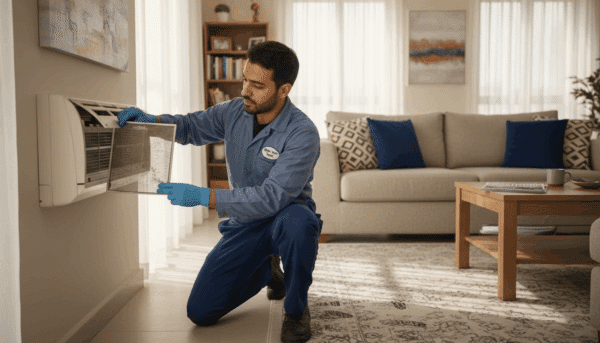
Why AC Units Collect Dust: Risks and Solutions
Why AC units collect dust is a common concern for villa owners in Dubai, where fine sand and airborne particles are part of everyday life. While a visible layer of dust may quickly appear on surfaces, what often goes unnoticed is the buildup happening inside AC units, which can have a greater impact on indoor air quality and system efficiency. Indoor and outdoor dust—including allergens, construction debris, and fine particulate matter—is drawn into the HVAC system during normal operation. Over time, these particles accumulate inside filters, ducts, and coils, quietly affecting both health and running costs. This guide explains how AC units trap and collect dust and shares practical strategies to minimize buildup and protect your investment.
Table of Contents
Contents
- 1 Table of Contents
- 2 Key Takeaways
- 3 How AC Units Trap and Accumulate Dust
- 4 Main Sources of Dust in HVAC Systems
- 5 System Design and Environmental Influences
- 6 Health Risks and Efficiency Losses from Dust
- 7 Prevention Strategies for Dust Accumulation
- 8 Protect Your Villa from Dust Build-Up with Expert AC Cleaning
- 9 Frequently Asked Questions
- 10 Recommended
- How AC Units Trap and Accumulate Dust
- Main Sources of Dust in HVAC Systems
- System Design and Environmental Influences
- Health Risks and Efficiency Losses from Dust
- Prevention Strategies for Dust Accumulation
Key Takeaways
| Point | Details |
|---|---|
| Dust Accumulation Sources | Dust enters AC systems from outdoor particles, indoor activities, and construction materials, making regular maintenance essential. |
| Health Risks | Accumulated dust in HVAC systems exacerbates respiratory issues and allergies, particularly impacting vulnerable populations. |
| Efficiency Loss | Dust reduces cooling efficiency by 15-20%, leading to increased energy costs during peak usage periods. |
| Preventative Measures | Utilizing high-efficiency filters, regular inspections, and professional cleanings can significantly reduce dust buildup. |
How AC Units Trap and Accumulate Dust
Your AC system is designed to circulate cool air throughout your villa, but it’s also pulling in particles from every corner of your home. Dust, pollen, pet dander, and other airborne contaminants enter the system constantly. The problem? These particles don’t just pass through and exit; many of them settle and accumulate inside the unit itself.
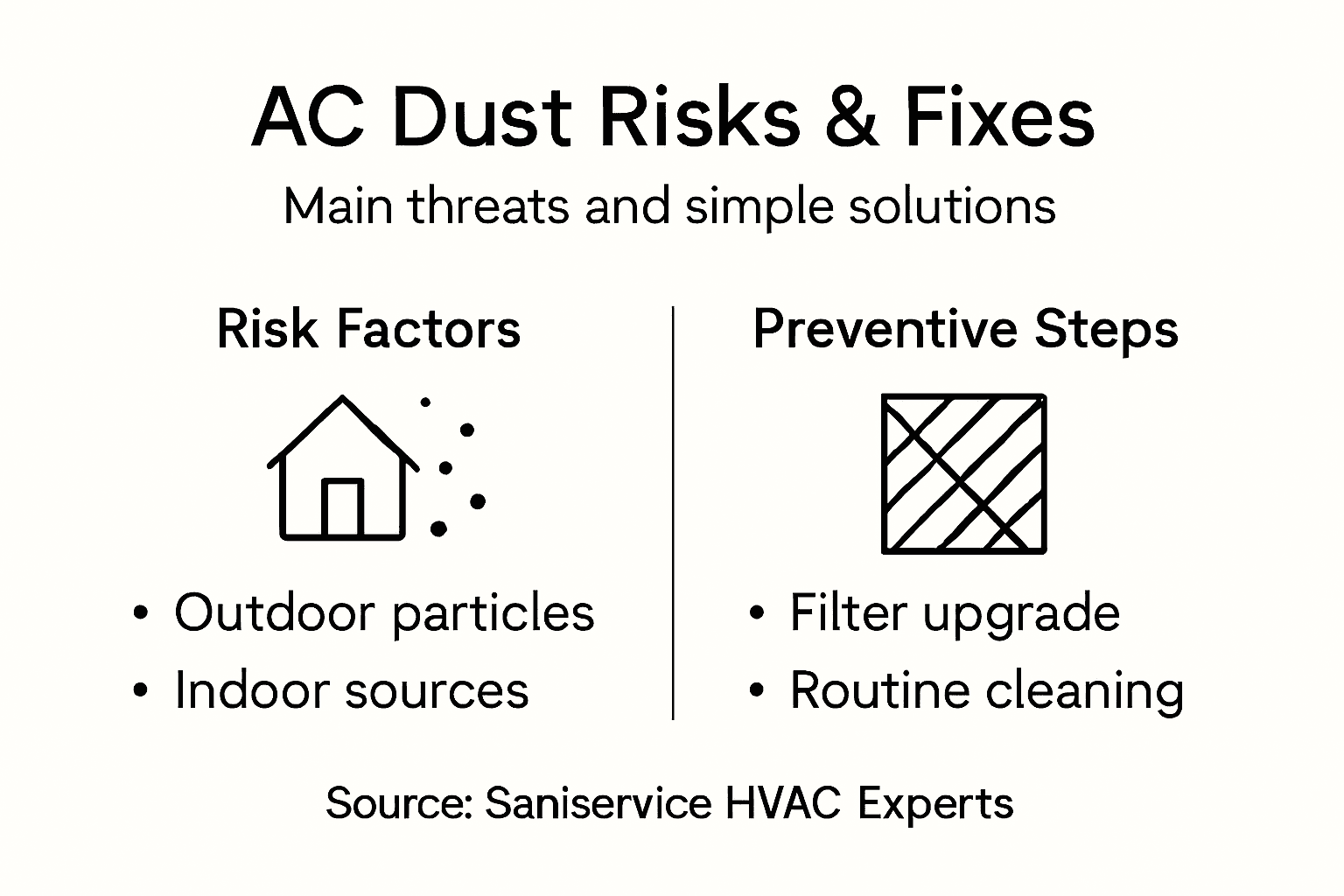
The process starts with your air filter. When you draw air through your AC unit, the filter catches large dust particles, but this is where the system’s limitations become clear. Fine particles, including those below 2.5 micrometers, can bypass standard filters entirely. Particulate matter accumulating on coils and ducts creates buildup that reduces efficiency and air quality over time. These microscopic particles settle on cooling coils, blend with condensation moisture, and form stubborn deposits that ordinary vacuuming cannot reach.
Your AC ducts act like highways for dust particles, but they also function as storage containers. As air moves through the ductwork, some particles lose momentum and deposit themselves on interior surfaces. Over months and years, these layers accumulate, creating a visible, gray residue that you might notice when you peer into a vent. In Dubai’s climate, where sand and construction dust are inevitable outdoor contaminants, this process accelerates significantly.
The coils inside your unit face perhaps the biggest challenge. These aluminum fins are designed to maximize surface area for heat exchange, which inadvertently maximizes dust accumulation. Moisture from the cooling process attracts and clings to dust particles, creating ideal conditions for biofilm development. HVAC design and filtration maintenance directly influence how much dust escapes capture and settles within the system.
Drip trays and drainage systems present another accumulation point. Dust mixes with condensation water, creating sludge that blocks drainage and fosters microbial growth. This combination of dust and moisture becomes far more problematic than dry dust alone.
Pro tip: Schedule professional AC duct cleaning annually in Dubai’s dusty environment; this prevents the heavy accumulation that DIY methods cannot address and maintains the hospital-grade cleanliness that SaniAC by Saniservice delivers using science-backed disinfection.
Main Sources of Dust in HVAC Systems
Dust does not magically appear inside your AC unit. It comes from somewhere, and understanding these sources helps explain why your system accumulates so much buildup despite having air filters. In Dubai’s unique environment, multiple dust sources converge, making regular maintenance non-negotiable for villa owners.
Outdoor dust represents your first major source. When your AC draws in fresh air through external intakes, it pulls in sand, soil particles, and construction dust that are omnipresent in the UAE. Dust from construction and roadways infiltrates HVAC systems constantly, particularly during the cooler months when homeowners increase ventilation. Pollen and spores add another layer of outdoor contamination that filters alone cannot fully prevent.
Indoor sources are equally significant. Daily activities in your home generate surprising amounts of dust. Cooking releases fine particles that float through your ducts. Movement and foot traffic stir up dust from furniture, carpets, and textiles. Pet dander circulates continuously if you own cats or dogs. These indoor particles get sucked into your AC return vents and begin their journey through the system where they accumulate on filters and within ductwork.
Your home’s construction materials also contribute. Drywall dust from renovations, fiberglass fragments from insulation, and paint particles settle in ducts over time. Moisture in your system attracts and retains these particles, allowing them to stick rather than pass through.
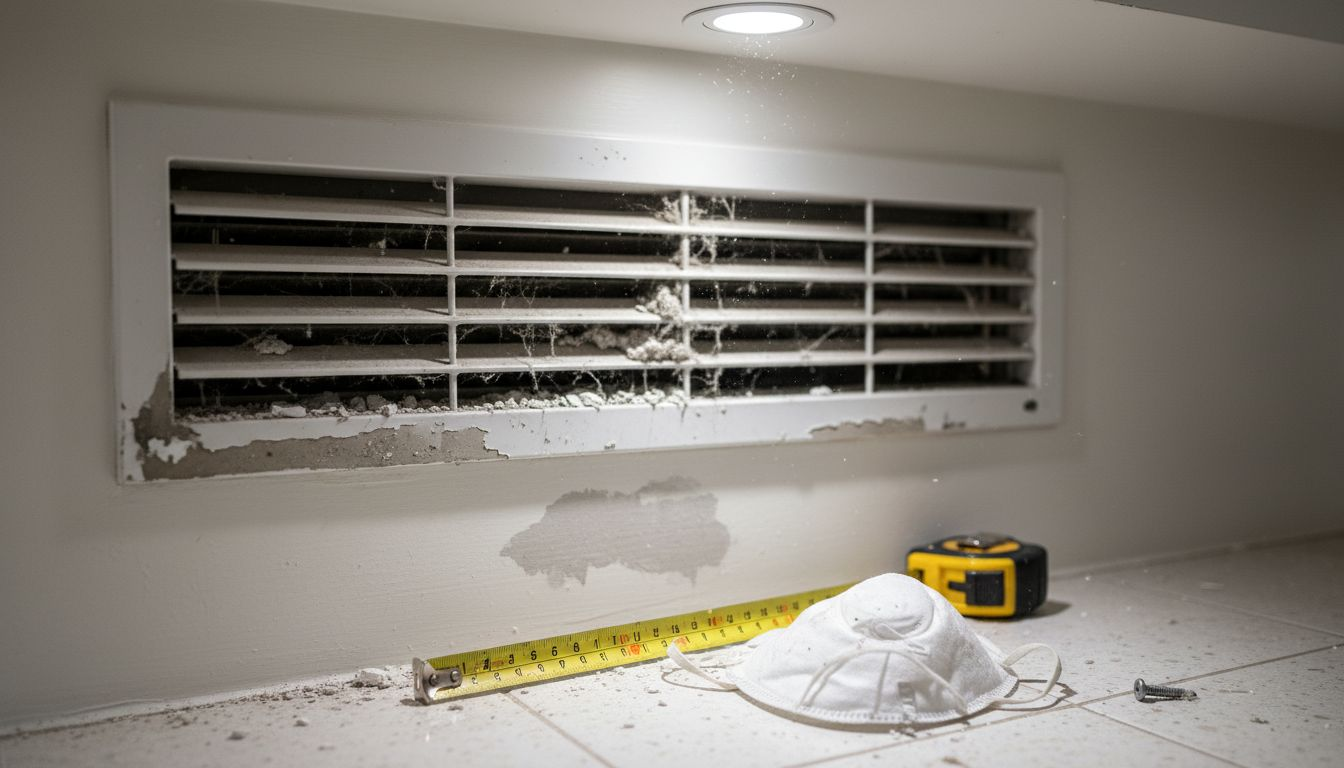
The most dangerous aspect? These dust sources often contain more than just dirt. Dust may contain allergens and heavy metals that pose health risks when recirculated through your home. When filtration fails or maintenance lags, your family breathes air that has cycled through accumulations of these contaminants.
Here is a summary of key dust sources and where they accumulate in your AC system:
| Dust Source | Main Entry Point | Typical Accumulation Sites | Unique Risk in Dubai |
|---|---|---|---|
| Outdoor particles | External air intake | Coils, ducts, filters | High sand and construction dust |
| Indoor activities | Return vents | Ductwork, filters | Increased by frequent foot traffic |
| Construction debris | Duct leaks, intake | Ducts, coils | Renovation dust is common |
| Pet dander | Return vents | Filters, coil surfaces | Persistent in multi-pet homes |
Pro tip: Identify your specific dust sources by checking your return vents monthly; if you notice gray buildup or smell musty odors, professional duct cleaning becomes urgent to prevent these sources from circulating back into your living spaces.
System Design and Environmental Influences
Not all AC systems are created equal when it comes to dust accumulation. The way your unit is designed, where your intake sits, and how air flows through your home all determine whether dust settles harmlessly or circulates constantly. Dubai’s harsh climate adds another layer of complexity that most standard designs don’t fully address.
Your AC intake location matters more than you might think. If the external vent sits near a construction site, busy road, or sandy area, your system works overtime filtering contaminants. Outdoor air intakes located away from contaminant sources dramatically reduce the dust entering your ducts. Many villas in Dubai have intakes positioned poorly, facing prevailing wind patterns that carry sand and dust directly into the system.
Filter efficiency determines what actually gets trapped versus what passes through. Standard fiberglass filters capture large particles but allow fine dust to slip past. Higher-efficiency filters cost more but prevent the microscopic particles that cause the worst buildup. However, even premium filters need regular replacement to maintain effectiveness. System design must account for appropriate ventilation rates that balance fresh air with filtration capacity.
Environmental conditions in Dubai create unique challenges. Climate, dust storms, and high soil erosion increase particulate loading that your HVAC system must handle. During shamal season, when dust storms rage for days, even well-designed systems struggle. Your ductwork may not have been sized to accommodate the extra filtration load during peak dust months.
Air distribution design affects how dust settles. Poorly balanced ductwork creates dead zones where air moves slowly and dust accumulates heavily. Properly designed systems maintain consistent airflow that keeps particles suspended and moving toward filters rather than settling on surfaces.
Pro tip: Have an HVAC professional evaluate your intake location and ductwork design; repositioning an intake away from dust sources or upgrading to higher-efficiency filtration can cut dust accumulation by up to 40 percent.
Health Risks and Efficiency Losses from Dust
Dust accumulation in your AC system creates a double problem: it harms your health while simultaneously draining your wallet through wasted energy. These two consequences feed each other, making regular maintenance not just a comfort issue but a serious necessity for villa owners in Dubai.
The respiratory impact hits hardest. When your AC circulates dusty air, you and your family breathe particles that lodge deep in your lungs. Dust particles smaller than 10 micrometers penetrate deep into lungs, causing inflammation and triggering respiratory diseases. People with asthma, allergies, or existing heart conditions face particular danger. Children and elderly residents show even greater vulnerability to dust related air quality problems.
Allergies intensify dramatically. Dust carries pollen, mold spores, and pet dander that accumulate in your ducts. Each time your AC cycles, these allergens circulate through every room. Dubai’s dry climate keeps these particles airborne longer, extending exposure time. Residents report increased allergy symptoms, congestion, and unexplained coughing during peak dust season.
The efficiency problem operates silently in the background. Dust coating your cooling coils acts as insulation, preventing proper heat exchange. Your compressor works harder to achieve the same cooling effect, consuming significantly more electricity. A heavily dust-laden system can reduce efficiency by 15 to 20 percent, translating to substantial monthly electricity bills. In summer months when your AC runs continuously, this waste becomes substantial.
Airflow obstruction compounds the problem. Dust buildup in ducts and filters restricts air movement through your system. Your blower motor struggles against this resistance, consuming more power while delivering less cooling. Dust buildup in HVAC systems can impair function and health safety by reducing air quality and increasing respiratory disease risks.
Pro tip: Schedule professional AC cleaning before Dubai’s summer season peaks; cleaning removes dust that reduces efficiency and improves indoor air quality, potentially lowering your cooling costs by 15 to 20 percent while protecting your family’s health.
Prevention Strategies for Dust Accumulation
Prevention beats cure. Stopping dust from accumulating in the first place costs far less than dealing with years of buildup and its consequences. Smart villa owners in Dubai implement layered prevention strategies that address dust at multiple points in the system.
Filter quality forms your first defense line. Standard fiberglass filters trap large particles but allow fine dust to pass through. Using high-efficiency filters and routine replacements dramatically reduces dust entering your ducts and settling on coils. Upgrade to MERV 11 or MERV 13 rated filters that capture smaller particles without restricting airflow excessively. Replace filters every 30 to 60 days during dusty season and every 90 days during cooler months.
This table compares standard and high-efficiency AC filter features and their impact on indoor air quality:
| Filter Type | Particle Capture Effectiveness | Maintenance Frequency | Impact on Air Quality |
|---|---|---|---|
| Standard Fiberglass | Catches large dust only | Every 60-90 days | Allows fine dust through |
| High-Efficiency (MERV 11/13) | Traps fine and ultrafine particles | Every 30-60 days | Significantly reduces allergens |
Regular maintenance prevents catastrophic buildup. Monthly visual inspections of your return vents reveal dust accumulation before it becomes severe. Check intake vents for debris and clear away any visible dust. These simple checks cost nothing but prevent expensive problems later.
Intake location strategy protects your system from the source. Controlling dust at sources means positioning outdoor intakes away from construction sites, busy roads, and sandy areas. If your intake faces a dust source, adding a pre-filter screen or enclosure can reduce contamination by 30 to 40 percent.
Sealing leaks prevents unfiltered air from entering your ducts. Small cracks and disconnections allow dust laden air to bypass your filter system entirely. Professional ductwork inspections identify these leaks that DIY checks miss. Many villa owners discover their ducts develop leaks from vibration and age, allowing contaminated air direct entry into living spaces.
Moisture control prevents dust from sticking. Dry dust passes through more easily than particles clinging to moist surfaces. Ensure your drainage trays empty properly and condensation doesn’t accumulate. Regular professional coil cleaning removes the sticky biofilm layer that traps dust.
Pro tip: Combine monthly filter checks with professional AC cleaning twice yearly in Dubai; this dual approach prevents the dust accumulation that costs money in wasted energy and poses health risks to your family.
Protect Your Villa from Dust Build-Up with Expert AC Cleaning
If your AC unit in Dubai struggles with persistent dust accumulation, reducing efficiency and harming your indoor air quality, you are not alone. The article highlights how dust embeds deeply within coils, ducts, and drainage trays, creating health risks and increased energy costs. You deserve a solution that goes beyond filter replacement and surface vacuuming to target these stubborn contaminants with scientific precision.
Saniservice is Dubai’s trusted leader in professional air conditioning cleaning and disinfection. Our NADCA-certified technicians perform thorough dismantling and deep cleaning of every AC component. Using hospital-grade, chemical-free biosanitisers backed by our in-house microbiology lab, we eliminate mold, bacteria, allergens, and the embedded dust particles that cheap methods leave behind. Experience improved air quality, prolonged system life, and enhanced energy efficiency for your home or villa.
Take control of your indoor environment today. Explore our proven solutions for maintaining clean and dust-free HVAC systems on our AC Cleaning & Maintenance – Saniservice AC Cleaning page and see how we have transformed homes in our compelling Case Studies – Saniservice AC Cleaning. Don’t wait for dust to compromise your health and comfort. Visit https://saniacservice.com now and book your professional AC cleaning service to safeguard your family and investment.
Frequently Asked Questions
Why do AC units accumulate dust?
AC units accumulate dust because they continuously draw in air from both indoor and outdoor spaces, pulling in particles like dust, pollen, and pet dander. These particles can settle inside the unit, especially in the coils and ducts, leading to reduced efficiency and air quality.
What are the health risks associated with dust in AC systems?
Dust accumulation in AC systems can lead to various health issues, particularly respiratory problems. Small dust particles can penetrate deep into the lungs, triggering allergies, asthma, and other respiratory diseases, particularly in vulnerable populations like children and the elderly.
How can I reduce dust accumulation in my AC unit?
To reduce dust accumulation, use high-efficiency air filters, conduct regular maintenance, ensuring your filters are replaced every 30 to 60 days, and perform a visual inspection of vents monthly. Additionally, sealing ductwork leaks and optimizing the intake location can also help.
How often should I clean my AC unit to maintain good air quality?
It is recommended to schedule professional AC cleaning at least twice a year to maintain good air quality. You should also check and replace air filters every 30 to 60 days, especially during dusty seasons, to prevent significant dust buildup.
Recommended
Related articles



Leave a Reply