AC Hygiene And Health: Protecting Indoor Well-Being
Role of ac hygiene in health on every property manager in Dubai knows the relentless heat can quickly turn indoor comfort into a challenge. As air conditioning systems work nonstop through the United Arab Emirates’ scorching seasons, overlooked maintenance can invite serious risks inside your luxury villas. Research shows that improper AC hygiene fuels microbial contamination, worsening allergies, respiratory problems, and the spread of disease. Discover how targeted cleaning strategies and smarter system care protect both air quality and the health of your residents.
Table of Contents
Contents
- 1 Table of Contents
- 2 Key Takeaways
- 3 Understanding AC Hygiene and Indoor Health
- 4 Types of AC Contaminants and Associated Risks
- 5 How Clean AC Systems Improve Air Quality
- 6 Key Responsibilities for Property Owners
- 7 Pitfalls of Poor AC Maintenance and Prevention
- 8 Take Control of Your Indoor Air Quality with Expert AC Hygiene Solutions
- 9 Frequently Asked Questions
- 10 Recommended
- Understanding AC Hygiene And Indoor Health
- Types Of AC Contaminants And Associated Risks
- How Clean AC Systems Improve Air Quality
- Key Responsibilities For Property Owners
- Pitfalls Of Poor AC Maintenance And Prevention
Key Takeaways
| Point | Details |
|---|---|
| Importance of AC Hygiene | Proper maintenance of air conditioning systems is crucial for preventing microbial growth that can lead to respiratory issues and allergies. |
| Health Risks of Contaminants | Biological, chemical, and particulate contaminants in AC systems pose significant health risks, especially in humid environments like the United Arab Emirates. |
| Preventative Maintenance Strategies | Regular professional cleaning and filter replacement are essential actions to enhance indoor air quality and system efficiency. |
| Responsibilities of Property Owners | Property owners must implement a proactive maintenance plan for air conditioning systems to ensure a healthy living environment and avoid major health risks. |
Understanding AC Hygiene and Indoor Health
Indoor air quality represents a critical yet often overlooked aspect of residential health, particularly in hot climate regions like the United Arab Emirates. Air conditioning systems play a pivotal role in maintaining comfortable living environments, but they can simultaneously become breeding grounds for harmful microorganisms when not properly maintained.
Recent scientific research reveals significant health implications associated with neglected AC systems. Microbial contamination risks in HVAC systems demonstrate how poorly maintained air conditioning can contribute to respiratory issues, allergies, and potential disease transmission. In Dubai’s unique environmental context, where temperatures frequently exceed 40°C, AC systems operate continuously, creating ideal conditions for microbial growth.
Key factors contributing to AC-related health risks include:
- Accumulated moisture in drainage trays
- Dirty or clogged air filters
- Presence of organic debris within ductwork
- Inconsistent cleaning and maintenance practices
- Limited understanding of proper AC hygiene protocols
The environmental conditions in the UAE amplify these challenges. High humidity combined with consistently warm temperatures creates an optimal environment for bacteria, fungi, and viruses to proliferate within air conditioning systems. Air conditioner usage impact on indoor air quality indicates that occupant behavior and maintenance practices significantly influence potential health risks.
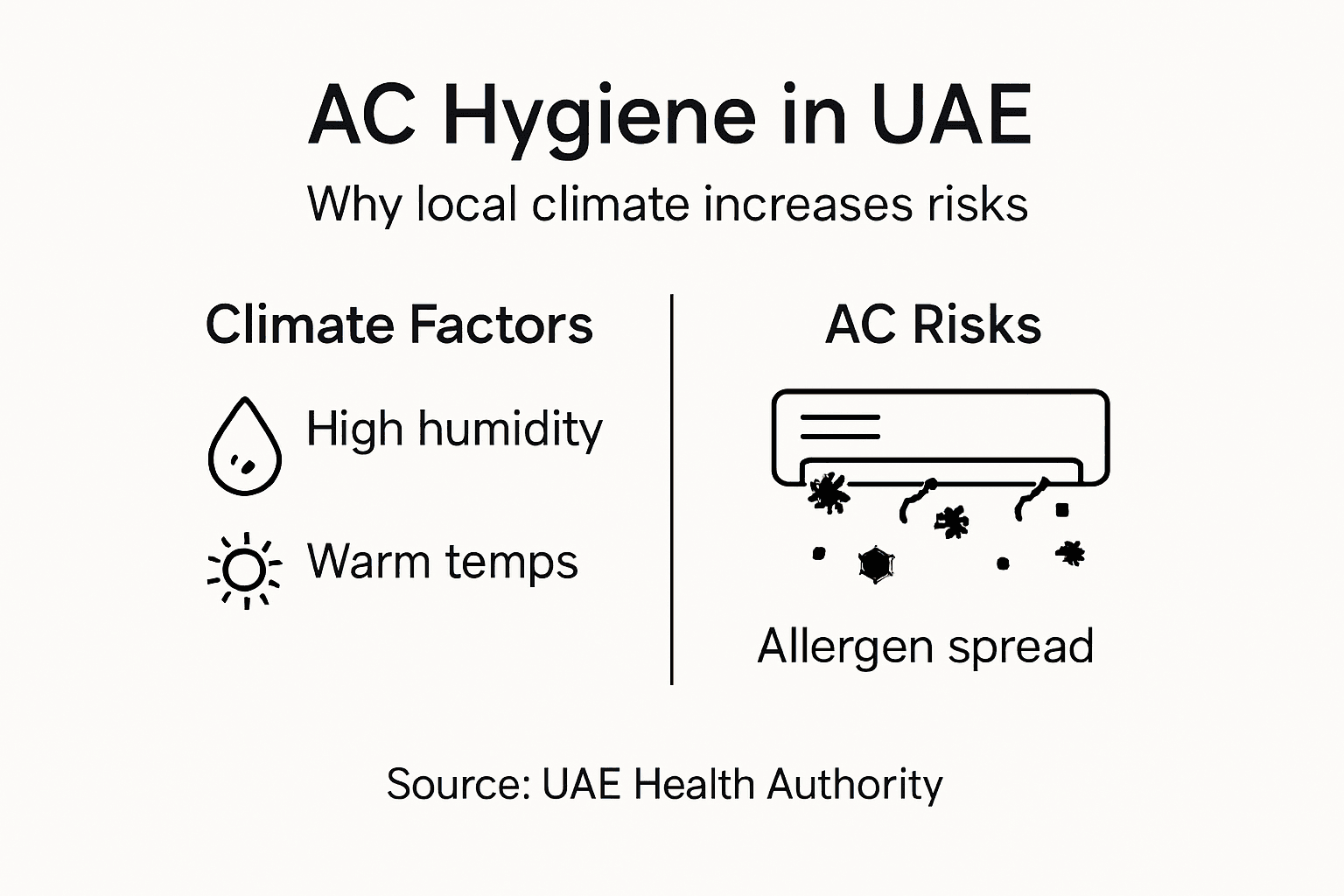
Preventative strategies become crucial in mitigating these risks. Regular professional cleaning, comprehensive filter replacement, and systematic moisture management can dramatically reduce microbial contamination and protect indoor air quality.
Compare preventative actions for AC hygiene and their benefits:
| Preventative Action | Frequency | Benefit to Indoor Health | Additional Advantage |
|---|---|---|---|
| Professional Cleaning | Twice annually | Reduces microbial contamination | Extends AC system lifespan |
| Filter Replacement | Every 3-6 months | Improves air filtration | Lowers energy consumption |
| Moisture Management | Ongoing | Prevents mold and bacteria | Minimizes odor and leaks |
Pro tip: Schedule professional AC hygiene assessments at least twice annually to comprehensively evaluate and address potential microbial risks in your indoor environment.
Types of AC Contaminants and Associated Risks
Air conditioning systems in hot climates like Dubai can harbor a complex ecosystem of harmful contaminants that pose significant health risks to occupants. Indoor air pollutant varieties reveal a diverse range of microbiological and chemical agents that can proliferate within HVAC systems, threatening respiratory and overall human health.
Biological contaminants represent a primary concern in AC systems, encompassing multiple dangerous microorganisms:
- Bacteria
- Fungi and mold spores
- Viruses
- Dust mites
- Microscopic parasites
These biological agents thrive in the warm, moisture-rich environments typically found within air conditioning systems, particularly in regions with high humidity like the United Arab Emirates. Global indoor air quality challenges demonstrate how these contaminants can rapidly multiply and distribute throughout indoor spaces, creating potential health hazards.
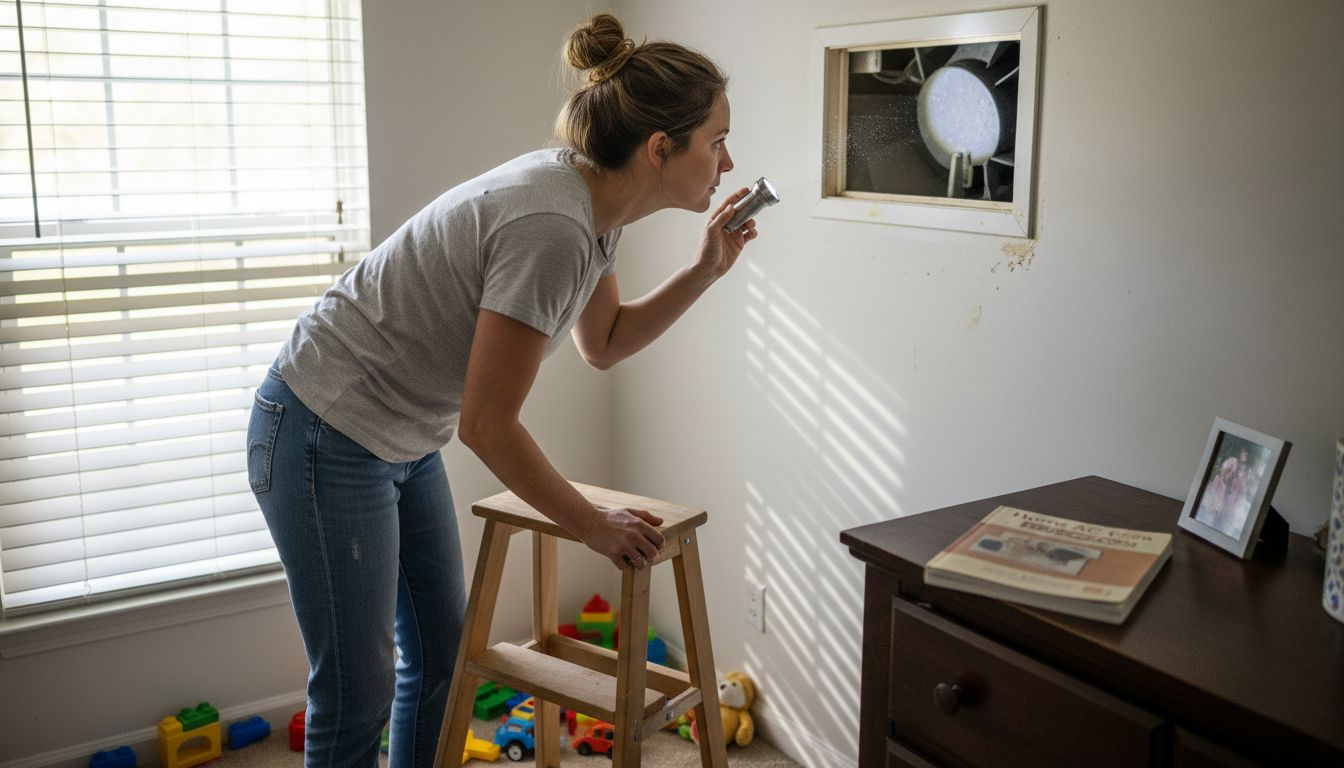
Chemical pollutants also pose substantial risks within AC systems. These include volatile organic compounds (VOCs), which can originate from building materials, cleaning products, and outdoor pollution that infiltrates indoor environments. The accumulation of these chemical agents can lead to various health issues, ranging from minor respiratory irritations to more serious long-term conditions.
Particulate matter represents another critical category of AC contaminants. These microscopic solid and liquid particles suspended in the air can include dust, pollen, smoke residues, and industrial emissions. In Dubai’s urban environment, these particles can easily enter and circulate through air conditioning systems, potentially causing significant respiratory and cardiovascular complications.
Here’s a concise summary of major AC system contaminants and their effects:
| Contaminant Type | Source in AC Systems | Potential Health Impact | Example Scenario |
|---|---|---|---|
| Biological Agents | Moisture-rich coils, filters | Respiratory infections, allergies | Mold growth from condensation |
| Chemical Pollutants | Building material, cleaning products | Headaches, chronic irritation | VOCs from paint in airflow |
| Particulate Matter | Urban dust, pollen, smoke | Asthma, cardiovascular risks | Fine dust entering from outdoors |
Pro tip: Invest in high-quality HEPA filtration systems and schedule professional AC cleaning at least twice annually to dramatically reduce contaminant risks in your indoor environment.
How Clean AC Systems Improve Air Quality
Clean air conditioning systems play a critical role in maintaining optimal indoor environmental health, particularly in challenging climates like Dubai. HVAC air quality strategies demonstrate how systematic cleaning and maintenance can dramatically transform indoor air quality and reduce potential health risks.
The primary mechanisms by which clean AC systems enhance air quality include:
- Efficient particle filtration
- Reduction of microbial growth
- Elimination of accumulated dust and debris
- Improved air circulation
- Enhanced overall system performance
Professional AC cleaning addresses multiple dimensions of indoor air contamination. Comprehensive cleaning involves not just surface maintenance, but deep sanitization of critical system components such as filters, coils, and ductwork. Innovative HVAC ventilation designs emphasize how advanced filtration techniques can significantly reduce airborne pollutants and improve overall air quality.
Thermal comfort is another crucial benefit of maintaining clean AC systems. When air conditioning units operate without accumulated contaminants, they can more efficiently regulate temperature and humidity, creating a healthier indoor environment. This is particularly important in the United Arab Emirates, where extreme external temperatures make indoor air quality management critical for resident well-being.
Clean air conditioning systems are not just about temperature control—they are a fundamental component of preventative health management.
Pro tip: Schedule professional deep cleaning of your AC system every six months, focusing on comprehensive sanitization of all internal components to maximize air quality and system efficiency.
Key Responsibilities for Property Owners
Property owners in Dubai bear substantial responsibility for maintaining safe and healthy indoor environments, particularly through strategic air conditioning system management. Indoor air quality maintenance strategies highlight the critical role owners play in protecting occupant health through proactive and systematic approaches.
Key responsibilities for property owners include:
- Regular professional AC system inspections
- Comprehensive filter replacement and cleaning
- Timely repair of system damages
- Implementing advanced ventilation techniques
- Monitoring indoor air quality metrics
- Ensuring proper drainage and moisture control
Preventative maintenance represents the cornerstone of responsible property management. HVAC system health guidelines emphasize that consistent, professional interventions can dramatically reduce potential health risks associated with poorly maintained air conditioning systems.
In the unique climate of the United Arab Emirates, where extreme temperatures and high humidity create challenging environmental conditions, property owners must adopt a comprehensive approach to AC hygiene. This involves not just reactive repairs, but a proactive, strategic management plan that anticipates potential issues before they become significant problems.
Effective property management transcends mere maintenance—it is a commitment to creating safe, healthy living environments.
Pro tip: Develop a standardized quarterly AC maintenance schedule with a certified professional service to ensure systematic, comprehensive system health and performance.
Pitfalls of Poor AC Maintenance and Prevention
Neglecting air conditioning maintenance can lead to severe consequences for indoor air quality and occupant health, particularly in challenging environments like Dubai. HVAC system maintenance risks reveal multiple critical pitfalls that can emerge from inconsistent or inadequate system care.
The primary risks associated with poor AC maintenance include:
- Rapid microbial contamination growth
- Significant reduction in system efficiency
- Increased energy consumption
- Potential respiratory health complications
- Higher long-term repair and replacement costs
- Compromised indoor air quality
Biofilm formation represents one of the most insidious dangers in poorly maintained air conditioning systems. Indoor air pollution consequences demonstrate how accumulated dust, moisture, and organic debris can create ideal environments for harmful microorganism proliferation, leading to potential health risks for occupants.
The unique climate of the United Arab Emirates exponentially amplifies these maintenance challenges. Extreme temperatures and high humidity create perfect conditions for rapid microbial growth and system degradation, making regular professional intervention not just recommended, but essential for maintaining safe indoor environments.
Preventative maintenance is not an expense—it’s an investment in health, comfort, and long-term system performance.
Pro tip: Implement a comprehensive digital maintenance tracking system that schedules regular inspections, documents system health, and alerts you to potential issues before they become critical problems.
Take Control of Your Indoor Air Quality with Expert AC Hygiene Solutions
Maintaining optimal air conditioner hygiene is essential to protect your indoor well-being against microbial contamination, allergens, and pollutants—especially in the harsh climate of the United Arab Emirates. This article highlights critical risks like bacteria growth and mold buildup in neglected AC systems that can compromise your health and comfort. Tackling these challenges requires precise scientific approaches and thorough maintenance that go beyond basic cleaning.
Saniservice stands as Dubai’s trusted leader in professional AC cleaning and disinfection, blending advanced microbiological science with Swiss-quality service. Our NADCA-certified technicians perform deep cleaning of every AC component, using hospital-grade, chemical-free biosanitisers to remove mold, bacteria, and allergens for safer indoor air. Discover how we apply evidence-based practices at Saniservice to extend your system’s lifespan while reducing energy consumption. Learn more about our comprehensive offerings by visiting our AC Cleaning & Maintenance page.
Don’t leave your indoor health to chance. Visit Saniservice today to schedule your professional AC hygiene assessment and cleaning. Explore real-life success stories in our Case Studies – Saniservice AC Cleaning to see how we have transformed indoor environments across Dubai. Take the step now for cleaner air, improved comfort, and healthier living spaces.
Frequently Asked Questions
What are the main health risks associated with poor AC hygiene?
Neglected air conditioning systems can lead to respiratory issues, allergies, and even disease transmission due to the growth of harmful microorganisms such as bacteria, fungi, and viruses.
How often should I have my AC system cleaned for optimal health?
It is recommended to schedule professional AC system cleaning at least twice a year to reduce microbial contamination and ensure optimal indoor air quality.
What are some effective strategies for improving AC hygiene?
Regular maintenance such as professional cleaning, replacing air filters every 3-6 months, and managing moisture levels can significantly enhance AC hygiene and indoor air quality.
How can clean AC systems improve indoor air quality?
Clean air conditioning systems improve air quality by efficiently filtering particles, reducing microbial growth, eliminating accumulated dust, and enhancing overall air circulation, leading to a healthier indoor environment.