


Airborne Allergens – How They Impact Indoor Air
Dust on your AC vents, a sneeze as the air switches on, and itchy eyes—these are signs many Dubai homeowners face daily. In a city where outdoor pollen, persistent mold, and dust mites thrive in climate-controlled spaces, indoor air can quickly become a hidden source of discomfort. Understanding airborne allergens and separating fact from fiction allows you to identify harmful particles and build a healthier, more comfortable home environment for every resident.
Table of Contents
Contents
- 1 Table of Contents
- 2 Key Takeaways
- 3 What Are Airborne Allergens and Myths
- 4 Common Types and Major Sources Explained
- 5 How Airborne Allergens Affect Health
- 6 Managing Risks in Homes and Buildings
- 7 Effective Strategies to Reduce Exposure
- 8 Take Control of Airborne Allergens for Healthier Indoor Air
- 9 Frequently Asked Questions
- 10 Recommended
- What Are Airborne Allergens and Myths
- Common Types and Major Sources Explained
- How Airborne Allergens Affect Health
- Managing Risks in Homes and Buildings
- Effective Strategies to Reduce Exposure
Key Takeaways
| Point | Details |
|---|---|
| Understanding Airborne Allergens | Airborne allergens like pollen, dust mites, and mold trigger immune responses in sensitive individuals, leading to various health issues in Dubai’s indoor environments. |
| Climate’s Role in Allergens | Dubai’s year-round warm climate promotes high allergen levels and necessitates continuous air filtration and AC maintenance to protect health. |
| Debunking Myths | Common myths, such as the belief that air fresheners eliminate allergens or that allergens are confined to bedrooms, mislead individuals about effective allergen management. |
| Proactive Prevention | Regular cleaning, moisture control, and professional AC disinfecting are essential practical steps to minimize allergen exposure and improve indoor air quality. |
What Are Airborne Allergens and Myths
Airborne allergens are invisible particles suspended in the air that trigger immune system overreactions in susceptible individuals. These substances—pollens, fungal spores, dust mites, and animal dander—are present in virtually every indoor environment in Dubai, especially during high-pollen seasons.
Your body mistakes these harmless particles for threats, launching an allergic response. This affects your airways, skin, and mucous membranes, causing discomfort that ranges from mild sneezing to severe asthma attacks.
Common Airborne Allergens Found Indoors
Airborne allergens in Dubai homes and offices include:
- Pollen from outdoor plants, flowers, and trees that enter through windows and doors
- Dust mite feces accumulating in bedding, carpets, and upholstered furniture
- Pet dander (skin flakes, fur, and saliva) from cats, dogs, and birds
- Mold spores thriving in humid AC systems and bathrooms
- Cockroach allergens (feces and body parts) in darker indoor spaces
- Fabric fibers shed from curtains, clothing, and furniture
Each of these particles floats through your air, getting inhaled with every breath. In Dubai’s climate-controlled environments, they accumulate quickly without proper ventilation and regular AC maintenance.
Here’s a quick comparison of major indoor airborne allergens and their health impacts:
| Allergen Type | Typical Source | Main Health Effects |
|---|---|---|
| Pollen | AC systems, windows | Sneezing, sinus congestion |
| Dust Mites | Bedding, carpets | Asthma, skin irritation |
| Mold Spores | Humid areas, AC coils | Coughing, respiratory distress |
| Pet Dander | Fur, saliva, vents | Wheezing, eye irritation |
| Cockroach Allergens | Kitchen corners, vents | Nasal inflammation, allergy risk |
How Climate Affects Pollen Levels
Pollen concentrations increase with seasonal changes and climate patterns, impacting millions of residents. Dubai’s warm temperatures create year-round breeding grounds for mold and dust mites, unlike colder regions with seasonal relief.
Climate change is extending allergy seasons globally, but Dubai’s consistent heat means allergen exposure remains high throughout the year. This continuous exposure makes indoor air filtration and AC cleaning critical for household health.
Common Myths About Airborne Allergens
Myth #1: “Allergens only affect people with allergies.”
Reality: Everyone breathes allergens daily. Those without diagnosed allergies simply have immune systems that don’t overreact. However, prolonged exposure or weakened immunity can trigger new allergies at any age.
Myth #2: “Opening windows brings fresh air that clears allergens.”
Reality: In Dubai, opening windows actually invites more outdoor pollen and dust inside. Sealed windows with proper filtration work far better during high-pollen seasons or dusty weather.
Myth #3: “Air fresheners eliminate allergens.”
Reality: Air fresheners mask odors but do nothing to remove particles. They often add volatile organic compounds (VOCs) that irritate airways further. HEPA filters and proper AC disinfection work; fragrances do not.
Myth #4: “Allergens are only in bedrooms.”
Reality: Living rooms, kitchens, and offices contain equally high allergen levels. Dust settles everywhere, especially near air vents, ceiling fans, and furniture.
Myth #5: “Dust is just dirt—it’s harmless.”
Reality: Household dust contains allergens, dead skin cells, fibers, and microbes. It accumulates inside AC ducts and coils, creating toxic biofilm that distributes allergens throughout your home.
Why Understanding Allergens Matters
Knowledge about allergens empowers you to take targeted prevention steps. When you know what triggers symptoms, you can control your environment instead of just managing the reactions afterward.
Types of air contaminants affect indoor health differently, and allergens represent only one category. However, they represent the most common cause of indoor air quality complaints among Dubai homeowners and renters.
Proper identification allows professionals to recommend specific solutions—whether upgrading your AC filters, increasing ventilation, or scheduling professional disinfection services.
Understanding airborne allergens is the first step toward breathing cleaner air and reducing allergic symptoms in your Dubai home.
Pro tip: Start tracking when your symptoms worsen (morning, afternoon, after AC runs) to identify which allergens affect you most, then address those sources directly.
Common Types and Major Sources Explained
Airborne allergens come from specific sources, and understanding where they originate helps you target removal strategies effectively. Dubai’s climate and lifestyle create unique indoor environments where certain allergens thrive year-round, unlike regions with seasonal variation.
The most problematic allergens share one trait: they remain suspended in air long enough to be inhaled repeatedly. This is why controlling sources matters more than chasing particles after they’ve spread.
Pollen—The Seasonal Invader
Pollen from trees, grasses, and weeds enters your home through open windows, doors, and ventilation systems. Different plant species release pollen at different times, creating peak seasons that vary by location and weather patterns.
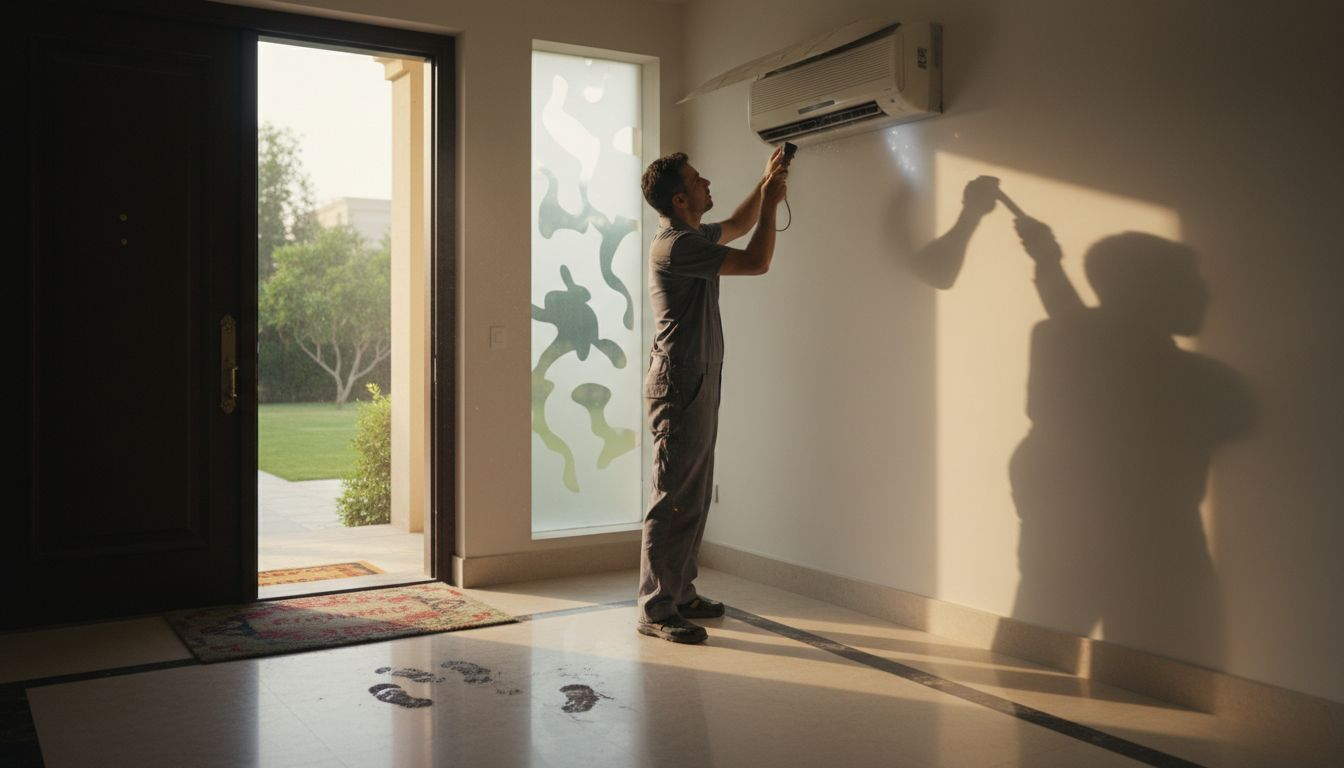
In Dubai, outdoor pollen levels spike during spring months, but indoor environments trap pollen year-round. Your AC system pulls outdoor air inside, concentrating pollen in ducts and coils where it accumulates as biofilm.
Common pollen sources in the UAE include:
- Date palm pollen (especially heavy March through May)
- Acacia tree pollen from landscaping and parks
- Grass pollen from maintained green spaces
- Ragweed pollen drifting from neighboring regions
Dust Mites—The Hidden Colony
Dust mites live invisibly in household dust, thriving in warm, humid environments. Dubai’s climate is perfect for their reproduction—they multiply faster in temperatures above 25°C with humidity above 50%.
These microscopic creatures inhabit bedding, carpets, upholstered furniture, and AC filters. Their feces contain powerful allergens that trigger reactions even after the mites die.
Dust mite populations concentrate in:
- Mattresses and pillows
- Bedroom carpets and rugs
- Curtains and heavy fabrics
- Couch cushions and upholstered chairs
- AC vents and ductwork
Mold Spores—Thriving in Humidity
Mold requires moisture to grow, making AC systems, bathrooms, and basements primary breeding grounds. Mold spores accumulate indoors year-round in damp areas, especially during Dubai’s humid summer months.
When your AC condenses moisture, water collects in drain trays and ductwork. If not properly maintained, this stagnant water becomes a mold factory distributing allergens throughout your home.
High-risk areas for mold growth include:
- AC coils and drainage systems
- Bathroom exhaust vents
- Kitchen under-sink areas
- Window frames and seals
- Basement corners and crawl spaces
Pet Dander—Always Present
Pet dander consists of dead skin cells, fur, and saliva from cats, dogs, birds, and other animals. It settles on surfaces and circulates through air vents continuously, not just when pets are shedding visibly.
One cat or dog produces enough dander to trigger symptoms in allergic individuals for months after removal. Pet allergens cling to clothing, furniture, and AC filters, making them difficult to eliminate completely.
Why Sources Matter More Than Symptoms
Treating symptoms with antihistamines feels easier than controlling sources, but it’s a temporary band-aid. Professional AC cleaning and maintenance actually eliminate allergen sources at their origin.
SaniService by Saniservice removes allergen-laden biofilm from AC coils using hospital-grade disinfection, not just standard filters. This addresses the root cause rather than masking reactions.
Controlling allergen sources at their origin—in your AC system and home—prevents reactions before they start.
Pro tip: Focus first on your AC system, since it’s the primary source for distributing pollen, mold, and dust mites throughout your Dubai home.
How Airborne Allergens Affect Health
Airborne allergens trigger real physical reactions inside your body, not just mild annoyances. When you breathe in pollen, dust mite feces, mold spores, or pet dander, your immune system identifies them as threats and launches a defensive response.
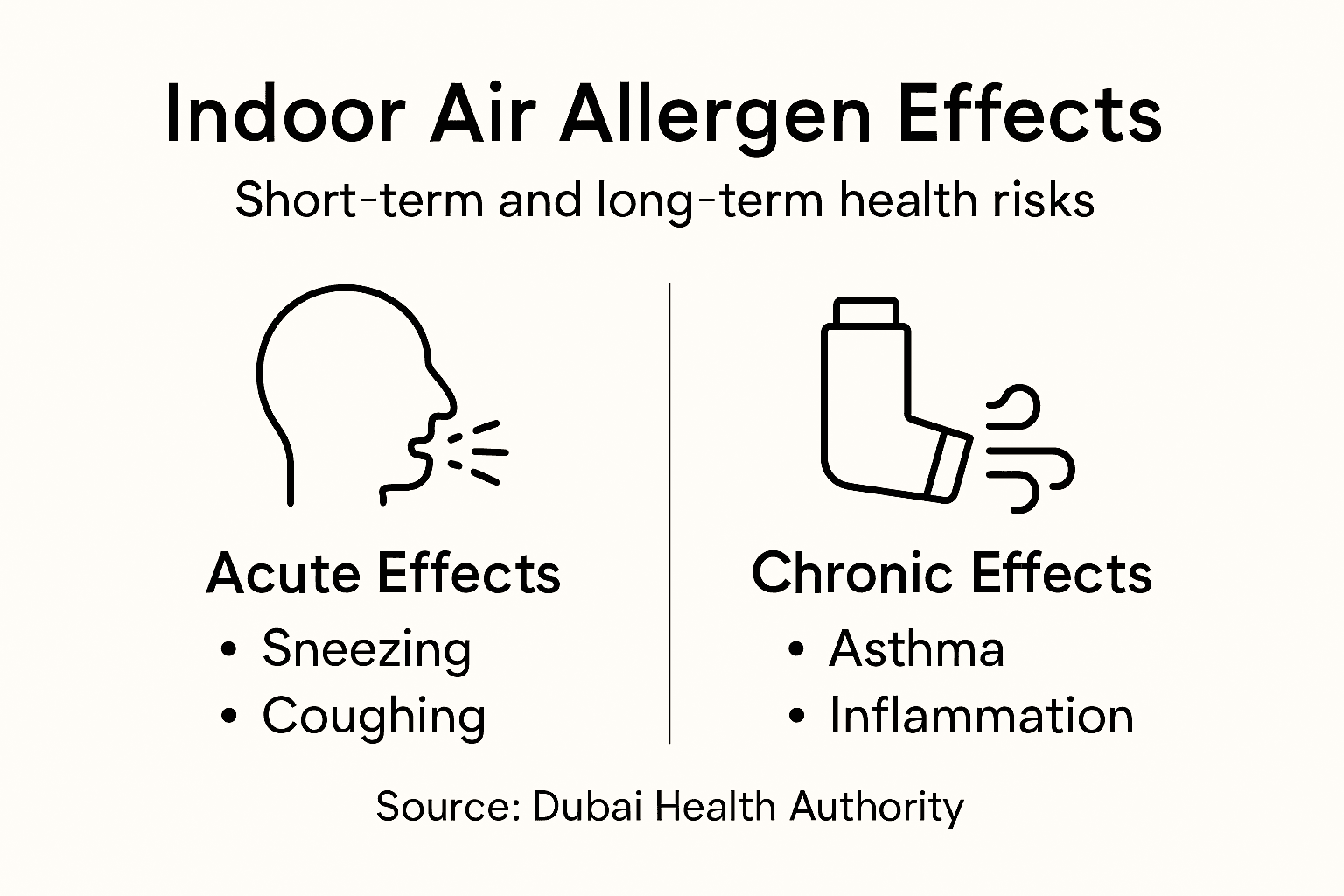
This immune reaction releases chemicals that cause inflammation, itching, and respiratory distress. The severity ranges from minor discomfort to life-threatening reactions depending on your sensitivity and allergen exposure levels.
How Your Body Reacts to Allergens
Allergic reactions occur when immune antibodies called IgE mistakenly identify harmless particles as dangerous invaders. This triggers the release of histamine and other inflammatory chemicals from your cells.
Your body responds with immediate symptoms designed to expel the threat. These reactions happen within minutes of exposure and can worsen with repeated or prolonged contact.
Common allergic responses include:
- Respiratory symptoms: sneezing, congestion, wheezing, and coughing
- Eye irritation: itching, redness, and excessive tearing
- Nasal issues: runny nose, post-nasal drip, and sinus pressure
- Skin reactions: hives, rashes, and itching
- Asthma attacks: difficulty breathing and chest tightness
Acute vs. Chronic Health Effects
Allergic symptoms can range from mild discomfort to severe anaphylaxis, depending on your sensitivity and exposure duration. Short-term exposure causes acute symptoms that resolve when allergen contact stops.
Chronic exposure creates persistent inflammation that damages airways over time. This can develop into asthma, chronic rhinitis, or other long-term respiratory conditions.
Dubai residents face year-round allergen exposure due to the climate, making chronic conditions more common than seasonal allergies. Your AC system becomes critical in controlling exposure.
Vulnerable Populations at Higher Risk
Children and elderly individuals experience stronger reactions because their immune systems are either developing or weakened. Indoor air quality can significantly affect children’s respiratory health and development, particularly during critical growth years.
Familial history matters too—if your parents have allergies, you’re more likely to develop them. People with asthma, eczema, or existing respiratory conditions face compounded risks from airborne allergens.
High-risk groups include:
- Young children (under 12 years)
- Seniors (over 65 years)
- People with asthma or COPD
- Individuals with eczema or dermatitis
- Those with family histories of allergies
Long-Term Health Consequences
Uncontrolled allergen exposure doesn’t remain isolated to your nose and eyes. Chronic inflammation spreads throughout your respiratory system, causing permanent airway remodeling and reduced lung capacity.
This damage accumulates over months and years. Persistent exposure to moldy AC systems, dust mite colonies, and unfiltered pollen progressively weakens your respiratory health.
Long-term conditions resulting from chronic allergen exposure include:
- Chronic rhinosinusitis (persistent sinus inflammation)
- Allergic asthma requiring ongoing medication
- Sleep disturbances from nighttime congestion
- Reduced focus and productivity at work
- Secondary infections from damaged mucous membranes
Why AC System Cleanliness Directly Impacts Health
Your AC system circulates air 6-8 times daily in a typical Dubai home. If that system contains mold, dust mites, and pollen biofilm, you’re breathing allergen-laden air constantly.
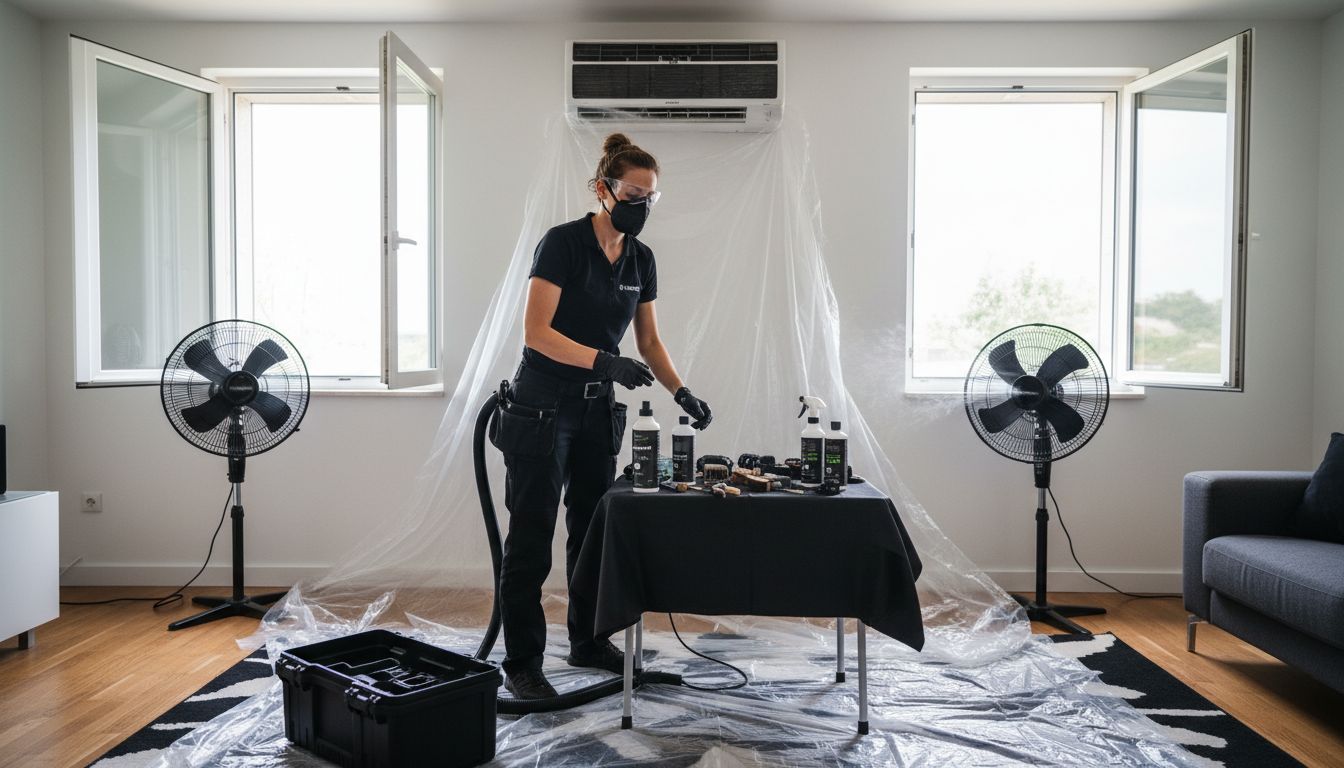
Professional AC disinfection removes these hidden allergen sources. Hospital-grade cleaning reaches coils and ducts where standard filters cannot, eliminating breeding grounds for mold and dust mites.
Controlling airborne allergens through AC system maintenance prevents both acute symptoms and long-term respiratory damage.
Pro tip: If family members develop new allergies suddenly, check your AC filters first—a clogged system is often the hidden trigger.
Managing Risks in Homes and Buildings
Reducing airborne allergens requires a strategic approach combining ventilation, moisture control, regular cleaning, and professional AC maintenance. Dubai’s climate demands year-round allergen management since seasonal relief never arrives—your home needs continuous protection against pollen, mold, and dust mites.
Effective risk management starts with understanding which sources you can control directly. Simple habits combined with professional intervention eliminate most allergen triggers.
Control Moisture to Stop Mold Growth
Mold thrives in humid environments, making moisture control your first defense. Controlling humidity levels prevents mold from spreading in bathrooms, kitchens, and AC systems where condensation accumulates.
Keep indoor humidity between 30-50% using dehumidifiers and proper ventilation. Your AC system should drain condensation effectively—if drain trays remain wet, you’re cultivating mold factories.
Practical moisture control steps include:
- Run exhaust fans during and after showers
- Ensure bathroom and kitchen vents lead outdoors
- Fix leaky pipes and water-damaged areas immediately
- Use dehumidifiers in naturally damp spaces
- Schedule professional AC drain pan cleaning quarterly
Reduce Dust Mite and Pet Allergens Through Cleaning
Using allergen-proof bedding and regular cleaning reduces dust mites significantly. Dust mites live in textiles, so washing bedding weekly in hot water kills colonies before they multiply.
Vacuuming with HEPA filters captures allergens instead of recirculating them. Standard vacuums spread fine particles back into the air, worsening exposure.
Daily cleaning priorities include:
- Wash pillowcases and sheets weekly in hot water
- Vacuum carpets and rugs twice weekly with HEPA filters
- Dust surfaces with damp cloths (dry dusting spreads particles)
- Wash pet bedding weekly
- Minimize upholstered furniture in bedrooms
Improve Ventilation Strategically
Increasing fresh air sounds helpful, but in Dubai, opening windows during high-pollen seasons invites more allergens inside. Instead, use exhaust fans to remove moisture and stale air while keeping windows sealed.
Proper ventilation means air movement, not outdoor air exchange. Your AC system should distribute filtered air evenly throughout the home.
Seal Entry Points and Maintain AC Systems
Pollen and dust enter through gaps around windows, doors, and AC vents. Weatherstripping and caulking seal these openings, reducing outdoor allergen infiltration significantly.
Your AC system requires professional disinfection annually. Dirty AC ducts harbor mold, dust mites, and pollen biofilm that circulate allergens every time the system runs. Hospital-grade disinfection removes these hidden sources completely.
Building-wide allergen reduction includes:
- Sealing gaps around windows and doors
- Installing air purifiers with HEPA filtration
- Scheduling professional AC coil and duct cleaning
- Replacing AC filters monthly
- Maintaining proper AC drainage
Create Allergen-Free Zones
Bedrooms matter most since you spend 8 hours daily there. Keep bedrooms allergen-free by minimizing fabric surfaces, using HEPA-filtered air purifiers, and maintaining sealed windows during high-pollen periods.
Children’s rooms deserve priority attention. Reducing bedroom allergens improves sleep quality and reduces nighttime asthma attacks significantly.
Professional AC disinfection eliminates the primary source distributing allergens throughout your entire home.
Pro tip: Schedule professional AC cleaning before summer peaks in Dubai—mold thrives fastest during hot, humid months, making spring maintenance your best offense against year-round allergen exposure.
This table summarizes common strategies to reduce airborne allergen exposure in Dubai homes:
| Improvement Step | Targeted Allergen | Expected Benefit |
|---|---|---|
| AC disinfection | Mold, pollen, dust mites | Cleaner indoor air |
| HEPA vacuum use | Dust mites, pet dander | Reduced allergen spread |
| Dehumidifiers | Mold, dust mites | Controlled humidity |
| Allergen-proof bedding | Dust mites | Fewer bedroom symptoms |
| Window sealing | Pollen, dust | Lower outdoor allergen infiltration |
Effective Strategies to Reduce Exposure
Reducing allergen exposure requires both immediate actions and long-term lifestyle changes. The best strategy combines multiple approaches targeting different allergen sources simultaneously, creating multiple layers of protection throughout your home.
Personalized allergen avoidance works better than generic solutions. Understanding which allergens affect you most allows focused interventions that deliver faster symptom relief.
Bedroom Allergen Control—Your Sleep Sanctuary
Using dust-proof covers on bedding and washing regularly eliminates dust mite colonies where they thrive most. Your mattress, pillows, and box springs harbor millions of dust mites—encasing them stops allergen exposure during your most vulnerable hours.
Weekly hot water washing kills existing dust mites before populations explode. Bedding washed at 130°F (54°C) eliminates nearly all mites; cold water washing fails to kill them.
Bedroom allergen control steps include:
- Install allergen-proof zippered covers on mattresses, pillows, and box springs
- Wash all bedding weekly in hot water
- Replace pillows every 1-2 years
- Remove carpeting and use washable area rugs
- Keep pets completely out of bedrooms
- Reduce soft furniture that collects dust
Pet Management Strategies
Keeping pets means accepting higher allergen levels unless you implement strict controls. Weekly pet baths reduce dander shedding significantly, though complete allergen elimination remains impossible with animals in the home.
Pet allergens accumulate on furniture, bedding, and clothing. Washing pet bedding weekly prevents dander from concentrating in resting areas.
If you keep pets:
- Bathe them weekly to minimize dander
- Wash pet bedding every 3-4 days
- Designate pet-free zones (especially bedrooms)
- Use HEPA air filters in shared spaces
- Vacuum pet areas daily
Window and Door Sealing During Peak Seasons
Keeping windows closed during high-pollen periods prevents outdoor allergens from entering. In Dubai, spring months bring significant pollen surges making sealed windows essential during March through May.
When outdoor air quality is poor, your sealed AC system with proper filtration provides safer air than outside air. Check weather apps for pollen forecasts and plan indoor days accordingly.
Source Control and Clutter Reduction
Controlling indoor allergen sources by eliminating dust and pet dander reservoirs reduces symptoms more effectively than filtering air alone. Decluttering removes surfaces where dust accumulates, making cleaning faster and more thorough.
Eliminate unnecessary items collecting dust:
- Heavy curtains (replace with washable roller shades)
- Upholstered furniture (use leather or wipeable alternatives)
- Stuffed animals and decorative items
- Books and paper products in bedrooms
- Layered bedding and throw pillows
Air Filtration and HEPA Technology
HEPA filters capture 99.97% of particles 0.3 microns or larger. Portable HEPA air purifiers in bedrooms supplement AC filtration, especially for dust mite and pet allergen control.
Standard AC filters miss fine allergen particles that HEPA filters trap. Upgrading to HEPA-rated filters in your AC system improves protection dramatically.
Humidity Control as Allergen Prevention
Keeping indoor humidity between 30-50% prevents mold and dust mite multiplication. Dehumidifiers in naturally damp areas reduce allergen breeding grounds.
High humidity accelerates dust mite reproduction. Lower humidity slows their population growth naturally.
Multiple strategies targeting different allergen sources work synergistically—combining bedroom protection, pet management, and ventilation delivers the best long-term relief.
Pro tip: Start with bedroom allergen control first since you spend one-third of your life there; improvements in sleep quality and symptom reduction happen within 2-3 weeks.
Take Control of Airborne Allergens for Healthier Indoor Air
Living in Dubai means facing airborne allergens like pollen, dust mites, and mold spores every day. These hidden particles circulate continuously through your air conditioning system causing allergies, respiratory issues, and chronic discomfort. If you want to protect your family or employees from persistent symptoms and reduce exposure at the source, professional AC cleaning is essential. Saniservice combines scientific precision with expert care to eliminate allergen-laden biofilm and contaminants hiding deep inside your AC coils, ducts, and drainage trays. Our NADCA-certified technicians use hospital-grade, chemical-free disinfectants proven to remove mold, bacteria, and allergens effectively.
Don’t wait for symptoms to worsen or new allergies to develop. Act now by scheduling your expert air conditioning disinfection with Saniservice today. Discover how our multidisciplinary Indoor Sciences team offers evidence-based solutions that improve indoor air quality and create healthier living and working spaces across the UAE. Learn more about why controlling air contaminants matters on our Air Contaminants Guide or explore the Risks of Dirty AC Ducts for deeper insight. Start breathing cleaner air with Saniservice and experience lasting relief from airborne allergens.
Frequently Asked Questions
What are the common types of airborne allergens found indoors?
Common indoor airborne allergens include pollen, dust mite feces, pet dander, mold spores, cockroach allergens, and fabric fibers. These allergens can trigger allergic reactions in sensitive individuals.
How do airborne allergens affect health?
Airborne allergens can trigger allergic reactions by causing symptoms such as sneezing, coughing, nasal congestion, and respiratory distress. In severe cases, they can lead to asthma attacks and long-term respiratory issues if exposure is chronic.
What strategies can be used to reduce airborne allergens in the home?
Effective strategies include maintaining low indoor humidity to prevent mold growth, using HEPA filters in air purifiers, regular cleaning with damp cloths to minimize dust, and ensuring proper AC maintenance to eliminate hidden allergens.
How does climate affect the level of airborne allergens?
Warm climates promote year-round breeding of allergens like mold and dust mites. Seasonal climate changes can also influence pollen levels, extending allergy seasons and increasing allergen exposure for residents.
Recommended
- Types of Air Contaminants – Impact on Indoor Health
- Could indoor air quality be harming my kids? – Saniservice AC Cleaning
- Could indoor air quality cause my symptoms? – Saniservice AC Cleaning
- Could poor indoor air quality cause my symptoms? – Saniservice AC Cleaning
- FAQ: Routine Air Filter Replacement for HVAC Systems in Tampa Bay FL Services – Home Therapist Cooling, Heating, and Plumbing
- 7 Key Advantages of Deep Cleaning for Los Angeles Families



Leave a Reply