

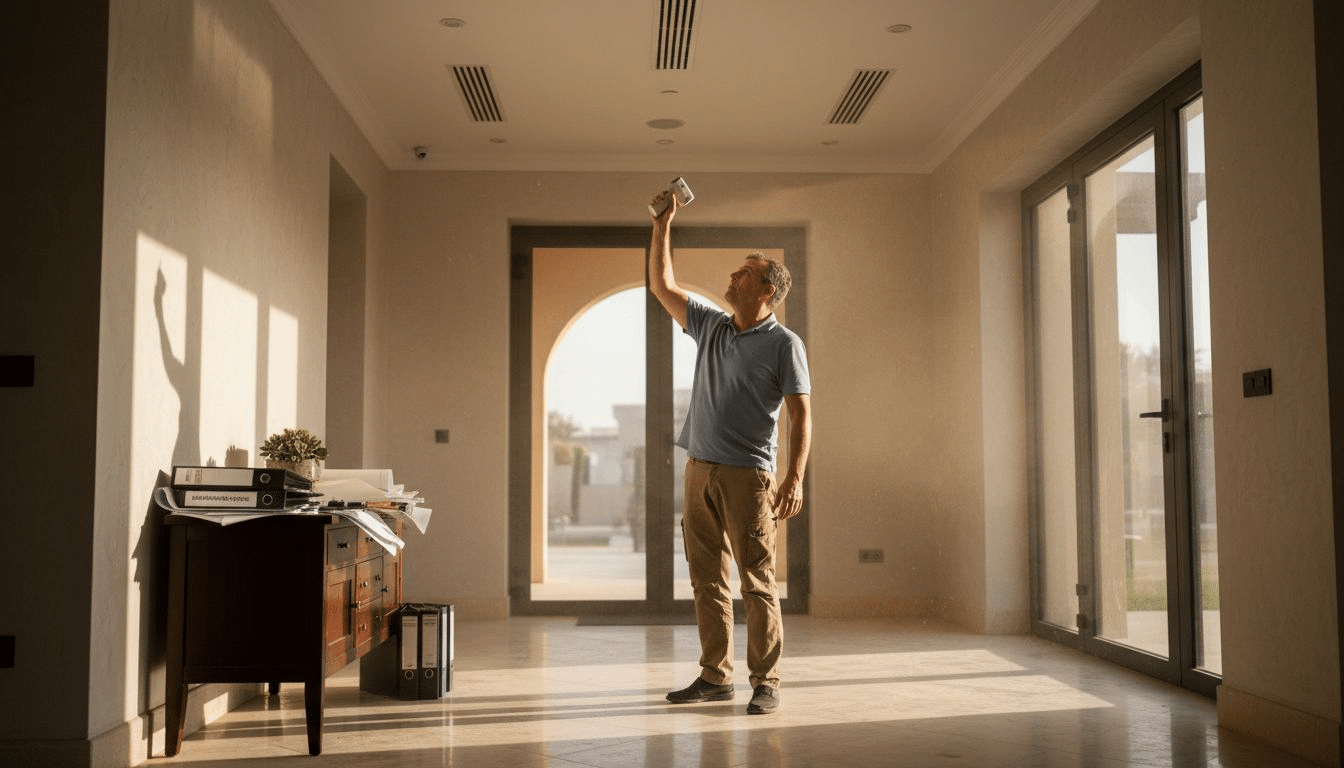
Types of Air Contaminants – Impact on Indoor Health
Breathing clean air often fades into the background until unexpected odors or a haze of dust draws fresh concern in your Dubai villa. For those managing luxury properties, understanding the complex mix of air contaminants is more than maintenance—it’s a key to safeguarding resident well-being and protecting high-value assets. This guide clarifies what defines these invisible threats, emphasizing why precise knowledge is vital for selecting targeted solutions in exclusive residential spaces.
Table of Contents
Contents
- 1 Table of Contents
- 2 Key Takeaways
- 3 What Are Air Contaminants? Clarifying Definitions
- 4 Major Types of Indoor Air Contaminants
- 5 Sources and Characteristics of Common Pollutants
- 6 Risks to Health and AC Efficiency
- 7 Expert Prevention and Remediation Strategies
- 8 Take Control of Indoor Air Contaminants for Healthier Living
- 9 Frequently Asked Questions
- 10 Recommended
- What Are Air Contaminants? Clarifying Definitions
- Major Types of Indoor Air Contaminants
- Sources and Characteristics of Common Pollutants
- Risks to Health and AC Efficiency
- Expert Prevention and Remediation Strategies
Key Takeaways
| Point | Details |
|---|---|
| Air Contaminants Affect Health | Poor indoor air quality can lead to respiratory issues, cardiovascular diseases, and cognitive impairments. Regular maintenance is essential to mitigate these risks. |
| Identifying Sources is Crucial | Distinguishing between indoor and outdoor sources enables targeted interventions. Understanding specific contaminants aids in effective communication with professionals. |
| System Maintenance Enhances Efficiency | Regular HVAC cleaning and advanced filtration technologies can significantly improve indoor air quality and system performance. Neglecting maintenance leads to higher energy costs and health risks. |
| Proactive Monitoring is Necessary | Continuous assessment of air quality helps identify problems early, ensuring tailored solutions that adapt as conditions change over time. |
What Are Air Contaminants? Clarifying Definitions
Air contaminants are harmful substances that enter the air you breathe in your villa or building. These substances exist as gases, liquids, or solids and come from both natural and human-made sources. Understanding what they are is the first step toward protecting your indoor environment.
Think of air contaminants as invisible invaders. Some originate from outside—vehicle emissions, industrial activity, dust storms. Others generate inside your home from everyday activities like cooking, cleaning, or furniture off-gassing.
Sources of Air Contaminants
Contaminants come from two primary sources:
- Natural sources: Volcanic activity, wildfires, dust storms, pollen, and biological decay
- Human-made sources: Burning fossil fuels, vehicle emissions, industrial processes, and household chemicals
In Dubai’s climate, both categories matter. Desert dust storms introduce particulate matter outdoors, while indoor activities create their own pollutants trapped within your air conditioning system.
Common Types of Air Contaminants
Common air pollutants include several major categories that affect indoor air quality. The EPA focuses on six critical pollutants as indicators of air contamination and health risk:
- Particulate Matter (PM): Tiny solid or liquid particles suspended in air
- Nitrogen Dioxide: Gas from combustion and vehicle emissions
- Ozone: Ground-level ozone forms from chemical reactions
- Sulfur Dioxide: Gas from fuel burning and industrial activity
- Lead: Heavy metal from certain industrial processes
- Carbon Monoxide: Colorless, odorless gas from incomplete combustion
Indoors, you’ll also encounter volatile organic compounds (VOCs)—chemicals from paints, cleaners, adhesives, and furniture that evaporate into the air.
Gaseous vs. Particulate Contaminants
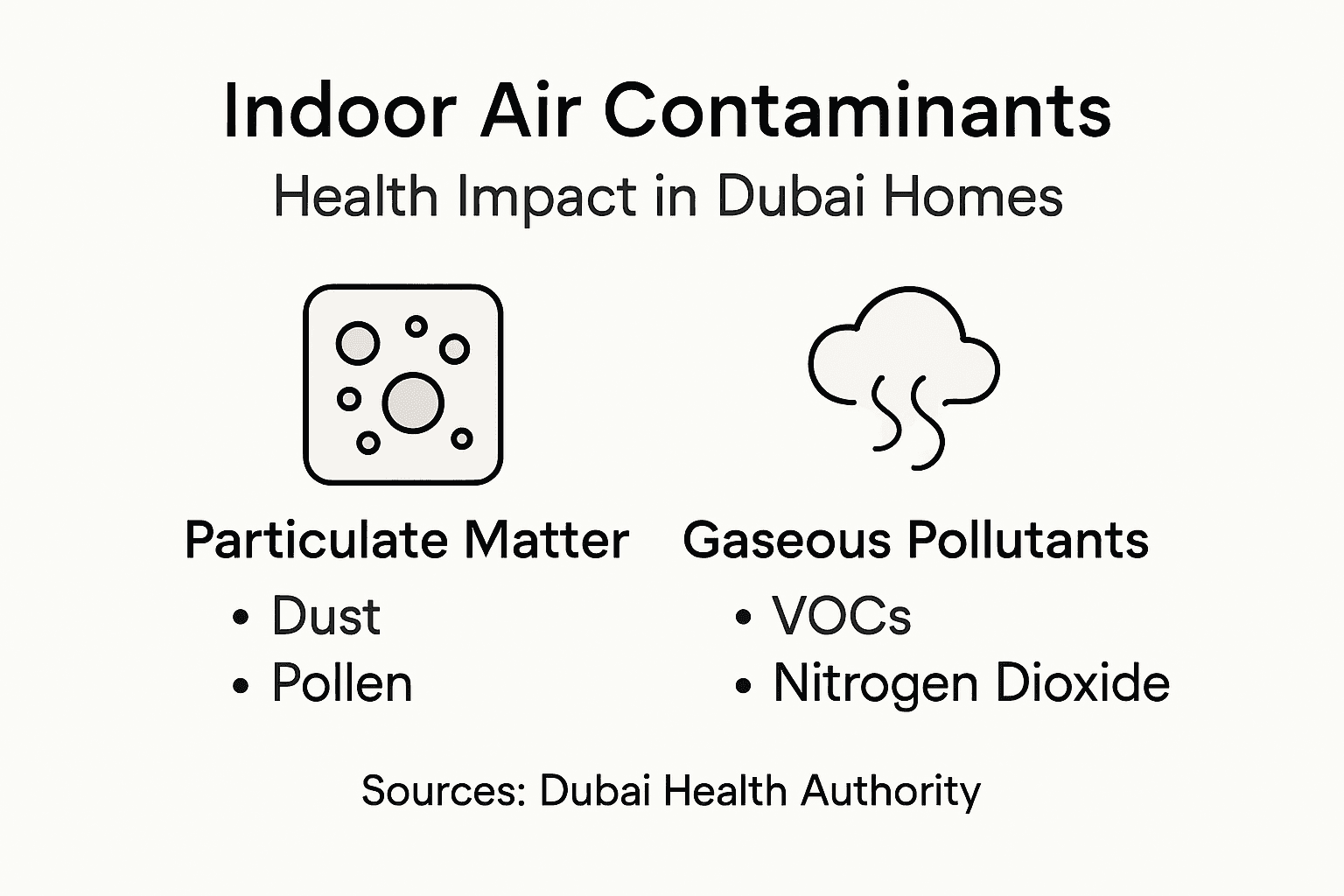
Air contaminants take two distinct forms. Gaseous contaminants are invisible and include carbon dioxide, nitrogen oxides, and VOCs. Particulate contaminants are solid or liquid particles—dust, pollen, mold spores, bacteria—visible under magnification.
Your HVAC system handles both differently. Filters catch particles, but gases require different filtration technology or air treatment methods to remove effectively.
Most indoor air contamination stems from human activities rather than outdoor sources, making your cleaning and maintenance choices directly impact your family’s health.
Why Definitions Matter for Dubai Residents
Proper definitions help you identify problems and request appropriate solutions. When you describe air quality issues to professionals, precision matters. Saying “my air feels stale” differs significantly from “I smell chemical odors” or “dust accumulates rapidly.”
Each description points to different contaminants requiring different removal approaches. Understanding these distinctions ensures you invest in the right interventions for your villa’s specific air quality challenges.
Pro tip: Document any air quality concerns you notice—odors, visible dust, health symptoms—and describe them specifically when consulting professionals, as this information guides testing and treatment decisions.
Major Types of Indoor Air Contaminants
Indoor air contains far more than just oxygen and nitrogen. Your villa’s air harbors multiple categories of contaminants that accumulate over time, especially in Dubai’s hot, sealed environment. Understanding these types helps you identify problems and take action.
Indoor air contaminants include gases, vapors, and aerosols such as dust, sprays, mists, smokes, and fumes. Each type behaves differently and requires different removal strategies. Some settle quickly; others remain suspended indefinitely.
Five Major Categories of Indoor Contaminants
Your home’s air quality depends on controlling these primary types:
- Particulate Matter: Dust, pollen, pet dander, skin cells, and fibers that float or settle
- Biological Pollutants: Mold spores, bacteria, viruses, dust mites, and their waste products
- Volatile Organic Compounds (VOCs): Chemical vapors from paints, cleaners, adhesives, and furniture
- Combustion Products: Carbon monoxide, nitrogen oxides, and sulfur dioxide from appliances or outdoor sources
- Chemical Pollutants: Lead, pesticides, and industrial chemicals that enter from outside or household sources
Particulate Matter and Biological Pollutants
Particulate matter ranges from visible dust to microscopic particles. In Dubai’s desert climate, outdoor dust enters through windows and doors, then circulates through your AC system. Once inside, these particles settle on surfaces or remain airborne.
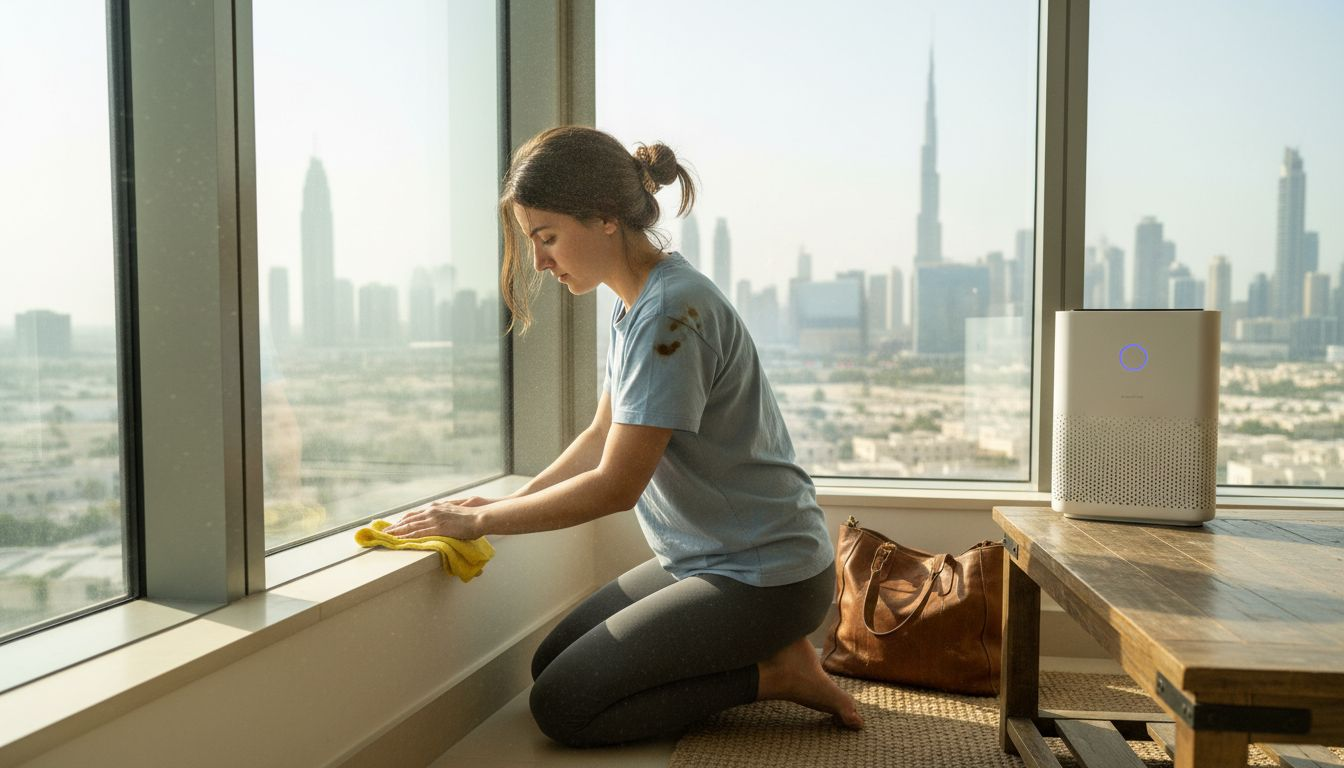
Biological pollutants thrive in moist environments. Your air conditioning system creates the perfect breeding ground—cool temperatures and moisture in drainage trays and coils allow mold and bacteria to flourish. These spread throughout your villa every time the system runs.
Volatile Organic Compounds and Combustion Products
VOCs are invisible chemical vapors released from everyday items. New carpets, paint, furniture, and cleaning products emit VOCs continuously. They accumulate indoors because they don’t escape naturally in sealed, air-conditioned spaces.
Combustion products form when fuel burns incompletely. Gas stoves, appliances, and outdoor vehicle emissions contribute carbon monoxide and nitrogen oxides. These colorless, odorless gases pose serious health risks at even low concentrations.
The longer air remains trapped in your villa without proper circulation and filtration, the higher the concentration of contaminants becomes—making regular HVAC maintenance non-negotiable for health.
Why Indoor Contaminants Concentrate
Your sealed villa creates a concentration effect. Outdoor air enters slowly through small gaps, while contaminants generated inside remain trapped. This differs from older homes with natural air leakage, where pollutants disperse more readily.
This concentration effect means small amounts of everyday pollution multiply into significant health hazards over weeks and months. A minor VOC source becomes a major exposure issue when that air recirculates 8–10 times daily through your AC system.
Pro tip: Request professional HVAC testing to identify which contaminant categories affect your specific villa, then target interventions accordingly rather than applying generic solutions.
Sources and Characteristics of Common Pollutants
Pollutants don’t appear randomly in your villa’s air—they come from specific sources and behave according to their chemical and physical properties. Identifying these sources and understanding how pollutants behave is essential for controlling them effectively.
Indoor air pollution stems from human activities like cooking, smoking, and cleaning, as well as reactions on building surfaces and furniture. Each source produces different pollutants with distinct characteristics. Your villa’s air composition changes throughout the day based on these activities.
Primary Sources in Dubai Homes
Your indoor pollutants originate from multiple locations:
- Cooking and appliances: Release nitrogen dioxide, carbon monoxide, and particulate matter
- Cleaning products and cosmetics: Emit VOCs that linger for hours or days
- Building materials and furniture: Off-gas formaldehyde and other chemicals continuously
- Outdoor infiltration: Desert dust, vehicle emissions, and industrial pollutants enter through gaps
- Occupant activities: Smoking, candles, air fresheners, and personal care products add contaminants
Understanding Pollutant Characteristics
Pollutants like nitrogen dioxide, sulfur dioxide, and formaldehyde have distinct chemical and physical properties that determine how they behave. Some are heavy and settle quickly; others remain suspended indefinitely. Some dissolve in water; others don’t react with moisture at all.
These characteristics matter because they affect detection and removal. Particulate matter requires mechanical filtration. Gaseous pollutants need activated carbon or specialized filters. Understanding what you’re fighting helps you choose the right solutions.
How Pollutants Behave Over Time
Emission patterns vary dramatically. A new paint job releases maximum VOCs on day one, then gradually decreases over weeks. Cooking releases pollutants during and immediately after meals. Dust accumulation is continuous but accelerates in high-traffic areas or during Dubai’s windy seasons.
Indoor chemistry processes also matter. Pollutants react with each other and with surfaces in your villa, sometimes creating secondary pollutants more harmful than the originals. This complexity makes comprehensive monitoring essential.
Building characteristics like ventilation rates, surface materials, and humidity levels directly affect how pollutants concentrate and persist—making no two villas identical in their air quality challenges.
Why Location Matters
Bedroom air differs from kitchen air. Your master suite typically has lower pollutant concentrations because cooking doesn’t occur there, but it may have higher dust mite levels. Children’s rooms accumulate more off-gassing from toys and furniture.
Understanding these location-specific patterns helps you prioritize which rooms need the most attention and intervention.
Pro tip: Document which rooms develop odors, dust accumulation, or health symptoms first—this pattern reveals your villa’s primary pollution sources and guides where to focus HVAC maintenance and air treatment efforts.
Risks to Health and AC Efficiency
Poor indoor air quality creates a double problem: it damages your health while simultaneously degrading your air conditioning system’s performance. These two consequences reinforce each other, creating a cycle that worsens over time without intervention.
Chronic exposure to indoor air contaminants such as particulate matter, nitrogen dioxide, and formaldehyde significantly contributes to respiratory and cardiovascular diseases. The health impact is quantified in disability-adjusted life years (DALYs), highlighting how serious these exposures truly are. Your family’s long-term health depends directly on controlling these pollutants.
Direct Health Impacts
Air contaminants affect multiple body systems:
- Respiratory system: Triggers asthma, bronchitis, and reduced lung function
- Cardiovascular system: Increases blood pressure and heart disease risk
- Cognitive function: Reduces concentration, memory, and work productivity
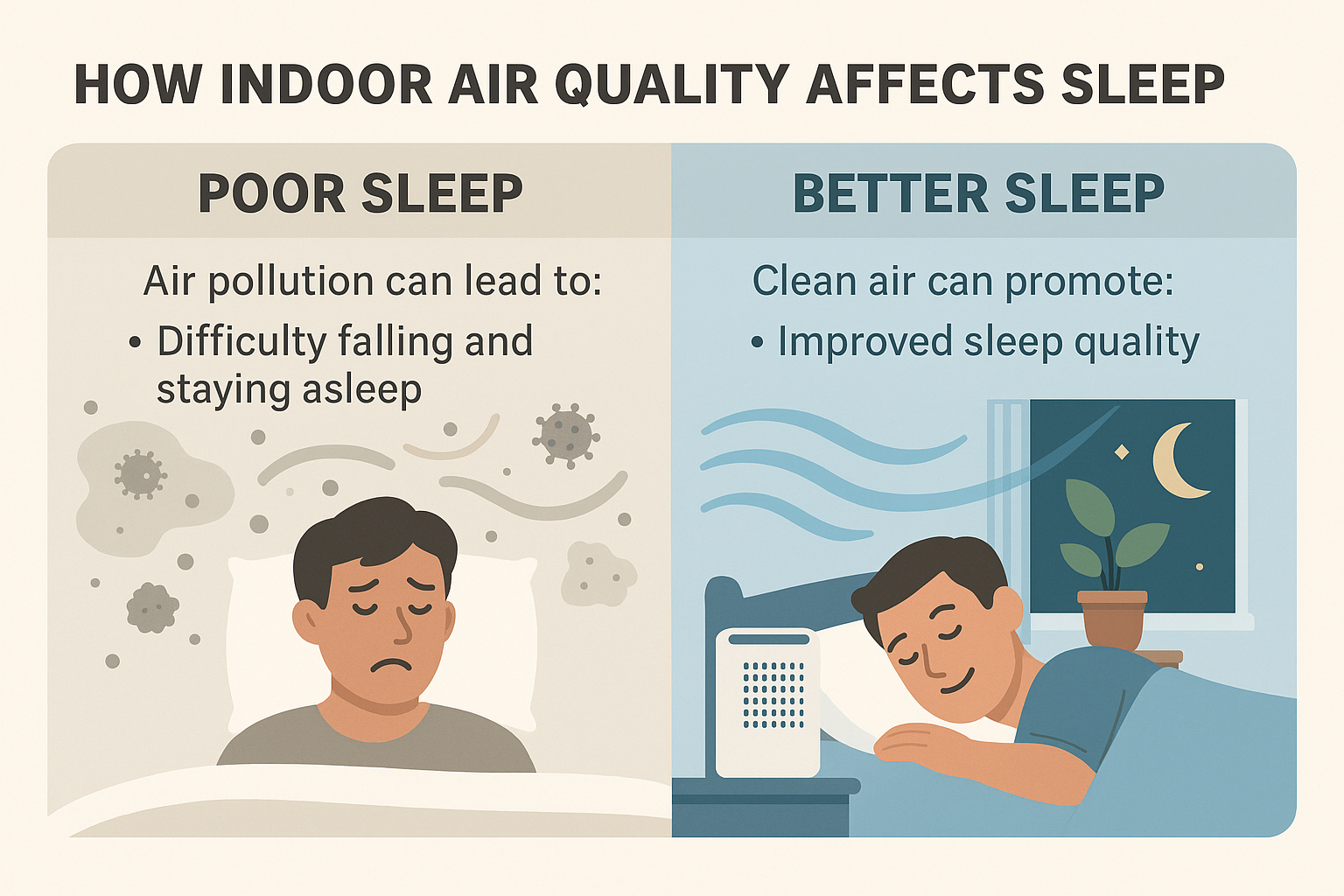
- Sleep quality: Poor IAQ disrupts sleep patterns and increases fatigue
- Immune system: Weakens resistance to infections and illnesses
Children, elderly residents, and anyone with pre-existing conditions face heightened vulnerability. Even healthy adults experience measurable performance declines in polluted indoor environments.
How Contaminants Damage AC Systems
Particulate matter clogs filters and coils, forcing your system to work harder for less output. Mold and bacteria colonize damp AC components, releasing spores and toxins into circulated air. VOCs and chemical reactions corrode metal components and degrade system efficiency over time.
A contaminated AC system becomes a pollution generator rather than a solution, spreading contaminants throughout your villa with every operating cycle.
Here’s a comparison of how common indoor air contaminants affect health and air conditioning systems:
| Contaminant Type | Health Impact | Effect on AC Efficiency |
|---|---|---|
| Particulate Matter | Triggers asthma, allergies | Clogs filters, reduces airflow |
| Biological Pollutants | Infections, respiratory issues | Promotes mold in coils, lowers performance |
| VOCs | Headaches, cognitive effects | Corrodes metal parts, damages components |
| Combustion Products | Carbon monoxide poisoning | Difficult to filter, raises system stress |
| Chemical Pollutants | Toxic effects, long-term illness | Causes buildup and corrosion |
The Efficiency-Health Connection
Poor indoor air quality and thermal discomfort increase energy consumption while reducing overall AC system efficiency. When filters clog, your system consumes more electricity while delivering worse air quality—a losing proposition financially and health-wise.
A dirty AC system can consume 15-25% more energy than a clean one while providing inferior air quality. That excess cost compounds monthly and yearly, draining your wallet while your family’s health suffers.
Contaminated air conditioning systems create a vicious cycle: poor performance leads to increased energy use, higher costs, and continued health risks—breaking this cycle requires professional intervention.
Long-Term Consequences
Morbidity and mortality increase measurably with chronic poor IAQ exposure. Hospital visits, medication costs, and lost work productivity mount silently. Some health effects emerge immediately; others develop gradually over months or years before becoming apparent.
Prevention through proper maintenance costs far less than treating health problems or replacing damaged AC equipment later.
Pro tip: Schedule annual professional AC cleaning and disinfection before Dubai’s cooling season—this single action prevents both health deterioration and efficiency losses while extending your system’s lifespan significantly.
Expert Prevention and Remediation Strategies
Controlling indoor air contaminants requires a systematic approach combining source control, maintenance, and technology. Simply opening a window won’t solve Dubai’s air quality challenges—you need deliberate, science-backed strategies tailored to your villa’s specific conditions.
Effective remediation focuses on three pillars: reducing pollutant generation, improving filtration, and maintaining system cleanliness. Expert strategies for improving indoor air quality emphasize increasing ventilation and filtration while addressing cost and maintenance challenges through technology adoption and policy support. Professional guidance ensures your investments deliver measurable results.
Source Control Strategies
The most cost-effective approach stops pollution at its origin:
- Choose low-VOC materials: Select paints, adhesives, and furniture that emit fewer chemicals
- Control moisture: Fix leaks immediately and maintain humidity below 50% to prevent mold
- Eliminate combustion sources: Service gas appliances regularly and ensure proper ventilation
- Reduce chemical products: Replace conventional cleaners with simpler alternatives
- Manage outdoor infiltration: Seal gaps around windows and doors to minimize dust entry
HVAC System Maintenance and Filtration
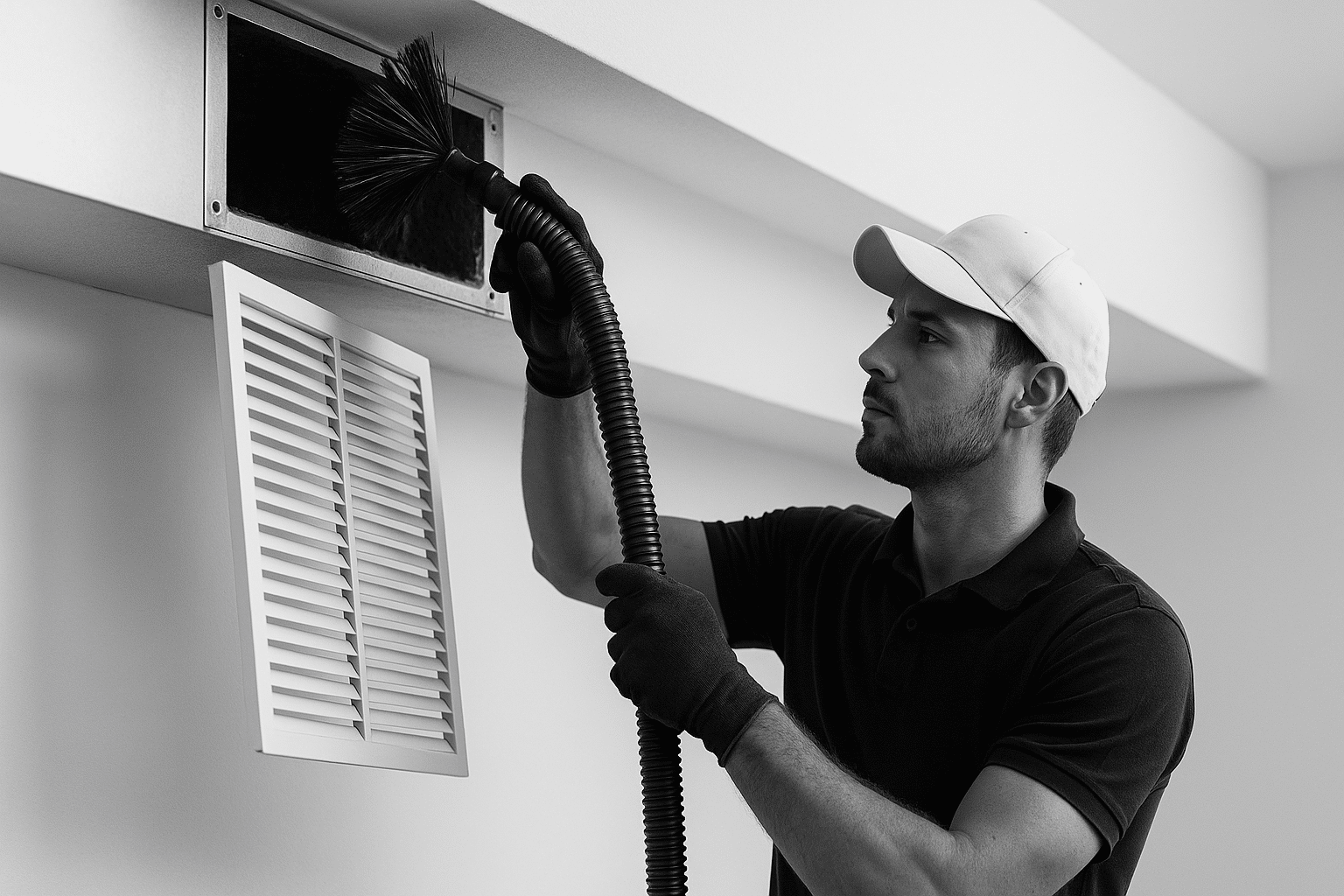
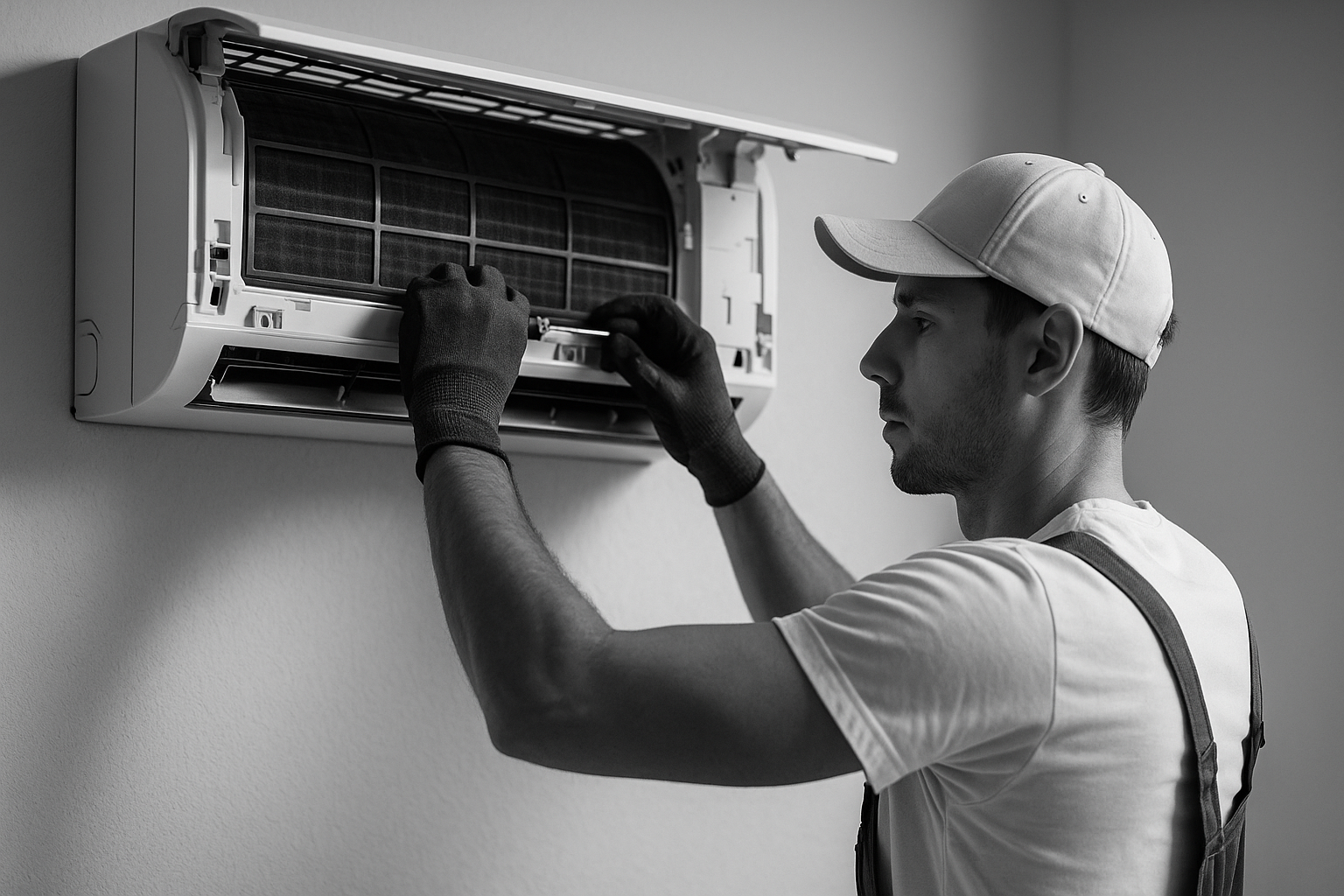
Prevention strategies include regular maintenance of HVAC systems and use of air purifiers with HEPA filters to remove particulate matter effectively. Standard filters catch visible dust but miss microscopic particles and biological contaminants. Upgraded filtration captures more pollutants while professional cleaning removes biofilm and mold colonizing your AC components.
Your AC system requires more than filter changes. Coils accumulate mold and bacteria that standard cleaning misses. Drainage trays harbor stagnant water breeding dangerous microorganisms. Professional disinfection using hospital-grade, chemical-free treatments eliminates these hidden threats that filters can’t address.
Advanced Technology and Professional Solutions
UV disinfection systems neutralize mold and bacteria in ductwork and coils. HEPA filtration captures 99.97% of particles 0.3 microns or larger. Air purifiers supplement HVAC systems for targeted room-level protection.
But technology alone fails without expert installation and maintenance. Improper filter sizing, incorrect UV placement, or missed contamination sources undermine results. Professional assessment identifies your villa’s specific vulnerabilities and recommends appropriate interventions.
Combining source control, professional HVAC cleaning, and appropriate technology creates a comprehensive defense—each component reinforces the others for maximum protection.
Monitoring and Continuous Improvement
Track changes through occupant observations and professional testing. Document symptom improvements, odor reduction, and dust accumulation patterns. Annual professional assessments verify system performance and identify emerging issues before they become serious.
This ongoing approach differs from one-time fixes. Indoor air quality requires consistent attention and adaptation as your villa ages and your family’s needs evolve.
The following table summarizes prevention strategies and their benefits for Dubai homes:
| Prevention Strategy | Key Approach | Long-Term Benefit |
|---|---|---|
| Source Control | Use low-VOC materials, seal gaps | Reduces pollutant entry |
| HVAC Maintenance | Schedule professional cleaning | Boosts AC lifespan, lowers health risk |
| Advanced Filtration | Install HEPA, UV systems | Removes microscopic contaminants |
| Continuous Monitoring | Annual testing, symptom tracking | Detects issues early, adapts solutions |
Pro tip: Invest in professional HVAC deep cleaning and disinfection as your foundation, then add source control measures and technology based on your villa’s specific test results and occupant health patterns.
Take Control of Indoor Air Contaminants for Healthier Living
Understanding the different types of air contaminants and their impact on indoor health is crucial for every villa or home in Dubai. If you experience lingering odors, increasing dust, or health symptoms related to poor air quality, these are signs that harmful particulate matter, VOCs, or biological pollutants may be thriving inside your air conditioning system. Addressing these invisible threats requires expert intervention that goes beyond basic cleaning to remove mold, bacteria, and chemical residues effectively.
Saniservice offers scientifically proven solutions tailored to combat these specific indoor pollutants. Our NADCA-certified technicians use hospital-grade, chemical-free biosanitisers and meticulous deep-cleaning methods on every AC component including coils, blowers, and drainage trays. Backed by a team of microbiologists and HVAC engineers, we ensure your AC system delivers safer air, enhanced energy efficiency, and longer lifespan. Trust in Dubai’s leading air conditioning cleaning experts to eliminate health risks and improve your indoor environment today.
Ready to breathe cleaner, healthier air inside your villa? Visit Saniservice now to schedule your professional AC cleaning and disinfection service. Discover how our expert approach aligns with the specific challenges of indoor air contaminants and protects your family’s health. Learn more about our cutting-edge air conditioning cleaning services and why so many homeowners across the UAE depend on Saniservice for indoor air quality you can trust.
Frequently Asked Questions
What are the common types of air contaminants?
Common types of air contaminants include particulate matter, biological pollutants, volatile organic compounds (VOCs), combustion products, and chemical pollutants. Each type has unique sources and impacts on indoor air quality.
How do indoor air contaminants affect health?
Indoor air contaminants can lead to various health issues, including respiratory problems, cardiovascular disease, cognitive impairment, and sleep disturbances. Vulnerable populations, such as children and the elderly, may face heightened risks.
What are effective methods for reducing air contaminants in my home?
Effective methods for reducing air contaminants include source control strategies like using low-VOC materials, maintaining proper humidity levels, performing regular HVAC maintenance, and utilizing advanced air filtration systems such as HEPA filters or UV disinfection.
How often should HVAC systems be cleaned to maintain good air quality?
HVAC systems should ideally be cleaned and maintained at least once a year to ensure efficient operation and minimize the buildup of contaminants that can adversely affect indoor air quality.
Recommended
- Could indoor air quality be harming my children? – Saniservice AC Cleaning
- Could indoor air quality cause my symptoms? – Saniservice AC Cleaning
- 9 Critical Health Risks of Poor Indoor Air Quality Dubai Residents Must Know – Saniservice AC Cleaning
- Could indoor air quality affect my children’s health? – Saniservice AC Cleaning
- Indoor Air Quality: Everything You Need to Know – HVAC Service and Repair | Louisville, KY | Project Heating & Cooling
- Air Quality and Carpets: Complete Guide for Homes – Yarra Valley Carpet Cleaning

Leave a Reply