How Dirty AC Coils Affect Cooling Efficiency Dubai Homes
Understanding How Dirty AC Coils Affect Cooling Efficiency Dubai is essential. In Dubai’s climate, How Dirty AC coils affect cooling efficiency is not a gradual or subtle process. Coil surfaces that carry even a thin layer of particulate accumulation or biofilm lose their ability to transfer heat effectively, and the system compensates by running longer, consuming more energy, and delivering less cooling. For families living in villas, apartments, and townhouses across the UAE — where AC systems operate continuously for eight to ten months of the year — the cumulative impact is significant.
Understanding how dirty AC coils affect cooling efficiency Dubai residents experience requires looking at both coil types independently: the evaporator coil inside the air handling unit, and the condenser coil in the outdoor unit. Each one fails differently, contaminates differently, and responds to cleaning differently. Comparing their behaviour under contaminated versus clean conditions reveals why coil condition is one of the most important variables in residential AC performance.
This article examines that comparison directly — what changes, what degrades, and what professional coil cleaning restores — so that homeowners can make informed decisions about the systems their families breathe from every day.
How Dirty AC Coils Affect Cooling Efficiency Dubai Evaporator Systems
Contents
- 1 How Dirty AC Coils Affect Cooling Efficiency Dubai Evaporator Systems
- 2 How Dirty AC Coils Affect Cooling Efficiency Dubai Condenser Units
- 3 Dirty Coils vs Clean Coils — A Direct Comparison
- 4 The Dubai Climate Factor in Coil Contamination
- 5 How Dirty AC Coils Affect Cooling Efficiency Dubai Compared to Other AC Faults
- 6 What Professional Coil Cleaning Restores
- 7 Expert Takeaways for Dubai Homeowners
- 8 Frequently Asked Questions
- 8.1 How do dirty AC coils affect cooling efficiency in Dubai apartments specifically?
- 8.2 How often should AC coils be cleaned in Dubai villas?
- 8.3 What is the difference between dirty evaporator and condenser coil effects?
- 8.4 Can dirty AC coils cause musty smells in Dubai homes?
- 8.5 Does cleaning AC coils reduce electricity bills in the UAE?
- 8.6 Is coil cleaning covered in a standard AC maintenance contract in Dubai?
- 8.7 How do I know if dirty coils are affecting my AC performance in Dubai?
- 9 Conclusion
The evaporator coil sits inside the indoor air handling unit and is responsible for absorbing heat from the circulating air inside your home. Refrigerant passes through it in a cold state, and as warm room air moves across the fins and tubes, heat transfers into the refrigerant, leaving cooler air to continue into your living space. This process depends entirely on direct, unobstructed contact between the coil surface and the passing air.
When particulate accumulates on evaporator fins — a near-constant process in Dubai’s dusty environment — that contact is reduced. The layer of dust, desert particulate, and fibrous material acts as an insulating barrier. Heat transfer slows. The refrigerant exits the coil without absorbing its full thermal load. The system detects the shortfall and runs longer to compensate, increasing energy draw without proportionally increasing cooling output. This relates directly to How Dirty AC Coils Affect Cooling Efficiency Dubai.
Biofilm on Evaporator Coils
In Dubai’s humid summer months, the evaporator coil operates under conditions that can promote moisture-driven microbial conditions in the coil bay. Condensation forms on the coil surface as part of normal dehumidification, but when that moisture lingers on a contaminated surface, it creates conditions that support biofilm formation. Biofilm — a structured layer of microbial activity — is denser than particulate dust alone and significantly more resistant to airflow.
A biofilm-coated evaporator coil presents two problems simultaneously: impaired heat transfer and restricted airflow through the fin array. Both effects compound each other. Reduced airflow means less warm air reaching the coil. Reduced heat transfer means what does reach the coil yields less cooling. The measurable result is a unit that runs continuously without achieving set temperature, and an indoor environment that feels humid and slightly stale regardless of thermostat setting. When considering How Dirty AC Coils Affect Cooling Efficiency Dubai, this becomes clear.
How Dirty AC Coils Affect Cooling Efficiency Dubai Condenser Units
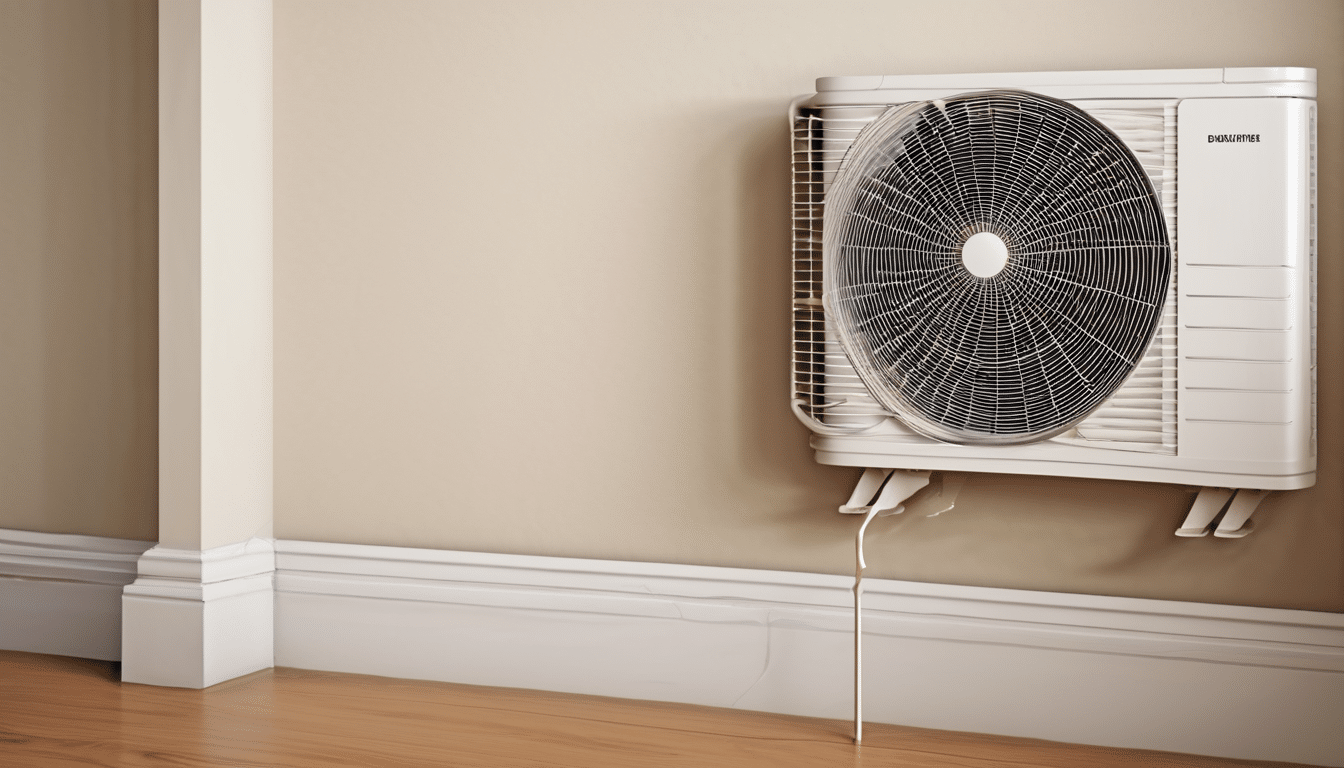
The condenser coil is located in the outdoor unit — typically on a rooftop, in a service yard, or mounted externally on a villa or apartment building. Its function is to release the heat absorbed indoors to the outside air. This process requires the condenser fins to be clean and the outdoor airflow across the coil to be unimpeded. In Dubai’s outdoor environment, this is where contamination accumulates fastest.
Desert dust, construction particulate, airborne fibres, and windborne debris settle into condenser fin arrays consistently. During summer, when outdoor temperatures regularly exceed 45°C, a condenser coil blocked by debris faces an additional thermal challenge: the ambient air it must reject heat into is already extremely hot. A clean condenser under these conditions manages the load adequately. A contaminated condenser cannot. The importance of How Dirty AC Coils Affect Cooling Efficiency Dubai is evident here.
Condenser Coil Contamination vs Evaporator Coil Contamination
The consequences of condenser contamination differ from evaporator contamination in one important respect: they place direct stress on the compressor. When the condenser cannot shed heat efficiently, refrigerant pressure rises on the high side of the system. The compressor works harder to maintain the pressure differential the system requires. Sustained high-side pressure increase shortens compressor lifespan, increases electrical consumption, and can trigger high-pressure cutouts that cause the unit to shut down unexpectedly.
Evaporator contamination primarily degrades indoor comfort and energy efficiency. Condenser contamination does both, with the added risk of accelerating mechanical failure. Understanding how dirty AC coils affect cooling efficiency Dubai homes requires recognising that the two coils represent different failure modes, both of which require attention during a professional coil cleaning service.
Dirty Coils vs Clean Coils — A Direct Comparison
Comparing contaminated and clean coil performance side by side illustrates the scale of degradation that builds incrementally and is frequently attributed to other causes — compressor age, refrigerant loss, or thermostat failure — when the root cause is simply coil soiling.
Heat Transfer Capacity
A clean evaporator coil operates at close to its designed heat transfer coefficient. Particulate accumulation on the fin surface reduces effective contact area. Field assessments commonly observe units where the coil surface is partially or significantly blocked, with corresponding reductions in the temperature differential between supply and return air. After professional cleaning, that differential returns to the expected range, confirming that the system’s refrigerant charge and compressor were never the problem. Understanding How Dirty AC Coils Affect Cooling Efficiency Dubai helps with this aspect.
Energy Consumption
An AC system compensates for impaired coil performance by extending run time. The compressor, fan motor, and auxiliary components operate for longer periods to achieve what a clean system achieves in fewer cycles. The practical result for Dubai households is noticeably higher electricity bills during summer months — an outcome that is frequently absorbed as a seasonal inevitability rather than identified as a recoverable loss from coil contamination.
Indoor Air Quality
How dirty AC coils affect cooling efficiency Dubai homes extends beyond temperature. A contaminated evaporator coil recirculates particulate and, in the presence of biofilm, distributes microbial load through the duct system with every cycle. Families with respiratory sensitivities, asthma, or allergies may notice symptoms worsening without an identifiable cause. After professional evaporator coil cleaning and disinfection using Dubai Municipality approved bio-sanitisers, the air quality improvement is often noticed before the temperature improvement — a different quality of air, not just a cooler room.
The Dubai Climate Factor in Coil Contamination
How dirty AC coils affect cooling efficiency Dubai systems is inseparable from the conditions that accelerate contamination here. Four factors are specific to the UAE residential context and distinguish it from temperate climates where AC systems operate seasonally.
First, continuous operation means coils never have a dormant period during which surface conditions can stabilise. Second, high desert particulate levels — intensified by construction activity across Dubai, Abu Dhabi, Sharjah, and Ras Al Khaimah — mean fin arrays accumulate debris faster than in most urban environments globally. Third, summer humidity during the June to September period creates persistent moisture on evaporator coil surfaces, supporting moisture-driven microbial conditions in the coil bay. Fourth, high outdoor temperatures during summer place condenser coils under maximum thermal stress precisely when they are most likely to be contaminated from months of continuous operation. How Dirty AC Coils Affect Cooling Efficiency Dubai factors into this consideration.
These four conditions compound each other. A coil that might remain serviceable for eighteen months in a European climate may require professional attention every six to twelve months in a Dubai villa or apartment.
How Dirty AC Coils Affect Cooling Efficiency Dubai Compared to Other AC Faults
One of the most useful comparisons for Dubai homeowners is understanding how coil contamination ranks against other common AC performance issues. Refrigerant loss, thermostat calibration drift, duct leakage, and filter blockage all affect system performance — but coil contamination is among the most impactful and, importantly, the most reversible through professional service. This relates directly to How Dirty AC Coils Affect Cooling Efficiency Dubai.
Refrigerant loss requires diagnosis by a licensed technician and recharging, which addresses a physical depletion. Coil contamination is entirely surface-based — the coil’s structural integrity is intact; only its surface condition has changed. Professional cleaning restores it to near-original performance without component replacement. This makes coil cleaning one of the highest return-on-investment interventions available in residential AC maintenance, particularly when both evaporator and condenser coils are addressed in the same service visit.
Coil Cleaning vs Full AC Service
A full AC service addresses coils, blower wheels, drain lines, condensate trays, filters, and duct connections. Coil cleaning alone addresses only the heat exchange surfaces. The comparison matters because a clean coil in a system with a blocked drain line will develop biofilm conditions rapidly — the moisture that should drain away accumulates instead, and the coil bay stays wet. Addressing coil contamination in isolation without inspecting the condensate drainage pathway is incomplete. SaniHome’s approach to coil cleaning includes inspection of connected system components precisely because contamination in one area recontaminates adjacent areas within weeks. When considering How Dirty AC Coils Affect Cooling Efficiency Dubai, this becomes clear.
What Professional Coil Cleaning Restores
Professional evaporator coil cleaning using NADCA-aligned methodology involves safe access to the coil bay, soft-brush and low-pressure agitation of fin surfaces, application of appropriate coil cleaner with dwell time, and rinse procedures that remove loosened particulate without damaging fin geometry. For biofilm conditions, a Dubai Municipality approved antibacterial and antifungal bio-sanitiser is applied after mechanical cleaning, addressing microbial load at the surface level.
Condenser coil cleaning involves fin straightening where compacted debris has deformed fin rows, removal of embedded particulate from the fin array using appropriate technique for the coil type, and inspection of refrigerant line connections and fan motor condition during access. After professional cleaning of both coils, the measurable changes include restored supply air temperature differential, reduced run time to achieve set temperature, and lower electrical consumption during peak summer months. The importance of How Dirty AC Coils Affect Cooling Efficiency Dubai is evident here.
Expert Takeaways for Dubai Homeowners
- How dirty AC coils affect cooling efficiency Dubai homes is measurable — reduced supply air temperature differential, longer run cycles, and higher bills are the consistent indicators.
- Evaporator and condenser coils fail through different mechanisms and require separate assessment during any professional service visit.
- Dubai’s continuous-operation environment and high particulate load mean coil inspection intervals should be shorter than generic manufacturer guidelines suggest.
- Biofilm on evaporator coils is a separate problem from particulate accumulation — it requires disinfection, not just mechanical cleaning.
- Coil cleaning is most effective when condensate drainage is also inspected and cleared in the same service, preventing rapid recontamination.
- A before-and-after service report, including documentation of coil condition, provides measurable evidence that cleaning has delivered the improvement it should.
Frequently Asked Questions
How do dirty AC coils affect cooling efficiency in Dubai apartments specifically?
In Dubai apartments, evaporator coils in split or ducted systems accumulate particulate continuously due to high indoor-outdoor air exchange rates and desert dust infiltration. Contaminated fins reduce heat transfer, causing the system to run longer and deliver less cooling. The effect is amplified in smaller apartment spaces where a single underperforming unit affects the entire living area. Professional coil cleaning restores heat transfer capacity and reduces run time.
How often should AC coils be cleaned in Dubai villas?
Based on field assessments across Dubai villas, evaporator coils typically require professional inspection and cleaning every six to twelve months, depending on occupancy, filter maintenance frequency, and proximity to construction activity. Condenser coils in outdoor units accumulate debris faster during winter shamal winds and summer dust events. Annual professional service covering both coil types is a reasonable baseline for most Dubai residential properties. Understanding How Dirty AC Coils Affect Cooling Efficiency Dubai helps with this aspect.
What is the difference between dirty evaporator and condenser coil effects?
A contaminated evaporator coil primarily reduces indoor cooling comfort and indoor air quality. A contaminated condenser coil primarily raises system operating pressure and stresses the compressor, potentially shortening mechanical lifespan alongside reducing cooling output. Both types of coil contamination increase energy consumption. Addressing only one coil type in a professional service leaves the other as an unresolved performance constraint.
Can dirty AC coils cause musty smells in Dubai homes?
Yes. Moisture-driven microbial conditions in the coil bay — a common finding during professional assessments in Dubai — produce volatile compounds that circulate through the duct system with every cooling cycle. The result is a musty or sour smell that appears shortly after the AC starts. Mechanical cleaning alone does not resolve this. Antibacterial and antifungal disinfection of the evaporator coil surface using a Dubai Municipality approved bio-sanitiser is required to address the microbial source. How Dirty AC Coils Affect Cooling Efficiency Dubai factors into this consideration.
Does cleaning AC coils reduce electricity bills in the UAE?
Commonly observed during professional assessments, systems with significantly contaminated coils run for extended periods to reach set temperature, increasing compressor and fan motor operating hours. After professional coil cleaning, run cycles shorten as heat transfer efficiency is restored. For UAE households operating AC continuously through summer, this translates to a measurable reduction in electricity consumption. The specific improvement depends on the degree of contamination prior to service and the overall condition of the system.
Is coil cleaning covered in a standard AC maintenance contract in Dubai?
This depends entirely on the scope defined in the maintenance contract. Many standard contracts include filter cleaning and visual inspection without addressing coil surfaces directly. A comprehensive residential maintenance plan — such as those provided by SaniHome across Dubai, Abu Dhabi, Sharjah, and the northern emirates — should specify evaporator and condenser coil cleaning explicitly, along with drain line and condensate tray servicing, to ensure the full system is addressed rather than surface components only. This relates directly to How Dirty AC Coils Affect Cooling Efficiency Dubai.
How do I know if dirty coils are affecting my AC performance in Dubai?
The most reliable indicators are: the system runs continuously without reaching set temperature; supply air feels less cool than expected; electricity consumption has increased without a change in usage patterns; or a musty smell is present when the AC starts. A professional assessment by a NADCA-aligned specialist can document coil condition directly and confirm whether contamination is the primary cause of the performance reduction you are experiencing.
Conclusion
How dirty AC coils affect cooling efficiency Dubai homes is not a theoretical concern — it is a practical reality that plays out in thousands of apartments, villas, and townhouses across the UAE every summer. The comparison between contaminated and clean coil performance is consistent: impaired heat transfer, longer run cycles, higher energy consumption, and in the presence of moisture-driven microbial conditions, degraded indoor air quality alongside reduced cooling.
The good news is that coil contamination is entirely reversible through professional service. A NADCA-aligned coil cleaning that addresses both evaporator and condenser surfaces, incorporates appropriate disinfection where microbial conditions are identified, and inspects the condensate drainage pathway as part of the same visit restores system performance to a measurable, documented standard. For Dubai families asking why their AC never quite keeps up — the coils are almost always worth inspecting first.
If you would like a professional assessment of coil condition in your home, SaniHome’s residential AC specialists serve properties across Dubai, Abu Dhabi, Sharjah, Ajman, Ras Al Khaimah, Umm Al Quwain, and Fujairah. Contact us for a property-specific evaluation and service recommendation. Understanding How Dirty AC Coils Affect Cooling Efficiency Dubai is key to success in this area.