


Air Duct Hygiene: Crucial for Luxury Villa Living
Luxury villa owners in Dubai face a distinct challenge as what is air duct hygiene conditioning systems work around the clock in a hot, humid climate. If you rely on pristine indoor air and efficient HVAC operation, overlooking true air duct hygiene can lead to hidden health risks and wasted energy. Dubai’s continuous cooling creates ideal conditions for mold and microbial growth inside ductwork, making professional assessment key. Proper air duct hygiene goes beyond the visible—this article unpacks real science, common myths, and expert standards you need to safeguard your home’s comfort and investment.
Table of Contents
Contents
- Defining Air Duct Hygiene And Common Myths
- How Contaminants Build Up In Ducts
- Cleaning Methods And Scientific Standards
- Health, Efficiency, And Cost Implications
- Avoiding Pitfalls: Choosing Certified Experts
Key Takeaways
| Point | Details |
|---|---|
| Air Duct Hygiene is Essential | Proper air duct hygiene involves maintaining ducts to prevent the buildup of dust, allergens, and microbial growth, especially in humid climates like Dubai. |
| Misconceptions About Cleaning | Routine duct cleaning does not guarantee significant health improvements or energy savings; it should only be done when specific contamination levels warrant it. |
| Professional Assessment is Crucial | Regular professional assessments can identify areas of contamination that are not visible, ensuring targeted and effective cleaning interventions. |
| Choose Certified Experts | Selecting certified duct cleaning providers guarantees adherence to industry standards and ensures that your ductwork receives the necessary quality of care. |
Defining Air Duct Hygiene and Common Myths
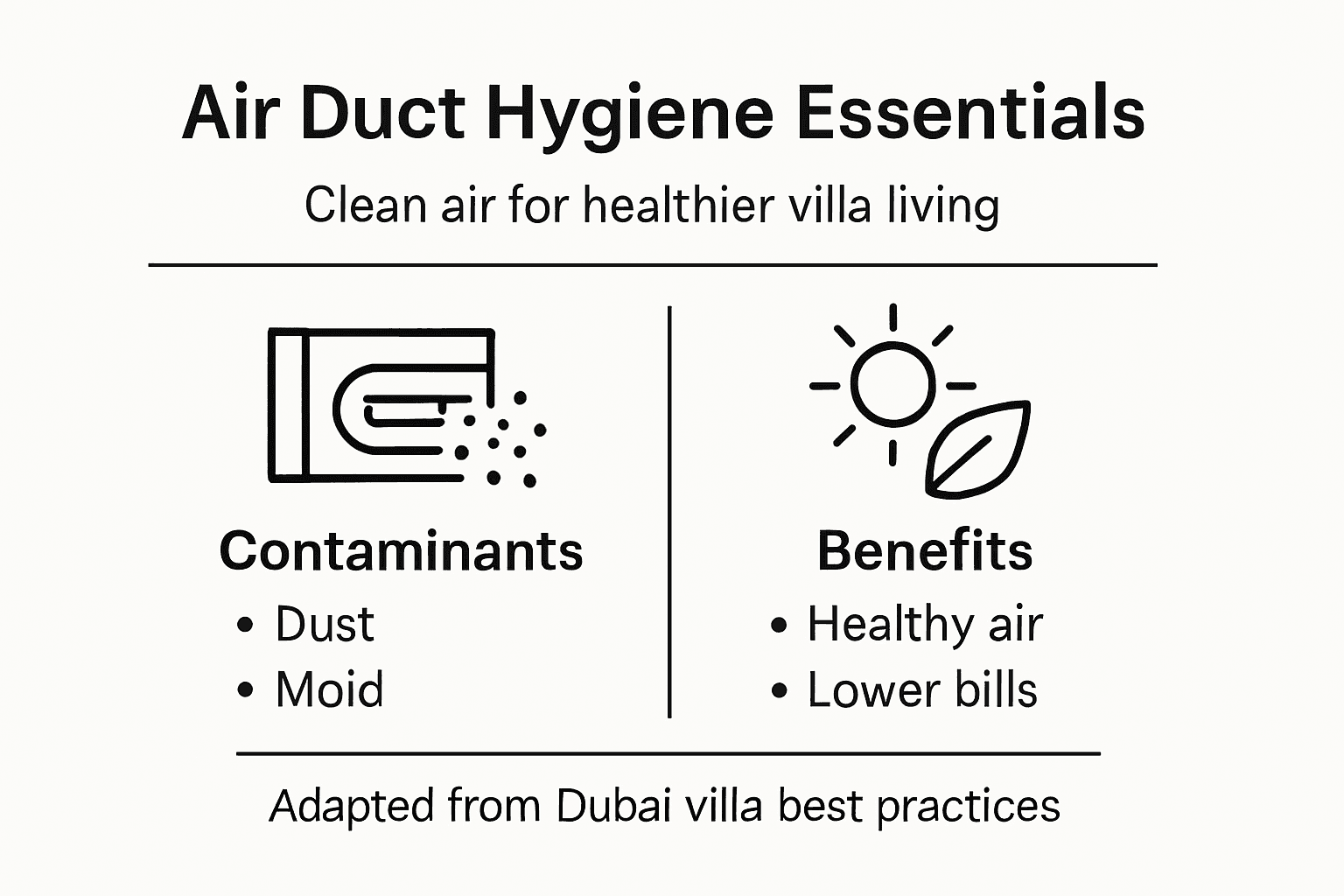
Air duct hygiene refers to the cleanliness and microbiological condition of your home’s ductwork—the network of passages that distribute conditioned air throughout your villa. This encompasses far more than simply the absence of visible dust. True air duct hygiene involves preventing and managing the accumulation of dust, allergens, microbial growth, and other contaminants that can degrade indoor air quality and compromise your HVAC system’s performance. In Dubai’s hot, humid climate, where air conditioning systems run continuously, the conditions inside ducts can become particularly hospitable for mold and bacterial colonization. Proper air duct hygiene means maintaining ducts that actively support the health and comfort of your household while ensuring your system operates at peak efficiency.
Unfortunately, the air duct cleaning industry has generated considerable confusion through misleading claims and oversimplified messaging. One of the most persistent myths suggests that routine duct cleaning alone—without addressing root causes—will dramatically improve your family’s health or energy bills. Research indicates this belief is overstated. According to government findings on HVAC duct cleaning and indoor air quality, existing evidence does not strongly support the claim that routine duct cleaning by itself leads to measurable improvements in health or system efficiency for all homes. However, the same research confirms that ducts do accumulate dust and microbial growth over time, which can impede airflow and discharge dust and odors into living spaces. The critical distinction: cleaning matters when specific conditions warrant it, not as a blanket preventive service.
Another widespread misconception conflates general cleanliness with hygiene. Many villa owners assume that if their ducts look clean from the outside, the system must be fine. This overlooks the reality of what happens inside ductwork over months and years. Dust settles on inner surfaces where you cannot see it. Moisture from humid air and condensation creates biofilm—a sticky layer of microorganisms that builds up on coil surfaces and duct walls. In luxury villas where powerful air conditioning runs almost continuously during summer months, this biofilm can develop surprisingly quickly. A truly hygienic duct system requires professional assessment to identify actual contamination, not assumptions based on appearance. SaniAC by Saniservice addresses this through scientific evaluation, using microbiology laboratory testing to determine whether your specific ductwork needs intervention, rather than recommending blanket cleaning for every property.
The third major myth suggests that duct cleaning is primarily a cosmetic or comfort upgrade. While visible dust reduction matters psychologically and aesthetically, the real importance of duct hygiene lies in preventing health risks and system degradation. When ducts accumulate microbial growth and debris, they become potential sources of airborne allergens and irritants. For households with family members experiencing respiratory sensitivity, allergies, or asthma, the difference between adequately maintained ducts and heavily contaminated ones can be tangible. Additionally, clean ducts maintain proper airflow, allowing your HVAC system to operate efficiently without excessive strain. This directly impacts energy consumption and extends equipment lifespan—practical benefits that justify professional attention when conditions warrant it.
Pro tip: Request a professional microbiology assessment of your air ducts before committing to cleaning services; this determines whether intervention is actually necessary based on contaminant levels specific to your villa, rather than accepting generic recommendations.
How Contaminants Build Up in Ducts
Duct contamination does not happen overnight. It accumulates gradually through a combination of factors specific to your villa’s location, climate, and daily operations. Understanding how this buildup occurs helps explain why professional assessment matters and why prevention is more cost-effective than dealing with heavily contaminated systems later. In Dubai’s environment, where outdoor air contains significant dust particles and indoor humidity levels remain high year-round, your ductwork faces constant pressure from multiple contamination sources. The process begins the moment your air conditioning system draws in outdoor air and distributes conditioned air throughout your home.
Dust and particulate matter form the most obvious layer of contamination. When your HVAC system operates, it pulls air from outside through filters designed to capture larger particles. However, no filter achieves 100 percent efficiency, especially over time as filters accumulate their own buildup. Smaller dust particles, skin cells, pet dander, and other debris slip past or around filters and travel into your ductwork. Once inside, these particles settle on duct surfaces, particularly where air velocity slows or where bends create dead zones. Occupant activities compound this problem. Cooking generates fine particulates. Cleaning produces dust clouds. Even normal movement through the villa disturbs settled dust that can be drawn into ducts. Over months and years, these layers of dust accumulate into a visible, tangible buildup that restricts airflow and provides an ideal surface for additional contamination.
Microbial growth represents the second and more concerning contamination layer. Humidity in Dubai creates perfect conditions for mold spores and bacterial colonization to thrive. Condensation forms inside ducts when warm, humid air cools as it travels through shaded ductwork or passes over cold evaporator coils. This moisture, combined with the dust layer already present, creates what microbiologists call biofilm. Biofilm is a sticky, adherent layer of microorganisms that forms on surfaces and becomes increasingly resistant to cleaning the longer it persists. Research on how ventilation systems accumulate pollutants demonstrates that duct design, sealing integrity, and maintenance directly influence how readily contaminants build up and subsequently disseminate into living spaces. In poorly sealed or deteriorating ducts, these microorganisms become active participants in your indoor air quality, releasing spores and microbial byproducts that enter your living areas.
Chemical and gaseous contaminants add a third dimension to duct pollution. Volatile organic compounds (VOCs) from cleaning products, furniture off-gassing, and outdoor air pollution can accumulate on duct surfaces. Unlike dust, these cannot be simply vacuumed away. They bond to surfaces and can be released back into your home’s air as conditions change. Additionally, any water damage or leaks in your ductwork accelerate all three contamination types. Moisture creates ideal conditions for mold germination, dust particles clump together more readily, and chemical degradation accelerates. In luxury villas where HVAC systems are often concealed within walls or attic spaces, identifying water damage early becomes more difficult. This is why professional inspection reveals problems invisible to the naked eye.
The contamination buildup process is not uniform across your entire duct system. Certain areas accumulate contaminants faster based on airflow patterns, temperature zones, and humidity levels. Return air ducts accumulate heavier dust loads because they capture air directly from your living spaces before it reaches filters. Supply ducts, while carrying filtered air, still accumulate microbes and chemical residues over time. Areas where ducts bend sharply or narrow experience reduced airflow velocity, creating pockets where particles settle preferentially. Understanding this variation explains why blanket cleaning approaches miss the mark. Your villa’s ductwork requires targeted assessment to identify where contamination is actually problematic, not just assumption-based treatment of the entire system.
Here’s a quick comparison of common air duct contaminants and their sources:
| Contaminant Type | Primary Source | Example Impact on Home |
|---|---|---|
| Dust & Particulates | Outdoor air, occupant activity | Reduced airflow, visible buildup |
| Microbial Growth | Humidity, condensation | Mold spores, health concerns |
| Chemicals & VOCs | Cleaning products, materials | Release of odors, potential toxicity |
Pro tip: Schedule a professional inspection during the cooler months (October through March) when humidity levels are lower and contamination patterns are more stable, making it easier for technicians to identify actual problem areas and recommend targeted intervention rather than unnecessary full-system cleaning.
Cleaning Methods and Scientific Standards
Not all duct cleaning approaches deliver equivalent results. The methods used, the equipment deployed, and the standards applied determine whether your villa’s ductwork receives genuine remediation or merely cosmetic surface treatment. Professional cleaning of air ducts encompasses multiple distinct processes, each targeting specific types of contamination. Understanding these methods helps you evaluate service providers critically and ensure you are investing in science-backed solutions rather than marketing promises.
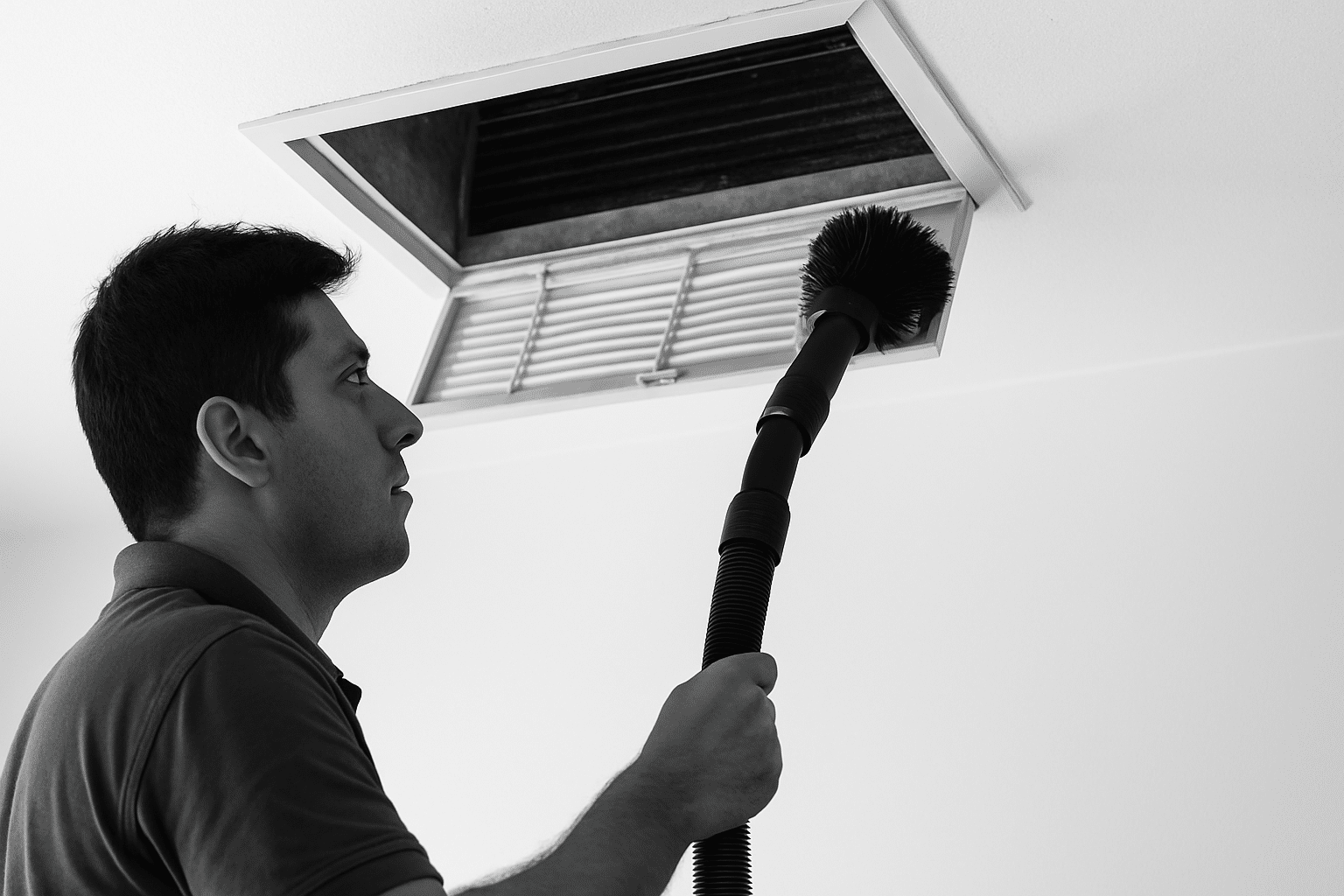
Mechanical cleaning forms the foundation of legitimate duct remediation. This involves physically removing accumulated dust, debris, and biofilm through specialized equipment. Negative air machines create controlled suction that pulls contaminants from ducts into collection containers equipped with HEPA filtration. Rotary brushes and agitation tools dislodge stubborn biofilm and dust layers that have bonded to duct surfaces over time. Access ports are strategically created or utilized to ensure technicians can reach all interior surfaces, including those difficult areas where contamination preferentially accumulates. The process is systematic and comprehensive, moving through the ductwork section by section rather than attempting to treat the entire system from a single access point. This methodical approach distinguishes professional remediation from rushed or incomplete procedures.
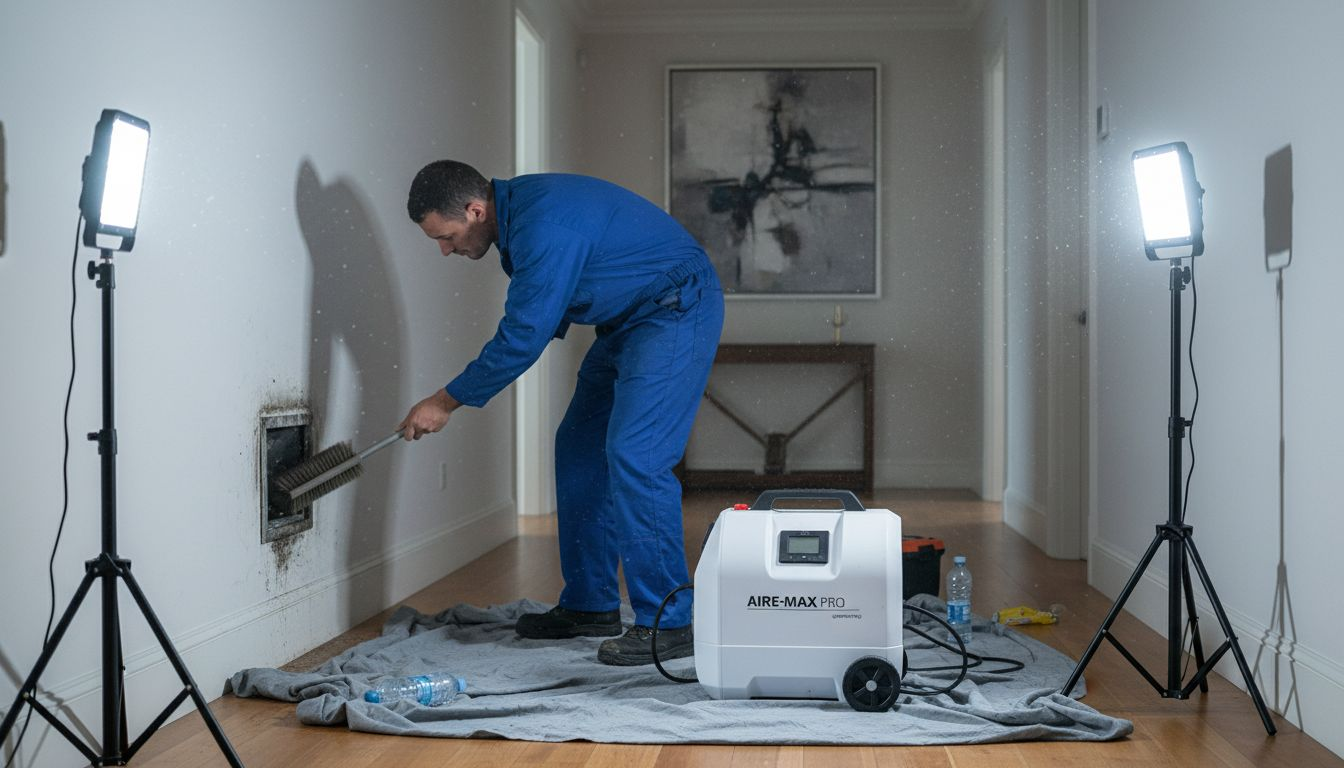
Disinfection and antimicrobial treatment represent the second critical component. After mechanical removal, residual microbial spores and bacteria remain on duct surfaces, ready to recolonize if conditions permit. Hospital-grade biosanitizers eliminate these remaining microorganisms without relying on harsh chemicals that could damage your HVAC components or leave toxic residues. SaniAC by Saniservice utilizes chemical-free, evidence-based disinfection methods that target microbial viability while protecting your family’s safety. These treatments address the root cause of contamination rather than simply removing visible debris. The application requires precision timing and proper ventilation protocols to ensure occupant safety during and immediately after treatment. This is why professional application matters significantly more than over-the-counter duct cleaning products, which lack the antimicrobial efficacy needed for heavily contaminated systems.
Scientific standards guide effective duct cleaning practice. ASHRAE’s standards for filtration and air cleaning outline evidence-based principles for removing airborne contaminants, addressing particles, bioaerosols, and gases through methods applied specifically to building HVAC systems. These standards emphasize that cleaning effectiveness depends on proper methodology, appropriate technology selection, and consideration of system-specific factors like ductwork configuration and airflow patterns. NADCA certification (National Air Duct Cleaners Association) establishes technician qualifications and procedural standards that ensure work meets industry best practices. Technicians holding NADCA certification have undergone rigorous training in duct system design, contamination identification, and proper cleaning protocols. When evaluating service providers, NADCA certification serves as a verifiable marker of professional competency.
- Three key factors distinguish high-quality cleaning from inadequate work:
- Complete access and coverage: Professional teams dismantle ductwork components when necessary to reach all contaminated surfaces. Surface cleaning from outside ducts leaves internal biofilm and microbial colonization untouched, perpetuating the original problem.
- Verification through testing: Legitimate providers conduct post-cleaning microbiology testing to confirm contamination reduction. This objective measurement replaces subjective assessment and provides documented evidence that cleaning achieved its purpose.
- Equipment and chemical safety: Hospital-grade disinfection coupled with proper ventilation protocols protects your family during and after treatment. Inferior services may use aggressive chemicals or incomplete ventilation, creating secondary health risks.
- During Dubai’s extreme summer months, when HVAC systems run continuously at maximum capacity, properly cleaned and sealed ducts operate with significantly greater efficiency. Unobstructed airflow reduces compressor strain, lowers energy consumption, and extends system lifespan. Conversely, contaminated ducts force your equipment to work harder against resistance, increasing operating costs and accelerating component degradation. This efficiency benefit justifies professional intervention when contamination warrants it, translating directly to measurable cost recovery through reduced energy bills and deferred equipment replacement.
- Pro tip: Request your cleaning provider’s NADCA certification credentials and ask for post-service microbiology test results showing before and after contamination levels; this transparency confirms the work actually accomplished what was promised rather than relying on visual inspection alone.
- Health, Efficiency, and Cost Implications
- The decision to invest in professional air duct cleaning extends far beyond aesthetics or comfort preferences. It carries direct consequences for your family’s respiratory health, your HVAC system’s operational efficiency, and your household’s long-term financial sustainability. These three dimensions interconnect in ways that many villa owners fail to recognize until problems escalate into costly repairs or health issues emerge. Understanding these implications helps you view duct hygiene not as an optional luxury service, but as a practical component of home management aligned with your family’s wellbeing and your property’s asset value.
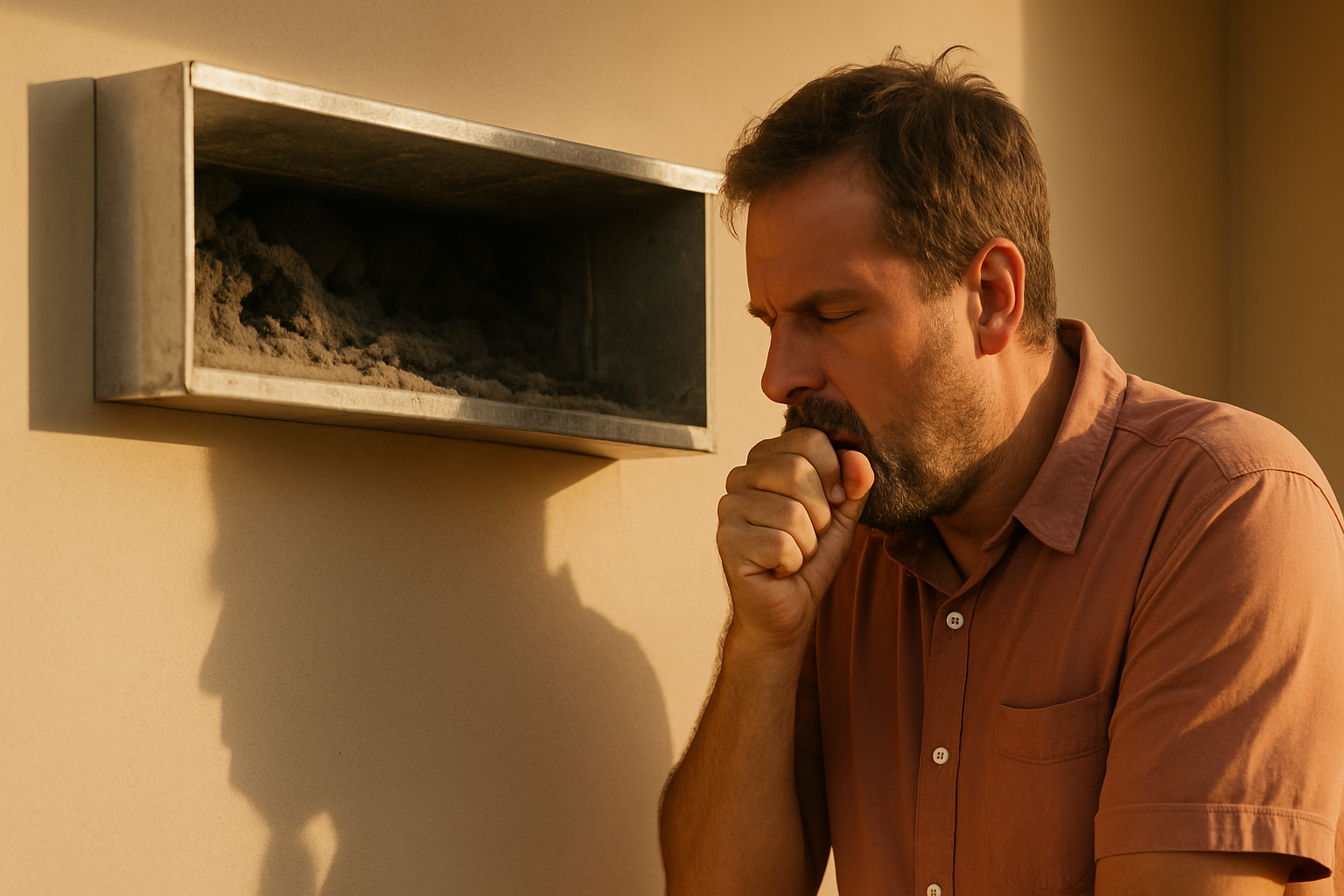
- Respiratory health impacts represent the most immediate and personal concern for luxury villa residents. When contaminated ducts release dust, mold spores, and microbial byproducts into your living spaces, family members inhale these particles continuously throughout the day. For households with children, elderly relatives, or individuals with asthma, allergies, or other respiratory sensitivities, contaminated indoor air quality translates into measurable health consequences. These may range from minor symptoms like persistent coughing and nasal congestion to exacerbated asthma attacks requiring medical intervention. Research demonstrates that reducing indoor particulate matter through HVAC maintenance improves respiratory health outcomes and generates positive economic returns through lower medical expenses. In Dubai’s extreme heat, where families spend significant time indoors with air conditioning running continuously, the cumulative exposure to contaminated air becomes especially significant. Clean ducts mean cleaner air circulating through your home, reducing the contaminant load your family members breathe and thereby lowering the risk of respiratory complications.
- Energy efficiency and system longevity form the second critical dimension of duct hygiene’s value proposition. Contaminated ducts restrict airflow through accumulated dust and biofilm buildup. When your HVAC system encounters increased resistance, the compressor and blower motor must work harder to maintain your desired temperature settings. This increased workload consumes more electricity, directly raising your energy bills. In Dubai’s climate, where cooling demands peak during summer months, an inefficient system operates at maximum capacity for extended periods, accelerating component wear. A contaminated system that runs at 85 percent efficiency compared to a properly cleaned system operating at 95 percent efficiency represents a meaningful difference in energy consumption over months and years. Clean ducts enable your system to operate at peak efficiency, reducing strain on components and extending equipment lifespan by several years. This longevity benefit delays expensive replacements—a central air system replacement in a luxury villa can easily exceed 50,000 AED or more—making professional duct cleaning a cost-effective preventive investment.
- The financial equation becomes clearer when you calculate total cost of ownership. Professional duct cleaning costs between 2,000 and 5,000 AED for most Dubai villas, depending on system complexity and contamination severity. Over a five-year period, this represents an investment of 400 to 1,000 AED annually. Reduced energy consumption from improved efficiency typically yields monthly electricity savings of 150 to 300 AED during cooling season, translating to 1,800 to 3,600 AED annually. Extended equipment lifespan that defers replacement by even two to three years preserves 15,000 to 25,000 AED in capital expenditure. Combined with reduced medical expenses from improved air quality and enhanced family comfort, the financial case for proper duct maintenance becomes compelling. This is before considering the intangible value of peace of mind knowing your family breathes clean, healthy air in your own home.

- Villa owners often underestimate the compounding effect of delayed maintenance. Skipping professional cleaning when conditions warrant it does not simply mean tolerating dirtier air. It means:1. Accelerated biofilm development that becomes progressively more difficult and expensive to remove later2. Increasing energy costs month after month as efficiency continues declining3. Component failures occurring years earlier than typical, triggering emergency replacements at premium pricing4. Accumulating health impacts that manifest as chronic respiratory issues requiring ongoing medical managementConversely, proactive duct maintenance prevents this deterioration cycle, maintaining system efficiency and indoor air quality within your controlled standards. This approach aligns with luxury villa living principles—deliberate stewardship of your property investment combined with commitment to family health and environmental sustainability.
- Pro tip: Calculate your actual electricity savings by comparing bills from months before and after professional duct cleaning; most villa owners discover energy reductions of 10 to 15 percent during the following cooling season, often recovering cleaning costs within 12 to 18 months through reduced utility expenses.
- Avoiding Pitfalls: Choosing Certified Experts
- The duct cleaning industry attracts both legitimate professionals and opportunistic operators who prioritize speed and profit over quality and safety. This variation creates significant risk for villa owners who lack technical knowledge to distinguish between competent service providers and those cutting corners or using ineffective methods. The cost difference between a rushed, incomplete cleaning and a thorough, science-backed intervention may seem minimal upfront, but the performance gap becomes obvious within weeks. Protecting your investment and your family’s health requires understanding what separates genuine experts from operators merely claiming expertise.
- Certification serves as your primary verification mechanism. Professional duct cleaners holding credentials from recognized organizations have demonstrated knowledge, adhered to standardized procedures, and committed to ongoing professional development. NADCA certifications, including Air Systems Cleaning Specialist and Certified Ventilation Inspector credentials, ensure professionals maintain competency in HVAC system hygiene, proper inspection protocols, and cleaning methodologies aligned with industry best practices. These certifications represent substantive achievements requiring documented training, examination passage, and adherence to codes of professional conduct. When evaluating service providers, NADCA certification eligibility should be your baseline expectation, not a premium feature. SaniAC by Saniservice holds NADCA certification alongside triple ISO certification in quality management, environmental responsibility, and occupational health and safety, demonstrating commitment to rigorous professional standards.
- Beyond certifications, several red flags indicate operators you should avoid. Providers offering blanket recommendations to clean all ducts regardless of contamination levels likely prioritize revenue over genuine assessment. Legitimate experts conduct initial microbiology testing and visual inspection, then recommend cleaning only when data supports intervention. Operators quoting prices significantly below market rates typically accomplish this through reduced scope, inadequate equipment, or incomplete disinfection protocols. The cheapest option frequently delivers the poorest results and may leave your system in worse condition than before intervention. Providers unable or unwilling to explain their methodology in detail, or who resist explaining why specific cleaning approaches address your system’s particular conditions, lack confidence in their work quality. Trust your instincts when interactions feel pressured or dismissive of your questions.
- Competent providers demonstrate specific practices that distinguish quality work. They begin with documented assessment including photographic evidence of contamination, microbiology sampling to quantify microbial load, and written analysis of findings. They explain their proposed methodology in terms you can understand, detailing which duct sections require intervention and why. They provide written contracts specifying scope of work, equipment to be used, disinfection protocols, occupant safety measures during service, and post-service testing to verify results. They obtain your explicit consent before proceeding and explain preparations required from you, such as sealing off occupied spaces or adjusting thermostat settings during treatment. Upon completion, they provide comprehensive documentation including before and after microbiology test results, photographic evidence of cleaning progress, and written guidance on maintenance practices to extend the benefit of their work.
- SaniAC by Saniservice operates from Dubai’s base with an in-house microbiology laboratory staffed by trained scientists capable of testing your specific duct environment. This laboratory capacity enables evidence-based assessment rather than guesswork, ensuring cleaning recommendations reflect actual contamination levels rather than generic assumptions. The company’s multidisciplinary team includes microbiologists, HVAC engineers, architects, and building scientists, bringing specialized expertise to complex problems. Hospital-grade disinfection protocols combined with HEPA filtration containment protect your family during service delivery. This comprehensive approach represents the standard you should expect from luxury villa specialists, not exceptional service worthy of premium pricing alone.
- When evaluating proposals, request and verify references from recent villa cleaning projects with comparable system complexity. Ask for evidence of before and after microbiology testing results showing actual contamination reduction. Request copies of technician certifications and insurance documentation. Clarify what happens if post-service testing reveals contamination levels higher than expected or if recontamination occurs within a specified timeframe. Quality providers offer performance guarantees because their methods consistently deliver results. This confidence distinguishes professionals from operators hoping you will not follow up on outcomes.
- Below is a summary of certified provider qualities versus red flags to watch for when selecting an air duct cleaning service:
| Certified Provider Qualities | Red Flags to Avoid |
|---|---|
| NADCA or ISO certifications | No proof of qualifications |
| Provides detailed lab testing | Blanket cleaning recommendations |
| Offers full documentation | Vague or missing methodology |
| Guarantees post-cleaning results | Unusually low pricing |
- Three specific questions separate serious providers from casual operators:
-
“What microbiology testing will you conduct before recommending cleaning, and what contamination levels warrant intervention?” Legitimate providers reference objective standards rather than stating they automatically clean all ducts.
-
“How will you protect my family and property during disinfection, and what safety protocols do you follow?” Quality providers explain specific containment measures, occupant evacuation requirements, and verification that residues are eliminated.
-
“What documentation will you provide after completion, and what happens if contamination levels do not meet expectations?” Professionals offer comprehensive documentation and performance guarantees.
- Pro tip: Contact SaniAC by Saniservice or other certified Dubai providers for complimentary site assessment before committing to service; this initial evaluation typically costs nothing and provides objective data about your specific ductwork conditions, enabling informed comparison between provider recommendations rather than accepting claims at face value.
- Elevate Your Villa’s Air Quality with Proven Science-Backed Solutions
- Maintaining pristine air duct hygiene is far more than a cosmetic upgrade for luxury villas in Dubai. The article highlights the hidden dangers of dust, microbial biofilms, and chemical contaminants severely impacting your family’s respiratory health and your HVAC system’s efficiency. If you seek to avoid costly energy waste and protect your loved ones from airborne irritants, relying on generic cleaning myths is not enough. You need a targeted, microbiology-driven approach that identifies actual contamination levels and applies hospital-grade disinfection for true duct remediation.
- Discover how Saniservice addresses these specific challenges by combining NADCA-certified expertise with evidence-based microbiology testing. Our multidisciplinary Indoor Sciences team meticulously dismantles and deep-cleans every system component, ensuring not just visible cleanliness but scientifically verified hygiene. Benefit now from improved energy efficiency, extended system lifespan, and healthier indoor air tailored to your villa’s unique needs.
- Start your journey to healthier indoor air today by exploring our comprehensive services in AC Cleaning & Maintenance.
- Don’t wait until contamination worsens and costs escalate. Visit Saniservice for a complimentary site assessment and see real results documented with lab-tested before and after data. Learn from our success stories in Case Studies – Saniservice AC Cleaning and take the first step toward cleaner, safer air in your home now.
- Frequently Asked Questions
- What is air duct hygiene and why is it important for luxury villas?
- Air duct hygiene refers to the cleanliness and microbiological condition of a villa’s ductwork. It is crucial because it prevents the accumulation of dust, allergens, and microbial growth, ensuring healthier indoor air quality and optimal HVAC performance.
- How do contaminants build up in air ducts?
- Contaminants accumulate in air ducts gradually due to factors like dust from outdoor air, moisture from humidity, and occupant activities. Over time, this leads to a buildup of dust, microbial growth, and chemical residues that can affect air quality and system efficiency.
- What cleaning methods should be used for effective air duct cleaning?
- Effective air duct cleaning involves specialized mechanical cleaning methods, including negative air machines for suction and rotary brushes for scrubbing surfaces. Additionally, disinfection with hospital-grade biosanitizers is essential to eliminate remaining microbial spores after physical cleaning.
- How can I ensure I choose a qualified air duct cleaning service?
- To ensure you choose a qualified service, look for providers with NADCA certifications, request detailed microbiology testing before cleaning, and verify that they provide documentation of their methods and results. Quality providers will also offer performance guarantees for their work.
- Recommended
- The New Standard in Quiet Luxury: Immaculate Air Quality For Your Home
- HVAC Cleaning for Energy Efficiency: Proven Impact
- Should I get professional duct cleaning for my villa? – Saniservice AC Cleaning
- Best Air Duct Cleaning Companies Near Me – Expert Comparison 2025 – Saniservice AC Cleaning

Leave a Reply