

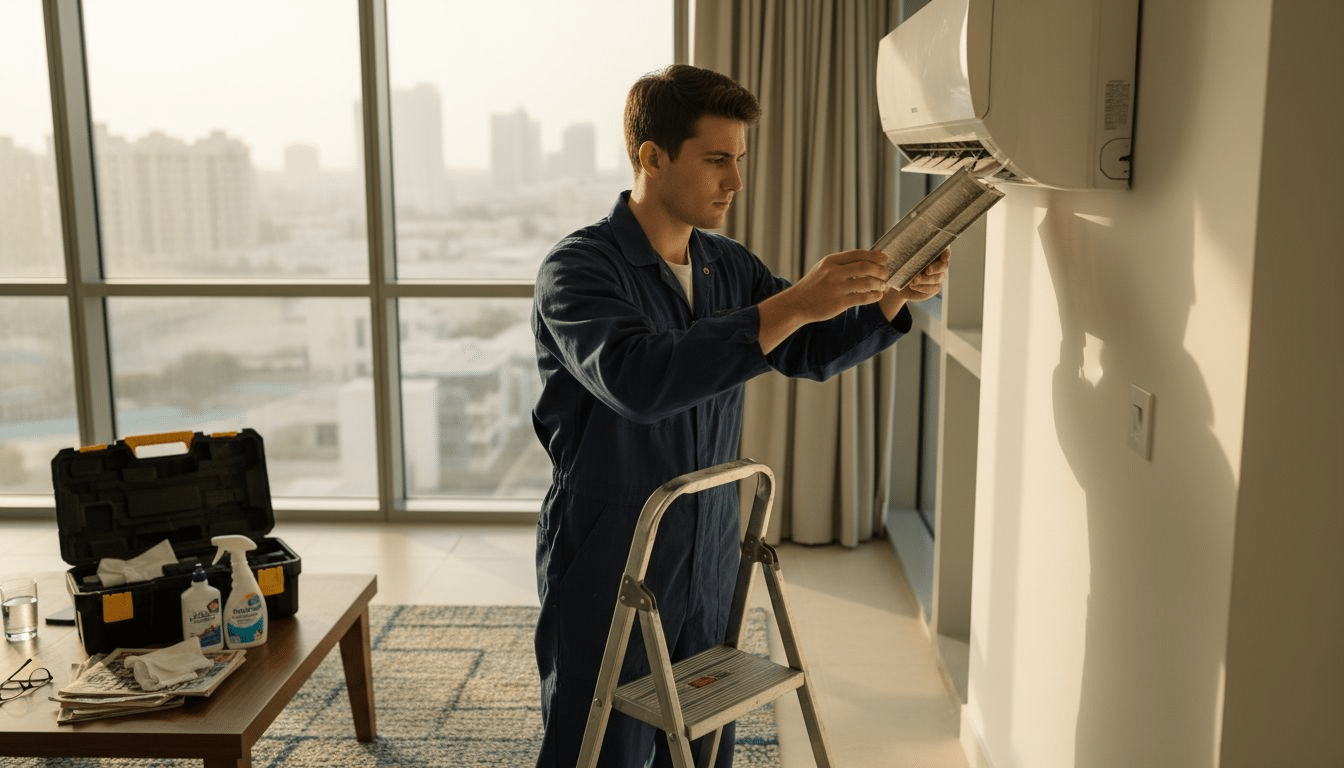
Comprehensive AC Cleaning: Ensuring Healthier Dubai Homes
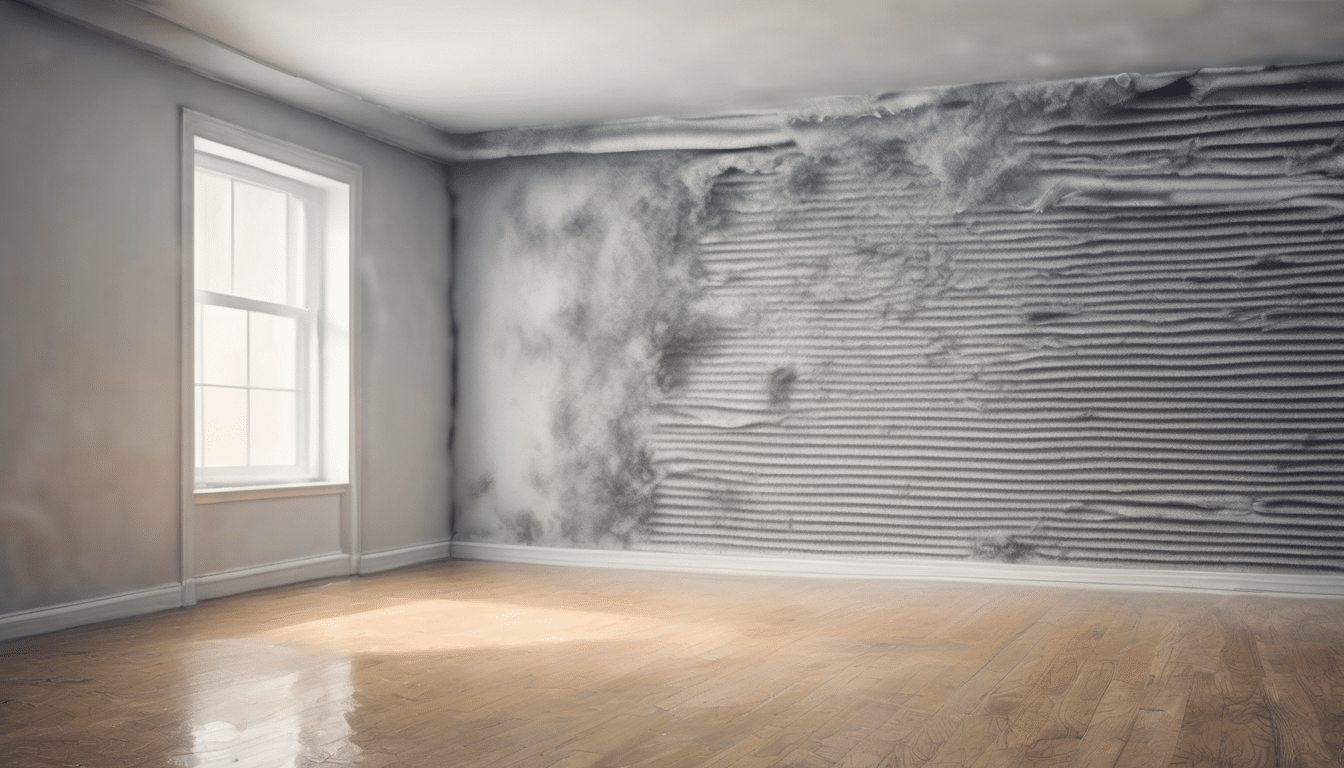
For property managers and luxury villa owners in Dubai, keeping air conditioning systems truly clean can feel like chasing an invisible problem. Yet in a climate where dust, humidity, and extreme heat accelerate buildup inside every unit, relying on filter changes or light surface wipes is a risky misconception. What is Comprehensive AC cleaning addresses deep-seated contaminants and prevents mold, bacteria, and allergens from cycling through indoor spaces. This overview breaks down what sets proper cleaning apart and why professional methods deliver results—protecting your investment and your air quality.
Table of Contents
Contents
- 1 Table of Contents
- 2 Key Takeaways
- 3 Defining Comprehensive AC Cleaning and Misconceptions
- 4 Essential Components and Cleaning Methods Explained
- 5 Distinct Types of AC Cleaning Services in Dubai
- 6 Benefits for Indoor Health and Energy Efficiency
- 7 Potential Risks and Mistakes to Avoid
- 8 Comparing Professional and DIY AC Cleaning Approaches
- 9 Experience True Indoor Air Quality with Saniservice’s Comprehensive AC Cleaning Solutions
- 10 Frequently Asked Questions
- 11 Recommended
- Defining Comprehensive AC Cleaning And Misconceptions
- Essential Components And Cleaning Methods Explained
- Distinct Types Of AC Cleaning Services In Dubai
- Benefits For Indoor Health And Energy Efficiency
- Potential Risks And Mistakes To Avoid
- Comparing Professional And DIY AC Cleaning Approaches
Key Takeaways
| Point | Details |
|---|---|
| Comprehensive AC Cleaning | Involves deep cleaning of all internal components, not just basic maintenance like filter changes. |
| Misconceptions | Homeowners often believe their systems self-clean or that filter changes are sufficient, which is not accurate. |
| Professional vs. DIY | Professional cleaning ensures thorough inspection and access to internal systems, mitigating common risks associated with DIY attempts. |
| Health and Efficiency Benefits | Comprehensive cleaning significantly improves indoor air quality and energy efficiency, leading to lower utility bills and enhanced comfort. |
Defining Comprehensive AC Cleaning and Misconceptions
Comprehensive AC cleaning goes far beyond replacing your filter or wiping down the outdoor unit. It involves a systematic dismantling and deep cleaning of all internal components—the evaporator coils, condenser coils, blower fans, drainage trays, refrigerant lines, and ductwork—using specialized equipment and techniques to remove accumulated dirt, mold, bacteria, and organic debris that standard maintenance cannot address. In Dubai’s climate, where temperatures regularly exceed 45°C (113°F) and humidity levels fluctuate dramatically, air conditioning systems accumulate contaminants at an accelerated rate. When left unaddressed, these buildups compromise both system performance and indoor air quality, creating an environment where allergens, microbes, and volatile organic compounds (VOCs) circulate freely through your villa or property.
The confusion around what constitutes proper AC cleaning stems largely from persistent misconceptions. Many homeowners believe their systems are self-cleaning or that regular filter changes are sufficient to maintain indoor air quality. This assumption is fundamentally flawed. Filters capture only particles that have already entered the system; they do nothing to clean the internal surfaces where biofilms form. Another common myth suggests that duct cleaning is a simple DIY task that homeowners can tackle with household equipment. In reality, professional duct cleaning requires negative pressure systems, specialized camera equipment, and access points that most homeowners lack. Regular maintenance of air conditioning units, including professional cleaning of filters, coils, fins, and refrigerant lines, is essential for both performance and energy efficiency—not optional add-ons.
What distinguishes comprehensive AC cleaning from surface-level maintenance is the depth and methodology involved. True comprehensive cleaning requires technicians to access components that never receive attention in routine servicing. The drainage trays, for instance, frequently become stagnant pools where bacteria and mold colonies establish themselves, spreading contamination each time your system operates. The blower wheel accumulates a thick layer of dust and organic matter that reduces airflow efficiency by 15 to 30 percent. Evaporator coils develop biofilm that insulates the refrigerant from heat exchange, forcing your compressor to work harder and consume significantly more energy. Professional teams like SaniAC by Saniservice combine hospital-grade biosanitizers with mechanical cleaning to eliminate not just visible debris but also the microscopic organisms responsible for odors, reduced efficiency, and compromised air quality. This multifaceted approach addresses the root causes rather than treating symptoms.
Pro tip: Request evidence of laboratory testing or microbiology reports from your AC cleaning provider; SaniAC by Saniservice can demonstrate before-and-after microbial counts from their in-house laboratory, giving you quantifiable proof that your system is genuinely cleaner and healthier.
Essential Components and Cleaning Methods Explained
Your air conditioning system is a collection of interconnected parts, each playing a specific role in cooling your home while maintaining air quality. Understanding these components and how they get contaminated helps explain why surface-level cleaning falls short. The evaporator coil sits inside your indoor unit and absorbs heat from air circulating through your home. The condenser coil located in your outdoor unit releases that heat to the outside environment. Both coils are lined with aluminum fins that maximize surface area for heat exchange. Between these coils flows refrigerant through copper lines, serving as the medium that transfers thermal energy. Your blower fan forces air across the evaporator coil and pushes cooled air throughout your ductwork. Finally, the condensate drain collects moisture that condenses on the evaporator coil and directs it outside. Each of these components demands attention during comprehensive cleaning because dirt and biological growth on any single part reduces the efficiency of the entire system.
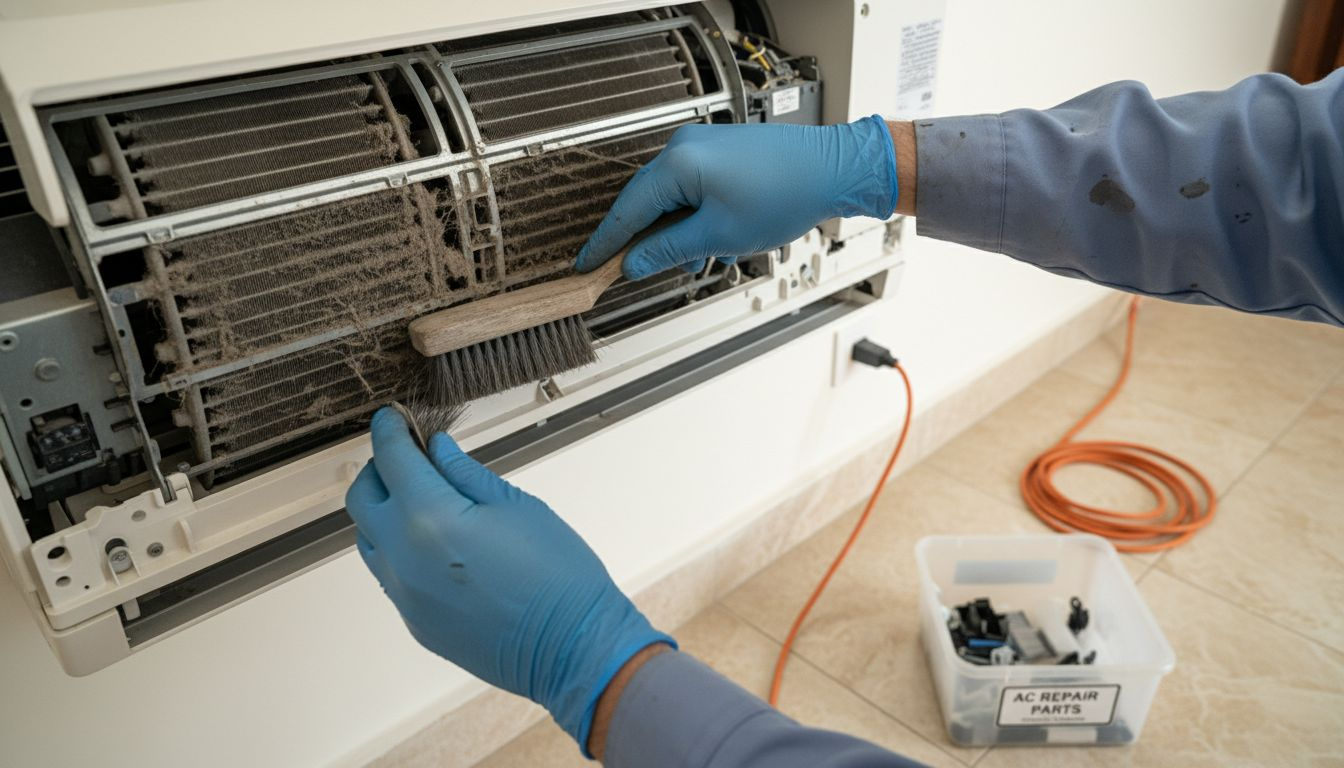
When these components accumulate contaminants, your system’s ability to exchange heat deteriorates rapidly. Dust and pollen settle on coil fins, creating an insulating layer that prevents efficient heat transfer. Moisture trapped in drainage trays and on cooling surfaces becomes a breeding ground for mold and bacteria. The blower wheel, often overlooked during routine maintenance, develops a thick biofilm that restricts airflow and forces your compressor to work harder. Key components requiring regular cleaning include air filters, evaporator coils, condenser coils, coil fins, and condensate drains, with each part directly affecting your system’s airflow and heat exchange capacity. Professional cleaning methods address all these components systematically. Technicians begin by safely isolating electrical systems and refrigerant lines, then dismantle accessible sections to expose internal surfaces. They use chemical cleaning, rinsing, and sanitizing techniques that remove dust, pollen, allergens, and microbial growth that standard vacuum cleaning cannot eliminate. Hospital-grade biosanitizers kill bacteria and mold colonies at the source rather than just removing visible debris.
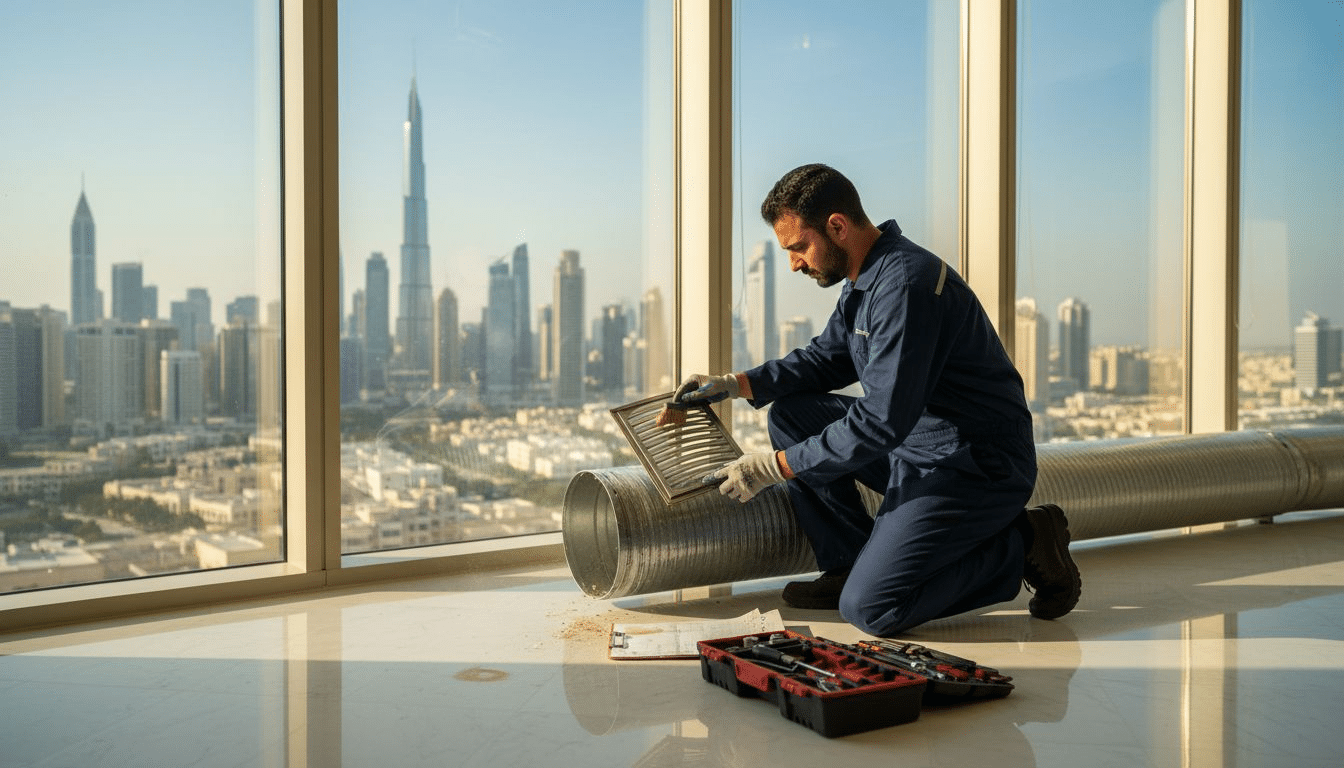
The depth of professional cleaning distinguishes comprehensive service from basic maintenance. While filter replacement takes minutes, proper coil cleaning requires specialized equipment like foam cannons for chemical application and wet vacuum systems for thorough rinsing. Fin straightening tools restore bent aluminum fins to their original geometry, maximizing surface area for heat exchange. Duct cleaning demands negative pressure systems that create suction powerful enough to dislodge years of accumulated dust from inside walls and hidden sections. SaniAC by Saniservice approaches each component with precision, using their in-house microbiology laboratory to verify that cleaning has actually eliminated harmful microorganisms rather than simply moving them around. This scientific verification distinguishes true comprehensive cleaning from marketing claims.
Pro tip: Ask your AC cleaning provider to show you the drainage tray first; if it contains standing water or visible slime, this confirms your system needs immediate professional intervention, as stagnant drainage systems are major sources of mold and odor problems.
Distinct Types of AC Cleaning Services in Dubai
Not all AC cleaning services are created equal, and Dubai’s unique climate demands specialized approaches that standard maintenance cannot provide. The variety of services available ranges from basic filter replacement to comprehensive system overhauls, each addressing different contamination levels and system conditions. Routine maintenance cleaning covers straightforward tasks like filter replacement and basic coil inspection. These services typically cost less and take minimal time but address only the most accessible components. Professional duct cleaning goes several layers deeper, using mechanical equipment like rotating brush systems to dislodge years of accumulated dust, sand, and debris from inside your ductwork. Professional AC duct cleaning services in Dubai cover plastic sheet containment to minimize dust spread, mechanical duct cleaning with Rotobrush machines, sanitization treatments, and coil and fan cleaning tailored to address the region’s specific climatic contaminants.
Beyond these foundational services, sanitization and disinfection treatments have become increasingly important in Dubai’s high-humidity environment where mold and bacterial growth accelerate rapidly. These treatments use specialized biosanitizers to eliminate microbial colonies at the source rather than simply removing visible debris. Chemical cleaning systems employ eco-friendly solutions designed to dissolve mineral deposits, grease, and organic buildup without damaging aluminum fins or copper refrigerant lines. SaniAC by Saniservice combines these approaches with hospital-grade, chemical-free biosanitizers verified through their in-house microbiology laboratory. Advanced cleaning uses eco-friendly chemicals and high-pressure systems tailored to mitigate Dubai’s desert dust, high humidity, and extreme heat challenges, ensuring your system can handle the punishing conditions that drive contamination rates up by 40 to 60 percent compared to temperate climates.
The most comprehensive option available in Dubai is full system deep cleaning, which combines all previous methods into a complete overhaul. Technicians dismantle accessible sections, chemically clean all coils and fins, mechanically clean ducts and blower components, and apply antimicrobial treatments to prevent rapid recolonization. This approach is ideal for villas that have never received professional cleaning or properties showing signs of mold growth, visible dust discharge, or reduced cooling capacity. Property managers overseeing multiple units often benefit from preventive maintenance plans that schedule quarterly or semi-annual cleanings before problems develop. The cost difference between routine maintenance (typically 300 to 500 AED) and comprehensive deep cleaning (1,500 to 3,000 AED) reflects the dramatically different outcomes you receive. Choosing the right service type depends on your system’s age, current condition, and your health priorities.
Here’s a side-by-side comparison of routine AC cleaning versus comprehensive professional cleaning in Dubai:
| Aspect | Routine AC Cleaning | Comprehensive Professional Cleaning |
|---|---|---|
| Scope | Filter change, visual inspection | Dismantling, deep cleaning, sanitizing all parts |
| Equipment Used | Basic household tools | Specialized tools and biosanitizers |
| Time Required | 30–60 minutes | 3–6 hours per system |
| Effect on Air Quality | Limited | Makes a measurable improvement |
| Typical Cost (AED) | 300–500 | 1,500–3,000 |
| Frequency Needed | Monthly | 1–2 times per year |
| Long-term Benefits | Short-term airflow boost | Improved health, energy savings, longevity |
Pro tip: Request a before-and-after photo comparison of your coils and ductwork; reputable providers like SaniAC by Saniservice document the transformation visually and provide microbiology reports proving the reduction in bacterial and mold colonies.
Benefits for Indoor Health and Energy Efficiency
Comprehensive AC cleaning delivers measurable improvements across two critical areas that directly impact your quality of life and operating costs. The health benefits emerge immediately as your system stops circulating the mold spores, bacterial endotoxins, and allergen particles that accumulate inside dirty coils and ducts. When an evaporator coil becomes coated with biofilm, every time your AC operates, it pushes that microbial-laden moisture into your home’s air. Children with asthma, elderly residents with compromised immunity, and anyone with respiratory sensitivities experience symptom relief within days of professional cleaning. The reduction in musty odors alone signals that the anaerobic bacteria breeding in your drainage trays have been eliminated. Beyond odor, you notice fewer allergy flare-ups, improved sleep quality, and reduced coughing or wheezing during peak cooling hours. These health gains become especially pronounced in Dubai, where outdoor air quality during summer months forces residents to rely entirely on indoor air circulation.
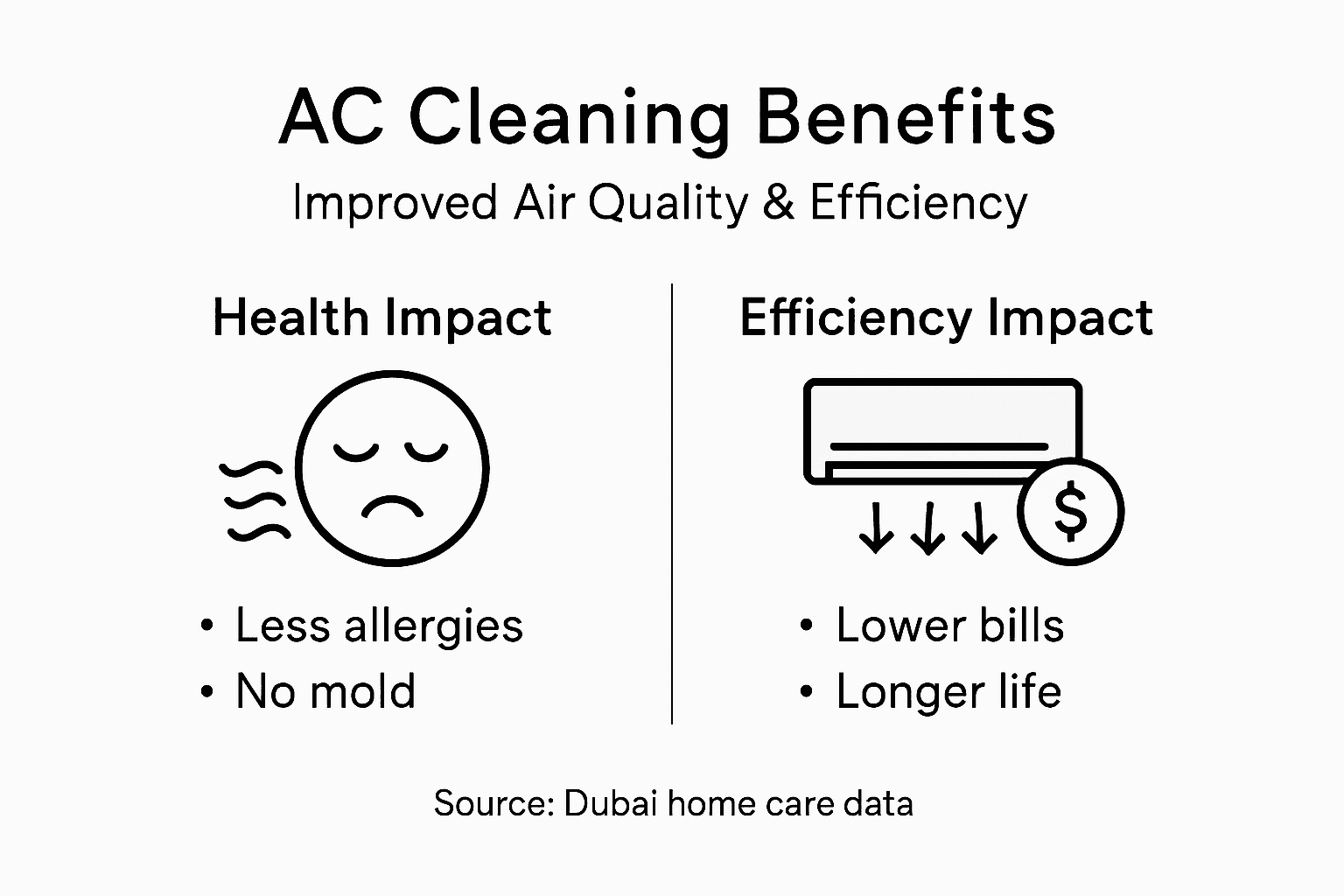
The energy efficiency improvements are equally dramatic and translate directly to your monthly utility bills. Routine HVAC cleaning significantly reduces fan and blower energy consumption by 41 percent to 60 percent, increases supply airflow by 10 percent to 46 percent, and stabilizes system operation according to peer-reviewed research published by NADCA, the leading authority on HVAC system cleanliness. This efficiency gain occurs because clean coils transfer heat far more effectively than contaminated ones. Your compressor no longer works overtime trying to achieve your target temperature through a layer of insulating debris. A villa owner in Dubai can reasonably expect to reduce their summer AC energy consumption by 20 to 35 percent following comprehensive cleaning. For properties cooling 3,000 to 5,000 square feet continuously during the eight-month cooling season, this translates to savings of 2,000 to 4,000 AED annually. The professional cleaning investment typically pays for itself within three to four months through energy savings alone.
These dual benefits compound over time. A cleaner system runs cooler, experiences less mechanical stress, and requires fewer repairs over its lifespan. Components that would normally require replacement at seven to ten years often operate effectively for twelve to fifteen years when maintained through regular professional cleaning. Your compressor, the most expensive component in your system, experiences substantially lower failure rates when it is not forced to labor against contaminated coils. Property managers overseeing multiple villas recognize these long-term advantages immediately, as they directly impact operating budgets and tenant satisfaction scores. Young families prioritize health benefits, while investment property owners focus on energy savings and equipment longevity. Both groups achieve their objectives through the same intervention: comprehensive AC cleaning performed by qualified professionals like SaniAC by Saniservice who verify results through laboratory testing.
Pro tip: Track your electricity consumption for two months before and after professional cleaning; you will have concrete evidence of your energy savings, which you can use to justify the service cost to property management companies or justify the investment to family members.
Potential Risks and Mistakes to Avoid
DIY AC cleaning attempts frequently cause more damage than they solve, particularly when property owners lack understanding of refrigerant systems, electrical components, and delicate mechanical tolerances. The most common and costly mistake involves using harsh chemical cleaners that were never designed for AC equipment. These corrosive substances damage aluminum fins, corrode copper refrigerant lines, and degrade the insulation on electrical components, leading to refrigerant leaks, electrical shorts, or system failure within weeks. Another widespread error occurs when homeowners apply high water pressure during cleaning, which bends the thin aluminum fins beyond repair and blocks airflow through the coils entirely. Bent fins dramatically reduce heat exchange efficiency, and straightening them requires specialized fin combs that most people do not possess. Common mistakes to avoid include using harsh chemicals that damage components, employing high water pressure that bends fins, and failing to properly reassemble the unit according to established AC maintenance standards. Once fins are bent, your system operates at 20 to 40 percent reduced efficiency until professional straightening restores them, essentially nullifying any benefit you gained from cleaning.
The dangers extend beyond visible component damage. Refrigerant systems require specific handling protocols that protect both the equipment and human health. Refrigerants are classified as hazardous substances under Environmental Protection Agency (EPA) regulations, and improper handling during cleaning can release these substances into the atmosphere, creating legal liability for the property owner. Additionally, incomplete system reassembly after cleaning leads to refrigerant leaks that develop over days or weeks, gradually reducing cooling capacity until your compressor fails from overheating. Electrical components pose electrocution risks when cleaning is performed without properly isolating power, and moisture left inside the system during reassembly creates short circuits or corrosion that fails silently for months before causing catastrophic equipment failure. Neglecting the outdoor unit represents another critical oversight, as the condenser coil must be cleaned simultaneously with indoor components to maintain system balance. Many DIY cleaners focus exclusively on indoor units, leaving the outdoor condenser completely contaminated, which forces the compressor to work against a thermodynamic disadvantage and accelerates wear.
The financial consequences of mistakes often exceed the cost of professional cleaning significantly. A bent fin situation requiring professional straightening costs 500 to 800 AED. A refrigerant leak repair ranges from 1,500 to 3,000 AED depending on the size and location. Complete compressor replacement, which can result from improper reassembly or moisture contamination, costs 4,000 to 8,000 AED or more. SaniAC by Saniservice eliminates these risks entirely by employing NADCA-certified technicians who follow manufacturer specifications precisely, use hospital-grade biosanitizers that cannot damage equipment, and verify results through laboratory testing. Professional teams carry liability insurance that protects you if unexpected equipment failure occurs during their service. They understand Dubai’s specific climate challenges and adjust their cleaning methods accordingly. The marginal cost difference between hiring professionals and attempting DIY cleaning vanishes when you factor in the near certainty of causing damage that requires expensive professional correction.
Below is a summary of common AC cleaning mistakes, their consequences, and best practices:
| Common Mistake | Consequence | Best Practice |
|---|---|---|
| Using harsh chemicals | Coil corrosion, leaks | Only use AC-safe cleaners |
| High water pressure | Bent fins, blocked airflow | Use low pressure, gentle rinse |
| Skipping outdoor unit | Poor cooling, compressor stress | Clean indoor and outdoor units |
| Improper reassembly | Leaks, electrical risks | Reassemble following manufacturer specs |
| Ignoring drainage tray | Mold, odors | Always inspect and clean tray |
Pro tip: If you have already attempted DIY cleaning and suspect fin damage or improper reassembly, request a system inspection from SaniAC by Saniservice before attempting to operate your AC; catching problems before they cascade into compressor failure saves thousands of dirhams in repair costs.
Comparing Professional and DIY AC Cleaning Approaches
The choice between professional cleaning and attempting DIY work comes down to understanding what each approach can and cannot accomplish. DIY cleaning typically involves basic tasks like vacuuming accessible filter surfaces, wiping dust from outdoor units, or using consumer-grade coil cleaners purchased from hardware stores. These efforts address only the outermost layer of contamination and require minimal investment, usually 100 to 300 AED in supplies. However, DIY cleaning cannot access internal ductwork, cannot safely handle refrigerant systems, and cannot apply the hospital-grade biosanitizers that eliminate microbial colonies at the cellular level. The appeal of DIY work lies purely in cost savings, but this advantage disappears entirely when damage occurs. Professional AC servicing, by contrast, represents a comprehensive approach that delivers expert care through trained technicians who can diagnose hidden issues, perform thorough cleaning including coils and ducts, and optimize system efficiency using specialized equipment and knowledge that most property owners will never possess.
The scope difference becomes immediately apparent when examining what professionals actually accomplish. Licensed technicians systematically dismantle your AC system, exposing every internal surface to cleaning. They use foam cannons to apply chemical cleaners uniformly across coil surfaces, wet vacuum systems to remove loosened debris without water damage, and fin straightening tools to restore bent aluminum fins to factory specifications. They photograph before and after conditions to document their work. They verify that refrigerant lines are properly sealed and that electrical connections are secure. They test system airflow to confirm adequate pressure and cooling capacity. They apply biosanitizers proven to eliminate harmful microorganisms and provide laboratory documentation proving that contamination levels have actually decreased. None of these capabilities exist in DIY work. A property owner vacuuming an outdoor unit cannot diagnose a refrigerant leak developing inside copper lines. They cannot identify mold colonies forming deep within ductwork. They cannot verify that their cleaning actually improved indoor air quality or energy efficiency. They are essentially guessing whether their effort made any meaningful difference.
The financial comparison reveals that professional cleaning offers superior value when calculated over time. A comprehensive professional cleaning costs 1,500 to 3,000 AED and maintains system performance for six to twelve months, depending on Dubai’s seasonal dust patterns and your usage intensity. If you perform three DIY cleaning attempts annually at 200 AED each, you invest 600 AED yearly but gain none of the comprehensive benefits. If damage occurs from any DIY mistake, your costs skyrocket to 2,000 to 8,000 AED for professional repairs. Professional teams working for companies like SaniAC by Saniservice carry liability insurance, employ NADCA-certified technicians who follow strict protocols, use equipment calibrated for precision, and stand behind their work with guarantees. They understand Dubai’s specific climate challenges and adjust their techniques accordingly. Investment property owners often negotiate annual service contracts with SaniAC by Saniservice, paying 4,000 to 6,000 AED yearly to maintain multiple units professionally, which costs less per unit than repeated DIY attempts with uncertain outcomes.
Pro tip: Request a free system assessment from SaniAC by Saniservice before deciding between DIY and professional cleaning; their technicians can photograph current contamination levels and explain exactly what is inside your ducts and coils, giving you concrete evidence to justify the professional cleaning investment to property management or family members.
Experience True Indoor Air Quality with Saniservice’s Comprehensive AC Cleaning Solutions
Dubai homes demand more than just routine maintenance to combat the accelerated buildup of mold, bacteria, and allergens inside air conditioning systems. This article highlights the critical need for professional, deep cleaning that dismantles and sanitizes every component from coils and blower fans to drainage trays and ducts. If you are seeking measurable improvements in air quality, energy savings, and the longevity of your AC system, understanding the importance of hospital-grade, chemical-free cleaning is essential. Saniservice combines cutting-edge science with proven methods to protect your family’s health and optimize system performance.
Take control of your home’s air quality today by exploring our expert AC Cleaning & Maintenance – Saniservice AC Cleaning services designed specifically for Dubai’s extreme climate challenges. You can also see real transformations and scientific validation of our work through our detailed Case Studies – Saniservice AC Cleaning. Trust the leading authority in professional AC cleaning backed by an in-house microbiology laboratory and NADCA-certified technicians at https://saniacservice.com. Schedule your comprehensive AC cleaning now for healthier indoor air, enhanced energy efficiency, and peace of mind.
Frequently Asked Questions
What is comprehensive AC cleaning?
Comprehensive AC cleaning involves a systematic dismantling and deep cleaning of all internal components of an air conditioning system, including evaporator and condenser coils, blower fans, drainage trays, refrigerant lines, and ductwork, to remove accumulated dirt, mold, and bacteria.
How often should I have my AC cleaned?
It is recommended to have comprehensive AC cleaning done 1 to 2 times per year, especially in environments with high dust and humidity levels. Routine maintenance, like filter changes, should be done monthly.
What are the benefits of comprehensive AC cleaning for indoor air quality?
Comprehensive AC cleaning significantly improves indoor air quality by eliminating mold spores, bacteria, and allergens that can accumulate in the system. This leads to reduced allergy symptoms, better overall health, and fresher air circulation in your home.
Can DIY cleaning effectively maintain my AC system?
While DIY cleaning may address surface-level dust, it cannot access internal ductwork or effectively sanitize the coils and components. Professional cleaning is essential for thorough maintenance and to prevent potential damage to the system.
Recommended
- Best Air Duct Cleaning Companies Near Me – Expert Comparison 2025 – Saniservice AC Cleaning
- Step by Step AC Cleaning Guide for Healthier Indoor Air
- 7 Essential Steps for Your HVAC Hygiene Checklist
- 7 Essential Types of Air Conditioning Maintenance Explained
- Nettoyage Régulier pour Santé : Guide Complet Montréal | Ménage-NRJ


Leave a Reply