Portable HVAC Cleaning Equipment Guide
Understanding Portable HVAC Cleaning Equipment: What Technicians Use is essential. In Dubai, where air conditioning operates year-round under extreme thermal and humidity loads, the condition of HVAC coils and ductwork directly influences indoor air quality, energy consumption, and occupant comfort. When a technician arrives to clean a system, the results depend as much on the equipment they carry as on their knowledge. Portable HVAC cleaning equipment — what technicians use on-site — determines whether a service produces a measurable outcome or simply moves contamination from one surface to another. That distinction matters enormously in a city where sealed indoor environments recirculate the same air every hour of every day.
The challenge most property owners face is that HVAC cleaning looks similar from the outside regardless of quality. A technician removes panels, applies something, wipes something, and leaves. Without understanding what portable HVAC cleaning equipment technicians use and why each tool serves a specific purpose, there is no reliable way to assess whether the job was done properly. This article addresses that gap, describing the core equipment categories, their function, and how they contribute to a complete and lasting clean. This relates directly to Portable HVAC Cleaning Equipment: What Technicians Use.
Saniservice field specialists, operating under NADCA-aligned methodology and triple ISO certification, carry a defined set of portable tools calibrated to Dubai’s specific contamination patterns — dense construction dust, humidity-driven biofilm, and coils under continuous thermal stress. The equipment described here reflects field-verified practice rather than catalogue speculation. When considering Portable HVAC Cleaning Equipment: What Technicians Use, this becomes clear.
Portable HVAC Cleaning Equipment: What Technicians Use – Why Portable Equipment Matters for HVAC Cleaning in Dubai
Fixed workshop equipment has no place inside a villa bedroom or a hotel corridor. Every piece of portable HVAC cleaning equipment technicians use must perform at the same standard as larger stationary units while fitting through standard doorways, operating on single-phase power, and producing minimal disruption to occupied spaces. This is a genuine engineering challenge that separates professional-grade portable kits from consumer alternatives. The importance of Portable HVAC Cleaning Equipment: What Technicians Use is evident here.
Dubai’s built environment adds specific demands. Systems in high-rise towers often have fan coil units in ceiling voids accessible only through compact access panels. Villas in communities such as Arabian Ranches or Palm Jumeirah may have sprawling duct networks across two or three floors. In each case, the portable HVAC cleaning equipment technicians bring to site must reach the contamination, contain the debris, and deliver enough mechanical or hydraulic force to dislodge biofilm that has been accumulating across months of continuous operation. Understanding Portable HVAC Cleaning Equipment: What Technicians Use helps with this aspect.
Portable also means accountable. When a technician carries their own tools, each piece of equipment reflects a professional investment in outcome. The choice of a portable pressure unit, a HEPA-filtered vacuum, or a specific nozzle configuration is not incidental — it signals the approach and the standard behind it. Portable HVAC Cleaning Equipment: What Technicians Use factors into this consideration.
Portable HVAC Cleaning Equipment: What Technicians Use – Portable HVAC Cleaning Equipment Technicians Use for Coil Cl
Coil cleaning is frequently the most technically demanding part of an HVAC service. Evaporator coils accumulate a layered combination of dust, moisture, and microbial growth that bonds tightly to aluminium fins. Removing this contamination without damaging the fin structure requires controlled pressure delivered at precise angles. This relates directly to Portable HVAC Cleaning Equipment: What Technicians Use.
Portable Pressure Washers and Coil Cleaning Blasters
Among the most important portable HVAC cleaning equipment technicians use is the portable pressure unit — specifically, coil cleaning machines designed for indoor HVAC applications. The ZPB140 Port-A-Blaster is a recognised example in this category, engineered to deliver adjustable high-pressure water flow in a compact, portable format. Units like this generate sufficient pressure to penetrate deep between coil fins and flush accumulated biofilm, dust compaction, and debris through to the drain pan below. When considering Portable HVAC Cleaning Equipment: What Technicians Use, this becomes clear.
What distinguishes purpose-built HVAC coil cleaning blasters from general pressure washers is the combination of flow rate control, spray pattern adjustability, and physical size. General pressure washers generate pressures that can bend or flatten aluminium fins, permanently reducing airflow and heat exchange efficiency. A calibrated portable coil cleaning unit — like the Port-A-Blaster — applies the right pressure profile: sufficient to remove contamination, controlled enough to preserve fin geometry. The importance of Portable HVAC Cleaning Equipment: What Technicians Use is evident here.
In Dubai’s climate, where coils run continuously at high load, biofilm layers can become dense enough that chemical treatment alone is insufficient. The mechanical action of a portable pressure unit completes what chemistry softens, producing a coil surface that both looks and performs differently after the service. Understanding Portable HVAC Cleaning Equipment: What Technicians Use helps with this aspect.
Chemical Application Equipment
Alongside pressure equipment, portable HVAC cleaning equipment technicians use for coil preparation includes foaming applicators and low-pressure chemical sprayers. Alkaline or mildly acidic coil cleaners are applied to dwell on the fin surface before pressure rinsing, breaking down organic matter and grease deposits. The application device matters — uneven chemical distribution leads to uneven cleaning, leaving protected pockets of contamination that will recolonise the clean surface within weeks. Portable HVAC Cleaning Equipment: What Technicians Use factors into this consideration.
Saniservice technicians use controlled foam application to ensure consistent coverage across the full coil face, working with chemistry that is verified safe for occupied environments and rated for aluminium coil contact. This relates directly to Portable HVAC Cleaning Equipment: What Technicians Use.
Portable HVAC Cleaning Equipment: What Technicians Use – Portable HVAC Cleaning Equipment Technicians Use for Duct Sy
Duct contamination in Dubai villas typically includes compacted construction dust, fibreglass particles from insulation degradation, and biological growth in humid return-air sections. Addressing this requires a different category of portable HVAC cleaning equipment from coil tools — one focused on agitation, extraction, and containment. When considering Portable HVAC Cleaning Equipment: What Technicians Use, this becomes clear.
HEPA-Filtered Negative Pressure Machines
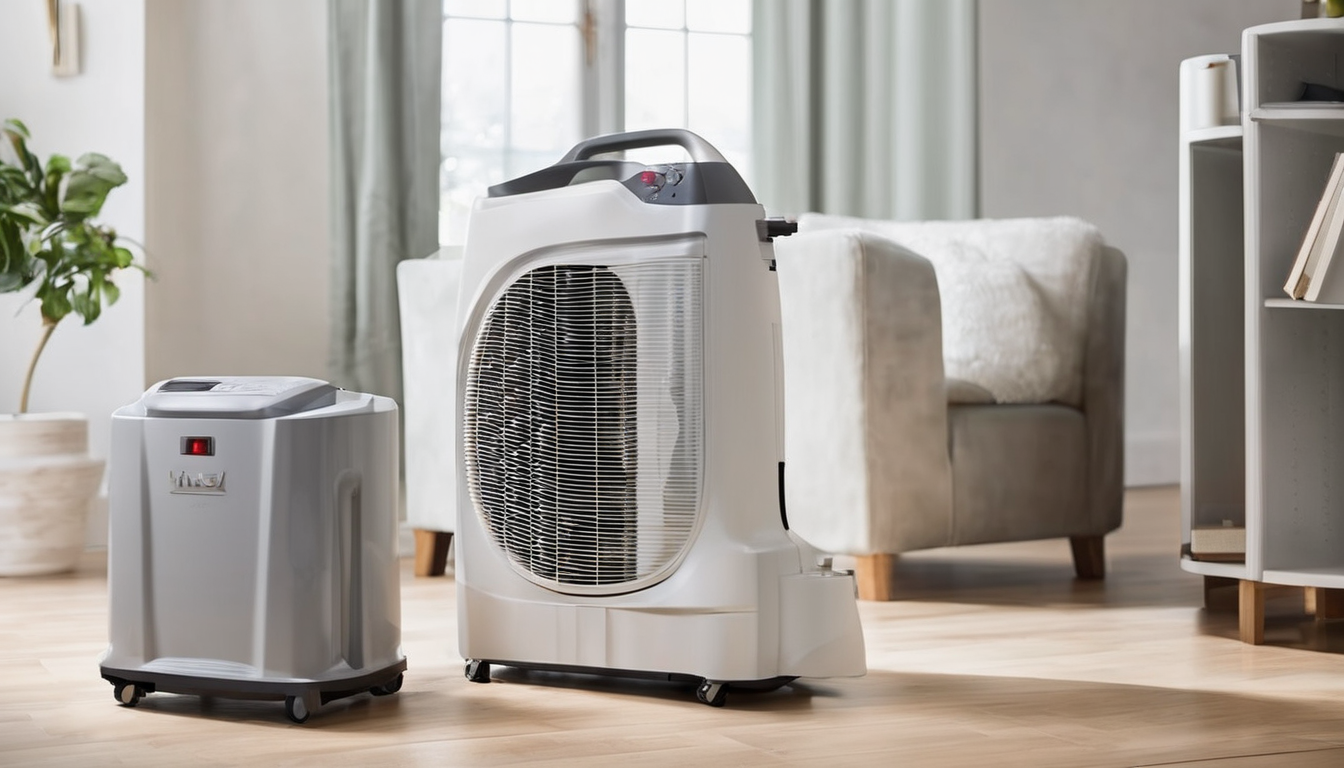
The foundation of professional duct cleaning is negative pressure containment. Portable HEPA-filtered negative pressure machines — sometimes called air scrubbers or source-removal units — create a controlled airflow within the duct system during cleaning. This draws dislodged debris toward a collection point rather than allowing it to migrate further into the building or become airborne in occupied rooms. The importance of Portable HVAC Cleaning Equipment: What Technicians Use is evident here.
NADCA-aligned duct cleaning methodology requires that source-removal equipment achieve a defined air change rate within the duct section being cleaned. The portable unit must seal to the duct, operate quietly enough for occupied environments, and filter extracted air to HEPA standard before it is returned to the room. This is non-negotiable when working in bedrooms, nurseries, or clinics where vulnerable occupants may be present during or immediately after service. Understanding Portable HVAC Cleaning Equipment: What Technicians Use helps with this aspect.
Rotary Brush Systems and Pneumatic Agitation Tools
Mechanical agitation is what separates surface-level duct cleaning from genuine source removal. Portable rotary brush systems — driven by electric or pneumatic power — are inserted into duct sections to dislodge compacted dust from interior surfaces. The brushes rotate against the duct wall while the negative pressure machine simultaneously extracts the liberated debris. Portable HVAC Cleaning Equipment: What Technicians Use factors into this consideration.
For flexible ductwork, which is common in Dubai apartment fan coil systems, softer brush configurations are used to avoid tearing the inner liner. For galvanised iron (GI) ducts, more robust brush heads can be applied with greater force. A well-equipped portable HVAC cleaning equipment kit includes multiple brush diameters and configurations to match the duct geometry encountered on site. This relates directly to Portable HVAC Cleaning Equipment: What Technicians Use.
Portable HVAC Cleaning Equipment Technicians Use for Drain Systems
Condensate drain lines and drain pans are among the most overlooked components in standard AC cleaning. In Dubai’s humidity, these areas accumulate standing water that supports biofilm formation — a layered microbial community that produces the musty or sour odours many residents associate with their AC units. Addressing this requires specific portable tools. When considering Portable HVAC Cleaning Equipment: What Technicians Use, this becomes clear.
Portable drain flushing equipment includes flexible tube kits with directional nozzles that navigate the bends in condensate lines and mini-jet units that introduce controlled water pressure into the drain line to break up blockages and biofilm accumulation. After mechanical flushing, antimicrobial treatment is applied by low-pressure sprayer or foam generator to address residual biological activity. The importance of Portable HVAC Cleaning Equipment: What Technicians Use is evident here.
The drain pan itself requires direct scrubbing with appropriate tools — typically portable wet-vacuum equipment combined with hand-applied antimicrobial agents. Saniservice field assessments commonly identify drain pan contamination as the primary source of AC odour, even in systems where the coils and ducts have been recently serviced. Portable HVAC cleaning equipment technicians use for drain systems completes the contamination pathway rather than leaving this component untreated. Understanding Portable HVAC Cleaning Equipment: What Technicians Use helps with this aspect.
Disinfection and Sanitisation Equipment
Once mechanical cleaning is complete, disinfection of internal surfaces is applied using portable fogging or cold atomisation equipment. These portable units generate fine droplets that penetrate duct interiors, coil surfaces, and drain pans with antimicrobial solution without soaking surfaces or damaging electrical components nearby. Portable HVAC Cleaning Equipment: What Technicians Use factors into this consideration.
The chemistry used matters as much as the delivery method. In residential settings — particularly homes with children, elderly residents, or occupants with respiratory sensitivities — the portable HVAC cleaning equipment technicians use for disinfection must apply agents that are certified safe for occupied environments, with documented dwell times and off-gassing profiles that confirm the space is safe to reoccupy within a defined period. This relates directly to Portable HVAC Cleaning Equipment: What Technicians Use.
Saniservice uses disinfection chemistry verified through its own microbiology laboratory, applying it via controlled portable atomisation equipment that produces consistent droplet sizing for reliable surface contact across all internal HVAC surfaces.
Measurement and Verification Tools
Professional portable HVAC cleaning equipment technicians use extends beyond the cleaning tools themselves. Verification instruments confirm that the work has produced a measurable outcome rather than a surface appearance.
Portable anemometers measure airflow at supply and return grilles before and after cleaning, providing a direct indicator of duct restriction or coil blockage reduction. Thermal imaging cameras detect temperature differentials across coil surfaces that indicate uneven heat exchange — a sign of persistent contamination or fin damage. Particle counters measure airborne particulate levels during and after duct cleaning to confirm that the negative pressure system effectively contained debris rather than releasing it into the occupied space.
These verification instruments are not standard in every service provider’s kit. Their presence distinguishes a science-backed service from a routine cleaning visit, providing the evidence-based documentation that property managers and facility teams increasingly require.
What to Look for in a Technician’s Portable Kit
Understanding portable HVAC cleaning equipment — what technicians use and why — gives property owners a practical way to evaluate service quality before a job begins. A well-equipped technician arriving at a Dubai villa or apartment should carry, at minimum, a portable coil cleaning pressure unit, HEPA-filtered negative pressure equipment, rotary agitation tools in multiple configurations, drain flushing equipment, controlled disinfection delivery tools, and at least one airflow or particulate measurement device.
The absence of any of these categories signals an incomplete service approach. Coil cleaning without drain treatment leaves the odour source in place. Duct agitation without negative pressure containment redistributes dust into the living environment. Disinfection without mechanical cleaning applies chemistry to contamination that should have been physically removed first.
Expert Takeaways for Dubai Property Owners
- Portable HVAC cleaning equipment that technicians use should be purpose-built for HVAC applications, not adapted from general cleaning tools.
- The ZPB140 Port-A-Blaster and similar coil cleaning units deliver controlled pressure that removes biofilm without fin damage — this is technically distinct from standard pressure washing.
- HEPA-filtered negative pressure containment is the standard for duct cleaning in occupied spaces and should be confirmed before service begins.
- Drain systems require their own dedicated portable tools — they are not a secondary concern that a general wipe-down addresses.
- Verification instruments separate a measurable service from a subjective one. Ask whether airflow readings are taken before and after.
- In Dubai’s continuous-use AC environment, service frequency matters as much as service quality. Portable HVAC cleaning equipment performs best when the contamination load has not been allowed to compound over years.
Frequently Asked Questions
What is portable HVAC cleaning equipment and why do technicians use it instead of fixed equipment?
Portable HVAC cleaning equipment refers to self-contained, transportable tools that technicians carry to each property to clean coils, ducts, drains, and internal surfaces on-site. Fixed equipment cannot access ceiling voids, compact access panels, or multi-floor duct networks typical in Dubai villas and apartments. Portable units deliver professional-grade results in the actual installed location of the HVAC system.
What is the ZPB140 Port-A-Blaster used for in HVAC cleaning?
The ZPB140 Port-A-Blaster is a portable coil cleaning pressure unit designed to deliver controlled, adjustable water pressure to evaporator and condenser coil surfaces. It removes compacted dust, biofilm, and organic matter from between aluminium fins without the fin damage associated with conventional pressure washers. It is particularly effective in Dubai’s continuous-use systems where biofilm layers accumulate rapidly under high thermal load.
How does negative pressure equipment protect occupants during Dubai duct cleaning?
HEPA-filtered negative pressure machines create a controlled airflow within the duct section being cleaned, drawing dislodged debris toward a sealed collection point rather than releasing it into occupied rooms. This is standard under NADCA-aligned methodology and is essential in Dubai homes where residents, children, or elderly occupants may be nearby during service.
Can portable HVAC cleaning equipment address musty AC odours in Dubai apartments?
Yes, when the correct portable equipment is used. Musty odours in Dubai AC systems most commonly originate from biofilm accumulation in drain pans and condensate lines. Portable drain flushing tools combined with controlled antimicrobial application equipment address this directly. Coil or duct cleaning alone, without drain system treatment, typically leaves the odour source in place.
How do I know if a technician has the right portable HVAC cleaning equipment before they start?
Before service begins, ask whether the technician carries a dedicated coil cleaning pressure unit, HEPA-filtered negative pressure equipment, rotary duct agitation tools, drain flushing kit, disinfection delivery equipment, and airflow measurement instruments. The absence of any of these suggests the service will address some but not all contamination pathways in the system.
Is portable HVAC cleaning equipment suitable for commercial properties in Dubai and Abu Dhabi?
Professional portable HVAC cleaning equipment is designed to operate across residential and commercial environments. In commercial settings — offices, clinics, hotels, and retail across Dubai and Abu Dhabi — portable units must meet additional requirements around noise output, chemical safety in occupied zones, and documentation of outcomes for facility management records. NADCA-accredited providers carry commercial-rated portable equipment for these environments.
How often should portable HVAC Coil Cleaning be carried out in Dubai’s climate?
In Dubai’s year-round AC environment, professional coil cleaning using purpose-built portable equipment is commonly recommended every six to twelve months, depending on system load, duct condition, and occupancy type. Properties with construction activity nearby, households with pets, or facilities with sensitive occupants such as clinics or nurseries may benefit from more frequent assessment. Professional evaluation of coil condition is the most reliable basis for scheduling decisions.
Conclusion
There is a moment after a properly executed HVAC clean — coils flushed, drains cleared, ducts extracted and treated — when airflow feels different. The change is not cosmetic. It is the result of removing what was physically present in the system, using the right portable HVAC cleaning equipment that technicians are trained to deploy with precision. In Dubai’s demanding climate, that outcome depends entirely on what arrives in the technician’s kit and how it is used.
Understanding portable HVAC cleaning equipment — what technicians use and what each tool accomplishes — transforms property owners from passive recipients of a service into informed participants in their own indoor environment. The questions you ask before a job begins are as important as the service itself. If you would like to understand what your system requires and what professional assessment looks like in practice, Saniservice specialists are available to evaluate your property and explain exactly what portable HVAC cleaning equipment will be deployed and why. Understanding Portable HVAC Cleaning Equipment: What Technicians Use is key to success in this area.