

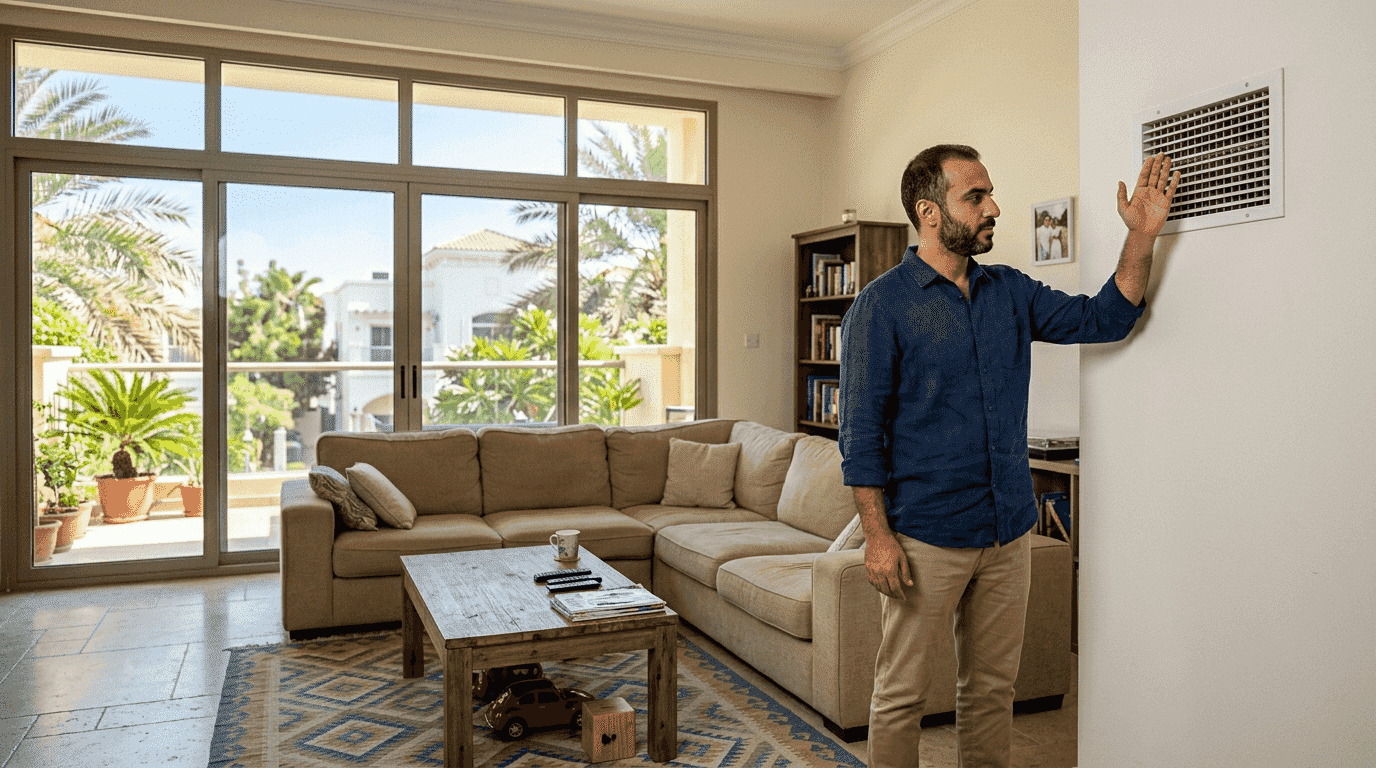
What are air ducts? Essential guide for Dubai homeowners
Your AC struggles to cool your home, so you assume the unit itself is failing. But most cooling problems trace back to something homeowners rarely inspect: the air ducts hidden in walls and ceilings. Understanding what air ducts are and how they work transforms how you approach HVAC performance and indoor air quality in Dubai’s demanding climate. This guide explains air duct basics, types, maintenance essentials, and practical steps to improve comfort and efficiency.
Table of Contents
Contents
- 1 Table of Contents
- 2 Key takeaways
- 3 What are air ducts and why do they matter in Dubai homes?
- 4 Types of air ducts: rigid, flexible, and spiral explained
- 5 How duct design and maintenance impact indoor air quality and system efficiency
- 6 Choosing and maintaining air ducts for optimal HVAC performance in Dubai
- 7 Keep your air ducts clean for healthier, efficient home cooling
- 8 Frequently asked questions
- 9 Recommended
- What Are Air Ducts And Why Do They Matter In Dubai Homes?
- Types Of Air Ducts: Rigid, Flexible, And Spiral Explained
- How Duct Design And Maintenance Impact Indoor Air Quality And System Efficiency
- Choosing And Maintaining Air Ducts For Optimal Hvac Performance In Dubai
- Keep Your Air Ducts Clean For Healthier, Efficient Home Cooling
Key takeaways
| Point | Details |
|---|---|
| Air ducts distribute conditioned air | Channels carry heated or cooled air from HVAC units throughout your home, directly affecting comfort and efficiency. |
| Three main duct types exist | Rigid, flexible, and spiral ducts each offer different airflow, durability, and cost characteristics. |
| Poor duct design harms health | Leaky or dirty ducts spread dust, mold, and allergens, reducing indoor air quality. |
| Regular maintenance prevents issues | Inspecting and cleaning ducts annually avoids costly repairs and improves system performance. |
| Proper ductwork lowers energy bills | Well-sealed, insulated ducts reduce cooling waste and extend HVAC system lifespan. |
What are air ducts and why do they matter in Dubai homes?
Air ducts are channels that distribute heated or cooled air from your HVAC unit to different rooms in your home. They form the circulatory system of your climate control setup, moving conditioned air where you need it while returning stale air for reconditioning. In Dubai’s extreme heat, efficient airflow and properly sealed ducts become essential for maintaining comfortable indoor temperatures without sky-high energy bills.
When ducts leak, accumulate dust, or suffer poor installation, your entire system underperforms. Common symptoms include weak airflow in certain rooms, strange noises during operation, excessive dust on surfaces, and uneven temperatures across your home. These issues force your AC to work harder, driving up electricity costs while failing to deliver consistent comfort.
Many homeowners focus only on AC brand reputation when cooling problems arise. As one industry expert notes:
Cooling problems are often duct problems. If airflow is weak, uneven, noisy, or dusty, the ducting and sealing usually matter more than the brand name.
Typical duct-related problems you might encounter include:
- Air leaks at joints and connections reducing cooling effectiveness
- Accumulated dust and debris circulating allergens throughout your home
- Poor insulation causing temperature loss before air reaches rooms
- Improper sizing creating pressure imbalances and noisy operation
- Condensation issues from inadequate drain slopes leading to mold growth
Recognizing these warning signs early helps you address root causes rather than treating symptoms. Understanding whether you should clean air ducts for better air quality becomes easier when you grasp how ducts influence your home environment.
Types of air ducts: rigid, flexible, and spiral explained
Three main duct types serve residential and commercial buildings, each offering distinct advantages for airflow quality and system performance.
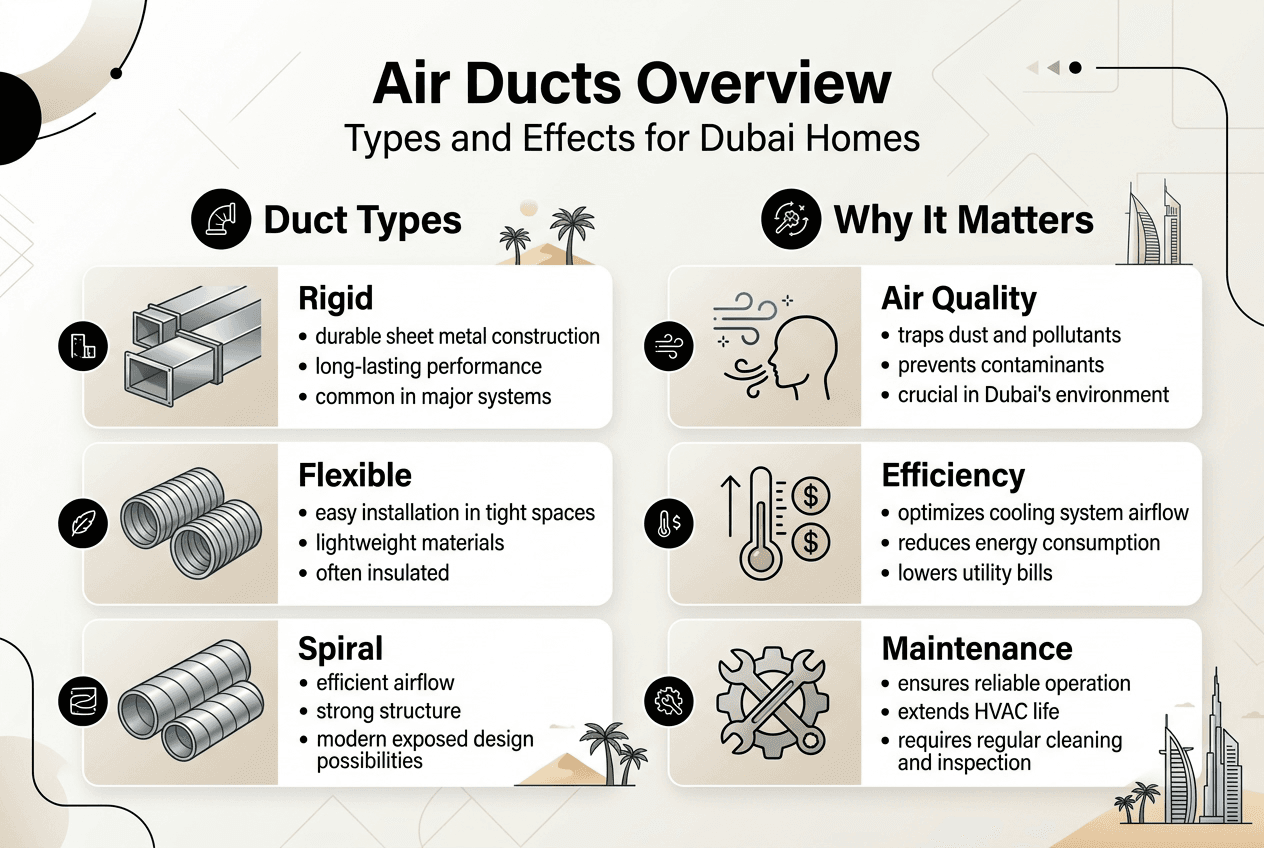
Rigid ductwork uses galvanized steel or aluminum sheets formed into rectangular or round channels. This type provides high and consistent airflow compared to flexible ductwork due to smooth interior surfaces that minimize resistance. Rigid ducts also have a longer lifespan than flexible ductwork, often lasting decades with minimal maintenance. They resist crushing, maintain shape under pressure, and rarely sag or compress. The downside? Installation requires more labor and custom fabrication, increasing upfront costs.
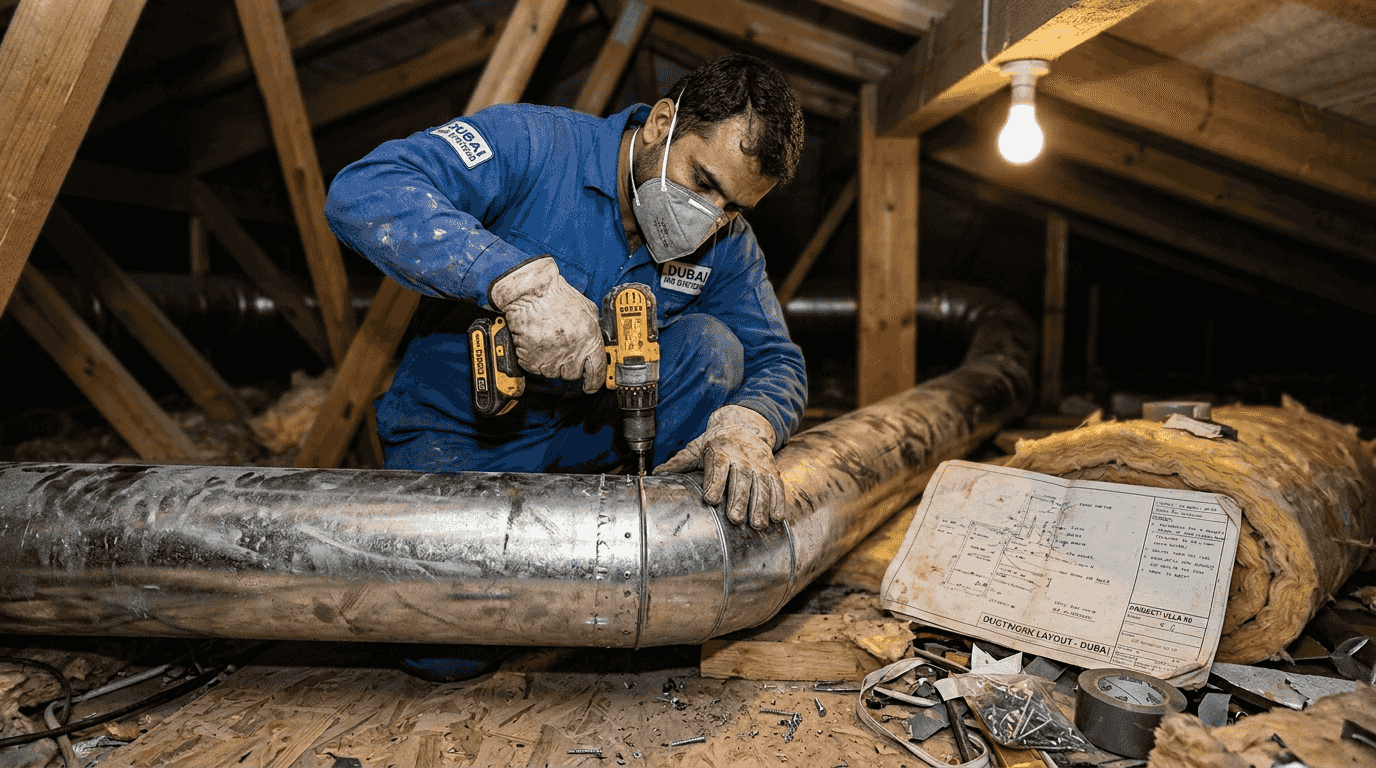
Flexible ducts consist of wire coil covered with plastic or metalized film. Installers favor them for tight spaces and complex routing because they bend around obstacles easily. However, flexible ducts compress, sag, and develop airflow restrictions over time. Their ribbed interior creates turbulence that reduces efficiency. They work best for short runs connecting rigid trunk lines to individual vents.
Spiral ducts feature circular cross-sections with reinforced spiral seams. They combine rigid duct durability with easier installation than rectangular metal ducts. The round shape maximizes airflow per square inch of material while the spiral construction adds strength. Commercial buildings commonly use spiral ducts for visible installations where aesthetics and performance both matter.
| Feature | Rigid Ducts | Flexible Ducts | Spiral Ducts |
|---|---|---|---|
| Airflow efficiency | Excellent, smooth flow | Moderate, prone to restriction | Excellent, optimized shape |
| Lifespan | 20-30+ years | 10-15 years | 20-25 years |
| Maintenance needs | Low, easy to clean | Moderate, harder to access | Low, accessible surfaces |
| Installation cost | Higher, custom work | Lower, quick install | Moderate, specialized tools |
| IAQ impact | Best, minimal dust buildup | Fair, can harbor particles | Good, smooth surfaces |
Pro Tip: Choose rigid or spiral ducts for main trunk lines serving your entire home, then use short flexible sections only where necessary to connect final outlets. This approach maximizes airflow while keeping installation practical.
Selecting appropriate ductwork affects not just immediate cooling but long-term mold and dust prevention in HVAC systems. Consider your building layout, budget, and performance priorities when evaluating options.
How duct design and maintenance impact indoor air quality and system efficiency
Proper duct design involves more than choosing materials. Sealing, insulation, routing, and drain slope all determine whether your system delivers clean air efficiently or wastes energy while circulating contaminants.
Air duct design and material selection significantly impact IAQ. Poorly designed or constructed ducts can harbor mold, dust, and other contaminants that spread throughout your home every time the system runs. Leaky joints allow unfiltered air from attics or wall cavities to enter the airflow, introducing particles your AC filter never captures.
In Dubai’s climate, condensation poses special challenges. Inadequate insulation on ductwork running through hot spaces causes moisture buildup that feeds mold colonies. Poor drain slopes allow water to pool in low spots rather than flowing to drainage points. These moisture issues compound quickly in humid summer months.
Maintaining clean, well-sealed ducts protects respiratory health and system performance. Follow these steps for effective duct maintenance:
- Schedule professional inspections annually before peak cooling season begins
- Check visible duct sections for gaps, disconnections, or obvious damage
- Monitor airflow at each vent to identify potential blockages or leaks
- Replace air filters monthly during heavy use periods to reduce dust accumulation
- Arrange professional cleaning every 2-3 years or when visible contamination appears
- Verify insulation remains intact on all accessible ductwork sections
- Test drain lines to confirm proper slope and drainage function
Neglecting duct maintenance forces your AC to compensate for inefficiencies, raising energy bills 20-40% compared to well-maintained systems. Contaminated ducts also reduce system lifespan by making components work harder to overcome airflow restrictions.
Recent analysis shows that most Dubai AC stress comes from three hidden issues: wrong ducting, unclear scope, and dirty airflow zones. Addressing these factors through proper design and regular upkeep prevents expensive repairs and health problems.
Pro Tip: Schedule duct inspections and cleaning during spring, before summer heat peaks. This timing ensures your system performs optimally when you need it most while avoiding peak-season service delays.
Learning how to prevent mold and dust in ducts and understanding how to clean AC ducts to reduce dust empowers you to maintain healthier indoor environments year-round.
Choosing and maintaining air ducts for optimal HVAC performance in Dubai
Selecting the right ductwork requires balancing performance needs against budget and installation constraints. Use this checklist before committing to installation:
- Confirm capacity assumptions match your home’s actual cooling load calculations
- Verify duct specifications (size, insulation R-value, sealing method) meet local building codes
- Review proposed routing to minimize bends, length, and potential restriction points
- Check insulation plans for all ductwork running through unconditioned spaces
- Ensure drain slope specifications prevent water pooling and condensation issues
- Require commissioning steps including airflow testing and leak detection after installation
As industry experts note, price becomes stable when scope is frozen. Confirm capacity assumptions, routing, duct specs, insulation, drain slope, and commissioning steps before work starts. This approach prevents mid-project changes that inflate costs and compromise quality.
Ongoing maintenance preserves your investment and ensures continuous performance. Different duct types and building uses require varying attention levels:
| Duct Type | Residential Inspection | Residential Cleaning | Commercial Inspection | Commercial Cleaning |
|---|---|---|---|---|
| Rigid metal | Annually | Every 3-5 years | Every 6 months | Every 2-3 years |
| Flexible | Annually | Every 2-3 years | Every 6 months | Annually |
| Spiral | Annually | Every 3-4 years | Every 6 months | Every 2 years |
Best practices for extending duct lifespan and improving indoor air quality include:
- Seal all joints and connections with mastic or metal tape, never standard duct tape
- Insulate ducts in unconditioned spaces to R-6 minimum, R-8 preferred for Dubai heat
- Support flexible ducts every 4 feet to prevent sagging and airflow restriction
- Install access panels at key points for future inspection and cleaning
- Keep vents and returns unblocked by furniture or curtains
- Monitor humidity levels and address condensation immediately when detected
- Replace damaged sections promptly rather than attempting temporary repairs
Pro Tip: Hire NADCA-certified professionals familiar with Dubai’s specific climate challenges for both installation and maintenance. Their expertise in managing extreme heat, humidity, and sand infiltration ensures your system performs reliably year after year.
Exploring the complete HVAC hygiene process guide and reviewing the HVAC hygiene checklist provides frameworks for maintaining optimal system health between professional services.
Keep your air ducts clean for healthier, efficient home cooling
Understanding air ducts is just the first step. Maintaining them properly requires expertise, specialized equipment, and scientific precision.
Saniservice delivers professional AC and duct cleaning services designed specifically for Dubai’s demanding conditions. Our NADCA-certified technicians use hospital-grade, chemical-free biosanitizers to eliminate mold, bacteria, and allergens from every component. Regular professional cleaning improves indoor air quality, reduces respiratory irritants, and enhances HVAC efficiency while extending system lifespan. Access our detailed air conditioning cleaning checklist and comprehensive air conditioner cleaning guide to understand what thorough maintenance involves. For complete system care, explore our HVAC hygiene process step-by-step guide showing how science-backed cleaning prevents costly repairs and health issues.
Frequently asked questions
What is the purpose of air ducts in an HVAC system?
Air ducts are channels that distribute heated or cooled air from HVAC units to different parts of your building, ensuring even temperature and consistent comfort. They also remove stale air and return it for reconditioning, maintaining air quality throughout your home.
How often should air ducts be inspected and cleaned?
Inspection is recommended at least annually, with cleaning every 2-3 years or more frequently if visible contamination or performance issues arise. Homes in dusty or humid environments like Dubai may need professional HVAC hygiene process attention more often to prevent mold and allergen buildup.
Can poorly maintained ducts affect my health?
Yes. Mold and dust accumulating in ducts worsen allergies, asthma, and respiratory problems when circulated through your home. Contaminated air ducts can contribute to respiratory problems and exacerbate allergies, making regular cleaning essential for protecting health.
What are the differences between rigid and flexible ducts?
Rigid ducts provide higher, more consistent airflow due to smooth interior surfaces and last longer with minimal sagging or compression. Flexible ducts install more easily in tight spaces but are prone to airflow restrictions, damage, and shorter lifespans compared to rigid alternatives.
Recommended
- Complete Guide to Why Duct Cleaning Matters in Dubai – Saniservice AC Cleaning
- 10 Key Insights on Indoor Air Quality Basics Dubai: Benefits and Basics of Duct Cleaning – Saniservice AC Cleaning
- 5 Essential Insights on AC Duct Sanitization Dubai: Ensuring Cleaner, Safer Air in Your Home – Saniservice AC Cleaning
- Professional Air Duct Cleaning in Dubai for Villas



Leave a Reply