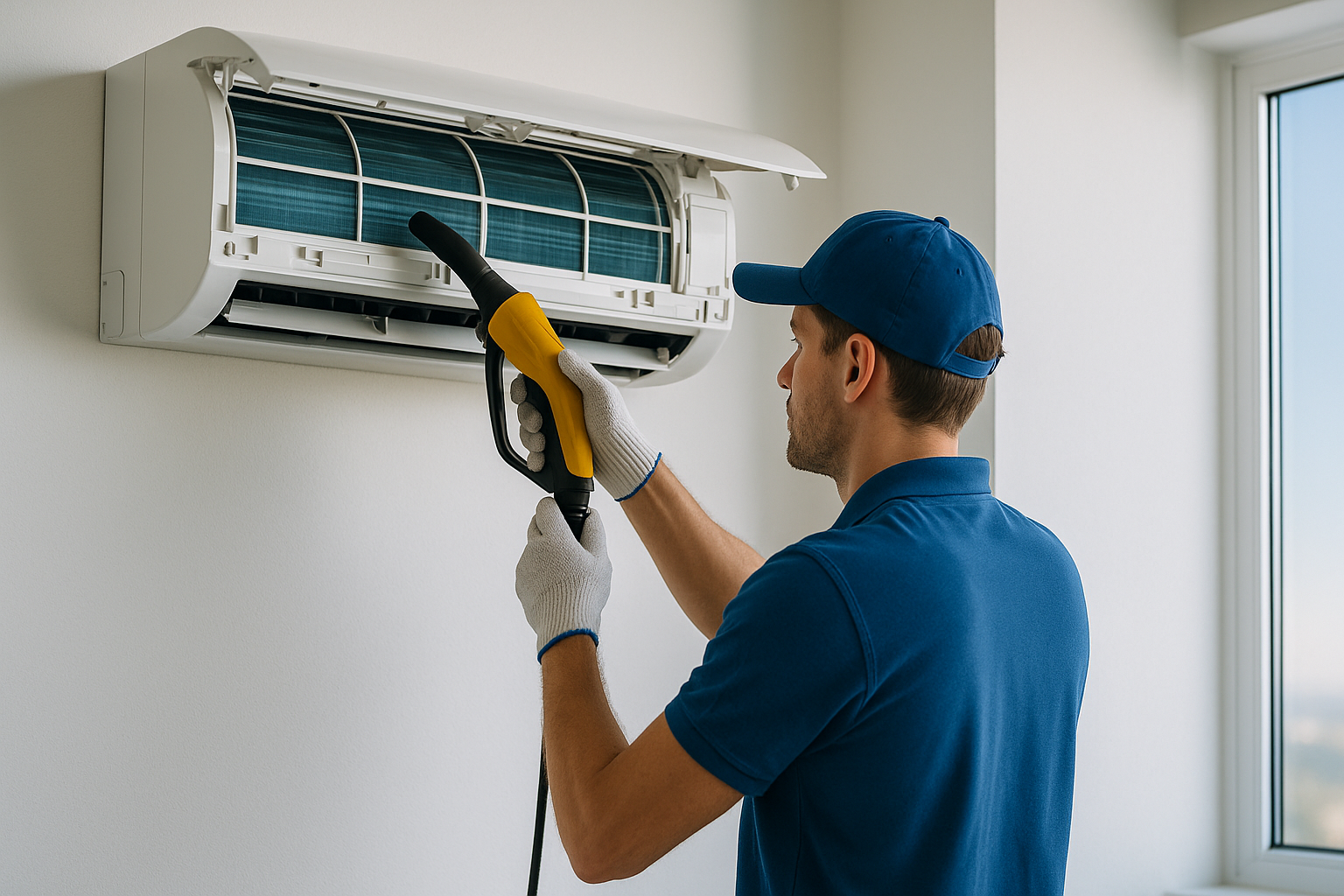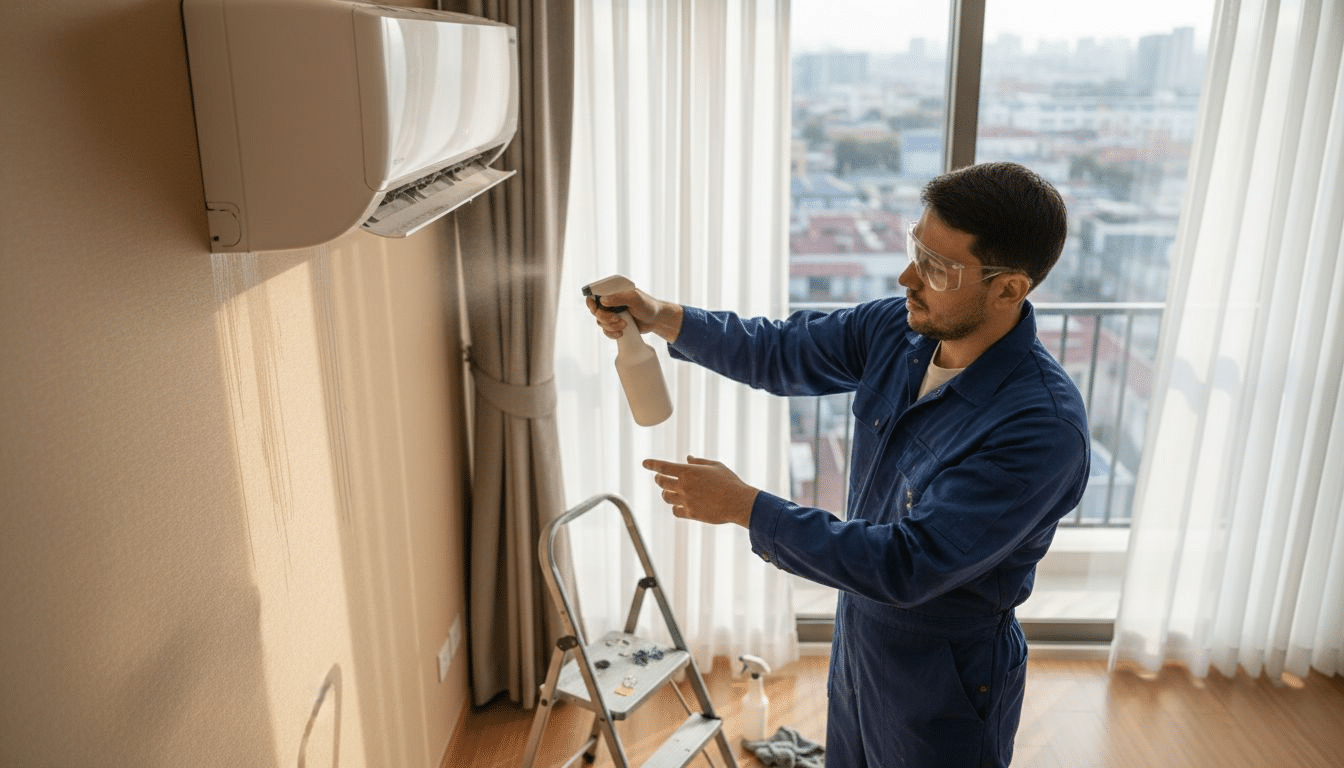
What is AC coil cleaner? A 2026 guide for UAE homeowners
Dirty AC coils can reduce airflow by up to 30%, driving energy bills higher while compromising indoor comfort and air quality. For homeowners and property managers across the UAE, understanding what AC coil cleaner is and how it restores cooling efficiency is crucial to maintaining healthy, cost-effective indoor environments. This guide explains the science behind coil cleaners, dispels common myths, and shows why professional cleaning beats DIY approaches in the region’s demanding climate.
Table of Contents
- Understanding AC Coils And Why They Need Cleaning
- What Is AC Coil Cleaner And How Does It Work?
- Common Misconceptions About AC Coil Cleaning
- DIY Vs Professional AC Coil Cleaning: Risks And Benefits
- When And How Often To Clean AC Coils In The UAE
- Benefits Of Using Professional AC Coil Cleaners
- Saniservice’s Approach: Science-Backed AC Coil Cleaning In The UAE
- Ready For Expert AC Coil Cleaning In The UAE?
- FAQ
Key takeaways
| Point | Details |
|---|---|
| AC coil cleaners target contaminants | They remove dirt, mold, and microbes that block airflow and degrade efficiency. |
| Chemical and biological cleaners differ | Chemical agents dissolve grime; biological options use enzymes to eliminate microbial buildup safely. |
| Professional cleaning saves money long term | It improves energy efficiency up to 20%, extends equipment life 2 to 3 years, and enhances indoor air quality. |
| DIY methods carry significant risks | Homeowners can damage delicate coil fins or fail to remove hidden biofilms, worsening contamination. |
| UAE climate demands frequent maintenance | Cleaning every 6 to 12 months prevents dust and humidity from degrading AC performance and health. |
Understanding AC coils and why they need cleaning
AC coils are the heart of your cooling system, facilitating heat exchange that transforms warm indoor air into refreshing coolness. Evaporator coils absorb heat from inside your home, while condenser coils release it outdoors. This continuous cycle depends on clean, unobstructed coil surfaces to transfer heat efficiently.
However, coils trap airborne particles, moisture, and organic matter, creating ideal conditions for contamination. In the UAE, where dust storms and high humidity are common, coils accumulate layers of dirt, microbial biofilms, and mold faster than in temperate climates. This buildup blocks airflow, reduces heat transfer efficiency, and forces your AC to work harder, consuming more energy.
Microbial contaminants pose additional health risks. AC coils accumulate dust, mold, and biofilms that impair system efficiency and indoor air quality. Mold spores, bacteria, and allergens circulate through ducts, triggering respiratory issues and allergic reactions in occupants. Regular cleaning addresses both performance and health concerns, restoring your system to optimal function.
Key contamination issues include:
- Dust and sand accumulation blocking airflow and reducing cooling capacity
- Microbial biofilms forming on moist coil surfaces, releasing allergens and pathogens
- Corrosion from salt air in coastal areas degrading coil integrity over time
- Condensate buildup encouraging mold growth in drain pans and coil fins
What is AC coil cleaner and how does it work?
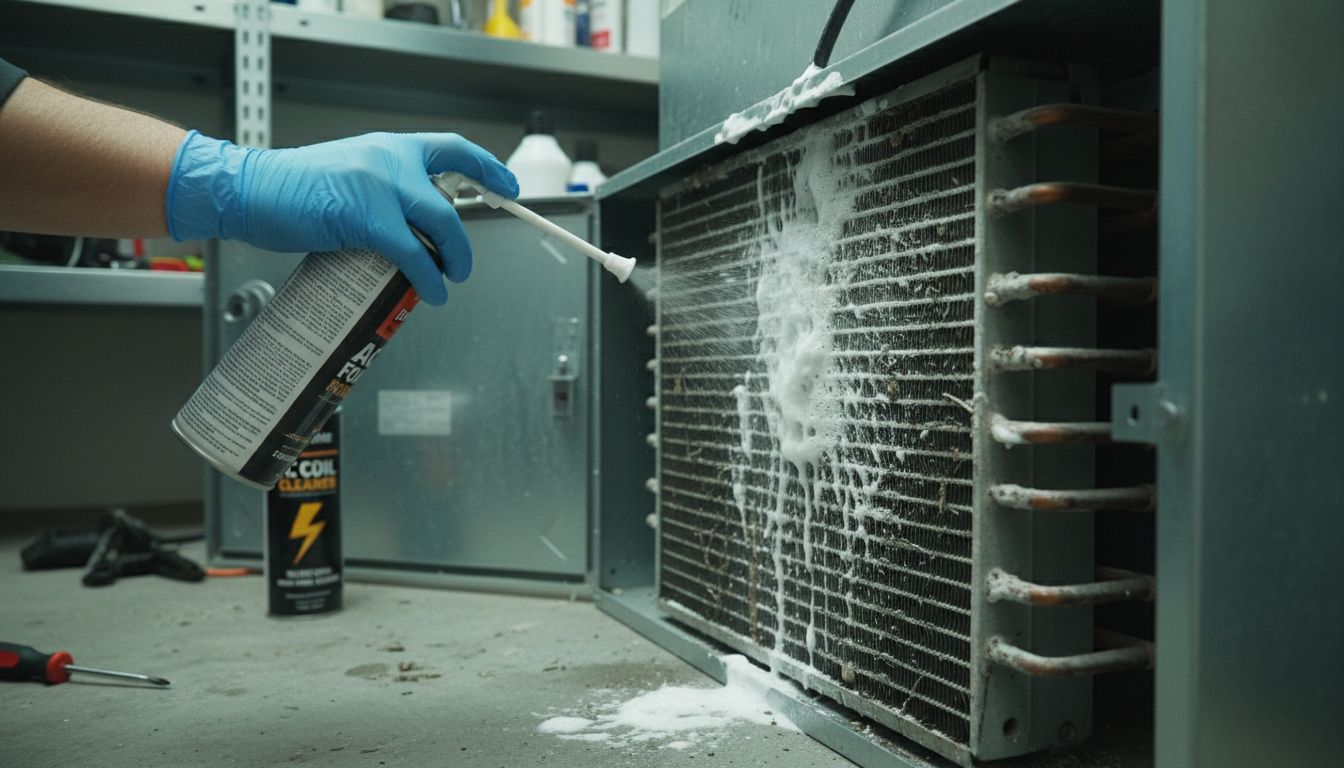
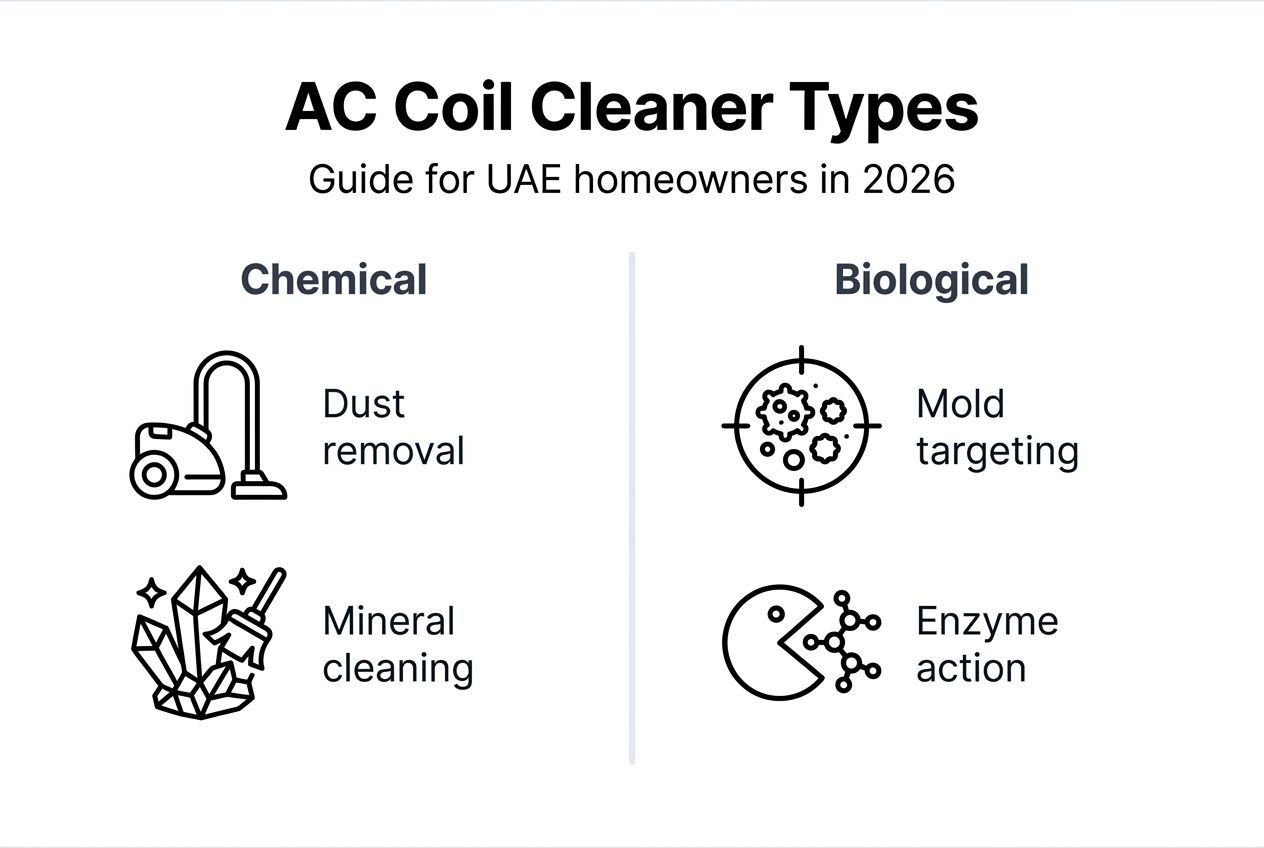
AC coil cleaner refers to specialized chemical or biological agents designed to remove contaminants from coil surfaces without damaging the delicate aluminum fins and copper tubes. Chemical cleaners use acidic or alkaline agents to dissolve grime, while biological cleaners use enzymes and biosanitisers to break down microbial contaminants.
Chemical cleaners work by dissolving inorganic particles like dust, dirt, and mineral deposits. Acidic formulations target alkaline buildup, while alkaline cleaners handle greasy residues. These agents break molecular bonds, allowing contaminants to rinse away with water. However, incorrect application can corrode coil surfaces, so proper dilution and safety precautions are essential.
Biological cleaners take a different approach. They employ enzymes and biosanitisers that target organic matter, including mold, bacteria, and biofilms. Enzymes break down proteins and lipids in microbial cell walls, while biosanitisers disrupt microbial metabolism without harsh chemicals. This method is safer for coil materials, environmentally friendly, and highly effective against health threatening pathogens.
| Cleaner Type | Primary Action | Best For | Safety Consideration |
|---|---|---|---|
| Chemical (Acidic) | Dissolves alkaline deposits | Mineral buildup, hard water scale | Risk of coil corrosion if misused |
| Chemical (Alkaline) | Breaks down grease and oils | Greasy residues, organic grime | Can damage aluminum fins |
| Biological (Enzymatic) | Digests organic contaminants | Mold, bacteria, biofilms | Eco-friendly, safe for materials |
| Biosanitisers | Kills microbes without harsh chemicals | Pathogen elimination, allergy prevention | Hospital-grade safety |
Choosing the right cleaner depends on the predominant contamination type. Homes near construction sites or deserts face heavy dust requiring chemical agents, while properties in humid coastal zones need biological cleaners to combat mold. Many professionals combine methods for comprehensive results.
Pro Tip: In UAE homes with both heavy dust and high humidity, a two-step process using a mild chemical rinse followed by biological disinfection delivers the best long-term results without damaging coils.
Common misconceptions about AC coil cleaning
Many homeowners believe visible dirt is the only problem, but microbial biofilms degrade airflow and release allergens even when coils look relatively clean. These invisible contaminants form thin layers on coil surfaces, reducing heat transfer efficiency and circulating harmful particles throughout your home. Relying on visual inspection alone misses the root cause of many indoor air quality issues.
Another widespread myth is that DIY cleaning is as effective as professional service. While surface dust removal seems straightforward, reaching all coil surfaces requires dismantling components and using specialized tools. Homeowners often miss hidden areas, spread mold spores during cleaning, or damage fragile fins with excessive pressure. Incomplete cleaning can worsen problems by redistributing contaminants deeper into the system.
Some people assume cleaning frequency should follow a fixed calendar schedule, but environmental factors matter more. Homes near busy roads, construction sites, or in sandy areas need more frequent attention than properties in less dusty neighborhoods. Similarly, systems running constantly in summer accumulate contaminants faster than those used seasonally. Professional assessments tailor schedules to your specific conditions, preventing both under-maintenance and unnecessary service costs.
Common misconceptions include:
- Believing all cleaners are interchangeable when different contaminants require specific treatments
- Thinking higher chemical concentrations clean better, when they actually risk coil damage
- Assuming new AC systems don’t need cleaning for several years, ignoring initial dust from construction
- Expecting instant results when biological cleaners may take hours to fully neutralize microbes
Pro Tip: Avoid household cleaners like vinegar or bleach on AC coils. These substances can corrode aluminum, damage copper tubes, and leave residues that attract more dirt over time.
DIY vs professional AC coil cleaning: risks and benefits
DIY coil cleaning appeals to cost-conscious homeowners, but the risks often outweigh savings. Without proper training, you can bend delicate fins, reducing airflow permanently. Incorrect chemical dilution corrodes metal surfaces, shortening equipment life. Most critically, DIY methods rarely eliminate microbial biofilms, which require specific biosanitisers and contact time to neutralize effectively. Spreading mold spores during amateur cleaning can worsen indoor air quality.
Professional services eliminate these risks through specialized equipment and training. Professional cleaning uses specialized equipment and hospital-grade biosanitisers that effectively remove microbes and protect coil integrity. Technicians dismantle components to access every surface, apply correctly formulated cleaners, and verify results with post-cleaning assessments. The investment pays off through measurably improved energy efficiency, extended equipment life, and healthier indoor air.
Professional cleaning delivers quantifiable benefits:
- Energy savings of 15 to 20% by restoring optimal heat transfer and airflow
- Significant reduction in airborne allergens and pathogens improving occupant health
- Prevention of costly breakdowns by identifying wear and corrosion early
- Extended HVAC lifespan by 2 to 3 years through proper maintenance
The professional process follows three main steps:
- Inspection and assessment identify contamination type, severity, and underlying issues like refrigerant leaks or drainage problems requiring attention before cleaning begins.
- Application of appropriate cleaners matched to contamination type, with proper contact time, agitation, and rinsing to remove all residues without damaging components.
- Post-cleaning verification measures airflow, heat transfer efficiency, and microbial levels to confirm restoration of optimal performance and document results.
While DIY cleaning costs less upfront, frequent professional service proves more cost-effective long term by preventing repairs, reducing energy waste, and protecting your HVAC investment in the challenging UAE environment.
When and how often to clean AC coils in the UAE
The UAE’s unique climate accelerates AC coil contamination significantly. Dust storms deposit fine particles that penetrate filters, while high humidity creates moisture that encourages microbial growth. Coastal properties face additional challenges from salt-laden air that corrodes metal surfaces. These factors make cleaning every 6 to 12 months recommended to maintain AC performance and air quality.
Cleaning frequency should reflect your specific circumstances. Systems running 24/7 during summer months accumulate more contamination than those used selectively. Properties near construction sites, busy roads, or in sandy areas need more frequent attention. Homes with allergy sufferers or respiratory conditions benefit from quarterly professional inspections to catch problems early.
Professional assessment removes guesswork from scheduling. Technicians measure contamination levels, evaluate system performance, and recommend cleaning intervals tailored to your property. This approach prevents both neglect and over-maintenance, optimizing cost-effectiveness while protecting equipment and health.
| Contamination Risk Level | Environment Type | Recommended Cleaning Interval | Key Indicators |
|---|---|---|---|
| High | Coastal, near construction, heavy AC use | Every 4 to 6 months | Visible mold, musty odors, reduced cooling |
| Moderate | Urban residential, standard AC use | Every 6 to 9 months | Dust buildup, slight efficiency loss |
| Lower | Suburban, seasonal AC use, good filtration | Every 9 to 12 months | Minimal visible contamination |
Timing matters for cost savings. Spring cleaning prepares systems for summer’s heavy workload, while fall maintenance addresses accumulated contamination before milder months. Scheduling before peak seasons ensures optimal efficiency when you need it most.
Pro Tip: If you notice reduced airflow, unusual odors, or rising energy bills between scheduled cleanings, don’t wait for your next appointment. These symptoms indicate contamination severe enough to warrant immediate professional attention.
Benefits of using professional AC coil cleaners
Professional coil cleaning delivers measurable improvements across efficiency, health, and equipment longevity. Professional AC coil cleaning reduces energy consumption by up to 20%, decreases allergens and microbes significantly, and extends system lifespan by 2 to 3 years. These benefits translate directly into lower utility bills, fewer sick days, and delayed replacement costs.
Energy savings result from restored heat transfer efficiency. Clean coils allow refrigerant to absorb and release heat optimally, reducing the work required from compressors and fans. This decreased workload lowers electricity consumption while improving cooling capacity. In the UAE’s hot climate, where AC accounts for up to 70% of residential energy use, a 20% reduction delivers substantial annual savings.
Health improvements come from eliminating microbial contamination. Professional biosanitisers kill mold spores, bacteria, and allergens that circulate through your home. Residents experience fewer respiratory issues, reduced allergy symptoms, and better overall air quality. This benefit is particularly valuable for children, elderly family members, and anyone with asthma or allergies.
Equipment longevity increases when coils stay clean. Contamination forces components to work harder, accelerating wear on compressors, fans, and motors. Regular cleaning reduces mechanical stress, prevents corrosion, and identifies minor issues before they become expensive failures. The typical AC coil cleaning step by step guide includes inspection points that catch problems early.
Key benefits include:
- Lower monthly electricity bills through restored energy efficiency and reduced runtime
- Healthier indoor environments with fewer airborne contaminants and allergens
- Extended equipment life avoiding premature replacement of expensive HVAC systems
- Improved comfort from better cooling performance and consistent temperatures
- Reduced maintenance costs by preventing breakdowns and expensive emergency repairs
Saniservice’s approach: science-backed AC coil cleaning in the UAE
Saniservice combines cutting-edge microbiology with Swiss-quality service standards to deliver superior AC coil cleaning results. Hospital-grade biosanitisers eliminate 99.9% of pathogens, backed by in-house microbiology and triple ISO certifications. This scientific approach ensures both immediate cleaning effectiveness and long-term protection against recontamination.
The process begins with microbiology-informed assessment. An in-house laboratory analyzes contamination types and severity, guiding selection of appropriate cleaning agents and methods. This precision eliminates guesswork, ensuring optimal results without unnecessary chemical use or environmental impact.
Hospital-grade biosanitisers form the core of Saniservice’s methodology. These chemical-free agents kill bacteria, mold, and viruses without harsh substances that damage coils or harm occupants. The formulations work at the cellular level, disrupting microbial metabolism while remaining completely safe for humans, pets, and sensitive AC components.
Triple ISO certification (9001, 14001, 45001) guarantees quality management, environmental responsibility, and occupational health safety throughout every service. NADCA-certified technicians follow scientifically validated protocols, meticulously dismantling and cleaning each component from coils and blowers to ducts and drainage trays. This comprehensive approach addresses contamination wherever it hides.
Saniservice’s advantages include:
- Multidisciplinary Indoor Sciences team combining microbiologists, architects, HVAC engineers, and building scientists for holistic solutions
- Evidence-based practice rooted in laboratory testing and scientific validation of every method
- Customized cleaning protocols tailored to specific contamination profiles and system conditions
- Sustainable, eco-friendly products that protect both indoor health and the environment
- Proven results trusted by healthcare facilities, government agencies, and discerning homeowners across the UAE
Ready for expert AC coil cleaning in the UAE?
Professional AC coil cleaning transforms system performance, indoor air quality, and long-term cost-effectiveness. Saniservice’s science-backed approach combines hospital-grade biosanitisers, microbiology expertise, and triple ISO-certified quality to deliver results you can measure in lower energy bills, healthier air, and extended equipment life.
Explore comprehensive resources like our air conditioning cleaning checklist step guide and air conditioner cleaning guide to understand the full scope of professional maintenance. When you’re ready to protect your HVAC investment and family’s health, expert AC coil cleaning service in Dubai stands ready to deliver Swiss-quality results backed by scientific precision.
Scheduling regular professional coil maintenance prevents the costly HVAC breakdowns and health risks that plague neglected systems. Contact Saniservice today to experience the difference that science-backed indoor hygiene makes in the UAE’s demanding climate.
FAQ
What is the best AC coil cleaner for homes with allergies?
Biological coil cleaners with enzymes and biosanitisers are safest and most effective for allergy concerns. They eliminate mold and microbes without harsh chemicals that can irritate sensitive individuals. Types of AC cleaning methods explains different approaches for health-focused maintenance.
Can I clean my AC coils myself safely in the UAE?
DIY cleaning risks coil damage and inadequate microbial removal. Professional service is recommended for safety and effectiveness, especially in harsh UAE conditions. Professionals use specialized tools and chemicals to protect AC longevity and health. Learn more about DIY versus professional approaches before attempting home cleaning.
How often should I schedule AC coil cleaning in Dubai’s climate?
Cleaning every 6 to 12 months is advised in Dubai to combat dust and humidity effects. Professional assessment can tailor timing based on AC usage and contamination levels. How often should AC be cleaned in Dubai provides detailed guidance for different property types and usage patterns.
Recommended
- Coil Cleaning Explained: Efficiency, Safety, and Health – Saniservice AC Cleaning
- Expert AC Coil Cleaning Service in Dubai – Home AC Cleaning
- 5 Smart Insights on AC Coil Cleaning Dubai: Boost Efficiency & Protect Against Salt-Air Corrosion – Saniservice
- 7 Types of AC Cleaning Methods Every Dubai Home Needs – Saniservice AC Cleaning