

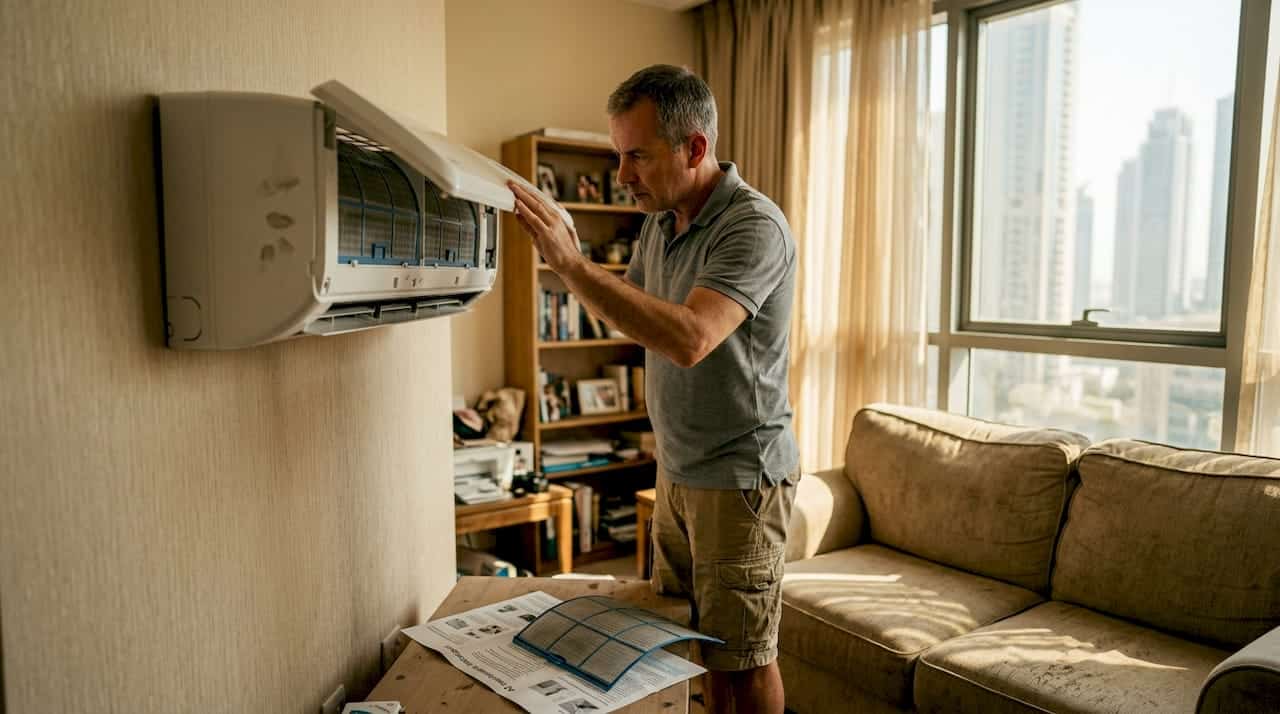
Eliminating odors from AC in Dubai: a 2026 homeowner’s guide
Walking into your Dubai home after a long day, you expect cool, refreshing air. Instead, you’re greeted by a musty, unpleasant smell wafting from your AC vents. This common problem affects countless homeowners and property managers across the UAE, where high humidity and constant AC operation create ideal conditions for mold and bacterial growth. Unpleasant AC odors don’t just impact comfort; they signal potential air quality issues that can affect your health and wellbeing. This guide walks you through identifying odor sources, preparing for effective elimination, and maintaining fresh, clean air in your Dubai home throughout 2026 and beyond.
Table of Contents
Contents
- 1 Table of Contents
- 2 Key takeaways
- 3 Understanding the causes of odors in AC systems in Dubai
- 4 Preparing your AC system for odor elimination
- 5 Step-by-step guide to eliminating AC odors effectively
- 6 Verifying odor removal and maintaining fresh AC air quality
- 7 Keep your AC odor-free with expert cleaning services
- 8 FAQ
- 9 Recommended
- Understanding The Causes Of Odors In AC Systems In Dubai
- Preparing Your AC System For Odor Elimination
- Step-By-Step Guide To Eliminating AC Odors Effectively
- Verifying Odor Removal And Maintaining Fresh AC Air Quality
- Keep Your AC Odor-Free With Expert Cleaning Services
- FAQ
Key takeaways
| Point | Details |
|---|---|
| Humidity breeds mold | Dubai’s climate creates moisture in AC coils and drains, causing musty odors that worsen without regular maintenance |
| Regular cleaning prevents odors | Replacing filters every 30-45 days and cleaning coils twice yearly stops odor buildup before it starts |
| Professional help for persistence | Hidden mold in ducts or refrigerant leaks require expert diagnosis and specialized equipment to resolve safely |
| Prevention saves money | Quarterly maintenance reduces energy costs by 20-30% while extending your AC system’s lifespan by 3-5 years |
Understanding the causes of odors in AC systems in Dubai
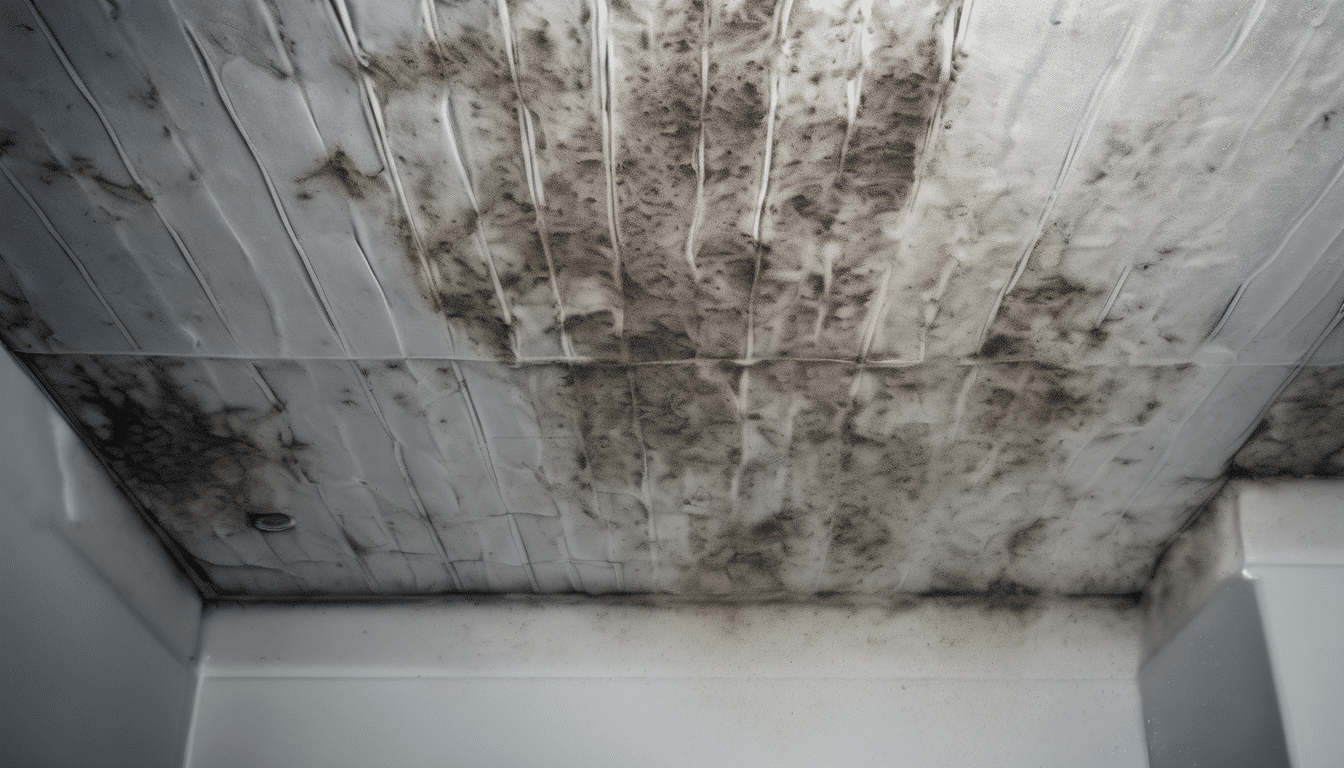
Before you can eliminate AC odors, you need to understand what’s causing them. The primary causes of AC odors in Dubai homes are mold and mildew growing from moisture trapped in evaporator coils, drain pans, drain lines, and clogged filters, all exacerbated by the region’s high humidity, airborne dust, and constant AC operation. Unlike temperate climates where AC systems get seasonal breaks, Dubai’s year-round heat means your system runs continuously, creating perfect conditions for moisture to stagnate and microorganisms to thrive.
Dubai’s outdoor humidity levels often exceed 80%, and when warm, moisture-laden air passes over cold evaporator coils, condensation forms rapidly. If this moisture doesn’t drain properly or if the system lacks adequate airflow, it pools in drain pans and saturates filters. Dust particles carried by desert winds settle on these damp surfaces, providing nutrients for mold colonies. Within days, what started as a small moisture problem becomes a full-blown odor issue.
Different smells indicate different problems. A musty, earthy odor typically signals mold or mildew in coils or ducts. A sulfur or rotten egg smell often points to clogged drain lines where organic matter has decomposed. Sweet or chemical odors may indicate a refrigerant leak, requiring immediate professional attention. Burning smells suggest electrical issues or overheating components, which demand shutting down your system right away. Understanding these distinctions helps you respond appropriately and know when to call experts.
Constant AC operation without maintenance creates a compounding effect. Dirty filters restrict airflow, causing coils to stay colder and collect more condensation. Clogged drain lines back up water into the drain pan, where it sits and breeds bacteria. Over time, these issues intensify, and what began as a faint odor becomes an overwhelming smell that permeates your entire home. Regular AC system maintenance in Dubai breaks this cycle before it starts, protecting both your comfort and your indoor air quality solutions Dubai.
Preparing your AC system for odor elimination
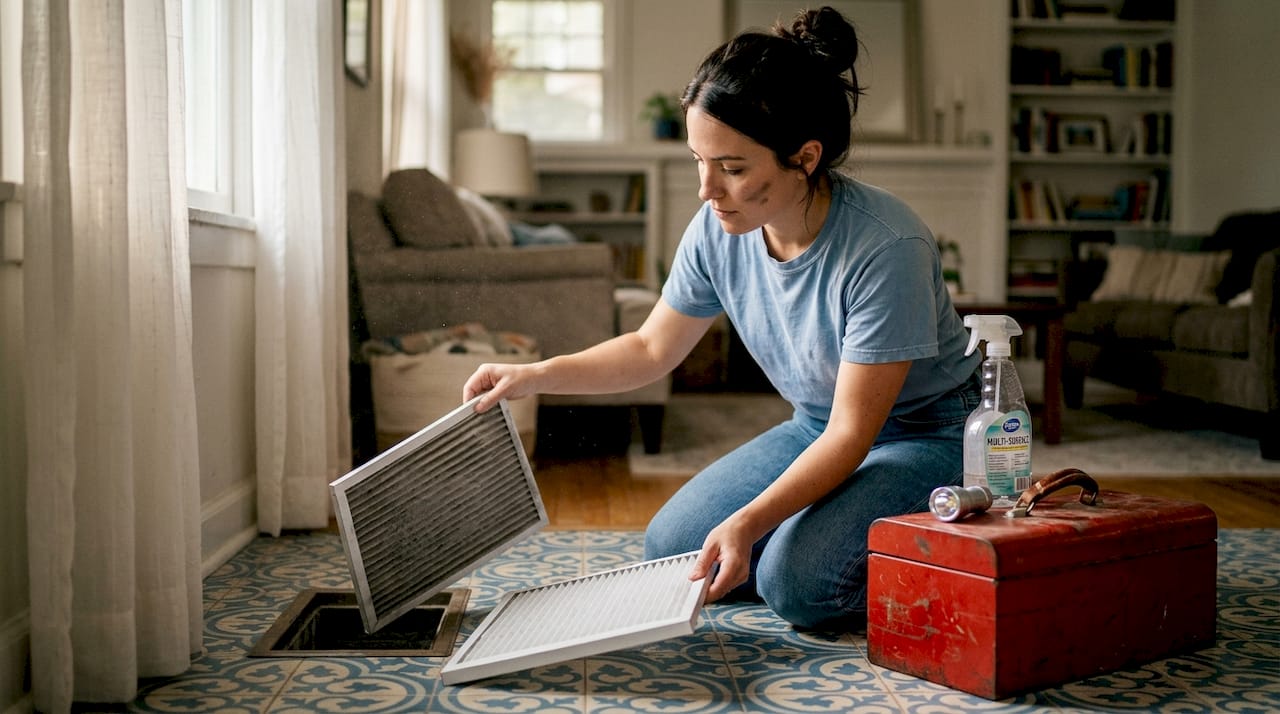
Successful odor elimination starts with proper preparation. Gathering the right tools and materials before you begin saves time and ensures you can complete the job thoroughly. You’ll need replacement air filters sized correctly for your AC unit, antimicrobial coil cleaner specifically formulated for HVAC systems, white vinegar or diluted bleach for drain line flushing, a wet/dry vacuum, soft brushes, safety gloves, and eye protection. If you plan to install UV lights for ongoing prevention, purchase UV-C bulbs rated for HVAC applications.
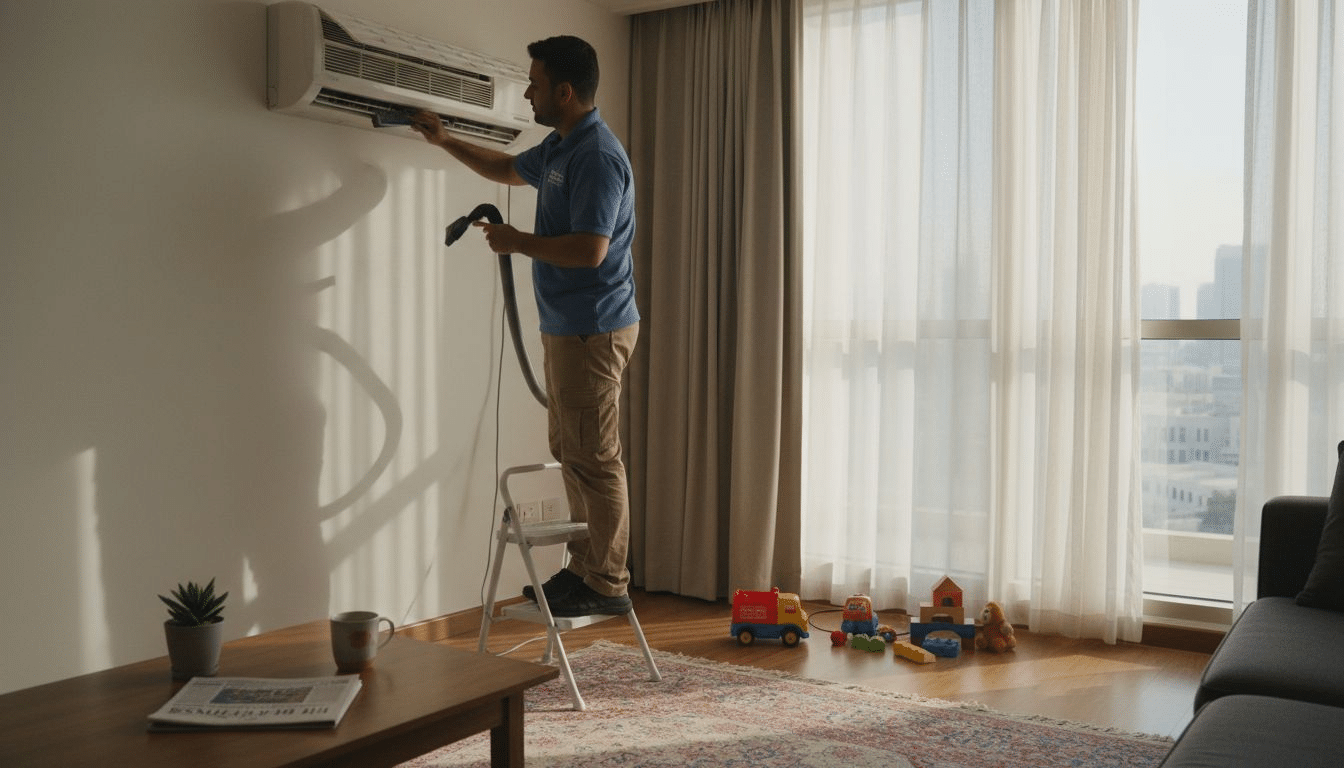
Before touching any components, turn off your AC system at both the thermostat and the circuit breaker. This prevents electrical hazards and ensures the system won’t cycle on while you’re working. Remove the access panel to inspect your current filter condition. If it’s visibly dirty, caked with dust, or shows signs of moisture damage, replacement is non-negotiable. Check drain lines for standing water or visible blockages. A flashlight helps you see inside drain pans and identify mold growth on coil fins.
The table below summarizes essential supplies, their purpose, and recommended usage frequency for Dubai’s climate:
| Supply | Purpose | Frequency |
| — | — |
| Air filters | Remove dust and allergens, prevent coil contamination | Every 30-45 days |
| Antimicrobial coil cleaner | Eliminate mold and bacteria from evaporator/condenser coils | Twice yearly |
| Vinegar or diluted bleach | Flush drain lines, dissolve organic buildup | Monthly or as needed |
| UV-C lights | Inhibit mold growth in ducts and on coils | Install once, replace bulbs annually |
Pro Tip: Choose antimicrobial cleaners specifically designed for AC coils rather than general-purpose household cleaners. Harsh chemicals can corrode delicate aluminum fins and reduce heat transfer efficiency, ultimately costing you more in energy bills and potential repairs.
Safety matters during preparation. Wear gloves when handling cleaning agents, especially bleach solutions. Ensure adequate ventilation in the area where you’re working. If you’re cleaning an indoor air handler, open windows or use fans to disperse fumes. Keep pets and children away from the work area until you’ve finished and properly disposed of dirty materials. Document your starting point with photos; this helps you track improvement and provides a reference for future maintenance. Understanding the air conditioner disinfection process Dubai professionals use can inform your DIY approach and help you recognize when a task exceeds your skill level. Following best practices for central AC cleaning ensures you don’t inadvertently damage sensitive components while trying to eliminate odors.
Step-by-step guide to eliminating AC odors effectively
With preparation complete, you’re ready to tackle odor elimination systematically. Follow these steps in order for best results:
-
Replace or clean air filters every 30-45 days. In Dubai’s dusty environment, filters clog faster than in other climates. Remove the old filter and inspect it. If it’s disposable and heavily soiled, replace it with a new one matching the exact dimensions. Washable filters should be rinsed with water, allowed to dry completely, then reinstalled. Never run your AC without a filter; even a few hours of unfiltered operation allows dust to coat coils and accelerate odor problems.
-
Clean evaporator and condenser coils with antimicrobial agent twice yearly. Access the evaporator coil by removing the air handler panel. Spray the antimicrobial cleaner onto the coil fins, ensuring complete coverage. Let it sit for the time specified on the product label, typically 10-15 minutes. The cleaner will foam and loosen mold, dust, and debris. Use a soft brush to gently remove stubborn buildup, working in the direction of the fins to avoid bending them. Rinse with water if the product requires it, then vacuum excess moisture with a wet/dry vacuum.
-
Flush drain lines with vinegar or diluted bleach to clear clogs and remove mold. Locate the drain line access point, usually a PVC pipe with a removable cap near the air handler. Pour one cup of white vinegar or a 1:10 bleach-to-water solution into the line. Let it sit for 30 minutes to dissolve organic buildup and kill mold. Flush with a gallon of clean water. If water doesn’t drain freely, use a wet/dry vacuum on the outdoor drain outlet to suction out blockages. Repeat monthly during peak humidity months.
-
Install UV lights in ductwork to inhibit mold growth and odors. UV-C lights emit germicidal radiation that destroys mold spores and bacteria on contact. Mount the light near the evaporator coil where it can irradiate the coil surface and drain pan continuously. Follow manufacturer instructions for wiring and placement. UV lights work 24/7 to prevent future odor problems, making them a worthwhile investment for Dubai homes.
-
Identify and safely address specific odors; refer serious issues to professionals. A sulfur smell indicates drain clogs, which you can often resolve with drain line flushing. Chemical or sweet odors suggest a refrigerant leak, which only licensed technicians should handle due to environmental and safety regulations. Burning smells point to electrical problems; shut off your AC immediately and call an expert. Persistent musty odors after cleaning may indicate hidden mold in ductwork or negative air pressure pulling contaminated air from wall cavities.
The table below compares DIY tasks with professional services to help you decide when to call experts:
| Task | DIY Approach | Professional Service |
|---|---|---|
| Filter replacement | Easy; monthly to bimonthly | Included in maintenance contracts |
| Drain line flushing | Moderate; monthly maintenance | Deep cleaning with pressure flushing |
| Coil surface cleaning | Moderate; requires care to avoid damage | Complete coil disassembly and sanitization |
| Duct cleaning | Difficult; limited access and tools | Specialized equipment removes deep contamination |
| Refrigerant leak repair | Illegal without certification | Licensed technicians with proper tools |
Pro Tip: Keep a maintenance log noting dates you replaced filters, cleaned coils, and flushed drains. This simple practice helps you optimize cleaning intervals based on how quickly your system accumulates dirt and lets you catch odor issues before they become severe. Understanding the types of AC cleaning methods Dubai homeowners can use empowers you to choose the right approach for your situation. For comprehensive odor removal, especially in systems with persistent issues, the AC disinfection process Dubai professionals employ ensures every component is thoroughly sanitized.
Verifying odor removal and maintaining fresh AC air quality
After completing cleaning steps, verify your success by assessing whether musty, chemical, or sulfur odors have disappeared when your AC runs. Turn the system on and let it cycle for 30 minutes. Walk through each room, paying attention to air coming from vents. Fresh, neutral-smelling air indicates effective odor removal. Any lingering smell suggests you may have missed a contaminated component or that mold exists in areas you couldn’t access.
Monitor indoor relative humidity levels, keeping them below 50-60% to prevent mold recurrence. Dubai’s outdoor humidity makes this challenging, but a properly functioning AC system should dehumidify as it cools. If humidity stays high despite AC operation, your system may be oversized, have a refrigerant issue, or need airflow adjustments. Consider adding a standalone dehumidifier in particularly humid spaces like bathrooms or laundry rooms.
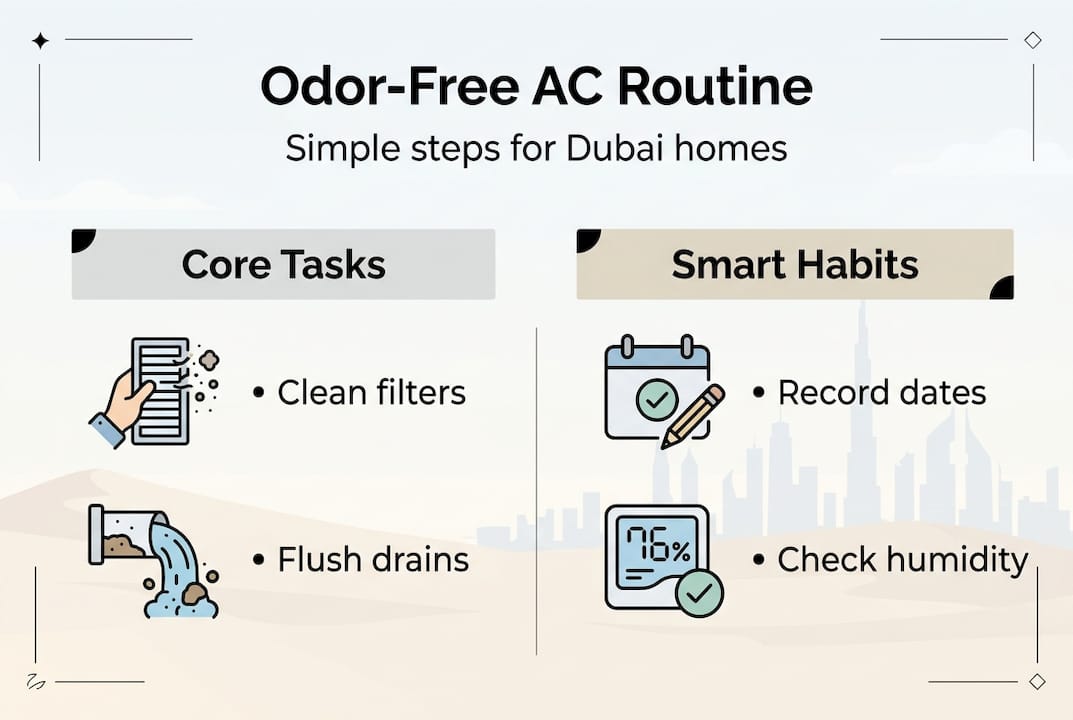
Air quality metrics provide objective verification of improvement. Post-treatment TVOC levels below 200 parts per billion and CO2 concentrations under 900 parts per million indicate good indoor air quality in Dubai homes. You can measure these with affordable air quality monitors available online. Tracking these numbers over time helps you identify when maintenance is needed before odors return.
Quarterly professional AC servicing maintains odor-free, energy-efficient operation in Dubai’s demanding climate. Technicians access components you can’t reach, use specialized tools to clean thoroughly, and identify potential problems before they cause odors or breakdowns. This proactive approach costs less than emergency repairs and extends your system’s lifespan significantly.
“Regular maintenance can reduce energy costs by 20-30% and extend AC lifespan by 3-5 years, making it one of the most cost-effective investments Dubai homeowners can make in their comfort and property value.”
Maintain fresh AC air quality with these ongoing practices:
- Check filters monthly and replace when visibly dirty, even if it’s sooner than 45 days
- Schedule professional coil cleaning twice yearly, ideally before and after summer peak
- Flush drain lines monthly during humid months, quarterly during cooler periods
- Inspect drain pans for standing water whenever you change filters
- Have ductwork professionally cleaned every 3-5 years to remove accumulated dust and mold
- Keep outdoor condenser units clear of debris, plants, and obstructions that restrict airflow
- Use UV lights continuously; replace bulbs annually or per manufacturer recommendations
These practices work together to prevent odor problems rather than just reacting to them. Understanding AC maintenance benefits Dubai homeowners experience helps you appreciate why regular service matters. Following a comprehensive preventive HVAC maintenance Dubai 2026 schedule ensures your system operates efficiently year-round while maintaining the indoor air quality your family deserves.
Keep your AC odor-free with expert cleaning services
While DIY maintenance handles routine tasks, professional cleaning ensures thorough removal of hard-to-reach mold and contaminants that cause persistent odors. Expert technicians dismantle AC components completely, accessing areas you can’t reach with household tools. They use hospital-grade antimicrobial treatments proven to eliminate odor-causing organisms at their source, not just mask symptoms. Regular professional maintenance optimizes AC efficiency and indoor air quality in Dubai’s humid climate, preventing small issues from becoming expensive repairs.
Explore our detailed AC cleaning guide for healthier air to understand what professional service includes. Learn best practices for central AC cleaning that keep your system running efficiently between service appointments. Follow our comprehensive AC cleaning checklist step guide to maintain your investment and enjoy fresh, clean air every day. Professional service combines with your routine maintenance to deliver the odor-free comfort you deserve.
FAQ
How often should I clean or replace my AC filters in Dubai?
Replace or clean filters every 30 to 45 days in Dubai’s dusty, humid environment. During peak summer months when your AC runs constantly, check filters every three weeks. Dirty filters restrict airflow, cause coils to freeze, and create conditions for mold growth that produces odors. Keeping filters fresh is the single most effective step homeowners can take to prevent AC odor problems. Our AC maintenance guide 2025 Dubai provides detailed schedules tailored to local climate conditions.
Can UV lights help prevent AC odors in Dubai homes?
Yes, UV-C lights installed near evaporator coils continuously inhibit mold and bacteria growth, significantly reducing odor development. These lights emit germicidal radiation that destroys microorganisms before they can colonize damp AC surfaces. UV lights work 24/7 without chemicals, making them an ideal long-term prevention strategy for Dubai’s humid climate. They’re particularly effective when combined with regular filter changes and coil cleaning. Professional air conditioner disinfection process Dubai services often include UV light installation as part of comprehensive odor prevention strategies.
What should I do if the AC smell persists after cleaning?
Persistent odors after thorough cleaning typically indicate hidden mold in ductwork, a refrigerant leak, or negative air pressure drawing contaminated air from wall cavities. These issues require professional inspection with specialized equipment like borescopes and thermal imaging cameras to locate the source. Don’t ignore ongoing odors; they signal air quality problems that can affect your health. If you smell burning or electrical odors, shut off your AC immediately and contact experts before using it again. Professional AC cleaning services in Dubai have the tools and expertise to diagnose and resolve complex odor sources that DIY methods can’t address.
How does Dubai’s humidity affect AC odor problems?
Dubai’s outdoor humidity often exceeds 80%, creating excessive condensation on AC coils and in drain systems. This constant moisture provides ideal conditions for mold and bacteria to thrive, especially when combined with dust particles that serve as nutrients. Unlike drier climates where condensation evaporates quickly, Dubai’s humidity keeps AC components damp continuously, accelerating microbial growth. This is why Dubai homeowners need more frequent maintenance and why odor problems develop faster here than in other regions. Controlling indoor humidity below 60% through proper AC sizing and dehumidification helps minimize these issues.
Recommended
- Air Conditioner Disinfection Process for Dubai Residences – Saniservice AC Cleaning
- 7 Types of AC Cleaning Methods Every Dubai Home Needs – Saniservice AC Cleaning
- Complete Guide to AC Cleaning in Dubai – Saniservice AC Cleaning
- AC Maintenance Guide 2025: Ensure Clean, Healthy Airflow – Saniservice AC Cleaning


Leave a Reply