

Home air sanitization guide for Dubai: Healthier air
Dubai’s air quality challenges are unlike anywhere else. A single sandstorm can push indoor dust levels to dangerous highs within hours, while the city’s intense humidity creates the perfect conditions for mold growth inside your AC ducts. Standard cleaning routines simply don’t address these layered threats. The good news: air purifiers reduce PM2.5 by 19-93%, and with the right strategy, you can transform every room in your home into a genuinely healthy space.
Table of Contents
Contents
- 1 Table of Contents
- 2 Key Takeaways
- 3 Know the enemy: Common indoor air contaminants in Dubai homes
- 4 Strategy basics: The three pillars of home air sanitization
- 5 Dubai-specific steps: Preparing your home for air sanitization
- 6 Step-by-step guide: Executing air sanitization for Dubai homes
- 7 Verification: How to assess air quality improvement
- 8 Next steps: Get expert help for deeper air sanitization
- 9 Frequently asked questions
- 10 Recommended
- Know the enemy: Common indoor air contaminants in Dubai homes
- Strategy basics: The three pillars of home air sanitization
- Dubai-specific steps: Preparing your home for air sanitization
- Step-by-step guide: Executing air sanitization for Dubai homes
- Verification: How to assess air quality improvement
- Next steps: Get expert help for deeper air sanitization
- Frequently asked questions
Key Takeaways
| Point | Details |
|---|---|
| Dubai’s unique air threats | Dust, humidity, and VOCs make indoor air sanitization especially critical for Dubai homes. |
| Three main strategies | Source control, ventilation, and air cleaning are the foundation for healthy indoor air. |
| Regular AC maintenance | Frequent AC filter changes and duct cleaning are key in the city’s dusty environment. |
| Efficacy of air purifiers | HEPA filters and UVC purifiers can dramatically reduce fine particles and airborne viruses. |
| Monitoring and troubleshooting | Check air quality with monitors and adjust strategies if symptoms or issues persist. |
Know the enemy: Common indoor air contaminants in Dubai homes
Before you can fix your air, you need to know what’s in it. Dubai homes face a unique mix of pollutants that most air quality guides simply don’t account for.
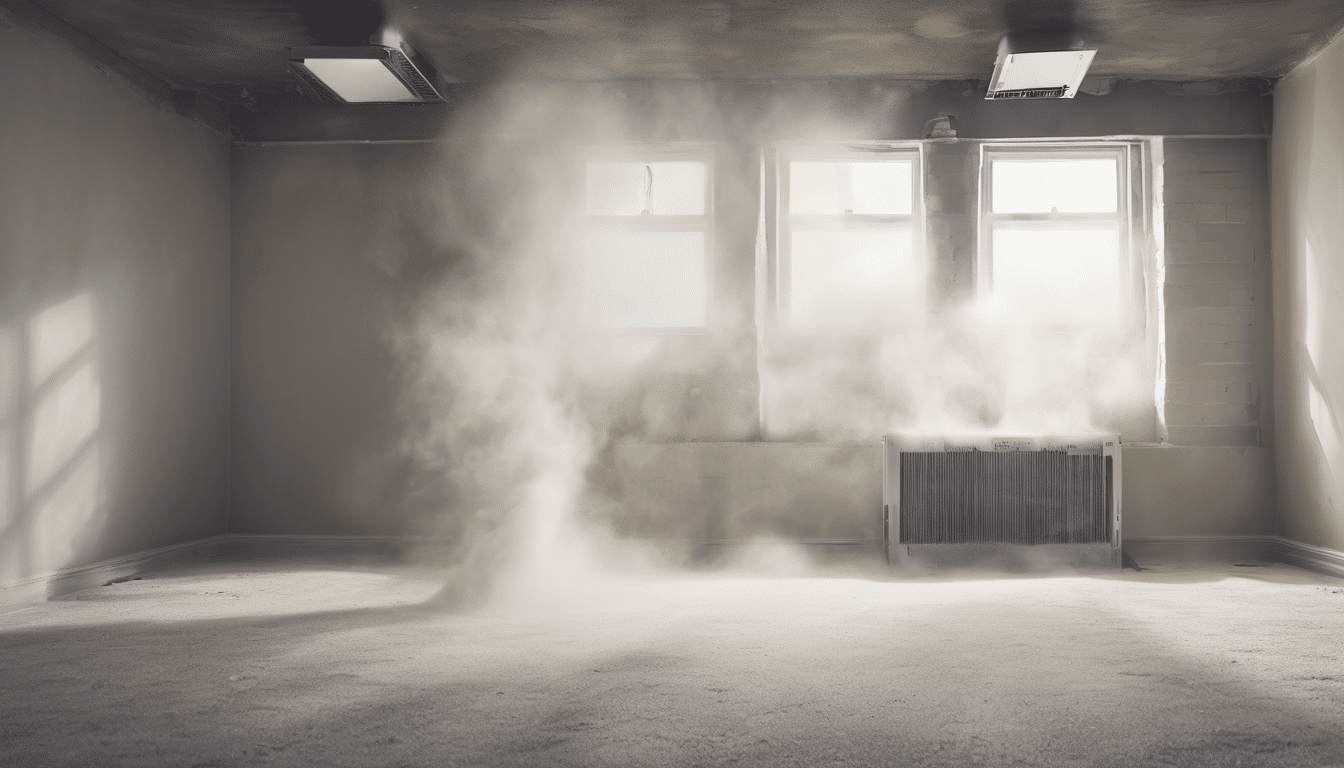
Dust and particulate matter are the most visible threat. Sandstorms push fine particles through window seals, door gaps, and even your AC system. These particles are small enough to reach deep into your lungs and trigger respiratory symptoms.
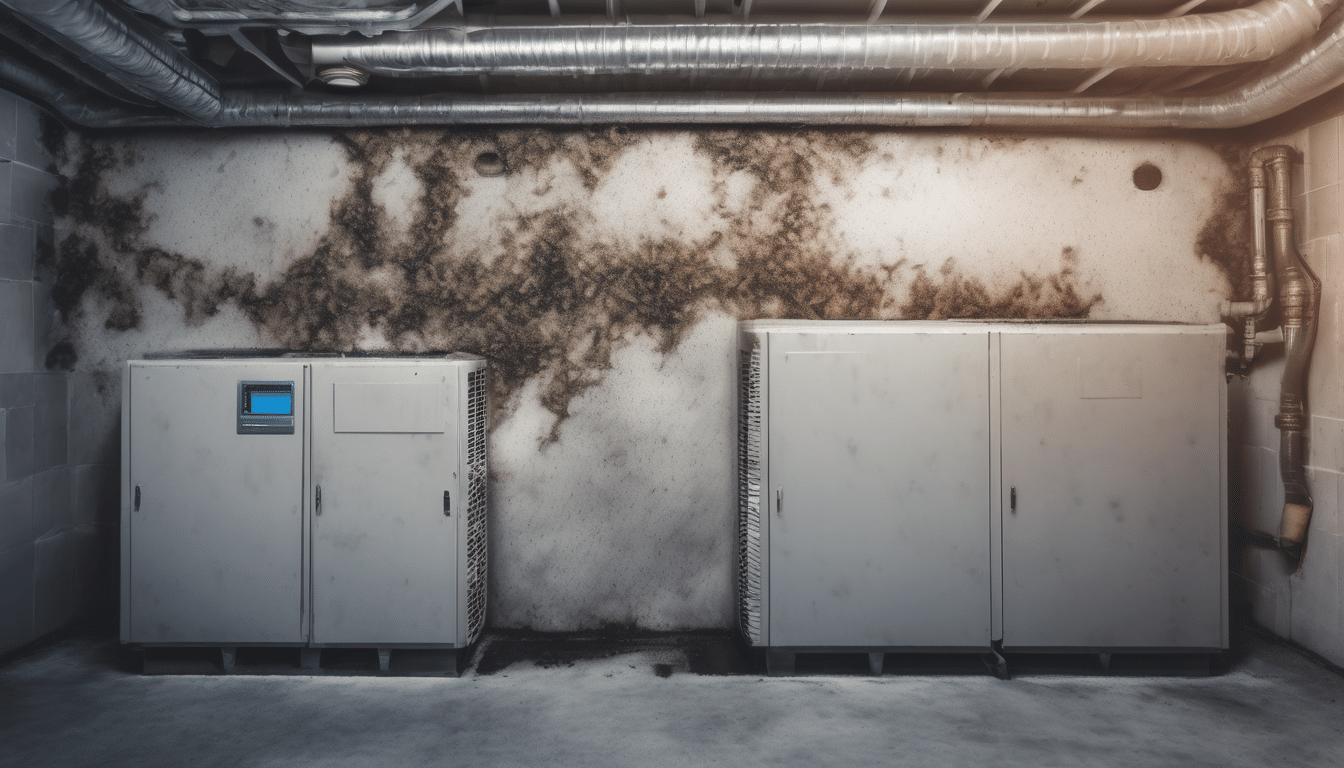
Mold and bacteria thrive in Dubai’s humidity. When indoor humidity climbs above 60%, mold spores colonize AC coils, drain trays, and duct walls. You won’t always see it, but you’ll smell it and feel it.
Volatile organic compounds (VOCs) come from cleaning products, paints, furniture, and air fresheners. In a tightly sealed, air-conditioned home, these gases accumulate fast.
Here’s a quick breakdown of the main contaminants and their sources:
| Contaminant | Primary source in Dubai homes | Health impact |
|---|---|---|
| Fine dust (PM2.5) | Sandstorms, outdoor air infiltration | Respiratory irritation, asthma |
| Mold spores | High humidity, AC drain trays | Allergies, sinus issues |
| VOCs | Cleaners, furniture, paints | Headaches, eye irritation |
| Pet dander | Pets, soft furnishings | Allergic reactions |
| Bacteria/viruses | Human activity, poor AC hygiene | Illness, infections |
According to Dubai industry consensus on indoor air quality, HEPA AC filters should be replaced every 1-3 months, ducts cleaned every 6-12 months, and indoor humidity kept between 40-60%. These aren’t suggestions. In Dubai’s climate, they’re the baseline for safe living.
For a broader look at what’s affecting your home’s air, explore indoor air quality solutions Dubai to understand the full picture.
Strategy basics: The three pillars of home air sanitization
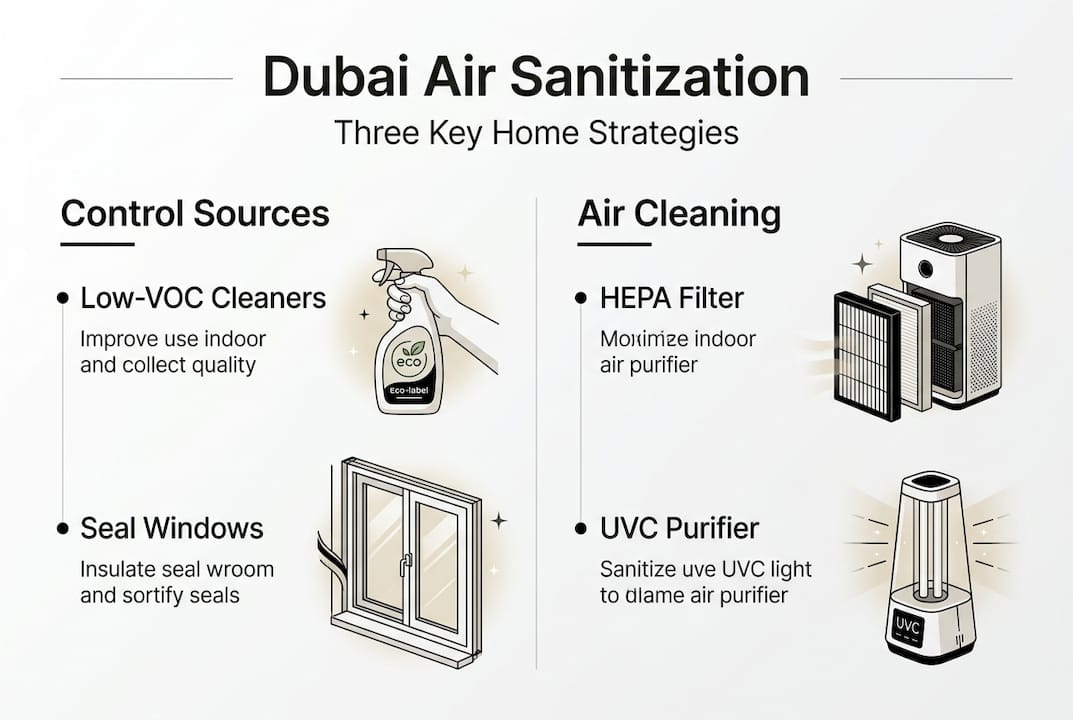
Now that you know what you’re up against, let’s explore proven strategies to win the battle. The EPA’s core IAQ strategies come down to three pillars: source control, ventilation, and air cleaning. Used together, they’re far more effective than any single approach.
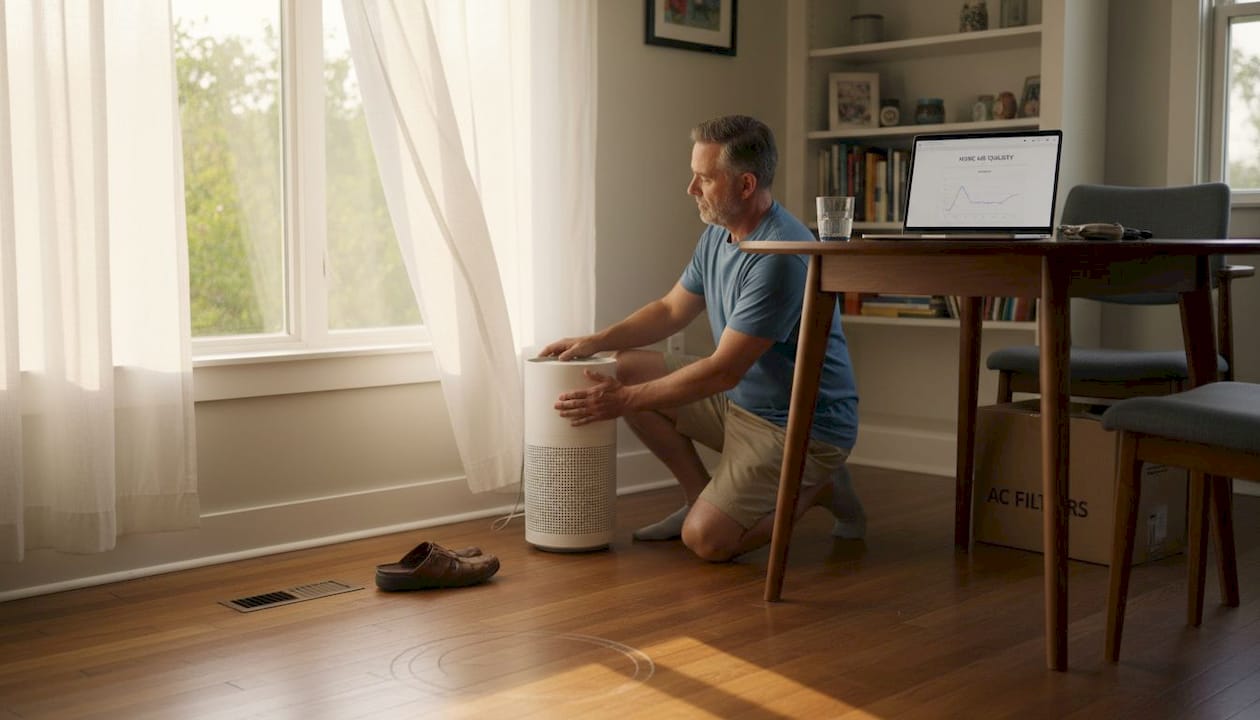
1. Source control means eliminating or reducing pollutants at their origin. This is the most cost-effective step. Switching to low-VOC cleaning products, sealing gaps around windows, and keeping shoes outside all reduce the pollutant load before it enters your air.
2. Ventilation means cycling in fresh outdoor air to dilute indoor pollutants. In Dubai, this is tricky. During sandstorms or high-pollution days, opening windows makes things worse. The solution is smart ventilation: open windows during cooler, cleaner early mornings and rely on your AC’s fresh air intake setting during peak heat.
3. Air cleaning uses filters and purifiers to capture particles and neutralize contaminants. HEPA filters are the gold standard for particles. For a full comparison:
| Air cleaning method | What it removes | Best use case |
|---|---|---|
| HEPA filter (AC/portable) | PM2.5, dust, pollen, mold spores | Whole-room particle removal |
| Activated carbon filter | VOCs, odors, gases | Kitchens, newly furnished rooms |
| UVC light (in-duct) | Bacteria, viruses, mold | AC systems, high-traffic areas |
| MERV 13+ HVAC filter | Fine particles, allergens | Central AC systems |
The key is layering. Source control reduces what enters your air. Ventilation dilutes what’s already there. Air cleaning captures what remains. Learn more about improve indoor air quality methods and review AC hygiene best practices to build your personal strategy.
Dubai-specific steps: Preparing your home for air sanitization
Every strategy works best when tailored to Dubai’s environment. Here’s how to prep your home for the city’s unique conditions.
Start with your AC system. It’s the heart of your home’s air circulation, and in Dubai, it runs almost year-round. A dirty AC doesn’t just recirculate dust. It actively breeds mold and bacteria in the drain tray and coil fins.
Here’s your Dubai-specific prep checklist:
- Replace or clean AC filters every 1-3 months, more often after sandstorms
- Schedule duct cleaning every 6-12 months with a certified provider
- Monitor indoor humidity with a digital hygrometer and keep it between 40-60%
- Damp-dust all surfaces after sandstorms rather than dry-dusting, which just resuspends particles
- Switch to low-VOC cleaning products to reduce chemical off-gassing in sealed spaces
- Check window and door seals for gaps that let in fine outdoor dust
For detailed guidance on maintaining your system, see AC maintenance Dubai and the full AC maintenance guide Dubai.
Pro Tip: After a sandstorm, run your AC on recirculation mode for 30-60 minutes before switching to fresh air intake. This lets the filters capture the initial surge of fine particles before pulling in more outdoor air.
According to Dubai industry consensus, damp dusting post-sandstorm and using low-VOC cleaners are two of the most impactful habits Dubai homeowners can adopt.
Step-by-step guide: Executing air sanitization for Dubai homes
Once your home is prepared, you’re ready to tackle the sanitization process itself. Follow these steps in order for the best results.
-
Eliminate major sources first. Remove visible mold, fix any water leaks, ban indoor smoking, and store chemical cleaners in sealed containers. Source control is the foundation everything else builds on.
-
Adjust your ventilation. On clean-air days, open windows in the early morning for 15-20 minutes. During sandstorms or high-pollution alerts, keep windows closed and use your AC’s recirculation mode. Check EPA strategies for reducing indoor exposure for additional guidance.
-
Change your AC and HEPA filters. Follow the 1-3 month schedule for Dubai. If you’ve just had a sandstorm, check filters immediately. A clogged filter doesn’t just reduce air quality. It also strains your AC and raises your electricity bill. The benefits of AC servicing go well beyond air quality.
-
Clean all surfaces with damp methods. Use a damp microfiber cloth on hard surfaces, and vacuum soft furnishings with a HEPA-equipped vacuum. Dry dusting spreads particles into the air rather than removing them.
-
Deploy portable air purifiers for spot protection. Place them in bedrooms and living areas where you spend the most time. HEPA purifiers with activated carbon filters handle both particles and VOCs.
Research confirms that HEPA plus UVC systems can achieve greater than 4-log reduction of SARS-CoV-2 in just 36 seconds, making them a powerful tool in high-risk rooms.
For energy-conscious homeowners, pairing regular filter changes with smart thermostat settings also cuts costs. See HVAC energy saving tips for practical ways to keep your system efficient.
Verification: How to assess air quality improvement
After following the sanitization steps, it’s crucial to verify that your home’s air has truly improved. Feeling better is a good sign, but objective data is better.
Signs your steps are working:
- Noticeably less dust settling on surfaces within 24-48 hours
- No musty or chemical odors in rooms
- Reduced allergy symptoms: less sneezing, clearer breathing, fewer headaches
- AC running more quietly and efficiently
- Visible cleanliness on filter surfaces after the standard interval
Use monitors to get real data. A basic indoor air quality monitor tracks CO2 (aim for under 1,000 ppm), PM2.5 (aim for under 12 micrograms per cubic meter), and relative humidity (40-60%). These devices cost under AED 200 and give you a clear picture of what’s actually in your air.
Pro Tip: Place your air quality monitor away from vents and windows for the most accurate reading. A spot in the center of your main living area gives you the best baseline measurement.
If problems persist after following all steps, the EPA recommends prioritizing source control over technology and layering strategies together. Persistent odors often point to mold inside ducts or coils, which requires professional cleaning. Explore preventive HVAC maintenance and the full list of AC maintenance benefits Dubai to understand when it’s time to call in the experts.
Next steps: Get expert help for deeper air sanitization
DIY steps take you a long way, but some problems need professional-grade solutions. If you’re dealing with persistent mold, post-sandstorm contamination, or an AC system that hasn’t been professionally cleaned in over a year, it’s time to go deeper.
At Saniservice, our NADCA-certified technicians use hospital-grade, chemical-free biosanitisers to dismantle and deep-clean every AC component, from coils to drain trays. Our in-house microbiology lab verifies results that DIY methods simply can’t match. Start with our AC cleaning checklist to see what a professional service covers, follow the step-by-step AC cleaning guide for a detailed walkthrough, or explore our full range of air quality improvement Dubai services tailored specifically for UAE homes and villas.
Frequently asked questions
How often should I clean AC filters in Dubai?
AC filters in Dubai should be cleaned or replaced every 1-3 months, with full duct cleaning every 6-12 months for optimal air quality.
Are air purifiers effective against PM2.5 and viruses?
Yes. HEPA purifiers can reduce PM2.5 by up to 93%, and HEPA combined with UVC can neutralize airborne viruses like SARS-CoV-2 in under a minute.
What’s the ideal humidity level for indoor air in Dubai?
Keep indoor humidity between 40-60% to minimize mold growth and keep your home comfortable year-round.
How can I check if my indoor air has improved?
Use a CO2, PM2.5, or RH monitor and look for reduced dust, fresh-smelling air, and fewer allergy symptoms. The EPA recommends monitoring after any intervention to confirm results.
Should I avoid ozone-based air cleaners?
Yes. Ozone generators are not recommended for home use due to potential respiratory health risks. Stick with HEPA and activated carbon options instead.
Recommended
- Best practices for AC hygiene: guide for Dubai homes
- 5 Essential Insights on AC Duct Sanitization Dubai: Ensuring Cleaner, Safer Air in Your Home – Saniservice AC Cleaning
- Air Conditioner Disinfection Process for Dubai Residences – Saniservice AC Cleaning
- 10 Key Insights into Indoor Air Quality Basics Dubai for Healthier Spaces – Saniservice AC Cleaning

Leave a Reply