


Sick Building Syndrome – Why It Risks Dubai Health
Headaches, constant fatigue, and scratchy throats often seem like minor complaints in luxury villas and commercial spaces across Dubai, but these symptoms may signal a deeper problem tied to your building itself. Many property managers and villa owners struggle to distinguish routine discomfort from the real impact of poor indoor air quality—a challenge amplified by Dubai’s sealed, air-conditioned environments. Gaining clarity on Sick Building Syndrome, how it differs from other building-related conditions, and the many misconceptions around its causes can help you protect tenant health and maintain premium property standards.
Table of Contents
Contents
- 1 Table of Contents
- 2 Key Takeaways
- 3 Defining Sick Building Syndrome and Misconceptions
- 4 Symptoms Linking Health to Indoor Environments
- 5 Major Causes and Building Risk Factors
- 6 Sick Building Syndrome vs. Building-Related Illness
- 7 Effective Strategies for Prevention and Management
- 8 Protect Your Indoor Health from Sick Building Syndrome Today
- 9 Frequently Asked Questions
- 10 Recommended
- Defining Sick Building Syndrome And Misconceptions
- Symptoms Linking Health To Indoor Environments
- Major Causes And Building Risk Factors
- Sick Building Syndrome Vs. Building-Related Illness
- Effective Strategies For Prevention And Management
Key Takeaways
| Point | Details |
|---|---|
| Understanding SBS | Sick Building Syndrome (SBS) is characterized by nonspecific symptoms that improve when occupants leave the building, differing from Building-Related Illness, which has identifiable causes. |
| Multiple Contributors | SBS arises from a multifactorial blend of inadequate ventilation, chemical contaminants, and biological agents, not a single source. |
| Occupant Health Monitoring | Property managers should document occupant symptoms and patterns to differentiate SBS from other health issues effectively. |
| Integrated Solutions | Preventing SBS requires a comprehensive approach, optimizing HVAC systems, ventilation, and moisture control simultaneously for effective indoor environment management. |
Defining Sick Building Syndrome and Misconceptions
Sick Building Syndrome (SBS) is a condition where building occupants experience acute health and comfort effects that seem connected to time spent in a specific building, yet no single identifiable illness or cause emerges. The symptoms improve or disappear when occupants leave the building, making it distinct from other health conditions.
This is fundamentally different from building-related illness, where doctors can identify a specific, diagnosable condition like Legionnaires’ disease. With SBS, the connection remains unclear—occupants feel unwell inside but return to normal health outside.
Common SBS Symptoms
Occupants typically report a range of nonspecific symptoms that arise during time spent indoors:
- Headaches and migraines
- Eye, nose, and throat irritation
- Persistent fatigue and lethargy
- Dizziness and vertigo
- Nausea and general malaise
These symptoms often cluster among multiple occupants in the same building, yet each person may experience them differently in severity and type. The acute health effects linked to time in buildings typically resolve within hours of leaving the space.
Why the Confusion Exists
Many people mistakenly believe SBS stems from a single cause—mold, poor ventilation, or one chemical contaminant. This misconception creates confusion because SBS is almost always multifactorial, meaning multiple environmental factors work together to produce the effect.
Common factors include:
- Inadequate ventilation and outdoor air exchange
- Temperature and humidity imbalances
- Chemical contaminants from indoor sources
- Biological contaminants including molds and bacteria
- Off-gassing from materials and furnishings
SBS arises from a combination of environmental factors, not a single source—which is why treating one problem rarely solves the entire issue.
In Dubai’s climate, where air conditioning runs continuously and windows remain sealed, these conditions create an ideal environment for SBS development. The constant recycling of indoor air without adequate fresh air intake amplifies the problem.
A Critical Distinction
Another key misconception involves confusing SBS with poor air quality alone. While poor indoor air quality certainly contributes to SBS, the syndrome represents a specific pattern where symptoms resolve upon leaving the building. A person may tolerate poor air quality temporarily, but SBS develops when exposure becomes chronic and systemic.
Understanding this distinction matters for property managers and villa owners because it changes how you approach solutions. You’re not simply installing an air purifier—you’re fundamentally improving the indoor environment through comprehensive HVAC management, ventilation optimization, and contaminant elimination.
Pro tip: Document when occupants experience symptoms and whether they coincide with specific times of day or seasons—this pattern helps identify whether your building actually has SBS versus other health issues unrelated to the indoor environment.
Symptoms Linking Health to Indoor Environments
Your body sends clear signals when indoor air quality deteriorates. The symptoms of Sick Building Syndrome manifest in ways that seem minor at first, then become impossible to ignore. Most importantly, they vanish once you leave the building—which is the diagnostic hallmark.
Physical Symptoms You’ll Notice
The most common symptoms occupants experience include:
- Headaches and migraines that develop during the workday
- Dizziness and lightheadedness without clear cause
- Nausea and general malaise
- Fatigue that persists despite adequate sleep
- Eye, nose, and throat irritation
- Coughing, wheezing, and respiratory discomfort
- Skin rashes or irritation in sensitive individuals
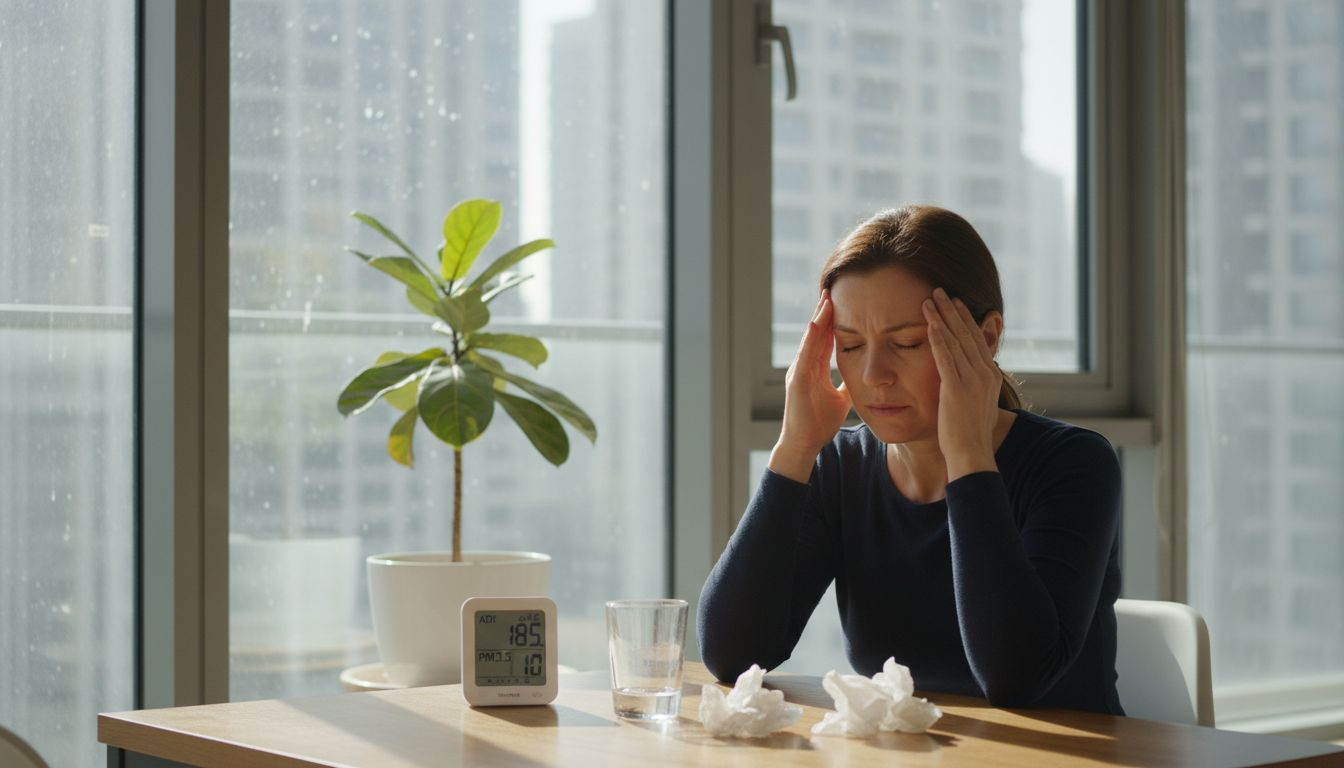
These symptoms linked to poor indoor air quality often follow a predictable pattern—they worsen as the day progresses and improve significantly by evening or on weekends when occupants leave the building.
Why Symptoms Cluster
In luxury villas and commercial properties across Dubai, multiple occupants frequently report identical symptoms simultaneously. This clustering is not coincidence. It indicates an environmental issue affecting everyone exposed to the same recirculated air.
A property manager might notice that tenants in certain units report headaches while others report respiratory symptoms. Both are experiencing the same underlying problem—contaminated indoor air—but individual susceptibility varies based on health status and sensitivity.
Vulnerable Populations Experience Worse Effects
Certain groups suffer more severely from poor indoor environments. People with pre-existing asthma, allergies, or immunocompromised conditions experience disproportionately worse reactions. Children and elderly occupants also show heightened vulnerability.
Mold exposure in moist environments particularly affects respiratory health, triggering nasal stuffiness, throat irritation, and persistent coughing. For those with compromised immune systems, mold exposure poses serious health risks beyond typical SBS symptoms.
This matters for property owners because it creates potential liability if occupants develop documented health complications.
The Symptom-to-Source Connection
Understanding which symptoms correlate with which indoor problems helps identify the root cause. Chemical off-gassing typically triggers headaches and eye irritation. Mold and biological contaminants cause respiratory symptoms. Poor ventilation amplifies all effects.
In Dubai’s sealed, air-conditioned buildings, the accumulation of these factors creates a perfect storm. The constant recycling of recirculated air concentrates contaminants rather than diluting them with fresh outdoor air.
Symptoms that disappear when you leave the building but return within hours of re-entry confirm an indoor environmental issue, not a personal health condition.
Documentation Matters
Property managers should track when occupants report symptoms and which units are affected most frequently. This data becomes critical for identifying HVAC system issues, mold growth, or ventilation problems requiring professional intervention.
Pro tip: Ask occupants to maintain a simple log documenting symptom timing and severity—morning onset suggests overnight air quality degradation, while afternoon worsening indicates accumulation throughout the day, each pointing to different solutions.
Major Causes and Building Risk Factors
Sick Building Syndrome doesn’t appear randomly. It develops when specific environmental conditions align within a building. Understanding these causes helps property managers and villa owners identify what’s going wrong and take corrective action.
The Ventilation Problem
Inadequate ventilation stands as the primary culprit in Dubai’s sealed buildings. When HVAC systems recirculate the same air without introducing sufficient fresh outdoor air, contaminants concentrate rather than dissipate. This is especially problematic in the desert climate where windows remain permanently sealed.
Tightly sealed environments prevent natural air exchange, trapping indoor pollutants indefinitely. Modern energy-efficient construction prioritizes insulation over fresh air intake, creating the perfect conditions for SBS development.
Chemical Contaminants from Building Materials
Your office carpet, adhesives, paint, and cleaning products emit volatile organic compounds (VOCs). These chemicals off-gas continuously, especially in new construction or recently renovated spaces. In a sealed building with poor ventilation, these compounds accumulate to levels that trigger symptoms.
Common sources include:
- Adhesives and sealants
- Carpet and flooring materials
- Paint and coatings
- Furniture finishes
- Cleaning agents and disinfectants
- Upholstery and textiles
The combination of multiple off-gassing sources creates a chemical stew that irritates airways and triggers headaches.
Biological Contaminants and Moisture
Microbial contamination from moisture and poor ventilation creates an ideal breeding ground for mold, bacteria, and fungi. Dubai’s humidity—combined with air conditioning systems that create condensation—produces damp conditions that microorganisms thrive in.
When HVAC drip trays aren’t regularly cleaned, stagnant water accumulates. Mold grows in air ducts, on coils, and within drainage systems. Occupants then inhale mold spores and bacterial fragments with every breath.
HVAC System Negligence
Poorly maintained air conditioning systems amplify all other problems. Dirty coils, clogged filters, and contaminated ducts act as incubators for biological growth and chemical accumulation. As air passes through these compromised components, it picks up additional contaminants before reaching occupants.
Regular maintenance is not optional—it’s foundational to preventing SBS.
How These Factors Compound
Multiple risk factors work together synergistically, meaning their combined effect is far worse than any single factor alone.
Consider a sealed villa in Dubai with new carpeting, no fresh air intake, and an AC system that hasn’t been professionally cleaned in two years. That building now has inadequate ventilation, chemical off-gassing, biological contamination, and a contaminated HVAC system—all at once. Occupants get hit with all four simultaneously.
This is why treating one problem rarely solves SBS. The causes are interlocking and require comprehensive solutions.
The following table summarizes how risk factors for SBS typically interact and amplify each other in sealed buildings:
| Risk Factor | Role in SBS Development | Amplifying Synergy |
|---|---|---|
| Poor Ventilation | Traps contaminants | Intensifies chemical and biological buildup |
| Chemical Off-gassing | Releases VOCs indoors | Builds up due to lack of fresh air |
| Moisture Issues | Promotes mold growth | Increases bio-contaminant loads |
| HVAC Negligence | Circulates pollutants | Spreads and concentrates hazards |
Pro tip: Request HVAC maintenance records and conduct a moisture assessment of your building’s air conditioning system—these two data points reveal whether your property has the foundational risk factors for SBS development.
Sick Building Syndrome vs. Building-Related Illness
These two conditions sound similar, yet they’re fundamentally different. Understanding the distinction matters because it changes how doctors diagnose occupants and how property managers respond. The confusion creates real problems in Dubai where building-related health issues require specific interventions.
The Core Difference
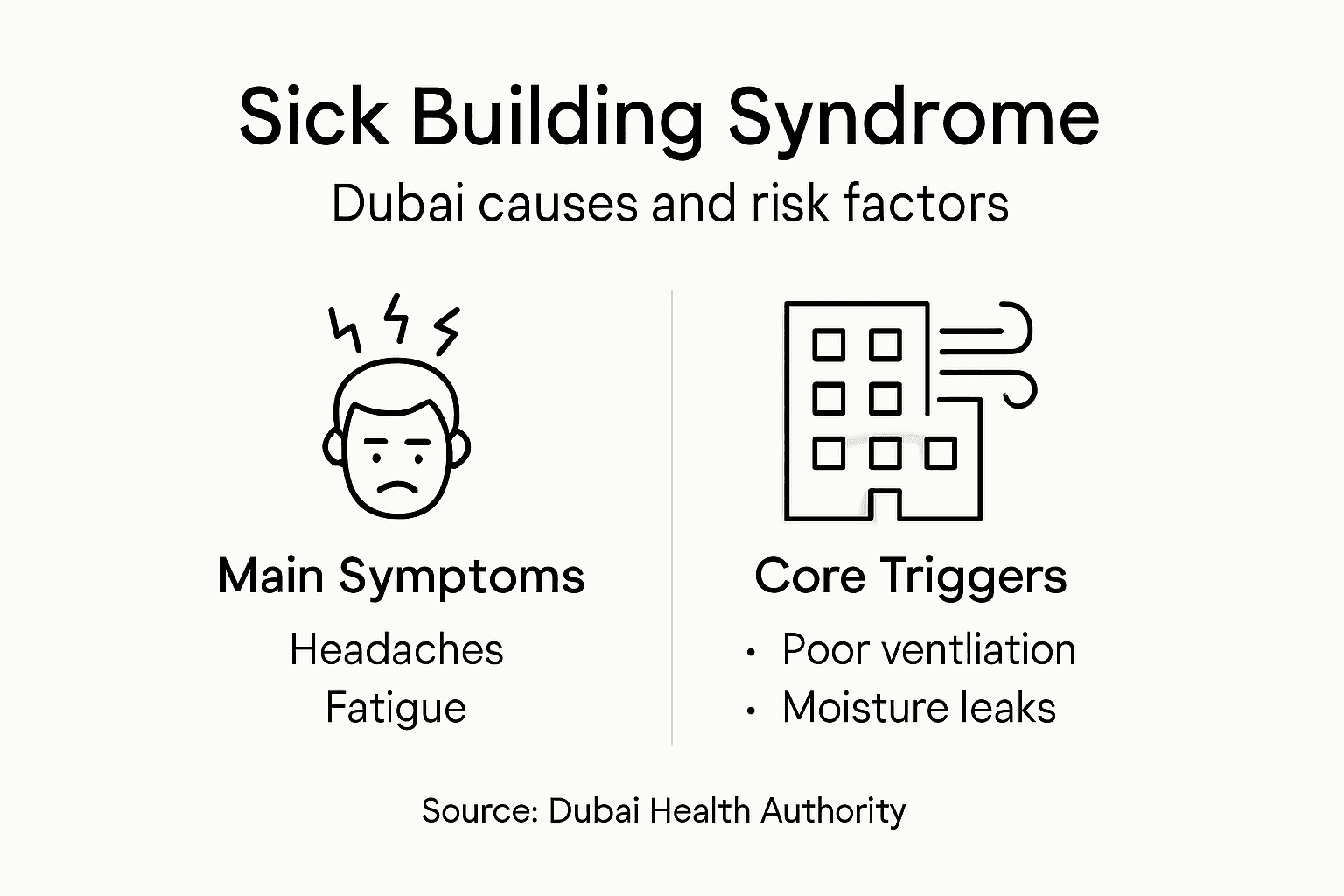
Sick Building Syndrome (SBS) presents as a collection of nonspecific symptoms without a clearly identifiable cause. Headaches, fatigue, and throat irritation appear, but no specific illness emerges from medical testing. Symptoms improve once occupants leave the building, then return when they re-enter.
Building-Related Illness (BRI) is completely different. It’s a diagnosable medical condition caused by specific, identifiable agents in the building. Doctors can pinpoint the exact cause and confirm it through clinical testing.
Key Distinguishing Factors
The differences matter operationally:
Here’s a quick comparison of Sick Building Syndrome (SBS) and Building-Related Illness (BRI):
| Aspect | Sick Building Syndrome (SBS) | Building-Related Illness (BRI) |
|---|---|---|
| Symptom Onset | Nonspecific, gradual | Sudden, often severe |
| Medical Diagnosis | Not identifiable by tests | Proven by laboratory testing |
| Cause | Multiple interacting factors | Single, identifiable agent |
| Persistence of Symptoms | Resolve after leaving building | Persist after exposure ends |
| Response Required | Environmental investigation | Medical treatment and agent removal |
- SBS: Nonspecific symptoms, no medical diagnosis, multifactorial causes, improves upon leaving
- BRI: Specific diagnosable illness, identifiable causative agent, singular or limited causes, may persist after leaving
Building-Related Illness includes conditions like Legionnaire’s disease, which doctors can definitively diagnose through testing. They can identify the bacteria in water systems and confirm infection through serological tests. With SBS, no such certainty exists.
Real-World Examples
A tenant develops a respiratory infection traced to Legionella bacteria in the cooling tower. That’s BRI. A doctor diagnoses it, culture confirms it, and treatment proceeds with clarity.
Another tenant in the same building experiences chronic headaches and fatigue that vanish on weekends. Medical tests show nothing abnormal. That’s SBS.
Both occupants are experiencing building-caused health problems, but one is diagnosable illness while the other is environmental sensitivity.
Why This Distinction Matters for Property Managers
BRI demands immediate, specific remediation. If Legionella is found, you must disinfect water systems and notify authorities. The response is clear and regulated.
SBS requires comprehensive environmental improvement. You can’t simply treat one problem because it’s multifactorial. You need HVAC optimization, ventilation enhancement, moisture control, and chemical management—all simultaneously.
Medical Evaluation Approaches Differ
SBS requires environmental investigation and occupant symptom tracking; BRI requires medical testing and agent identification.
When occupants report symptoms, doctors first rule out BRI by conducting tests and seeking specific diagnoses. If tests are negative and symptoms fit the SBS pattern, environmental factors become the focus. This diagnostic pathway is essential for proper building remediation.
Property managers often mistake SBS for individual health issues rather than building problems, delaying necessary environmental corrections.
Psychological and Social Factors
SBS involves psychosocial aspects that BRI doesn’t. Occupants’ expectations, building perception, and stress levels influence how severely they experience SBS symptoms. This doesn’t make symptoms imaginary—it means environmental improvement must address occupant awareness and building perception alongside physical conditions.
Pro tip: When occupants report health concerns, request they see a physician first to rule out BRI through proper medical testing—this clarifies whether you’re addressing a building environmental issue (SBS) or a specific infectious disease (BRI) requiring different remediation.
Effective Strategies for Prevention and Management
Preventing Sick Building Syndrome requires a systematic approach targeting the root causes. Property managers and villa owners in Dubai can’t simply install a purifier and hope for the best. Real solutions demand comprehensive environmental management across multiple domains.
HVAC System Excellence
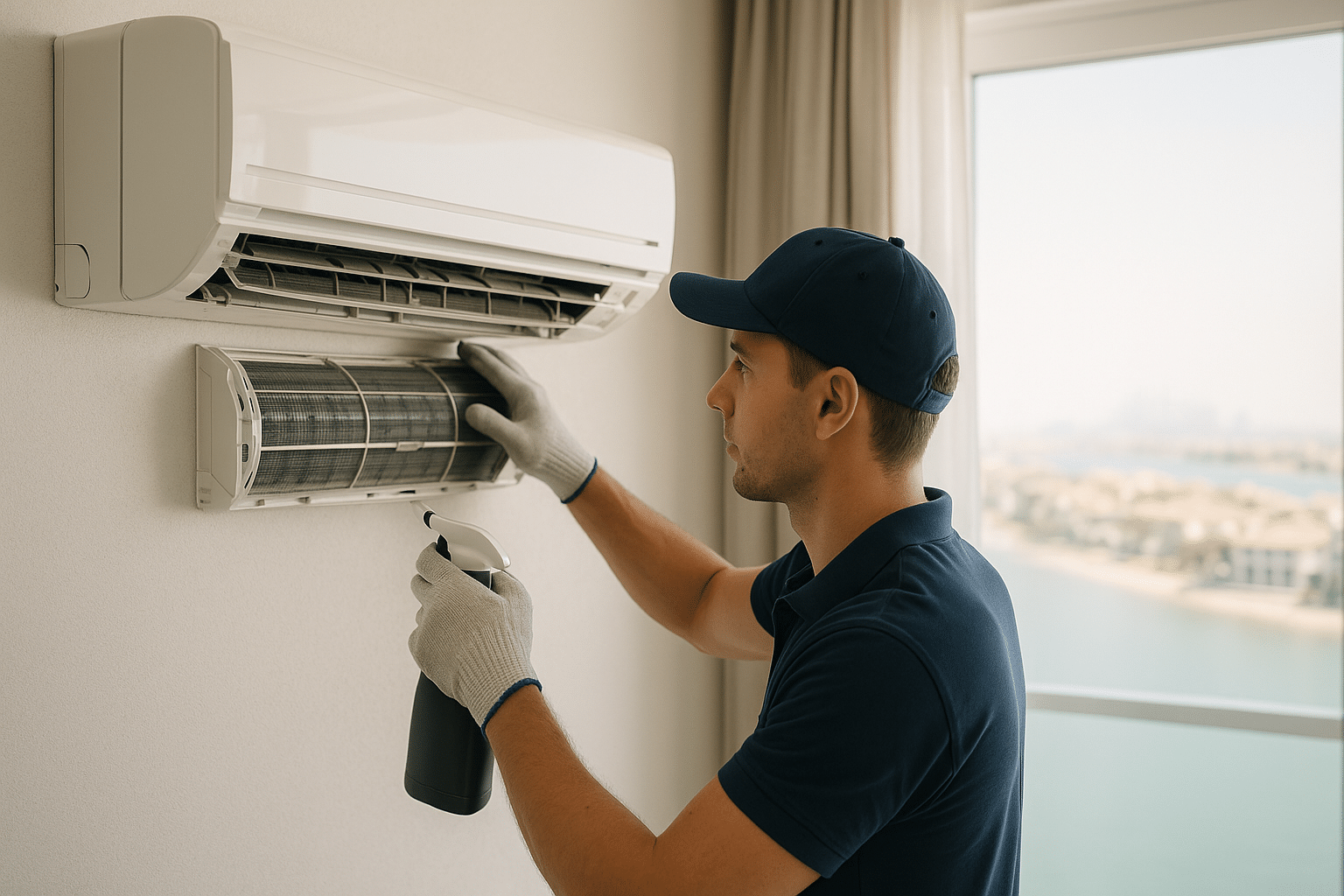
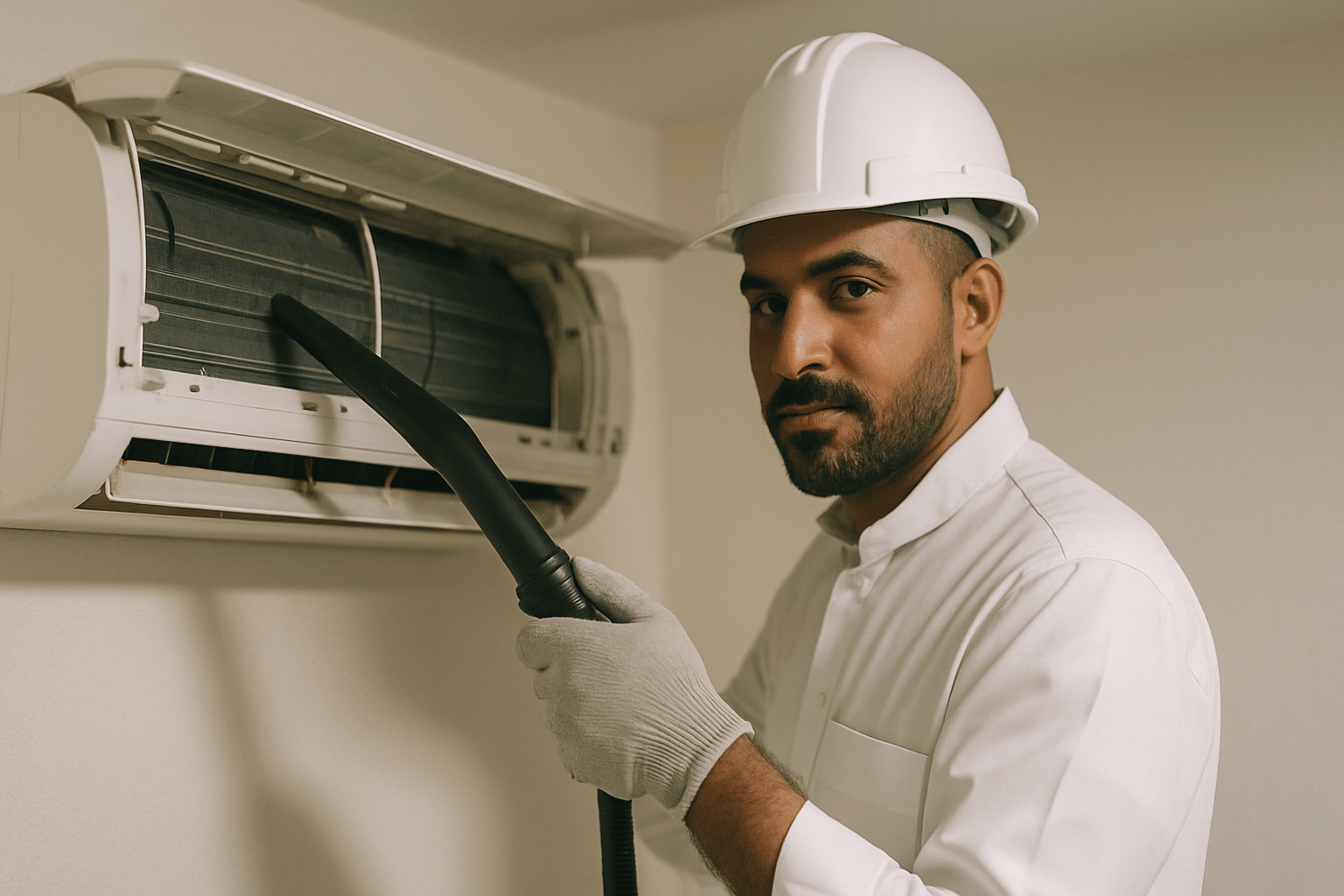
Your air conditioning system is either solving the problem or creating it. Professional HVAC maintenance stands as the foundation of SBS prevention. This means regular cleaning of coils, filters, ducts, and drainage systems where biological contamination thrives.
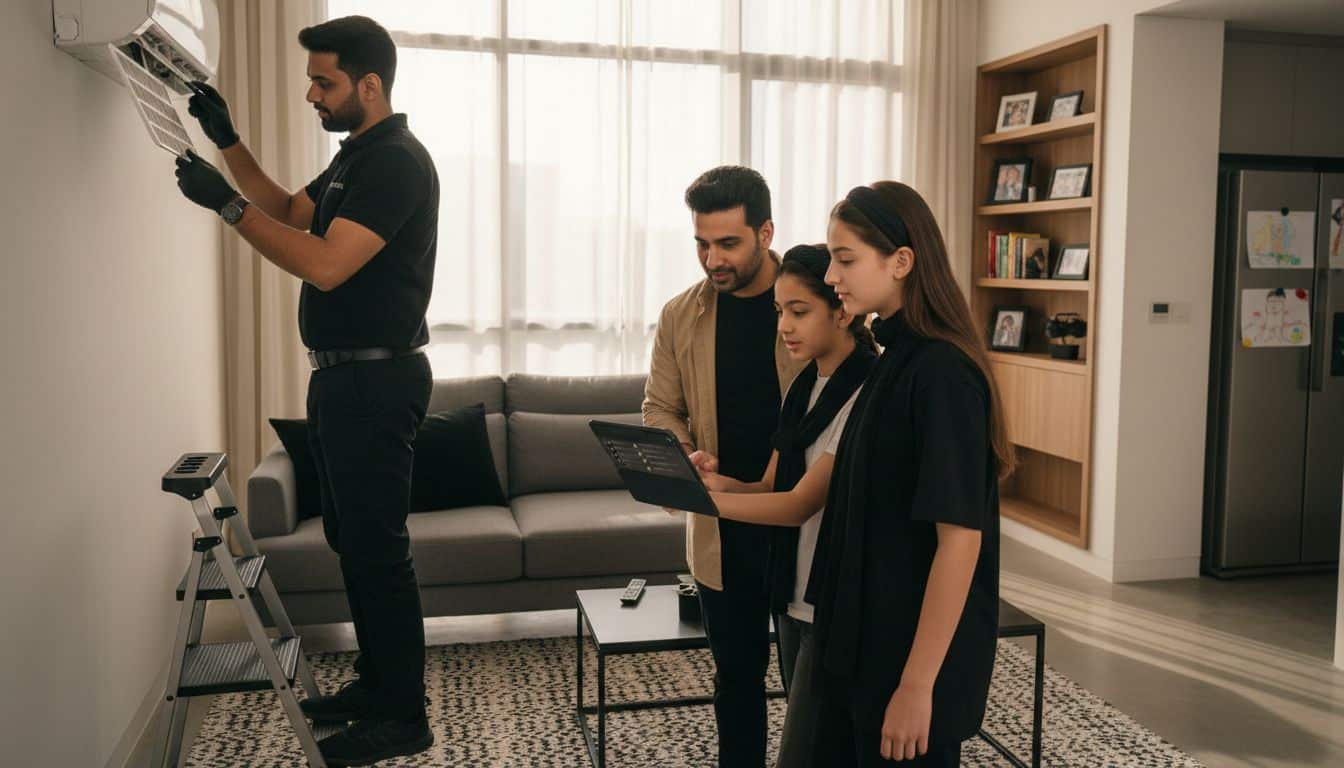
SaniAC by Saniservice specializes in deep cleaning AC systems with hospital-grade biosanitizers that eliminate mold, bacteria, and allergens without chemicals. Their NADCA-certified technicians dismantle components and disinfect every surface, ensuring clean air reaches occupants.
Regular maintenance schedules prevent contamination from accumulating in the first place.
Ventilation Optimization
Fresh air intake must increase significantly beyond minimum codes. Sealed buildings need engineered solutions that introduce outdoor air while maintaining temperature control. Upgrading ventilation systems to provide greater outdoor air exchange directly reduces chemical and biological contaminant concentrations.
In Dubai’s climate, this requires balancing cooling efficiency with fresh air introduction—a technical challenge that demands professional HVAC design.
Moisture and Humidity Control
Mold cannot grow without moisture. Controlling humidity between 30-50% prevents biological contamination. This involves:
- Regular AC drainage system inspection and cleaning
- Proper insulation preventing condensation
- Dehumidification in high-moisture areas
- Immediate response to water leaks or seepage
Stagnant water in drip trays creates microbial breeding grounds within 48 hours. Professional AC cleaning removes these contamination sources before they become problems.
Material Selection and Off-Gassing Reduction
Building biology principles emphasize minimizing toxic materials and volatile organic compound sources. When selecting furnishings, adhesives, paints, and carpeting, prioritize low-VOC or non-toxic alternatives.
For new construction or renovations, specify materials that off-gas minimally. Allow adequate ventilation during initial off-gassing phases rather than sealing the space immediately.
Occupant Education and Monitoring
Occupants must understand how their building environment functions. Educate residents about symptom tracking and proper building use. When occupants report symptoms with timing patterns, property managers gain diagnostic data that pinpoints specific problems.
Comprehensive Integration
Preventing SBS requires simultaneous attention to ventilation, moisture control, material selection, and HVAC maintenance—not sequential fixes.
Treating one issue while ignoring others wastes resources. A newly renovated villa with low-VOC materials but poor ventilation still develops SBS. An AC system professionally cleaned but with inadequate fresh air intake won’t solve the problem.
Successful SBS prevention integrates all strategies into a cohesive indoor environmental management plan. This demands professional assessment and ongoing monitoring rather than reactive responses to occupant complaints.
Pro tip: Schedule professional HVAC assessment and moisture evaluation before occupants report symptoms—preventive deep cleaning and system optimization costs far less than managing chronic SBS complaints and potential tenant turnover.
Protect Your Indoor Health from Sick Building Syndrome Today
Sick Building Syndrome poses a real and urgent risk to your home or commercial space in Dubai. When symptoms like headaches, fatigue, and respiratory irritation arise due to poor ventilation and contaminated air conditioning systems, it is clear your indoor environment needs expert care. You deserve a healthy space where fresh air flows freely, and mold, bacteria, and allergens no longer compromise your wellbeing.
Take control now by partnering with Saniservice, Dubai’s foremost authority in professional air conditioning cleaning and disinfection. Our NADCA-certified technicians specialize in dismantling and deep-cleaning every AC component using hospital-grade biosanitizers proven to eradicate the invisible threats that cause Sick Building Syndrome. Backed by in-house microbiologists and building scientists, we provide a scientific approach that ensures safer air and lasting comfort. Visit Saniservice to schedule your comprehensive HVAC inspection and protect your property against the multifactorial dangers highlighted in Sick Building Syndrome. Act today before minor symptoms become chronic health challenges for your family or tenants.
Frequently Asked Questions
What is Sick Building Syndrome (SBS)?
Sick Building Syndrome (SBS) is a condition where building occupants experience acute health and comfort effects that seem related to time spent in a specific building, but no single identifiable illness or cause is found.
What are the common symptoms of Sick Building Syndrome?
Common symptoms include headaches, eye irritation, fatigue, dizziness, and respiratory discomfort, which tend to improve after leaving the building.
How can building owners prevent Sick Building Syndrome?
Building owners can prevent SBS by optimizing ventilation, conducting regular HVAC maintenance, controlling moisture levels, selecting low-VOC materials, and educating occupants about symptom tracking.
How does poor ventilation contribute to Sick Building Syndrome?
Inadequate ventilation traps indoor pollutants, leading to a concentration of contaminants that can trigger health symptoms among building occupants.
Recommended
- 9 Critical Health Risks of Poor Indoor Air Quality Dubai Residents Must Know – Saniservice AC Cleaning
- Could indoor air quality cause my symptoms? – Saniservice AC Cleaning
- 10 Critical Insights on Poor Indoor Air Quality Health Risks Dubai and How to Maintain Your AC – Saniservice AC Cleaning
- Is construction dust harmful to my family’s health? – Saniservice AC Cleaning
- Indoor Air Quality Testing Explained
- Complete Guide to HVAC’s Role in Air Quality – Home Therapist Cooling, Heating, and Plumbing

Leave a Reply