

Improve indoor air quality with expert AC cleaning UAE
Your air conditioner runs nonstop, yet you still wake up with a scratchy throat or notice dust settling within hours of cleaning. In UAE homes, indoor air can be up to five times more polluted than outdoor air, especially in air-conditioned spaces. Expert AC cleaning and disinfection offer the most effective path to healthier indoor air, tackling hidden contaminants at their source.
Table of Contents
Contents
- 1 Table of Contents
- 2 Key takeaways
- 3 Introduction to indoor air quality challenges in the UAE
- 4 Prerequisites for improving indoor air quality
- 5 Professional AC cleaning and disinfection services
- 6 Ongoing HVAC maintenance and filter management
- 7 Moisture control and ventilation strategies
- 8 Common mistakes, failure points, and safety warnings
- 9 Expected outcomes, success metrics, and timeline
- 10 Enhance your home’s air quality with expert AC cleaning
- 11 FAQ
- 11.1 How often should I schedule professional AC cleaning for best indoor air quality?
- 11.2 Are chemical disinfectants safe to use for AC system cleaning?
- 11.3 Can ventilation improve indoor air quality in the dusty UAE environment?
- 11.4 What immediate changes can I expect after professional AC cleaning?
- 11.5 Does professional AC cleaning really reduce energy costs?
- 12 Recommended
- Introduction To Indoor Air Quality Challenges In The UAE
- Prerequisites For Improving Indoor Air Quality
- Professional AC Cleaning And Disinfection Services
- Ongoing HVAC Maintenance And Filter Management
- Moisture Control And Ventilation Strategies
- Common Mistakes, Failure Points, And Safety Warnings
- Expected Outcomes, Success Metrics, And Timeline
- Enhance Your Home’s Air Quality With Expert AC Cleaning
Key takeaways
| Point | Details |
|---|---|
| Expert AC cleaning reduces allergens | Indoor microbial counts drop by over 70% within 48 hours after professional service completion. |
| Regular maintenance sustains gains | HEPA filter changes every three months and annual duct cleaning maintain air quality and HVAC efficiency. |
| Moisture control prevents mold | Keeping indoor humidity between 40-60% inhibits mold growth and microbial proliferation. |
| Avoid common mistakes | Uncertified chemical disinfectants and excessive ventilation without screens worsen indoor pollution. |
| Measurable improvements are rapid | Allergy and asthma symptoms improve within weeks, with energy savings extending HVAC lifespan. |
Introduction to indoor air quality challenges in the UAE
The UAE’s hot, dusty climate forces homeowners to rely on air conditioning nearly year-round. Continuous AC use, combined with poor ventilation and dust ingress, creates ideal conditions for indoor pollutant buildup. Your HVAC system, meant to provide comfort, can become a breeding ground for allergens, mold spores, and bacteria when contaminated components circulate these particles throughout your living space.
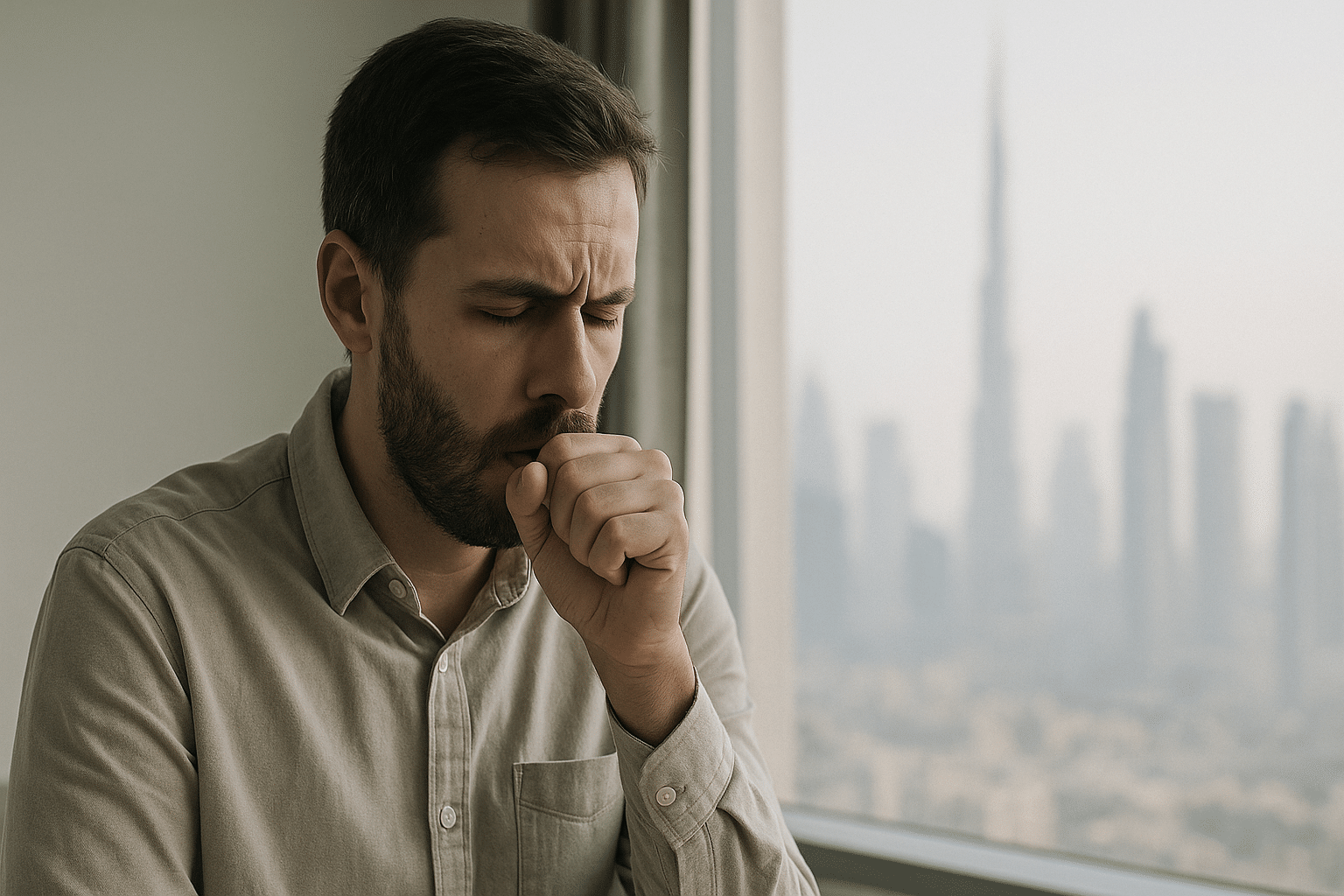
Common respiratory issues linked to poor indoor air quality in UAE homes include persistent coughing, nasal congestion, eye irritation, and worsening asthma symptoms. Dust mites thrive in the warm, humid microenvironments within AC units, while mold colonizes damp evaporator coils and drainage trays. Many families unknowingly breathe in these contaminants daily, mistaking indoor air quality problems for seasonal allergies or viral infections.
Key environmental factors contributing to UAE indoor air challenges:
- Desert dust and sand particles infiltrate homes through windows, doors, and ventilation gaps
- High outdoor temperatures drive constant AC operation, reducing fresh air exchange
- Humid coastal conditions promote mold growth in HVAC components and ductwork
- Construction activity in urban areas introduces fine particulate matter indoors
Without professional intervention, these pollutants accumulate rapidly. Your AC filter captures some particles, but contaminated coils, blower wheels, and ducts require thorough dismantling and cleaning to eliminate microbial reservoirs. Understanding these challenges helps you recognize why standard maintenance falls short and why expert cleaning delivers transformative results.
Prerequisites for improving indoor air quality
Before tackling indoor air quality improvements, you need foundational knowledge and resources. Understanding your HVAC system’s components and airflow pathways allows you to identify contamination points and communicate effectively with professionals. Recognizing the difference between cleaning and disinfection guides your service selection, as AC cleaning removes visible debris while disinfection eliminates microorganisms.
Access to professional IAQ testing identifies specific contaminants in your home. Surface swabs detect mold species, air samples measure particulate and microbial concentrations, and moisture meters locate hidden dampness promoting growth. These assessments establish baseline data, enabling you to track improvements and verify service effectiveness.
Essential resources for effective IAQ improvement:
- NADCA-certified AC cleaning and disinfection services with documented protocols
- Moisture monitoring equipment to track indoor humidity levels
- HEPA or equivalent filters rated MERV 13 or higher for particle capture
- Window screens to enable controlled ventilation without dust infiltration
- Maintenance log to schedule filter changes and professional service intervals
| Resource Type | Purpose | Frequency |
|---|---|---|
| Professional IAQ testing | Baseline and verification | Initial + annual |
| NADCA-certified cleaning | Deep system decontamination | Every 6-12 months |
| HEPA filter replacement | Ongoing particle capture | Every 3 months |
| Humidity monitoring | Mold prevention | Weekly checks |
Professional services matter because HVAC systems require specialized tools and expertise. Dismantling evaporator coils, accessing concealed ductwork, and applying biosanitisers safely demands training that prevents system damage and ensures occupant safety. Attempting DIY deep cleaning often leads to incomplete decontamination or component harm, wasting money and leaving pollutants in place.
Professional AC cleaning and disinfection services
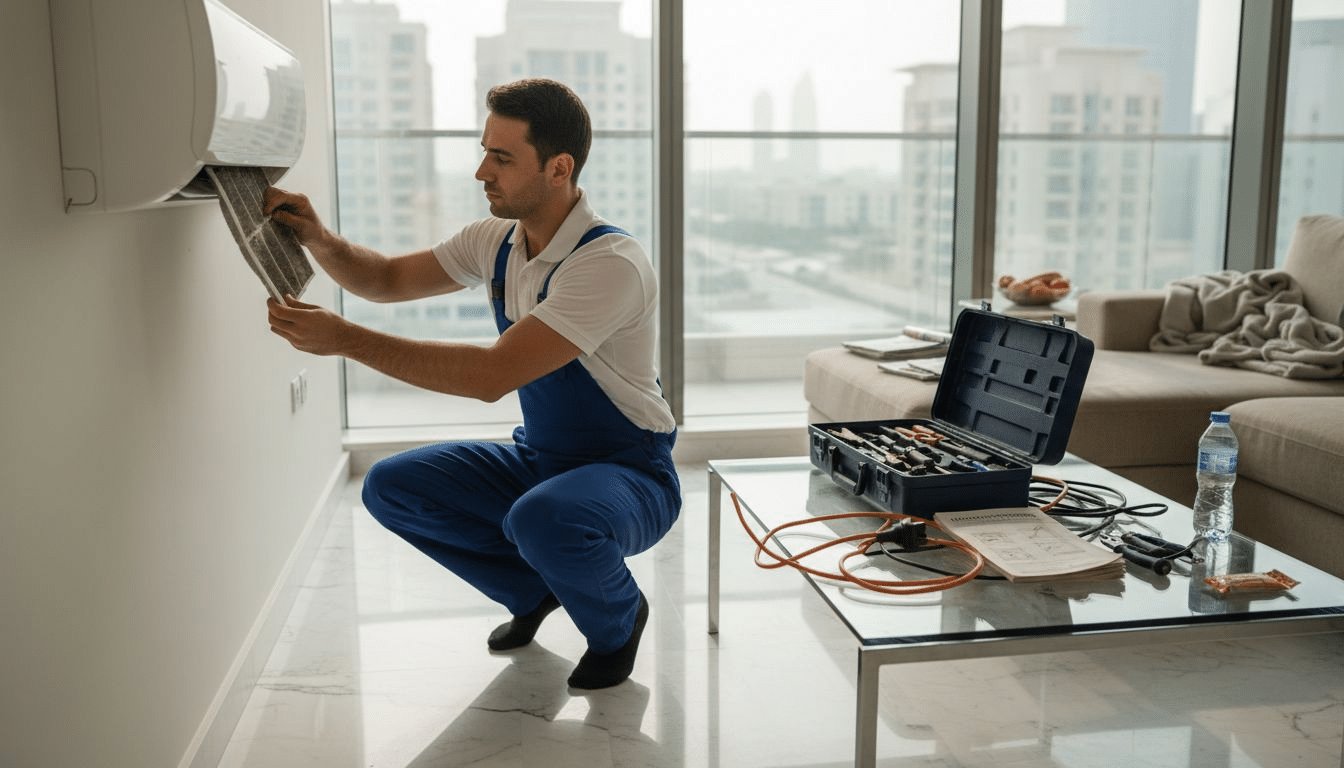
Expert AC cleaning follows a systematic approach that addresses every contamination point. The disinfection process begins with complete system shutdown, followed by careful dismantling of accessible components. NADCA-certified technicians remove evaporator coils, blower assemblies, condensate trays, and accessible ductwork sections for individual cleaning.
The cleaning sequence ensures thorough decontamination:
- Initial inspection and documentation of system condition, photographing contaminated areas
- Protective containment setup to prevent cross-contamination during cleaning
- Component removal and dry debris extraction using HEPA-filtered vacuums
- Application of hospital-grade, chemical-free biosanitisers to all surfaces
- Mechanical agitation and rinsing to remove biofilm and embedded particles
- UV-C or thermal treatment for final microbial elimination
- Reassembly with new filters and system performance verification
Hospital-grade, chemical-free biosanitisers offer safety advantages over traditional disinfectants. These products break down into water and oxygen after use, leaving no toxic residues that could volatilize into your breathing air. Certification ensures products meet stringent efficacy standards, killing 99.9% of target organisms including mold, bacteria, and viruses without harsh fumes or allergens.
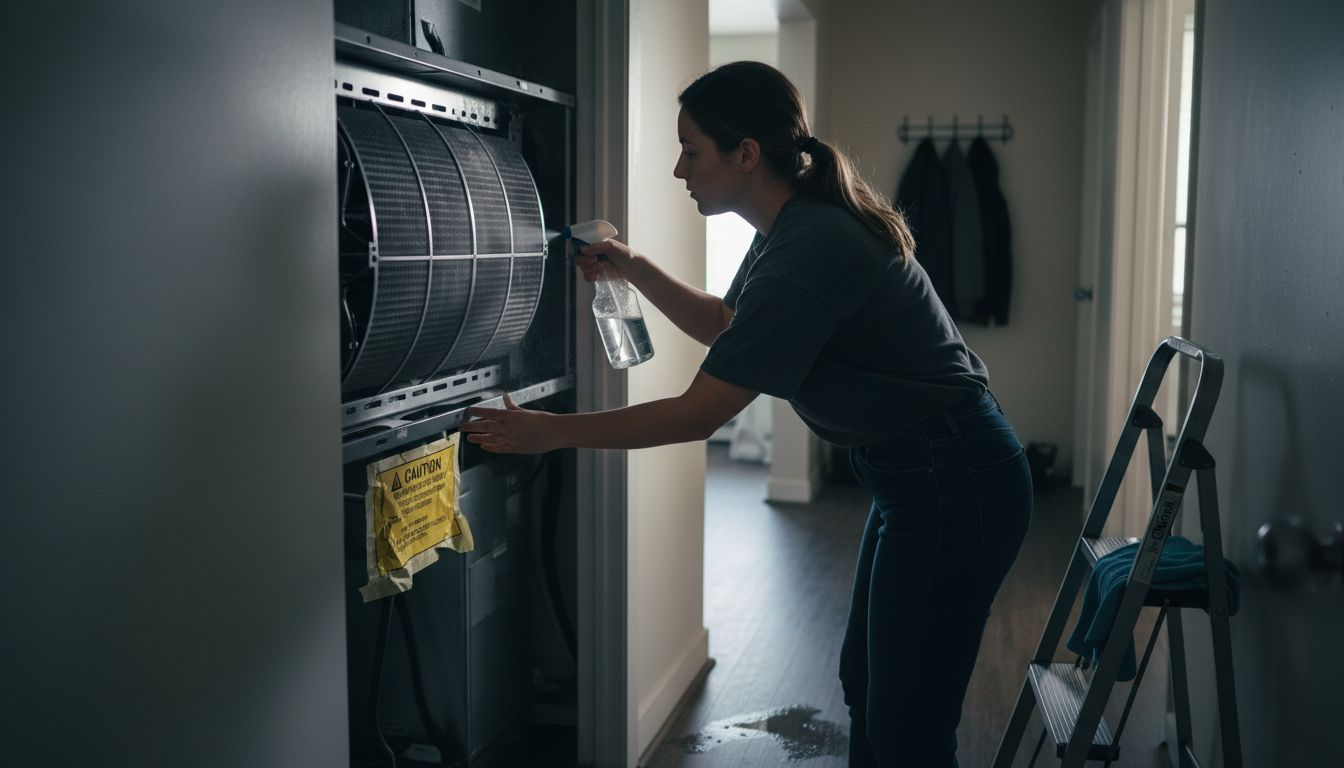
NADCA certification guarantees adherence to industry standards and lab validation. Technicians complete rigorous training in HVAC system mechanics, contamination assessment, and proper cleaning protocols. This certification distinguishes professional services from basic maintenance, ensuring comprehensive decontamination rather than surface-level cleaning.
Typical timeline for measurable improvements: indoor microbial counts drop by over 70% within 48 hours after service completion. Occupants notice reduced musty odors immediately, while allergy symptoms begin improving within days as circulating allergen levels decrease. Deep cleaning AC systems boosts air quality by removing hidden contaminant reservoirs that standard filter changes cannot address.
Pro Tip: Schedule your professional AC cleaning before high occupancy periods such as family visits or summer holidays. This timing maximizes health benefits when vulnerable individuals spend extended time indoors, and ensures optimal system performance during peak usage.
Ongoing HVAC maintenance and filter management
Sustaining air quality gains requires consistent maintenance between professional cleanings. Regular HEPA filter replacement every three months prevents particle accumulation that reduces airflow and allows contaminants to bypass filtration. Filters rated MERV 13 or higher capture particles as small as 0.3 microns, including most allergens, mold spores, and bacteria.
Annual duct cleaning maintains the improvements achieved through professional AC disinfection. Dust, skin cells, and fiber fragments accumulate in ductwork over time, providing nutrients for microbial growth. Best practices for central AC cleaning include inspecting duct interiors for visible contamination and scheduling cleaning when buildup becomes apparent or every 12-18 months in dusty environments.
Inspection and repair of refrigerant leaks improve both efficiency and indoor air quality. Low refrigerant causes evaporator coils to freeze, creating excess condensation that promotes mold growth. Proper refrigerant charge ensures optimal temperature and humidity control, reducing moisture that supports microbial proliferation. Understanding what’s best for your HVAC system helps you prioritize repairs that protect both performance and air quality.
Key maintenance activities for sustained IAQ:
- Monthly visual inspection of accessible vents and grilles for dust accumulation
- Quarterly filter replacement with documented dates in your maintenance log
- Semi-annual condensate drain clearing to prevent standing water and mold
- Annual professional duct inspection and cleaning as needed
- Immediate repair of any water leaks or unusual odors from HVAC components
Well-maintained HVAC systems deliver measurable benefits beyond air quality. Energy consumption decreases by 15-20% when clean coils and ducts allow unrestricted airflow, reducing cooling costs throughout the year. System lifespan extends significantly because components operate within design parameters rather than straining against accumulated debris. AC duct cleaning improves indoor air quality while protecting your investment in HVAC equipment.
Pro Tip: Set smartphone reminders for filter changes and keep spare HEPA filters on hand. This simple habit prevents gaps in filtration that allow rapid recontamination, and ensures you never run the system with a clogged filter that forces unfiltered air through bypass gaps.
Moisture control and ventilation strategies
Maintaining indoor relative humidity between 40-60% creates an environment hostile to mold and dust mites. Humidity below 40% causes respiratory irritation and static electricity, while levels above 60% enable rapid mold colonization on surfaces and within HVAC components. Portable hygrometers provide accurate readings, alerting you when conditions drift outside the optimal range.
Short ventilation periods of 5-10 minutes daily using window screens reduce indoor pollutants without significant dust infiltration. Opening windows briefly allows fresh air exchange that dilutes accumulated volatile organic compounds, carbon dioxide, and odors. Window screens prevent desert dust and insects from entering during ventilation, balancing fresh air benefits against contamination risks.
HVAC system features enhance air freshness without manual ventilation. Many modern systems include dedicated fresh air intakes with filtration, providing continuous outdoor air exchange at controlled rates. UV-C lamps installed in return air ducts neutralize airborne microorganisms, while activated carbon filters absorb odors and chemical vapors. These technologies maintain air quality even when outdoor conditions prevent window opening.
Avoid prolonged high humidity and stagnant air that promote microbial growth. Running bathroom exhaust fans during and 20 minutes after showers removes moisture before it condenses on cool surfaces. Preventing mold in Dubai’s climate requires vigilance during humid seasons, when outdoor moisture infiltrates buildings and overwhelms dehumidification capacity.
| Practice | Safe Approach | Risky Approach |
|---|---|---|
| Humidity control | 40-60% RH with monitoring | Ignoring humidity levels |
| Daily ventilation | 5-10 min with screens | Extended window opening |
| Moisture sources | Immediate exhaust fan use | Allowing steam accumulation |
| Air circulation | HVAC fan mode for mixing | Keeping doors/vents closed |
Managing humidity in Dubai’s high-humidity seasons often requires supplemental dehumidification. Portable dehumidifiers in bathrooms, laundry areas, and basements remove excess moisture that HVAC systems cannot handle alone. Empty collection tanks daily and clean units monthly to prevent them from becoming mold sources themselves.
Common mistakes, failure points, and safety warnings
Ignoring regular professional AC cleaning leads to progressive allergen buildup and eventual system damage. Many homeowners replace filters diligently yet wonder why air quality remains poor. Filters capture only airborne particles, leaving biofilm and debris cemented to coils, blower wheels, and duct interiors. This contamination continuously seeds the air with microorganisms that filters cannot remove.
Use of uncertified chemical disinfectants represents a serious health risk. Harsh biocides, bleach solutions, and ammonia-based cleaners volatilize into breathing air, causing respiratory irritation and increasing indoor volatile organic compound concentrations. These chemicals also corrode aluminum fins and copper tubing, reducing HVAC efficiency and lifespan. Only certified, chemical-free products guarantee safety for occupants and equipment.
Over-ventilation without dust screens defeats air quality improvement efforts. Opening windows extensively during sandstorms or high pollution days introduces more contaminants than mechanical filtration can remove. The resulting dust accumulation clogs filters rapidly, reduces HVAC efficiency, and settles on surfaces throughout your home. Understanding AC cleaning versus disinfection helps you recognize when professional intervention surpasses DIY efforts.
Failure to assess IAQ professionally causes ineffective remediation. Guessing at contamination sources wastes money on unnecessary services while actual problems persist. Visible mold on vents indicates extensive hidden growth within the system, requiring comprehensive disinfection rather than surface cleaning. Professional testing identifies specific organisms and contamination severity, guiding appropriate response.
Critical safety considerations:
- Never operate HVAC systems with access panels removed or components improperly secured
- Avoid DIY coil cleaning with pressure washers that bend delicate aluminum fins
- Do not use household cleaners inside AC units, as residues contaminate breathing air
- Never ignore persistent musty odors, which indicate active mold growth requiring professional attention
“The use of certified, chemical-free biosanitisers is non-negotiable for indoor air quality services. Occupant safety depends on products that eliminate pathogens without introducing new toxins into living spaces. This principle guides every professional service protocol.”
Recognizing these mistakes before they occur protects your health and investment. Professional services cost less than repairing damaged components or treating health issues from prolonged poor air quality exposure. Preventive maintenance and expert cleaning deliver superior outcomes compared to reactive approaches after problems become severe.
Expected outcomes, success metrics, and timeline
Reduction of allergens and microbes by 70% or more within 48 hours represents the most dramatic improvement. Professional cleaning eliminates microbial and allergen reservoirs that continuously contaminate circulating air. This rapid decrease translates to immediate symptom relief for allergy and asthma sufferers, with reduced sneezing, congestion, and respiratory irritation.
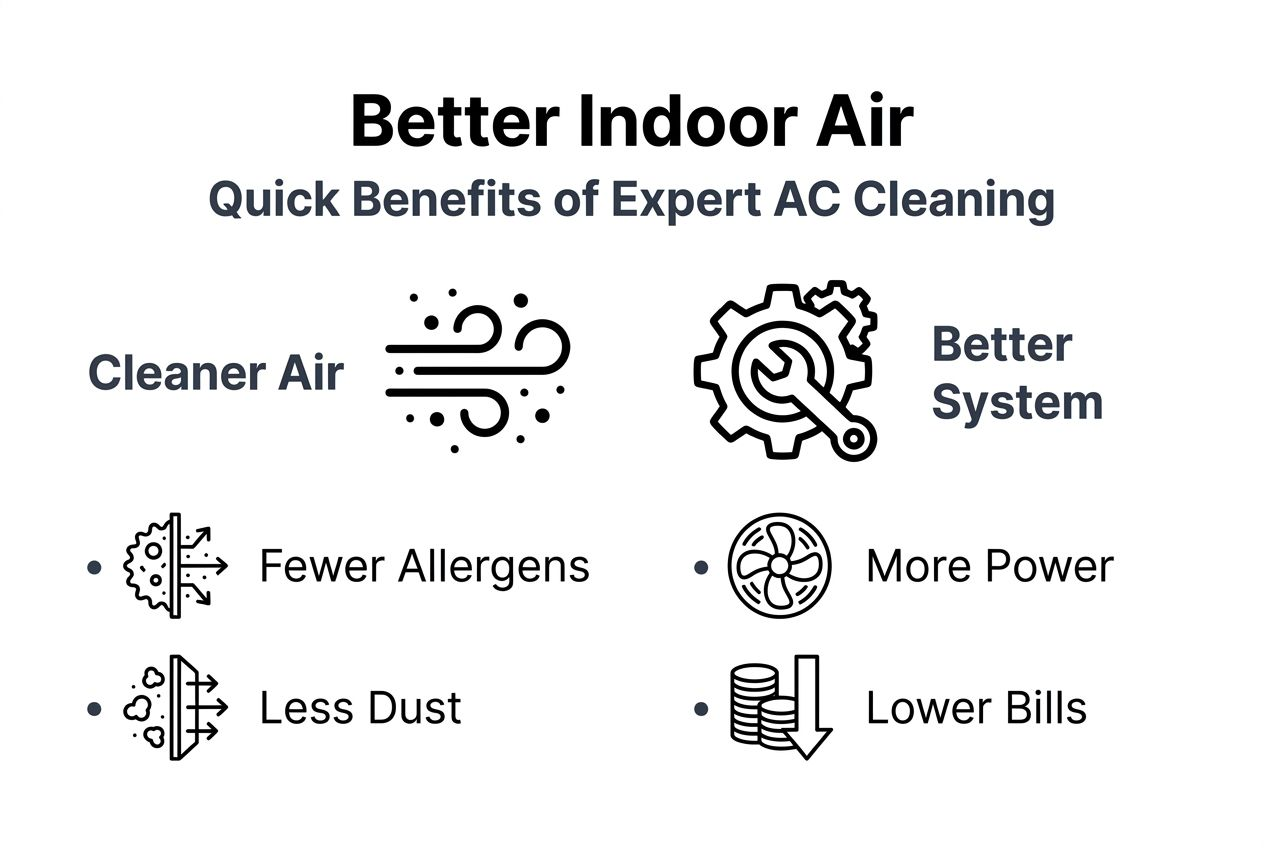
HVAC airflow and efficiency improve by up to 20% after comprehensive duct cleaning and coil restoration. Clean evaporator coils transfer heat efficiently, reducing compressor runtime and energy consumption. Unrestricted ductwork delivers conditioned air without pressure losses, improving comfort and temperature uniformity throughout your home. These performance gains appear immediately upon system restart after service.
Health symptoms show marked improvement within weeks as sustained exposure to reduced allergen levels allows immune systems to recover. Chronic sinus infections become less frequent, sleep quality improves without nighttime congestion, and exercise tolerance increases with better respiratory function. Children and elderly household members experience the most significant benefits, as their immune systems are most vulnerable to indoor air pollutants.
Long-term benefits include substantial energy savings and HVAC lifespan extension. Deep cleaning measurably boosts air quality while reducing wear on compressors, fans, and controls. Systems operating with clean components encounter less resistance, cycling less frequently and maintaining set temperatures with reduced effort. Many homeowners report 25-30% lower cooling costs in the months following professional service.
| Metric | Baseline (Before) | Post-Service (After) | Improvement |
|---|---|---|---|
| Indoor mold spores | 2,500 CFU/m³ | 600 CFU/m³ | 76% reduction |
| Particulate matter PM2.5 | 45 μg/m³ | 12 μg/m³ | 73% reduction |
| HVAC airflow rate | 320 CFM | 385 CFM | 20% increase |
| Energy consumption | 100% baseline | 78% baseline | 22% savings |
| Allergy symptom days/month | 18 days | 4 days | 78% reduction |
Realistic expectations include understanding that outdoor air quality and seasonal factors influence indoor conditions. During severe sandstorms or high pollen seasons, filter changes may need to occur more frequently. However, professional cleaning establishes a clean baseline that withstands environmental challenges far better than contaminated systems.
Tracking these metrics validates your investment in professional services. Request before-and-after testing documentation, photograph filter conditions at replacement intervals, and note symptom changes in a health diary. This data demonstrates tangible improvements and guides future maintenance scheduling for sustained air quality excellence.
Enhance your home’s air quality with expert AC cleaning
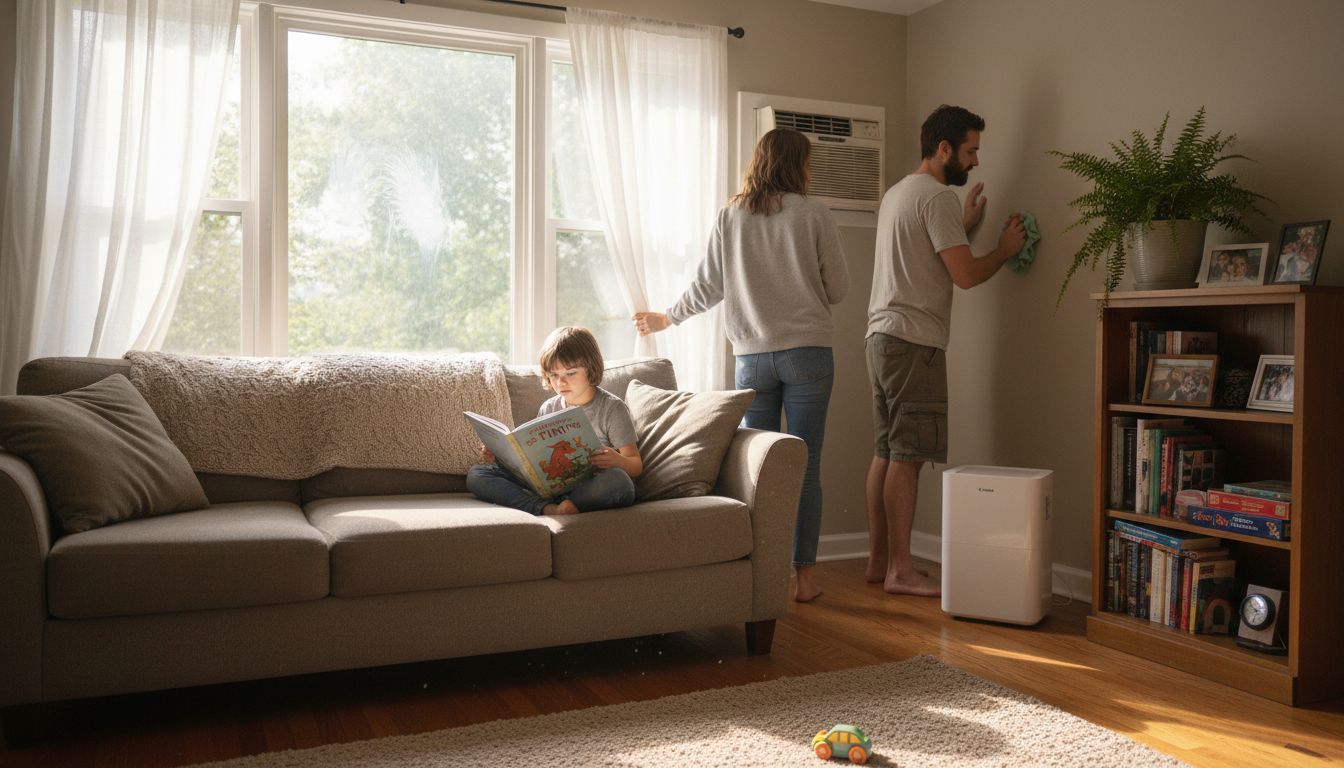
Achieving the dramatic indoor air quality improvements described requires professional expertise and proven methods. Saniservice’s NADCA-certified technicians use chemical-free, hospital-grade products to deliver rapid, measurable results. Our comprehensive air conditioning cleaning checklist ensures no contamination point goes unaddressed, from evaporator coils to concealed ductwork.
Every service we provide is backed by our in-house microbiology laboratory and Indoor Sciences team, combining scientific precision with Swiss-quality standards. Our complete air conditioner cleaning guide walks you through what to expect, while premium AC cleaning services deliver the health protection your family deserves. Regular professional service supports respiratory health, HVAC efficiency, and energy savings, transforming your home into a truly healthy indoor environment.
FAQ
How often should I schedule professional AC cleaning for best indoor air quality?
Schedule professional AC cleaning every 6-12 months depending on usage patterns, occupant sensitivities, and environmental dust exposure. Homes with allergy or asthma sufferers benefit from more frequent service every 6 months, while typical households maintain excellent air quality with annual cleaning.
Are chemical disinfectants safe to use for AC system cleaning?
Only certified, chemical-free, hospital-grade products are safe for AC disinfection in occupied spaces. Uncertified chemical disinfectants leave toxic residues that volatilize into breathing air, increasing indoor VOC concentrations and causing respiratory irritation. Professional services use biosanitisers that break down into harmless components after eliminating microorganisms.
Can ventilation improve indoor air quality in the dusty UAE environment?
Short, controlled ventilation periods of 5-10 minutes daily using window screens effectively flush indoor pollutants without significant dust infiltration. Extended window opening during sandstorms or high pollution periods introduces more contaminants than HVAC filtration can remove, worsening indoor air quality.
What immediate changes can I expect after professional AC cleaning?
Microbial and allergen levels reduce by over 70% within 48 hours of service completion, with noticeable improvements in air freshness and reduced musty odors. Improved airflow becomes apparent immediately, while respiratory symptoms begin improving within days as circulating allergen concentrations decrease.
Does professional AC cleaning really reduce energy costs?
Clean HVAC components reduce energy consumption by 15-22% through improved heat transfer efficiency and unrestricted airflow. Lower compressor runtime and reduced fan resistance translate to measurable monthly savings, with many homeowners recovering service costs within a single cooling season through reduced electricity bills.
Recommended
- Luxury AC Cleaning Services in Dubai – Because your deserve
- 9 Smart Tips for Improving Indoor Air Quality Dubai: How to Choose Reliable AC Cleaning Services in Al Barari – Saniservice AC Cleaning
- Top HVAC Cleaning Services Dubai – Expert Comparison 2025
- AC Cleaning Services for High-end Residences in Dubai


Leave a Reply