

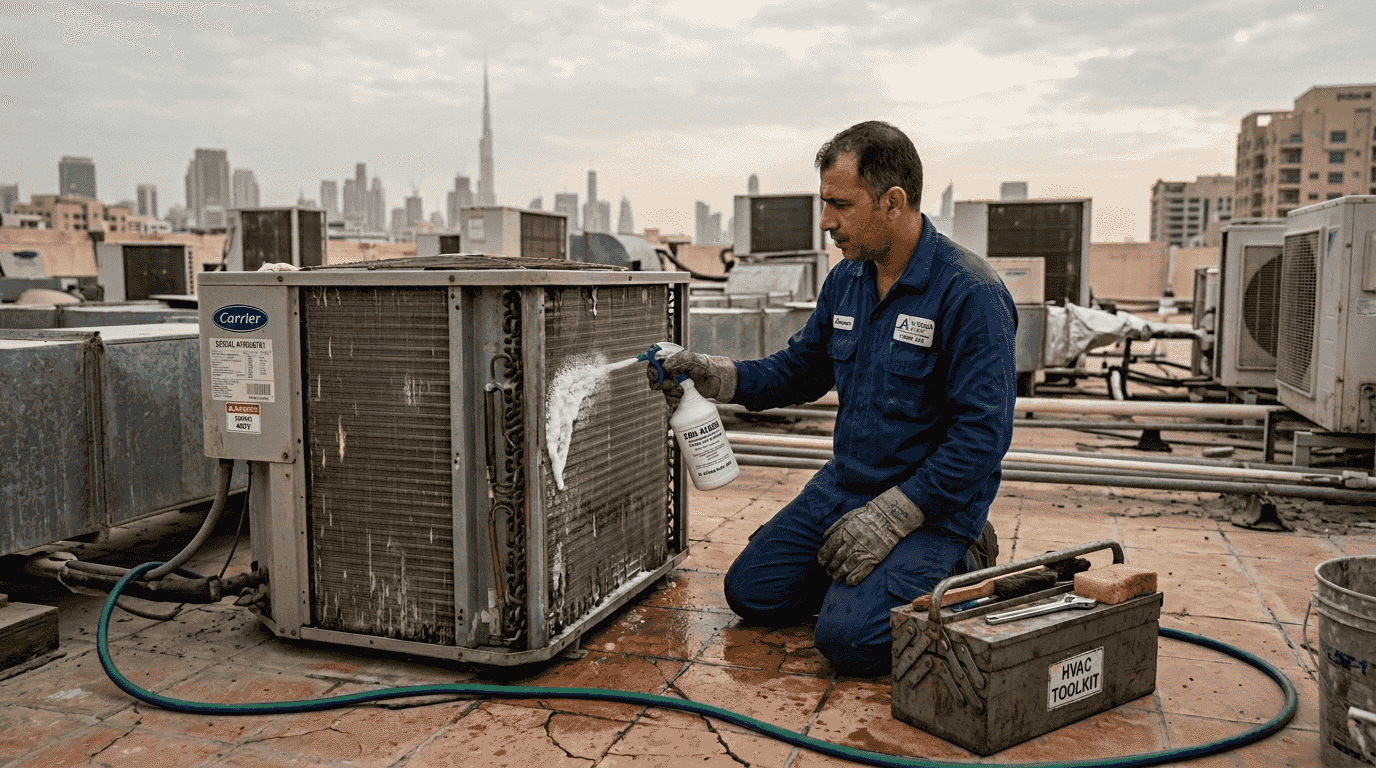
What to use to clean AC coils for 20% energy savings
Did you know that dirty AC coils can increase your energy bills by up to 20%? Many UAE homeowners struggle with knowing what products to use for safe, effective coil cleaning without damaging their expensive AC systems. This guide explains the science-backed methods and specialized cleaners that restore efficiency, improve indoor air quality, and extend system lifespan in Dubai’s dusty climate. You’ll discover exactly what to use, what to avoid, and how often to clean for optimal performance year-round.
Table of Contents
Contents
- 1 Table of Contents
- 2 Key takeaways
- 3 Why cleaning AC coils matters for your system’s performance
- 4 What to use to clean AC coils: safe and effective products and methods
- 5 Common mistakes to avoid when cleaning AC coils
- 6 How often to clean AC coils and maintenance tips for UAE climates
- 7 Professional AC coil cleaning services for healthier homes
- 8 Frequently asked questions
- 9 Recommended
- Why Cleaning AC Coils Matters For Your System’s Performance
- What To Use To Clean AC Coils: Safe And Effective Products And Methods
- Common Mistakes To Avoid When Cleaning AC Coils
- How Often To Clean AC Coils And Maintenance Tips For UAE Climates
- Professional AC Coil Cleaning Services For Healthier Homes
- Frequently Asked Questions
Key takeaways
| Point | Details |
|---|---|
| Energy savings potential | Regular coil cleaning reduces energy consumption by up to 20% through improved heat transfer and airflow. |
| Best cleaning products | Specialized coil cleaners like A/C Brite safely penetrate and lift embedded dirt without damaging aluminum or copper surfaces. |
| Critical safety rules | Never use high-pressure water or stiff brushes that bend delicate fins and damage coil tubing. |
| Optimal cleaning frequency | Clean coils every 6 to 12 months, or more frequently in Dubai’s dusty, greasy environments. |
| Performance benefits | Proper cleaning improves cooling performance, reduces compressor strain, and extends equipment lifespan significantly. |
Why cleaning AC coils matters for your system’s performance
Your AC coils are the heart of heat transfer in your cooling system. When dust, dirt, and debris accumulate on evaporator and condenser coils, they create an insulating barrier that blocks efficient heat exchange. This forces your compressor to work harder and run longer to achieve the same cooling effect.
The energy impact is substantial. Regular AC coil cleaning significantly improves energy efficiency, reducing electricity consumption by up to 20%. For a typical Dubai villa running AC year-round, that translates to hundreds of dirhams in annual savings.
Beyond energy costs, dirty coils create cascading performance problems:
- Reduced airflow restricts cooling capacity and comfort
- Elevated head pressure increases compressor load and wear
- Longer run times accelerate component degradation
- Trapped moisture promotes mold and bacterial growth
- Compromised indoor air quality affects respiratory health
In the UAE’s harsh climate, coils face constant assault from fine sand particles, airborne grease from kitchens, and high humidity. Understanding why AC coil cleaning matters helps you prioritize maintenance before minor efficiency losses become expensive repairs.
Clean coils aren’t just about saving money. They’re about maintaining the healthy indoor environment your family deserves.
The good news? Regular cleaning with the right products reverses these problems and restores your system to near-original efficiency. But using the wrong cleaners or techniques can cause permanent damage.
What to use to clean AC coils: safe and effective products and methods
Specialized coil cleaners are engineered specifically for HVAC applications. Unlike household cleaners, they’re pH-balanced to safely clean aluminum fins and copper tubing without corrosion or discoloration.
A/C Brite Coil Cleaner is a heavy-duty formula that penetrates and lifts embedded dirt safely on aluminum and copper coils. The foaming action works deep into fin spaces, loosening grime that water alone cannot remove. Its biodegradable formula rinses clean without leaving harmful residues.
For effective cleaning, follow these product application steps:
- Turn off power to the AC unit completely at the breaker
- Remove any protective grilles or covers for full coil access
- Dilute cleaner according to manufacturer specifications for your coil condition
- Apply foam evenly across the entire coil surface using a spray bottle
- Allow the foam to penetrate for the recommended contact time (typically 5 to 10 minutes)
- Rinse thoroughly with low-pressure water from inside out to push debris away from fins
- Let coils dry completely before restoring power and operation
Never substitute harsh chemicals like bleach, ammonia, or acidic cleaners. These products corrode coil materials, strip protective coatings, and leave residues that attract more dirt. They can also produce toxic fumes when mixed or heated.
For advanced coil cleaning techniques that address stubborn buildup, consider enzymatic cleaners that break down organic matter or alkaline cleaners for greasy deposits. Always test any new product on a small, inconspicuous area first.
Pro Tip: Use a soft brush (like a toothbrush) to gently agitate heavily soiled areas while the foam is working. Brush parallel to fins, never across them, to avoid bending the delicate metal.
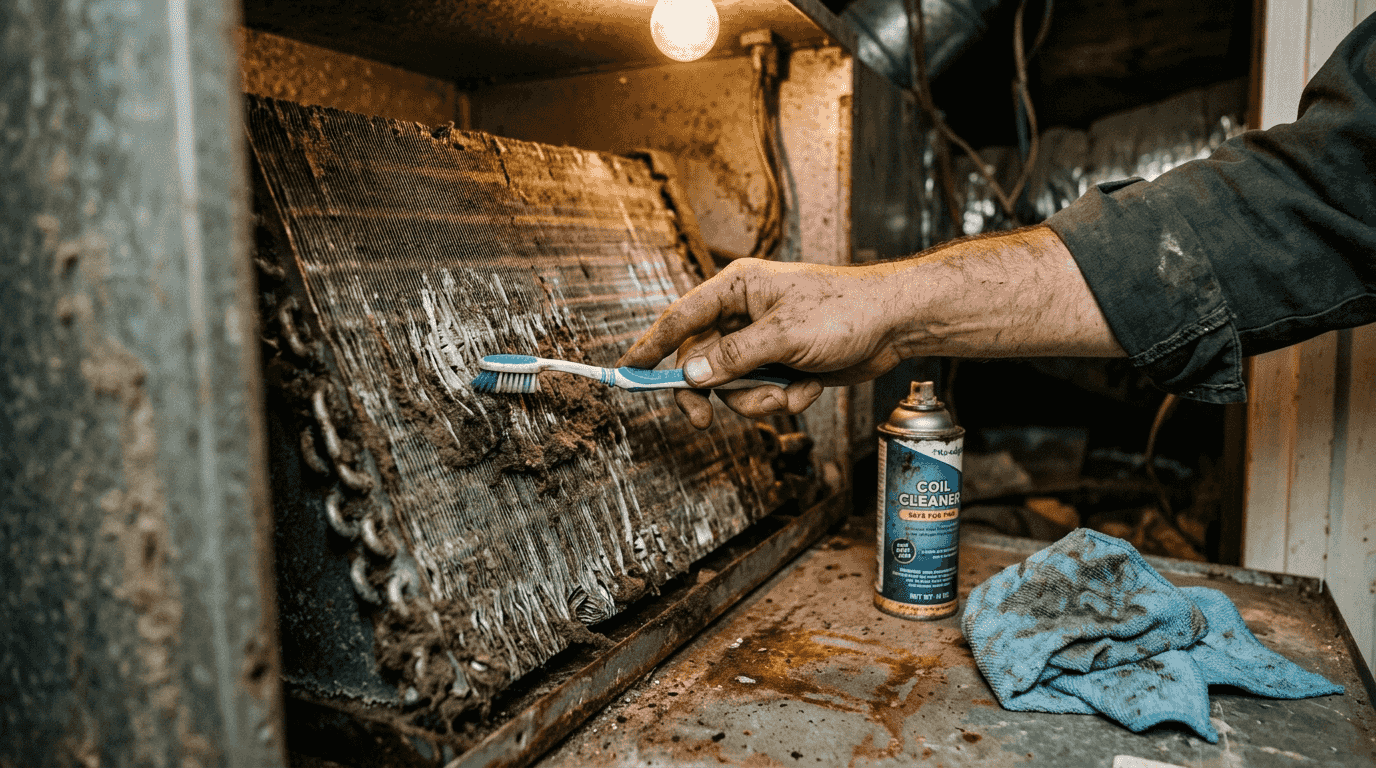
Proper product selection and application technique make the difference between a system that runs efficiently for years and one that fails prematurely from cleaning damage.
Common mistakes to avoid when cleaning AC coils
Even with the right products, improper technique destroys coils and reduces system efficiency. Understanding what not to do is just as critical as knowing the correct methods.
The most damaging mistake? Using high-pressure water. Garden hoses with nozzles, pressure washers, and even moderately high water pressure bend aluminum fins and damage coil tubing. Improper cleaning methods cause about 10 to 15% of AC failures due to coil damage. Once fins are bent, airflow is permanently restricted even if the coils are clean.
Other critical mistakes to avoid:
- Using stiff wire brushes that tear fins and scratch protective coatings
- Applying cleaners without proper dilution, leading to chemical damage
- Failing to rinse thoroughly, which leaves residue that attracts more dirt
- Cleaning coils while the system is running or powered on
- Neglecting to protect electrical components from moisture exposure
Coils may appear clean to the naked eye but still impair performance significantly. High head pressure and condensing temperature are indicators of dirty condenser coils even when surface dirt isn’t visible. Deep-seated contamination between fins often escapes casual inspection.
Another overlooked error is prolonged chemical contact on painted surfaces or plastic components near coils. Most coil cleaners are safe for metal but can discolor or degrade other materials. Cover or tape off vulnerable areas before applying any cleaning solution.
Pro Tip: If you accidentally bend fins during cleaning, use a fin comb (available at HVAC supply stores) to carefully straighten them. Work slowly and gently to restore proper spacing and airflow.
For a comprehensive approach that avoids these pitfalls, follow our step by step coil cleaning guide which details safe procedures for both evaporator and condenser coils.
Recognizing and avoiding these mistakes protects your investment and ensures cleaning actually improves rather than harms system performance.
How often to clean AC coils and maintenance tips for UAE climates
Cleaning frequency directly impacts efficiency and system longevity. For most systems, clean coils every 6 to 12 months or more frequently in dusty or greasy conditions. In the UAE, environmental factors often require shorter intervals.
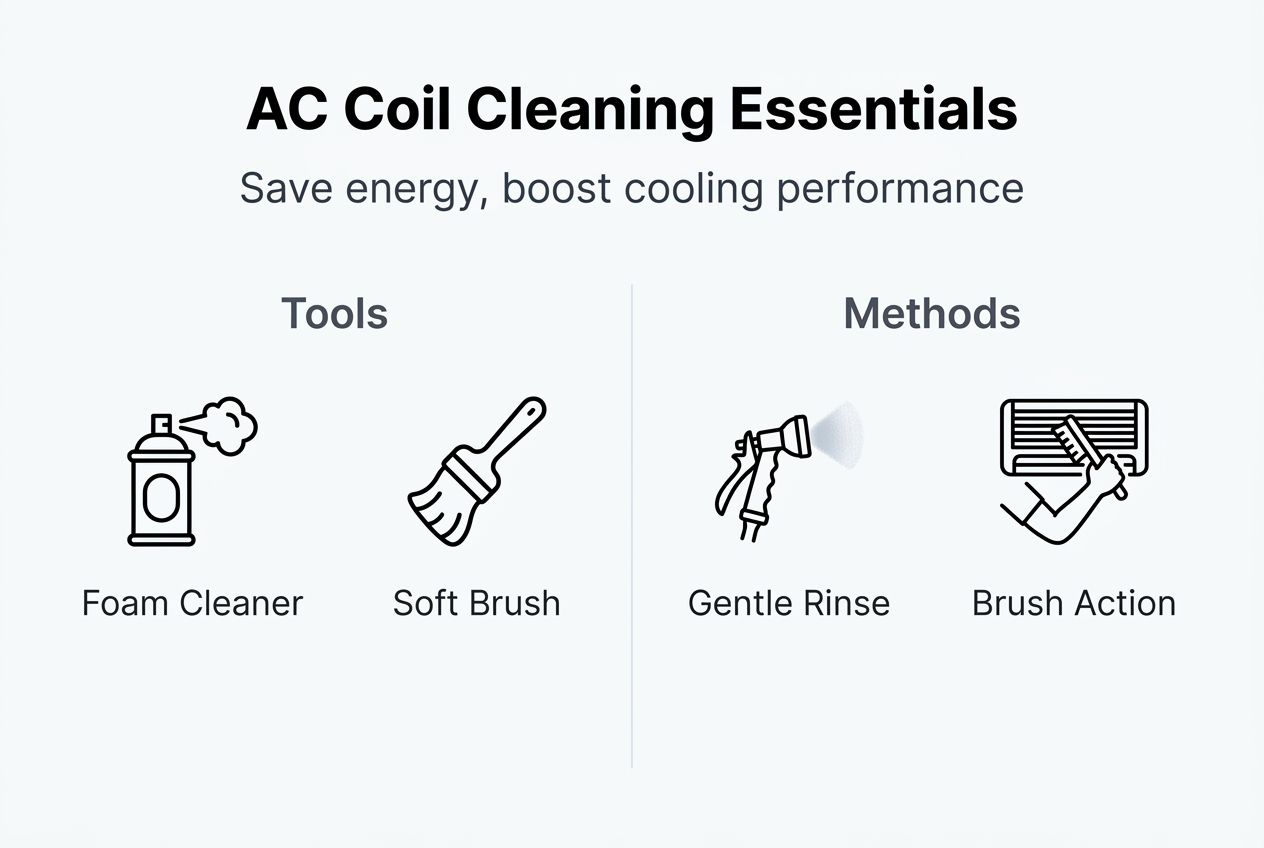
Dubai’s unique climate accelerates coil contamination. Fine desert sand penetrates outdoor units, while kitchen exhaust and vehicle emissions deposit oily residues on coils. Coastal areas add salt-laden moisture that promotes corrosion. High year-round AC usage means these contaminants accumulate rapidly.
Tailor your cleaning schedule to your specific environment:
- Inspect outdoor condenser coils monthly for visible dirt buildup or debris
- Check indoor evaporator coils every 3 months for dust or mold growth
- Clean condenser coils every 6 months minimum, or quarterly in dusty areas
- Clean evaporator coils annually, or semi-annually if you notice musty odors
- Schedule professional deep cleaning before peak cooling season (April to May)
- Monitor energy bills for unexpected increases signaling reduced efficiency
Here’s how environment affects cleaning frequency:
| Environment Type | Condenser Coil Cleaning | Evaporator Coil Cleaning |
|---|---|---|
| Urban residential | Every 6 months | Annually |
| Near construction | Every 3 to 4 months | Every 6 months |
| Coastal location | Every 4 to 6 months | Annually |
| Kitchen-heavy use | Every 6 months | Every 6 months |
| Desert-adjacent | Every 3 to 4 months | Annually |
Between deep cleanings, simple maintenance extends the interval. Rinse outdoor coils gently with a hose monthly to remove surface dust. Replace air filters every 1 to 2 months to reduce indoor coil contamination. Keep vegetation and debris at least 2 feet away from outdoor units.
For guidance tailored to complete system maintenance, review our air duct cleaning frequency guidelines which complement coil cleaning schedules. When you’re ready for professional service, our expert coil cleaning service in Dubai ensures thorough maintenance using laboratory-tested methods.
Consistent cleaning based on your environment keeps efficiency high and prevents the gradual performance decline that most homeowners don’t notice until it becomes severe.
Professional AC coil cleaning services for healthier homes
While DIY cleaning handles routine maintenance, professional service delivers deeper results and identifies issues invisible to homeowners. Saniservice’s NADCA-certified technicians use specialized equipment and hospital-grade, chemical-free biosanitizers that eliminate mold, bacteria, and allergens beyond what consumer products can achieve.
Our Indoor Sciences team brings laboratory precision to every service. We don’t just clean coils; we test microbial levels before and after treatment, measure airflow improvements, and document efficiency gains. This science-backed approach ensures you’re not just getting clean coils, but genuinely healthier indoor air.
Professional cleaning saves time and prevents costly mistakes like damaged fins or incomplete cleaning that wastes effort. Technicians safely dismantle components for access to areas you cannot reach, then reassemble and test everything to factory specifications.
Explore our comprehensive air conditioning cleaning checklist to see what professional service includes. For complete guidance on maintaining your system between professional visits, our air conditioner cleaning guide provides step-by-step instructions. When you’re ready to experience the difference that laboratory-backed cleaning makes, schedule our expert AC coil cleaning service for guaranteed results and long-term system protection.
Frequently asked questions
How do I know if my AC coils need cleaning?
Several signs indicate dirty coils requiring attention. Reduced cooling capacity despite thermostat settings, unusually high energy bills compared to previous months, and longer run times to reach target temperatures all suggest restricted heat transfer from dirty coils. You might also notice warm air from vents, ice formation on indoor coils, or unusual sounds from the outdoor unit. High head pressure and condensing temperature measured during service calls definitively confirm dirty condenser coils. Regular visual inspection helps catch buildup before performance suffers noticeably.
Can I use household cleaners to clean AC coils safely?
No, household cleaners damage coil materials and void warranties. Products like bleach, ammonia, glass cleaners, and degreasers have pH levels and chemical formulations that corrode aluminum fins, strip protective coatings, and leave residues that accelerate future contamination. These cleaners weren’t designed for the specific metallurgy and thermal requirements of HVAC coils. Specialized coil cleaners like A/C Brite are formulated with balanced chemistry that cleans effectively without causing damage. The small cost difference between household and HVAC-specific products is insignificant compared to replacing damaged coils or losing efficiency.
Is rinsing necessary after applying coil cleaner?
Yes, thorough rinsing is essential for proper cleaning results. Rinsing is required to remove cleaner residue and loosened debris that foaming action lifts from coil surfaces. Residual cleaner attracts dust and creates sticky buildup that clogs fins faster than before cleaning. Incomplete rinsing also leaves chemicals that can corrode metals over time through prolonged contact. Use low-pressure water and rinse from the inside of coils outward to push contamination away from fins rather than deeper into them. Continue rinsing until water runs completely clear with no foam or discoloration.
How often should I schedule professional AC coil cleaning?
Frequency depends on your specific environment and system usage patterns. Clean coils every 6 to 12 months, with more frequent cleaning in dusty or greasy environments common throughout the UAE. Homes near construction sites, in desert-adjacent areas, or with heavy kitchen use benefit from quarterly professional service. Most Dubai residences achieve optimal results with professional cleaning twice yearly, before and after peak cooling season. Our professional coil cleaning frequency recommendations account for your location, system age, and usage patterns to create a customized maintenance schedule that maximizes efficiency without unnecessary service calls.
Recommended
- AC Coil Cleaning Procedure: 7 Proven Steps for Maximum Cooling Efficiency
- AC Coil Cleaning Explained: Health, Savings, Longevity – Saniservice AC Cleaning
- Can I clean my AC coils myself or hire a pro? – Saniservice AC Cleaning
- AC Coil Cleaning Step by Step for Healthier Homes – Saniservice AC Cleaning
Related articles



Leave a Reply