Choose the right AC service types for healthier UAE air
Up to 50% of AC ducts in UAE properties harbor mold contamination that standard filter cleaning can’t eliminate. This hidden threat compromises indoor air quality daily while reducing system efficiency by 15-30%. Understanding specialized AC service types—from deep cleaning and disinfection to comprehensive duct cleaning—empowers property managers and homeowners to protect occupant health and optimize HVAC performance in the region’s demanding climate.
Table of Contents
Contents
- 1 Table of Contents
- 2 Key takeaways
- 3 Understanding the different AC service types
- 4 Why specialized AC cleaning is critical in UAE’s climate
- 5 Certifications, expertise, and technology behind effective AC services
- 6 Common misconceptions about AC cleaning and disinfection
- 7 Comparing AC service types: what to choose for your property
- 8 Implementing effective AC service regimens for health and efficiency
- 9 Summary and next steps for healthier indoor air in your property
- 10 Explore expert AC cleaning solutions for your UAE property
- 11 FAQ
- 12 Recommended
- Understanding The Different AC Service Types
- Why Specialized AC Cleaning Is Critical In UAE’s Climate
- Certifications, Expertise, And Technology Behind Effective AC Services
- Common Misconceptions About AC Cleaning And Disinfection
- Comparing AC Service Types: What To Choose For Your Property
- Implementing Effective AC Service Regimens For Health And Efficiency
- Summary And Next Steps For Healthier Indoor Air In Your Property
- Explore Expert AC Cleaning Solutions For Your UAE Property
Key takeaways
| Point | Details |
|---|---|
| Specialized cleaning reduces contamination | AC disinfection using chemical-free biosanitisers eliminates over 99.9% of mold, bacteria, and allergens safely. |
| UAE climate demands frequent maintenance | Hot, dusty conditions require professional AC cleaning every 3-6 months to prevent microbial buildup. |
| Duct cleaning improves respiratory health | Regular duct cleaning reduces airborne allergens by up to 50%, lowering health risks for occupants. |
| Certified technicians ensure effectiveness | NADCA-certified professionals using hospital-grade biosanitisers deliver science-backed indoor hygiene. |
| Tailored service plans optimize efficiency | Matching service types to property needs extends system lifespan and cuts energy costs. |
Understanding the different AC service types
Property managers and homeowners often face confusion about which AC service their system truly needs. Each specialized service type targets distinct contamination layers that accumulate inside your HVAC components over time.
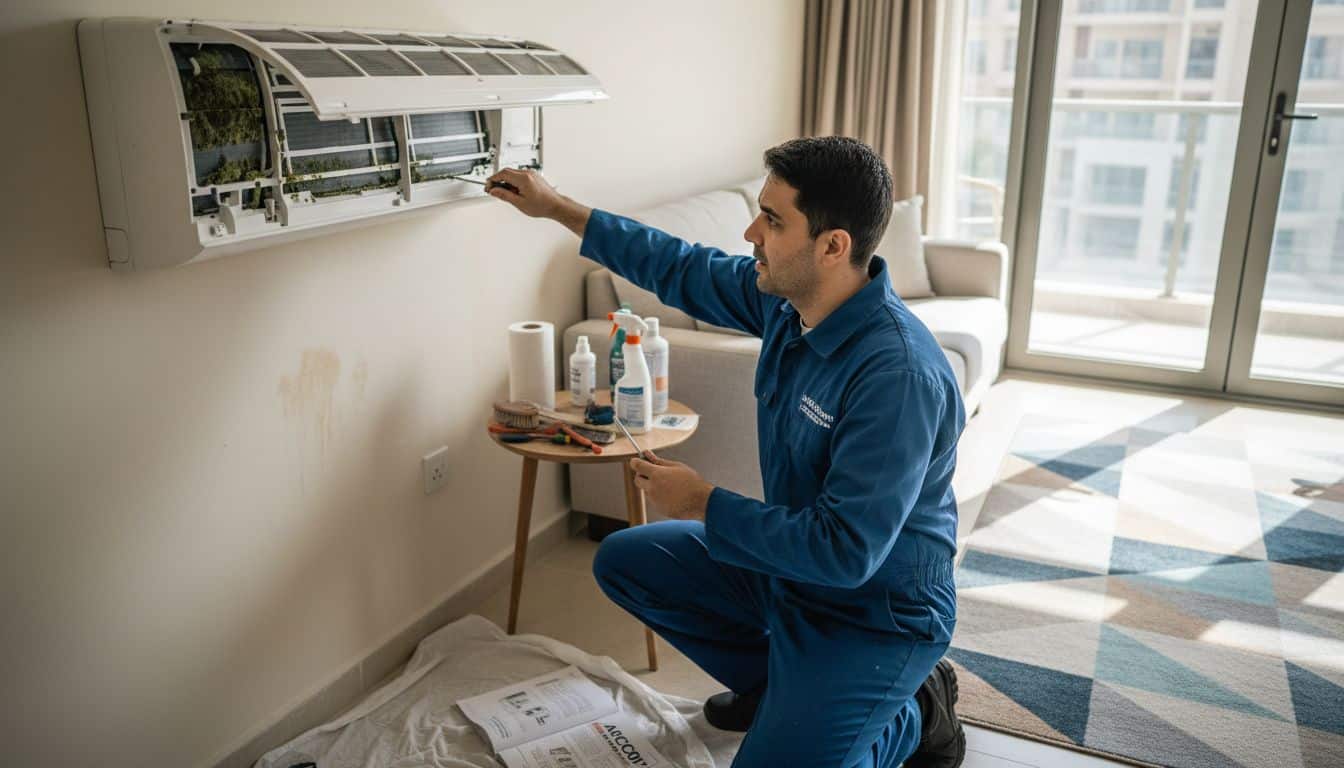
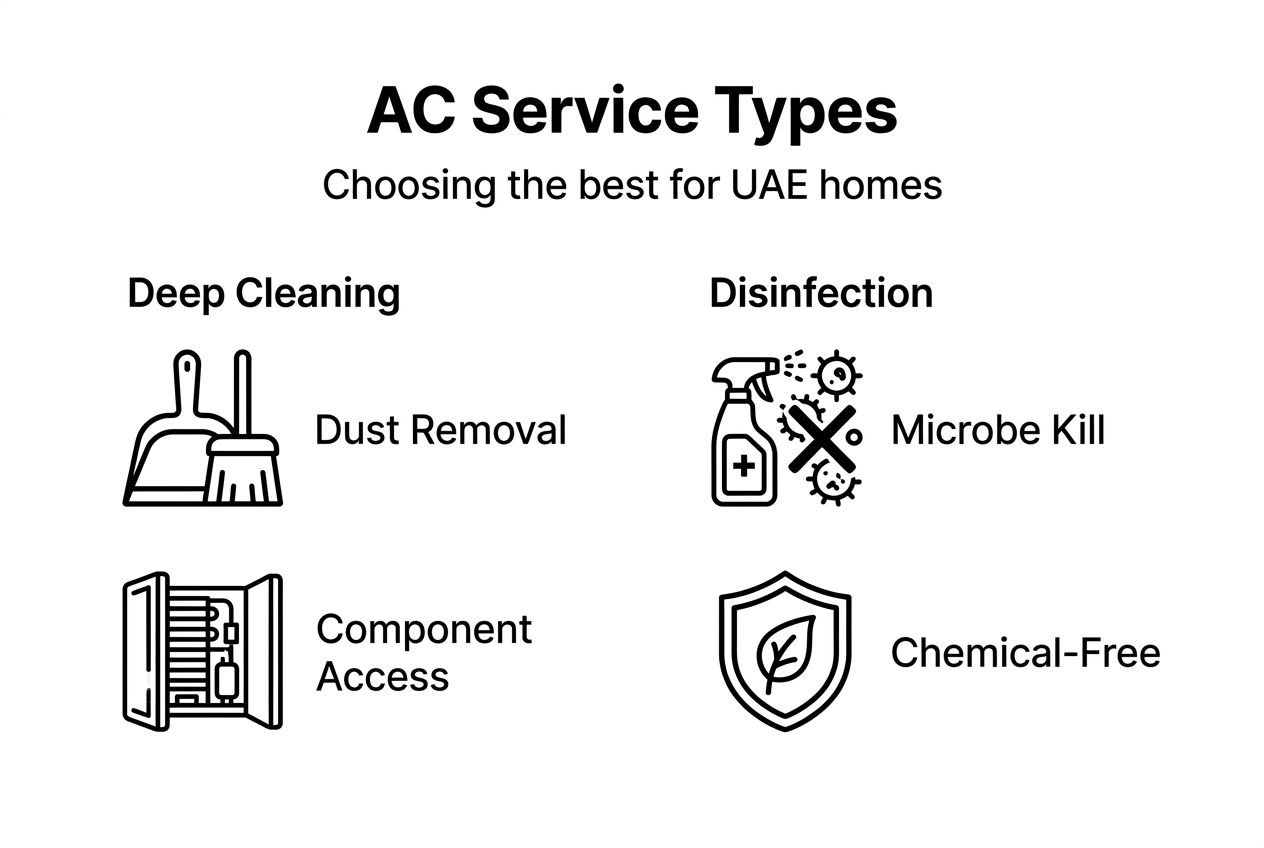
Deep cleaning involves dismantling major AC components like coils, blowers, and drainage trays to remove embedded dust and organic matter. This process addresses visible buildup that reduces airflow and cooling capacity. Technicians use mechanical brushing and specialized cleaning agents to restore component surfaces to near-original condition.
Disinfection takes cleaning further by eliminating microscopic threats. Hospital-grade, chemical-free biosanitisers eliminate over 99.9% of mold, bacteria, and allergens without harmful residues. This step is critical for occupants with respiratory sensitivities or compromised immunity. Chemical-free formulations protect indoor air quality while achieving hospital-level sanitization.
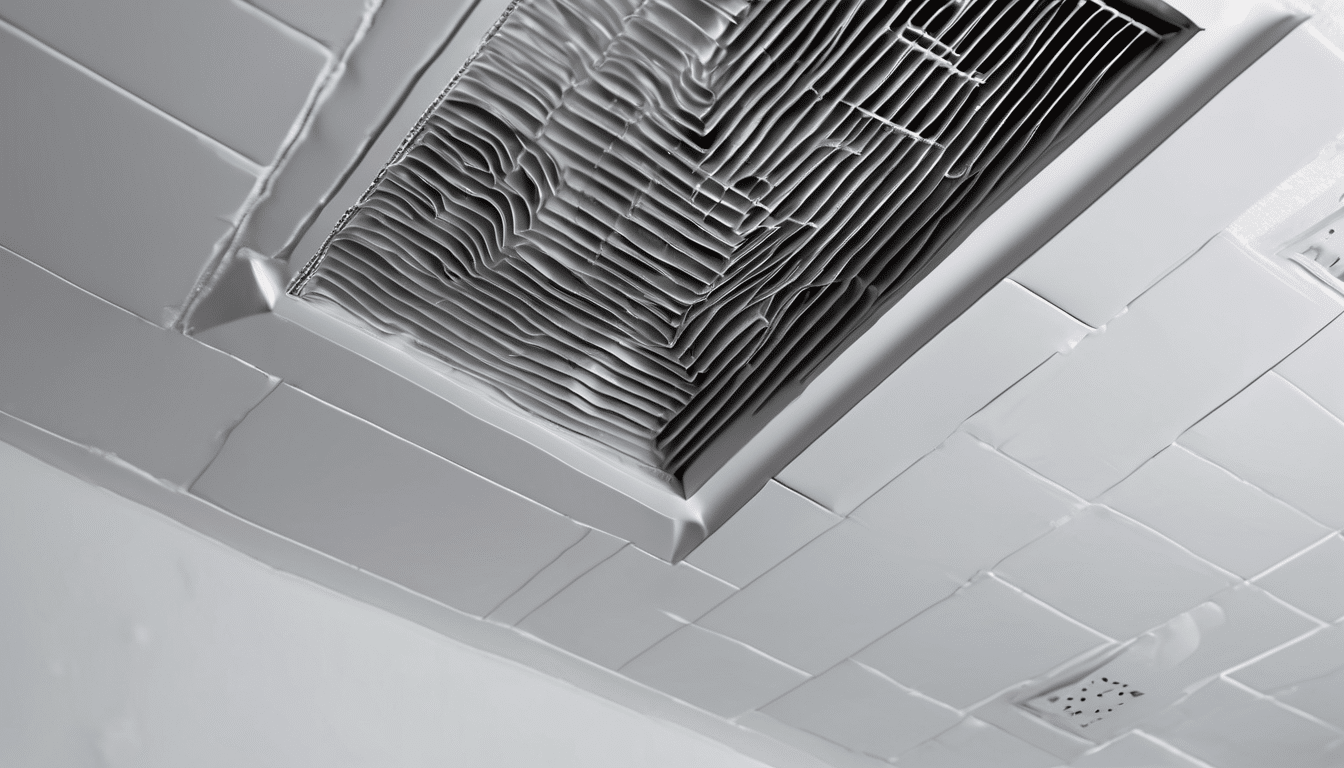
Duct cleaning addresses contamination within your entire air distribution network. Dust, pollen, and microbial colonies accumulate inside ductwork over months of operation. Regular duct cleaning reduces airborne allergen levels by up to 50%, directly improving respiratory health outcomes for building occupants.
Each service type serves a distinct purpose:
- Deep cleaning restores mechanical efficiency and airflow capacity
- Disinfection eliminates health threats at the microbial level
- Duct cleaning removes allergen reservoirs throughout the distribution system
- Combined approaches deliver comprehensive indoor air quality improvement
Expert AC cleaning services for high-end residences often integrate all three service types for maximum health and efficiency benefits. Understanding these distinctions helps you make informed decisions about maintenance priorities. For broader context on maintaining healthy indoor environments, explore proven tips for improving indoor air quality in Dubai that complement regular AC maintenance.
The UAE’s climate amplifies contamination rates dramatically. Your system pulls in dusty outdoor air continuously while condensation creates ideal conditions for microbial growth. This combination makes specialized cleaning essential rather than optional. Comprehensive indoor air quality solutions in Dubai must address both mechanical cleaning and biological contamination for lasting results.
Why specialized AC cleaning is critical in UAE’s climate
The UAE’s environmental conditions create perfect conditions for accelerated AC contamination. Desert dust particles infiltrate systems daily, coating internal components with fine particulate matter. High outdoor temperatures force air conditioning units to run nearly continuously, amplifying contamination accumulation rates.
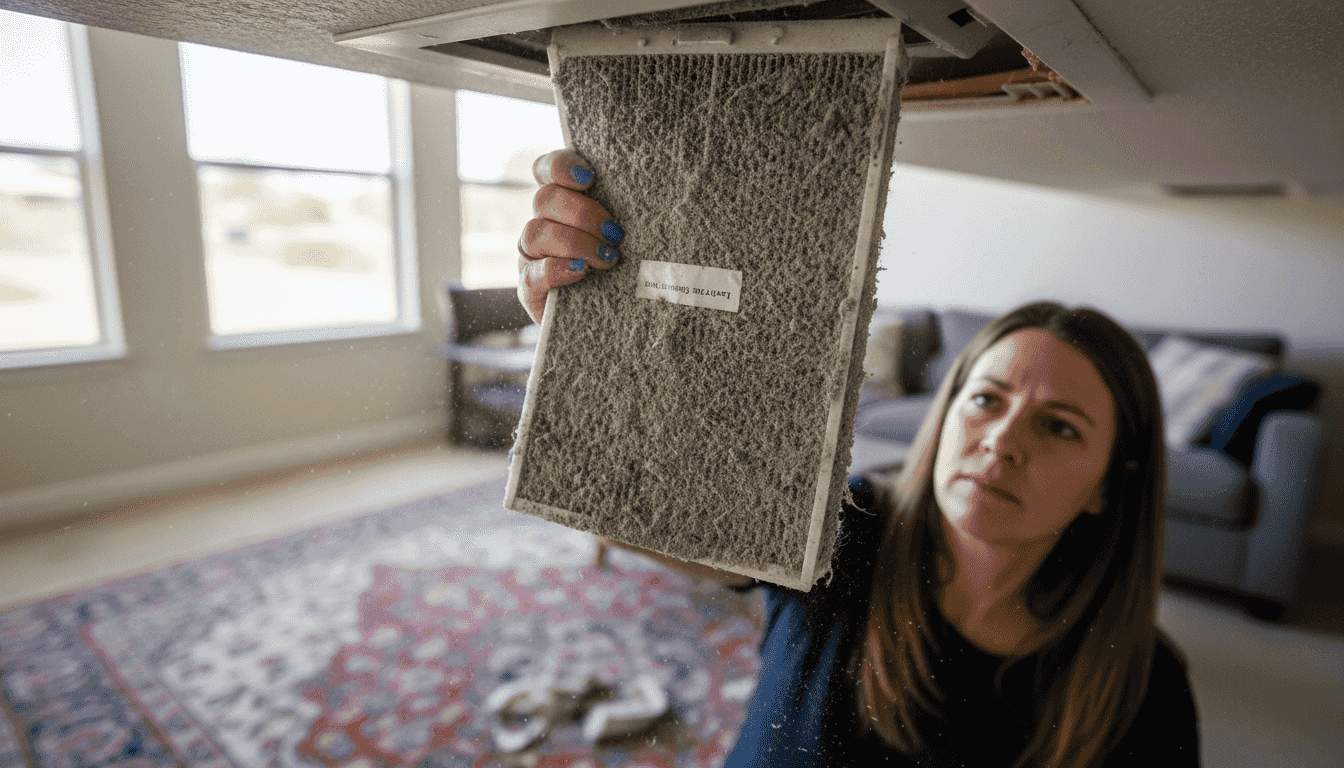
Dust and microbial buildup reduces system performance measurably. Dirty coils and blocked airways force your HVAC system to work 15-30% harder to achieve the same cooling output. This increased energy consumption translates directly to higher utility bills and shortened equipment lifespan.
Mold growth in 35-50% of duct systems significantly contributes to poor indoor air quality and occupant health issues. Condensation inside AC components creates moisture that feeds fungal colonies. These hidden growths release spores continuously into your breathing air.
Health risks intensify for vulnerable populations:
- Children and elderly occupants face heightened respiratory sensitivity
- Individuals with asthma or allergies experience worsening symptoms
- Immune-compromised residents risk serious respiratory infections
- Long-term exposure increases chronic respiratory condition development
Pro Tip: Schedule AC inspections immediately if occupants report unexplained respiratory symptoms or detect musty odors from air vents.
The region’s climate demands maintenance frequencies that differ dramatically from temperate zones. Most UAE properties require professional cleaning every 3-6 months rather than annual servicing. This accelerated schedule prevents contamination from reaching health-threatening levels.
“Regular specialized maintenance in hot, dusty climates prevents the 15-30% efficiency losses that drive up energy costs and accelerate system failure.”
Neglecting proper maintenance creates cascading problems. Energy waste compounds monthly while component wear accelerates. System lifespan typically shortens by 3-5 years without appropriate cleaning regimens. Property managers seeking comprehensive strategies should review indoor air quality improvement solutions specific to Dubai conditions that address these unique challenges.
Parents particularly should prioritize AC hygiene because children’s developing respiratory systems face greater vulnerability to airborne contaminants. Detailed guidance on protecting children’s health in Dubai emphasizes environmental factors including AC cleanliness.
Comparing top HVAC cleaning services in Dubai reveals significant variation in service depth and scientific methodology. Property owners must distinguish between basic filter changes and comprehensive contamination elimination to protect their investment and occupant wellbeing.
Certifications, expertise, and technology behind effective AC services
Not all AC cleaning services deliver equivalent results. The gap between basic maintenance and scientifically validated contamination elimination depends entirely on technician training, certification, and methodology.
NADCA (National Air Duct Cleaners Association) certification represents the global standard for HVAC cleaning excellence. Certified technicians undergo rigorous training in contamination assessment, proper cleaning protocols, and safety procedures. This certification ensures your service provider follows evidence-based practices rather than improvised methods.
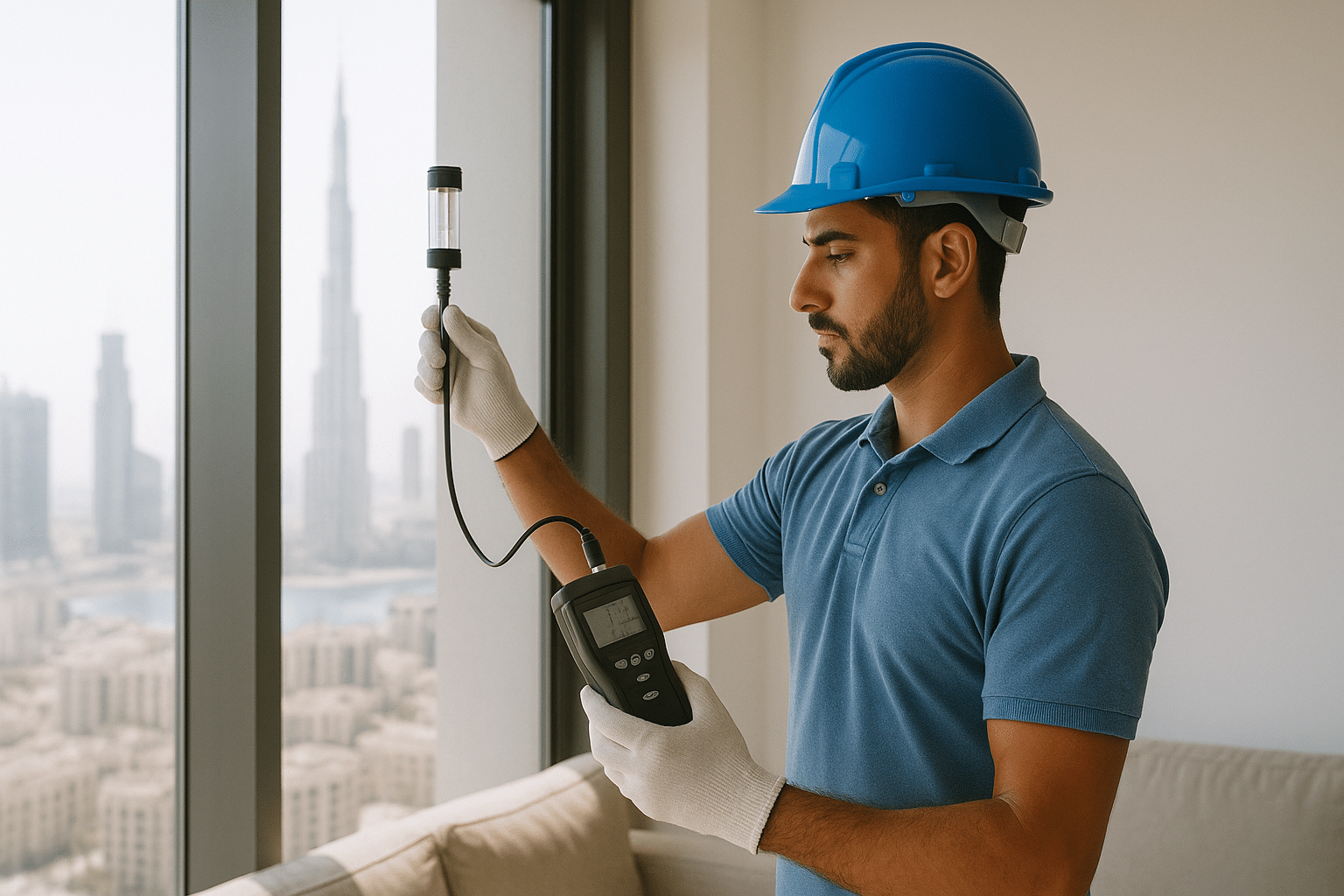
Microbiology laboratory support transforms AC cleaning from mechanical process to scientific intervention. Lab testing identifies specific contaminant types present in your system before service. Post-cleaning verification confirms elimination effectiveness through quantifiable microbial counts. This data-driven approach removes guesswork from indoor air quality management.
Hospital-grade biosanitisers offer significant advantages over traditional chemical disinfectants:
- Zero harmful residue accumulation on surfaces or in air
- Effective elimination of bacteria, viruses, fungi, and allergens
- Safe for occupants immediately after application
- No volatile organic compound emissions
- Environmentally sustainable formulations
Multidisciplinary service teams bring diverse expertise to complex indoor air quality challenges. Microbiologists analyze contamination patterns while HVAC engineers assess mechanical factors affecting system performance. Architects and building scientists evaluate environmental conditions that accelerate contamination. This comprehensive approach identifies root causes rather than treating symptoms alone.
Pro Tip: Always request documentation of technician certifications and ask whether the service provider uses third-party laboratory verification of cleaning effectiveness.
Customized cleaning protocols match service intensity to actual contamination levels and property requirements. A healthcare facility demands hospital-level disinfection protocols while a residential villa may require different emphasis on allergen removal. Cookie-cutter approaches miss these critical distinctions.
Property managers evaluating service providers should consult guidance on how to select AC disinfection services that meet professional standards. This resource outlines essential criteria for distinguishing qualified providers from those offering superficial cleaning.
Detailed air conditioning cleaning checklists help you verify that technicians address all critical system components. Comprehensive service includes coils, blowers, drainage trays, filters, ducts, and often-neglected areas where contamination concentrates.
Understanding the complete HVAC cleaning process through updated guides empowers informed decision-making about service scope and expected outcomes. Knowledge prevents both over-servicing and dangerous under-maintenance that compromises health and efficiency.
Common misconceptions about AC cleaning and disinfection
Several persistent myths prevent property managers and homeowners from implementing truly effective AC maintenance. Correcting these misconceptions protects both health outcomes and system performance.
Many believe regular filter replacement constitutes adequate AC maintenance. Filters capture only a fraction of contaminants while dust, mold, and bacteria colonize coils, blowers, and ductwork behind the filter. Surface-level cleaning leaves health threats and efficiency losses completely unaddressed.
Annual AC servicing represents another dangerous assumption. The UAE’s extreme conditions accelerate contamination far beyond what annual cleaning can manage. Most properties require professional intervention every 3-6 months to prevent microbial buildup and maintain optimal performance.
Traditional chemical disinfectants appear effective but create hidden risks. Chemical-free biosanitisers reduce VOC emissions by over 60% compared to traditional chemical disinfectants, making them dramatically safer for sensitive populations. Chemical residues accumulate in ductwork and evaporate into breathing air for weeks after application.
Ignoring invisible microbial contamination because systems appear clean externally leads to serious consequences:
- Continuous allergen exposure worsens respiratory conditions gradually
- Energy waste compounds monthly without visible warning signs
- Mold colonies expand exponentially once established
- System component damage accelerates silently until failure occurs
Some property managers assume newer AC systems don’t require deep cleaning. Age doesn’t prevent contamination. Even brand-new systems accumulate dust and develop microbial growth within months of operation in dusty climates.
Comparing options through resources like what’s best for your property helps match maintenance approaches to actual environmental conditions and usage patterns. Generic advice rarely fits UAE-specific challenges.
Understanding why AC maintenance saves energy quantifies the financial impact of neglecting proper cleaning. The 15-30% efficiency loss from contaminated components translates to substantial unnecessary utility expenses over time.
These misconceptions often stem from comparing UAE conditions to temperate climates where less frequent maintenance suffices. The region’s unique environment demands specialized knowledge and adapted maintenance frequencies that differ dramatically from manufacturer recommendations designed for moderate climates.
Comparing AC service types: what to choose for your property
Selecting appropriate AC services requires matching maintenance depth to your property’s specific contamination risks and performance goals. Each service type delivers distinct benefits that address different aspects of system health.
| Service Type | Microbial Elimination | Allergen Reduction | Energy Efficiency Impact | Best For |
|---|---|---|---|---|
| Filter replacement | Minimal | Low (10-15%) | Small improvement | Basic maintenance between deep services |
| Deep cleaning | Moderate | Moderate (30-40%) | Significant (10-20% efficiency gain) | Restoring airflow and cooling capacity |
| Duct cleaning | High | High (40-50%) | Moderate | Allergen-sensitive occupants, respiratory health |
| Disinfection (biosanitiser) | Very high (99.9%+) | Very high | Moderate | Healthcare, immune-compromised occupants |
| Combined comprehensive | Highest | Highest (50%+) | Maximum (15-30% efficiency gain) | Optimal health and performance |
Residential properties typically benefit most from combined deep cleaning and disinfection every 3-6 months. This approach addresses both mechanical efficiency and health concerns effectively. Homes with children, elderly residents, or allergy sufferers should prioritize duct cleaning in the maintenance rotation.
Commercial spaces face higher occupancy loads that accelerate contamination. Office buildings and retail spaces often require quarterly comprehensive cleaning to maintain acceptable indoor air quality for staff and customers. High-traffic areas demand more frequent attention than low-use zones.
Healthcare facilities must maintain hospital-level standards. Monthly disinfection using chemical-free biosanitisers becomes essential rather than optional. Lab verification ensures microbial elimination meets regulatory requirements for patient safety.
Combined service approaches deliver synergistic benefits:
- Deep cleaning removes physical contaminants that shield microbes
- Disinfection eliminates biological threats exposed by cleaning
- Duct cleaning prevents recontamination from distribution system
- Regular scheduling maintains gains rather than fighting chronic buildup
Pro Tip: Start with comprehensive combined service to establish a contamination baseline, then maintain with targeted services based on lab testing results and occupant feedback.
Property managers seeking detailed comparisons should review what’s best for your specific situation to understand how property type, usage patterns, and occupant needs influence optimal service selection.
Following a structured step-by-step AC cleaning guide ensures nothing gets overlooked during maintenance. Comprehensive checklists prevent the partial cleaning that wastes money without delivering full benefits.
Strategies to maximize HVAC performance integrate cleaning schedules with other efficiency measures. Proper maintenance amplifies benefits from programmable thermostats, insulation improvements, and system upgrades.
Implementing effective AC service regimens for health and efficiency
Transforming AC maintenance knowledge into practical implementation requires systematic planning and consistent execution. Follow these steps to establish a regimen that protects both occupant health and system performance.
-
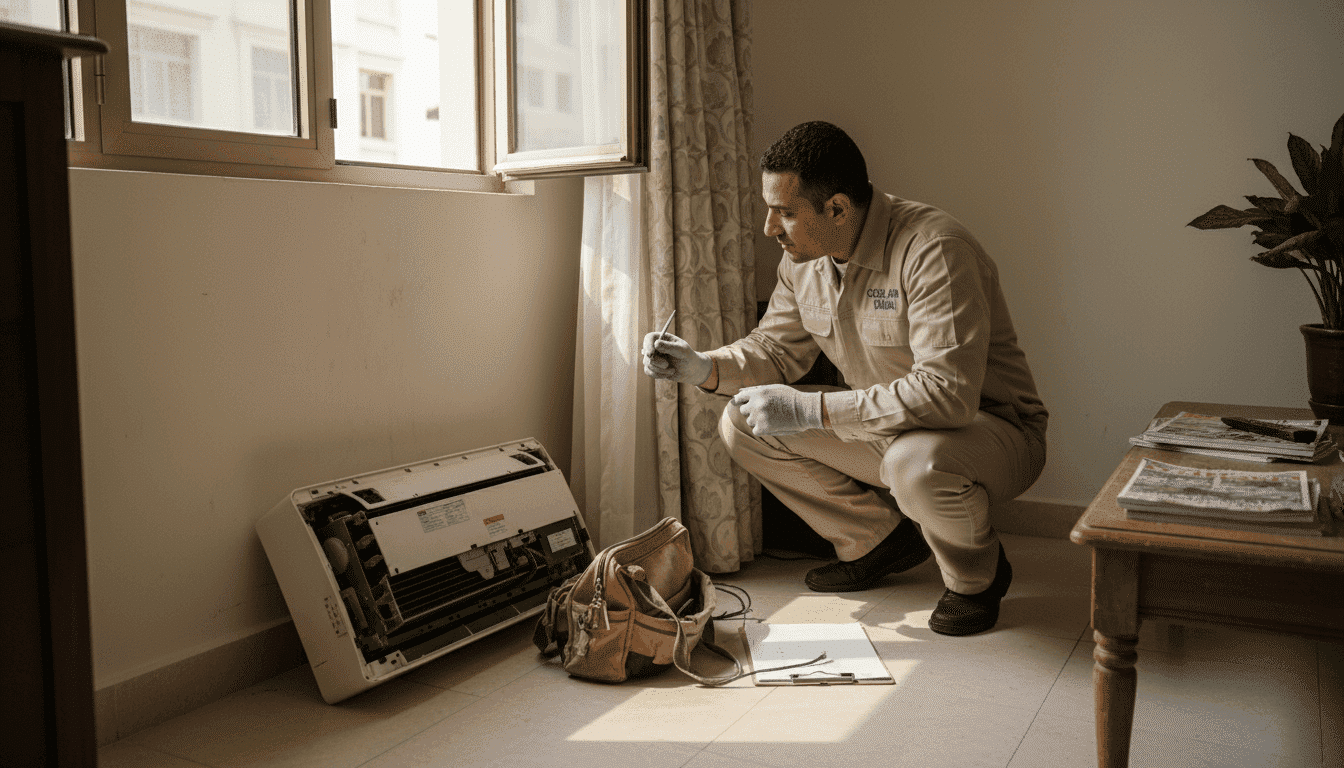
Conduct comprehensive system assessment. Schedule professional inspection to document current contamination levels, system condition, and performance metrics. Lab testing provides baseline microbial counts for comparison after cleaning.
-
Select appropriate service types. Match cleaning depth to assessment findings and property requirements. Healthcare facilities need more intensive protocols than residential spaces. Occupant health sensitivities should guide service selection.
-
Verify provider credentials thoroughly. Confirm NADCA certification for all technicians. Ask about laboratory support capabilities and chemical-free biosanitiser availability. Request references from similar property types.
-
Establish maintenance frequency. Schedule services every 3-6 months based on climate exposure, system usage intensity, and occupant density. Mark calendar commitments to prevent schedule drift.
-
Document and verify results. Require before and after lab testing for microbial contamination. Compare energy consumption data quarterly to track efficiency improvements. Survey occupants about air quality perception changes.
-
Adjust protocols as needed. Increase service frequency if testing reveals persistent contamination. Modify approaches based on seasonal variations in dust levels or humidity.
Tailoring frequency to specific conditions optimizes cost-effectiveness. Properties near construction sites or major roads face higher dust exposure requiring more frequent attention. Coastal locations with high humidity accelerate mold growth demanding enhanced disinfection focus.
Lab testing removes subjectivity from effectiveness evaluation. Quantifiable microbial counts before and after service provide irrefutable evidence of contamination elimination. This data justifies maintenance investments to stakeholders and guides protocol refinements.
Sustained regimens compound benefits over time. Initial comprehensive cleaning removes accumulated contamination while regular maintenance prevents reestablishment. Energy savings grow as systems maintain peak efficiency continuously rather than cycling between clean and contaminated states.
Evidence-based provider selection eliminates trial and error. Accredited services backed by laboratory verification deliver predictable results. The air conditioner cleaning guide for healthier air outlines selection criteria that distinguish qualified providers.
Property managers should consider indoor air quality testing services in Dubai that provide independent verification of cleaning effectiveness. Third-party testing adds accountability and confirms claimed results objectively.
Revisiting guidance on how to select AC disinfection services periodically ensures your maintenance approach incorporates latest best practices and technological advances in indoor air quality management.
Summary and next steps for healthier indoor air in your property
Specialized AC service types deliver measurable improvements in indoor air quality and system efficiency when properly selected and implemented. Deep cleaning restores mechanical performance while disinfection with chemical-free biosanitisers eliminates health threats safely. Duct cleaning removes allergen reservoirs that standard maintenance misses completely.
The UAE’s demanding climate requires maintenance frequencies of 3-6 months rather than annual servicing. Certified NADCA technicians using laboratory-verified protocols ensure contamination elimination rather than superficial appearance improvements. Chemical-free biosanitisers protect occupant health while achieving hospital-level disinfection standards.
Property managers and homeowners must move beyond filter replacement myths to embrace comprehensive maintenance approaches. Combined service strategies address both mechanical efficiency and biological contamination for maximum health and performance benefits. Regular scheduling prevents the costly contamination cycles that damage equipment and compromise wellbeing.
Act now to protect your investment and occupant health. Schedule professional assessment to establish your system’s current contamination baseline. Contact certified providers who offer laboratory verification and chemical-free disinfection options. Implement evidence-based maintenance frequencies tailored to your property’s specific environmental exposure and occupancy patterns.
Explore expert AC cleaning solutions for your UAE property
Saniservice delivers science-backed AC cleaning and disinfection throughout the UAE using NADCA-certified technicians and in-house microbiology laboratory support. Our multidisciplinary Indoor Sciences team combines microbiologists, HVAC engineers, and building scientists to address contamination comprehensively.
Our hospital-grade, chemical-free biosanitisers eliminate over 99.9% of mold, bacteria, and allergens without harmful residues. Triple ISO certification ensures consistent quality across all service types from basic cleaning to comprehensive contamination elimination.
Explore our detailed air conditioning cleaning checklist to understand the thorough process your system deserves. Learn how to select AC disinfection services that meet professional standards for health and efficiency. Discover specialized AC cleaning services for high-end residences that protect your premium investment.
Contact Saniservice today to schedule your comprehensive system assessment and begin breathing cleaner, healthier air.
FAQ
How often should AC cleaning and disinfection be performed in the UAE?
We recommend professional AC cleaning every 3-6 months for UAE properties due to the region’s intense heat and dust exposure. High-traffic commercial spaces may require quarterly service while residential properties often maintain quality with semi-annual cleaning. Adjust frequency based on occupant health sensitivities and environmental factors like proximity to construction or major roads.
What is the difference between chemical disinfectants and chemical-free biosanitisers?
Chemical-free biosanitisers reduce VOC emissions by over 60% compared to traditional chemical disinfectants while achieving equivalent microbial elimination. Traditional chemicals leave residues that evaporate into breathing air for weeks, potentially triggering respiratory sensitivities. Biosanitisers eliminate bacteria, mold, and viruses without harmful byproducts, making them ideal for homes with children, elderly residents, or anyone with compromised immunity.
Can regular filter cleaning ensure healthy indoor air quality?
Filter replacement removes only surface dust particles while leaving mold, bacteria, and allergens colonizing coils, blowers, and ductwork completely untouched. These hidden contaminants continuously circulate through your breathing air despite clean filters. True indoor air quality improvement requires deep cleaning and disinfection that addresses contamination throughout the entire AC system, not just at the filter location.
How does duct cleaning improve respiratory health?
Duct cleaning reduces airborne allergen levels by up to 50%, directly lowering respiratory health risks for building occupants. Accumulated dust, pollen, and pet dander inside ductwork create allergen reservoirs that standard cleaning can’t reach. Removing these contaminants decreases continuous exposure that triggers asthma symptoms, allergic reactions, and respiratory irritation, particularly benefiting children and sensitive individuals.