

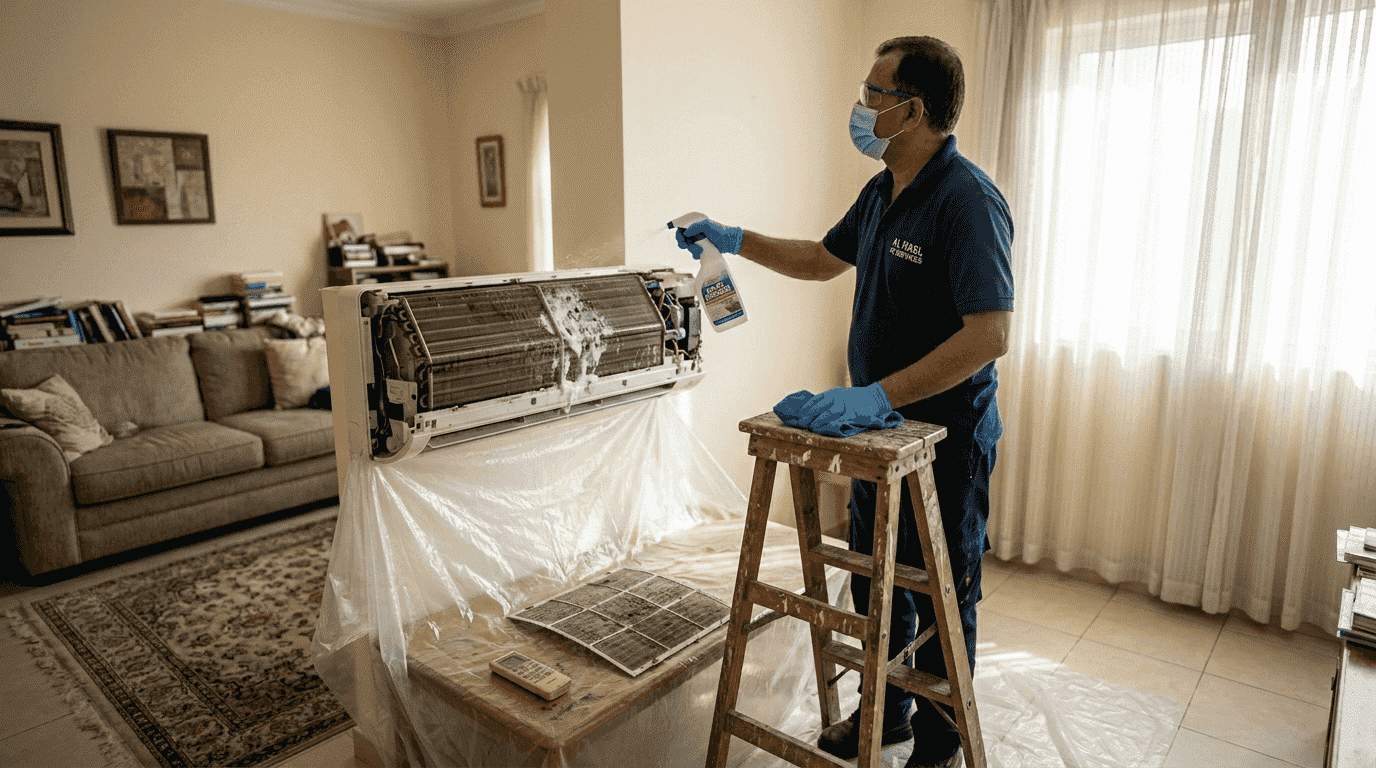
What can you use to clean AC coils for better cooling
Your air conditioner runs all day, yet your electric bill keeps climbing and rooms feel stuffy. The culprit might be hiding in plain sight: dirty AC coils that reduce cooling efficiency by up to 30%, forcing your system to work harder while delivering less comfort. This guide reveals exactly what materials and methods safely clean AC coils, restore peak performance, and slash energy waste in UAE’s demanding climate.
Table of Contents
Contents
- 1 Table of Contents
- 2 Key takeaways
- 3 Why cleaning AC coils is essential for homeowners in the UAE
- 4 What can you use to clean AC coils: types of cleaners and their pros and cons
- 5 Safe methods and materials to clean your AC coils effectively
- 6 DIY versus professional AC coil cleaning: what homeowners in UAE should consider
- 7 Keep your AC coils clean with Saniservice expert care
- 8 Frequently asked questions
- 9 Recommended
- Why Cleaning AC Coils Is Essential For Homeowners In The UAE
- What Can You Use To Clean AC Coils: Types Of Cleaners And Their Pros And Cons
- Safe Methods And Materials To Clean Your AC Coils Effectively
- DIY Versus Professional AC Coil Cleaning: What Homeowners In UAE Should Consider
- Keep Your AC Coils Clean With Saniservice Expert Care
- Frequently Asked Questions
Key takeaways
| Point | Details |
|---|---|
| Efficiency impact | Dirty coils can reduce cooling capacity and increase energy use by up to 30%, driving higher bills |
| Heat transfer restoration | Proper cleaning removes debris blocking airflow and restores the coil’s ability to transfer heat efficiently |
| Cleaner safety | Alkaline coil cleaners are safer than acid types and recommended by most manufacturers for residential use |
| Long-term benefits | Regular maintenance improves indoor air quality, extends system lifespan, and reduces repair costs |
Why cleaning AC coils is essential for homeowners in the UAE
AC coils are the heart of your cooling system’s heat exchange process. When dust, pollen, and airborne particles accumulate on these metal fins, they create an insulating barrier that blocks proper heat transfer. The coil can no longer absorb indoor heat effectively or release it outdoors, forcing the compressor to run longer cycles just to maintain your set temperature.
This efficiency loss translates directly to wasted energy. Studies show dirty coils increase energy consumption by over 30%, a significant drain on household budgets, especially in the UAE where air conditioners run nearly year-round. During summer months when outdoor temperatures exceed 45°C, your AC already works at maximum capacity. Adding the burden of clogged coils means you’re paying for cooling power that never reaches your living spaces.
Beyond energy costs, dirty coils accelerate wear on your entire HVAC system. The compressor must work harder and longer, shortening its operational life. Restricted airflow causes uneven cooling, hot spots in rooms, and increased humidity levels that promote mold growth. For property managers overseeing multiple units, these compounding issues multiply maintenance calls and tenant complaints.
Regular coil cleaning offers measurable returns:
- Restored cooling capacity delivers consistent comfort in every room
- Lower electricity bills from improved heat exchange efficiency
- Extended equipment lifespan by reducing mechanical stress
- Better indoor air quality as clean coils trap fewer allergens and contaminants
“Maintaining clean coils is one of the most cost-effective ways to optimize HVAC performance. The energy savings alone typically pay for professional cleaning within months, while preventing expensive repairs down the line.”
Understanding what substances safely clean these delicate components, and which ones risk permanent damage, empowers you to make informed maintenance decisions. The coil cleaning process requires specific products designed for aluminum or copper fins, not generic household cleaners that can corrode metal surfaces or leave harmful residues.
What can you use to clean AC coils: types of cleaners and their pros and cons
Coil cleaners fall into two main chemical categories, each with distinct properties and applications. Alkaline cleaners use base compounds like sodium hydroxide or potassium hydroxide to break down organic matter, grease, and typical household dirt. Acid cleaners contain hydrofluoric or phosphoric acid to dissolve mineral deposits and stubborn buildup.
Alkaline coil cleaners represent the safer choice for most residential applications. These formulations effectively remove dust, pollen, cooking oils, and biological contaminants without the hazardous risks associated with acid products. They work by raising the pH to break molecular bonds in organic materials, allowing debris to rinse away easily. Most manufacturers recommend alkaline cleaners for routine maintenance because they’re less likely to damage coil fins or void equipment warranties.
Acid cleaners tackle heavy mineral scaling and corrosion that alkaline products can’t dissolve. However, they pose serious safety concerns. Hydrofluoric acid can cause severe chemical burns, and improper application etches metal surfaces or weakens coil integrity. Professional HVAC technicians use acid cleaners only when necessary, with proper protective equipment and neutralizing agents on hand.
| Cleaner Type | Best For | Safety Level | Application Method |
| — | — | — |
| Alkaline (Base) | Dust, dirt, grease, organic buildup | Moderate (gloves/eyewear needed) | Spray on, wait 5-10 min, rinse |
| Acid | Heavy mineral deposits, corrosion | High risk (professional use only) | Requires neutralization, special handling |
| Enzyme-based | Light maintenance, eco-friendly option | Low risk | Longer dwell time, gentle action |
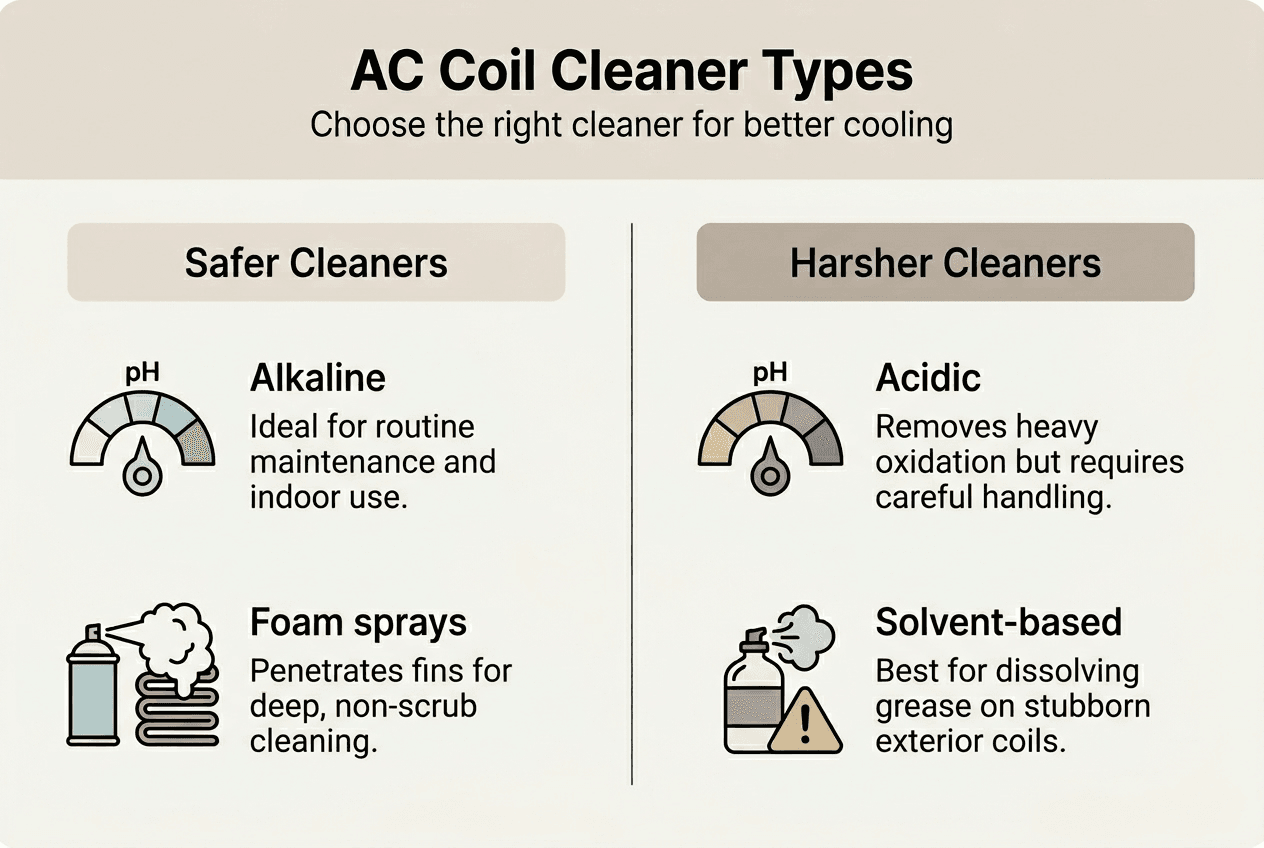
When selecting a coil cleaner, verify it’s labeled specifically for HVAC coils, not general-purpose degreasers. Check compatibility with your coil material (aluminum or copper) and whether it requires rinsing. No-rinse formulas offer convenience but may leave residue that attracts future dirt if not applied correctly.
Pro Tip: Always test any cleaner on a small, inconspicuous section of the coil first. Wait 24 hours to check for discoloration, pitting, or other damage before treating the entire surface. This simple precaution prevents costly mistakes.
Key considerations for choosing the right cleaner:
- pH level: Alkaline cleaners typically range from pH 10-14; higher numbers mean stronger action but greater caution needed
- Foaming action: Expanding foam helps cleaner cling to vertical coil surfaces and penetrate between fins
- Biodegradability: Eco-friendly formulas minimize environmental impact when rinsed into drainage systems
- Manufacturer approval: Using non-approved cleaners may void your AC warranty
For UAE homeowners dealing with fine desert dust that infiltrates even sealed systems, alkaline cleaners provide the best balance of effectiveness and safety. The right coil cleaner removes accumulated particles without requiring aggressive chemicals that risk coil damage or indoor air contamination.
Safe methods and materials to clean your AC coils effectively
Proper coil cleaning requires more than just spraying cleaner and hoping for the best. Following a systematic approach protects both your safety and your equipment investment. Start by gathering the right tools: soft-bristle brush (nylon, not wire), alkaline coil cleaner spray, garden hose with adjustable nozzle, protective gloves, safety goggles, and clean towels.
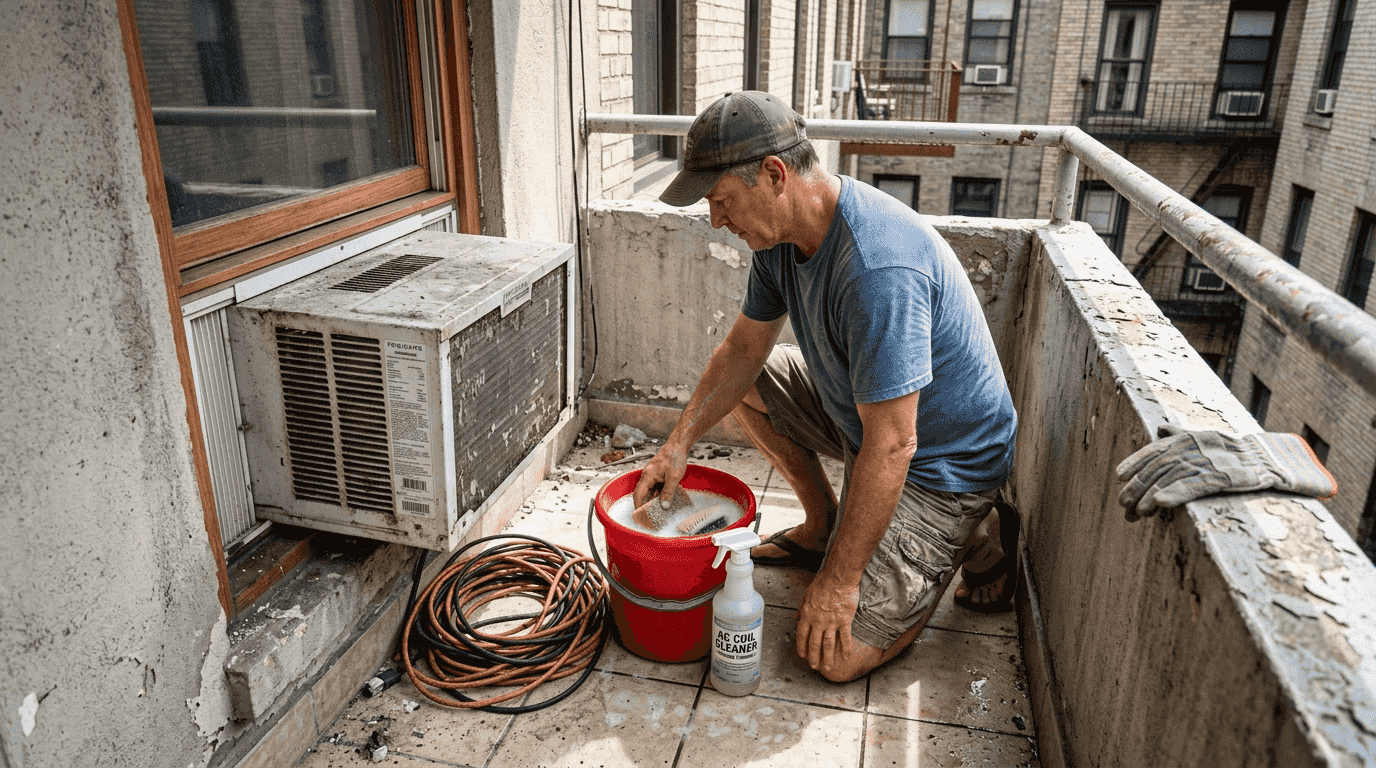
Before touching any AC component, shut off power at both the thermostat and circuit breaker. Verify power is off by attempting to turn on the system. This critical safety step prevents electric shock and protects the compressor from damage during cleaning. Remove the outer AC panels or access covers to expose the coil fins, taking photos if needed to remember reassembly order.
Follow these steps for thorough, safe coil cleaning:
- Remove loose debris: Use the soft brush to gently sweep away surface dust, leaves, and visible dirt from coil fins, brushing in the direction of the fins to avoid bending them.
- Apply coil cleaner: Spray alkaline cleaner evenly across the entire coil surface, ensuring foam penetrates between fins; follow product instructions for recommended dwell time, typically 5-10 minutes.
- Rinse carefully: Using low to moderate water pressure, rinse the coil from the inside out (opposite the airflow direction) to push debris away from the system rather than deeper into it.
- Inspect and repeat: Check for remaining buildup in hard-to-reach areas; apply a second treatment if needed, focusing on problem spots.
- Dry thoroughly: Allow coils to air dry completely before restoring power, or use clean towels to absorb excess moisture and speed the process.
Pro Tip: Clean coils during cooler morning hours when the system hasn’t been running. Hot coils can cause cleaner to evaporate too quickly, reducing effectiveness and potentially releasing irritating fumes.
Critical safety precautions:
- Never use high-pressure washers that can bend delicate fins or force water into electrical components
- Avoid household cleaners like bleach, ammonia, or vinegar that corrode metal and leave harmful residues
- Wear protective equipment throughout the process; even mild alkaline cleaners can irritate skin and eyes
- Keep children and pets away from the work area until cleaning is complete and power restored
Regular cleaning restores airflow and heat transfer, preserving cooling capacity and reducing the energy waste that drives up utility bills. For evaporator coils inside your air handler, the process requires more disassembly and careful attention to drainage pans and condensate lines. Many homeowners find indoor coils more challenging to access and clean thoroughly without professional tools.
The step-by-step cleaning process becomes easier with practice, but certain situations call for expert intervention. If you encounter heavy corrosion, refrigerant leaks, bent fins covering more than 20% of the coil surface, or mold growth inside the air handler, professional service ensures proper remediation without risking system damage or health hazards.
For property managers maintaining multiple AC units, establishing a cleaning schedule and training maintenance staff on proper techniques maximizes efficiency. Document cleaning dates and observations to track patterns and identify units requiring more frequent attention. This proactive approach prevents emergency breakdowns during peak cooling season when HVAC services are in highest demand.
DIY versus professional AC coil cleaning: what homeowners in UAE should consider
Deciding whether to clean AC coils yourself or hire professionals depends on several practical factors. DIY cleaning offers immediate cost savings and the satisfaction of maintaining your own equipment. You control the schedule, can perform light maintenance between professional services, and develop valuable knowledge about your HVAC system. Basic coil cleaning requires minimal investment in tools and supplies, making it economical for homeowners comfortable with hands-on tasks.
However, self-cleaning has limitations. Without proper training, you might miss hidden buildup in hard-to-reach areas or fail to recognize early warning signs of serious problems. Improper technique can bend coil fins, reducing airflow efficiency even after cleaning. Using wrong products or excessive water pressure risks permanent damage that costs far more to repair than professional cleaning would have cost initially.
Professional AC cleaning services bring expertise, specialized equipment, and comprehensive system inspection. Certified technicians identify issues beyond dirty coils, such as refrigerant leaks, failing capacitors, or ductwork problems that impact overall performance. They use commercial-grade cleaners and tools designed for thorough cleaning without component damage. Most importantly, professional service includes warranty protection and liability coverage if something goes wrong.
Consider professional cleaning when:
- Your AC hasn’t been serviced in over a year or you’ve never cleaned the coils
- You notice reduced cooling performance despite DIY cleaning attempts
- Visible mold or heavy corrosion appears on coils or in the air handler
- You’re uncomfortable working with electrical components or chemicals
- Property management responsibilities require documented maintenance records
“The difference between DIY surface cleaning and professional deep cleaning often determines whether your AC lasts 10 years or 15 years. Professionals dismantle components to access areas homeowners can’t reach, removing contaminants that gradually degrade system performance.”
A balanced approach works well for many UAE households. Perform light DIY maintenance quarterly to remove surface dust and keep coils relatively clean between professional deep cleanings. Schedule expert service annually or semi-annually, timed before peak summer demand when your AC works hardest. This strategy maximizes cost efficiency while ensuring thorough maintenance.
For villa owners with multiple AC units or property managers overseeing residential complexes, professional service becomes more cost-effective. Bulk scheduling reduces per-unit costs, and technicians complete the work faster with minimal disruption to occupants. Professional cleaning also provides documentation valuable for tenant relations, property value maintenance, and potential resale considerations.
Safety remains the deciding factor for many homeowners. Working with electrical systems, climbing ladders to reach outdoor units, and handling chemical cleaners all carry inherent risks. If you have any doubt about safely completing the task, professional service eliminates those concerns while delivering superior results. The investment in expert care pays dividends through lower energy bills, fewer repairs, and extended equipment lifespan that far outweigh the service cost.
Keep your AC coils clean with Saniservice expert care
Maintaining peak AC performance in UAE’s extreme climate requires more than occasional DIY efforts. Professional coil cleaning removes the deep-seated contaminants that gradually choke efficiency and compromise indoor air quality. Saniservice combines NADCA-certified expertise with hospital-grade cleaning methods to restore your system’s full cooling capacity while eliminating mold, bacteria, and allergens that accumulate on coils.
Our technicians meticulously dismantle and clean every component, from evaporator and condenser coils to blowers and drainage systems, using chemical-free biosanitizers proven effective in our own microbiology laboratory. This science-backed approach delivers measurable results: lower energy bills, cleaner indoor air, and extended equipment lifespan. Whether you manage a single villa or oversee multiple properties, comprehensive AC cleaning ensures optimal performance when you need it most. Our detailed cleaning checklist covers every critical component, and convenient scheduling makes professional maintenance effortless. Discover how Saniservice transforms AC care with Swiss-quality precision and UAE-specific expertise.
Frequently asked questions
Can I use household products like vinegar or bleach to clean AC coils?
Household acids and bleach corrode aluminum and copper coils, causing permanent damage that reduces heat transfer efficiency. These products also leave residues that attract more dirt and may release harmful fumes when mixed with other substances. Always use cleaners specifically formulated for HVAC coils to protect your equipment and maintain warranty coverage.
How often should AC coils be cleaned in the UAE climate?
Clean outdoor condenser coils at least twice yearly, ideally before summer peak season and again mid-year. Indoor evaporator coils benefit from annual professional cleaning. If you live near construction sites, busy roads, or areas with heavy dust, increase frequency to quarterly light cleanings with professional service every six months.
Is it necessary to hire a professional for AC coil cleaning?
Professional cleaning ensures safety, thoroughness, and early detection of potential problems that could lead to costly repairs. Technicians access areas homeowners can’t reach and use specialized tools to clean without damaging delicate components. DIY works for light maintenance between professional services, but annual expert cleaning maximizes efficiency and system longevity.
What happens if I don’t clean my AC coils regularly?
Neglected coils accumulate layers of debris that progressively reduce cooling capacity and increase energy consumption. Your AC runs longer cycles to maintain temperature, driving up electricity bills while delivering less comfort. Eventually, the added strain causes premature compressor failure, refrigerant leaks, or complete system breakdown requiring expensive replacement rather than simple maintenance.


Leave a Reply