

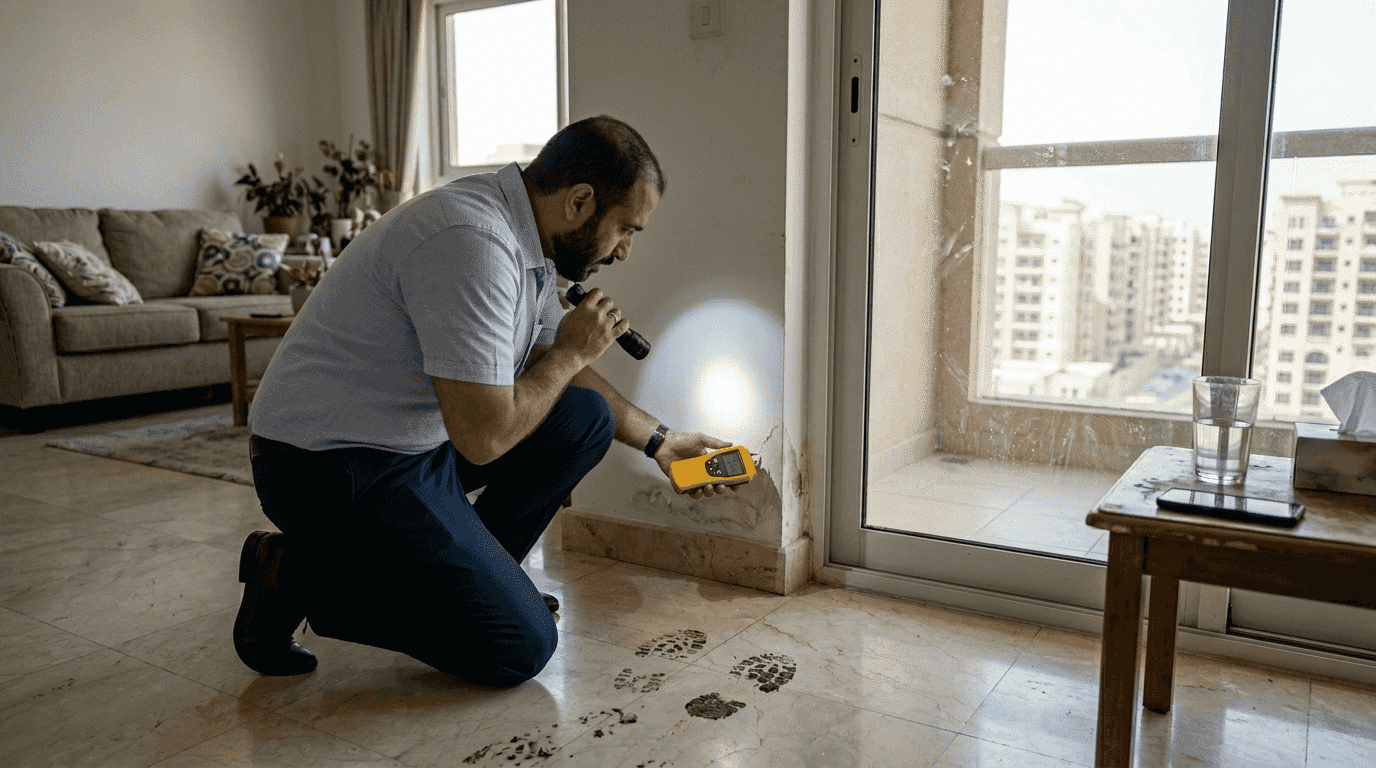
What is mold inspection and why it matters in UAE homes
Many homeowners assume mold is always visible or detectable by smell, but hidden mold infestations require professional methods to uncover. In UAE homes, where humidity constantly challenges indoor air quality, understanding mold inspection becomes essential for health and property protection. This guide clarifies what mold inspection truly involves and why it matters in your home.
Table of Contents
Contents
- 1 Table of Contents
- 2 Key takeaways
- 3 Understanding mold and its risks in the UAE
- 4 What is mold inspection? Definition and scope
- 5 How does mold inspection work? Tools and techniques
- 6 Common misconceptions about mold inspection
- 7 Why mold inspection matters for health and property in the UAE
- 8 Comparing mold inspection methods
- 9 Applying mold inspection results: next steps for homeowners
- 10 Protect your home with expert mold inspection and AC cleaning
- 11 Frequently asked questions
- 12 Recommended
- Understanding Mold And Its Risks In The UAE
- What Is Mold Inspection? Definition And Scope
- How Does Mold Inspection Work? Tools And Techniques
- Common Misconceptions About Mold Inspection
- Why Mold Inspection Matters For Health And Property In The UAE
- Comparing Mold Inspection Methods
- Applying Mold Inspection Results: Next Steps For Homeowners
- Protect Your Home With Expert Mold Inspection And AC Cleaning
- Frequently Asked Questions
Key takeaways
| Point | Details |
|---|---|
| Professional detection | Mold inspection detects both visible and hidden mold using scientific tools including moisture meters, infrared cameras, and laboratory analysis. |
| UAE climate challenges | The region’s humid climate significantly increases indoor mold growth risks, making regular inspection essential for health. |
| Misconceptions corrected | Relying on visibility or smell alone leads to missed mold infestations that compromise health and property value. |
| Health protection | Accurate inspection using lab analysis improves health outcomes by identifying dangerous mold species before symptoms worsen. |
| Actionable results | Inspection results guide targeted remediation, HVAC cleaning, and ongoing maintenance for lasting indoor air quality. |
Understanding mold and its risks in the UAE
Mold represents more than just unsightly spots on walls. These microscopic fungi release spores into the air, creating invisible health hazards throughout your home. Different species carry varying risk levels, with some producing toxic compounds that affect respiratory systems.
Humidity levels above 60% create perfect breeding grounds for mold colonies. UAE homes face this challenge year round due to coastal moisture and air conditioning condensation. Within 24 to 48 hours of water exposure, mold begins colonizing surfaces.
Health impacts demand attention. Mold exposure links to asthma and allergy exacerbation in 21 to 30% of cases. Symptoms include persistent coughing, wheezing, throat irritation, and skin reactions. Children and individuals with compromised immune systems face heightened vulnerability.

The hidden nature of mold growth complicates detection. Colonies thrive inside walls, above ceilings, within HVAC ducts, and beneath flooring. You might breathe contaminated air for months without seeing obvious signs. Indoor air quality deteriorates silently as spore concentrations build.
Key risk factors in UAE homes include:
- Constant air conditioning creating condensation on cold surfaces
- Coastal humidity penetrating building materials
- Poor ventilation trapping moisture indoors
- Plumbing leaks behind walls and under floors
- Bathroom and kitchen moisture without proper exhaust
“Understanding mold biology helps you appreciate why professional inspection becomes necessary rather than optional for UAE homeowners.”
What is mold inspection? Definition and scope
Mold inspection represents a systematic process to detect and assess mold contamination throughout residential and commercial properties. The goal extends beyond finding visible mold to identifying hidden infestations that threaten health and structural integrity.
Professional inspectors examine your entire property methodically. They search for both active mold growth and conditions that enable future colonization. Visual examination pairs with air and surface sampling using specialized scientific instruments.
The scope covers multiple investigation layers:
- Visual assessment of walls, ceilings, floors, and fixtures for mold signs
- Moisture mapping to locate water intrusion and high humidity zones
- Air quality sampling to measure airborne spore concentrations
- Surface sampling from suspected contamination areas
- HVAC system inspection including ducts, coils, and drainage pans
- Building material assessment for water damage and hidden growth
Inspection serves as the foundation for effective remediation planning. Without accurate detection, cleanup efforts target wrong areas while dangerous mold persists elsewhere. Scientific methods replace guesswork, providing measurable data about contamination levels.
The process differs fundamentally from remediation itself. Inspection identifies problems and quantifies risks. Remediation removes the mold and repairs underlying moisture issues. Separating these functions ensures unbiased assessment before cleanup begins.
Comprehensive inspection generates detailed reports documenting findings. These reports specify mold species identified, concentration levels measured, and moisture sources discovered. Homeowners receive clear guidance about health risks and recommended corrective actions.
How does mold inspection work? Tools and techniques
Professional mold inspection combines multiple technologies to paint a complete picture of contamination. The process begins with thorough visual examination and odor assessment. Inspectors trained to recognize mold signs examine every accessible area.
Moisture meters provide crucial data by measuring water content in building materials. Elevated moisture readings indicate conditions favoring mold growth even before visible colonies appear. Inspectors probe walls, ceilings, and floors to map moisture distribution patterns.
Infrared thermal imaging cameras reveal hidden moisture and temperature variations invisible to the naked eye. Cold spots often indicate water intrusion or poor insulation creating condensation zones. This technology detects problems behind walls without destructive testing.
Air sampling captures airborne spores using specialized pumps and collection cassettes. Samples taken from multiple rooms and outdoor reference points establish contamination baselines. Laboratory analysis counts spore types and concentrations, revealing air quality status.
Surface sampling collects visible mold or suspicious residues using swabs, tape lifts, or bulk material samples. These specimens undergo microscopic examination and culture testing. DNA mold species testing offers over 95% specificity in identifying exact mold types present.
Key inspection tools include:
- Moisture meters with pin and pinless sensors
- Infrared thermal imaging cameras
- Air sampling pumps and spore trap cassettes
- Surface sampling swabs and tape lifts
- Borescopes for viewing inside walls and cavities
- Photo documentation equipment
Pro Tip: Schedule inspection during typical living conditions rather than immediately after deep cleaning. Normal conditions reveal actual air quality and contamination levels you experience daily.
HVAC systems receive special attention during inspection. Mold and dust in HVAC systems circulate contaminants throughout homes continuously. Inspectors examine air handlers, cooling coils, condensate pans, and ductwork where moisture accumulates.
Common misconceptions about mold inspection
Many homeowners harbor false beliefs about mold that delay proper inspection and remediation. Understanding these misconceptions prevents costly mistakes and protects family health.
The biggest myth suggests you can always see or smell mold problems. Reality proves different. Mold often hides despite no visible signs or odors, growing inside walls, above ceilings, and within HVAC systems. Air quality deteriorates before obvious symptoms appear.
Another common error assumes all mold poses equal danger. Different species carry vastly different health risks. Some produce toxic mycotoxins while others cause primarily allergic reactions. Professional identification determines actual risk levels rather than generic fear.
DIY testing kits create false confidence. These products lack accuracy compared to professional laboratory analysis. They often produce false negatives, missing dangerous contamination while suggesting homes are safe. Proper sampling technique and chain of custody matter for reliable results.
Key misconceptions to avoid:
- Bleach kills mold permanently (it only removes surface stains temporarily)
- Small visible mold spots indicate small problems (extensive hidden growth often exists)
- Mold only grows in old buildings (new construction faces equal risks from moisture)
- Running dehumidifiers alone solves mold problems (source control and cleaning remain essential)
- Home insurance always covers mold damage (policies typically exclude gradual water damage)
“Professional inspection requires scientific sampling and analysis, not guesswork or amateur visual assessment alone.”
Homeowners frequently underestimate how quickly mold spreads. A small leak ignored for weeks creates extensive contamination requiring professional remediation. Early detection through inspection prevents minor issues from becoming major health hazards and expensive repairs.
Why mold inspection matters for health and property in the UAE
The UAE’s environmental conditions create perfect storms for mold proliferation in residential properties. Understanding regional risks explains why inspection becomes critical rather than optional for homeowners.
Indoor humidity over 60% drastically increases mold growth risks throughout UAE homes. Coastal locations experience persistent moisture penetration. Air conditioning systems working constantly generate condensation that feeds mold colonies if not properly managed.
Health consequences demand proactive inspection. Respiratory problems linked to mold exposure affect 21 to 30% of exposed individuals. Symptoms include chronic coughing, asthma attacks, sinus infections, and allergic reactions. Children attending schools in moldy buildings show increased absenteeism and reduced academic performance.
Property damage from unchecked mold growth reduces home values significantly. Mold deteriorates building materials including drywall, wood framing, insulation, and ceiling tiles. Stains, odors, and structural weakness become apparent once infestations advance beyond early stages.
Financial impact extends beyond repair costs:
- Property resale values drop 10 to 30% with known mold history
- Insurance premiums increase after mold claims
- Energy efficiency declines as contaminated HVAC systems work harder
- Medical expenses rise from mold related illnesses
- Legal liability emerges if tenants develop health problems
Statistic Alert: Studies show indoor humidity over 60% combined with poor ventilation increases mold contamination risk by 300% in UAE climate conditions.
Early detection through professional inspection enables targeted intervention before problems escalate. Identifying moisture sources and hidden mold colonies guides effective remediation. Understanding Dubai’s climate challenges helps homeowners implement prevention strategies.
Combining inspection with humidity control proves essential. Dehumidifiers, proper ventilation, and regular HVAC maintenance create environments hostile to mold growth. Annual inspections catch new problems early, protecting investments and family wellbeing.
Comparing mold inspection methods
Choosing appropriate inspection techniques depends on property conditions, budget constraints, and accuracy requirements. Each method offers distinct advantages and limitations for UAE homeowners.
Visual inspection provides the most accessible starting point. Trained inspectors identify obvious mold growth, water stains, and moisture sources during systematic property walkthroughs. This approach costs least but misses hidden contamination behind walls and inside systems.
Moisture detection tools including meters and thermal cameras improve hidden problem discovery. These instruments locate water intrusion and damp building materials where mold likely grows. Infrared imaging achieves about 85% accuracy in detecting moisture related issues without invasive testing.
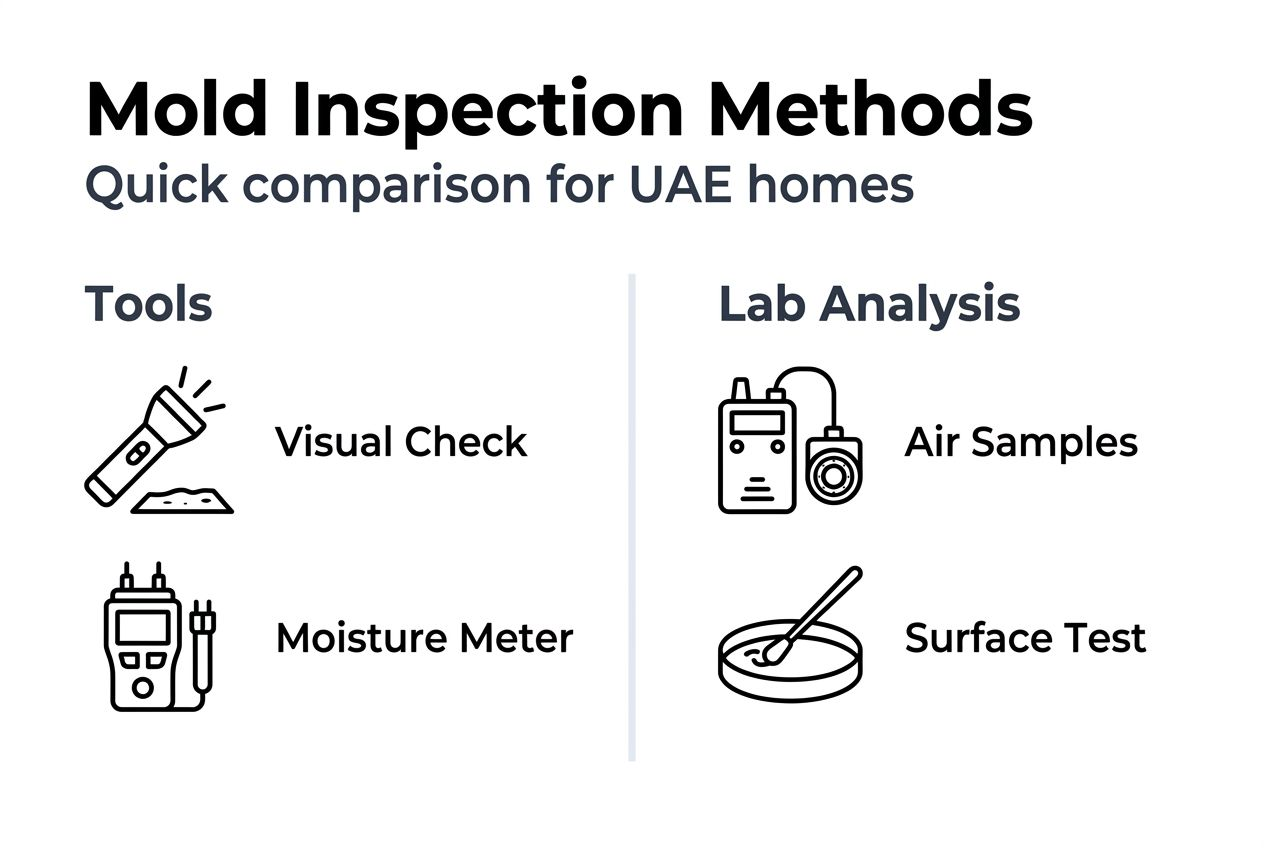
Laboratory testing delivers highest precision through scientific analysis. Air samples quantify spore concentrations while surface samples identify specific mold species present. DNA testing provides over 95% specificity, enabling targeted remediation based on actual contamination rather than assumptions.
| Method | Accuracy | Cost | Time | Best For |
|---|---|---|---|---|
| Visual inspection | 60-70% | Low | 1-2 hours | Initial assessment, obvious problems |
| Moisture meters | 75-85% | Moderate | 2-3 hours | Locating water sources, hidden dampness |
| Infrared imaging | 80-85% | Moderate | 2-4 hours | Non-invasive hidden moisture detection |
| Air sampling | 85-90% | Higher | 3-5 days | Quantifying airborne spore levels |
| Surface sampling | 90-95% | Higher | 3-5 days | Identifying mold species present |
| DNA testing | 95%+ | Highest | 5-7 days | Precise species identification, legal cases |
Pro Tip: Combine visual inspection with at least one sampling method for reliable results. Visual assessment alone misses too many hidden problems common in UAE homes.
Choosing methods involves balancing thoroughness with budget. Homes with obvious moisture problems benefit from comprehensive testing including air and surface samples. Properties with unexplained health symptoms but no visible mold require extensive investigation using multiple technologies.
Timing affects inspection accuracy. Schedule testing during typical occupancy conditions rather than immediately after ventilation improvements. Real world conditions reveal actual contamination levels affecting daily health.
Applying mold inspection results: next steps for homeowners
Receiving your inspection report marks the beginning rather than end of mold management. Understanding results and taking targeted action protects health and property value long term.
Review laboratory reports carefully to identify specific mold species and concentration levels present. Reports classify findings as low, moderate, or high contamination. High spore counts demand immediate remediation while moderate levels require monitoring and preventive measures.
Plan targeted remediation focusing on identified hotspots:
- Address moisture sources first by repairing leaks and improving drainage
- Remove contaminated materials that cannot be effectively cleaned
- Clean affected surfaces using appropriate antimicrobial treatments
- Dry building materials thoroughly before reconstruction
- Verify successful remediation through post cleanup testing
Integrating HVAC cleaning reduces indoor spores by over 90% when combined with source remediation. Air conditioning systems circulate contaminated air throughout homes even after visible mold removal. Professional duct cleaning and coil disinfection eliminate hidden reservoirs.
Implement humidity control as ongoing prevention:
- Maintain indoor humidity between 40 to 50% using dehumidifiers
- Ensure bathroom and kitchen exhaust fans vent outdoors
- Run air conditioning consistently rather than intermittently
- Address condensation on windows and cold surfaces
- Improve attic and crawl space ventilation
Schedule annual mold inspections for ongoing risk management. Regular monitoring catches new moisture problems before extensive contamination develops. Properties with previous mold issues benefit from more frequent inspection cycles.
Pro Tip: Keep detailed records of inspection reports, remediation work, and follow up testing. Documentation proves valuable for insurance claims, property sales, and tracking long term air quality trends.
HVAC mold prevention strategies deserve special attention in UAE homes. Regular maintenance including filter changes, coil cleaning, and condensate pan treatment prevents system contamination. Professional annual service costs less than remediation after problems develop.
Consider indoor air quality monitoring methods for continuous assessment between professional inspections. Affordable sensors track humidity, temperature, and air quality parameters. Real time data enables quick response to changing conditions.
Protect your home with expert mold inspection and AC cleaning
Hidden mold threatens your family’s health and home’s value every day it remains undetected. Professional inspection identifies contamination early, enabling targeted remediation before problems escalate. UAE’s humid climate demands proactive monitoring rather than reactive crisis management.
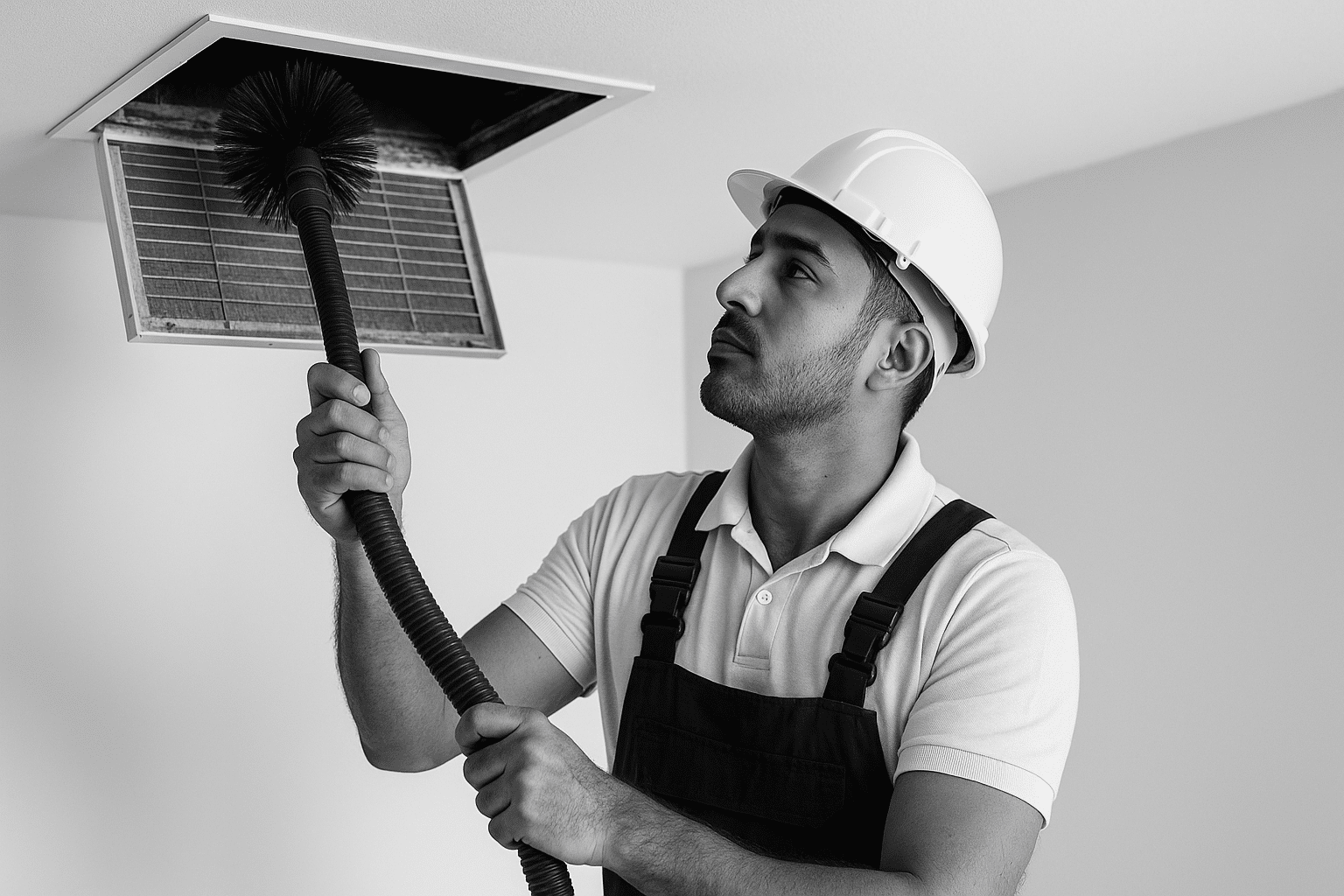
Integrating expert AC and HVAC cleaning with mold inspection reduces airborne spore levels dramatically while improving system efficiency. Clean cooling coils, ducts, and air handlers prevent mold circulation even after source remediation. Regular maintenance protects your investment and creates healthier indoor environments.
Saniservice combines scientific mold inspection with comprehensive air conditioning cleaning services backed by in house laboratory analysis. Our multidisciplinary team includes microbiologists and HVAC engineers who understand UAE specific challenges. We deliver HVAC hygiene benefits through evidence based practices proven to eliminate mold, bacteria, and allergens.
Schedule your professional mold inspection today. Our step by step AC cleaning approach ensures every component receives thorough disinfection using hospital grade, chemical free treatments. Protect your family with science backed indoor air quality solutions designed for UAE homes.
Frequently asked questions
What does mold inspection include?
Mold inspection includes visual examination of your property, moisture detection using specialized meters and infrared cameras, air quality sampling to measure spore concentrations, and surface sampling from suspected areas. Laboratory analysis identifies specific mold species present and quantifies contamination levels, providing detailed reports with remediation recommendations.
How often should I have mold inspection in the UAE?
Schedule professional mold inspection annually due to UAE’s humid climate and year round air conditioning use. Properties with previous mold issues, recent water damage, or unexplained health symptoms require more frequent inspection every six months. New home purchases should include pre-sale mold inspection to identify hidden problems before closing.
Can I do mold inspection myself?
DIY mold testing kits lack accuracy compared to professional laboratory analysis and proper sampling techniques. While you can perform visual checks for obvious mold growth, hidden contamination inside walls, ceilings, and HVAC systems requires specialized equipment and expertise. Professional inspection provides reliable data necessary for effective remediation planning and health risk assessment.
What happens after a mold inspection?
After inspection, you receive detailed laboratory reports identifying mold species, concentration levels, and contamination extent. Use results to plan targeted remediation addressing moisture sources and removing affected materials. Follow up with HVAC cleaning to eliminate airborne spores, implement humidity control measures, and schedule post remediation testing to verify successful cleanup.
Is mold inspection covered by home insurance?
Most home insurance policies exclude mold damage resulting from gradual water intrusion or maintenance neglect. Coverage typically applies only when mold results from sudden, accidental events like burst pipes. Review your policy carefully and consider purchasing separate mold coverage riders. Documentation from professional inspections strengthens claims when coverage does apply.
How long does professional mold inspection take?
Comprehensive mold inspection takes two to four hours on site for average sized homes. Laboratory analysis of collected samples requires three to seven days depending on testing methods used. DNA species identification takes longer than basic spore counts but provides more precise results. Inspectors provide preliminary observations immediately while detailed reports follow after lab analysis completes.


Leave a Reply