


Signs of poor ventilation for healthier Dubai homes 2026
Your home should be a sanctuary of clean, fresh air. Instead, many Dubai residences suffer from poor ventilation that silently degrades indoor air quality and resident health. In a climate where sealed windows and constant air conditioning are the norm, recognizing ventilation problems becomes critical. Condensation on glass, persistent musty smells, visible mold patches, and unexplained respiratory symptoms all signal that your home isn’t breathing properly. This guide reveals the warning signs of inadequate ventilation, explains the health risks tied to trapped pollutants, and provides actionable solutions to restore healthy airflow in your Dubai residence.
Table of Contents
Contents
- 1 Table of Contents
- 2 Key takeaways
- 3 Common signs of poor ventilation in residential buildings
- 4 Health and pollutant risks linked to poor ventilation
- 5 Moisture, mold growth, and condensation issues in Dubai homes
- 6 How to detect and monitor ventilation problems effectively
- 7 Comparison of ventilation improvement options for Dubai residences
- 8 Improve your home’s air quality with professional HVAC maintenance
- 9 FAQ
- 10 Recommended
- Common Signs Of Poor Ventilation In Residential Buildings
- Health And Pollutant Risks Linked To Poor Ventilation
- Moisture, Mold Growth, And Condensation Issues In Dubai Homes
- How To Detect And Monitor Ventilation Problems Effectively
- Comparison Of Ventilation Improvement Options For Dubai Residences
- Improve Your Home’s Air Quality With Professional HVAC Maintenance
Key takeaways
| Point | Details |
|---|---|
| Visible moisture signals | Condensation on windows and mold growth indicate trapped humidity from poor air exchange |
| Health symptom patterns | Frequent coughing, allergies, and respiratory discomfort link directly to accumulated indoor pollutants |
| Elevated CO2 and VOCs | Levels above 1000 ppm CO2 or detectable VOCs reveal inadequate ventilation in sealed Dubai homes |
| Monitoring technologies | CO2 sensors, VOC detectors, and regular HVAC inspections enable early problem detection |
| Professional maintenance | Systematic HVAC cleaning and filter replacement dramatically improve ventilation efficiency |
Common signs of poor ventilation in residential buildings
Recognizing ventilation problems early prevents serious health consequences and property damage. Dubai’s climate creates unique challenges that make these signs especially important to monitor.
Condensation appearing on windows, mirrors, or cool surfaces reveals moisture buildup from insufficient air exchange. When indoor air cannot escape and fresh outdoor air doesn’t enter, water vapor accumulates and condenses on the coldest available surfaces. This phenomenon intensifies during Dubai’s humid seasons when outdoor moisture levels spike.
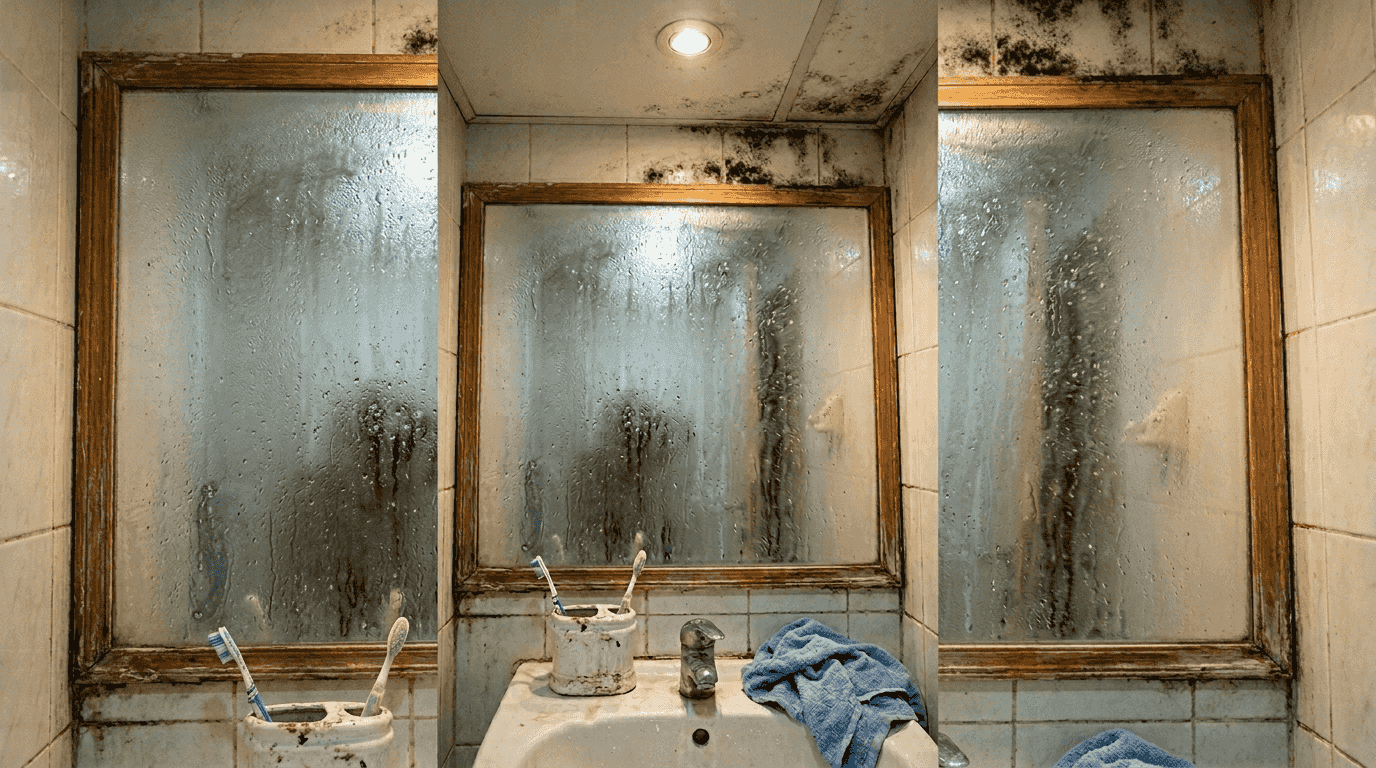
Persistent musty or stale odors signal trapped air and microbial activity. Cooking smells that linger for hours, bathroom odors that spread throughout the home, or a general staleness indicate air isn’t circulating properly. These odors often accompany biological contamination that thrives in stagnant conditions.
Visible mold or mildew growth represents the most serious ventilation failure. Common signs of poor ventilation include condensation on windows, persistent odors, and the presence of mold or mildew, all of which create health hazards. Black spots on bathroom ceilings, fuzzy patches behind furniture, or discoloration around AC vents all demand immediate attention.
Frequent respiratory symptoms among residents provide another critical indicator. Unexplained coughing, sneezing, watery eyes, or aggravated asthma often stem from poor indoor air quality symptoms caused by pollutant accumulation. When multiple family members experience similar issues that improve away from home, ventilation problems are likely responsible.
Pro Tip: Walk through your home early in the morning before opening windows or turning on AC. Your nose will detect odors and stuffiness that daily routines normally mask, revealing ventilation deficiencies.
- Condensation patterns on windows and cold surfaces
- Musty or cooking odors that persist for hours
- Visible mold growth in bathrooms, closets, or near AC units
- Respiratory symptoms that worsen indoors and improve outdoors
- Excessive dust accumulation despite regular cleaning
Health and pollutant risks linked to poor ventilation
Poor ventilation transforms your home into a reservoir for harmful substances that directly threaten resident health. Understanding these risks motivates proper corrective action.
Indoor pollutants like particulate matter, VOCs, and CO2 accumulate when ventilation fails. Cooking releases PM2.5 and PM10 particles. Cleaning products emit volatile organic compounds. Human respiration produces carbon dioxide. Building materials off-gas formaldehyde and other chemicals. Without adequate air exchange, these substances concentrate to dangerous levels.
CO2 levels above 1000 ppm signal inadequate ventilation and cause measurable cognitive impairment. Dubai’s sealed homes with constant AC operation easily exceed this threshold without mechanical ventilation assistance. Residents experience fatigue, difficulty concentrating, and reduced decision-making ability without recognizing the cause.
Mold spores and allergens proliferate in humid, stagnant air conditions. Inadequate ventilation increases the risk of respiratory illnesses and exacerbates allergies, particularly in climates like Dubai’s where outdoor humidity regularly exceeds 70%. These biological contaminants trigger asthma attacks, allergic rhinitis, and chronic respiratory inflammation.
Dubai’s architectural reliance on sealed windows and air conditioning creates a perfect storm for pollutant buildup. Modern construction prioritizes energy efficiency through airtight building envelopes, but this approach requires compensatory mechanical ventilation that many buildings lack. The result is homes that trap every pollutant generated inside.
“The health burden of indoor air pollution is substantial, with poor ventilation contributing to respiratory diseases, cardiovascular problems, and reduced quality of life. In hot climates with sealed buildings, mechanical ventilation becomes essential for health protection.”
- PM2.5 and PM10 particles from cooking and outdoor infiltration
- VOCs from cleaning products, furniture, and building materials
- CO2 accumulation from human respiration in sealed spaces
- Biological contaminants including mold spores, bacteria, and allergens
- Chemical off-gassing from carpets, paints, and synthetic materials
Monitoring indoor air quality symptoms and following an indoor air quality checklist helps identify problems before they cause serious health consequences.
Moisture, mold growth, and condensation issues in Dubai homes
Moisture problems represent the most visible and damaging consequence of poor ventilation in Dubai’s humid climate. Understanding the moisture-mold-health connection enables effective prevention.
Humidity levels above 60% significantly accelerate mold growth on virtually any indoor surface. Dubai’s outdoor humidity frequently exceeds 80% during summer months, and without proper ventilation, indoor levels mirror outdoor conditions. Mold spores present in all environments germinate and colonize when moisture persists for 24 to 48 hours.
Poor ventilation traps moisture from daily activities like showering, cooking, and even breathing. A family of four produces approximately 10 to 15 liters of water vapor daily through normal activities. This moisture must exit the building through ventilation, or it accumulates on cold surfaces as condensation and in porous materials as absorbed humidity.
High humidity, a consequence of poor ventilation, promotes mold growth leading to respiratory issues and allergic reactions. Mold exposure triggers asthma exacerbations, allergic rhinitis, hypersensitivity pneumonitis, and fungal infections in vulnerable individuals. Children, elderly residents, and those with compromised immune systems face the greatest risks.
Inadequate ventilation exacerbates mold and mildew growth in humid climates like Dubai. The combination of high outdoor humidity, moisture-generating activities, and sealed building envelopes creates ideal conditions for fungal proliferation. Bathrooms, kitchens, and poorly ventilated closets become contamination hotspots.
Effective ventilation reduces humidity and moisture buildup, interrupting the mold growth cycle. Mechanical exhaust in bathrooms and kitchens removes moisture at the source. Whole-home ventilation systems dilute indoor humidity with drier outdoor air during favorable conditions. Regular air circulation prevents stagnant pockets where moisture concentrates.
- Humidity above 60% enables rapid mold colonization
- Daily activities generate 10 to 15 liters of water vapor per household
- Condensation on windows signals excessive indoor moisture
- Mold triggers asthma, allergies, and respiratory infections
- Bathroom and kitchen exhaust fans provide critical moisture removal
Managing high humidity in Dubai requires both mechanical ventilation and behavioral adjustments to minimize moisture generation and maximize air exchange.
How to detect and monitor ventilation problems effectively
Proactive monitoring enables early intervention before ventilation problems cause health issues or property damage. Modern technology makes detection accessible and affordable.
-
Install CO2 monitors in main living areas. Devices measuring carbon dioxide levels provide real-time feedback on ventilation effectiveness. Readings consistently above 1000 ppm indicate insufficient air exchange requiring immediate correction.
-
Deploy VOC detectors to identify chemical pollutants. Regular monitoring using CO2 sensors and VOC detectors helps identify ventilation issues early. These devices alert you to elevated concentrations from cleaning products, building materials, and outdoor infiltration.
-
Schedule quarterly HVAC inspections and filter replacements. Professional technicians identify airflow restrictions, duct leaks, and component failures that compromise ventilation. Clean HVAC filters dramatically improve air circulation and pollutant removal.
-
Implement humidity monitoring in bathrooms and kitchens. Hygrometers reveal moisture accumulation patterns that predict mold growth. Readings above 60% signal the need for enhanced ventilation in those spaces.
-
Leverage smart home integration for automated alerts. AI-driven predictive maintenance and BMS automation optimize ventilation performance by analyzing sensor data and adjusting systems proactively.
Pro Tip: Place CO2 monitors in bedrooms overnight. Morning readings above 1500 ppm indicate poor bedroom ventilation that disrupts sleep quality and cognitive function.
| Monitoring Tool | Parameter Measured | Recommended Action Level |
|---|---|---|
| CO2 Monitor | Carbon dioxide concentration | Above 1000 ppm |
| VOC Detector | Volatile organic compounds | Above 500 ppb total VOCs |
| Hygrometer | Relative humidity | Above 60% sustained |
| Particulate Counter | PM2.5 and PM10 levels | Above 35 μg/m³ PM2.5 |
| Airflow Meter | Ventilation rate per occupant | Below 15 CFM per person |
Following a comprehensive HVAC maintenance checklist ensures all system components contribute to optimal ventilation performance.
Comparison of ventilation improvement options for Dubai residences
Multiple approaches exist for improving residential ventilation, each with distinct advantages and limitations in Dubai’s climate. Selecting the right combination depends on your home’s design, budget, and specific air quality challenges.
Natural ventilation through operable windows and architectural features offers zero operating cost but limited effectiveness in Dubai. Stack effect and cross-ventilation rely on temperature and pressure differentials that barely exist in consistently hot climates. Outdoor air pollution and high humidity often make opening windows counterproductive.
Mechanical exhaust fans in bathrooms and kitchens provide targeted moisture removal at the source. Implementing mechanical ventilation like exhaust fans significantly improves air exchange and reduces pollutants. These systems operate independently of outdoor conditions and prevent moisture-related damage.
HVAC system upgrades with enhanced filtration and ventilation modes deliver whole-home solutions. HEPA filters capture 99.97% of particles, while UV-C lights neutralize biological contaminants. Dedicated outdoor air systems (DOAS) introduce fresh air without compromising cooling efficiency.
Regular professional maintenance ensures existing systems operate at peak efficiency. Dirty filters, clogged drains, and contaminated coils sabotage ventilation performance and recirculate pollutants. Systematic cleaning and component replacement restore design airflow rates.
| Ventilation Method | Effectiveness | Energy Cost | Installation Cost | Dubai Suitability |
|---|---|---|---|---|
| Natural (windows) | Low | None | None | Poor (humidity, pollution) |
| Exhaust fans | Medium | Low | Low to Medium | Good (targeted moisture removal) |
| HVAC with HEPA/UV | High | Medium | Medium to High | Excellent (whole-home solution) |
| DOAS system | Very High | Medium to High | High | Excellent (dedicated fresh air) |
| Regular maintenance | High (restores design) | None | Low | Essential (prevents degradation) |
Pro Tip: Combine bathroom exhaust fans with HVAC maintenance for maximum impact at reasonable cost. This approach addresses both moisture hotspots and whole-home air circulation without major renovation.
- Natural ventilation faces challenges from outdoor pollution and humidity
- Exhaust fans excel at source control for moisture and odors
- HVAC upgrades with filtration provide comprehensive air quality improvement
- Professional maintenance prevents performance degradation over time
- Balanced systems using multiple approaches deliver optimal results
Implementing indoor air quality best practices creates a comprehensive strategy that addresses ventilation alongside other air quality factors.
Improve your home’s air quality with professional HVAC maintenance
Recognizing poor ventilation signs is the first step toward healthier indoor air. Taking action through professional HVAC maintenance delivers measurable improvements in air quality, comfort, and health outcomes.
Regular professional HVAC cleaning removes accumulated pollutants, restores airflow efficiency, and prevents mold proliferation in your system. Saniservice’s NADCA-certified technicians systematically dismantle and deep-clean every component using hospital-grade, chemical-free biosanitizers proven effective against mold, bacteria, and allergens. Our in-house microbiology laboratory validates cleaning effectiveness, ensuring your system distributes truly clean air.
Following a systematic HVAC maintenance checklist ensures your system operates efficiently in Dubai’s demanding climate. Our comprehensive air conditioner cleaning guide explains how professional maintenance improves ventilation performance while reducing energy consumption and extending equipment lifespan.
FAQ
What are the common signs of poor ventilation in Dubai homes?
Condensation on windows, visible mold growth, persistent musty odors, and frequent respiratory symptoms among residents indicate poor ventilation. Monitoring CO2 levels confirms ventilation adequacy, with readings above 1000 ppm signaling insufficient air exchange.
How does poor ventilation affect health and indoor air quality?
Poor ventilation causes accumulation of pollutants including VOCs, PM2.5, and mold spores that trigger allergies, asthma, and respiratory infections. In Dubai’s humid climate, inadequate air exchange also promotes mold growth and moisture damage that further degrade health and property.
What steps can building managers and homeowners take to improve ventilation?
Regular HVAC maintenance and filter replacement form the foundation of good ventilation. Install exhaust fans in bathrooms and kitchens to remove moisture at the source. Use CO2 and VOC sensors to monitor air quality continuously. Consider professional deep-cleaning services for thorough mold prevention and system optimization.
Recommended
- 9 Critical Health Risks of Poor Indoor Air Quality Dubai Residents Must Know – Saniservice AC Cleaning
- 10 Must-Know Indoor Air Quality Improvement Solutions for Healthier Homes in Dubai – Saniservice AC Cleaning
- 5 Critical Health Risks of Poor Indoor Air Dubai Homeowners Can’t Ignore
- 9 Critical Insights into the Health Risks of Poor Indoor Air Quality in Dubai – Saniservice AC Cleaning




Leave a Reply